
Don’t play the bus driver when you don’t know how to drive. Anthony T. Hincks
With the technology at our disposal, the possibilities are unbounded. All we need to do is make sure we keep talking. Stephen Hawking
When pandemics unfold, it’s not just because peculiarly aggressive pathogens have exploited passively oblivious victims or because we’ve inadvertently provided them with ample transmission opportunities. It’s also because our deeply rooted, highly nuanced capacity for cooperative action failed. Sonia Shah
I’m sure the universe is full of intelligent life. It’s just been too intelligent to come here. Arthur C. Clarke
Now is the time to understand more, so that we may fear less. Marie Curie
In the last analysis, we ourselves are a part of the mystery that we are trying to solve. Max Planck
Way back in the last century, I worked as a hospital chaplain in a busy urban medical facility. Part of my responsibility was being part of the team on call in the emergency room. I wasn’t much help, as I recall. I clearly “didn’t know how to drive” this bus that worked so fearlessly, urgently and collaboratively on behalf of patients suffering from heart attacks, gun shot wounds, substance overdoses, and a variety of other ills that routinely afflicted US urban populations in the 1980s.
But I did have a minor role to play in the other piece of emergency room life –the need to help “stabilize” the mood of patients and families whose anxiety levels were, quite appropriately, off the charts. In this process, I learned about more and less legitimate forms of reassurance, the former consisting of reminders that the team in this hospital knew how to cope with emergencies, understood how to cope together, and thereby gave those now facing grave medical threats the best opportunity to regain health. The latter, I also quickly learned, lay in a different direction — in pious proclamations about how everything would be OK, that it wasn’t that bad after all, that God would take care of the matter, that there was no need to worry because the people driving the medical bus actually had their drivers licenses…
No, many of these emergency room cases were true, life-threatening incidents, demanding the highest levels of competence from medical and support personnel and, eventually, also some soul-searching on the part of families and patients (assuming they survived) about the changes that needed to occur in their own lives such that hospital emergencies were less likely to recur. Indeed, one of my vivid memories of that time was the discouragement etched on the faces of highly-skilled nurses and attending physicians who were exhausted from having to cope with the same conditions, over and over, including the fears of patients and families that, this time, recovery was unlikely.
There is a commercial widely played in the New York media for a hospital with a tag line reminiscent of the quotation above from Madame Curie: “more science, less fear.” This linkage has wide applicability for the times we are living in, a time characterized by a cascading distrust of science and other “expertise,” a willingness to hitch our emotional wagons to any half-baked conspiracy theory that piques our interest, and even leadership at the highest levels ready to debunk or silence altogether the testimony of scientists in an effort to deflect public concern that they are not doing enough, are not serious enough, about fixing what we must and preventing what we can.
This leadership deficit sometimes extends as well to the rooms where we spend the bulk of our waking hours.
Despite some interesting and even hopeful events this week, including from the Committee on Development Policy and the Statistical Commission, the UN seemed bogged down in ways that we assume discourage diplomats but certainly frustrate both our small team and the thousands who regularly or episodically follow our reporting. For instance, in the Disarmament Commission an entire session in preparation for important work on weapons and weapons systems was frittered away due to the failure of the US to grant a visa to the head of the Russian delegation.
But this was a relatively trivial matter compared to the Security Council where the presence of high-level officials from Germany and Belgium this week was insufficient to break deadlocks in policy that have consigned millions of Syrian families to decade-long, almost-inconceivable misery. In two meetings this week — including an erstwhile “emergency” session on Friday — diplomats convened mostly to share now-familiar positions, examining the matter of crossing-points for humanitarian assistance for those damaged by a conflict we seem unable to otherwise resolve, and (rightly) dismissing the diplomatic effectiveness of the Astana process but without suggesting how we are now going to move forward on cease fire negotiations or address the growing military tensions now flaring up between Syrian and Turkish forces.
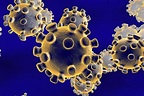
And while this was going on, the global headlines were dominated by another emergency that turned cities into ghost towns, quarantined many thousands, damaged supply chains, jeopardized the existence of travel companies, and caused many to resort to mask wearing and other measures that further distanced people from each other. Our coronavirus emergency also opened the door for “explanations” regarding the origins and consequences of the pandemic that are no more science-based than the tooth fairy.
The UN did, this week, circulate a document of “recommendations” for UN personnel, families and visitors. Moreover, its World Health Organization continues to monitor and advise both on the coronavirus and on the more general threat from pandemics which are likely to remain in the headlines as melting ice releases long-dormant microbes and climate change wrecks havoc on organisms at all levels of the biological chain. And there is now serious discussion about whether to change the format for the upcoming UN Commission on the Status of Women or to postpone it altogether.
But are such responses sufficiently reassuring? Is this pandemic not also morphing into a serious threat to international peace and security? And thus is the UN in general, and the Security Council in particular, playing the role it needs to play in this crisis? Does the Council itself (and Council watchers such as ourselves) have anything more to offer to those anxious about coronovirus than we now have to offer those Syrians fearing more indiscriminate bombing raids and the fresh displacement that often follows in its wake?
These are questions posed to us all the time by the still-growing audience for our writings and twitter posts. Many of these persons recognize that the spread of this current virus constitutes both a stern test of our current policy competence and of our general preparedness to address a new generation of global health threats. At stake here is our ability (and willingness) to move beyond fear and conspiracy; to embrace the science and demand the same of our leadership; to resist the temptations associated with flawed “explanations,” politically-biased communications and compromised capacity for cooperation, temptations that endanger our common survival much more than falling financial markets and quarantined cruise ships.
Our colleagues generally recognize that this is anything but the most reassuring time for the global community, our technological tools and achievements notwithstanding. Clearly, there are many “mysteries” to address now, many challenges to investigate, resolve and overcome. And a large slice of that “mystery” is really about us, about our capacity as a species (and the institutions we still rely on) to “drive the bus” towards a future of greater cooperation and competence, of greater commitment to unlocking the potential and participation of all, of greater focus on prevention and science-based responses, of greater interest in “understanding more so that we might fear less.”
This next period will surely determine whether fear gets the better of us or we of it; indeed whether the patient that is us survives or expires. With all that we have and all that we have left, let us choose life.


 gapwblog
Leave a comment