Archive | June, 2020

Charter School: Recovering the UN’s Larger Purpose, Dr. Robert Zuber

28 Jun

Eliasson and WHD

Celebration is an active state, an act of expressing reverence or appreciation. Abraham Joshua Heschel

We all marvel at headlines and highlight reels. But we rarely discuss the marks and scars and bruises that come with breaking through glass ceilings. Elaine Welteroth

It’s easy to get discouraged about the marathon that you are only a fifth of the way through. Josh Hatcher

Tradition is a good gift intended to guard the best gifts. Edith Schaeffer

Today, we are divorcing the past and marrying the present. Today, we are divorcing resentment and marrying forgiveness. Today, we are divorcing indifference and marrying love.   Kamand Kojouri

As we fail our children, we fail our future. Henrietta Fore

Earlier this week, a European journalist whose work I greatly respect and who covers the United Nations as a regular part of his beat, wrote me to ask about how I was reacting to the UN’s COVID-restricted 75th Charter anniversary commemorations.

His own view, which I am mostly paraphrasing, is that multilateralism is in grave danger, that the UN now matters to fewer people than the UN itself imagines, and that the current round of introspective celebrations are unlikely to change much in the world at large.  There is reason to take these laments seriously beyond the fact that seasoned journalists have heard enough “spin” in their professional careers to render them suspicious of any claims of progress or reform, either at individual or institutional level.

The UN on VTC did in fact have a busy though not altogether reassuring week, culminating in Friday’s commemoration of the 75th anniversary of the signing of the UN Charter, a document more referenced than read; one which lays out normative and procedural guidelines for the international community despite the fact that too-many members of that community, including at times its most powerful members, have treated the Charter with more indifference than reverence. Such indifference was manifest in two of the most challenging discussions of the UN week, both in the Security Council, one on the Middle East and the other on Children in Armed Conflict.

The first of these focused on the imminent threat by Israel to annex portions of what are widely recognized as Palestinian lands in the West Bank, a move sure to increase regional instability, a move roundly criticized by Council members (other than the US), Arab states and UN Special Coordinator Mladenov and which was justified by Israel based on “biblical claims” rather than on Charter values. Indeed, this move towards annexation was described by South Africa as simply the logical next step in a long sequence of illegal settlement activity which the Security Council has resolved to end but has taken few concrete steps to do so. As the Minister of Foreign Affairs of Palestine noted at this same meeting, if the Council had been responsible all along in implementing its own resolutions, peace in the region would likely “already be a reality.”

And then there was the discussion on Children and Armed Conflict, a thematic obligation of the Council that has long-attracted considerable interest and resources from other parts of the UN system. And yet, as Belgium (a leader on this issue) lamented during this past week’s session, “we have little to celebrate.”   Despite what our often our best efforts, abuses committed against children continue to rise in number.  The “annex” to the Secretary-General’s annual report focused on states that commit or enable such abuses continues to face accusations (and not without merit) that its reporting is “politicized.”   And the ultimate solution to what UNICEF director Fore referred to as the vulnerabilities of children to conflicts “completely beyond their control” is (as also noted by Indonesia and others) the elimination of armed conflict itself.  That the Council cannot even agree to support the Secretary-General’s call for a “global cease fire” is cause for considerable consternation regarding its ability  (and that of the UN as a whole) to, as Fore put it, return to children “what has cruelly been taken from them by conflict.”

Neither impending annexation nor the pervasive assault on our common future represented by conflict-related abuses of children were directly mentioned during Friday’s commemoration of the signing of the UN Charter. But it was clear that speakers understood at some level that the UN system is suffering from wounds that are not all about COVID-19 or the unwillingness of the largest powers (and their allies) to subsume their national interest to the global interest.

Indeed, some of what ails the UN is both broad-based and self-inflicted, owing in part to the fact that, much like in our personal lives, strengths and weaknesses often emerge from a similar source. As the president of the General Assembly rightly noted on Friday, we must “bring into the UN the many voices previously excluded from global policy.” And indeed the UN’s 75th year has been characterized by “global conversations” orchestrated by the UN and designed to bring more of the aspirations and expectations of the global community to the attention of diplomats and UN officials. And yet, these “voices” are themselves not often sufficiently representative, voices that are linguistically-sophisticated, well-educated and often attached to large NGO interests, voices that make for good video but don’t necessarily seal the deal in terms of how the UN bubble takes stock of those persons most in danger of “being left behind.”

And then there was the typically excellent presentation by Deputy Secretary-General Amina Mohammed who acknowledged that people often don’t understand what the UN does, the multiple ways in which it addresses human need and builds consensus for change.   But the flip side of this is that so much of the UN’s often-remarkable humanitarian activity is in response to armed violence which could have been but was not prevented, violence which the Security Council is mandated to address but which is dependent on political will and national priorities largely generated in national capitals rather than around the Council oval itself, priorities too often tone-deaf to the cries of the frightened and incapacitated.

Moreover, while an effective consensus on global policy can be the conduit to an equally effective implementation, such consensus can easily and often become an end in itself, a job half-finished that is treated as a completed product, as though resolution language alone can build political determination to address the multiple challenges that now literally threaten our common future, as though wanting change and making change are cut from the same cloth. As DSG Mohammed herself recognized during the Charter commemoration, we need to build consensus “but we need consensus with ambition,” consensus that leads to preventive or protective actions far beyond the mere acknowledgment of global problems which, in many instances are already inflaming unmanageable quantities of anxiety and discouragement.

We have long understood that assessments of persons and institutions are largely a function of the level of expectations we have of them. And it may be the case that in striving to “preserve multilateralism” we are in danger of raising expectations beyond capacity, that we now risk making more promises that we can likely keep and that are merely to be heaped on top of expectations already raised and then disappointed. Still it is right for the UN to seek to raise its levels of ambition, and there is evidence in areas from peacekeeping to food security that the UN is committed to doing just that, is determined to actively promote a human security framework that, as former DSG Jan Eliasson noted on Friday, is less about the endless acquisition of weapons and more about shrinking inequalities, increasing health care access and healing our climate.

This and more is surely worthy of celebration, an acknowledgement of progress made, problems fixed and lives extended. And indeed a case could be made — including in my own life — that we don’t actually celebrate enough. But a secure future for our children will require more than celebrations, more than resolutions, more than high sounding words and promises that appear emptier from the outside than those who make them imagine them to be. The key here, I am convinced, is less about infusions of resources (our current institutional obsession) and more about infusions of active reverence – reverence for the high calling we have chosen and assumed, a calling that stretches beyond the borders of state and NGO mandates, a calling which requires us to examine the ideas, structures, traditions and working methods to which we have long been betrothed and “divorce” those which are no longer worth “guarding,” those which impede and distract, which convert urgency into indifference and which allow us to believe that we have crossed the finish line of a marathon that in fact has many kilometers yet to go.

At this precarious moment with “scars and bruises” to spare and expectations running ahead of will and capacity, we would do well to recapture some of that “reverence and appreciation” which are the hallmark of genuine celebrations. These are the attributes – more than money, more than political resolutions, more than ageing multilateral structures, perhaps even as much as the grand Charter values and traditions still worthy of preservation and respect –which will allow us to push through this treacherous, angry, divided, skeptical moment in our history.

Moreover, the presence of such attributes may ultimately determine whether or not, at the end of this current bottleneck of human possibility, we will have failed our future.

Nightwatch: An Ode to Fathers and Their Complex Roles, Dr. Robert Zuber

21 Jun

We are formed by little scraps of wisdom. Umberto Eco

Once, at the hardware store, Brooks had shown me how to use a drill. I’d made a tiny hole that went deep. The place for my father was like that. Elizabeth Berg

Dignity, he said, lifting his half-lasagna into its box, is no detail. Aimee Bender

He was a sweet man. He was a gun nut, too. He left me his guns. They rust. Kurt Vonnegut

I’d only seen him as my father, and as my father I had judged him. There was nothing to do about that now but add it to the catalogue of my mistakes. Ann Patchett

We never get over our fathers, and we’re not required to. (Irish Proverb)

No, he would never know his father, who would continue to sleep over there, his face for ever lost in the ashes. Albert Camus

Today is Father’s Day, another opportunity for those in my society  (and others) to sentimentalize a role that is the focus of much attention but little understanding, a role about which we tend to have many expectations but about which we are, collectively at least, essentially incurious.

This day also provides a rare opportunity for me to write about men, not as genre or essence, not as an embodiment of some larger, nefarious, patriarchal imposition on the unwary, but as beings with many layers of complexity – of privilege and discrimination, as perpetrators and victims of violence, of the bearers of unearned power and influence and those many men whose lives and aspirations have been undermined and even ridiculed in both social and economic spheres.

While we rarely talk about such things in multilateral spaces, spaces in which “gender” has come to mean “female” or other, non-male incarnations; spaces in which we speak of “disproportionate impact” at every turn as though we know enough about “impact” to determine the who, how and what of that; it is clear, to me at least, that the wholly-appropriate attention to women’s inclusion has pushed to the side the uncomfortable reality that “leaving no-one behind” will also require much more policy attention to the lives of men and boys than we are currently paying.

The fatherhood that is, for many men, at the heart of their complexity is casually celebrated on this day and little regarded the rest of the year. Indeed, being a father still ranks as one of the easier things to become and one of the harder and more thankless things to do well. For those who willingly discharge their biological function but subsequently neglect the social and nurturing consequences, we have appropriate means of social approbation. But most fathers don’t fit that mold. Most want to do some approximation of the right thing by the children they sire, even if they are at loose ends regarding what that might imply in practical terms — how to protect, how to discipline, how to educate, how to fulfill largely unstated expectations amidst an often-bewildering and rapidly-shifting cultural and gendered landscape.

Much like with mothers, there is no blueprint for fathers. We have collectively compiled a longer list of things we “know” that fathers have neglected to do for children than what they have done and could do more of, a list that mostly recognizes what is best for children but which offers scant guidance regarding how to cultivate relationships with children that can persevere through all the social upheaval of our times, all the social and technological shifts that promise empowerment for some and an undignified marginalization for many, including many fathers.

This fatherhood thing is no simple task, and it is made even more complex as the substance and iconography of “maleness” shifts (as it should) while many expectations of “father” remain largely intact, expectations both numerous and largely lacking in sensitive interrogation. We don’t ask many good, emotionally-probing questions of fathers, even when we are older and able to do so, and especially within the families where most of these expectations occur. This discursive deficiency is equally notable in families of limited means or of cultural minorities, the millions of families with fathers who don’t have the luxury of staying home during a pandemic to “bond” with their children, who instead have to get up and ride the buses and trains to “essential” jobs that aren’t paid or protected “essentially,” jobs that confer little or no dignity, that leave people drained of emotional and physical energy after long shifts, and that then consign them to their worry throughout the return ride, praying to some deity or other that they aren’t bringing the virus home with them along with their barely adequate paychecks.

Are these “essential” but multiply-exhausted workers deemed to be “good” fathers or not? Are they responsible fathers or not? And how much do any of the rest of us actually care about their journeys, how they actually feel about their roles and obligations, the toll exacted on these men who, in some cases, are trying to fulfill a challenging responsibility incompletely understood, and trying to do so in a society that privileges neither themselves nor their progeny, a society that devalues their social class every bit as resolutely as it now devalues their migration status or racial and ethnic origins?

The title for this post was appropriated from an iconic Rembrandt painting (which was actually renamed long after the artist’s death as its multi-layered varnish darkened) and which had previously become the inspiration for an overnight program for kids and their guardians that I ran for a few years (many years ago) at the Cathedral of St. John the Divine in New York. The program was characterized by diverse activities for kids, religiously-focused and not, in what still represents an overwhelming, mysterious space, especially so at night.

For the adults present it was also a time to reflect on how and what we “watch” for our own sake and to enhance the well-being of children. And what we often concluded is the importance of “watching” in at least two aspects: first to be attentive to the protection and other needs of children as they grow, including the ways in which our relationship to them needs to evolve as their personal and social contexts evolve; but also to ensure that those young people who “watch” us, who look to us to model the “scraps of wisdom” that will help define their future lives, are hopefully seeing in us at the very least a good measure of what we want them to see in the world; are able as well to take away from their years with us the skills and life-lessons that we most wanted them to learn.

Successful “watching” in this sense requires in part a different type of conversation. Many of us after a certain age can admit that we still routinely judge our fathers but typically fail to see the person behind the role, fail to ask the sincere and probing questions which can get behind the scenes of their original aspirations for their children as well as their best (and worst) attempts at modeling, questions which acknowledge that fatherhood is a complex human endeavor more than a role to play, more than a caricature of caregiver, critic and/or provider.

Indeed, we collectively tend to avoid questions such as these all year long including in our hallowed halls of policy. But on this day, while with family members and other loved ones, as fathers in many settings open their Father’s Day cards and even pick up the checks for their own Father’s Day lunches, let’s all pause for a moment to consider how an always-challenging and often under-appreciated presence is increasingly and unhappily being pushed towards even greater challenge and emotional isolation.

The people who cherish their fathers and the people who disparage them align with the view that fatherhood still matters profoundly, that the “hole” fathers metaphorically drill in their children is often quite deep. We may never get over our fathers, and may never want to, but we can commit a piece of ourselves on this day to understand more about how and why they drilled, how and what they watched, day and night, for the sake of their progeny.  For those old enough to ask and fortunate enough to have fathers around to respond, such indication of interest, I suspect, would be among the greatest gifts that any father could possibly receive.

In Defense of the International Criminal Court, Limited Sovereignty and Global Security, Professor Hussein Solomon

15 Jun

Editor’s Note:  Dr. Solomon has graced us with another of his insight-filled writings, this time providing reflection on and historical context for the US president’s recent decision to sanction members of the International Criminal Court pursuing investigations of atrocities committed against Afghanistan citizens, including by US troops.  This decision drives another wedge between the US government and global efforts to ensure accountability for the most serious of crimes, many of which have certainly been committed in Afghanistan over many years of conflict.  This piece is longer than most for us, but is worth your time. 

US President Donald Trump has launched an all-out legal and economic offensive against the International Criminal Court (ICC) following its decision to investigate war crimes in Afghanistan committed by all sides, including by the United States. The Trump Administration’s tirade against the ICC, its talk of sovereignty and international law, ignores the fact that the war in Afghanistan has resulted in more than 100,000 civilian casualties according to the United Nations. Ignoring this grim statistic suggests that impunity for such crimes should be the norm. Such impunity of course, makes a mockery of civilized norms regarding the sanctity of life and accountability for abuses.

The US, it should be noted up front, does not object to the ICC rendering judgments in situations which suit US policy interests. In the Security Council, the US offers verbal support for the work of the ICC in places such as Darfur and Libya as well as for prosecutions of persons accused of committing atrocity crimes in African states. However, this “support” does not extend to any insinuation of jurisdiction over actions committed by US military or civilian personnel which, if they were committed by Libyans or Sudanese, would most assuredly be classified as war crimes, even by the US itself. Moreover, the US is determined to use its influence to shield allies (read Israel) from any consequences stemming from ICC investigation of abuses in Palestine.

More worryingly, the rhetoric from Washington eerily echoes that of tyrants who have engaged in the internal repression of their citizens and then decried any form of sanctions or other coercive measures, arguing that this violates their state’s sovereign integrity. In this, the Saddam Husseins and Slobodan Milosevics of the world are drawing upon a particular philosophical tradition which views sovereignty as protection against external influence in a state’s affairs. Sovereignty, as a legal and political construct, arose in Europe at a time when medieval feudal states slowly gave way to absolutist nation-states. Commenting on this Francis Deng noted that sovereignty developed ‘as an instrument of feudal princes in the construction of territorial states. It was believed that instability and disorder, seen as obstacles to stable society, would only be overcome by viable governments capable of establishing firm and effective control over territory and population’.

As the old social order decayed and crumbled, absolute monarchs were installed all over Europe; and each of these had their own praise-singers and sycophants justifying the role of monarchy in a ‘New World Order’. In England, this saw Hobbes translating the social contract as people surrendering all their rights to a sovereign Ruler. In France, Jean Bodin also endorsed this view and thus this philosophical tradition contributed to the rise of the absolutist monarchy and the nation-state in Europe.

This did not mean that this philosophical tradition, which was soon transformed into an established orthodoxy, did not go unchallenged. A rich and varied alternative discourse could be heard above the cacophony of the monarchist sycophants. Other social contract theorists such as John Locke and Jean-Jacques Rousseau stridently argued against the notion that as part of the social contract, the people transferred all rights to a Sovereign Ruler. From this emerged the idea of limited and popular sovereignty–that the Ruler had a clear but limited mandate from the people and that its violation by the Ruler could justify popular resistance to that Ruler.

Of course, Locke’s and Rousseau’s ideas were not entirely unique and drew upon the earlier works of Althusius. This German Calvinist, who drew inspiration from ancient theories of popular rights, argued in 1603 for the ‘revolutionary right of active resistance to rulers who violated their contract’. This view was later endorsed by Suarez, who argued that ‘the Ruler always remained limited by positive law and the permanent rights of the People’. Similarly, the German philosopher Wolff, argued that the people were free to choose how much power to devolve upon government and how much to retain for themselves.

By the 1780s the fierce debates between supporters of absolute monarchy andthe proponents of popular sovereignty took a new twist with Kant arguing that the state, as opposed to an absolute monarch, was the agent and representative of popular sovereignty or as Rousseau put it, the ‘general will’. As with Hobbes’ sovereign, Kant’s state ‘absorbed all popular rights including the right to rebel or disobey’. Fueled by the American War of Independence, the French Revolution and the Industrial Revolution which heralded a new class structure in Europe and North America, Kant’s notion of a sovereign state supreme in its domestic jurisdiction and free from external influence became the norm. The sovereign nation-state also became the norm in Africa following the 1885 Berlin Conference, which carved up that continent into European colonial territories.

In the first decades of the twenty-first century, it is increasingly clear that the myth of sovereignty meaning national governments being supreme in their territorially defined jurisdictions, is cracking. The Afghanistans’, the Somalias’ and the Yemens’ clearly illustrate the inadequacy of the concept in these troubled times. It is also clear that ‘even as the traditional concept of sovereignty erodes there is no presumptive, let alone adequate replacement for the state. The locus of responsibility remains with the state for the promotion of citizens’ welfare and liberty and international cooperation. For academics, then, the challenge is to rethink the notion of sovereignty in an era of interdependence that has witnessed profound global change. Highlighting the enormity of this challenge, former United Nations Secretary-General Boutros Boutros-Ghali stated: `A major intellectual requirement of our time is to rethink the question of sovereignty not to weaken its essence which is crucial to international security and co-operation, but to recognize that it may take more than one form and perform more than one function. This perception would help solve problems both within and among states’.

Supporting this shift in intellectual discourse has been social developments that contributed to a radical change in the global strategic landscape, and which enabled key policymakers to be receptive to these new ideas. The first of these movements is the process of democratization that has been gathering tremendous momentum from the nineteenth century. This has increasingly challenged Kant’s notion of the state as the embodiment of all popular rights. In an era where a democratic ethos prevails and where violations of human rights are quickly beamed via satellite into people’s homes or through ubiquitous social media, a popular consciousness has developed that state security (read sovereignty) is often purchased at the expense of human security. This has also led to the notion that in the final instance, the people are sovereign and that the state acts as the agent of that popular sovereignty. Unlike Kant, it argued against the notion of a state that absorbs all popular rights, including the right to rebel. Moreover, it also emphasizes that for the power of the state to be recognized as legitimate, it must be exercised responsibly and within the mandate given to it. Sovereignty constructed in this way means that the state uses its resources to enhance the human condition of its citizens – at the very least providing for the basic needs of its people.

Given the enormity of power the state has at its disposal vis-à-vis the individual citizen, it is equally clear that state power needs to be constrained. Here, new social contracts have evolved – Constitutions, Bills of Rights, etc. – clearly limiting the power of the state. These, together with an elected Parliament and an independent judiciary, are supposed to make governments accountable to the people and reinforce the idea that the state is an agent of popular sovereignty. The existence of several tyrannical regimes, however, clearly illustrates the limits of such domestic accountability, even in our own time. In such situations, it is becoming obvious that agents (states) who violate the trust of their people are increasingly being held accountable by the international community, in essence, to other states. But this raises another question: why should states pursuing their own national self-interest (in the classical realist genre) care about human rights violations/atrocities committed in other states?

The answer to this question relates to the second movement taking place in the world today. The myth of an independent sovereign state impervious to outside influence has been recognized by states as problematic for centuries. Since this myth, however, was crucial for the construction of nation-states from disparate peoples, states found it useful to perpetuate that myth. States realized that just as no two people can live in total freedom without encroaching on the freedom of others and therefore need the regulatory mechanism of the state, so too states need some regulatory framework, no matter how primitive, to guide the relations between states. Thus Evan Luard notes that: ‘Already during the Middle Ages conventions had emerged about some aspects of states’ conduct: for example, the treatment of heralds, declarations of war, diplomatic practice and similar matters. The rules of chivalry established a code governing the behaviour which knights should adopt towards each other in the battlefield . . . Canon law established rules about the conduct of war and other aspects of state conduct. In particular the doctrine of ‘just war’ laid down for what purpose war was justifiable and rules about the ways which wars should be conducted’.

From the nineteenth century onwards, there emerged the idea among some states that war was not a rational way to achieve their foreign policy objectives: that war was detrimental to both their political alliances and commercial ventures. Thus from the Congress of Vienna in 1815 after the Napoleonic wars to the Hague conferences of 1899 and 1907, states sought to create mechanisms which they hoped would prevent the occurrence of war and would regulate its conduct, should it occur. At the end of the First World War in 1918, this went a step further when states ‘accepted the discipline of compulsory conciliation of their disputes by signing the Covenant of the League of Nations’. At the end of the Second World War, and with the establishment of the United Nations’ Organization in 1945, states were once more willing to surrender a part of their sovereignty for the promise of international peace offered by the new organization. Under the new United Nations system, the international behaviour of states was subjected to the political authority of a Security Council that was more powerful than the Council of the League of Nations.

As time wore on, it became increasingly clear to states that their relationship with other states was not the only thing which needed regulation. It has become obvious that how states (agents) relate to their domestic constituencies can also serve to undermine international peace and security and hence endanger the national interests of other states. How does this come about? Samuel Makinda notes that ‘[j]uridical sovereignty without popular sovereignty can result in human insecurity.’ Indeed, social exclusion of a particular group from economic or political power, ethnic cleansing and the like, have resulted in millions of internally displaced and refugees as the current Syrian conflict demonstrates. These then become a source of regional insecurity as they flee into neighbouring states. In the process, the international order is itself threatened.

The politics of exclusion pursued by some states that deliberately undermine the human security of their citizens also adversely affect international stability in other ways. In some cases, those affected populations bearing the brunt of state repression choose to fight back as witnessed by the struggle of the Kurds for an independent homeland of their own.

Recognizing that insecurity anywhere is a threat to security everywhere, states have decided to band together for the cause of international security. For instance, acknowledging that an intrinsic relationship exists between agents (states) not acting responsibly towards their citizens and a failure to achieve international peace, states have in various international fora begun to regulate this domestic realm to ensure that states are in the final instance accountable to the international community — its laws and norms — for their actions. This resulted in the development of a normative code by which a state’s actions could be held up for scrutiny. The 1948 Universal Declaration of Human Rights, the 1966 International Covenant on Civil and Political Rights, the 1966 International Covenant on Economic, Social and Cultural Rights as well as a vast array of other human rights instruments became a part of these global norms by which state actions could be monitored.

The flip side to this, of course, is that those states which do not adhere to these global norms open themselves up for international scorn and even the imposition of direct coercive measures by the global community. In this regard, Kalypso Nicolaidis notes that state sovereignty can be effectively bypassed when ‘a state stops fulfilling the basic responsibilities and functions that go along with sovereignty’. This was a point made abundantly clear to the South African apartheid regime in 1974. In that year the international community questioned Pretoria’s right to sovereignty (read to non-interference) on the basis that it exercised power illegitimately, irresponsibly and to the detriment of regional peace and security. This resulted in the South African government being ousted from the UN General Assembly and replaced by the African National Congress and the Pan-African Congress given that these liberation movements were perceived to be more representative of the majority of South African citizens. Sanctions and an arms embargo were soon to follow.

Despite the development of global norms as exercised in the case of South Africa, the truth is that during much of the Cold War era, dictators such as Pinochet, Mobutu and Suharto held sway – nurtured and assisted by superpowers who displayed scant regard for the precepts of popular sovereignty or human rights. However, with the more recent demise of global bipolarity and the beginnings of a new international consensus regarding sovereignty as responsibility, the way has become clear for the further development of international law to ensure accountability – that states must act as responsible agents of popular sovereignty.

One of the earliest examples of this new consensus occurred in 1991 with UN Security Council Resolution 688. This demanded an end to Iraqi aggression against the Kurds in northern Iraq and authorized a military operation to establish safe havens on Iraqi territory. In this way international humanitarian organizations were guaranteed access to the Kurds for the purposes of providing both protection and humanitarian relief. At the time, the United States’ Ambassador to the United Nations remarked that ‘this was the first time a significant number of governments denied the states’ right to the sovereign exercise of butchery.’ Since then the UN Security Council has authorized forcible intervention in Somalia in 1992 and Haiti in 1994, as well as in Yugoslavia and Libya.

The advent of forcible intervention in the affairs of a state represents a watershed in our theoretical understandings of sovereignty in the current international system. Dan Smith puts it this way: `The most familiar social science definition of the state is that it is the entity with the monopoly of the legitimate means of force within a given territory. Humanitarian intervention – especially forcible – breaks the states’ monopoly of force and rejects its legitimacy. It thus contradicts our understanding of the most basic function of sovereign statehood’.

In this way coercive intervention, at least in theory, reinforces the notion that sovereignty implies responsibility and that states that violate the trust of their citizens will be held accountable for their actions (or inaction) to the international community. Of course, developments in international law are not simply confined to the question of forcible intervention or other coercive measures but also to what John Dugard refers to as the ‘internationalisation of criminal law’. This is most clearly seen in the Pinochet case and in Tripoli’s handing over of the two Libyans to the Netherlands for trial under Scottish law for the bombing of Pan Am Flight 103 over Lockerbie in 1989. It has also resulted in the establishment of an International Criminal Tribunal for the Former Yugoslavia in The Hague. The International Criminal Tribunal for Rwanda in Arusha and the 120 states that signed an agreement in Rome in July 1998 to establish an International Criminal Court also serve to consolidate the trend. These are momentous developments and support the view that international law appears to be moving away from being premised on a system of sovereign states towards the development of a common law binding a world community of individuals. In the past states were the sole bearers of recognized legal status; in the twentieth century this hard shell has been breached and international law now concerns itself not just with states but also with individuals.

The twentieth century will certainly go down as one of the bloodiest centuries in the history of humanity. From the bloody plains of Armenia to the trench warfare of the First World War, the gas chambers of Auschwitz and Dachau, the killing fields of East Timor, Cambodia, Sudan; the former Yugoslavia and Congo, the twentieth century has witnessed human depravity reach new depths. Altogether 160 million people lost their lives in the century as a result of war, genocide and state killings.

Despite, an inauspicious start, the twenty-first century need not replicate the twentieth century’s bloodlust. There is a millennium feeling that such grave crimes committed by the Pol Pots and Assads are not simply crimes against the victims but an affront to our collective humanity and dignity and as such should not go unpunished. Reconstructing sovereignty as responsibility, remodeling states as agents of popular sovereignty whose purpose it is to enhance the human condition of their citizens, and who are accountable not only to their domestic constituencies but to the international community as well, will go some way to resolve the historic tensions between state and human security in favor of the latter.

None of this understanding of international law features in the Trump Administration’s antipathy towards the ICC which despite its flaws represents humanity’s best hopes and aspirations as we seek to tame the animal within us all.

Sea Sick: Moving Care Forward in our Stressed Out Planet, Dr. Robert Zuber

14 Jun

The sea is emotion incarnate. It loves, hates, and weeps. It defies all attempts to capture it with words and rejects all shackles. No matter what you say about it, there is always that which you can’t.  Christopher Paolini

If the ocean ​can calm itself, ​so can you.​ We ​are both ​salt water ​mixed with ​air.​  Nayyirah Waheed

And the ocean, calling out to us both. A song of freedom and longing.  Alexandra Christo

Then all collapsed, and the great shroud of the sea rolled on as it rolled five thousand years ago.  Herman Melville

The ocean is a place of skin, rich outer membranes hiding thick juicy insides, laden with the soup of being.  Vera Nazarian

Mist to mist, drops to drops. For water thou art, and unto water shalt thou return. Kamand Kojouri

This past week, in the video chat format which is likely to rule multilateral engagements until at least the end of July, the UN held discussions highlighting a series of global challenges, some of which have now come to dominate our collective consciousness while others have receded to the background, at least for a time.

At this week’s “Multilateralism in a Fragmented World” event, speakers highlighted the “universal aspirations” that the UN has had some success in both defining and meeting despite the fact, as noted by SG Guterres, that “we are not yet pulling in the same direction.”  This view was reinforced by Mary Robinson, chair of the Group of Elders, who not only highlighted some of the existential threats that the COVID pandemic has rendered more serious – including global hunger, gender-based violence and armed conflict – but also underscored the tendency of some governments to use the pandemic as “cover” for efforts to restrict fundamental rights and freedoms, including those of the journalists who seek to “make sense of an anxious and dangerous world.”

For months, the virus has been the UN’s core policy obsession, in part because of challenges to the messaging emanating from its World Health Organization but mostly due to the fact that so much in global policy and practice has been negatively impacted by COVID threats.  We have been forced to spend as much time adjusting to our new realities as we do addressing the large problems which confront us endlessly through our video screens. Indeed, the pandemic has thrown many of us back on needs and issues that are less structural and more personal in nature – the children whose education is on pause, the bills that can’t be paid on time, the physical distance that complicates emotional connection, the dreams and aspirations indefinitely put on hold.

It is harder to find energy for global issues when our private lives require so much vigilance, when the failure to wipe down a doorknob might provide a pathway to a deadly illness, when a child’s window for reading comprehension is slowly closing because of long breaks in schooling, when a dwindling bank balance foretells another round of unwelcome lifestyle adjustments.

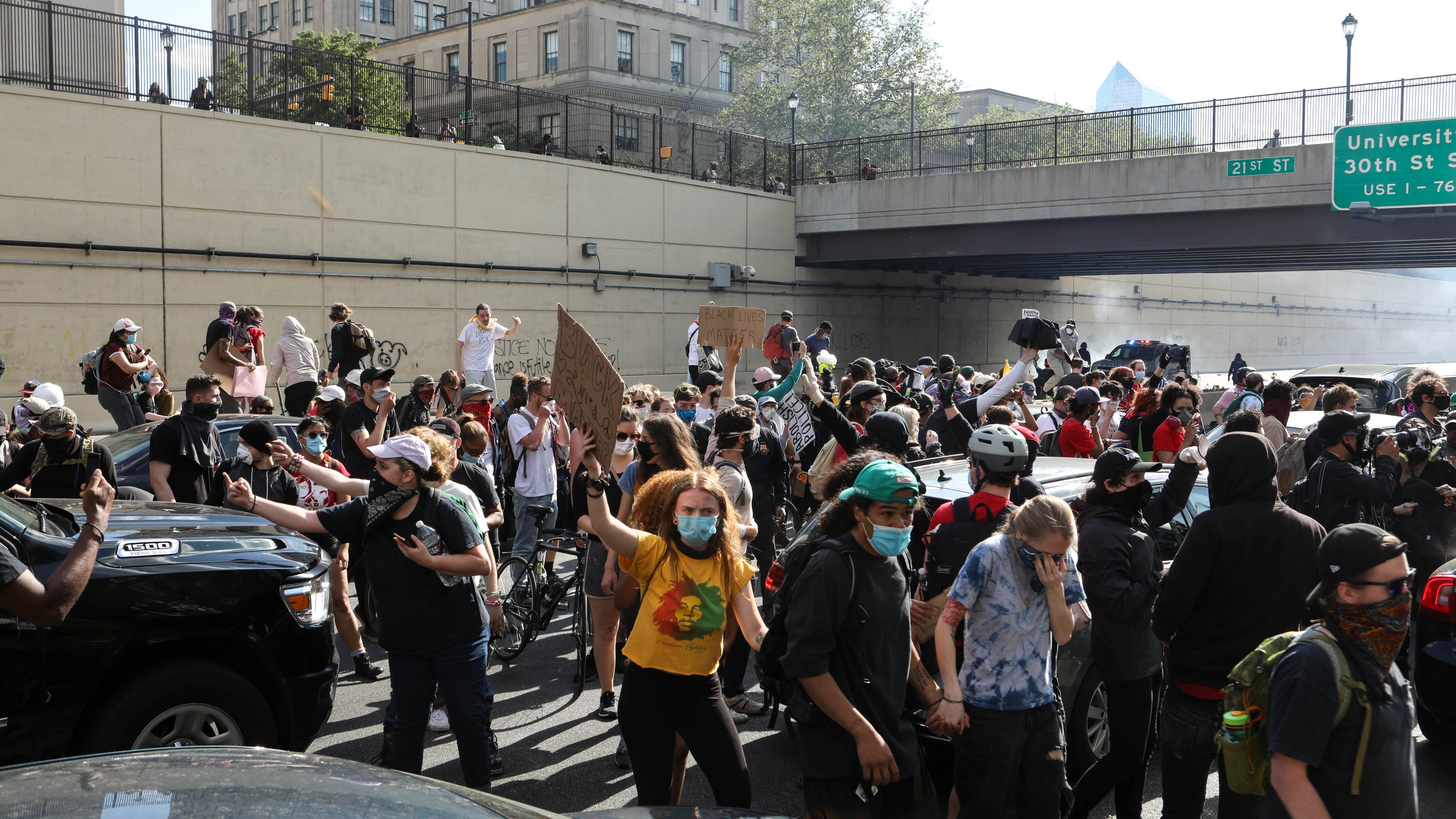
And then there is the matter of racial justice, the chronic absence of which has filled streets in the US and around the world, calling attention to the numerous instances of excessive use of force by police against black and brown people (now including the killing of Rayshard Brooks in Atlanta), patterns which merely exacerbate conditions of health and other inequalities and which only serve to widen chasms of mistrust between communities and the police forces which, in too many instances, have demonstrated an unjustifiably stubborn unwillingness to police themselves.

These two crises now dominate public consciousness and seem destined to do so for some time.  The images that fill our screens – the elderly gasping for air as COVID ravages their lungs, the protesters gagging on pepper spray so that our political leadership can pose for the cameras, the men and women pleading for relief from choke holds and knees on their windpipes – such disturbing images as these are not easily dislodged. Indeed, these images and the crises which lie behind them are almost more than many people can take, creating waves that rock their metaphorical boats and promise considerably more nausea than calm

We who work in policy know that part of our “job,” however challenging, is to find the words to remind people of issues and images that also constitute genuine crises but at this moment seem just a bit less compelling.  One of these is the declining health of our oceans, a topic which was featured last Monday during a large UN “World Oceans Day” event and a subsequent discussion later in the week on ocean governance.  For us, this is a high-priority discussion as sea levels rise, fish stocks deplete, coral bleaches, plastics over-run ocean eco-systems – this and more highlights the ocean’s now-compromised ability to sustain coastal livelihoods and absorb the carbon that, even during a pandemic, we continue to produce in vast, climate-unhealthy measure.

The discussions this week highlighted the many technological innovations which allow us to, among other things, survey the vast unexplored expanses of our ocean floor and remove plastics from our rivers before they find their way into seas and sea creatures.  Also highlighted were the evolving forms of ocean governance that are slowly expanding beyond areas of national jurisdiction with hopeful implications for marine protected areas, sea bed mining and the practices of shipping which has too often used the open sea as a surrogate dump.

While technology and governance are critically important matters to policy, for most people they simply do not sufficiently compel interest, certainly not in this time of viral spread and social unrest. Indeed, for all who are drawn to shorelines and their beach cultures, for all who fill boardwalks and fishing boats, most do not immediately connect their leisure with a responsibility to protect our planet’s most indispensable eco-system and the life and livelihoods which it sustains worldwide.

But there were other lessons from this week, other human reactions which oceans are still capable of invoking and which can help us see our way through crises both immediately compelling and looming at a distance. This was highlighted best during the World Oceans Day event by the Cousteau family, a name synonymous with the wonder, mystery and even “romance” of our ocean habitats, seas that were once a ubiquitous theme in our literary corpus with which we are now urged to reconnect.  It was good to listen to esteemed ocean advocates talking about seeking out stories — focused on oceans but also on water and ecosystems more generally – that can help reconnect people and planet, recapture some of the “freedom and longing” that constitute much of human aspiration, and motivate a greater sense of care for the resources that are critical to our common survival and that we simply cannot under any circumstances replace.

This to my mind is “romance” in the best sense – not so much steeped in sentimentalism as in a deep, rich and practical engagement with what a Namibian Minister this week referred to as our “interconnected normal.”  As the Cousteau family put it, “falling in love” again with the oceans (or for that matter our forests, deserts, rivers, wetlands and mountains) is worth the emotional investment, but it is also not enough.  We must, they insisted, “move care forward.”

Yes, that is the lesson directly relevant to our now-sick oceans –our increasingly indigestible “soup of being” — but also to other aspects of our stressed and agitated planet.  Move care forward such that access to food and health care is more abundant and equitable.  Move care forward such that our tendencies to discriminate and punish based on race and ethnicity are finally overcome.  Move care forward such that gross inequalities are narrowed and “protect and serve” becomes a mantra applicable equally to communities and its policing. Move care forward such that our collective disposition is to share more abundantly and horde less habitually.

And move care forward such that our planet, its oceans and other ecosystems, remain healthy enough to sustain the life that now appears to be more elusive than is actually the case, a life offering greater opportunity for justice, wonder and connection by all, and a life far less threatened than at present by bullets and bullies, by pandemics and pollution.

Bar Code: Upholding Standards for Institutions and Leadership, Dr. Robert Zuber

7 Jun

Teach your children humility by your words and actions, and they will give something to this world and not just take from it. Stewart Stafford

Without inspiration, we’re all like a box of matches that will never be lit. David Archuleta

Falsehood flies, and truth comes limping after it, so that when we come to be undeceived, it is too late; the jest is over, and the tale hath had its effect. Jonathan Swift

The city was like a fish dying on hard pavement, hopelessly gasping for air. Kien Nguyen

I think a life or a time looks simple when you leave out the details, the way a planet looks smooth, from orbit. Ursula LeGuin

That is what I have been seeking to do- clear away the extraneous matter so that we can see the truth-the naked shining truth. Agatha Christie

This has been an alternately terrible and glorious week, one in which the pursuit of equity and justice – and the occasionally violent response from agents ranging from law enforcement to self-appointed vigilantes – virtually forced a global pandemic off the top line of our global media.   That so many people worldwide rallied around the image of a singular, needless death in Minneapolis, placing their pent-up energies on the streets in the recognition of people used and then forgotten, people for whom “serve and protect” is merely a cruel reminder of promises not kept, people for whom a legacy of limited health care access conspires to make them disproportionate victims of a pandemic which is now poised to make a deadly comeback.

There is a column I read when I can’t take any more of the world and its habituated cowardice; it’s by Zach Lowe and it actually focuses on basketball.   The title is “5 Things I Like and Don’t Like” and while the subject matter is hardly earth shaking, the title is a weekly reminder to me of the importance – including to health and sanity — of seeking out “details” of hope and inspiration amidst the complex tumult which characterizes our human condition, now as much as ever.

Yes, there has been plenty to like and not like this week. The horrific tear-gassing of protesters so that the US president could have a photo-op in front of a church he doesn’t attend, holding a bible he doesn’t read, was followed by multiple dimensions of push back – from military leaders rejecting the use of their force against US civilians to police chiefs and mayors decrying the lack of inspiration and truth-telling from the highest levels of government as they seek to re-establish framework for policing that, in too many instances, has become overly-militarized, disconnected from constituents and defiant of any attempts to hold it accountable.

It has, of course, been a particularly rough stretch for law enforcement as well, having to enforce viral lockdowns and protest-related curfews, risking the reception or transmission of COVID-19, keeping a wary eye on elements in crowds of protesters seeking to hijack the central message for personal or political gain. And yet, despite the “domination” language emanating from a fenced-in White House, despite the fresh instances of police abuse whose images have been inundating my twitter feed, the people continue to come out and fill the streets, tired and battered though they may be, frustrated by the slow pace of change as they surely are, to give equity and justice another try. Indeed, so many people worldwide are giving justice another try in their own contexts, recognizing that we in the US are not alone in failing to honor our creed,  taking wider responsibility for equality rather than pushing off so much of this burden on law enforcement, lamenting that we have collectively been too passive (or even indifferent) in waiting for our governance structures to put out the smoldering embers of injustice rather than inciting the flames of destruction and despair yet again.

How good it has been to see so many younger and mixed-race peoples taking to the streets together, insisting that change will come this time regardless of how many batons are swung at them in anger, no matter how many protesters are harshly wrestled to the ground for no apparent reason, no matter how many erstwhile “leaders” huddle in their bunkers – real and metaphorical – and refuse to acknowledge both the “naked, shining truth” about our times and what far too many are currently doing to postpone a reckoning regarding inequality that was already long overdue.

And it is not only about race and policing; it is also about a climate crisis that takes the heaviest toll on economically marginal communities. It is about growing food insecurity, about massive conflict-related displacement, about oceans that are increasingly unable to sustain coastal economies, about educational opportunity (and the dreams to which it is often attached) slashed and deferred.

Justice in this larger sense requires much more than rhetorical values; it is also about the inspiration and will to make those values incarnate in our communities – for all not only for some, across borders and coastlines as well as within them. That so many people – and so many young people – whose lives have only recently transitioned from quarantine to protest, are now insisting on a “normal” that represents a clear departure from what has been, a “normal” that requires us to look after each other better and grasps that “what is good for me” is not nearly good enough; this is a clear and compelling sign of better things to come.

The “selfish and proud” poster that somehow found its way on to our twitter feed this week bears a hard truth far beyond its holder – that we continue to conflate the personal and general interest in a multitude of ways and under a multitude of “covers.” That we are all self-interested is beyond question; that we have isolated such interest within economic, political, enforcement and media bubbles, increasingly beyond the reach of reproach or accountability, has become a dangerous obsession. And that so much of our current leadership are blowing more bubbles than inspiring us to renounce our own is part of what motivates so many to take risks – including to their health – to voice both their displeasure at current inequities and their vision for a fairer and safer future. These are the ones who insist that the “matches” of change shall indeed remain lit.

And while we locate the words and policies to craft a higher bar for leadership at local and national levels, we must insist on more from multilateral processes as well.   At the UN for instance, the Security Council had a pretty good week with productive discussions on peacekeeping operations with force commanders, and resolutions consolidating political progress in the Sudan and reasserting the importance of impeding the flow of arms to Libya. Efforts to support regional counter-terror strategies in the Sahel beyond the provision of additional troops and military equipment were also welcome. Outside the Council, efforts to ensure a financial system that can accommodate sustainable development amidst the still-potent COVID challenges to national treasuries were also appreciated.

And yet here as well, the courage of leadership has yet to match the courage of the streets. The Council remains needlessly blocked on several matters – from accountability for violence in Cameroon and Syria to the peace and security implications of climate change and COVID-19. And while the “rioting” by some protesters and some police has garnered the attention of an already-overburdened UN human rights mechanism, official criticisms of racial injustice and police misconduct in the UN’s “host state” have often been tepid at best. It’s as though leadership is simply holding its breath that a US election in November will magically solve the worst of the fiscal and political tensions now plaguing US-UN relations.

What it will not do, of course, is resolve the dilemma of permanent Security Council members who refuse to inspire a higher bar of conduct in member states by reaching for that bar themselves. Nor will it resolve a growing concern amongst the millions who took to the streets this weekend that multilateral institutions, any more than national ones, are largely unable or unwilling to watch their backs.

As reprehensible as the deaths of Mr. Floyd and others in these weeks have been, as raw as the clashes between law enforcement and marchers have remained, it is unlikely that the justice rightly sought and long overdue will be attained through efforts to resolve this security dynamic alone.   We must hold our common leadership to a higher standard; we must raise the bar for those seeking power over our lives and futures; we must insist through our marching and subsequent voting that they contribute to justice for people and healing for planet rather than hiding behind largely unaccountable implementers merely content to “follow orders.”

Sadly, too many of our leaders have been content to leave people lying on the hard pavement, gasping for air. The protests of this weekend have demonstrated, however, that there is plenty of oxygen for change and accountability left in those lungs.