
Teach your children humility by your words and actions, and they will give something to this world and not just take from it. Stewart Stafford
Without inspiration, we’re all like a box of matches that will never be lit. David Archuleta
Falsehood flies, and truth comes limping after it, so that when we come to be undeceived, it is too late; the jest is over, and the tale hath had its effect. Jonathan Swift
The city was like a fish dying on hard pavement, hopelessly gasping for air. Kien Nguyen
I think a life or a time looks simple when you leave out the details, the way a planet looks smooth, from orbit. Ursula LeGuin
That is what I have been seeking to do- clear away the extraneous matter so that we can see the truth-the naked shining truth. Agatha Christie
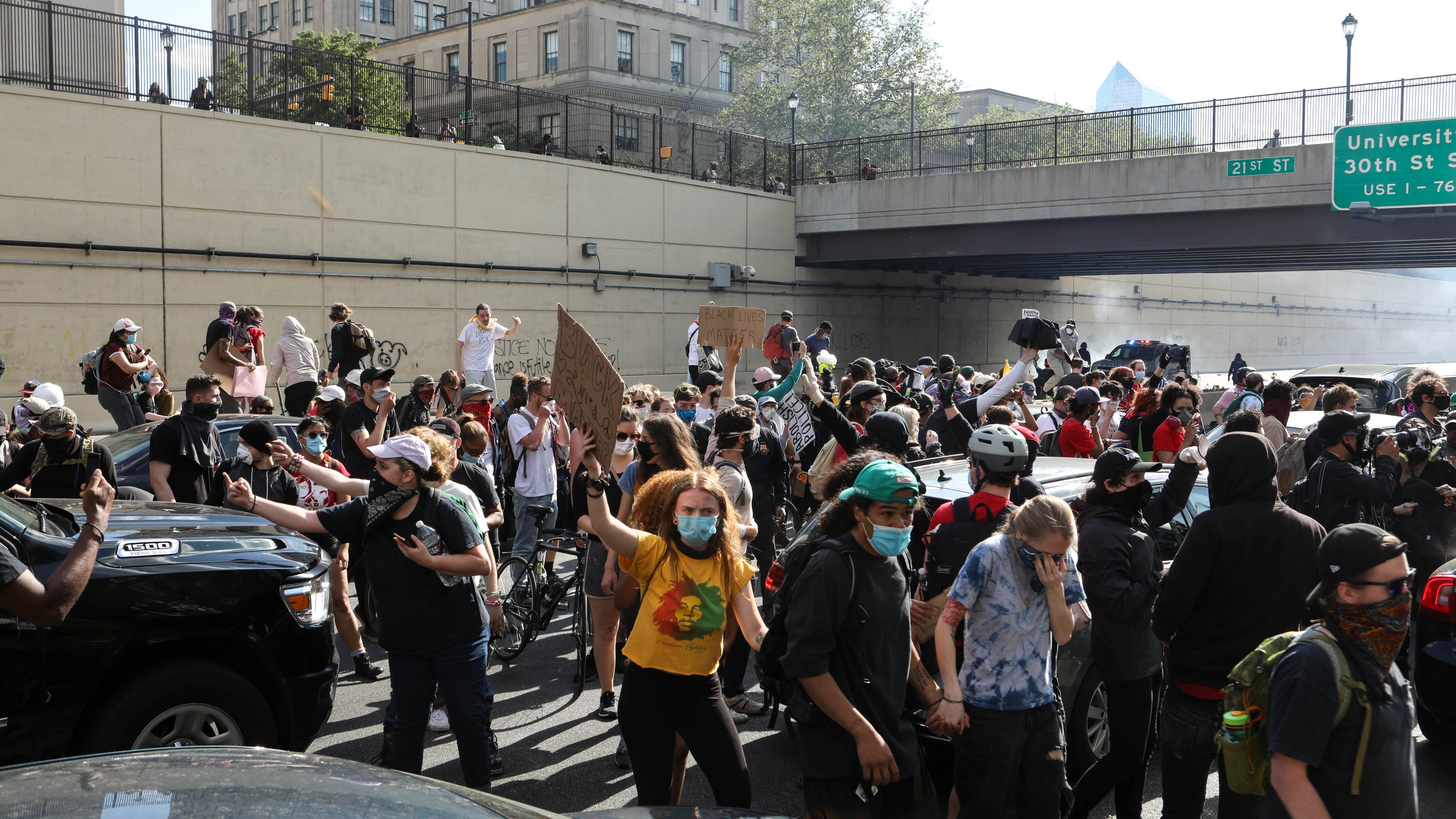
This has been an alternately terrible and glorious week, one in which the pursuit of equity and justice – and the occasionally violent response from agents ranging from law enforcement to self-appointed vigilantes – virtually forced a global pandemic off the top line of our global media. That so many people worldwide rallied around the image of a singular, needless death in Minneapolis, placing their pent-up energies on the streets in the recognition of people used and then forgotten, people for whom “serve and protect” is merely a cruel reminder of promises not kept, people for whom a legacy of limited health care access conspires to make them disproportionate victims of a pandemic which is now poised to make a deadly comeback.
There is a column I read when I can’t take any more of the world and its habituated cowardice; it’s by Zach Lowe and it actually focuses on basketball. The title is “5 Things I Like and Don’t Like” and while the subject matter is hardly earth shaking, the title is a weekly reminder to me of the importance – including to health and sanity — of seeking out “details” of hope and inspiration amidst the complex tumult which characterizes our human condition, now as much as ever.
Yes, there has been plenty to like and not like this week. The horrific tear-gassing of protesters so that the US president could have a photo-op in front of a church he doesn’t attend, holding a bible he doesn’t read, was followed by multiple dimensions of push back – from military leaders rejecting the use of their force against US civilians to police chiefs and mayors decrying the lack of inspiration and truth-telling from the highest levels of government as they seek to re-establish framework for policing that, in too many instances, has become overly-militarized, disconnected from constituents and defiant of any attempts to hold it accountable.
It has, of course, been a particularly rough stretch for law enforcement as well, having to enforce viral lockdowns and protest-related curfews, risking the reception or transmission of COVID-19, keeping a wary eye on elements in crowds of protesters seeking to hijack the central message for personal or political gain. And yet, despite the “domination” language emanating from a fenced-in White House, despite the fresh instances of police abuse whose images have been inundating my twitter feed, the people continue to come out and fill the streets, tired and battered though they may be, frustrated by the slow pace of change as they surely are, to give equity and justice another try. Indeed, so many people worldwide are giving justice another try in their own contexts, recognizing that we in the US are not alone in failing to honor our creed, taking wider responsibility for equality rather than pushing off so much of this burden on law enforcement, lamenting that we have collectively been too passive (or even indifferent) in waiting for our governance structures to put out the smoldering embers of injustice rather than inciting the flames of destruction and despair yet again.
How good it has been to see so many younger and mixed-race peoples taking to the streets together, insisting that change will come this time regardless of how many batons are swung at them in anger, no matter how many protesters are harshly wrestled to the ground for no apparent reason, no matter how many erstwhile “leaders” huddle in their bunkers – real and metaphorical – and refuse to acknowledge both the “naked, shining truth” about our times and what far too many are currently doing to postpone a reckoning regarding inequality that was already long overdue.
And it is not only about race and policing; it is also about a climate crisis that takes the heaviest toll on economically marginal communities. It is about growing food insecurity, about massive conflict-related displacement, about oceans that are increasingly unable to sustain coastal economies, about educational opportunity (and the dreams to which it is often attached) slashed and deferred.
Justice in this larger sense requires much more than rhetorical values; it is also about the inspiration and will to make those values incarnate in our communities – for all not only for some, across borders and coastlines as well as within them. That so many people – and so many young people – whose lives have only recently transitioned from quarantine to protest, are now insisting on a “normal” that represents a clear departure from what has been, a “normal” that requires us to look after each other better and grasps that “what is good for me” is not nearly good enough; this is a clear and compelling sign of better things to come.
The “selfish and proud” poster that somehow found its way on to our twitter feed this week bears a hard truth far beyond its holder – that we continue to conflate the personal and general interest in a multitude of ways and under a multitude of “covers.” That we are all self-interested is beyond question; that we have isolated such interest within economic, political, enforcement and media bubbles, increasingly beyond the reach of reproach or accountability, has become a dangerous obsession. And that so much of our current leadership are blowing more bubbles than inspiring us to renounce our own is part of what motivates so many to take risks – including to their health – to voice both their displeasure at current inequities and their vision for a fairer and safer future. These are the ones who insist that the “matches” of change shall indeed remain lit.
And while we locate the words and policies to craft a higher bar for leadership at local and national levels, we must insist on more from multilateral processes as well. At the UN for instance, the Security Council had a pretty good week with productive discussions on peacekeeping operations with force commanders, and resolutions consolidating political progress in the Sudan and reasserting the importance of impeding the flow of arms to Libya. Efforts to support regional counter-terror strategies in the Sahel beyond the provision of additional troops and military equipment were also welcome. Outside the Council, efforts to ensure a financial system that can accommodate sustainable development amidst the still-potent COVID challenges to national treasuries were also appreciated.
And yet here as well, the courage of leadership has yet to match the courage of the streets. The Council remains needlessly blocked on several matters – from accountability for violence in Cameroon and Syria to the peace and security implications of climate change and COVID-19. And while the “rioting” by some protesters and some police has garnered the attention of an already-overburdened UN human rights mechanism, official criticisms of racial injustice and police misconduct in the UN’s “host state” have often been tepid at best. It’s as though leadership is simply holding its breath that a US election in November will magically solve the worst of the fiscal and political tensions now plaguing US-UN relations.
What it will not do, of course, is resolve the dilemma of permanent Security Council members who refuse to inspire a higher bar of conduct in member states by reaching for that bar themselves. Nor will it resolve a growing concern amongst the millions who took to the streets this weekend that multilateral institutions, any more than national ones, are largely unable or unwilling to watch their backs.
As reprehensible as the deaths of Mr. Floyd and others in these weeks have been, as raw as the clashes between law enforcement and marchers have remained, it is unlikely that the justice rightly sought and long overdue will be attained through efforts to resolve this security dynamic alone. We must hold our common leadership to a higher standard; we must raise the bar for those seeking power over our lives and futures; we must insist through our marching and subsequent voting that they contribute to justice for people and healing for planet rather than hiding behind largely unaccountable implementers merely content to “follow orders.”
Sadly, too many of our leaders have been content to leave people lying on the hard pavement, gasping for air. The protests of this weekend have demonstrated, however, that there is plenty of oxygen for change and accountability left in those lungs.


 gapwblog