Archive | September, 2020

Atonement Time: The UN’s Search for Honest Disclosures, Dr. Robert Zuber

27 Sep
What is True Repentance? – Inspired Walk

A person is, among all else, a material thing, easily torn and not easily mended.  Ian McEwan

If I ever say, “I have undone that deed,” I shall be both a fool and a liar.  Josiah Royce

I am not a saint, unless you think of a saint as a sinner who keeps on trying.  Nelson Mandela

I’m too old to recover, too narrow to forgive myself.  Lillian Hellman

And here, shipmates, is true and faithful repentance; not clamorous for pardon, but grateful for punishment. Herman Melville

It’s when I have to acknowledge the past and all of those nameless, faceless people I’d assassinated, that I unravel inside.  Cheyenne McCray

Out of small changes come great things.  Alan Kinross

This has been a busy virtual week at the UN given the confluence of the opening of the 75th General Assembly, the UN’s 75th anniversary commemorations and a bevy of important high-level events on a range of issues germane to all three “pillars” of the UN. From ensuring inclusive participation in political processes and ending women’s rights violations associated with capital punishment to addressing our widening biodiversity crisis and affirming international legal prohibitions against the possession or use of nuclear weapons, the UN once again demonstrated its unparalleled ability to multi-task in response to the cocktail of global emergencies that now demand our full attention and that the current COVID pandemic has significantly, if not gravely, complicated.

Much of the discourse this week, especially during the 75th anniversary commemoration, was focused on the UN as an institution, what it does well and what it could surely do better.   Reaffirmations of the value and importance of multi-lateral problem solving could be heard through almost every virtual presentation.   Calls for UN reform were almost as numerous, especially for reform of a Security Council whose levels of transparency and relevance to the rest of the UN system have actually improved a bit, but rarely to a degree that satisfies the general membership.   Especially at this moment of significant acrimony and disharmony among the permanent members, and despite the fact that states complaining loudly about the Council often go to great lengths to win a term as an elected member, the Security Council has become as much of a worry for states as a reassurance.  

Of course, this is not the only area of the UN where reforms were urged.   States this week highlighted their concerns about the effectiveness of and financial resources for peacekeeping operations, the insufficient global coherence in the struggle to manage the COVID pandemic, the relative inability of the UN to enforce its treaty obligations or even sustain the political obligations of states to honor pledges to reduce emissions and fund humanitarian operations, let alone to honor in other tangible ways the institution they all claim to be “indispensable” by treating it as though it is precisely that.  

During the general debate this week, the speeches of global leaders were characterized by the usual combination of gratitude and pleading, probably appropriate given this time of “triple threat” from climate change, COVID infections, and economic decline.  Pacific island states sought relief from a climate emergency they did not cause;  land-locked developing states sought debt relief and concessional finance to help them meet their sustainable development obligations; states (such as Armenia and Azerbaijan, and India and Pakistan) caught in a seemingly endless cycle of aggression, distrust and political turmoil sought both justification for their positions and a path forward on political resolution for which the UN’s mediating role was deemed essential; states which have taken on responsibilities to ensure the UN’s survival and relevance sought assurances from their fellow members that dues will be paid, that civilians will be protected and that international law will be upheld.

Having watched 20 years or so of these opening extravaganzas, and with all due regard for the ways in which digital speechmaking alters both content and mood, it has been made clear, yet again, the degree to which most of the speeches during this General Assembly general debate are more for domestic than multi-lateral consumption.   Governments from the most democratic to the growing number of authoritarian entities spell out their domestic accomplishments while vetting their bilateral security concerns; India and Pakistan, the US and China, Ukraine and Russia, Turkey and Greece, Ethiopia and Egypt (over access to Nile River water) and many more.   And while there are occasional “soft edges” to the speeches – Bhutan, Mexico, Ireland, Djibouti, Korea (ROK) and Fiji were noteworthy in this regard – too many of the presentations did what political speeches are generally known for – telling only the truth that is politically expedient and placing blame for shortcomings on the malfeasance of other states or the inattentions of global policy and financial institutions.  

What rarely if ever happens is the public confession of responsibility by leaders for our broad-based dereliction of duty to our present and future; for our failure to practice the solidarity that leader after leader called for; for our tepid responses to climate and other threats that we know to be existential in nature; for our stubborn disregard of pledges made to fund humanitarian relief, keep the UN running effectively, and protect civilians from what, in some instances at least, is their gravest external threat – that from their own political leadership.  The intransigence of leaders in the face of global crises remains perhaps the most serious threat to multi-lateral effectiveness.  How, after all, can the UN bear the burden of its own reform when the states which constitute its membership and both fund and direct its activities are often so reform-phobic within their domestic domains?

It was not lost of me that this year’s General Assembly general debate overlapped with the Jewish remembrance of Yom Kippur, a time for us to reflect on those whom we have wronged, those from whom we must seek forgiveness, those with whom we very much need to be reconciled.  It is a time, not for self-justification and facile claims to have undone wrongs we have done to the “not easily mended,” but rather for genuine examination of our actions and motives, for truth-telling that alone can bridge our many divides of political resentment, lowering what SG Guterres referred to this week as our global “fever,” and restoring the trust that remains the engine for any of the UN’s cooperative endeavors.  It is a time in part about seeking forgiveness from others but also about offering forgiveness ourselves, recognizing that all of us have plenty to accomplish on both ends.

But as you might imagine, little of the spirit of Yom Kippur could be found infusing the culture surrounding this UN general debate.  In the bureaucratic and political cultures that dominate our fractured world and its multilateral incarnations, such honesty about ourselves and all that we have metaphorically “assassinated” would as likely discomfort as inspire the global policy community.  There is, it seems, only so much honesty about ourselves and our national cultures that we can tolerate, and we could certainly rely on this week’s general debate not to push those tolerance levels anywhere near their limits. 

And yet, as delegations noted often this past week, especially during the 75th anniversary event on Monday, that trust is often the missing ingredient to progress  – too often assumed and too little cultivated — in crafting effective multilateral antidotes to our current, toxic cocktail of global threats.  And successful trust cultivation involves precisely what Yom Kippur demands of us – honesty about ourselves and our motives, openness to the gift of forgiveness sought and received, and a deeper commitment to the reconciliation which alone can guarantee fidelity to peace agreements, human rights treaties and sustainable development obligations. 

The UN will never and probably should never become a hotbed of group therapy and spiritual renewal.  And yet, the “solidarity” that presidents and prime ministers clamored for this week will surely remain elusive unless some of the habits and practices associated with Yom Kippur can better infuse our work in this UN space.  The more we deny our own history, the more we seek to bury our complicity in wrongdoing, the more we insist on seeking pardon rather than accountability; in such instances reconciliation and solidarity will likely remain out of reach and the trust levels that we require from global constituents will continue to unravel.

Despite our various personal and institutional failings, we are not yet “too old to recover” nor to set in motion the relatively “small changes that can lead to great things.”  But such changes presume that we recognize just how much we have yet to atone for; how much we have yet to confess regarding our multiple failings and promises un-kept; how much forgiveness is yet required if trust deficits are to turn around.  Earlier this week, the newly-minted president of the General Assembly urged delegations to “leave your differences behind.”   But this moment of Yom Kippur suggests that we can only accomplish this when the origins of differences are confessed, when forgiveness is offered and received, and when commitments to reform our personal and institutional engagements are both sincere and sustainable.

There is simply no other viable pathway to reconciliation across our many current divides. Hopefully we won’t have to wait another long and uncertain year to see if any of the suggestions inspired by Yom Kippur have stuck.

Waiting Room: Attending to Degraded Fields and Empty Bellies, Dr. Robert Zuber

20 Sep

Time was a funny and fickle thing. Sometimes there was never enough of it, and other times it stretched out endlessly.  J. Lynn

All night you waited for morning, all morning for afternoon, all afternoon for night; and still the longing sings. Ruth Stone

You know, life fractures us all into little pieces. It harms us, but it’s how we glue those fractures back together that make us stronger.  Carrie Jones

There are people in the world so hungry, that God cannot appear to them except in the form of bread.  Mahatma Gandhi

The stomach alone was aware of the passage of time. Elie Wiesel

This is the era of hunger unprecedented. Marshall Sahlins

I was standing there, waiting for someone to do something; until I realized the person I was waiting for was myself. Markus Zusak

As the UN prepares for a commemoration of its 75th anniversary this Monday, the mood around the UN community is uneven; honoring its staying power and ample (if often unrecognized) global contributions combined with a sense of urgency, even dread, as threats to institutional legitimacy and sustainability mount. Moreover, the global commons represented in good measure by the UN seems to be unraveling in the face of large-power hostilities, expanding domains of authoritarian governance, a global pandemic with multiple iterations, broad-based economic contraction, and a bevy of sustainable development goals and targets that relevant data suggests are clearly headed in the wrong direction.

The Security Council plays a role in confirming this sobering assessment of the UN’s uneven potential given its unenforced resolutions; its back-room arm twisting especially of elected Council members; its largely tepid acknowledgement, let alone active enabling, of the essential contributions of other UN agencies, justice mechanisms and treaty bodies; even the habits of the permanent members to play by a different set of rules than they expect others to abide by. 

And yet, thanks in large measure to the growing determination of its elected membership, the Council has been encouraged to examine the scope and implications of a new generation of challenges affecting its primary mandate to maintain international peace and security.   Through a growing roster of “thematic” engagements, it is becoming apparent in ways that even permanent Council members cannot deny that such “maintenance” is more complex and comprehensive than perhaps ever before in UN history.

On Thursday, under Niger’s presidency, the Council spent an entire day examining the consequences of environmental degradation and hunger for conflict and, conversely, the impact of conflict on nutrition and livelihoods, on access to clean water and health facilities, on educational opportunity and mental health for children.  As noted by the executive secretary of the UN Convention to Combat Desertification, Ibrahim Thiaw, links between “humanity and the land” are profound and apply in both directions. We have too-often been derelict, he reminded, in respecting and protecting the land; thus human livelihoods and the communities whose vitality depends on them have been allowed to succumb to fire and drought, to flooding and erosion, and to violence from armed groups which remains as the source of so much global degradation.

During these important Council discussions held in the shadow of upcoming UN 75th year commemorations, one briefer after another laid bare the dire circumstances facing far too many children and other vulnerable persons in this world.  Briefers also highlighted the degree to which efforts to address acute needs by UN agencies and other actors are routinely impeded not only by access restrictions by states and attacks by spoilers, but also by a lack of funds, in many instances due to states making pledges of support they have yet to honor. 

And so the most desperate people wait, waiting under conditions that most of us in the well-resourced, oft-impatient West cannot fathom, waiting for provisions that will hopefully preserve their lives for another day, waiting for a shifting of environmental conditions that might allow them to stay in their homes and care for themselves and their neighbors, waiting for an end to the violence that engenders fear and impedes local initiatives at many levels.  In this context one truly moving statement of this day came from Under Secretary-General Lowcock who quoted a child in hunger, cholera and conflict-ravaged Yemen desperately imploring his father, “Daddy, when will the food come?” 

When indeed?  As ICRC director Maurer noted on Thursday, people living under severe environmental strain and resource deprivation “do not want a handout,” preferring (as we mostly all do) a future in which they can live in “independence” and dignity. But in some parts of the world basic needs are becoming more acute, not less, and the wait times for relief seem interminable and increasingly consequential. Moreover, the “social contract” that binds us in common interest is clearly “fracturing” all around, as Saint Vincent and the Grenadines lamented.  It is almost as though we are “losing interest” in each other as challenges multiply in all our lives and viable pathways towards the restoration of dignity and hope seem multiply blocked.

Clearly, we need to urgently raise the bar on the alleviation of human misery and the restoration of human potential, and there were a few clues offered on Thursday as to how this might become more feasible.  Belgium ably remarked that too much of our humanitarian response is now akin to a “fire extinguisher” rather than the “fire preventer” we need it to be.  And Ibrahim Thiaw wisely noted that, for all the remarkable work done by the humanitarian community, in the end “lives are saved but not changed.”

Such lack of change for people and communities, we might all agree, is simply not good enough, not for ourselves and certainly not for those now sitting more precariously than we will ever find ourselves on the precipice of ruin.   It may be the case, as Estonia stated on Thursday, that there is no “quick fix” for the messes we have gotten ourselves into, messes so dire that those most impacted cannot do much more than wait for someone to help attend to them.  Estonia also suggested a path forward that includes both increased diligence from policymakers and better access to relevant data to guide the practical renewal of energies and commitments to restore the land, restore livelihoods and restore hope. We need to keep those trucks and convoys moving as World Food Programme executive director Beasley noted.  But we must also more thoughtfully and and actively resist what he called a “toxic combination” of factors that threatens to undo all the gains on food security made over the past decade, dramatically decreasing the wait experienced by millions for some respite from what are often externally-imposed deprivations, with little more than empty stomachs and parched fields to mark the slow passage of time.

The untimely death on Friday of Ruth Bader Ginsburg was yet another painful reminder of how much we have all lost this year, but also how much time we have invested waiting for the fog of injustice to lift, the fires to die down, the jobs to come back, the pandemic death toll to abate. We are indeed facing an era of “hunger unprecedented,” for bread and health provisions, but also for the healing of personal and social fractures, for the return of some semblance of our collective sanity, for the restoration of our sense of solidarity, for the silencing of the guns on the streets of our communities.

For some of us, this is a time of considerable angst, even mourning. But for others, including for so many children in conflict settings, this is a time of agonized waiting for some urgent, sensitive and sustainable response from the rest of us. I know that I have not always made the best use of my pandemic-enforced opportunities to rethink our role in security and sustainable development and then play that out more effectively. Thus it is now well past time for me, and surely for others, to get off couches and computers, dust off the social contract, and help glue back together some of the many fractures stemming from this long and painful period.

Altar Call: Holding Ourselves Answerable for Her Future, Dr. Robert Zuber

13 Sep

Real generosity towards the future lies in giving all to the present.  Albert Camus

It is possible to believe that all the human mind has ever accomplished is but the dream before the awakening.  H.G. Wells

Deep under our feet the Earth holds its molten breath, while the bones of countless generations watch us and wait.  Isaac Marion

There had to be another way and I owed it to my daughter to find it.  Adrienne Brodeur

The trees waited for each generation to be born, to keep them company as they watched over us from high above.  Anthony Harkins

Love is the only future God offers.  Victor Hugo

When I see a photo like the one above, I wonder what is going through that girl’s mind.   A solitary youth with her sign, making a statement to political leadership and their followers, some of whom find such pleadings annoying at best and, if rumblings from the UK and other countries this week are any indication, a potentially criminal offense at worst.

That she could sit by herself on a bench calling attention to a threatened future to which those who pull the levers of economic and political power seem often indifferent speaks both to her power and likely also to her frustration.  Girls increasingly have a voice now and we can only celebrate that epiphany and wish for more of the same.  And yet we know that having a voice is not quite the same as moving the pile, and while we recognize that there are monstrous piles yet waiting to be moved, we seem to have depleted much of our reserve of energy, commitment, compassion and wisdom needed to find that “other way,” a way that can inspire sufficient confidence in the girl on the bench such that she can prepare more for her future and despair less of it.

Her generation is certainly not the first to grow up in unsettled times, but is perhaps the first to grow up amidst an avalanche of jarring, even dystopian images: of a pandemic which has robbed children of grandparents and classrooms, stoking both physical distance and social suspicion; of fires that have consumed vast groves of trees that can no longer “watch over them” and “keep them company” as they sojourn through this life; of adults who should know better choosing to shed dialogue for conflict, reconciliation for enmity, truth-telling for lies and conspiracies. 

It is a long and discouraging list of threats in part from climate and weapons but also emanating from our diminished selves; of our cautious engagement with issues to which we have largely acclimated ourselves but which must seem overwhelming to many young people; of the ways we continue to deceive ourselves regarding the depth of our “sacrifices” to make the world a safer, healthier place for those already poised to follow.

Indeed, hardly a day goes by when we have not been diminished yet again by some discouraging falsehood or other: manipulating COVID data, the stock market and election preparations to mask our health, economic and democratic failings; hyping the “virtues” of plastic by tying it to false promises about its recycling potential; demonizing people and ideas we don’t understand and won’t take the time to understand; indulging a relentless collapsing of general interest around our own private concerns. 

Given all this, it must be a bit lonely for that girl on that park bench, now distanced both from classmates and perhaps also from trust in those of us older folks locked in ideological and theological struggles that offer little to her future but compromise much.  That “come to Jesus” moment where we older folks must account for the decisions we have made and the consequences those decisions have produced; but also to answer for the anxieties of all those children on all those park benches trying in their own way to alter what appears to be the dire course of their future — that moment of gravity and accountability largely continues to elude us.  

While not quite the “moment” we seek, the UN for its part had a pretty good week where children and youth were concerned, highlighted by discussions on the role of youth in peacebuilding and on the nefarious practice of targeting school buildings and educators by (mostly) armed insurgents. An Arria Formula meeting convened by the Dominican Republic highlighted the importance of involving young people directly in policy decisions that could determine in large measure prospects for their own future.  One key to this, as suggested by a former UN Youth Advisor in Somalia, is through promotion of inter-generational dialogue, communication that is on a level playing field that can and must involve youth from diverse economic, ethnic, educational and religious backgrounds.

But the most compelling discussions of the week focused on the increasing phenomenon of armed attacks on schools and school facilities perpetrated by those seeking to intimidate students and teachers from pursuing a different path.  What Germany rightly deemed “crimes against our future” are being perpetrated, often with impunity, by persons whom Niger accused of preferring “ignorance and obscurantism” to learning and truth-telling.  UNICEF director Fore reminded the audience that the future will surely require diversely skillful youth and that such skills are in danger of being lost in large measure if we cannot stem the multiple impediments of COVID infections, poverty, the digital divide and school attacks.

While the UN week featured a (Security Council) presidential statement and a welcome affirmation of the value of the Safe Schools Declaration (click here), it also featured a bit of partisan bickering and limited practical measures (what Niger as Council president referred to as “rehabilitation and reconstruction” projects) that fell a bit short of what the President of the General Assembly highlighted in one of his final statements in that office – that at the end of the day “peaceful coexistence remains as the foundation for sustainable development and climate action.”

Such essential co-existence remains elusive at best. We adults continue to stoke the flames of misunderstanding and mistrust, flames burning as intensely as those now raging in the woods of the western US.  We continue to spin the truth, telling only the parts that serve our interests and not the parts that also call us to account.  We continue to act like we know what we’re doing, and then refuse to apologize (or amend our ways) when the limits of our collective wisdom have clearly been exposed.

The girl on the bench sees all of this.  They all do. 

As many of you recognize, this past Friday was the 19th anniversary of the infamous 9/11 attacks that brought down the World Trade Center towers in New York.   This is surely a day to remember, especially the sacrifices of First Responders whose valiant attempts to free persons trapped in the collapsing towers cost many of them their own lives.

But 9/11 is also a day to assess. What has changed/not changed over 19 long years? Are we any closer to reconciliation among nations and peoples? Have our preparations for armed conflict been any less active (or expensive)?  Are today’s children any more likely to inherit a sustainable, peaceful planet in which it is safe to go to school and then share with the world what they have learned there? Have we done anything close what we could be doing in this pivotal moment to stop the fires decimating our forests, the melting of our ice caps, the biological carnage associated with yet another cycle of preventable extinction, the bombs that intimidate normal life and learning? Have we done enough to swap out deception and hatred for honesty and love? Have we given enough of ourselves to the present to locate the “other way” that can ensure a safer, healthier future?

It turns out that, even in our centers of global policy, we have much to account for regarding our values, our choices and our actions.  The future for the girl on the bench depends on such an awakening.

Labor Union: Reconnecting with the Essential, Dr. Robert Zuber

6 Sep

To live in indolence on the goods of others, to be useless, that is to say, injurious! This leads straight to the depths of misery.  Victor Hugo

One should treasure those hum-drum tasks that keep the body occupied but leave the mind and heart unfettered.  Tad Williams

The economics of industrialized countries would collapse if women didn’t do the work they do for free.  Naomi Wolf

Every commodity, beneath the mantle of its pricetag, is a hieroglyph ripe for deciphering, a riddle whose solution lies in the story of the worker who made it and the conditions under which it was made.  Leah Hager Cohen

To create a little flower is the labor of ages.  William Blake

He understood that this was the overseer’s main skill, to recognize what was within human limits, but just barely.   Rachel Kushner

Our labour preserves us from three great evils — weariness, vice, and want.  Voltaire

On this Labor Day weekend in the US, most of us feel the compulsion not to labor so much as to escape its obligations for a short time; indeed for those of us who live for summer and its freedoms, this may well be a last gasp of escape before the burdens of work rear their heads again as our bit of earth begins to cool and darken.

COVID has changed so much in our lives this year, including how we work and recreate.  Our paid labor is, for many, now undertaken in union with child care, tutoring and diverse “hum drum tasks” and other homebound duties.  Our recreation is tinged with caution, knowing that many spaces are closed to us now and that even chance indoor encounters with those who refuse to be cautious can have major health consequences.

When familiar habits and options dissolve we are left with some hard choices, including to adapt or to struggle. And we have seen plenty of both over the past six months.   Some of our struggle is a function of defiance, of the refusal to adjust behavior to new circumstances, to resist the often-uneven efforts of state and health officials to reign in the reckless actions that lead to infections and that, in turn, place massive burdens on front-line health workers and others desperately trying to end the cycle of super-spreaders and deaths isolated from the touch of loved ones.

We clearly need to do more, even in areas currently facing low infection rates, to protect those who offer healing and other essential services, those who allow some of the rest of us to survive a pandemic with incomes and last vestiges of mental health intact, who place themselves – by personal choice or economic coercion — in circumstances vulnerable to themselves and their households, even on this Labor Day weekend, so that the more privileged among us can, if we are careful enough, escape pandemic wrath.

There have been some silver linings in the midst of these infections, though at least one of these appears to have been more fleeting than I would have wished.   For it was only a few months ago that we appeared to be experiencing a collective “epiphany” with respect to how we assess and value labor.   It was not so long ago that we were acting in more genuine union, banging pots and pans and yelling out our approval to honor health care workers.  It was also not so long ago that we put up signs on windows and in yards thanking those who delivered our mail and packages, who kept our public transit clean and our socially-distanced market check-out lines moving, who picked up our trash and maintained our parks, who attended to our internet, water and pest control needs as though nothing in the world had changed.

We weren’t banging pots in the evening hours for stock brokers.   We weren’t posting signs for real estate or Silicon Valley magnates.  We were showing appreciation — albeit rare and apparently all-too-fleeting — to those whom we came to be reminded are the real heroes of our now stressed-out communities.  These are the heroes who deliver our mail and supplies, the ones who attempt to heal our infections and keep us from killing each other, the ones who deliver our take-out meals and stock our store shelves, the ones who care for and instruct our now confused and isolated children.

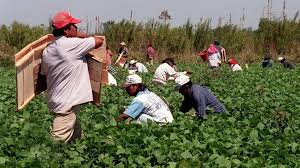
And these workers are just the ones with whom we directly interact.   What of the many people who are largely off our radar, including persons packed like sardines into stifling factories or the migrant workers who spend their long days in the field picking the crops that look so fresh and appealing on our store shelves and which they mostly cannot afford to purchase themselves?  What of the workers who are particularly vulnerable to infection, who have little access to testing or adequate health care, who endure work and living conditions that are virtual petri dishes for COVID spread, and who are not eligible for any of the government “stimulus” that, when it shows up at all, often ends up in the pockets of those more inclined to feed their own “indolence” than their needy neighbors?   And what of the families who depend on what little income these vulnerable workers secure, the remittances which COVID has suppressed but which remain virtual lifelines for those still residing in countries of origin?

It is deeply disturbing that so many of the people on whom our pandemic –affected lives depend remain so vulnerable.  It is equally disturbing that we have forgotten so quickly what we thought we had learned not so long ago about those who matter– and those who matter more.  

Thankfully not all have forgotten who keeps our fragile societies from imploding, our people from despair and hopelessness, persons who challenge economies to cease their relentless magnifying of the income and access inequalities that seduce our attentions towards the “rich and famous” rather than towards the courageous and reliable.  Some of this remembering emanates from policy centers such as the United Nations where we can and do help foster the resolve of governments to promote in unison more equal access to secure food supplies, to health care, to education, to clean water, to healthy oceans and forests, and to other baseline elements of a sustainable and meaningful life.

But it is also the case, as our dear friends with LINGAP Canada (https:/lingapcanada.com/) reminded us yesterday during their online event, that it is at local level where crises are most likely to be thoroughly identified and addressed, where needs are examined in whole and not in isolation, where caring is reinforced and its skills are developed, and where appreciation for the efforts and courage of others is more likely to be tangible than abstract.   With its focus on the Philippines and its people, LINGAP has been able to articulate some of the most disheartening consequence of this pandemic for Filipinos – from food insecurity and suppressed remittances to overly militarized movement restrictions and the almost complete elimination of public transit options.  These are consequences that, for many, make life within country less viable and threaten ties with family members abroad on whom their own sustainability often depends.

And through all of this, in the Philippines and elsewhere, are the vulnerable health and family care workers, those who are often underpaid (or unpaid altogether) and under-protected, those who seek to address the most dire cases of infection and isolation from a virus that we still don’t completely understand and from which too many on the outside refuse to protect themselves and others.  Meanwhile, rates of mental illness, domestic violence and even suicide continue to rise across societies while economies face grave damage and even immanent collapse,  virtually ensuring that those families most dependent on a reliable income stream will struggle mightily to find one.

But the point of the LINGAP event, indeed of this post, is not to rehash common and pervasive threats so much as to remind ourselves that the pathway to restoration leads through local communities and those within them who give of themselves under the most challenging circumstances and who are thus particularly essential to security and healing in all their aspects.  Theirs is the labor that we would do well to honor this weekend, the labor that can preserve us from the “weariness, vice and want” which are now so dominant across our political, economic and psychic landscapes.

Whether it’s bringing flower beds back to life or the comfort given to the dying, whether it’s the line workers stretched by “overseers” to their productive limit or the mail carriers praying to stay COVID-free, there are so many “riddles” beneath the price tags that we would do well to consider on this long weekend, riddles which expose unaddressed inequities and which invariably lead back to the labor that, as much as we are inclined to forget, we simply cannot live without.