To live in indolence on the goods of others, to be useless, that is to say, injurious! This leads straight to the depths of misery. Victor Hugo
One should treasure those hum-drum tasks that keep the body occupied but leave the mind and heart unfettered. Tad Williams
The economics of industrialized countries would collapse if women didn’t do the work they do for free. Naomi Wolf
Every commodity, beneath the mantle of its pricetag, is a hieroglyph ripe for deciphering, a riddle whose solution lies in the story of the worker who made it and the conditions under which it was made. Leah Hager Cohen
To create a little flower is the labor of ages. William Blake
He understood that this was the overseer’s main skill, to recognize what was within human limits, but just barely. Rachel Kushner
Our labour preserves us from three great evils — weariness, vice, and want. Voltaire
On this Labor Day weekend in the US, most of us feel the compulsion not to labor so much as to escape its obligations for a short time; indeed for those of us who live for summer and its freedoms, this may well be a last gasp of escape before the burdens of work rear their heads again as our bit of earth begins to cool and darken.
COVID has changed so much in our lives this year, including how we work and recreate. Our paid labor is, for many, now undertaken in union with child care, tutoring and diverse “hum drum tasks” and other homebound duties. Our recreation is tinged with caution, knowing that many spaces are closed to us now and that even chance indoor encounters with those who refuse to be cautious can have major health consequences.
When familiar habits and options dissolve we are left with some hard choices, including to adapt or to struggle. And we have seen plenty of both over the past six months. Some of our struggle is a function of defiance, of the refusal to adjust behavior to new circumstances, to resist the often-uneven efforts of state and health officials to reign in the reckless actions that lead to infections and that, in turn, place massive burdens on front-line health workers and others desperately trying to end the cycle of super-spreaders and deaths isolated from the touch of loved ones.
We clearly need to do more, even in areas currently facing low infection rates, to protect those who offer healing and other essential services, those who allow some of the rest of us to survive a pandemic with incomes and last vestiges of mental health intact, who place themselves – by personal choice or economic coercion — in circumstances vulnerable to themselves and their households, even on this Labor Day weekend, so that the more privileged among us can, if we are careful enough, escape pandemic wrath.
There have been some silver linings in the midst of these infections, though at least one of these appears to have been more fleeting than I would have wished. For it was only a few months ago that we appeared to be experiencing a collective “epiphany” with respect to how we assess and value labor. It was not so long ago that we were acting in more genuine union, banging pots and pans and yelling out our approval to honor health care workers. It was also not so long ago that we put up signs on windows and in yards thanking those who delivered our mail and packages, who kept our public transit clean and our socially-distanced market check-out lines moving, who picked up our trash and maintained our parks, who attended to our internet, water and pest control needs as though nothing in the world had changed.
We weren’t banging pots in the evening hours for stock brokers. We weren’t posting signs for real estate or Silicon Valley magnates. We were showing appreciation — albeit rare and apparently all-too-fleeting — to those whom we came to be reminded are the real heroes of our now stressed-out communities. These are the heroes who deliver our mail and supplies, the ones who attempt to heal our infections and keep us from killing each other, the ones who deliver our take-out meals and stock our store shelves, the ones who care for and instruct our now confused and isolated children.
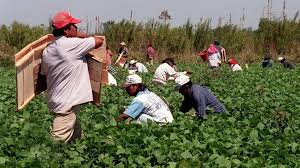
And these workers are just the ones with whom we directly interact. What of the many people who are largely off our radar, including persons packed like sardines into stifling factories or the migrant workers who spend their long days in the field picking the crops that look so fresh and appealing on our store shelves and which they mostly cannot afford to purchase themselves? What of the workers who are particularly vulnerable to infection, who have little access to testing or adequate health care, who endure work and living conditions that are virtual petri dishes for COVID spread, and who are not eligible for any of the government “stimulus” that, when it shows up at all, often ends up in the pockets of those more inclined to feed their own “indolence” than their needy neighbors? And what of the families who depend on what little income these vulnerable workers secure, the remittances which COVID has suppressed but which remain virtual lifelines for those still residing in countries of origin?
It is deeply disturbing that so many of the people on whom our pandemic –affected lives depend remain so vulnerable. It is equally disturbing that we have forgotten so quickly what we thought we had learned not so long ago about those who matter– and those who matter more.
Thankfully not all have forgotten who keeps our fragile societies from imploding, our people from despair and hopelessness, persons who challenge economies to cease their relentless magnifying of the income and access inequalities that seduce our attentions towards the “rich and famous” rather than towards the courageous and reliable. Some of this remembering emanates from policy centers such as the United Nations where we can and do help foster the resolve of governments to promote in unison more equal access to secure food supplies, to health care, to education, to clean water, to healthy oceans and forests, and to other baseline elements of a sustainable and meaningful life.
But it is also the case, as our dear friends with LINGAP Canada (https:/lingapcanada.com/) reminded us yesterday during their online event, that it is at local level where crises are most likely to be thoroughly identified and addressed, where needs are examined in whole and not in isolation, where caring is reinforced and its skills are developed, and where appreciation for the efforts and courage of others is more likely to be tangible than abstract. With its focus on the Philippines and its people, LINGAP has been able to articulate some of the most disheartening consequence of this pandemic for Filipinos – from food insecurity and suppressed remittances to overly militarized movement restrictions and the almost complete elimination of public transit options. These are consequences that, for many, make life within country less viable and threaten ties with family members abroad on whom their own sustainability often depends.
And through all of this, in the Philippines and elsewhere, are the vulnerable health and family care workers, those who are often underpaid (or unpaid altogether) and under-protected, those who seek to address the most dire cases of infection and isolation from a virus that we still don’t completely understand and from which too many on the outside refuse to protect themselves and others. Meanwhile, rates of mental illness, domestic violence and even suicide continue to rise across societies while economies face grave damage and even immanent collapse, virtually ensuring that those families most dependent on a reliable income stream will struggle mightily to find one.
But the point of the LINGAP event, indeed of this post, is not to rehash common and pervasive threats so much as to remind ourselves that the pathway to restoration leads through local communities and those within them who give of themselves under the most challenging circumstances and who are thus particularly essential to security and healing in all their aspects. Theirs is the labor that we would do well to honor this weekend, the labor that can preserve us from the “weariness, vice and want” which are now so dominant across our political, economic and psychic landscapes.
Whether it’s bringing flower beds back to life or the comfort given to the dying, whether it’s the line workers stretched by “overseers” to their productive limit or the mail carriers praying to stay COVID-free, there are so many “riddles” beneath the price tags that we would do well to consider on this long weekend, riddles which expose unaddressed inequities and which invariably lead back to the labor that, as much as we are inclined to forget, we simply cannot live without.


 gapwblog