
The goal of life is to make your heartbeat match the beat of the universe, to match your nature with Nature. Joseph Campbell
Food and the human spirit have become estranged. Masanobu Fukuoka
You must answer the call and pick your way. And there is no reverse. J.R. Ward
We are the witnesses through which the universe becomes conscious of its glory, of its magnificence. Alan Watts
In the end we shall have had enough of cynicism, skepticism and humbug, and we shall want to live more musically. Vincent Van Gogh
If nature were not beautiful it would not be worth knowing, and life would not be worth living. Henri Poincaré
It is one of the ironies of our time that, while concentrating on the defense of our country against enemies from without, we should be so heedless of those who would destroy it from within. Rachel Carson
As most of you know, a week of violence in the Middle East ended with yet another cease fire, an agreement that stopped (for now) the aerial assaults from Israeli bombers and Hamas missiles but which had little immediate impact on the bitter fruits of occupation, the settlements and demolitions, the ethnic cleansing which proceeded apace in areas of Jerusalem on which, apparently at least, the cease fire agreement was presumed to have no palliative impact.
And then there is the wreckage across Gaza, a postage-sized land already suffering from human deprivation and environmental degradation which now lies once again in ruins, a testament to the diverse and damaging consequences of armed conflict that a cease fire exposes but hardly cures. In Palestine as in so much of the rest of the world, there is a misleading quiet now, one bearing little prospect of harmony with our adversaries or with the planet we share.
I know that this lack of harmony, this willingness to cast aside cynicism and “humbug” and live more “musically,” is not unique to this moment. Certainly since the beginning of the industrial age, and likely much longer, we have demonstrated an almost genetic predisposition to unharmonious relations with our world and with each other, exploiting resources for personal gain, defending even when defense wasn’t necessary, justifying aggression in the name of religion or nation, taking more than we need and sharing less than we should.
But this time feels different. The warning sirens blare more loudly now, especially on climate change and species extinction. The bombs we use to punish adversaries are are both more explosive and more technologically clever now. The policy promises we make to each other are increasingly subject to caveats and political expediency. The institutions we have established to protect us from ourselves are proving incapable in many aspects of adjusting to evolving threats, including from extremist groups, climate risks and community-killing drought.
Our world seems often like a band that is not only out of tune but where the musicians seem committed more to compete for attention than to share in the “glory and magnificence” that our music can generate, that our world can generate as well if only we would commit to being its reliable and sensitive agents. Indeed, there is a concern in many quarters that the shrill notes emanating from our competitive and self-serving actions are drowning out the sirens that continue to blare their unsettling omens, blasting messages of urgent appeal to those who are still able to listen and heed the warnings, messages indicating that our time is limited to bring more harmony to our fractured world, to finally and sustainably make our own heartbeats “match the beat of the universe.”
Needless to say, this is no easy task. Many who used the opportunity of pandemic lockdown to establish a better work-life balance or shift their personal priorities know a bit of how difficult it can be to reset ourselves, to practice and then maintain vigilance regarding those things about each of us that threaten “destruction from within.” And once we move from our domiciles to the wider society, harmony becomes a far greater challenge. Indeed much of our personal “resetting” has as one of its objectives increasing our ability to manage the demands and stresses of a human world often spinning out of control, often failing to fulfill even the most fundamental of its values and commitments.
And yet the desire and demand for this greater, global harmony has not entirely disappeared, does not entirely verge on the edge of the extinction that now threatens so many of our fellow-species. Even in the hyper-political environment of the United Nations, a place where we routinely confuse resolution with commitment, consensus with harmony, there are growing community concern about the consequences of human “estrangement,” from our food to be sure, but also from the complexities of the natural world and even, perhaps especially, from each other.
The UN Secretary-General Antonio Guterres and the president of the Economic and Social Council, Pakistan’s Ambassador Akram, seem determined to convince the UN community of the “war on nature” that we insist on conducting, a “war” we are ultimately waging on ourselves, a “war” that too-easily spills over into active armed conflict and enables future pandemics, a “war” we are simply incapable of winning. And yet, amidst the week’s policy oxygen consumed by the violence in the Middle East, UN events also took place that reminded us of the ticking clock signifying our current, potentially-irreversible course as various human practices damage biodiversity across the spectrum, not only the large species we tend to identify with but a large food chain of both enormous complexity and increasing susceptibility to the onslaughts of our current, unsustainable levels of production and consumption.
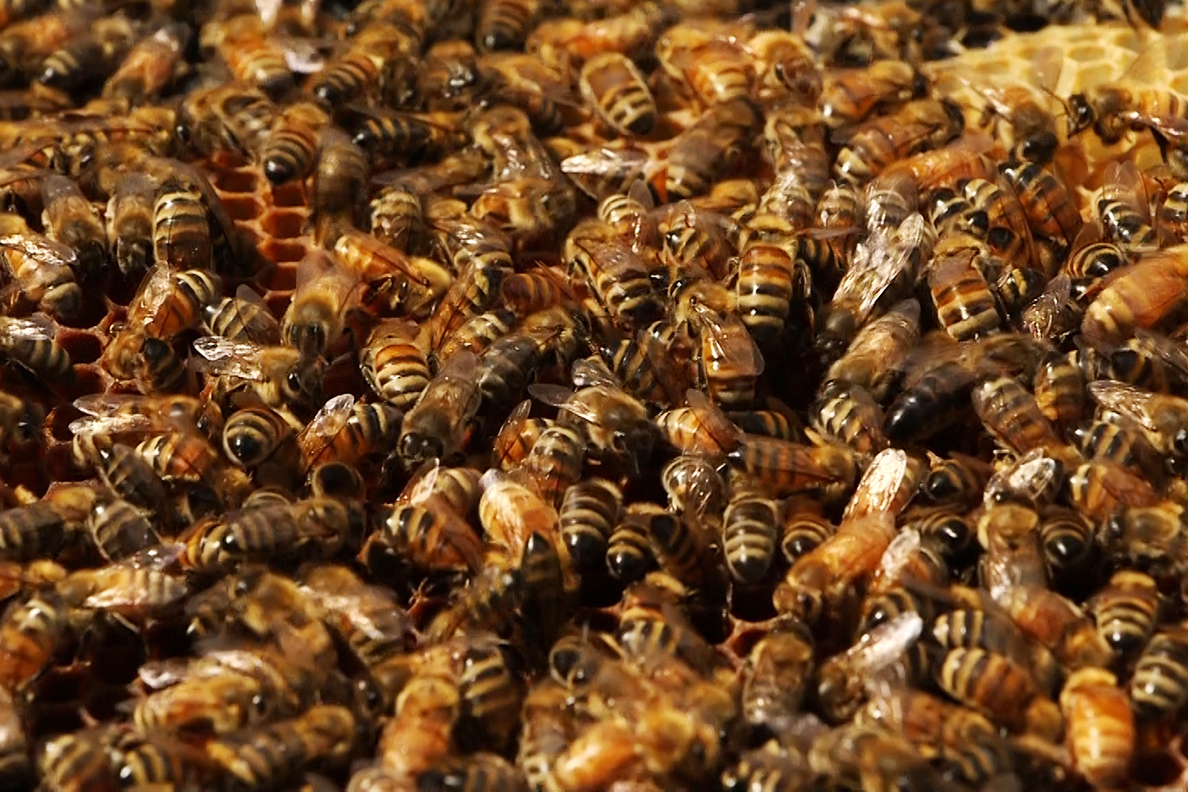
One of those was the annual event sponsored by the Mission of Slovenia to honor “World Bee Day,” a session that could easily seem trivial alongside a week of coups and famines, missile launches and crimes against humanity. But as my friends who keep bees and raise plants that attract their numbers recognize, bees and other pollinators are both endangered and crucial to life on earth. Indeed as this event noted, perhaps 80% of what nourishment humans consume requires essential input from bees. Moreover, the concept note crafted by Slovenia links endangered bees to a range of other biodiversity and ecosystem threats, noting that “current negative trends are projected to undermine progress towards a high number of the assessed targets of the Sustainable Development Goals related to poverty, hunger, health, sustainable consumption and production, water, cities, climate, oceans and land.” As we continue to pave over wetlands, degrade farmland, plant non-native species and denude forests, the damage we inflict on the smallest of our life forms exacerbates conditions which directly threaten the largest and most clever among us.
The other event of note on this theme was a preparatory meeting, hosted by the Mission of China, to encourage enthusiasm for the “COP15” meeting on biodiversity protection to be held next October in Kunming. China’s Minister of Foreign Affairs along with senior UN officials lent an air of gravitas to this session which was thankfully less about advertising and branding and more about our urgent biodiversity decline and the immediate need, as expressed at this session by the president of the General Assembly, to both enhance local ownership of biodiversity protection and factor in the importance and value (writ large) of nature into all our policymaking. Too often, he noted, a tree is only ascribed value in this world once it has been felled.
And many trees continue to be felled in all global regions. In a discouraging report released this week by Forest Trends, it appears that trees have incredibly been brought down faster in the years since companies and governments promised to stop cutting them down. And another report recently released by a consortium of European researchers put the spotlight on one of the underlying drivers of biodiversity loss, namely our willfully and habitually “unsound” management of chemicals and waste, once again despite formal promises to the contrary.
It is reports such as these than temper the enthusiasm of myself and others for these large COP events, which tend to create environmental footprints far deeper than their policy impacts and promise far more than they ultimately deliver. Yes, we need immediate, tangible progress on biodiversity as we do on climate change and ocean health. But are the upcoming COP events any more likely than previous ones to shift policy dynamics in discernable ways? Are they at all likely, to paraphrase the GA president, to enable more robust action at local level, to help local activists, in the recent words of one, build bridges wide enough for everyone to cross over our current abyss and reach another side characterized more by harmony than chaos? Are they likely to sustain the buzzing of bees and other insects that still manage to overcome our collective assaults and fill our markets with produce? Are they sufficient to reset our notions of value such that we understand more than we apparently do now that a beautiful, harmonious and balanced world is ultimately essential to current and future lives worth living?
With full regard for activists struggling to maintain their voices and their sanity in this “kill the messenger” time, we in our sector must do more, will do more, to insist that these COP events serve interests beyond the branding of host states, that their ecological expense is calculated in more than mere dollars and cents, that their deliberations are as urgent as the problems which have merely multiplied on our watch, that their outcomes don’t simply add to the long list of promises misplaced or incompletely kept. We need more than political declarations from our leadership, more than grand sessions leading to perfunctory outcomes. If indeed, as Ambassador Akram noted on Friday, this war on nature is actually a war on ourselves, then we have no excuses for postponing a truce, ending our deep estrangement from nature, and reversing the biodiversity loss we are running out of time to address.
This band of ours needs to be brought back in tune without delay. Our farewell tour as a species may be closer than we think.


 gapwblog