
Archive | July, 2022

To Expect and Inspire: Sides of a Precious Policy Coin, Dr. Robert Zuber

19 Jul
See the source image

You see what is, where most people see what they expect.  John Steinbeck

To wish was to hope, and to hope was to expect. Jane Austen

You said we cannot sail through, how were you so sure?  Mehek Bassi

Our brightest blazes of gladness are commonly kindled by unexpected sparks.  Samuel Johnson

Peace begins when expectation ends.   Sri Chinmoy

There is no passion to be found playing small – in settling for a life that is less than the one you are capable of living. Nelson Mandela

You can devise all the plans in the world, but if you don’t welcome spontaneity; you will just disappoint yourself. Abigail Biddinger

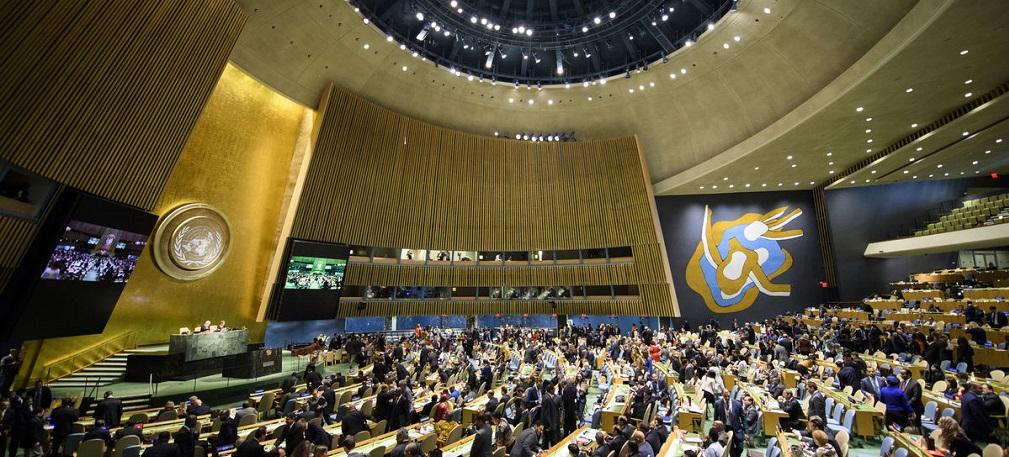
As many of you know, the past two UN weeks were devoted to the High Level Political Forum (HLPF), a monumental effort by the Economic and Social Council to clarify the expectations of states regarding their commitments to the 2030 Development Agenda and to assess the SDG-related performance of states through a process of Voluntary National Reviews.

This HLPF represents, in essence, the half-way point in a 15 year commitment to sustainable development made in 2015 to shift the direction of a global community in positive ways, but one which has actually seen many core Sustainable Development (SDG) commitments experience course reversals.  Among others, we are not on track to reduce poverty, address food insecurity, eliminate our fossil fuel dependences, end government corruption or build the durable partnerships needed to bring the health and other material circumstances of global citizens up to even minimum standards in this polarized and unequal world.

Given these and other SDG setbacks, those which the pandemic did not help but also did not cause, one would have been forgiven for assuming that this HLPF would be characterized by the kinds of energy and passion largely absent fronm diplomatic discourse.  If there was ever a time to step out of line, to show both urgency and flexibility in terms of how we define the times and our responsibilities to those times, to inspire as well as deliberate, to reassure as well as to demur, this would have seemed to be it.

And we did get some of that, including in the plenary session on ocean health and in “side events” such as one on “water and climate,” another on “invisible” older women, and a third on the sustainability role of local and regional governments, all of which got us closer to clarifying the urgency of the moment and showcasing a bit of the determination needed to overcome challenges, in part due to the active presence in these meetings of issue-relevant NGOs.  And yet, as the conference rooms filled up and the ministers uttered their statements, we could well regret that the polar ice caps continue to melt into the sea, children wait in vain for another meal, our freshwater reserves continue to evaporate or succumb to plastic pollution, and we continue to put pressure on what remains of life-saving reserves by doubling down on water sucking agricultural and meat producing practices, as well as on automobiles which represent a double-whammy of massive water (in production) and fossil fuel uses.

In this and other UN settings, it is fair to ask if what we propose for state and non-state action is possibly sufficient to avert levels of looming catastrophe for which, as with the current pandemic, we remain largely unprepared.

Stepping back for a moment, I was reminded this week of a position which has long guided my own thinking – that how was assess is largely a function of what we expect – that multiple people can look at and describe the very same situation and yet assess it differently based on their own expectation of performance.  Indeed, around the UN as elsewhere, much of the difference in how we identify and evalauatae the performance of this system is a function of what we have been led to expect or allowed ourselves to expect. 

And, I must say expectation levels seem to be headed south as quickly as levels of ocean health. Responses to some of my own frustrations about UN progress on sustainable development or the maintenance of international peace and security is some version of “well, what did you expect?”  The flaws in this response, to my mind at least, are obvious in an institution which seeks on the one hand to raise expectations for multilateral engagement while simultaneously dampening them with reminders that, well, it’s the governments that determine objectives and outcomes and the rest of us can do little more than make our case and hope that some other than the usual suspects is actually listening to what we say.

Another flaw in this complex and often-troubling scenario is the assumptions that expectations are what we have of others, that our role in this drama is largely a passive one, waiting to see if persons or institutions can deliver on what are often inflexible and even fantastical assumptions about how “others” should behave, how the world “should” work, expectations so often disconnected from reality, so often insufficiently flexible to circumstance but also insufficiently engaged with the people and/or institutions to which the expectations are directed. 

I must say that most of the quotations I unearthed for this piece (and didn’t include) failed both the flexibility and engagement tests.  One after another cautioned against having any expectations in the first place, not as a result of some Buddhist epiphany but so one could avoid “disappointment.”  As with so much else in life, the choice to recalibrate these dubious assumptions, to refine our expectations such that they remain both flexible and engaged was difficult to find. That we should be willing to see what is actually present, to refrain from predetermined notions of what “ought to be,” notions seemingly also designed to limit our own participation, is a curse which we have the ability and the obligation to curb.

Where this HLPF was concerned, it was a struggle for some not to give in either to a passive cynicism or a deep disappointment that, yet again, conclusions were not sufficiently relevant to the urgency of the times and young people were no closer to securing a world they can live with.   After “consensus” adoption of the Ministerial Declaration for this HLPF, delegations began to pick apart its provisions, with one caveat after another directed towards language in the Declaration from which delegations maintained the right to distance themselves, some on sovereign policy grounds, others on grounds of culture. Especially troubling to me was the fact that this distancing was most often directed towards language on climate change and reproductive rights, areas of particular urgency for our young people as the planet continues to bake and women’s rights continue to lean in the wrong direction.    

For us, despite another round of discouragement, these caveats must be understood as setbacks but not deal-breakers. If there is not sufficient urgency or inspiration in UN conference rooms, there is still space for us to supply it.  If delegations try to “go small” in keeping with their instructions from capital, we can do our part to expand the frame, to keep the focus on areas of greatest threat, to reassure constituents that we will continue to apply an active and flexible lens to global problems which we know are unlikely to disappear unless we do.

We also recognize that the “cherry picking” around the operative paragraphs of the Ministerial Declaration is unlikely to reassure an anxious global public wondering if the many ministers and leaders of diplomatic missions gathered for this HLPF actually understand what is now at stake. Perhaps they’ve simply heard it all before, heard it so often in fact that there is no longer shock value, no longer anything to hear that can inspire anything more than tepid motions towards a “consensus” which is unlikely to motivate states not already “all in” on sustainable development to significantly shift their national priorities.

What we need to add to the mix is more inspiration, words and images that can move people, move them in ways that our “flat,” cautious and cliche-ridden policy language often cannot, move them to take up their rightful place in the world and affirm the life that can still be theirs.

Indeed, the most inspirational moment of the week might well not have been in the HLPF at all, but in the Security Council of all places where Colombian and UN officials convened to honor the release of the Final Report of the Commission for the Clarification of Truth, Co-existence and Non-Repetition. The Declaration emerging from this report is most everything a document of this sort could be — smart and humble, informed and forward looking, generous and fair, tethered both to a complex national history and the spontaneity of its current moment, this and more in gorgeous, moving prose which seeks to vindicate the “blood of brothers” shed over and over by mapping out specific pathways allowing a weary nation to “go further until we love life.”

At the UN, it is now most often the president of the General Assembly who speaks in such tones. But he will leave his office soon and it is up to the rest of us to decide how to maintain that culture, a culture that inspires and assesses courageously, a culture that is not satisfied for one moment until the words on paper become hopeful change for the millions who long for it. For us and others the task is also to maintain flexible expectations in the face of the “unexpected sparks” of change, along with a posture which conveys that a sustainable peace still lies in our hands, especially so as we are able to resist the temptations to see only what we want to see or hurl pre-deteremined expectations at others from the sidelines.
Village Idiocy: An Educational Reflection, Dr. Robert Zuber

10 Jul

I don’t know why I cannot sleep – I slept just fine at school.  Kathy Kenney-Marshall

You are being taught by people who have been able to accommodate themselves to a regime of thought laid down by their predecessors. It is a self-perpetuating system. Doris Lessing

Instruction does much, but encouragement everything.  Johann Wolfgang von Goethe

Teaching is not a lost art, but the regard for it is a lost tradition.  Jacques Barzun

Once a student’s mind is set on fire, it will find a way to provide its own fuel.  Sydney J. Harris

You can’t eat straight A’s.  Maxine Hong Kingston

Under a cruel eye outworn, The little ones spend the day In sighing and dismay.  William Blake

The first week of the 2022 High Level Political Forum (HLPF) is now history. Some interesting and important discussions took place over these past few days on ocean health, gender equality and food security , important not only because they represent top-level priorities for the global community but because they serve as a reminder of our numerous dangling promises, dangling in that the urgency of our collective actions continues to fall short of the responses which the urgency of these times demands.

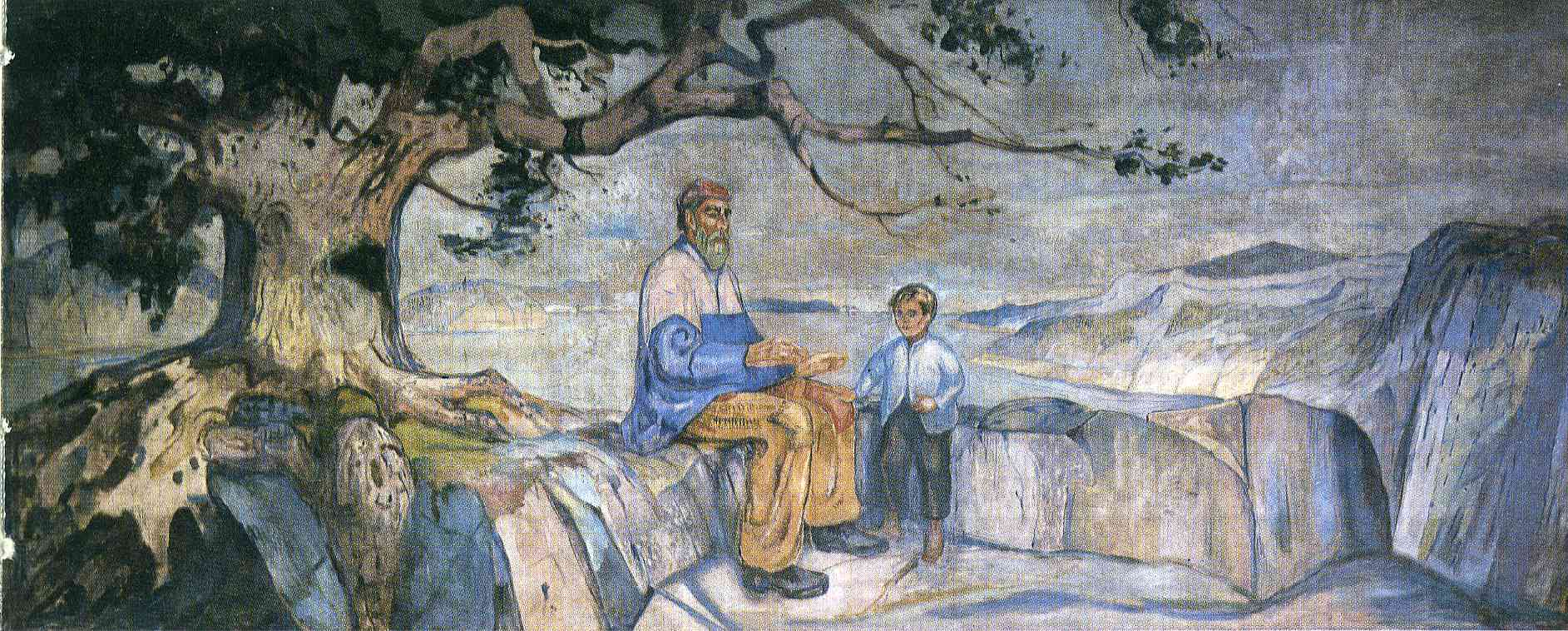
The HLPF also took up the issue of “education” this week, which as usual for such conversations at the UN was a bit of a hodge-podge of aspirations and cliches, largely dodging the core question of how we who have made a mess of the planet can possibly guide and inspire the youth who are soon to inherit it.

Yes, the “children are our future.” Yes, life-long learning is an aspiration worthy of pursuit. Yes, education in one form or another is essential to the fulfillment of the Sustainable Development Goals, if in fact they are to be fulfilled by our 2030 deadline. Yes, education needs to become more universally accessible, in part because so many children need to “catch up” from pandemic disruptions and in part because we continue to leave on the table so many skills and aptitudes, every one of which will be needed in some form if we are to set this carbon-saturated planet on a healthier course while we still have time to do so.

But in our rush to promote “education” as a sustainable development aspiration, in our campaigns to “innovate” the educational landscape (as with one HLPF side event), I worry that “well-educated” adults are dodging questions and concerns which may not complicate discussions in UN conference rooms but which plague educators (and those who aspire to educate) in a variety of settings.

I have been blessed in my life with some excellent teachers, both in and out of schools, especially in my early adult years, teachers who shared what they knew and gave what they could, teachers far less interested in replication than invention, who rooted for me to become more than I actually became. I have also been blessed to know a bevy of gifted teachers who are contemporaries — John Thompson, Bev Haulmark, Christopher Colvin, John Suggs, Barbara Zelter, Virginia Cawagas, Rien van Nek, Carolyn O’Brien — these and many others who have worked from time to time within school structures but also understand something of the limitations of classrooms, the degree to which the “self-perpetuating thought-regime” we represent can serve as a lifeline for some youth but can also constitute something of a “prison” for others.

In this age, we tend to be enamored of “school” as a physical entity, a place full of chairs and desks in a row, rooms that are age-segregated and hierarchical, driven largely by the expertise of the one in front of the room, concentrating on skills and tasks that we have concluded are essential to “educated” beings but which may not in fact be sufficient to the lives they are destined to lead, lives in significant portion defined by the storms which congregate on the horizon and which they had no real part in creating.

What, we might rightly ask, constitutes that base of skills and knowledge about which some broad consensus is feasible? As we know, at least in the US, schools have become something of a battleground for the ideas and values which parents seek to have reinforced through formal education. How do we talk with children about their own national history in all its messiness and complexity without resorting to slight-of-hand measures such as redefining slavery as “involuntary relocation?” How do we expect schools and our professional educators to prepare students to address existential threats such as climate change and hate speech the existence of which some parents and state officials are unwilling to acknowledge? How are teachers, including the very best of them, supposed to accompany and encourage young people in keeping with the aspirations which motivated their own professional choices when the trust and friendship necessary to accompaniment is institutionally discouraged?

So many of the teachers I know in so many global settings are stuck somewhere between lighting fires in the young and extinguishing them, between sharing lives from which young people could potentially learn much and hinding behind an ever-thickening professonal protocol, between reinforcing the metrics of school assessment and telling them the truth about the genuinely tenuous relationship between good grades and good lives. While they are in school, we want students to do well, to pay attention and resist the temptation to either snooze or act out. But school is not life, it may not in many instances even be sufficient training for life as it is now unfolding and, in any event, you “can’t eat straight A’s.”

The equation which many now draw, even inadvertently, between education and schooling is dangerous both to successful schooling itself and to a world which fails to examine the many factors which influence how students learn, what they learn and, most importantly, what they do with what they know, including how (or if) they continue on a path towards higher levels of wisdom and cognitive synethsis. The educational configuration enveloping our youth is surely in large part about school, increasingly about social media, but also about churches and corporations, families and libraries, neighbors and public servants. It is, in my view at least, important to keep all these formal and informal options alive and assessed, not only for the benefit of young people who may not thrive in more formal settings, but also to reinforce the idea that education is not only what teachers do, but what we all have some responsibility to do, each within our own domains and each with varying degrees of formality and bureaucracy. So long as “education” is left to increasingly harried, overly-scrutinized and under-appreciated teachers, the gaps separating those who make decisions in this fractured world and those who may well become victimzed by those decisions will only widen.

If indeed lifelong learning is a viable educational goal in this world of multiple threats, it will take more than classrooms to inspire it. More than grades and degrees. More than standards-driven learning which over-simplifies reality and prepares students ,for a world which will surely have shifted and shaken under their feet barely before they can even get those feet “wet.”

In the UN General Assembly this week, in a discussion surely relevant to the HLPF, delegates met in informal session to debate elements of a “Declaration on Future Generations” to be presented in September at the GA’s 77th session. While there were no teachers or students present for this conversation, there were a few helpful observations from delegations, including from South Africa and Japan, both of which noted the heavy threat levels under which schooling and related social functions are now forced to take place. Japan expressed the hope that such a Declaration, including its educational elements, could serve to “turbo-charge” our commitment to the SDGs, fulfill our promises to future generations and restore some of the confidence lost by many global youth in many of us global adults.

This is not about “business as usual” rhetorical flourishes on the value of sustainability and innovation. Indeed, as a UN Special Rapporteur reminded, “innovation does not come cheap.” It requires more of our resources, but also more of our humanity including our sharing of lessons learned along our own life paths, the lessons we were often too slow to learn ourselves. There is too much in our world as it is, including violence and strife in multiple forms which, as South Africa and the European Union implored, we should all be loathe to pass on to future generations. But as it now stands, pass on we shall, and the question is who and what can we entrust to the preparation of the young people who are set to assume some weighty responsibilities, whether they are ready to do so or not.

Lest we add villages of idiots to our long generational list of dubious “accomplishments” we must invest more of ourselves in the education of the young in the best and broadest sense of the term. Invest more of ourselves in all aspects of the “configuration” which shapes the values, hopes, anxieties and aspirations of our young people. More than curricular “innovations” and snappy, data-driven assessments. More than the perpetuation of systems which denigrate teachers and create apartheid-like systems of access. More than adults who claim to know more and possess greater wisdom than we do interfacing with young people who know we don’t.

These urgent times require more from each of us if our young people will be able to manage what we are now likely to bequeath to them. I hope at least a portion of them are still listening.

Muddle House:  Confusion over Policy Outcomes, Dr. Robert Zuber

4 Jul
“Hope 1” Pinterest.Com/MX

There’s too many men, too many people, making too many problems. And not much love to go around. Can’t you see this is a land of confusion? Genesis

Much unhappiness has come into the world because of bewilderment and things left unsaid.   Fyodor Dostoevsky

There I was, cold, isolated and desperate for something I knew I couldn’t have. A solution. A remedy. Anything.  Brian Krans

I felt like I had swallowed yeast, like whatever evil was festering inside me had doubled in size.   Jodi Picoult

Feeling lost, crazy and desperate belongs to a good life as much as optimism, certainty and reason.  Alain de Botton

I had talked too much. I had said too little.  Patrick Rothfuss

Fear grew in places unlit by knowledge.  Roshani Chokshi

It’s hard not to feel a bit frayed at the edges these days, confused and worried in equal measure about our personal and global prospects. 

Collectively speaking, we are binging now on acrimony and misunderstanding, perfectly willing to believe the worst of others while postulating a priori goodness for ourselves. In so doing, we absorb all the misinformation needed to turn neighbors into adversaries, parroting political positions with passions which belie the lack of attention we have generally paid to the untoward consequences of that for which we advocate. 

As you well know, there are so many fires raging in the world beyond those raging in our conflict zones and bone-dry forests, so many guns ready to be fired in anger or despair; so many leaders willing to sell out portions of entire populations to preserve the power that will hold them aloof from legal jeopardy; so many people searching for even a short respite from their manifold pressures and deprivations, never-mind finding some actual solution or something akin to a permanent remedy.

I don’t think I am alone in this, and God knows I have contributed to the confusion of others on multiple occasions (perhaps even at this moment). But more and more, regardless of where people sit on the political spectrum, I literally don’t seem to “know” what people are talking about.  I hear the words, I recognize the syntax, but the lack of “sense” regarding what is being said and not said, the hard-core principles detached from worldly experience and evidence, the need to believe beyond what can be reasonably justified, let alone practiced, all of that and more leaves me generally baffled.

Perhaps I shouldn’t be.  I, too, have elements of life which are “there” not due to any structural or cognitive inevitability but rather to my “need” to have them there, my “belief” in certain things which stretches potentially corroborating evidence into some grotesque caricature of itself.  I get it.  I’m not immune from participating in some of the craziness I have made a humble living helping to identify and address, most recently in multilateral policy contexts.

I certainly acknowledge that ,this “land of confusion” we have crafted for ourselves is a place where fear and anger increasingly occupy spaces “unlit by knowledge,” spaces often ceded over to the various demons of our sub-consciousness which, rather than exposing them to the light and freeing up their hiding places for better uses, we have instead converted  their  spaces into something both insular and habit forming,  not unlike a shelter from bombs or tornadoes now deemed too comfortable and familiar to abandon even in the absence of direct threats.

People sometimes assume that, because of our decent policy access, we are somehow immune from  confusion from societies which justify each and every manifestation of “what is good for me is good,” which force 10 year old rape victims to bear children in the name of “life”, which keep other girls of that age and others  out of school in the name of some “religion” or other, which drive economic inequalities to the very limits of human endurance, which rationalize armed violence with wanton fabrications of politics or culture, or which continue to see fossil fuels as the “solution” to a world already consumed by plastic waste, agriculture-killing droughts, and heat waves at the top of our blue planet  that make it easier for polar bears to get sun stroke than find food for their cubs. 

But no, we aren’t immune.  Policy access in and of itself is not the antidote to “feeling lost, crazy and desperate” at times, a condition which defines more circumstances than we imagine. Increasingly we have ingested so much metaphorical yeast that we are bloated with anxiety and uncertainty over the state of the world while questioning our own willingness  (let alone that of officialdom) to rise to this dangerous occasion, to address the nasty wounds quickly turning into nastier infections, including of our basic humanity, our commitment to the dignity of all, not simply the dignity of ourselves and our tribe.

The UN, as most of you who frequent these posts recognize, has long been recognized by us as a place where most of the crucial issues facing our fragile planet find analysis and expression.  At the UN/ECOSOC High Level Political Forum beginning on Tuesday, one planetary promise after another will find space for dialogue and assessment, the latter likely to serve as a reminder of just how much further we need to go to honor the complex and urgent commitments we made to global constituents in 2015.

This HLPF follows on the heels of several other big-ticket events including the UN Ocean Conference (Portugal), the World Urban Forum (Poland) and the Biennial Meeting of States (BMS8) to eradicate the illicit trade in small arms and light weapons held in New York. It has become typical of UN scheduling that its most important events are heaped upon other important events in ways which sow confusion among those in the wider global community seeking to keep track of what is being negotiated and ascertain whether outcomes from such events are in any way sufficient to address the urgent challenges which define our collective present. What do we have a right to expect from these grand, expensive and carbon-saturated global events?  What changes in places of need can we anticipate and how can we determine if the pace of change is adequate to reverse crises both clearly identified and well underway? And at another level, how do we know if the lofty gestures and noble commitments embedded in these outcomes represent genuine, good faith efforts to do what is needed and all that is needed to set the current precarious circumstances on a more hopeful course?

To be honest, there are too many times now when we come away from our monitoring and assessment of this frenetic UN policy environment more confused than reassured. We know a number of the people at the helm of these grand events, and we know them to be largely people of high character who worry with reason that the world we are apparently consigned to pass on is one unfit for their children or grandchildren. But as with all of us, character is not defined by the cautious, measured words we speak — and speak and speak again — so much as by the stories our lives communicate, stories about how we have been humbled and at times even transformed by the things we’ve experienced, the responsibilities entrusted to us, and the magnitude of global crises about which we are, sadly, still largely hedging our bets. If we are honest with ourselves, it is often those things left unsaid, including our own testimonies of compassion, loss and success, and even personal transformation, which could energize and inspire global citizens longing for a viable path forward. This sharing could well take forms of inspiration and reassurance, inspiration for making our hearts and limbs grow fuller and stronger together, and the active reassurance that we simply will not under any circumstances, with all the tools, energy and wisdom we can muster, allow weapons, famine, poverty, species loss or hate speech to have the final word.

The Klimt painting which adorns the heading of this piece serves as a reminder, to me at least, that if hope can be visualized it can be realized; that this “land of confusion” we have concocted for ourselves can truly give way to more honest and intelligible engagements with the challenges that remain within our competent and caring remit.  But progress must be demonstrated if it is to be believed, demonstrated in a way that can dispel the confusion and cynicism endemic in these times. It is our contention that, as helpful as they sometimes are, the careful speeches and tepid resolutions now emanating from our diverse and under-connected policy chambers remain largely insufficient to convince a weary and bewildered world that there is, indeed, “enough love to go around” to make those commitments real.