Editor’s Note: A student at Columbia University of Sri Lankan heritage, Himadri has concluded her summer internship with us, adding much value to our work and making the most of the opportunities which the UN presented. Her task here was to reflect on how being at the UN differed from (or confirmed) learning about the UN in a classroom setting, how her assessments of the UN were influenced by expectations of the UN generated in other contexts. We were really happy to have her with us especially during July’s High-Level Political Forum.
We have six years…six years left to go. In 2030, I will be 30. In 2040, I will be 40. In 2050, I will be 50 and so on. Only six years to make comprehensive progress on the 2030 Sustainable Development Goals, with only 17% of the goals and targets now on track. . While it may seem like there is a lot of time left, there is also still a lot of work to do to fully address all the goals and their targets, to honor the promises we have made to global constituents.
As a 24-year-old graduate student studying international affairs with an emphasis on Economic and Political Development, International Organizations/UN Studies and International Conflict Resolution, I have been able to understand some of the behind-the-scenes of what takes place within UN spaces. When you are in school, there is only so much you can take away from articles, resolutions and the knowledge of a professor. Having now been at the UN, I have been able to apply what I have learned and understand more of the system and processes that occur within that sphere. Overall, it has been an absolute privilege to have been able to attend meetings covering a span of topics: the conflicts in Gaza, Yemen, Ukraine, etc., food insecurity, children impacted by climate change and war, oceans, decolonization, etc. I have acquired an abundance of knowledge just by attending such meetings and side events, learning about various climate and terrorist threats, UN agency mandates and rules of procedure, preferred UN terminology, and so on. There were some topics that I had never truly known about until I attended a meeting, and that only goes to show the range of conversations which are taking place at the UN, especially during July’s High-Level Political Forum.
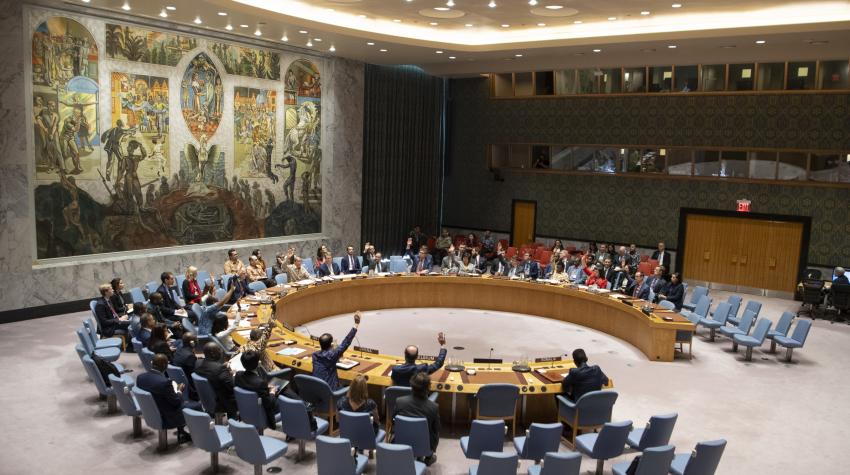
Throughout my time here, I have had multiple opportunities to engage in meetings held within the Security Council, ECOSOC and the General Assembly as well as “side events” in many other conference rooms. Upon my first time sitting in on a Security Council meeting, I felt excited to be able to witness discussions in a manner that is often closed to the outside world. There is a level of seriousness and intensity in the room that one can’t necessarily experience on UNTV or in a classroom. The briefings initially held at the beginning of meetings by various officials from UN agencies ranging from the OHCHR to the IOM and so on, offer incredible insight regarding statistics and stories of urgent situations taking place on the ground.
Initially, during the first few meetings, all the country’s statements appeared to be full of hope and promise, offering a great chance of making progress toward resolving situations on the UN agenda. However, upon attending several meetings and listening to multiple country statements back-to-back, I noticed the repetition of information and beliefs expressed by the country representatives. The statements would usually start the same, often including the same statistics that would already have been mentioned in an opening briefing. The words “let me make three points” were frequently mentioned as well. I bring up the structure of these speeches because it shows how much repetition we witness, not only in structure but in content as well.
While I still retain so much hope in the UN, and still wish to join the Foreign Service soon along with involving myself in humanitarian field work, I cannot help but wonder how much progress and change we are truly creating in terms of resolving many existing global threats. This is also the case for emerging crises; everyone but the people at the very top of governance seem so highly limited in terms of decision-making access and impact. Even those residing at or near the top experience their own limitations.
In addition to what I have previously noted, I have also observed other unfortunate occurrences in the meetings I attended. There are Member State representatives who walk out of the Council chamber when certain countries are preparing to speak, Member States who change the narrative (facts being turned into fiction and vice versa) and those who do not seem passionate or even interested in their own or other country’s speeches. I have also noticed the lack of attention given to those that are speaking or participating in the meetings. There have been countless times where it is evident that people were on their phones, ostensibly on social media, scrolling endlessly and even occasionally forgetting to turn their volume off. During my short tenure in the Council, I have heard bag pipes playing, some hip-hop music, etc. amidst deliberations on critical matters pertaining to peace and security. This may not seem like a big deal to some, but when discussing matters of war, the effects of it on civilians, etc. what does the lack of careful listening tell us?
These past couple of months have brought great insight into processes which had mostly been closed off to me and others in my cohort. On the outside, the UN often represents a symbol of peace, hope, strength and unity. It also serves as a promise to current and future generations, that there will not be another world war and that peace can eventually prevail. However, it seems that presently there are more wars (regional conflicts) occurring now than perhaps ever before. My question is thus, what are we doing exactly to help resolve these situations?
One of my favorite adornments in the Council chamber is the “Untitled (Mural for Peace)” by Norwegian artist Per Krohg. It sits as a perfect backdrop to the purpose of the Council, and further emphasizes the importance for peace and security in our world today. What a powerful message and image this is, where the phoenix is rising above the ashes of a conflict-ridden society. That is the future I wish to see, not a continuation of what is currently happening. If anything, we are now driving the phoenix back down into the ashes. The Damask wall tapestry further embodies faith with the growing wheat representing “hope and the heart of charity.” While such beliefs still persist, it is imperative that we fulfill these symbolic aspirations and apply them to the world.
On the inside, the Council meetings usually start in the same manner. The three dings go off, and the agenda is usually announced and adopted for the session. In some meetings, the level of intensity is relatively tame while in others there is finger-pointing and hostility that permeates the air. As a student, I see the hypocrisy within certain country statements, and while I understand the justification behind them should we not be looking for more sustainable solutions than reflect minimum concessions to peace? There are certainly hopeful solutions that representatives present to their colleagues, but not everyone is committed to following what seems to be the obvious answer to the issues presented in such meetings.
As I am entering my second year of my master’s program with this new outlook on the UN, I am hoping to discover what my place will be in that place post-graduation. I do not want to wait until 2050, when I am 50 years old, for change to take place in our world today. Not more discouraging change, which we surely don’t need, but good change. We need more good change, we need more progress on sustainability, and we need it quickly.
One final thought: Throughout my time at the UN, many discussions that took place in the context of smaller events, especially during the High-Level Political Forum (HLPF), mentioned the need to involve the youth by incorporating them in conversations and even decisions. These conversations include the evolving climate crisis, peacebuilding priorities, multiple human rights issues, etc. The problem is that prominent figures in the room may listen to youth but there is little to no progress which can be measured as a result of these interactions. Involving younger generations in actual development processes, whether it be policymaking or other discussions at multiple levels of policy and practice, is necessary if we wish to fulfill our SDG commitments.
As a member of the “younger generations,” there is so much I wish to do in terms of solving these global challenges that only seem to be growing. But it seems unlikely that I can make any impact or real change at my current stage. The more UN meetings I attended, the more I observed the age range of people leading discussions, and they were mostly (with all due respect) from the older generations. There were even some events where one could easily notice the lack of bodies of any age in the room, perhaps because not many people were aware of the event, perhaps they were too busy with other matters, or (I fear) perhaps some people in the system (or attending the HLPF) may be losing hope in an organization that has demonstrated limited capabilities to resolve many security and development concerns.
With that being said, I hope my reflection offers some helpful insight into a youth’s developing perspective on the UN. My passion for international affairs and this journey into diplomacy stems from my time in Model United Nations (MUN). In learning about various world issues at an even younger age and then being privileged to travel the world, I acquired this hope that the UN could be the answer to solving these pressing challenges. Over time, as my knowledge and experiences have grown, I realized that it is not only the UN but also and primarily world governments who are the keys to forging positive change. They are the primary policymakers and the ones who hold the power in decision-making when it comes to war, the climate crisis, peacebuilding priorities, etc. Thank you to FIACAT and all who made my UN sojourn possible. By 2030, I hope more significant progress on all of the SDGs will be possible. .


 gapwblog