
Tag Archives: Anticipation

Wait List: An Advent Reflection, Dr. Robert Zuber

27 Nov

Wallup.net

Every waiting day makes your life a little less. Every lonely day makes you a little smaller. Every day you put off your life makes you less capable of living it. Ann Brashares

What does the anticipation feel like? The sensation of staring into the void, the awareness of an end’s impending arrival? Burning and being extinguished simultaneously?  Teo Yi Han

One of the greatest strains in life is the strain of waiting for God. Oswald Chambers

Life can seem like a gloomy wait in the thick of black shadows. And still there are those who smile at the darkness, anticipating the beauty of an eventual sunrise.  Richelle E. Goodrich

“For a while” is a phrase whose length can’t be measured. At least by the person who’s waiting. Haruki Murakami

We never live; we are always in the expectation of living. Voltaire

So much of all this, so much of all living was patience and thinking.  Gary Paulsen

Whatever happens, do not let waiting become procrastination.  Neeraj Agnihotri

Tides do what tides do–they turn.  Derek Landy

Here we are at the beginning of another Advent season, another opportunity to remind ourselves, as several thoughtful figures have recently sought to do, that we should not let the struggles of the present annul feelings of anticipation that the promise of a brighter, more equitable and peaceful future can somehow be realized.

Somehow.

As with other years, this season leading up to Christmas seems to be more about preparation than anticipation, making our lists and checking them twice rather than discerning the times and its sometimes-frightening messaging. Such times require more from those of us who would once again dare to welcome into our lives in a few short weeks a baby lying in a barn whose presence in our world still yearns to teach and guide more than we are collectively willing to be taught and led.

But this season is less about the manger per se than about that which we long for, that for which we wait.  As we peer into the vastness of both a large and awesome universe and of our own inner realities, as we search for fresh signs that life on this planet, however damaged and threatened at present, is truly worth preserving by each of us, we must also acknowledge that the promise of such a world has not sufficiently informed our judgments or guided our actions.  We live for the most part as though the reality we recognize today is the one we will encounter tomorrow, and the day after, and the day after that.  A virtual carbon copy, if you will, of the tasks and their schedules which largely make up our weeks and months, tasks which reflect habits of the heart of which we are scarcely aware and mostly loath to shift in any event.  

But the tides are, indeed, continuing to turn.  Whether we choose to be moved to response by that reality or not, the planet we inhabit continues to become busier, warmer, less biologically diverse.   Rights are being rolled back.  Institutions of governance and finance are proving themselves to be less effective, indeed less trustworthy, than we had hoped they might be, often claiming more in the way of “leadership” than they are actually providing. Collectively, we still seem keen on soiling our own beds, on snuffing out much of the life on earth that has made our own life possible and thus jeopardizing prospects for those we have brought into this world (and those they will choose to bring as well).

And what of our religious life at a moment when so much of the humility and awe of our erstwhile divinely inspired universe has degenerated into mean-spirited and petty reflections of communications from a “God” many of us simply don’t recognize; a deity which seems to be stuck in age-old patterns of advocating violence and revenge rather than kindness and service; a God who has apparently authorized people of deep (if not altogether unjustified) grievance to take to the streets with their deadly weapons and smote those who offend their own sense of righteousness, who are at least as quick as the rest of us to pass judgment on others but not on themselves, and who somehow have allowed themselves to believe that the baby in the manger whom we anticipate yet again this Advent  represents a call to vengeance rather than compassion, of rampant materialism rather than reconciliation, of goodness somehow better reflected in our pigmentation than in the works of our hands, hearts and souls.

Thankfully, for many of us still, this is not what we long for in this season. This is not what we wait for nor what we hope for. Some still long instead for that time when the manger chill becomes a season of warmth, when the healing of body and mind can help us cast out our demons of hatred and violence, when the multitudes can be fed in a world of plenty as intent on sharing as on consuming, when the rumbling sounds we have come to hear so often are from many feet walking along paths of justice and mercy rather than from climate-induced devastation or from rockets slamming into apartment complexes.

We have written of this before and wish it did not bear repeating, but we must remind our readers and ourselves that our assessments in life our largely a function of our expectations.  And we do acknowledge that our expectations of humans remain considerable, even as we probe the depth of our own unhelpful habits, even as we continue to search the night skies and our own souls hoping to find more inspiration for ourselves and others, the “more” which can better enable, yet alone ensure, a planet fit for our children, all our children. 

We do indeed expect more of ourselves and of others, and this in spite the debris which I and so many have scattered over a too-broad section of our lives  We also expect more of institutional and political officials who continue to insist on the spoils of “leadership” while habitually overpromising and under-delivering.  We also expect more of self-justifying religious leadership which seems to be making this spiritual thing up as they go along, dragging us into places more arrogant than humble, more judgmental than kind, faith which presumes much but which dodges much of the emotional content of this Advent season and those moments which convey dimensions of a deeper and more common human aspiration. 

And we understand that anticipation worthy of the name is not to be equated with passive waiting, certainly not the waiting to be confused with lethargy or procrastination, clearly not the waiting which brings us pain or simply condenses our lives into smaller and smaller spaces. Rather it is about living such that what we anticipate is already alive within us, already burning and consuming what stands in the way of the changes we have mostly waited too long to make, already encouraging us to align ourselves, our actions and faith, with those times which could well be just around the bend, those times which can finally bring to pass the full promise of the manger. 

There is much to learn in this Advent season, much to fix as well, in the world and in ourselves.  What I wish most for each of you, for myself also, is the waiting which transitions into anticipation and which further transitions into a deeper commitment to discernment and service.   The sun will surely shine over us after this long season of darkness.  We can live in these moments as though its rays have already begun to melt away the Advent chill.

Anticipating Newness:  An Advent Reflection, Dr. Robert Zuber

28 Nov
See the source image

Once they’ve rejected resignation, humans gain the privilege of making humanity their footpath.  Kouta Hirano

Anticipation is a gift. Perhaps there is none greater. Anticipation is born of hope. Indeed it is hope’s finest expression.  Steven L. Peck

So many of us grow into doubting, hopeless, callous adults protecting hardened hearts. Medicating the pain. Life isn’t what we imagined. Nor are we.  Charles Martin

One who is fed on promises feeds from an empty bowl.  Marsha Hinds

What is called resignation is confirmed desperation.   Henry David Thoreau

You should seek answers, although it is better to anticipate some, to be the light and dream. Dejan Stojanovic

For unhappiness has nothing to teach, and resignation is ugly.   Françoise Sagan

As we close this long chapter of weekly posts in anticipation of less frequent but perhaps more impactful contributions, there is much to reflect upon, much to give thanks for.  While the audience for these posts has declined in recent times – a sign perhaps of a voice that has become tiresome and even redundant – I am so grateful to all of you who have dipped your toes in the water we have collected over many years, water which hopefully has helped to nourish both the day to day of this edgy world and that also anticipates a world that is on a path to become cleaner, fairer and greener, one more conducive to the health and well-being of our collective progeny.

I began these weekly posts several years ago in Advent and I will end them with Advent as well.  For those located (or stuck) within the Christian tradition, Advent is perhaps the most neglected of our ecclesial seasons.  We are so anxious to get to Christmas that we utterly fail this season of preparation, of discernment, even of longing.  We too often ignore the value in anticipation of a world in which human and divine converge, where a vast universe of creation deigns to shine its light on our relatively tiny planet and its equally tiny pursuits, light which emanated from the stars long before the dawn of the human age.  The light was there before we were, before our species embarked on this long journey – one clever in large measure but less so in wisdom – a species which now seems alternately passionate about renewal and resigned to what, in some key sectors of human existence at least, has become a precipitous and even ugly decline. 

This pervasive and creeping resignation is why Advent still matters, perhaps matters as much as the holiday season of incarnation to which it is attached, that holiday towards which we drive much too recklessly and certainly over the speed limit.   For how can we fully grasp the significance of the Christmas incarnation – of God with us (if you are able to accompany me there), and thus of a world that can be more than we have imagined it being — if we bypass the anticipatory stage to which it is rightly tethered?  How do we make full sense of a season which has become captive in too many instances of addictive consumption and awkward reunions around a dinner table without also sitting in contemplation of all that is in danger of being lost from life now, and all that could be if we were truly and fully engaged in the task of making it so, indeed if we still believed that such a world is possible?

The anticipation associated with this season is not to be confused with wishful thinking or an excuse to avoid the localized affairs which constitute so much of daily living.  Yes, the universe is vast beyond belief; yes, we are being called to discern more, to abandon resignation and embrace a kinder, fairer scale of possibility.  And yet, there are also diapers to change, wood and water to gather, children and elderly to protect and reassure, bills to pay, dishes to wash, bathrooms to clean, rice to harvest and cook.  On and on it goes, practical responsibilities that force our attention and focus our energy, the many details of responsible living which for many of us are challenging enough all year round, let alone as Christmas approaches, a logistical burden such that this seasonal call of the universe to us – this call of the divine if you will – cannot easily be heard let alone heeded. 

And yet we cannot escape the fact It is anticipation in its best sense that is the glue that literally holds this time of Advent and incarnation and its myriad details together, giving it a full meaning.  Theologians including Paul Tillich understood that to anticipate is to enable the energy of what our hearts long for to directly influence our thoughts and actions, to begin in essence to live in us as though the promise we anticipate is actually on its way, or more precisely is in some way already a living force within us, if not quite yet at its final landing spot. 

We don’t have to look far to see this insight in action.  The woman for whom an engagement ring is a symbol which allows her to anticipate and even map out the contours of a long life with another.  The child anticipating a bicycle for Christmas that is not so much about the object itself but about the future ability to ride through the parks and around the neighborhood.  The farmer attending to the question of to whom to sell and/or give his/her harvested crop while that crop is still months from its full ripeness. 

We know how to do anticipation.  We have experienced some of the effects of longings which have already taken up space in our hearts.  But it is so difficult now to capture this one, unique Advent longing as the logistics of the Christmas holiday drown out the promise of an Advent season that strives to beam hope into lives that, in too many instances, have largely short-circuited their hopeful connection.

But we must be clear: The problem we face now is more than logistical, more than ensuring that our personal effects are in order or that our laws and (in the case of the UN) resolutions are properly framed.  The problem now is in part that so many of us seem resigned to our current slide.  Many of us, including in our own policy sector, seem to be giving up on the possibility that climate change and species extinction can be reversed, that nations can replace enmity with trust, that the vast inequalities of wealth and power can revert to the mean, that our vast expenditures on coercive security measures can be diverted to solving problems that are still within our capacity to solve, that our communities and families can do better than building walls and shunning diversity.

Collectively, we are indeed increasingly in a resignation frame of mind.  We are increasingly suspicious of everything and everyone save for ourselves. But we are in some ways, if the sages and psychologists are on point, also desperate to be rescued from smug and callous versions of ourselves. Sadly our faith communities are simply not doing enough to reverse this toxic course.  This applies as well, perhaps especially, to my own Christian faith, one which should stake its claim fully on anticipation rather than resignation, at least if the core of Advent is to be believed.

In this regard, I am reminded of an old professor of mine at Yale, Jaroslav Pelikan, who used to refer to a Christian faith characterized by “pessimism about life and optimism about God.”  What this meant was that there buried deep within an otherwise hopeful faith is a resignation about ever having the world we might want, a world that is more than a snare and temptation to sin, a world envisioned by agreements like the UN Sustainable Development goals, but even more by the promise of incarnation — coming and already here –; a promise that is much more than an “empty bowl,” a promise to both honor and answer the vastness of a universe almost beyond comprehension, vastness which might otherwise make us despair of ever mattering in anything approximating the grand scheme of things. But the Advent promise reminds us that we matter anyway.  The world matters anyway. We matter to each other anyway. 

Mattering, perhaps, does not seem like a particularly high bar to many of you, but ours is a bar that has been slipping for some time and is now sliding lower still, a bar that needs so desperately to be repositioned such that it can inspire us to live out our lives in the light of the world we anticipate, to place our energies, talents and aspirations out where the light of a divine universe can shine upon them. We need to recover that place which confirms that a better world is possible, indeed that such a world is poised to appear if only we would consent to the “privilege of making humanity our footpath,” pledging to do at least our part to both anticipate the coming of a kinder, gentler, healthier planet and ensure its safe passage.

For the past six years, one Sunday after another, these missives have been devoted to that Advent spirit, one which eschews the temptations of inattentiveness, logistical chaos, personal resignation and, yes, of hardened hearts, one which attempts to inspire institutions large and small to keep the promises they make and, more particularly, that splendid promise of a world which has managed to come back from the brink, a world filled with people from all regions and backgrounds who have also found a way in this time of indifference, poverty and pandemic to come back from brinks of their own. For our part, we continue to live in anticipation of a world fit to sustain the lives of children, a world of doors not walls, a world of modest lifestyles and ambitious generosity, a world striving to bury every metaphorical hatchet — from hate speech to weapons of mass destruction.

For all our partial achievements and palpable failures over many years, this is what we continue to anticipate; this is what has been and remains alive in us; this is what we will do our best to grow and sustain until we meet again.

Lonely Exile: An Advent Reflection, Dr. Robert Zuber

29 Nov
Feeling lonely? You've got company. | The World from PRX

The loneliest moment in someone’s life is when they are watching their whole world fall apart, and all they can do is stare blankly.  F. Scott Fitzgerald

Every grievance you hold hides a little more of the light of the world from your eyes until the darkness becomes overwhelming. Donna Goddard

So many people are shut up tight inside themselves like boxes, yet they would open up, unfolding quite wonderfully, if only you were interested in them. Sylvia Plath

Of all the hardships a person had to face, none was more punishing than the simple act of waiting. Khaled Hossein

They’d elevate small grievances; they’d cherish hurt feelings and ill treatment like they were signs of virtue. Amy Bloom

As we have said about many things in this strange and uncomfortable year, this Advent season feels like few we have experienced in our collective lifetime.

One of the reasons, I suspect, why Advent is not more resonant within communities and even across faith traditions is that we don’t routinely engage in the reflections and reactions that the season demands. The word “Advent” is perhaps best translated as “expectation.” The signature image is, as we have noted over many years, the lone person peering into the night sky, knowing that something is out there that can reverse the trend of lonely exile, that can provide a lift to relationships in disarray and the loosening of the iron grip of occupation both of our nations and our souls.

This peering into the Milky Way was never merely wishful thinking, for Isiah and other prophets had long-anticipated “a light to those who sit in darkness” indeed even to those who find themselves sitting “in the shadow of death.” And yet this expectation was accompanied neither by a timeline nor a script. Something out there would surely come, a visitation would commence that could “guide our feet into the way of peace,” peace in our families, our communities, our world, but the timing and the program elements were as yet unclear, as yet uncertain. And the wait for clarity was genuinely painful as “the simple act of waiting” so often is.

But longing and waiting for a visitation are insufficient. This “way of peace” demands more of us as well. The visitation that can “guide our feet” requires us to use those feet to walk that path, to trust the direction but do so willfully and mindfully, to push ourselves forward and not wait for some unseen hand to keep pushing from behind. And as we walk, to engage in the two demands that, for me at least, signify the essence of the Advent season, the essence of our longing and response.

For me, the core of Advent takes the forms of Anticipation and Preparation: anticipation of the world made possible in part through the promise of a visitation; preparation to seize that opportunity, to be as ready as we can be as that world of promise takes its welcome shape.

On the surface, these two attributes seem like obvious conduits for the best of our modern age; indeed in healthy families, institutions or even governments, both play a key role. Such health requires an attentive and active investment in the world and its peoples, a willingness to see past our often-petty, soul-clogging grievances and our sometimes discouraging logistics to a time when, as the Anglican Book of Common Prayer puts it, we have “cast away the works of darkness” and now bathe in a light which is accessible to all and not just to some, a light which never dims in part because we ourselves have accepted the responsibility for illumination.

But all this sounds now like a bit fantasy, doesn’t it? Those in our time who dare to anticipate at all often see a future filled with obstacles for which we are no more prepared than we were for prior sets of challenges. We “expect” the next major storms to devastate coastlines, the next geo-political tensions to spill over into brutal conflict, the next species to be made extinct through our own greed and negligence, the next pandemics lying in wait to inflict their damage once the current virus has had its fill of us.

On and on, anticipating an epoch of impediments for which we do not know how to adequately prepare, indeed that our elected representatives and policymakers don’t seem properly equipped to address either. Rather than anticipating that time when our feet finally reach that place of light and peace, that time when anticipated visitation becomes trusted presence, we expect to see only the faintest glimmers of a world that seems perpetually beyond our reach. Indeed, especially in this pandemic year, it seems to many as though our sun is always setting, regardless of the hour.

But Advent calls out circumstances not in perpetual dusk — calls us to anticipate and prepare for the world that can and must exist beyond the loneliness that has disabled so many of our current connections, beyond the (non-virtuous) grievances that rob the world of light and disfigure our very souls, beyond the masks and social distancing which are necessary for physical health but challenging to emotional stability. We fear the dusk and the darkness which soon envelops it, but we fail to properly discern what such fear reveals about the status of our own resilience, our own courage to stay the course of peace, our own capacity to illuminate a path different from the one we are on now, a path inconsistent with Advent’s calling.

In writing this, my thoughts turned to a deceased Aunt who helped raise me but whose later years were a veritable cauldron of suspicion and grievance, immersed in conspiracy theories and half-truths she never bothered to interrogate. She was one of those people who when the phone or doorbell rang, would erupt in expletive-saturated discourse as though the voice on the other end had no goal other than to take her money or make her life more confusing and threatening than it already seemed.

With all due regard for the prevalence of elder abuse, I used to think that my Aunt was a relatively extreme, isolated case. But in this era of pandemic, climate and economic threats, when even a jaunt to the market has potentially grave health and budgetary implications, the numbers of socially isolated persons are vast approaching epidemic proportions. Indeed, one explanation for the failure of political polling to make accurate forecasts in the US election just concluded is the large number of people who now simply refuse to answer the phone or whose grievance-laden and conspiratorial responses made pollsters wish they hadn’t bothered.

Most of us are not as angry and self-protective as this, of course, but many of us seem unable to see past the current circumstances to that time when it is no longer necessary or appropriate to see others primarily as viral conduits or threats to our increasingly privatized spaces, but rather as fellow beings who need our touch, our encouragement, our tangible expressions of interest. It is thus cause for concern, especially apparent during this season of anticipation, that our heart-habits are still tracking in dubious directions, that the visitation of Advent finds so many of us in hardened, isolated, impatient, even desolate places.

As circumstances better enable, it will be instructive to see if and how we are able to pivot to a world where solidarity makes more sense than competition; where vulnerability makes more sense than isolation; where sharing makes more sense than hoarding; where showing interest in others makes more sense than demanding attention; where gratitude makes more sense than grievance; where our aching feet carry on the path towards that revelatory state wherein the world remains illuminated and lasting peace remains within our grasp.

This Advent more than others, such instruction still indicates a risk of of slipping deeper into “lonely exile,” a place of disconnect from ourselves but also from those who can bring richness to our lives, including those who can inspire visions of a better world and help enable the multiple preparations we must now be about in order to to get there. Thankfully this Advent can also serve as a reminder of what months of isolation, social distancing and face coverings have tended to obscure, that the keys to our recovery from this pandemic are also keys to our recovery as a species.

The blank stares which define so much our battered present must not be allowed any longer to blur anticipation of a healthier, fairer, saner planet. Something is coming to help push us down a path towards a world that is no longer falling apart, that is no longer shedding species and hope, that is no longer enveloped in a fog of virus, mistrust and indifference. Advent is our time time to prepare for that visit, for that push, and for that world.

The Gift of Anticipation:   An Advent Reflection, Dr. Robert Zuber

25 Nov

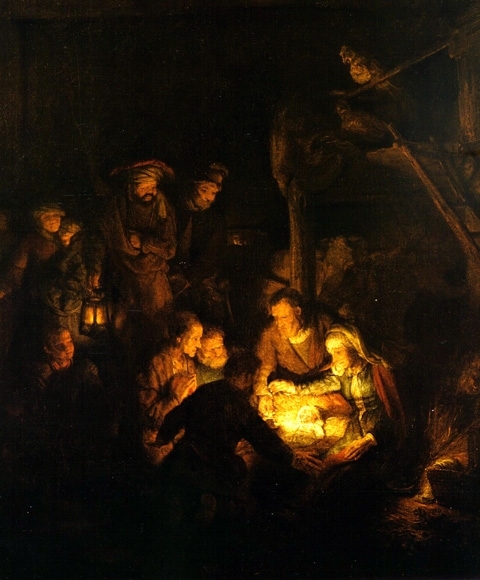
rembrandt-van-rijn-adoration-of-the-shepherds-1339152516_b

For Jim Torrens

If you come at four in the afternoon, I’ll begin to be happy by three.  Antoine de Saint-Exupéry

This present hour of joy should run at half the speed of those long hours of waiting. Albert Camus

It is desire that can live with deferral, an embrace of the God-shaped vacuum in us and a commitment to stop trying to make it full, a healthy hunger that is content to wait for the feast.  Amy Simpson

It is no exaggeration to say that the suffering we most frequently encounter is the suffering of memories.  Henri Nouwen

I was like a child leaving a gift unwrapped, the anticipation more exciting than the reality.  Karen White

We in the West have an odd relationship to anticipation.  Our current worldview is based so much on control – of circumstances, of our own brand and the narratives that define it – that anticipation for us mostly drives our anxiety.  And anxiety tends to push the envelope of self-referential aggressiveness, burying envelopes labeled “kindness” and “self-reflection” deep within our shelves.  Anxiety also tends to distort vision for both our challenging present and a more promising future, a bit like the dark lenses some of us choose to wear around town on an already gloomy day.

I have reflected a bit this week on the scene around the manger where, in Christian lore, the shepherds gathered to witness the coming of the Christ child.   Some of the greatest painters in western history have tried to capture this scene – but for me none quite like Rembrandt and his studio.  In London, in Munich and elsewhere, this precious scene and its affects are given the care and attention they deserve.  The results are neither sentimental nor quizzical.  The look in the eyes of the shepherds suggests that this dusty manger is where they belonged. The setting in which their anticipation became incarnate was surely not entirely what they expected.  But somewhere deep inside they expected the arrival of this energy, this hope, this message emanating from both beyond and within, a signal that life now stood a fundamentally better chance than was the case only one cold evening before.

Through the brush-strokes of Rembrandt, it seems clear (to me at least) that the shepherds had prepared to experience such a moment. They were not mere passers-by, indulging a curiosity, taking the antiquities-version of a selfie in case what they were seeing turned out to be “likeable.”  They were there because somehow or other they had prepared to be there.  They were in deeply moved by what they were witnessing, as well they might have been.  But they who spent much of their lives working their flocks had somehow anticipated this moment, anticipated that life could not go on as it had, that the hope represented by the manger child was one that had to be embraced and lived before it could be directly (and fully) experienced.

Were it otherwise, this scene might never have had the impact it did, an impact that a great painter and his best students could capture anew many centuries on.  Instead the effect would have been closer to “just one more baby born in a barn,” one more baby facing a life on the run, under occupation, with meager provisions and opportunities, a baby whose only option would be to line up alongside the legions already consumed by the demands of the present, including the “suffering of memories,” not the anticipation and wonder associated with a potentially renewed creation.

As most of you recognize, I spend a lot of time at the United Nations, perhaps more than my psychological and spiritual resources can manage.   And we who are focused mostly  on security threats and arrangements have also been preoccupied with the Sustainable Development Goals,  perhaps the most comprehensive and far-reaching promise that we human creatures can make to ourselves and our children — that by 2030 the world will be cleaner, cooler, safer, healthier, more just and more peaceful.

The 2030 Development Agenda has engendered many important discussions at and beyond the UN on key elements that will determine whether this promise becomes incarnate on a planet that might not be able for much longer to continue indulging our foolishness if we fail: securing real-time data and concessional funding, promoting good governance and development cooperation, ensuring inclusiveness and biodiversity.

It’s all good but, as many are whispering in the corridors outside UN conference rooms, it doesn’t yet seem to be enough.   We’re not making progress in many key areas and in some we are actually losing ground.   We’re not hitting our climate targets.  Hunger is on the rise as is nationalism-fueled discrimination.  Our appetite for weapons and fossil fuels seems at times insatiable, while our appetite for justice is easily appeased and our collective priorities seem mired – at least for the time being — in predatory economics and cynical politics.

What is the matter here?  Why are even our best efforts not resulting in better metrics?  The message of Advent seems clear on this point:  We have adjusted our policies, but so far failed to adjust our expectations, our commitments, even our appetites.  We have made our noble promises but so far largely failed to embrace —-in our energies and values — the peaceful and balanced world to which these promises point.  Too often, we are waiting for change without living the change.

Many certainly acknowledge the challenges, but too-often conclude that they have nothing to do with us or, more frequently, that we will adjust as little as possible about ourselves and our priorities, simply hoping to ride out this storm.  Ironically, perhaps, the very governments and international institutions that many now say they don’t trust are nevertheless being entrusted with the responsibility to turn this world around – largely, still, without our involvement let alone our practical commitment.

Something is clearly missing. We have this glorious blueprint for sustainable change, but few of us (and certainly few in power) have put their personal adjustments on the table.  What have those of us who work with these issues on a daily basis, who witness the current decline and the limits of our capacity to reverse it, what have we pledged to change in our own lives?  How are we living in anticipation of the world that can sustain the life which is currently under such severe threat?  How have dimensions of our participation in the current culture of predation evolved into a “healthier hunger?”

These are not snarky questions.  Indeed, the answers are more than instructive and could even be inspirational.  If the world we inhabit is not substantially different by 2030, it will be in large part because we have not prepared sufficiently for the hope that the Sustainable Development Goals represent.  As a species, we are not yet resolved to live out the promise of a healthier, fairer more peaceful world in anticipation of its eventual fulfillment.  What will the world look like if we get what we say we want?  Will it convey all (or most) of the benefits that we have promised?  And how can those benefits possibly convey in the absence of the best of ourselves–our willingness to live in anticipation of a world that, in several key ways, must look little like the current order, to recognize that this is more about us than about policy and technique, that 2030 is not the starting line for our planetary hope, though it may become its terminus?

If one searches “living in the power of the future,” one of the very first items you get back is an article about living off the grid.  Indeed, the current “grid” which holds us in its grasp is technologically sophisticated but often morally barren and mostly uninspiring.  It is a grid that demands as little from us as possible, that discourages us from thinking hard about the world to come, what that world will look like, and what it will require of us; indeed what it requires of us now.  Getting distance from such a grid, renouncing some of its uninvited power over our lives, might well be our own “manger moment.”

The baby in the hay is, for this unworthy servant at least, the place where anticipation meets incarnation, where the recognition that we simply “cannot go on this way” meets the energy and grace that can get us through to a better place. But there is no magic moment here, no point at which a world capable of sustaining our lives going forward simply appears.  The manger may represent a divine promise, but it’s one which we who pretend to hear it have never done enough to keep.  Despite our past malfunctions and sometimes anguished memories, we must do our part and do it with greater resolve.

If the world we seek is promised to arrive at 4PM then we must commit, in aspiration and in practice, to being happier and better-prepared by 3.