Tag Archives: conflict

Why Care? A Reflection by Brady Sanders

10 Sep

Editor’s Note: This second and last (for now) post from Brady Sanders seeks to answer a question that we pose to all interns. What should people in your professional or academic circle know about the world? And why should they care? Answers to questions like this are fundamental for us as we try in our own small way to grow the minds, hearts, hands and skills available to contribute to peace in multiple contexts. In such work, knowing and caring are obvious prerequisites.

At the conclusion of my summer internship with GAPW, Dr. Zuber asked me to construct a blog post answering these – seemingly – simple questions, “what should people in my professional circle know about the wider world and the people who inhabit it?  Why should they care about things beyond what their families and professions require them to know?”   On the surface, these seem like straightforward questions, with the answer being, without knowledge of what is going on in the world, one cannot attempt to make it a better place. However, upon delving deeper into this topic, its layers are revealed: specifically, why do individuals not know about global events? In this post, I plan to address not only what I think my peers and colleagues should know, but the overarching issues as to why they don’t know about these topics.

In my life, I have witnessed many people not knowing what is going on in the news, especially globally. Why is this the case? Many argue that people do not care – especially Americans – due to our stereotyped nationalism. However, I must disagree. I think people do care about what is happening, but they feel helpless. Many think that since they cannot do anything about the issue, they are better off just glossing over crises and not using their energy to understand those problems. The second, and the more alarming, reason is that there is so much sorrow in the news today that people have become desensitized to atrocities. The number of times I have heard people say, “I don’t listen to the news, it’s too sad,” is disheartening. This is a complex issue to tackle because the news has to get reported, particularly the sad news, so people can help stop these atrocities. But then when these difficult situations are covered, people say that it is too just too hard to process and stop watching. In my opinion, this is one of the most difficult bits of feedback to fix, and I will be honest, I genuinely have no idea how to break this cycle without a societal change that currently lies beyond my scope.  

Another question that people ask all the time is, “why should I care about something that is happening halfway around the world?” This is a completely valid question. Why should I, someone who lives in the middle of a privileged country, need to worry about what is happening in the middle of a more exploited country, as it has no direct effect on me? For one, if human rights are violated anywhere, it is something everyone should care about. Secondly, while these global events may not seem impactful to you now, they one day will be. For example, people living in Europe should care about the United States and our environmental laws, or honestly, our lack of environmental laws. Why is this? The impact of our emissions is not localized to where we live. Our CO2 levels will impact the global CO2 levels and increase the rate and severity of global warming’s consequences for everyone.

Another may ask, “why should I worry about conflicts if they don’t affect me?” Well, they do. The money spent by governments to pursue and address these conflicts is almost unimaginable; if such conflicts could be rooted out, this money could go towards more human security priorities and lead to a better world for us all. This money could feed the 820 million people around the world who are food insecure. This money could help provide drinking water to the 2.2 billion people who need access to safe, potable water. This money could help the 82.4 million forcibly displaced persons during 2020 alone start a new life. It seems evident that the money spent on conducting these conflicts could be used in much better ways, but the only way to solve conflicts peacefully is through diplomacy, and for this to work, we need to make sure the whole world knows what is going on.

This starts with you. And with me. Watch the news. Find and read a newspaper focused on global affairs because the news we consume in the US is often missing a wider, global picture. But more importantly, find ways to get involved. While your efforts may seem fruitless at times, don’t get discouraged; any help, any start, any means is better than inaction and indifference.

Altar Call: Holding Ourselves Answerable for Her Future, Dr. Robert Zuber

13 Sep

Real generosity towards the future lies in giving all to the present.  Albert Camus

It is possible to believe that all the human mind has ever accomplished is but the dream before the awakening.  H.G. Wells

Deep under our feet the Earth holds its molten breath, while the bones of countless generations watch us and wait.  Isaac Marion

There had to be another way and I owed it to my daughter to find it.  Adrienne Brodeur

The trees waited for each generation to be born, to keep them company as they watched over us from high above.  Anthony Harkins

Love is the only future God offers.  Victor Hugo

When I see a photo like the one above, I wonder what is going through that girl’s mind.   A solitary youth with her sign, making a statement to political leadership and their followers, some of whom find such pleadings annoying at best and, if rumblings from the UK and other countries this week are any indication, a potentially criminal offense at worst.

That she could sit by herself on a bench calling attention to a threatened future to which those who pull the levers of economic and political power seem often indifferent speaks both to her power and likely also to her frustration.  Girls increasingly have a voice now and we can only celebrate that epiphany and wish for more of the same.  And yet we know that having a voice is not quite the same as moving the pile, and while we recognize that there are monstrous piles yet waiting to be moved, we seem to have depleted much of our reserve of energy, commitment, compassion and wisdom needed to find that “other way,” a way that can inspire sufficient confidence in the girl on the bench such that she can prepare more for her future and despair less of it.

Her generation is certainly not the first to grow up in unsettled times, but is perhaps the first to grow up amidst an avalanche of jarring, even dystopian images: of a pandemic which has robbed children of grandparents and classrooms, stoking both physical distance and social suspicion; of fires that have consumed vast groves of trees that can no longer “watch over them” and “keep them company” as they sojourn through this life; of adults who should know better choosing to shed dialogue for conflict, reconciliation for enmity, truth-telling for lies and conspiracies. 

It is a long and discouraging list of threats in part from climate and weapons but also emanating from our diminished selves; of our cautious engagement with issues to which we have largely acclimated ourselves but which must seem overwhelming to many young people; of the ways we continue to deceive ourselves regarding the depth of our “sacrifices” to make the world a safer, healthier place for those already poised to follow.

Indeed, hardly a day goes by when we have not been diminished yet again by some discouraging falsehood or other: manipulating COVID data, the stock market and election preparations to mask our health, economic and democratic failings; hyping the “virtues” of plastic by tying it to false promises about its recycling potential; demonizing people and ideas we don’t understand and won’t take the time to understand; indulging a relentless collapsing of general interest around our own private concerns. 

Given all this, it must be a bit lonely for that girl on that park bench, now distanced both from classmates and perhaps also from trust in those of us older folks locked in ideological and theological struggles that offer little to her future but compromise much.  That “come to Jesus” moment where we older folks must account for the decisions we have made and the consequences those decisions have produced; but also to answer for the anxieties of all those children on all those park benches trying in their own way to alter what appears to be the dire course of their future — that moment of gravity and accountability largely continues to elude us.  

While not quite the “moment” we seek, the UN for its part had a pretty good week where children and youth were concerned, highlighted by discussions on the role of youth in peacebuilding and on the nefarious practice of targeting school buildings and educators by (mostly) armed insurgents. An Arria Formula meeting convened by the Dominican Republic highlighted the importance of involving young people directly in policy decisions that could determine in large measure prospects for their own future.  One key to this, as suggested by a former UN Youth Advisor in Somalia, is through promotion of inter-generational dialogue, communication that is on a level playing field that can and must involve youth from diverse economic, ethnic, educational and religious backgrounds.

But the most compelling discussions of the week focused on the increasing phenomenon of armed attacks on schools and school facilities perpetrated by those seeking to intimidate students and teachers from pursuing a different path.  What Germany rightly deemed “crimes against our future” are being perpetrated, often with impunity, by persons whom Niger accused of preferring “ignorance and obscurantism” to learning and truth-telling.  UNICEF director Fore reminded the audience that the future will surely require diversely skillful youth and that such skills are in danger of being lost in large measure if we cannot stem the multiple impediments of COVID infections, poverty, the digital divide and school attacks.

While the UN week featured a (Security Council) presidential statement and a welcome affirmation of the value of the Safe Schools Declaration (click here), it also featured a bit of partisan bickering and limited practical measures (what Niger as Council president referred to as “rehabilitation and reconstruction” projects) that fell a bit short of what the President of the General Assembly highlighted in one of his final statements in that office – that at the end of the day “peaceful coexistence remains as the foundation for sustainable development and climate action.”

Such essential co-existence remains elusive at best. We adults continue to stoke the flames of misunderstanding and mistrust, flames burning as intensely as those now raging in the woods of the western US.  We continue to spin the truth, telling only the parts that serve our interests and not the parts that also call us to account.  We continue to act like we know what we’re doing, and then refuse to apologize (or amend our ways) when the limits of our collective wisdom have clearly been exposed.

The girl on the bench sees all of this.  They all do. 

As many of you recognize, this past Friday was the 19th anniversary of the infamous 9/11 attacks that brought down the World Trade Center towers in New York.   This is surely a day to remember, especially the sacrifices of First Responders whose valiant attempts to free persons trapped in the collapsing towers cost many of them their own lives.

But 9/11 is also a day to assess. What has changed/not changed over 19 long years? Are we any closer to reconciliation among nations and peoples? Have our preparations for armed conflict been any less active (or expensive)?  Are today’s children any more likely to inherit a sustainable, peaceful planet in which it is safe to go to school and then share with the world what they have learned there? Have we done anything close what we could be doing in this pivotal moment to stop the fires decimating our forests, the melting of our ice caps, the biological carnage associated with yet another cycle of preventable extinction, the bombs that intimidate normal life and learning? Have we done enough to swap out deception and hatred for honesty and love? Have we given enough of ourselves to the present to locate the “other way” that can ensure a safer, healthier future?

It turns out that, even in our centers of global policy, we have much to account for regarding our values, our choices and our actions.  The future for the girl on the bench depends on such an awakening.

Dragnet: Climate’s Grip on the Security Sector, Dr. Robert Zuber

26 Jul

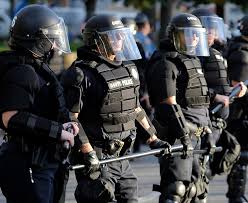
Poll: Riot gear for police at protests?

Life can only be understood backwards; but it must be lived forwards. Soren Kierkegaard

Ecological healing is all about the healing of relationships.  Charles Eisenstein

History is humankind trying to get a grip.  Kim Stanley Robinson

We must remember that this is not a fight we can win just by fighting.  Charles Eisenstein

We cannot choose the times we live in, but we can choose the stories we tell and live by. Sally Gillespie

When we begin a deeper journey into earth care, sometimes we are struck by the breadth of ruin, even ugliness, that it is our challenge to recover and redeem.  LL. Barkat

Birds start falling. Bees lie dying.  Mary Flanagan

On Friday, as the excellent presidency of Germany nears its end, the Security Council took up the issue of “climate and security,” a thematic relationship which the Council is under more and more pressure to address, especially from its elected members.  The manner in which it was addressed in this session, however, speaks volumes regarding both the policy strength of some delegations and the limitations of the Council in articulating a clear role for itself within our global system of response, one that encourages that all aspects of that system to function at maximum effectiveness.

The UN is, of course, primarily a negotiating platform, but as stated by Germany’s Foreign Minister Maas, some things are not negotiable and “we cannot negotiate with nature.”   But while we cannot negotiate with our climate, we can clearly cause it damage and, by extension, cause grave damage to ourselves and other life forms.  As Belgium made clear, this is no abstract matter but a crisis that both impacts and creates vulnerable people worldwide with “aggravated costs,” as Tunisia and Indonesia both noted, which will likely only increase at least in the near term.

There was broad recognition in this Council debate regarding what Belize referred to as the “indiscriminate consequences” of climate change, impacts (as underscored by Niger and others) that fall largely on regions, states and peoples already vulnerable to conflict and COVID-related threats. Such areas have generally contributed little to the climate crisis yet must live with the heat and the drought, the unpredictable rains and insect plagues that make an often- tenuous relationship to viability ever more so.

There were clear calls to action on Friday, especially from small island states who continue to watch nervously as their sea levels rise while large states continue their out-sized consumption and relentless production of greenhouse gases and other environmental pollutants.  There were also calls for the Council to remain fully seized of the data on climate linkages and impacts, with many supporting the appointment of a special UN envoy on climate and conflict.  But there is still concern in some quarters (including here) that the Council does not fully grasp the role it can play as an enabler of climate action underway in other parts of the UN system, not to mention in communities worldwide, keeping in mind the distinction between what the Council does itself and what actions it encourages in others. In our view, Council enabling – not controlling – effective climate action in diverse settings remains one key to our common survival.

But what of the specific climate-conflict nexus?  There was consensus on this Friday that climate change does not “cause” violence per se, but rather “exposes existing vulnerabilities” to which we have not paid sufficient attention and, as noted by a Niger military official, places the often “tenuous balance” between regional groups under considerable strain.  UN Assistant Secretary General Jenca, representing the Secretariat, underscored the degree to which climate threats expose “deep grievances” which often fester in societies and which can erupt in violence unless they are properly addressed.

While this debate added value in terms of basic nexus contours, it did not directly address (aside from comments on the role of peacekeepers) the impact of climate-related “grievances” on the security sector itself, those tasked with ground-level security functions in communities which, in a growing number of instances, are watching their livelihoods blown away by sandstorms or migrating to waters cool enough to sustain minimal oxygen levels. And where governments are either indifferent or lack a trusted presence, communities may well prefer to defend their interests and manage their difficult affairs on their own, interpreting government security as simply one more coercive element seeking to maintain “order” but not honor promises, adding another level of restriction to an already constrained existence, and this at the point of a gun.

In society after society, we have seen the impact of overly-stretched law enforcement, police which have been weaponized and politicized; police asked to perform security functions in tenuous situations far above their pay grade; police which have been encouraged by political leadership to focus on the coercive end of their mandate and not the conflict prevention and community-responsive elements; police who in many instances are barely required to grasp the letter of the law and even encouraged to ignore both the spirit of the law and abuses of that law committed by other officers.

And across the world those same police are now being sidelined and their reputations scarred by more coercive and unaccountable forces that have no interest in local communities aside from suppressing its dissent and misrepresenting the identity and intent of its protesters. From Cameroon to Portland, we have seen instances of unidentified agents who have increasingly become a tool of regimes seeking to maintain a repressive grip or impose one anew, forces asked to parachute into situations which may be antagonistic already but which their own coercive responses merely inflame.

Grievances at community level are deep now, as deep as I have ever seen them.  Many people are angry, afraid, abused, finding themselves isolated in circumstances worse than anything previously conjured up in their nightmares.  Those grievances in some instances apply as well to the security sector, to law enforcement tasked with maintaining “order” in situations where government officials have clearly not done their jobs, officials who are neither “getting a grip” on current threats nor interested in helping the rest of us to do so. In such a scenario, only authoritarians can possibly claim victory.  The rest of us are left with a series of bad choices, including to arm ourselves to the teeth or hurl projectiles at “enemies” about whom we know little and care even less.

As St. Vincent and the Grenadines said Friday in the Security Council, “action is all that counts now.”  But what is the action envisioned for often anti-democratic governments, edgy citizens and an over-stretched security sector?  What “counts” now?   One pathway is suggested by UN Police which is committed in principle to “the reform, restructuring and rebuilding of host-state police” and which measures this in more “representative, responsive and accountable policing that protect and serve the people.”

In this angry, authoritarian age these principles almost seem old school.  But as we seek to “live forward” in treacherous times, it is important to reaffirm understandings shared from at least a segment of our past – that the “fight” we now seem so intent on waging cannot be resolved through fighting alone. It will be hard enough to restore some measure of trust in a security sector and its leaders that too often manufacture enemies in the public domain, that bury basic tenets of racial representation and accountability, and that allow under-trained, over-militarized forces to clutch state-of-the-art weapons they are much too willing to use.  But we are compelled to try.

The climate healing that is so urgent now is directly related to equally-urgent healing in our communities, a healing premised on restoring the quality of our relationships to each other, but also to protecting the biodiversity struggling to survive, and to mitigating all of the social and personal “ugliness” which we have yet to “recover and redeem.”  But we cannot do so, we may never do so, so long as these fissures exist between a public at its wits end and a security sector that cannot be certain, especially now, who or what it is protecting, whose interests it is actually serving.

We need to restore faith in each other and we need to do so without delay.  For while we hurl tear gas and insults across artificial barriers, while we brandish heavy weapons that merely reinforce the resolve of other weapons-bearers, the social stresses inflamed by our sick climate continue to mount. Birds are falling; bees are dying; fish are abandoning their traditional habitats; islands are drowning; crops are failing.

At this painful time, when the stories we write and tell are much too dystopian and too little hopeful, we would do well to restore an UNPOL version of policing which many in the security sector thankfully still affirm: inclusive, accountable, responsive. But the bar of our collective inaction is too high, at least short term; and as Council members noted in passing and as confirmed at last week’s High Level Political Forum, frustrations and vulnerabilities stemming from our habitual climate negligence are likely to get worse.

This is the conflict-climate nexus that the Council needs to address:  a degraded climate leading to food insecurity, displacement and inequality, but also to a legitimate and largely unaddressed impatience for dignity and change that now seems destined to pit diversely distraught communities against a security sector increasingly equipped for militarized responses and egged on by an aggressive breed of authoritarian leadership.

If we are ever to recover what we have ruined in our world and in ourselves, this is the time. If ever there was a “fight” that cannot be resolved through fighting,  this is the one.


Words of Wisdom: Raising the Bar on Council Culture, Dr. Robert Zuber

7 Jan

Wise

Science is organized knowledge. Wisdom is organized life. Immanuel Kant

It’s easier to resist at the beginning than at the end. Leonardo da Vinci

The less you talk, the more you’re listened to. Pauline Phillips

Never interrupt someone doing what you said couldn’t be done. Amelia Earhart

If you only have a hammer, you tend to see every problem as a nail. Abraham Maslow

It’s early on a frigid Sunday in New York, the sort of morning that gives one a new appreciation for hibernation – slowing down the collective metabolism for a season to refresh and restore beyond the bitter elements; but in our case also to reflect on how we ourselves and the institutions we interact with can better fulfill our collective responsibilities.

The UN has been quiet this week, not quite hibernating, but certainly rebooting what had become by mid-December some badly frayed circuits.  The one significant exception was Friday’s “emergency” meeting in the Security Council called for by the US.   The meeting seemed less about how Iran is treating its demonstrators (the alleged and controversial topic of this first session under Kazakhstan’s presidency) and more about undermining confidence in the JCPOA – the Security Council endorsed agreement to restrict Iran’s development of its own nuclear weapons program.

The US has in the recent past used the Security Council as a platform to undercut the credibility of Iran – not only as an alleged sponsor of regional terror but as a state thus incapable of fulfilling agreements such as those embodied in the JCPOA.   The rationale appears to be that if Iran cannot be trusted in all things, it cannot be trusted in this thing either; in this instance despite the firm conviction of the IAEA that Iran is in compliance with its JCPOA obligations, a conviction which is accepted by most Council members including US “allies” France and the United Kingdom.

Meetings of this type are particularly frustrating for us; not only because of their “politicized” implications, but also because of the many conflicts that remain unresolved (such as in Yemen and Myanmar) or that, in instances such as Venezuela and Cameroon, barely seem to register on the Council’s scale of concern.  There is little doubt, as noted on Friday by ASG Zerihoun, that some official reactions to the protests in Iran were excessively violent, a matter of serious interest for Council members beyond the US, which itself had been accused of “grotesque intervention” by Iranian authorities.  But “serious interest” does not in itself justify an “emergency meeting” of the Council, nor does the hostile rhetoric focused on Iran’s at-times misguided policy decisions and human rights performance justify stubborn skepticism regarding Iran’s JCPOA-related compliance.  And it certainly does not justify time taken from interrogating and addressing other looming sites of violent conflict.

Honestly, it felt a bit jarring to emerge from a brief time of winter reflection into the midst of a Council discussion that frankly appeared more than anything else to be lacking in basic wisdom.  Jarring, but not a huge surprise. Council discussions are often more about scoring political points and feeling out the political limitations of national preferences than about full disclosures of national interest, placing policy preferences in their proper context, or the “clear-headed analysis” urged by new Security Council member Peru.

Indeed, wisdom seems to have become a largely discredited phenomenon in policy, in part because more claim it for themselves than exhibit its fruits and in part because of our tendency to keep things discrete – our personal lives from our professional lives, our politics from their personal and real-world implications.  Wisdom is born of experience but is not hostage to experience.   As implied by the quotations above, wisdom is about holding relevant things together, cultivating a long and engaged attention span, exercising self-restraint during times of stress or temptation,  seeing a bigger and richer picture, keeping our bearings when so many around us are losing their own.  It is about describing the (sometimes grave) obstacles in front of us and persistently calling attention to our collective responsibilities, especially to those who are distracted by less urgent matters.  It means talking less and listening more while ensuring that the words we employ have impact beyond their ability to brand preferences and manipulate outcomes.  Especially in the Council’s context, wisdom is about taking preventive measures to resist the outbreak of conflict which can minimize the need for remedial measures in conflict’s aftermath. It implies refraining from a preoccupation with one grievance such that our duty to identify and address grievances of equal or greater significance is compromised.

As some of the greatest minds in our collective history have noted, this wisdom business represents quite a high bar.  Fortunately for us, it is a “bar” that is reached every day by women and men in diverse cultural circumstances, persons with generally limited notoriety but with a demonstrated ability to “organize life,” to step back from the fray in a manner that clarifies options and implications going forward without haughty or self-important aloofness. For us, this “organizing” includes an all-important reminder that most problems needing to be addressed in the world are not akin to an exposed nail in search of some metaphorical hammer.

As France sensibly explained on Friday, it is possible and advisable for the Council to both address “flash points” in the Middle East and honor its JCPOA and related agreements.   Yes it is possible; but what we witnessed Friday was, from the standpoint of wisdom, a clear regression – the JCPOA under senseless threat while “flash points” in Gaza, Yemen, Eastern Ghouta (Syria) and elsewhere within and outside the Middle East region remain stubbornly resistant to Council-initiated resolutions.  As regional and even existential threats to planetary well-being loom large, wiser engagements emanating from this Council would certainly be reassuring.

As we have noted with other issue contexts, Friday’s discussion on Iran summed up many of the problems with the Council’s prevalent “culture” – too many statements, too little listening, too many conflicts ignored, too much political manipulation of those conflicts which are addressed.  The new elected Council members for which Friday was their debut moment – Côte d’Ivoire, Kuwait, Peru, Netherlands, Poland and Equatorial Guinea – have no doubt already experienced several elements of what can be an overly political, wisdom-challenged policy space.   We hope that these elected members will do whatever they can – individually and collectively — to more effectively “organize the life” of the Council.  We promise to support  — certainly not to interrupt — their progress.

Explanation of Vote: Procedures that Clarify and Heal, Dr. Robert Zuber

20 Nov

angry-kid

During a week in which considerable energy was expended on responses to a threatened US assault on climate-related multilateralism, UN Headquarters had on display its own controversies and contentions.  The 3rd Committee of the UN General Assembly (human rights) absorbed more than its share of conflict as delegates struggled over resolutions condemning the human rights records of individual states (Iran, Myanmar, Belarus, etc.) as well as the still-contentious matter of capital punishment – how to eliminate the practice (our preference) or at least to extend national moratoriums to minimize its use or threat of use by states.

Global Action’s interns were present for these discussions, the actual votes, and what the UN describes as “explanations of vote,” the opportunity for states to clarify why they supported a particular resolution or – more often – why they did not.  Our interns have been present for many of these “clarifications” and have noticed the diverse manifestations of “no” in UN processes: some states object on procedural grounds (such as believing that country-specific rights resolutions are invalid); others seek to protect their sovereign “ground” (as when deciding on national criminal penalties); still others seek to defend the interests of their political allies.  “No” can embody diverse sentiments, and for all their limitations and associated political drama, the UN’s “explanations of vote” helpfully bring at least some of these to the surface.

Such “explanations” might soften the impact of “no” in our personal lives as well. Small children often come to associate “no” with power, or at least the ability to manipulate or control circumstances – in no small measure because of the frequency with which they hear some variation of “no” from parents and other adults. “Don’t touch the stove.”  “Don’t spit out your food.” “Don’t leave the porch.” “Don’t pull the cat’s tail.”  “Don’t play with that bottle.”  “Don’t poke your sister.”  No, No, No, No, No.

The commands often come from a caring place.   There are many legitimate dangers lurking for unsuspecting children as well as people all-too-ready to judge families because of their ill-behaved progeny.  But for the children themselves, the relentless restrictions and modifications of behavior are often absent of “explanation,” interpreted as much arbitrary manifestations of adult authority than the acts of care that they so often are.  What appears to be mere “defiance” of a world in which desires are routinely thwarted is also a form of mimic – learning “no” as their lives are so often filled with “no.”

When children become teens, more of the complexities of “no” come into focus.   For most teens, some aspects of autonomy cannot arrive quickly enough, though generally quicker than the arrival of personal responsibility.  The all-too-typical teenage pattern in many societies – demanding privacy and separation on the one hand, dependency and an often relentless need for reassurance on the other – often drives parents and teachers to the brink.   Such reactions, it seems, come attached to the disclaimer (an “explanation” rarely uttered) that needs are subject to sometimes wild shifts — that what was perfectly acceptable on Tuesday has somehow morphed into a borderline “human rights” violation by Friday.

For many people, the more nefarious legacies of “no” – manipulating circumstances, creating distance, assuming malevolent intent when desires are thwarted, changing preferences and commitments more often than we change our socks – persist well into adult living.   Too often, we willingly continue on a path of suspicion and a prickly defiance.  Too often we state preferences devoid of real commitments – we want to keep our “options open” above all.  Too often there is an “edge” in our voice coupled with a certain withholding of emotional content that almost guarantees negative reactions from others.  Don’t give away too much.  Don’t reveal too much.  Keep your distance.

We are also now painfully prone to give in to suspicion about almost everything inside and outside our limited circles except what we probably should be suspicious of – and that is ourselves.  We have generalized excess confidence in what we “know” in part based on an excessive reliance on smart-phone mediated judgments.   We “know” what “other people” are thinking and feeling without asking.  We “know” how deplorable the “deplorables” are and how virtuous the intent is of those who share our political or religious judgments.   We know.

In a world where “explanations of vote” — in both the narrow and larger sense — are neither required nor requested, we are left to blithely assume much of the worst about the people and things that offend or allegedly threaten us.  No honest inquiries are made, and none are anticipated.

This edgy, suspicious worldview is neither as clever as we make it out to be nor helpful to the peaceful, inclusive world that many of us say we are trying to build.  And it is by no means inevitable.  Last week, the New York Chapter of Women in International Security held a discussion entitled “Perspectives on Colombia’s Peace Process.”   While there were several helpful interventions of note, the star of the discussion was Laura Ulloa, a woman twice kidnapped in Colombia by the FARC who has worked since at demobilizing combatants and improving life for underserved populations in her country.

As many of you recognize, Colombia went through its own crisis of “no” as the (voluminous) peace agreement that had been negotiated was rejected in its initial iteration.   As with other countries facing similar political turmoil, the recrimination in Colombia was evident as soon as the verdict was clear.  Do “these people” not want peace?   How could so many of “those people” fail to vote?  The questions, if seems, were largely rhetorical, born largely out of pain and frustration from a long war with adversaries obsessed about but little understood.

Laura’s take was refreshing.  She highlighted efforts to revise the agreement prior to its resubmission to voters.  She explained how her time with the FARC, while alarming at times, eventually humanized her feelings towards people whose life experience has largely been about the conduct and consequences of war.   Without condemning the FARC (or the government for that matter), she pointed to the need to put “truth first:” the truth about the violence, to be sure, but also the truth about the years of social neglect, disparagement and displacement.  The full truth is what she sought, not a self-interested version by one or more of the parties.  After all, she noted, we are seeking “agreement” on how to move forward together towards a more peaceful, inclusive society. This is not surrender.

And she communicated all of this seemingly with no traces of anger or bitterness.  She was firm in her convictions, but in a way that invited discussion, learning, flexibility in the face of overly-hardened opinions.  It is clear that she has spent much of her life watching and listening, not assuming and dictating.  She didn’t “know” for certain why people voted the way they did in this initial referendum or why some failed to vote at all; but she was certain that the reasons were diverse and complex, and she believed that those things “wrong” with the agreement – as with the country in which the agreement would be implemented – could (and would) ultimately be fixed.

This all was a wonderful reminder for me and others in the room.   Request more “explanations” and then listen respectfully to the answers.  Speak to others with less of an accusing edge.  Assume less, especially about the motives and intentions of those who appear to “vote” against our interests.

“No” is a complex word that is tied to some of the best and worst in our politics and in ourselves.   More “explanations” solicited and accepted would help heal our many current divides.