
Please don’t judge me too much until you are older and know more things. Ann Brashares
She gave me everything before she gave me nothing. Rebecca Solnit
Motherwhelm isn’t a problem, it’s a rite of passage. Beth Berry
My daughter, my mother, her mother, her mother’s mother. It is as if they have left footprints in the snow. Try as I might to deviate, my feet fall gently but firmly into their well-worn grooves. Pippa Grace
For a woman to birth something other than children and then mother it with the same sense of purpose, attention, and care came as an astonishment, even to me. Sue Monk Kidd
She caught herself working so hard at mothering that she forgot to enjoy her children. Susan Wiggs
I have seen him climbing a tree while she stood beneath him in unutterable anguish; she had to let him climb, for boys must be brave, but I am sure that, as she watched him, she fell from every branch. J.M. Barrie
There is always the fantasy of maternal love, but it does not accommodate a mother’s fear of her children. Stephanie Bishop
Earlier this week, I spent a few hours with a dying cousin, a wonderful younger man who was surrounded by extended family and health professionals offering all manner of caregiving. My role amidst this glorious frenzy of care was a relatively simple one, to help ease his transition from this life to whatever might come next.
Part of my intervention involved a series of familiar (to him) prayers and readings directed not only to him in his time of need but to those who are still ministering to him in various ways, who makes sure he eats what he can, takes what medicines are prescribed, and even ensures that stories, affections and even tears are shared while he is here to share them. Those who have cared for the sick and dying know how much can be required of them more than they imagined, more than they might even feel that they have in them.
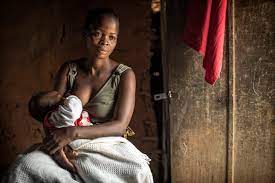
In this time of COVID-19, many millions around the world, including so many mothers, have had their caregiving capacities pushed beyond their limits. In various global regions, in places wracked by a spreading and largely unvaccinated pandemic, in places often characterized by gross economic inequalities, empty schools, unproductive farmlands and threats to home life and health access from armed groups, mothers and other caregivers wonder how they can get their children back on track, how to summon the energy to guarantee sustenance in an environment that continues to pile challenge on top of challenge, all of which have at least one thing in common – they are not the fault of the caregivers themselves.
In this regard, I recall an image from yesterday of an Afghan man clearly doing all that he could do to hold it together as he stood alongside the bloody, lifeless body of his daughter, one of the victims of yet another senseless shooting spree in that country. Another child taken from the world much too soon. Another family having to cope with a murderous end to their season of caregiving. There are hardly words to express such sadness.
Such loss, albeit with less-tragic lines, is also a feature of more “developed” parts of the world, places where caregiving has also mutated under the pandemic cloud of these past 15 months. This week, many mothers have taken to social and mainstream media to reflect on a year of caregiving in an environment over which they have little control and have often lost much, including their careers, their self-esteem and their chunks of their mental health. One of these mothers noted the vast sums of her energy trying (and sometimes failing) to preserve her income and continue to “birth” things in the wider world; to keep her children focused on learning though games and digital screens; to show tangible support and concern over zoon as parents “distantly” age and even succumb to the virus; and to hold on to sanity amidst logistical challenges which were both unplanned and wholly unpredictable.
A second mother wrote about having to accept being “merely OK” in meeting these logistical challenges. A third noted the strains that come with spending more time together with nuclear family than they ever imagined would be the case. A fourth spoke of shrinking circles of concern as friends and family struggle to maintain connective tissue during this long season of fear, uncertainty and isolation. Still another, a mother who just recently gave birth, described herself as almost “invisible” at a time when friends and family members would normally be flocking to hold the baby and offer whatever practical assistance they were able. One particularly thoughtful writer, Sari Azout, described the challenges of keeping the many dimensions of her life afloat while “mothering humans who never sleep,” a situation which may or may not be adjustable in the short-term, but one which is certainly unsustainable.
If “motherwhelm” is indeed a rite of passage, it is a rite accompanied by levels of anxiety, fear and disappointment to at least rival any time in our past. Some mothers in this time of pandemic are so busy working at being mothers that they have forgotten how to enjoy their children. Other mothers, who may not have seen their children for months on end, struggle to maintain connection to lives in flux, lives that they fear might be slipping away from them, slipping into a mode more forgetful and inattentive.
While it might not seem automatically relevant, the fears and courage of caregivers have bear a direct message for those of us who ostensibly create policy norms for the global community. While there is surely much to discuss, we talk endlessly in UN spaces about women, but rarely about mothers. We talk endlessly about children, but rarely about those who struggle to provide that practical, tangible care that can be so tenuous but which is indispensable to keeping alive their physical, emotional and cognitive well being. And it is much too easy for many of us in policy settings, especially those of us not actively caring for children or aging parents, to ignore or forget about the vast gulf which often separate our resolutions (even with their sometimes considerable protection and humanitarian consequences) and the often-relentless logistics of caregiving at local level, especially care administered under a cloud of multiple stressors.
Amidst all of the policy concerns at the UN this week, including not-unproblematic elections for senior leadership, eliminating the still-vast disparities of global digital access, and the horrific, unresolved violence affecting people in Tigray, on the streets of Myanmar and in the mosques of East Jerusalem, Estonia hosted a Security Council Arria Formula meeting to asses the impact of COVID-19 on children and communities already under strain from armed violence, climate change and a lack of health, protection and other government services.
We were grateful for the discussion as we are for the diverse UN capacities in the field seeking to end child recruitment by armed groups, restore educational options, address chronic food insecurity and much more. While conflict prevention remains an elusive goal in the Council and other UN chambers, the organization has done much to provide lifesaving assistance and advocate state responsibilities for children too often under siege.
That said, and as we noted at the time, talking about children in distress is low-hanging fruit for all of us in policy settings. There may be no other space in which we can easily appear so sincere while under-playing the specific policy changes that we need to both enable and enforce, part of which involves accompanying mothers and other caregivers whose interactions with children and community are so intensely practical, who continue to find ways to “make do” when the logistics of “making” are so fraught with difficulty.
Yes, as noted by Canada (Group of Friends) during this Arria session, we need more child protection advisors in the field alongside UN peacekeepers and experts. Yes, as noted by Saint Vincent and the Grenadines, we need better verification and monitoring mechanisms to track and address abuses against children. Yes, as noted by the US we must prioritize services to support children with disabilities whose prospects in conflict and pandemic zones are even more dire. Yes, as noted by Tunisia, we must do more to ensure that children under “suspicion” of being part of armed groups are freed from prisons where they routinely “languish in unsafe and unsanitary conditions.” And yes, as noted by UNICEF’s Fontaine, we need more “sustained engagement” with armed groups on child protection and release and, despite the pandemic, we must also pledge to “stay close to where children need us.”
All good, but these are needs which are not news to us and as several states willingly acknowledged, have yet to receive sufficient capacity response either in personnel or in funding. Moreover, in the two hours which I was engaged in this meeting, I don’t recall a single reference to caregivers; not the valiant UN responders but the mothers and others who are doing the hard, practical work — and often making the hard decisions — regarding how to maintain some modicum of tangible progress in enhancing the best interests of the child.
These are the questions looming for us over this otherwise fine policy session. What is likely to change in the field in response to events such as these? Will there be more funding? More protection advisors? More international accountability for child-abusing states and armed groups? More determined effort to stem the violence which does more than anything else to limit options for children? But beyond this, how do we support caregivers, the mothers and others whose bag of remedial ideas might well have largely emptied, caregivers who can barely attend to children and others in their circle while their own mental and physical health is in demonstrable decline? How do we support the care that mothers often struggle to provide, care which is both indispensable for children and for which no UN agency can possibly be a reliable surrogate?
I wrote a piece a few years ago entitled “Other Mothers,” an ode to caregivers who share love and perform services normally (and not without reason) associated with biological mothers. As we recognize, there remain numerous, viable paths to caregiving, even in this time of pandemic limitation. But while many of those paths are now strewn with debris and explosive remnants of various sorts deposited by the more selfish, narcissistic and violent among us, these are paths that still merit risking the journey. Indeed these are the paths which bear the promise of a future less-affected by the emotional and physical scars of the present; a future that is healthier and safer for both children and caregivers; a future that can restore the promises embedded in the “well-worn grooves” of our snowy footprints; promises to children who may now never seem to sleep but who are also free to play and learn, to risk and dream; a future where caregivers need never again confront the blunt and unimaginable end of young lives snuffed out long before their time.
During this pandemic, many mothers worldwide have felt obliged to take a step back in lives which were already under considerable stress, some of whom might even be doubting if the children who now pack the spaces inside their multiple dwellings will ever have a chance to overcome sickness, trauma and disappointment, will ever again be able to enjoy lives of nutrition and education, of health access and economic opportunity. These are the caregivers who need more of our attention, those who hold the key to children who no longer need to hide from the assaults of a world which seems to be spinning out of orbit. We owe these caregivers more, on Mothers Day for sure, but everyday.


 gapwblog