
From: University of Oregon
People will do anything, no matter how absurd, in order to avoid facing their own souls. Carl Jung
So many distractions, when all she wanted was silence, so she could understand what was going on. Rehan Khan
I am terrified by this dark thing that sleeps in me; all day I feel its soft, feathery turnings, its malignity. Sylvia Plath
Father McKenzie, writing the words of a sermon that no one will hear. No one comes near. The Beatles
The people dreamed and fought and slept as much as ever. And by habit they shortened their thoughts so that they would not wander out into the darkness beyond tomorrow. Carson McCullers
So on the ocean of life, we pass and speak to one another, only a look and a voice, then darkness again and a silence. Henry Wadsworth Longfellow
Yes, we may be in the midst of some great existential crisis, but we’re simply too busy to notice. Douglas Rushkoff
God’s creatures who cried themselves to sleep stirred to cry again. Thomas Harris
This was another of those weeks where the profundity of the quotations above is likely to overwhelm the wisdom of the prose below.
There were indeed some items of hopeful policy significance this week beyond the medical madness. At the UN, the General Assembly a resolution was tabled that affirmed the critical importance of multilateral cooperation necessary (in the words of Mexico) to ensure global access to medicines, vaccines and medical equipment to fight COVID-19. The announcement of the resolution was followed by pleas (from ourselves and others) that this resolution be swiftly actionable within and between member states.
Also this week, the Security Council presidency turned over to the Dominican Republic for April, a move which not only signaled a month of kind and competent leadership, but which virtually guaranteed that the Council would take up the peace and security implications of COVID-19, which to our mind and those of many others, are implications overdue for consideration. Indeed, a briefing by the Secretary-General provisionally scheduled for this coming week will likely touch both on COVID-19 response and his related call for a global cease fire to ensure response effectiveness.
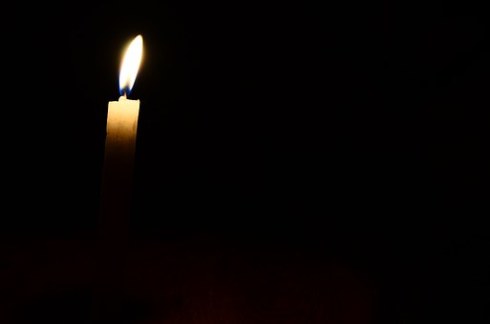
That said, there are still grave dangers lurking amidst the “corona darkness” that threaten many millions. As we noted two weeks ago, and despite the SGs call for a global cease fire, conflict still ranges in Libya, killings still persist in the Anglophone regions of Cameroon, bombs keep falling on Yemen, homes continue to be demolished in the Occupied Territories, weapons access spreads unabated. And while the current lull in human activity seems to have brought about a brief, welcome respite for parts of the natural world, too many of us seem poised to produce and consume with a vengeance once the “all clear” signal can be heard across the globe.
And the current danger runs deeper than merely taking our eyes off global situations that still require our active vigilance. For the virus has inadvertently provided cover for political leaders to assume powers they shouldn’t, and make decisions they shouldn’t, on the assumption that our attention is fully distracted by mask making and hand washing, by figuring out how to pay our bills and providing plausible explanations to our children for why their playgrounds have been closed, why their schools and daycare have been shut down, why they must now keep at least six feet distant from the people they have routinely run to hug.
Such distractions are legitimate and understandable. But they are also allowing our political leadership — swaths of which have proven themselves to be far more ambitious than competent – to make decisions “under cover” of the current viral darkness, often with implications which we are too distracted now to follow but that serve to double down on policies that are as likely to punish political adversaries as heal division; that are as likely to strip besieged families of their full complement of economic and health options as to help restore their dignity and ability to care for elders and children.
Historically speaking, it is not unusual for unscrupulous leadership to use crises (of which this is surely a major one) as an excuse to consolidate power, punish opposition, strip citizens of human rights and otherwise centralize authority. In the current virus crisis we see elements of all of these in societies as far-flung as Hungary, Brazil, the Philippines and the US. The power grabs; the misuses of funds; the consolidation of resources which are then parceled out based on loyalty rather than need; the daily attempts to manipulate information flows, putting out narratives which are almost completely self-serving rather than public-serving.
I am obviously more familiar with what is happening in the US though my eyes remain as attentive as I can keep them to stories from other regions written by journalists and others with contacts and perspective, often taking risks with their ears pinned to the ground. And the pattern in my country is one that is steadily being mimicked in other parts of the world: the endless self-congratulations; the equally endless lying, or at least speaking without knowing; rhetorical “explanations” that scramble media outlets and sow public confusion; the shrinking of options for medical care and for exercising the right to vote; the repeated implication that the interests of leadership and their friends take precedence over the common interests.
One common thread in all of this is the assumption of these erstwhile leaders that we are simply too busy to notice – too distracted by the logistical and emotional burdens of coping with a crisis that (as one of my friends noted) we can’t see, can’t smell, can’t track its own stealth. It is enough just being ourselves now, tending to anxious children, navigating grocery stores and pharmacies, writing sermons (and other opinions) that “no one will hear,”caring for sick loved ones and, in the worst of scenarios, watching them die at a distance and then being buried with none coming near. God’s children (if you will) are too often crying themselves to sleep and then stirring to cry again.
And under cover of this “corona darkness,” the very leaders who ignored the threat whose impacts they could well have minimized – certainly prepared for with more integrity and resolve – the very leaders who allow their closest supporters to exploit the rules that others are struggling to follow; these people are, in more than a few instances, using the crisis as a back-door opportunity to push their own interests and agendas beyond where they could push them through any other door. All of this scheming is taking place while the discouragement descends on more and more people; while the distractions multiply and intensify; while the bonds of human connection become further frayed; while people remain legitimately consumed by the immediate, including the immediacy of family protection.
What Sylvia Plath referred to as “malignity,” is appropriate in this context. We know that temptations are ever-present for people in power (at whatever level of power) to take advantage of “opportunities” provided by crises to see what they can get away with, to fill the airways with silence-busting nonsense such that people are severely challenged just to figure out what is going on around them. This is nefarious business under the best of circumstances. But when those who dismissed and even mocked the warnings of the coming darkness then turn around and attempt to exploit its cover, one is challenged to find the most appropriate condemnation. It hasn’t come to me yet.
In our own smaller policy context, we were among the groups these past weeks calling for “media distancing” from the counter-scientific half-truths, utter manipulations of timelines and prior pronouncements, and other often-misleading proclamations coming from some of our political leadership. We know — if we had ever forgotten — that we need better now from our media, from our civil society, from organizations such as ours. As the political elite cleans house of anyone deemed “disloyal,” even highly-respected Naval Commanders and those tasked with federal oversight, we need more people in that space of discernment and analysis, and we need to better honor those who have already risked much to keep that work alive.
In some instances we are now seeing the positive benefits of that “distancing” taking the form of more geographically and ethnically inclusive interviewing, more compassionate reporting, and more soliciting of expert opinion from the medical and scientific communities. This includes more space for the unique experiences and expertise of the women and men who risk their lives in intensive care units and makeshift clinics trying to keep as many of us alive as possible. As the current darkness motivates more and more to “shorten their thoughts,” there are thankfully still numerous people of integrity out there in a crowded media universe who can help keep those thoughts less distracted, better informed and more alert. Indeed, the families we now strive so hard to protect may ultimately depend as well on maintaining higher levels of vigilance.
People will, as Jung noted, do almost anything to avoid facing their own souls, to avoid looking at themselves through the same mirror that they so gleefully hold up to others. In this time of viral darkness, there are precious few leaders who have demonstrated that they can truly face their own souls, owning the errors that have occurred on their watch and that — deviously or not — have endangered many lives. Before this time of darkness runs its course and the next one prepares to descend, we must find the words and the energy to insist that they do so.


 gapwblog