
Tag Archives: Earth Day

Repentance: An Earth Day Imperative, Dr. Robert Zuber

26 Apr

Sun Stroke

Earth Day, a useful idea that could only occur to a civilization estranged from Earth. Hugh Roberts

In our obscurity, in all this vastness, there is no hint that help will come from elsewhere to save us from ourselves. Carl Sagan

I am so absorbed in the wonder of earth and the life upon it that I cannot think of heaven and angels.  Pearl S. Buck

But for us there was no wilderness, nature was not dangerous but hospitable, not forbidding but friendly.  Chief Luther Standing Bear

It is a wholesome and necessary thing for us to turn again to the earth and in the contemplation of her beauties to know the sense of wonder and humility.  Rachel Carson

In this state of total consumerism – which is to say a state of helpless dependence on things and services and ideas and motives that we have forgotten how to provide ourselves – all meaningful contact between ourselves and the earth is broken. Wendell Berry

It was inevitable. This week, as states in the US controversially prepared to “open” sectors of their economies, a spate of articles has appeared proclaiming what would otherwise appear to be obvious: that many of us here in the privileged west have had just about enough of confinement, enough of economic uncertainty, enough of a contact-free life.

And perhaps most importantly, enough of cycles of news and “information” that offer too-little in the way of guidance or comfort, that fail to reassure us that our leadership is listening to the right people, making the right connections, demonstrating that they are as concerned with the loss of lives as with the loss of elections. It is this dissonance that, more than anything, piles frustration on top of loss, that makes us wonder if anyone is telling the truth about the values and habits we still need to adjust, the planetary matters to which we still need to pay attention, let alone for how long our “lives in limbo” are destined to remain in that state.

For all of its warts — and we have called attention to many over the years — the UN in the midst of its own forced isolation has been trying hard to keep our collective attention focused on the big picture –on science more than politics; on fairness and solidarity with states unprepared for viral threats still to materialize; on support needed to soften the blows of the devastating economic fallout that SG Guterres referenced this week in a virtual meeting on development finance, fallout that might well push states on the margins of viability into deeper holes of inequality and decimated livelihoods despite the global community’s best preventive efforts.

And as highlighted during two valuable Security Council meetings this week, we were all reminded that many of our global ills, while “reinforced” by COVID infections (as noted by Fiji), were not “invented” as the virus washed up on our collective shores. On Tuesday, under leadership from April’s president The Dominican Republic, briefers from the main UN agencies tasked with enhancing food security for millions painted a most disturbing picture. None was more devastating than the World Food Programme’s David Beasley who used his video time to “raise the alarm” regarding the current “hunger pandemic” that exists alongside the COVID pandemic, hunger which has multiple causes beyond COVID including armed violence, locust plagues, economic collapse and a spate of climate-related natural disasters. “We need peace,” he pleaded, in order that we might more successfully address both a looming famine for millions and still-growing COVID infections in all their causes and manifestations.

And then there is the proverbial elephant in the contemporary policy room, a threat which looms large in our panoply of challenges and which affects all others, and that is the climate threat. Despite the welcome improvements in air quality and emboldened wildlife that have resulted from our current social isolation, our ice caps continue to melt, our oceans continue to warm, species of all sorts still face immanent extinction, and calls in many parts of the world to “return to normal” raise the specter of new waves of pollution, extraction, warming and even violence once this initial stage of the current viral threat has run its course.

I am reminded in this context by a cartoon which appeared recently in the Economist depicting the human race slugging it out with COVID while a much larger opponent, that of climate change, looms in the background, egging on COVID to land a few good punches to make we humans even less able, willing and focused to engage our larger and even more formidable foe.

While there is still some debate among Security Council members regarding the specific impacts of climate change on conflict, a Wednesday (Earth Day) Arria Formula discussion organized by France and others focused on precisely this linkage. The briefers, including USG DiCarlo, insisted that climate threats will surely outlast the current COVID pandemic and that such threats tend to multiply occasions for conflict in much the same way, as Niger opined this week, that COVID has multiplied misery for populations already impacted by climate-affected flooding and drought.

The takeaway’s from this Arria meeting included a call from Crisis Group’s Malley to “shorten the timeline” on how we both prevent conflict and prepare states to respond more rapidly and effectively to a range of climate-affected threats.  It also featured a reminder from the ever-thoughtful Ambassador of Saint Vincent and the Grenadines, Rhonda King, that “our darkest hours” require more constructive forms of engagement that can yield people-centered solutions.

But how are such solutions to be pursued? During the Arria, the Stockholm Peace Research Institute’s Smith called for a “larger knowledge community” to engage these difficult relationships.   And there is surely good value to be had in bringing together policymakers, academics, scientists and other “experts” to examine challenges in earnest and suggest pathways forward.

But my own preference is for “learning communities” that can integrate but move beyond expertise to help those of us now tethered to our television sets and I Pads examine our relationship to a world in which some have taken far more than their share while others have yet to find their portion; persons who can’t bring themselves to pay sufficient attention to their own “helpless dependence” on economic interests that create material addictions and anxieties that we can now scarcely manage, that place endless consumer distractions in the way of a deeper sense of humility and wonder, indeed of repentance itself.

It may seem like an odd segue from COVID and climate impacts to personal repentance, but I am convinced that solutions to our multiple challenges will simply require more from us than isolation and social distancing: more than policy and expertise; more than a mere “pause” in our often-stubborn me-first-ness; more than simple apologies and facile commitments to “do better;” more than expressions of anxiety that get us no closer to personal growth; more than an annual day of appreciation for a planet which we then collectively desecrate the remainder of the year.

Within the confines of our COVID-restricted private spaces, while we impatiently await official permission to resume larger portions of our lives, please give a bit of thought to the ways in which those lives have interacted to the detriment of our neighbors, our communities and indeed the planet itself.  Repentance for such interactions requires much of those who choose that route – the acknowledgement of mistaken ways, the firm resolve to amend those ways, and the attentiveness and perseverance needed to turn verbal commitments into life-affirming habits, to trade away vestiges of anxiety and indifference for greater portions of humility and wonder. In these and other instances, repentance is a practice well-suited to the times.

Whether we accept it or not, whether we like it or not, we are not going to easily be rescued from our folly; not by experts or governments alone, certainly not by beings visiting from other celestial realms. The rescue we now require will only be secured if it includes ample portions of a more attentive, humble and resolute version of ourselves, indeed, all of ourselves.
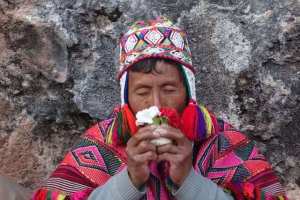
Dream Catcher: First Nations Address the Community of Nations, Dr. Robert Zuber

22 Apr

motherearth4

We did not weave the web of life; we are merely a strand in it. Whatever we do to the web, we do to ourselves.  Chief Seattle

If our prayers were suddenly answered, would be we ready? Or would we look behind us for the familiar things, the people, the habits, the routine?  Joyce Sequichie Hifler

Hold on to what is good, even if it’s a handful of earth.  Pueblo Prayer

Today is Earth Day, and it already promises to be a clear and cool late April day here in New York.

Many who acknowledge the day in more than superficial ways rightly claim that each and every day should be devoted to an examination of our practical values and commitments.  They urge us all to build on the smaller changes we are all-too-willing to make and that might actually deflect attention from the larger shifts in lifestyle that global circumstances now require of us.

Some are able to redirect energies and commitments in ways that are both pragmatic and inspirational.  But too many of us have already fallen off the sustainability wagon, abandoning the harder journey and settling for token gestures of action and rhetoric. Most of us are willing to contribute some part of ourselves to the sustainable future that our children will require, but our habits run deep and in directions (and with values) that in the main hold limited promise for our children’s future.  We struggle to make our small changes based on contexts that are themselves not really conducive to change.

As a First Nations prayer of unknown origins suggests, “We have forgotten who we are,” exploiting to our own ends, distorting our knowledge, abusing our power, seeking security largely for “our own.”  This is a heavy indictment on what is becoming here a lovely spring day, an indictment directed as much at the systems we have evolved as it is towards the minds and souls of individuals too busy resisting their own evolution.

At the UN over these two weeks, the Permanent Forum on Indigenous People has been meeting in its 17th session. We certainly haven’t attended all the discussons, but those we have – both plenary and side events – have added good value.   While a range of issues regarding the health and dignity of indigenous peoples have been raised, the primary focus of the discussion has been on representation – seeking a formal role for indigenous people in the UN General Assembly and other key UN organs with a level of status lying somewhere between that accorded member states and that of NGOs.

For some of the indigenous delegates –and for some of the rest of us – these representational discussions are not new.   In many parts of the world, indigenous peoples struggle to hold their own amidst a barrage of corporate incursions, formal and informal discrimination and government neglect that conspire to threaten livelihoods, languages and the ecosystems on which they depend.   Representatives of these groups – and those who support their diverse concerns – are becoming more and more skilled in linking issues interests and demanding rights-based attentiveness in multinational forums.  If the logistics of some “special status” could be successfully addressed – perhaps resulting in “observer” status — indigenous representatives could then experience a greater assurance that states would no longer be able to establish policy to address indigenous issues behind the backs of indigenous people.

This would be a welcome development at several levels.  And yet I wonder (as we do with persons with disabilities who will come later this year and the women who took over the UN for the CSW in February) if the indigenous delegations understand fully what the UN is capable of and what it isn’t?  And, perhaps more importantly, whether these delegations are more likely to change the UN, or to be changed by it?

It is difficult to exist within UN headquarters and not “play by its rules,” accept its political compromises and “thick” protocols. Indeed, were it not for the geographic origins and traditional clothing worn by some delegates, it would be a challenge to discern how this Forum differs from other Commissions.   The rooms and protocols reflect the same dynamics of power and communication.   People from diverse indigenous contexts read prepared statements that in some instances merely serve as a petition for the right to come and read more prepared statements in a wider range of UN conference rooms beyond the Forum itself.  As in other UN settings, the podium drives the process, giving priority to UN agencies and related “experts” seeking to brand their indigenous bona fides, which in some instances are considerable.  But the overall tone seems to serve as a message to indigenous representatives that “you are in the place you need to be,” that this is where the action is for you and “your people.”

I’m not convinced, at least not at face value.   There are few groups at the UN who cover the range of UN processes as we do, and we can confidently report that there is scant discussion of indigenous issues in formal UN settings aside from the two weeks of the Forum.  Moreover, there is little indication that the UN has in any way been impacted by the values that lie at the heart (if not always reflected in practice) of indigenous life.   Our collective resistance to truth telling, especially on matters of peace and security (Yemen is a good case study here); our ability to smooth over the many rough edges of global threat by burying urgency in a garden of bureaucratic consensus; our incessant habit of publicly “thanking” states for statements that in some instances seem as intended to undermine as enable our collective responsibility to peace, rights and development; these and other dimensions of our institutional culture could stand a steadier dose of indigenous perspective.

But such perspective comes with a risk.  As with many people on this Earth Day, our institutional habits here at the UN are highly resistant to change.  And I sometimes fear that the more people line up on First Avenue to get through UN security, the more people who petition to participate in the UN’s institutional habits, working methods and too-often politicized outcomes, the less likely that the cultural changes that we need to see in this policy space will actually come to pass.  Why change when we’re so “popular?”

It is not, of course, the task of indigenous communities to “save the rest of us from ourselves” nor to “fix” institutions that have often neglected indigenous values and interests.  And I am not inclined to sentimentalize the spiritual messaging of indigenous communities any more (or less) than that of their large, western, institutionalized counterparts. But it is not unreasonable to hope that the higher-profile presence of indigenous representatives being sought in all facets of this policy space could actually inspire and impact the way we routinely “do our business” and not merely replicate some of the least effective of our already considerable stable of unaddressed habits.

Certainly the value perspectives are in place within indigenous cultures to help shift our collective course.  In a passage called “Sacred Instructions,” attributed to William Commanda and Frank Decontie, we find a litany of indigenous values and practices that can transform lives, communities and, yes, even bureaucracies:  practicing kindness to self and others, expressing care in all our life settings, thanking the creator at all times, achieving humility as the path to wisdom and understanding, and practicing honesty with self and others.

None of this is easy in an age of competition, personal branding and ambition and none corresponds to any of the UN’s existing “rules of procedure.” Moreover, the mere stating of any aspiration is certainly not sufficient to making it incarnate in the world.  But I am convinced that the planet would be on a more sustainable path if these values and practices were less negotiable within our community, national and global institutions; if some of our complaining could be bathed in thanksgiving; if some of our incessant public relations could adopt a lens of humility; if some of our overly-politicized discourse could defer to our responsibilities to truth telling.

This Earth Day, we have more to do than finding the right colored bin for our ever-less-likely-to-be-recycled waste.  We must instead better prepare to receive the “answer to our prayer,” a prayer for justice and respect, yes, but a prayer for grace to help us cherish the things we have soiled, lift up the things we have brought down, share more of the love we keep hidden behind dispassionate eyes, and risk more honesty within our communities of policy and practice.

And perhaps above all, to hold on to what is good and offer more of what is good to others.