Tag Archives: environment

COP Out: Rebalancing a Fractured Harmony, Dr. Robert Zuber

23 May
See the source image

The goal of life is to make your heartbeat match the beat of the universe, to match your nature with Nature.  Joseph Campbell

Food and the human spirit have become estranged.  Masanobu Fukuoka

You must answer the call and pick your way. And there is no reverse.  J.R. Ward

We are the witnesses through which the universe becomes conscious of its glory, of its magnificence.  Alan Watts

In the end we shall have had enough of cynicism, skepticism and humbug, and we shall want to live more musically.  Vincent Van Gogh

If nature were not beautiful it would not be worth knowing, and life would not be worth living.  Henri Poincaré

It is one of the ironies of our time that, while concentrating on the defense of our country against enemies from without, we should be so heedless of those who would destroy it from within. Rachel Carson

As most of you know, a week of violence in the Middle East ended with yet another cease fire, an agreement that stopped (for now) the aerial assaults from Israeli bombers and Hamas missiles but which had little immediate impact on the bitter fruits of occupation, the settlements and demolitions, the ethnic cleansing which proceeded apace in areas of Jerusalem on which, apparently at least, the cease fire agreement was presumed to have no palliative impact.

And then there is the wreckage across Gaza, a postage-sized land already suffering from human deprivation and environmental degradation which now lies once again in ruins, a testament to the diverse and damaging consequences of armed conflict that a cease fire exposes but hardly cures. In Palestine as in so much of the rest of the world, there is a misleading quiet now, one bearing little prospect of harmony with our adversaries or with the planet we share.

I know that this lack of harmony, this willingness to cast aside cynicism and “humbug” and live more “musically,” is not unique to this moment. Certainly since the beginning of the industrial age, and likely much longer, we have demonstrated an almost genetic predisposition to unharmonious relations with our world and with each other, exploiting resources for personal gain, defending even when defense wasn’t necessary, justifying aggression in the name of religion or nation, taking more than we need and sharing less than we should.

But this time feels different. The warning sirens blare more loudly now, especially on climate change and species extinction. The bombs we use to punish adversaries are are both more explosive and more technologically clever now. The policy promises we make to each other are increasingly subject to caveats and political expediency. The institutions we have established to protect us from ourselves are proving incapable in many aspects of adjusting to evolving threats, including from extremist groups, climate risks and community-killing drought.

Our world seems often like a band that is not only out of tune but where the musicians seem committed more to compete for attention than to share in the “glory and magnificence” that our music can generate, that our world can generate as well if only we would commit to being its reliable and sensitive agents. Indeed, there is a concern in many quarters that the shrill notes emanating from our competitive and self-serving actions are drowning out the sirens that continue to blare their unsettling omens, blasting messages of urgent appeal to those who are still able to listen and heed the warnings, messages indicating that our time is limited to bring more harmony to our fractured world, to finally and sustainably make our own heartbeats “match the beat of the universe.”

Needless to say, this is no easy task. Many who used the opportunity of pandemic lockdown to establish a better work-life balance or shift their personal priorities know a bit of how difficult it can be to reset ourselves, to practice and then maintain vigilance regarding those things about each of us that threaten “destruction from within.” And once we move from our domiciles to the wider society, harmony becomes a far greater challenge. Indeed much of our personal “resetting” has as one of its objectives increasing our ability to manage the demands and stresses of a human world often spinning out of control, often failing to fulfill even the most fundamental of its values and commitments.

And yet the desire and demand for this greater, global harmony has not entirely disappeared, does not entirely verge on the edge of the extinction that now threatens so many of our fellow-species. Even in the hyper-political environment of the United Nations, a place where we routinely confuse resolution with commitment, consensus with harmony, there are growing community concern about the consequences of human “estrangement,” from our food to be sure, but also from the complexities of the natural world and even, perhaps especially, from each other.

The UN Secretary-General Antonio Guterres and the president of the Economic and Social Council, Pakistan’s Ambassador Akram, seem determined to convince the UN community of the “war on nature” that we insist on conducting, a “war” we are ultimately waging on ourselves, a “war” that too-easily spills over into active armed conflict and enables future pandemics, a “war” we are simply incapable of winning. And yet, amidst the week’s policy oxygen consumed by the violence in the Middle East, UN events also took place that reminded us of the ticking clock signifying our current, potentially-irreversible course as various human practices damage biodiversity across the spectrum, not only the large species we tend to identify with but a large food chain of both enormous complexity and increasing susceptibility to the onslaughts of our current, unsustainable levels of production and consumption.

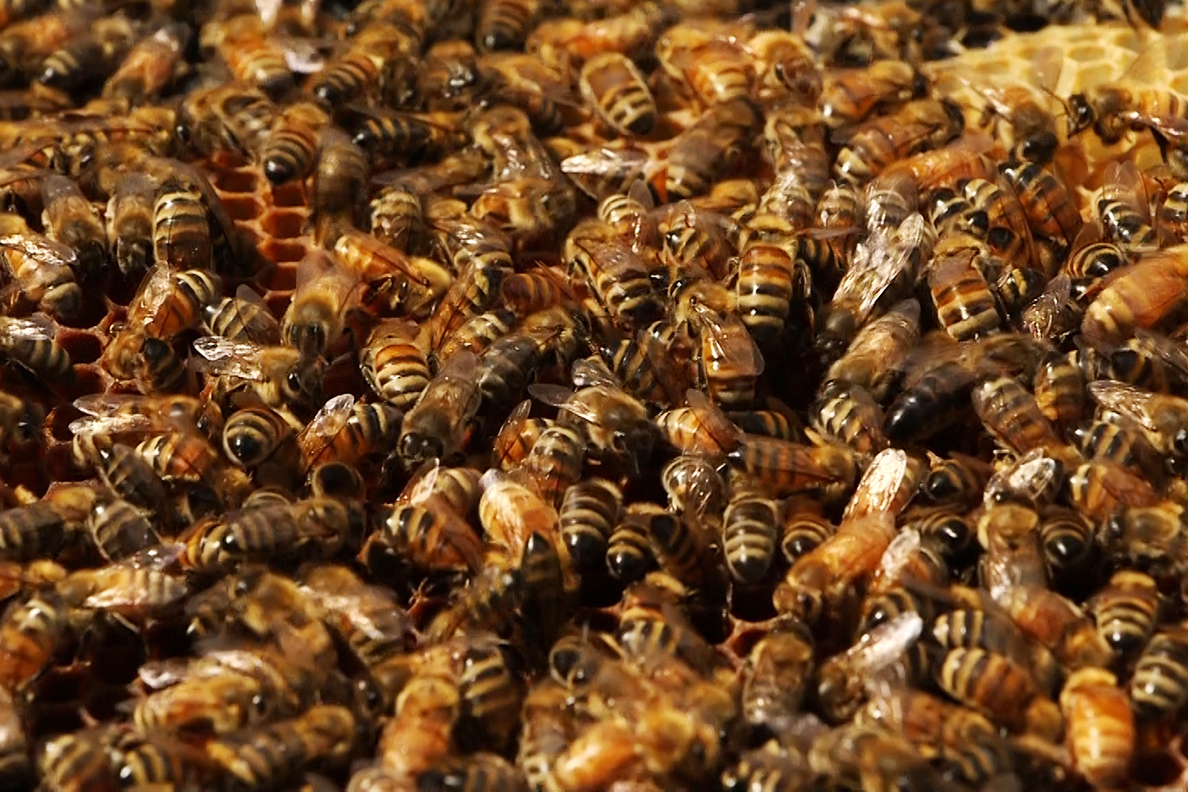
One of those was the annual event sponsored by the Mission of Slovenia to honor “World Bee Day,” a session that could easily seem trivial alongside a week of coups and famines, missile launches and crimes against humanity. But as my friends who keep bees and raise plants that attract their numbers recognize, bees and other pollinators are both endangered and crucial to life on earth. Indeed as this event noted, perhaps 80% of what nourishment humans consume requires essential input from bees. Moreover, the concept note crafted by Slovenia links endangered bees to a range of other biodiversity and ecosystem threats, noting that “current negative trends are projected to undermine progress towards a high number of the assessed targets of the Sustainable Development Goals related to poverty, hunger, health, sustainable consumption and production, water, cities, climate, oceans and land.” As we continue to pave over wetlands, degrade farmland, plant non-native species and denude forests, the damage we inflict on the smallest of our life forms exacerbates conditions which directly threaten the largest and most clever among us.

The other event of note on this theme was a preparatory meeting, hosted by the Mission of China, to encourage enthusiasm for the “COP15” meeting on biodiversity protection to be held next October in Kunming. China’s Minister of Foreign Affairs along with senior UN officials lent an air of gravitas to this session which was thankfully less about advertising and branding and more about our urgent biodiversity decline and the immediate need, as expressed at this session by the president of the General Assembly, to both enhance local ownership of biodiversity protection and factor in the importance and value (writ large) of nature into all our policymaking.  Too often, he noted, a tree is only ascribed value in this world once it has been felled.

And many trees continue to be felled in all global regions. In a discouraging report released this week by Forest Trends, it appears that trees have incredibly been brought down faster in the years since companies and governments promised to stop cutting them down. And another report recently released by a consortium of European researchers put the spotlight on one of the underlying drivers of biodiversity loss, namely our willfully and habitually “unsound” management of chemicals and waste, once again despite formal promises to the contrary.

It is reports such as these than temper the enthusiasm of myself and others for these large COP events, which tend to create environmental footprints far deeper than their policy impacts and promise far more than they ultimately deliver. Yes, we need immediate, tangible progress on biodiversity as we do on climate change and ocean health. But are the upcoming COP events any more likely than previous ones to shift policy dynamics in discernable ways? Are they at all likely, to paraphrase the GA president, to enable more robust action at local level, to help local activists, in the recent words of one, build bridges wide enough for everyone to cross over our current abyss and reach another side characterized more by harmony than chaos? Are they likely to sustain the buzzing of bees and other insects that still manage to overcome our collective assaults and fill our markets with produce? Are they sufficient to reset our notions of value such that we understand more than we apparently do now that a beautiful, harmonious and balanced world is ultimately essential to current and future lives worth living?

With full regard for activists struggling to maintain their voices and their sanity in this “kill the messenger” time, we in our sector must do more, will do more, to insist that these COP events serve interests beyond the branding of host states, that their ecological expense is calculated in more than mere dollars and cents, that their deliberations are as urgent as the problems which have merely multiplied on our watch, that their outcomes don’t simply add to the long list of promises misplaced or incompletely kept. We need more than political declarations from our leadership, more than grand sessions leading to perfunctory outcomes. If indeed, as Ambassador Akram noted on Friday, this war on nature is actually a war on ourselves, then we have no excuses for postponing a truce, ending our deep estrangement from nature, and reversing the biodiversity loss we are running out of time to address.

This band of ours needs to be brought back in tune without delay. Our farewell tour as a species may be closer than we think.
House Warming: Fixing the Thermostat on our Environmental Health, Dr. Robert Zuber

9 Feb

Nature is not a place to visit. It is home. Gary Snyder

The sea, though changed in a sinister way, will continue to exist; the threat is rather to life itself. Rachel Carson

Those who live by the sea can hardly form a single thought of which the sea would not be part. Hermann Broch

The real names of the environment are the names of rivers and river valleys; creeks, ridges, and mountains; towns and cities; lakes, woodlands, lanes, roads, creatures, and people. Wendell Berry

Home is where my habits have a habitat. Fiona Apple

How foolish to believe we are more powerful than the sea or the sky. Ruta Sepetys

The themes which run through much of the work of the UN in these precarious times are many, but can actually be placed in a couple of large and inter-related bins – the things we need to do better for the people with whom we share this earthly home, and the things we need to change about our relationship to our home itself, changes that can address at least some of the damage that we have willfully inflicted on our climate, our oceans, our biodiversity, our agriculture.

The first of these bins is quite large indeed and contains tools and norms for stopping and resolving conflict, protecting human rights, guaranteeing political and cultural participation, rolling back the excess production of weapons, responding effectively to humanitarian emergencies, ensuring decent work for people, especially young people, improving access to health and education for all, but especially for children and persons with disabilities…

You get the idea. These and more are part of our collective effort – often enabled by the UN — to better “humanize” our human relations, to provide a context for overcoming at least some of the callousness and cruelty that too-often dominate our political and economic relations. UN events on hate speech, counter-terror and excess weapons production this past week are but three examples of multi-lateral efforts to enhance prospects for and conditions of security for global constituents.

And then there are those responsibilities in that other “bin” which are about protecting the quality of human life on a planetary home towards which our species has created incalculable disruption and about which we still mostly fail to make good faith efforts that clearly convey the origins and nature of the crisis facing these eco-“co-authors” of our very existence. Here we speak of the natural treasures we claim to revere but to not sufficiently protect; the soils and insects that make our sustenance feasible but to which we pay scant attention; the climate now altering our home in frightening ways and now on the cusp of permanence but which have inspired mostly half-hearted responses and half-fulfilled commitments.

The UN has a constructive role to play here as well, given its ability to convene diplomats, scientists, NGOs, youth and others to highlight major eco-challenges.   The preparatory meetings held this week in New York for a June conference on oceans in Lisbon brought the potential and limitations of such convening to light. Despite robust enthusiasm from diplomats and a full gallery of NGOs, and noting with appreciation fresh efforts to “green” the shipping industry and approach other of what UN Special Envoy Thomson called “positive tipping points,”’ we were fearful that, much like the recent climate summit in Madrid, this could well be yet another event as likely to disappoint as to inspire, and this despite the contention of some key speakers that Lisbon could indeed be a “game changing” moment.

The reasons for our concern are, to our mind at least, quite clear. There is, on the face of it, value to be had in bringing a diverse range of stakeholders together to discuss the current state of ocean health and explore the gaps that need to be filled (including on ocean science) if we are to seize our responsibility to protect a living entity that is more than a recreational destination, more than a source of protein and recreation, more than a “sink” for our carbon excesses.

But this begs the question: Is there reason to believe that massive UN conferences that are so costly in human energy, hospitality and carbon emissions are actually able to “change the game” on matters of fundamental importance to our survival? Is the Lisbon event really going to move the needle on the “equitable prosperity” called for this week by Kenya, the enhanced ocean governance called for by the UN Office for Legal Affairs? Will it be successful in convincing the global public, as advocated by Portugal’s Minister of Oceans, that our leadership will no longer be satisfied with “half measures” on oceans instead of genuine transformation “that is urgent and fair?”

Perhaps. But events alone will not get us to the sustainable future on which our children’s lives depend.

What is missing?   From our vantage point in the middle of these global discussions, we have not yet made the case to enough people that the situation is as perilous as it actually is, that the earth and its oceans which house our collective aspirations are as “sick” as Envoy Thomson claimed this past week.   Moreover, and perhaps more important, we have not convinced people that we as erstwhile leaders are willing to make the hard choices needed to divert this course, to change the way we do our own business and not merely externalize concern to what we have already concluded are the “bad actors.”

Why, for instance, do we insist on holding large events which waste resources, burn carbon, and create often-tepid outcomes for which few leaders are actually held accountable? Why have we not made better use of the technology now available to enable participation by a wider range of stakeholders who might otherwise and rightly be deterred by the eco-consequences of long-distance air travel and four-star hotels?

And why do people like me tend to hold on to issues at global level instead of enabling the localizing of environmental concerns, the people who best know their lands and waterways and understand their neighbors, the people who can make the case for loving a home enough to preserve and protect it, certainly more than any diplomat or global “expert” ever could? Over the past few days, thanks to the great generosity of two old friends, I was privileged to see local initiatives in rural Mississippi and Louisiana, young people of very modest means, together with the adults who teach and mentor them, working the land and producing crops for local sale that are raising community nutrition levels, bringing people together and restoring community pride – and all without poisoning community relations or the local environment.

Indeed, these young people were described by one of my friends as “smart, connected to each other, knowledgeable, hopeful, proud and going places.” Who better to vouch for the preciousness of their home places? Who better to call things by their proper, local names while bringing attention to these oft-forgotten places of cultural and agricultural abundance? Who better to restore the reverence of home places as the condition for helping such places to thrive?

Like the rest of our threatened biosphere, the care and restoration of our oceans must be led by the people who know them best, the people whose every thought seems to take the ocean into account.   If the UN is determined to keep holding grand events that, to some degree, threaten the decay of our environmental home in the name of preserving it, then such events must fundamentally change their face — ensuring every technological opportunity for “greener access,” allowing for more active listening to persons closer to our lands and seas, and fully acknowledging the search of diverse peoples for deep meanings and even a bit of romance for the home places that can inspire actions in all corners of our world for a cooler, healthier, more bio-diverse planet.

Together with our friends and colleagues, we will use whatever access and leverage we have to make the case for policy that reverences local initiatives as the beating heart of efforts to lower the global thermostat and allow for the restoration of the bio-abundance that once adorned our earthly home.

Deprivation Nations:  The UN Struggles to Measure a Sustainable Life, Dr. Robert Zuber

10 Mar

species

An animal’s eyes have the power to speak a great language. Martin Buber

Your cravings as a human animal do not become a prayer just because it is God whom you ask to attend to them. Dag Hammarskjold

We’re simply not as different from the rest of the animal kingdom as we used to think. Jane Goodall

You have to steer a course between not appalling people, but at the same time not misleading them. David Attenborough

Today we stand with the brains of hunter-gatherers in our heads, looking out on a modern world made comfortable for some by the fruits of human inventiveness, and made miserable for others by the scandal of deprivation in the midst of plenty.  Richard Leakey

The UN completed yet another busy and, from the standpoint of effective policy, uneven week.   The Security Council held its collective breath as it contemplated a way forward for peace in South Sudan, but also warmly welcomed back H.E. Miroslav Lajčák, former president of the UN General Assembly, who is now responsible for, among other things, coordinating the work of the Organization for Security and Co-operation in Europe (OSCE) with that of the UN more generally and the Security Council more specifically.  In addition, several Council members sponsored a side event on the protection of health workers and facilities in armed conflict, a core tenet of international humanitarian law literally under assault in recent times.

Earlier in the week, the Peacebuilding Commission struggled with what seems to be an endless dilemma over how to navigate the challenge that is Burundi, specifically how to balance development and human rights commitments within a political and security environment that clearly (as evidenced by the conversations taking place on our twitter feed) alarms many stakeholders in Burundi at much higher levels of urgency than those of us in the policy community here in New York.

The week also witnessed abundant (and mostly welcome) references to International Women’s Day.  Amidst a few awkward “tributes” and near-zero-sum attributions of “exclusion,” the events and testimonies this week served as prelude to this week’s high-profile Commission on the Status of Women and also perhaps a bit of a blueprint for how we might successfully navigate other pervasive exclusions in economics, politics and peace processes that are directly related to ethnicity, race and social class.

Even more than these other concerns, the UN was dominated in recent days by ECOSOC’s Statistical Commission. Commission discussions can appear dry and disconnected at times, but are essential if we are to accurately track our collective responsibilities under the Sustainable Development Goals.  Some Commission side events — specifically one on “Knowledge and Politics in Setting and Measuring the SDGs,” hosted by the Friedrich-Ebert Stiftung and the UN Development Programme and another on “Measuring Child Poverty in Sierra Leone” hosted by UNICEF —  were noteworthy for their acknowledgement of the statistical burdens that accompany fulfilment of the Sustainable Development Goals, but also of some of the pitfalls that occur when we employ reductionist data modeling, allow our investigations to be tainted by political considerations or access limitations, or fail to innovate data collection to respond to evolving understandings of community needs and expectations.

In this regard, the Sierra Leone event was a special breath of fresh air.   Moving beyond poverty indexed almost exclusively to household income, the speakers in this event spoke instead of “deprivations” that collectively provide a more accurate lens on conditions of poverty than income figures alone.  By attempting to measure a wider range of factors associated with the “quality of life” of children and families – housing, nutrition, education, vaccination rates, clean water access, even “connectivity” to the wider world — statisticians and UN officials together can insist that the data they now collect is much better able to contribute to more comprehensive and sustainable reductions in poverty, especially for children.

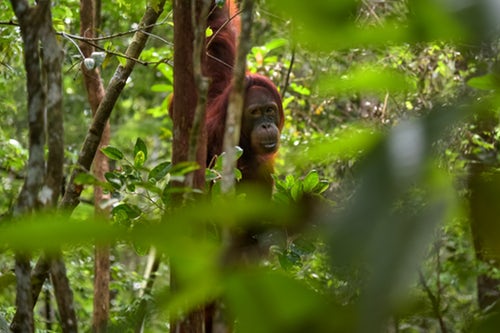
The skilled presenters also seemed mindful of the fact that their expansive indexes don’t necessarily capture all of the “deprivations” from which children in diverse urban and rural settings need to be protected.  Indeed, one deprivation that largely eluded “capture” is related to the need for a healthy environment, certainly for clean air and water, but also for healthy forests and the biodiversity they support – from large mammals to the exponentially more numerous (and equally-threatened) insects — essential to maintaining environmental well-being for current and future generations.

While threats to climate and oceans rightly dominate UN conference rooms, “other” environmental issues too-rarely appear on our common agenda.  This changed a bit this week as meetings to examine the role of “corruption” in the illicit wildlife trade and to prepare for the upcoming UN Forum on Forests brought together a number of stakeholders concerned with shrinking biodiversity and the forests (among other ecosystems) that support such life.  The corruption discussion was more elaborate, citing examples of the profligate and illegal wildlife trade made more profitable by virtue of the ability of traffickers to purchase inattentive silence from officials ranging from park rangers to environmental ministers.  Moreover, efforts to arrest and prosecute wildlife trafficking are impeded by funding limitations, themselves a product of an often indifferent public sentiment willing to endorse protection for only the most visible and iconic species – as though such species can possibly thrive independent of numerous “non-iconic” life forms on which their survival ultimately depends.

The original title of this piece was to be “animal crackers,” a form of warning about that time when our relationship to even the most visible parts of the current natural order will be confined to flour-concocted replicas rather than to direct and nurturing experiences.  Our current efforts to “save wildlife,” noble at one level, fail to communicate adequately the degree to which we are only “saving” what we ourselves have brought to the brink of extinction; moreover that we are “saving” mostly the top end of food chains that are literally disintegrating at lower levels, victims of our pesticides, our deforestation, our addiction to plastics, but mostly our collective indifference.

As I look out from the kitchen window of my apartment of many years on to a street that has been gentrified and layered in concrete almost beyond recognition, I can see only a couple of tired-looking pigeons and one solitary tree, and then only if I strain my neck.  While my neighborhood probably has more accessible “green options” than most in this city, the view out my window surely reflects deprivation conditions of a too-common kind, our too-often-unrequited longing to connect with the “great language” of the natural world of which we have so-far proven to be a mostly predatory component.  Thankfully, this “comfortable for some, deprived for many” world we still conspire to create lies in the “cross-hairs” of the 2030 Development Agenda, an agenda which reminds us that we are now well past the point where our planet and the human communities it labors to support can be healed with half-hearted or single-lens measures. Such measures fail on data quality but also fail to promote a vision for a world capable of shifting the “green” that enables our “cravings” into the green that nourishes and sustains our children, indeed our collective soul.

The ability and willingness of these national statistical experts to name and count the world that can nourish and sustain, that can underwrite hopeful policy for children and other living things facing often-unique configurations of deprivation, was among the most encouraging and gratifying aspects of a packed policy week.


Storm Center: The Bookend Messes Defining Modern Armed Conflict, Dr. Robert Zuber

21 Oct

Storm


What we are doing to the forests of the world is but a mirror reflection of what we are doing to ourselves and to one another.  Chris Maser

What is the use of a house if you haven’t got a tolerable planet to put it on?  Henry David Thoreau

We’re in a giant car heading towards a brick wall and everyone’s arguing over where they’re going to sit. David Suzuki

Who would want to live in a world which is just-not-quite fatal?  Rachel Carson

Why do they never tell us that you are poor devils like us, that your mothers are just as anxious as ours, and that we have the same fear of death, and the same dying and the same agony–Forgive me; how could you be my enemy?  Erich Maria Remarque

One of the welcome aspects of our work is watching the peace and security agenda expand beyond specific weapons systems and country-specific conflict configurations to examine the spectrum of causes and consequences that bracket the horrors of armed violence.

This is no mere academic exercise.  As we have noted often and colleagues of ours have more recently been emboldened to acknowledge, our task in this policy space is not manage armed conflict, not to soften its often horrific impacts, but ultimately to eliminate it.  This objective may well be the stuff of some fantasy-induced misinterpretation of the human condition – based on an assumption that human beings are actually capable of walking back from the brink of ruin, that we are capable of loving this planet as much as we love our aspirations and aggressions on it — but such is the lot we’ve chosen.

And this lot requires a lot – including a willingness to examine both causes and consequences, to assess and profess the things that we do collectively that compel (or excuse) people to pick up arms as well as the often-devastating consequences to people and planet in conflict’s aftermath.  Indeed, if armed violence and the evermore sophisticated weaponry with which it is conducted are ever to be put to rest, those causes and consequences must be burned into our consciousness in much the same way as the health of our own child towards whom we rightly invest much practical worry, hoping to sidestep illnesses with consequences that can run the gamut from inconvenient to heartbreaking.

The bad news here is that we seem more determined in these recent days to let our predatory nature run wild, eschewing legal and legislative restraints on our acquisitive and competitive dispositions and pushing concern about a possible day of reckoning to the furthest reaches of conscious life.

The good news, though, is that there are pockets of policy resistance to this trend, states and their representatives that both seek to grasp the full complement of causes of conflict and work to highlight the consequences to future generations of “looking away,” consequences both psychological and ecological as our capacity to humiliate and destroy continues to exceed our skill in healing traumatized children and restoring denuded landscapes.

The UN was the scene this week of good faith efforts to explore both causes and consequences of conflict, focusing in this instance on environmental dimensions that attracted considerable and welcome interest.  On Tuesday, Bolivia (current president) directed the UN Security Council on a discussion of how “the control, exploitation and access to natural resources have been a catalyst for the outbreak, escalation and continuation of armed conflicts.”  In a hard-hitting concept note, Bolivia acknowledged the “multidimensional and complex” roots of conflict but also noted the long history of conflict that has been fueled by disputes over the control, exploitation and access to natural resources, highlighting “foreign interests, multinational companies, elite actors and armed groups monopolizing control over resource revenues at the expense of local citizens.”

In fairness, there have been solid international efforts to curb state corruption (through the UN Office of Drugs and Crime and other entities) and apply human rights standards to the potential exploitation of natural resources including with regard to the diversion of profits to organized crime and terror groups, and the forced labor of people fueling the supply chain in ways that mostly serves to make life more comfortable and abundant in national capitals.  Australia and other states are promoting standards that address what have been for much too long abundant violations of rights in supply chains, standards that promise better governance, fairer labor standards, reduced incentives to conflict, an end to the human trafficking and even slavery that have long stoked hostility and frustration at local level.

At the other end of this spectrum are the environmental consequences of the conflict we fail to prevent, the ruined homes and farmlands, the denuded forests and polluted water supplies, the damaged infrastructure and wasted social capital that compromise any reasonable hope of healing and restoration.   The sometimes-devastating “ecological footprint” of military activity – from basing and training to illegal occupation and full scale military assault – has long been a concern of our policy community.  And, thanks in large measure to leadership from Finland and the International Law Commission, this linkage has remained acutely in our collective policy consciousness.

This matter includes but goes beyond remnants of war that include the ongoing impact of landmines and other explosive devices whose lurking presence deters persons displaced by conflict seeking to return home and “save what’s left.”  Indeed, as armed conflict becomes more resistant to legal restraint and more destructive in its creativity and technological flexibility, its environmental and other “human security” impacts are increasingly pushing us across the threshold of remediation in all its aspects.  The displaced have less and less to “save” at home, the traumas of conflict deepen and too-often remain untreated, and more people feel that they have little choice but to turn their backs on their now-contaminated fields and domiciles-in-rubble for uncertain futures elsewhere.

In an all-day seminar this past Thursday, the “protection of the environment in relation to armed conflict” kept a small group (including my interns) riveted for hours.  This event covered environmental impacts across the conflict cycle, including the issue of establishing “liability” for conflict-related environmental harm.  Highly-qualified speakers highlighted the tools at our disposal to monitor and assess environmental degradation related to armed conflict, as well as the degree to which increasingly scarce natural resources such as water and precious minerals – a major conflict trigger in our time – might actually increase the incentive for cooperative discussions on how to manage resources fairly and effectively prior to conflict such that the potential for such conflict is effectively minimized.  And while there were calls to the international community to prepare better for the environmental impacts of climate and conflict threats, there was also a sense in the room that viable, cross-border conflict-prevention measures together with normative principles and legal mechanisms of accountability for environmental damages — including often-grave damages inflicted by occupying forces — is likely to constitute our most productive way forward.

The point of which we must constantly remind ourselves is that the misery of warfare does not end once the guns finally go silent.  No matter how we might justify recourse to armed violence in political or strategic terms, the fact remains that once the missiles fly and the bombs drop, our capacity to address already-strained human and environmental challenges diminishes significantly.  The “mess” of armed conflict perists amidst even our best, good-faith efforts to restore what we have been quick to destroy.

If the UN can continue to shine a bright light on both the environmental causes and consequences of violence, highlighting the degree to which armed conflict is and remains a major inhibitor of sustainable development and human well-being, we will be further along in our quest to create a planet fit for children and other living beings, a planet filled with people who finally and firmly grasp their diverse “contributions” to armed conflict as well as the increasingly scant prospects for healing and wholeness that follow in modern conflict’s wake.

I sometimes worry that too many of us seem resigned now to live in a world that “is not quite fatal.” It is still possible to reverse this pessimistic course, but the brick wall towards which we have been blithely hurdling looms closer than ever. We must quickly slam on the brakes, recover our enthusiasm for what can still be an exciting and abundant journey, and find a safer route to our collective destination.

Green Day: The UN Seeks the Means to Defend Environmental Rights Defenders, Dr. Robert Zuber

30 Oct


activists

Environmental human rights defenders are at the heart of our future and the future of our planet.  2016 Report of the UN Secretary General on the “Situation of human rights defenders”

At the UN, as in much of the world as a whole, the policy news on a daily basis seems to run the gamut from hopeful to dreadful:

  • Some extraordinary progress on ocean preserves is offset by rapid polar melting and massive ocean storms
  • A breakthrough on negotiations to eventually “ban” nuclear weapons is compromised by reckless arms transfers and illicit arms movements that endanger civilians, destroy schools and medical infrastructure, and threaten an already fragile negotiating trust
  • Global progress on ending capital punishment is undermined by states citing drug trafficking and terrorism as “justifications” for continuing state-sanctioned executions
  • Policy gains on women’s equality are stymied by institutional sexism and political systems more comfortable with making promises on gender than keeping them

Perhaps nowhere at the UN is this schizophrenic path to progress more apparent than in the 3rd Committee (Social, Humanitarian and Cultural) of the UN General Assembly,  one of six GA committees meeting throughout October (and sometimes beyond). Chaired this year by Colombia’s Ambassador María Emma Mejía, the 3rd Committee embraces a stunning, ambitious schedule of rights-related issues that span a full spectrum of UN concerns – from persons with disabilities facing discrimination or journalists under siege to persons forcibly “disappeared” by governments or executed without due process.

Over the month, an extraordinary lineup of independent experts, Special Rapporteurs and Special Procedure Mandate Holders appear before the 3rd Committee to describe the progress they’ve made, the obstacles still to be overcome, and the reasons why attentiveness to the issues of their respective mandates still matters so much to the world.  This was also (and sadly) a time to honor extraordinary experts whose mandates (though not the issues themselves) are set to expire, including Juan Mendez (torture), Rita Izsak (minority rights), Maina Kai (peaceful assembly) and Fabian Salvioli (Human Rights Committee Chair).

My fall interns are forced (by me) to experience all facets of UN policy, but they seem to have a special interest in the skillfulness and diverse interests represented by these mandate holders.  As painful and even horrifying as some of their testimony surely is, interns are amazed (as well they ought) at the range of substantive UN human rights concerns – trafficking and child pornography, health care and adequate housing, the land rights of indigenous people and the plight of displaced children.  Despite limited implementation successes in a number of instances, these rights stand as almost “sacred” obligations of states parties, obligations that are not compromised — let alone disappear — because some states refuse their full acknowledgment.

But these rights obligations need champions outside the UN as well as within, as has been noted often by Michel Forst, Special Rapporteur on the Situation of Human Rights Defenders.  And as we have all come to know, the dangers faced by these “outside” champions show few signs of abating. Last Monday, in a side event –“Empower environmental defenders, safeguard our future” – Forst joined with Norway’s Ambassador May-Elin Stener and an activist from Honduras (CEHPRODEC) to chronicle some of the grave threats experienced by environmental rights activists seeking to organize communities to safeguard health and livelihoods in the face of aggressive corporate predation, state corruption and broad international indifference.

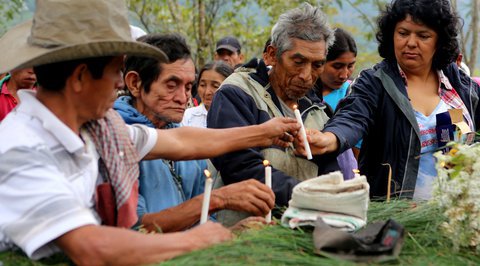
Many in the room were still mourning the death of Honduran activist Berta Cáceres, not the only activist to lose her life defending land and community in states such as Honduras and, given the current state of our limited protective mechanisms, unlikely to be the last.  Within the Global Action orbit, we have also mourned friends and colleagues who have paid the ultimate price for our collective indifference.  We have watched families torn apart as land-owning corporations pay family members to shoot their “trespassing” kinfolk. We have seen first-hand the effects of logging and mining that bring few local benefits but inflict staggering local hardships.  We have seen activists’ reputations rent asunder by forces eager to label them as “criminals” or “terrorists” while exempting their own actions from virtually all means of accountability.

As states prepare to assemble in Morocco to assess the early stages of implementation of the Paris Climate Agreement, they would do well to confess this schizophrenic policy moment – on the one hand, urgency to control emissions and create a more healthful planet characterized by peaceful and inclusive societies; on the other hand, business as usual under cover of states underwhelming in their commitment to protect their own citizens – and those who seek to defend them — from external threats of diverse human origins.

As the UN Secretary-General has intimated, human rights defenders are the essential link between sound global policy and community resiliency.  We cannot do without their tireless and courageous commitments.  We cannot fulfill our “leave no one behind” promises while abandoning communities – especially their women and indigenous — to defend legitimate local interests while their leadership languishes in prisons or even in morgues.  We cannot hope to inspire stable, healthy communities when the voices of so many of its citizens are mute – or facing a dangerous backlash.

As Rapporteur Forst himself noted during this side event, the world is characterized by growing “power imbalances” that imperil rights defenders and the community interests they seek to defend.  There is, he warned, a “crisis of retribution” which the Honduran activist asserted almost never results in punitive legal judgments.  As we seek a fairer, greener and more just planet, it is important to honor and sustain the community-based courage that must be part of any viable pathway to change.  As Ambassador Stener noted, state, corporate and community interests will not always align, but respectful dialogue –not threats– is the only sustainable way forward.  The international community can and should do more to guarantee that such dialogue takes place, and that it takes place on a more level playing field.

Green Lantern: UNGA Informal Debate on ‘Harmony with Nature”

23 Apr

As a nod to Earth Day 2013, the UN General Assembly was the setting for an ‘informal debate’ focused on ways to more effectively promote planetary ‘harmony’.

A half-full conference room listened to a short presentation from the UN Secretary-General Ban Ki-moon and more passionate speeches by the UN General Assembly President, Mr. Vuk Jeremić of Serbia, and by Ministers from Bolivia and Ecuador, two ‘left-leaning’ governments that tend to exercise a great deal of control over national economic outcomes.

There were some valuable reminders shared by these four speakers during what was a bit of an ideologically-imbalanced opening session.   From our own organizational standpoint, it is good to be reminded that consumption in the developed world is largely optional and has increasingly deleterious impacts on natural health in all global regions.  In addition, we should recognize that too much of the ‘green’ movement has been co-opted by those who seek to institutionalize levels of developed world consumption while attempting to ‘manage’ levels of growth in less developed nations.

At the debate, there were also renewed calls for a ‘universal declaration’ of the rights of nature tied to an alleged, if helpful, ‘right to recovery’ for nature that has been ravaged by a preponderance of short-term economic resource use disconnected from any reasonable capacity for future generations to access (and preserve) the same resources.

Our economic situation has been increasingly dark in recent times – inequities and shortages abound, as do the toxic effects of our mindless exploitation.    While it is not yet clear how ‘nature rights’ could be properly identified and enforced, nor is it clear how economic reform would result in locally based economies rather than state structures attempting to micro-manage large scale economic development, it is critically important to shine a light on alternatives that are urgent, viable and fair.  Needless to say, we don’t have sufficient alternatives at present. We need to keep the lantern lit as much as possible.

An office like ours has very limited access to deliberations on economic futures.   From our experience in meetings such as this one, it is clear that States too have limited options, more limited than they generally acknowledge.  Economic decisions, more and more, take place beyond the reach of states in board rooms and investment houses.  Whatever one thinks of “Occupy’ and other movements to expose economic inequities, including in economic decision making, it is clear that this current system is being driven by self-interested and unaccountable forces.   If such forces were merely accumulating wealth, there would be sufficient cause for general concern.  That accumulated wealth is driving so much planetary dysfunction should be cause for the loudest general alarm.

Simply put, there are biological limits to economic growth.   And those limits are not being acknowledged, let alone respected.   As one of the ministers from Ecuador wondered aloud and with some urgency, “Who precisely is going to bell this cat?”  How will that be accomplished? The cat has a defensive, nasty disposition and sharp claws.  It will take some real courage to bell it.  Until that happens, though, the rest of us will largely remain ignorant (willfully or otherwise) of the ways that our lives are about to become more painful and toxic than they need to be!

Our collective disenchantment with our economic system seems to grow daily.   At the same time, our resistance to economic change borders on the neurotic.   We have deep addictions to unsustainable and largely optional patters of consumption that remain stubborn in their remedial application and are also quite devastating to our long-term biological prospects.

On Earth Day, we need to shine more light on the structures and choices that undermine a ‘green’ agenda – unequal economic access, unsustainable (and largely optional) patterns of consumption, and more.  We also need to renew our connections with some of our more ‘intimate’ ecological processes – how our food is grown, where our drinking water comes from, what happens to our waste when we are ‘done’ with it.

Our ignorance of basic environmental processes as well as our insistence that we own everything we use are both planet-defeating attitudes. Our preference for owning a neighbor’s land to having a neighbor undermines community integrity.   Our relentless pursuit of non-essential consumer goods represents a psychologically defective, wasteful application of time and resources.   Our ability to simultaneously express a deep love for our children while contributing to the demise of the system that supports their lives is a dangerous inconsistency.  Clearly, we must continue to shine a light on these and other discontinuities, and then organize a viable, participatory strategy to overcome them.


–Dr. Robert Zuber

Remarks from Global Action’s Director at World Order Values Reception

10 Dec

We are here to highlight and celebrate the World Order Values: Peace, Social Justice, Economic Well-Being, Ecological Balance, Positive Identity

These are not values to inspire belief so much as values to guide and inspire practice.

These values have no hierarchy, but they have witnessed shifts in urgency. When I was younger at the World Order Models Project, it was the peace values that preoccupied most of us – more specifically peace in relation to the nuclear arms race.

The priorities have shifted over the years. Our climate now poses even deadlier challenges than our arsenals.

And, as we saw recently in Guatemala and South Africa, positive identity is more and more a requirement for healthy living, as important in its own way as clean air and a reliable security system.

  • No more are people content to remain trapped in self-concepts bequeathed by their captors or those who have otherwise humiliated them.
  • No more are people willing to ‘move on’ from gross abuse without as full an accounting of what happened to them as humanly possible.
  • No more are people willing to accept promises of assistance or respect from governments or corporations or even universities at face value.

The task in this season is not only to practice these World Order Values but to practice them in the right spirit  – a spirit of kindness and hospitality and attentiveness and humility. These values and the tasks associated with them represent a calling that is both high and common. ‘Common’ because everyone can contribute. ‘High’ because they demand so much of our spirits – our souls if you will – more sometimes than we seem willing to commit.

With all of the frustration that characterizes this work at times, all the travel to meetings that don’t result in real policy movement, all the strategic discussions that go nowhere, all the applications for grants or workshop opportunities that come back rejected, we have still – each in our own way and all of us together — helped to make world order values incarnate. We don’t know yet if it will be enough to turn energies and commitments away from consumption and competition and domination. But there is more in place now to help us reach our goals – more diplomatic infrastructure, more public awareness, more treaties and resolutions, more transparency, more skill.  This should reassure us that our task is only formidable, but not impossible.

The world order values have become for us more than candy sprinkles on our ice cream, more than adornments on our holiday trees.   They are the lifeblood of our work, the standards by which we will be judged by our grandchildren — and their grandchildren as well.

And so, a toast, to those children yet to come and to those of us who believe that Peace, Social Justice, Economic Well-Being, Ecological Balance and Positive Identity represent a future that is worthy of our progeny.


–Dr. Robert Zuber