Tag Archives: Labor

Workday, Every Day: A Labor Day Reflection, Dr. Robert Zuber

1 Sep

Each of us needs to withdraw from the cares which will not withdraw from us. Maya Angelou

All happiness depends on courage and work.  Honoré de Balzac

In the name of God, stop a moment, cease your work, look around you.  Leo Tolstoy

Work without love is slavery. Mother Teresa

The caterpillar does all the work, but the butterfly gets all the publicity. George Carlin

We can only see a short distance ahead, but we can see plenty there that needs to be done.  Alan Turing

People might not get all they work for in this world, but they must certainly work for all they get. Frederick Douglass

I’ve written on many Labor Days about our growing labor pains, the consolidation of economic power and the alienation of too many people from labor itself but also from the laborers who, in some real sense, both define and sustain their lives.

In reviewing quotations for this piece, I found many more sentimental than relevant – quotes rightly extolling the dignity of work while attempting to convince the reader to find and pursue passions, or locate better work-life balances, whatever that might mean. A bit of that sentiment is reflected in this post.

I have no particular axe to grind regarding these aforementioned bits of labor advice, except to remind ourselves of a few things – that we often don’t honor labor or even seek to understand the connections between those who sweat and grind out a living and the lifestyles those people make possible.  Nor are we entirely mindful of the degree to which “following passions” is literally not on the radar of so many of our fellow citizens, domestically and globally.  Many people simply need jobs.  They have mouths to feed.  And the jobs they find are too often conveyor belts to uncertainty and on-the-edge living.  Passion is an indulgence, important for those who are privileged enough to pursue it let alone attain it, but it is also a pursuit which does not always lend itself to more general solidarity with those who preserve the social and physical infrastructure which makes our individual pursuits possible.

And then there is this matter of balance.  We are all familiar with the “live to work, work to live” dichotomy, but perhaps are less conscious of the social and economic requirements of whatever balance is to be achieved.

One key ingredient would seem to be time.  Time to do something special with your family.  Time to give your aching back some relief.  Time to cultivate a hobby that doesn’t involve television or twitter.  Time to plant a tree, or paint a fence, or share a bit of neighborliness.  Time to be what most people’s jobs do not allow them to be, a human in a broader and more satisfying sense, with time to look around and behold all the things people have missed while they’re serving up Happy Meals or cleaning out other people’s gutters.

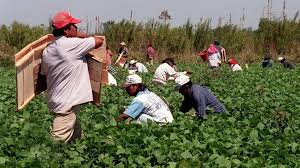
I am overly blessed with the wherewithal and even more the time to “cease my work and look around me.”  I am sitting in a Manhattan apartment (such as it is), eating an apple, drinking my sorry excuse for coffee, and contemplating labor-related issues on a federal holiday.  But my privilege is shared by relatively few others.  Today, the shopping malls and most local stores are open.  Police and First Responders are on call.  Public transportation is operating and will shortly gear up even more as fortunate folks return to their homes from mountains and beaches. Teachers are frantically finalizing lesson plans as school is set to resume tomorrow, if it hasn’t already.  Immigrants remain on the harvest while dodging the masked bounty hunters seeking to further decimate agricultural workers and their families.   

Labor Day weekend is a chance for some to “withdraw from the cares of the world.”  For others, it’s merely another day of living on the edge.

Our US president, on whom skeptical eyes are and will remain locked, sent out a Labor Day message which says so much – about him of course, but also about our diminishing responsibilities to each other’s well-being.  “Too many non-working holidays in America,” he rants. “Soon we’ll end up having a holiday for every once working day of the year. It must change if we are going to make America great again.”

What “must change” in my humble view is our relationship to labor and to those who perform the tasks that the rest of us cannot – and apparently don’t wish to – live without.  How can we ignore that people need a livable return from their labor which would allow their families at least a modicum of economic security.  People need dependable, accessible health care.  People need protection from ICE and other government entities which have swapped out “the worst of the worst” with indiscriminate and cruel quotas.  On this Labor Day, too many workers have none of this. Yet again.  

All people need a break in their routine, a break to take their children on an outing, restore their eyes and muscles, throw a fishing line into a lake, fix their leaky faucet, see a doctor.  In this country and others, there is so much work to be done if we are to spread prosperity and honor our creeds.  There is so much work to be done if we are to take care of our soldiers, farmers and teachers, or care for those elderly and disabled cast aside by self-satisfied, compromised politicians.  Especially now.  Especially in these conditions.

But people also need more unencumbered time and likely more respect as well. The problem here is not our number of holidays of which, if anything, we probably have too few.  The problem is more that we have willfully segregated ourselves and especially our consumption patterns from many of the people whose labor makes those patterns possible, people particularly in need of healing and rest with their loved ones but for whom Labor Day is just another day. 

This is a problem which it is within our competence to fix and today would be an appropriate time to head in that direction.

Recovering the Disposable:  A Labor Day Reflection, Dr. Robert Zuber

2 Sep

Nothing will work unless you do.  Maya Angelou

The only effective answer to organized greed is organized labor.  Thomas Donahue

The first step in the evolution of ethics is a sense of solidarity with other human beings.  Albert Schweitzer

We are in this together, this accumulation of scars, this world of objects, this physical and temporary heaven that so often takes on the countenance of hell. What matters is kindness; what matters is solidarity. Olivia Laing

People are not crucified for helping poor people. People are crucified for joining them.  Shane Claiborne

If liberty means anything at all, it means the right to tell people what they do not want to hear. In times of universal deceit, telling the truth will be a revolutionary act.  George Orwell

We stand with the demonized so that the demonizing will stop. We situate ourselves right next to the disposable so that the day will come when we stop throwing people away.  Gregory Boyle

Solidarity involves commitment, and work, as well as the recognition that even if we do not have the same feelings, or the same lives, or the same bodies, we do live on common ground.  Sara Ahmed

Be regular and orderly in your life, so that you may be violent and original in your work. Gustave Flaubert

Without labor nothing prospers.  Sophocles

Yes, we have come to another Labor Day, the end of summer for all in this hemisphere, the end of innocence for some, the end of fans stuck on “high” and waking by the light of the dawn rather than the drones of an alarm, the end of consuming farm-fresh fruits at a volume that would give fruit bats indigestion. 

With due regard for the degree to which I now have to borrow energy from holidays to find enough inspiration to post, there is actually much of value to share from this weekend.   This is the time when we recognize the panoply of skills and occupations which make this world prosper to the extent that it can be said to do so.  Within a single building or neighborhood, the various ways in which people piece together lives and livelihoods are inspirational, if not always recognized as such.  People engage in their “work,” honored and not, fairly compensated and not, enjoyable and not, empowering and not, in an effort to take care of what is most important to them and navigate our increasingly complex and technology-driven societies. 

And while we tend to pay little attention to those who pick up our trash, care for our elderly, harvest our fruits and vegetables, run the credit cards for our “happy meals,” or perform many other tasks that the rest of us would wish not to do without, were we to sit with this inattentiveness for a bit we would have to admit that our consumer-driven and competitive cultures currently require vast amounts of this labor, labor which we might have dabbled in during a more youthful incarnation but which most who bother to read these posts would not see as containing any element of aspiration.  That we need so much of what too many of us tend to disregard if not outright disrespect (and this would include vital minerals mined by children under horrific conditions) is a discontinuity more akin to a profound moral failure than some clever incarnation of unearned privilege.

And of course, threats to those “hanging on” with jobs that don’t compensate sufficiently and demand a great deal physically and mentally continue to grow.  The growth spurt of artificial intelligence which (like much “advanced” technology) no one I know was asking for, threatens labor in many fields and contexts, but certainly those “hanging on” the most.  AI promises to kick to the curb those who have barely managed to stay on the sidewalk with not even a “thank you for your service.”  Indeed, one of the reasons that I have long advocated for “universal basic income” (UBI) is that it would provide just enough “order and regularity” such that people could choose to care for gardens and relatives, to join religious or political movements, to create art and meaning for others, to increase rather than reduce the amount of “intentionality” in the world, to provide real alternatives to the desperate pursuing of dead-end jobs that fail to provide basic security for families and in the age of AI are set to evaporate like raindrops in a desert. 

UBI would allow people to cultivate and practice skills which they possess but have not had opportunity to incarnate. Indeed, part of the honoring of Labor Day is directed towards the dazzling array of skills by which I am continually surrounded, skills I admire but don’t have, skills I need from others and cannot generate within myself. Indeed, as someone whose skills set is quite narrow and limited, confined now to writing pithy things when the mood hits and providing advice for policymakers who pretty much have no intention of heeding it, I am continually astounded by what people are able to do in this world – the cabinets and clothes they make, the repairs that keep old cars and houses functional, the ability to maintain water resources and other civilian infrastructure. the vegetables and fruits they know how to plant and harvest – these and much more are skills which I do not possess but can certainly respect and even revere. These are among the skills that keep our world from plunging into utter discouragement.  These are among the innumerable and necessary responses to tasks for which my name will never appear on any call list.

But in the end, honoring is a relatively easy bar to achieve if it does not produce more than sentiment or what is now commonly known as “virtue signaling.”  For as we honor labor there is the obligation to solidarity with the laborer, the people who endure the grind which keeps this leaky ship of ours afloat.  Solidarity takes real effort, occasionally even real sacrifice.  It involves telling the truth about the ways in which so much labor strips away the dignity we insist upon for ourselves.  It involves concrete actions in political and economic realms to ensure that those who work in fields and factories have at least basic access to health care and educational opportunities for themselves and their families. And it involves counter-balancing false narratives, including setting straight what has become the “universal deceit” about “job stealing,” criminally-minded immigrants who seek only to sow violence and discord amongst our erstwhile law-abiding citizenry.

On this Labor Day, more and more of us are facing a crisis of disposability as more and more technical, financial and political power concentrates in the hands of those with large ambitions couched in “solutions” which are largely self-referencing.  This crisis applies to me, to my neighbors, to many millions of workers all global regions. We are all at risk of having our skills and values denigrated outright or at a miminum restricted to smaller and smaller circles of interest. Indeed, as I write this, the “common ground” of labor which we would do well to acknowledge and support appears to be collapsing under our feet.  Let us pledge before the next Labor Day to restore at least some of its firmness. 

The (In)Decencies of Work: A Labor Day Reflection, Dr. Robert Zuber

4 Sep

Courtesy of Hope Hanafin

Without a constant livelihood, there will be no constant heart.  Ueda Akinari

There are things that keep us alive, there are things we stay alive for.  Abhijit Naskar

Poverty is terror. Having your Social Security threatened is terror. Having your livelihood as an elderly person slowly disappearing with no replenishment is terror. Harry Belafonte

All across this world, especially within the African diaspora, we feel like there is a constant devaluing of our culture and our livelihood. Jidenna

Inequality is a poison that is destroying livelihoods, stripping families of dignity, and splitting communities. Sharan Burrow

The curse of our time, perhaps soon a fatal one, is not idleness, but work not worth doing, done by people who hate it, who do it only because they fear that if they do not they will have no ‘job’, no livelihood, and worse than that, no sense of being useful or needed or worthy.  John Holt

Do your work and I shall know you; do your work and you shall reinforce yourself.   Ralph Waldo Emerson

This is Labor Day Weekend in the US, a time for some at least to honor and assess the conditions of those among us who keep us fed and clothed, who respond to us during health or other crises, who keep our infrastructure repaired and transportation safe allowing some of us at least to experience one final weekend delicacy of these summer months.

But even those of us who are reasonably well maintained in this world, who have enough to eat, dependable shelter, a viable social network and work that has at least some meaning attached to it know that things are not well with labor. In our time.  As social inequalities rise, the gap between those who “work for a living” and those who decide the too-often dehumanizing conditions under which that work happens continues to expand.  More and more people, especially agricultural workers and others in the so-called “service industry,” work at jobs over which they have little or no control and which ensure that workers and their families do no better than “scrape by” from one minimum-wage paycheck to the next, many wondering if their children will be able to break the cycle of what are essentially “fixed income” jobs with little input, limited satisfaction, and with few or no clear pathways to progress.

The UN speaks much of “decent work,” which rightly attempts to identify impediments to labor which is “dignified” in all aspects – dignified in the sense that the conditions under which that labor occurs are safety and participation-oriented, that exploitation of those seeking opportunities including as migrants (forced or voluntary) is duly highlighted and eliminated, that child labor on and off the streets is replaced by educational and health care access, that those who toil in mines and fields have access to the fruits of their own labor, and that dependents are able to reap at least some benefit from the absence (and often bone-weariness as well) of their working parents. 

“Decent” by UN standards is intended as a floor not a ceiling, as well it should.   

As the UN itself is well aware, impediments to decent work are not limited to gaps in our labor laws and immigration policies, as unforgiving as these often can be.  Across the world, more and more people have been forced to abandon homes and local livelihoods, victims of one or more of armed violence, persecution and other human rights abuses, and climate change impacts running the gamut of drought, severe flooding and biodiversity loss. This is “terror” of a sort that most of us who can read and digest posts such as this one can scarcely imagine, the terror of poverty compounded by the loss of livelihoods and community, the loss of much of what keeps people sustained in body and spirit, the loss of that which keeps us alive and that we “stay alive for.”

For all its good efforts towards “decent work” for all, what the UN cannot do, cannot ensure, is labor which is honored and respected by others. The UN (or any other institution of its ilk) cannot ensure that we who are “well off” are willing to recognize in ways concrete the degree to which our own affluence is a product of the labor of others, those often toiling under conditions that might well break most of the rest of us. The UN cannot ensure that we have the courage to look into the eyes of children flooding the streets and markets, children often left to wonder if the grueling uncertainty of lives as vendors or cleaners will ever end.  And in turn, wondering if the worry and fatigue in the eyes of the parents of these children will ever be allowed to transition into lives characterized by more security, more dignity, even more time away from labor to pursue other ends.

I can almost hear the voices chanting that “this is capitalism,” that people have a right to get what they can get for themselves, that people who “made it” are under no obligation to embrace even the most modest principles of fairness and equity.  I’ve heard this many times, often accompanied by expletives which I myself use but would never subject you to in this space.  But let’s also be clear: capitalism does not require disrespect of those who harvest our crops, deliver food or packages in the midst of a pandemic, or leave their warm beds at 3AM to fix problems with water, power or transportation which they did not cause.   It does not require our indifference to those who teach otherwise ignored children or care for the frail and elderly as they approach their own worldly ends.  It does not require us to centralize money as the sole measure of “success” to the exclusion of identity, community and self-worth.  It does not require our ignorance of the needs of people involuntarily on the move, often with children who cannot fathom why parents decided  to leave the “security” of home for the hardship which is now their constant companion.  It does not require the invalidation of the “constant heart” which beats in response to what once was and could still be our “constant livelihoods.”

And as the anxiety around artificial intelligence reaches a fever pitch in our time, including some urgent norm development through the UN, we would do well on this day to consider the degree to which we have dehumanized so much of our labor force aside from the wealthy decisionmakers who have, creatively or nefariously, pushed their way to the top. We are currently in the midst of an avalanche of technological advance, much of it unrequested at community level and most all of it to the benefit of a few. It is disconcerting to me, rightly or otherwise, that we are on the verge of magnifying the impact of non-human intelligence as our own capacity for sound and attentive judgment continues to wane, as more and more of us, as noted recently by Jared Holt, choose to “glue our eyelids shut.”  Equally disconcerting to me is that we threaten livelihoods with technology with only scant effort to accommodate the “terror” of livelihood loss, the consequences from which cannot be alleviated through money alone.

Of my many oft-quotations of Wendell Berry, the one I utilize most often is that we have become cultures full of people “who would rather own a neighbor’s farm than have a neighbor.”  This fools errand lies at the heart of why we need to take this day more seriously, why the reconciliation of our peoples which is more and more up for grabs requires us to better validate both the labor and the laborer. This day and every day, we can and must do more to ensure that our still-serially disrespected workers have options for decency and dignity that they, like the rest of us, need in order to feel “useful and worthy,” including options of greater honor accorded to the work they do that the rest of us, at least in this time, simply cannot do without.

Humane Harvest: A Labor Day Reflection, Dr. Robert Zuber

5 Sep
Primary view of object titled 'Wall Street Banquet, Court of Fiestas, Corridor of the Agrarian Revolution'.
Diego Rivera “Wall Street Banquet,” via UNT Digital Library

The air was hot, vivid and breathless–a final fierce concentration of the doomed and dying summer. William Faulkner

People who traveled for so many miles through such horrific conditions in order to find work cannot accurately be portrayed as lazy benefit-scroungers. Patrick Kingsley

The first thing that a new migrant sends to his family back home isn’t money; it’s a story.   Suketu Mehta

Every commodity, beneath the mantle of its pricetag, is a hieroglyph ripe for deciphering, a riddle whose solution lies in the story of the worker who made it and the conditions under which it was made. Leah Hager Cohen

Harvests are a time to remember your sacrifice. William Kamkwamba

The sun was made to light worthier toil than this. Henry David Thoreau

I’ve always been amused by the contention that brain work is harder than manual labor. I’ve never known a man to leave a desk for a muck-stick if he could avoid it. John Steinbeck

In the US we are in the midst of another Labor Day weekend, a time less to honor labor than to forget about it if just for a time.  One more drive with the family, one more picnic with the neighbors before everyone settles in to the routines and responsibilities of fall. For many in this part of the world, this is the end of a summer with many desperate to carve out spaces to reunite with long-isolated friends and relatives or to visit some of the places which inspire mind and soul, places which remind us all that we labor on a planet full of wonder, a planet very much worth more of our care than we currently offer.

While my own brain is still in fog recovery mode from a bout of Covid, it has not stopped appreciating all of the tasks that need to be accomplished in this world for my own life to have the unearned quality it enjoys.  For all of the inefficiencies brought about by (in this country for sure) crumbling infrastructure, bad health choices and off-the-charts levels of personal and communal grievance, there are many millions of people who dutifully teach our children to read, harvest and transport the crops that will sustain us through a long winter, who keep our trains on the tracks and our planes in the air, who ensure that (Flint and Jackson notwithstanding) water is safe from the tap, and who perform a myriad of other tasks whose reliability is perhaps even more essential as levels of social complexity increase and levels of trust in leadership and each other head decidedly in another direction.

I am grateful for all of this and more, even if appreciation sometimes wanes when the trains are running late yet again, my morning berries have been thoroughly colonized by fruit flies or when some other “first world problem” has consumed way more of my conscious life than should ever be the case.  Moreover, as retirement comes more sharply into focus, assessment takes its place alongside gratitude as a major consequence of a life lived long, if not always well.   For after all the writing and monitoring, the mentoring and challenging, the endless stream of houseguests and church guests, and the equally endless errands and other planning that such requires, what has come of all this?  What exactly was accomplished?  What piles were moved?  What policies were delivered to constituencies in a form they could recognize, beyond consensus resolution texts and mere promises of relief?

At this point, I honestly can’t say as I know.  We Global Action folks acknowledge the generosity of our friends and donors and cherish their belief that, at least episodically, we were able to help them preserve their own hopefulness, their own sense that despite all that we know, things are not as bleak for their progeny as they sometimes appear.  We know that many dozens of our interns are out in the world doing good work, often tilting at their own windmills, but also helping people to move towards possibility they might otherwise have forgotten they had.  We also know of the many groups at local level who we were able to help find a place at the table of global policy even if more than a few wondered at some point if the investment was worth the energy. We have worked really hard for many years, and it’s not over for us, but it’s also not been enough.  It was never going to be enough.

And yet despite the ephemeral nature of much of what we have done together, the “outcomes” of such mostly akin to fine sand slipping through slender fingers, there is a certain status (for want of a better word) which has long accompanied this journey.  We get less respect than we used to get, including in UN spaces, but we still get more than our portion.   We get more than the health care workers who endure horrific stresses to extend the lives of people who haven’t done enough to extend their own.  We get more than farm workers who labor in hot fields day after day so that our supermarket shelves can boast some faux abundance, workers with minimal access to health care let alone shade amongst the crops, workers who in many cases do not enjoy sufficient legal protections to allow them to visit family members whom they might not have seen in a generation, allowing them to share stories in person after long and sorrowful absences.  

And we get more than the teachers poised to receive a new crop of students, teachers who seem now to be suffering through one indignity after another, yet more assaults on an already-daunting profession by overly-anxious and/or entitled parents and by ideologues in legislative settings who have taken an often-warped view of “God’s will” as the pretext for curriculum which denies large portions of our history, establishes one version of faith as the “fertility cult” of choice, and ignores the pluralism in which a goodly portion of my own  society’s value to the world is grounded.

On this Labor Day weekend, we must admit that we live amidst a landscape of devalued labor, a landscape from which thousands of caring and devoted teachers and health workers flee their now-utterly politicized professions of choice, more and more people are plotting a permanent if perhaps unsustainable escape from their minimum-wage tedium, and those participating in the “great resignation” are only slowly finding ways to use their time on earth which do not involve months and years of soul-crushing, market driven, repetitive labor.  Moreover, we have not reformed our social status system beyond athletes, celebrities and political leadership, nor have we found the means to create genuinely multi-generational collaborations which allow younger people to gain their footing in a world they are destined to manage, while also allowing we older people facing our own inevitable decline to contribute (even sacrifice) meaningfully beyond the end of our formal employment.

As we in the northern hemisphere face the end of our “doomed and dying summer,” we also continue to face a crisis of labor – of people underutilized, too-often purchased and too-little respected, of status deserved but rarely conferred, people who now broadly threaten to withhold in one form or another the skills and engagement we simply cannot manage without.  As we conclude our seasonal and well-earned trips to the beach or mountains, and as folks like me look back over decades of work which accomplished barely a portion of what had been hoped for, it is clear that the multiple pains of our labor have yet to be adequately addressed.  We will need to more effectively respect and then harvest many skills of labor from all ages and backgrounds if we are to successfully climb out of the holes of acrimony and mistrust, of ethnocentrism and climate impacts, that we have dug for ourselves.  I am at a loss to see another viable path forward.

Weekend Escape: A Labor Day Reflection, Dr. Robert Zuber

5 Sep
Visual search query image

They are closing the mine in two weeks, they say. Six days a week bumping down in the gondola, pecking out the rocks and hauling them back up, doing it again the next day for twenty-seven years, one cave-in, three thin raises, and a failed strike. Where am I going to go every day, what am I going to do with all that sunshine?  Lou Beach

Ramona felt sad and somehow lonely, as if she were left out of something important, because her family was in trouble and there was nothing she could do. Beverly Cleary

There is tons of work to be done, and lots of people who would like to do the work. It’s just that the economic system is such a grotesque catastrophe that it can’t even put together idle hands and needed work, which would be satisfying to the people and which would be beneficial to all of us. Noam Chomsky

As long as there are ways we can serve, then we have a job to do.  Marianne Williamson

That paper–it sits there, open at the employment section. It sits there like a war, and each small advertisement is another trench for a person to dive into. Markus Zusak

Once we attain self-awareness, we stop becoming the victims of worthless comparisons, identity clashes and, of course, idle mindsets that make further progress impossible.  Dr Prem Jagyasi

The soul is made for action, and cannot rest till it be employed. Idleness is its rust. Unless it will up and think and taste and see, all is in vain.  Thomas Traherne

As most of you who read these posts recognize, this is Labor Day weekend in the US, a last gasp of the northern summer, but also a time to reflect on those who labor in a society increasingly without a culture that values labor, without a culture that grants and sustains the dignity of those many persons who we largely ignore but without whom are lives would be immeasurably impoverished.

In a time of pandemic, when so many children are forced into horrific working conditions or, in places like Afghanistan where women are losing the little income they managed to secure, it may seem a bit tone deaf to focus on US labor issues.  But we have plenty of them, some due to restrictive immigration policies, some due to the lack of a sustaining culture of respect for labor itself, and some due to a culture shift, in part motivated by pandemic isolation, regarding what we want in return from the investment of our skills and energies, how we seize current opportunities to create better synergies between what we do for money and what we do with life.

I won’t dwell on the immigration issue, except to say that we remain in the midst of vast migrations of peoples due in large measure to armed conflict and climate change.  As now with Afghanistan, these are not only people on the move; these are people with skills seeking a new home, a new outlet, a new chance, but they are met with growing skepticism and even hostility within destination states.  Some of this hostility is overt as in “we don’t want you here.”  But some is more subtle, a message of tentative welcome so long as they consent to do the work that we don’t want to do, indeed won’t do ourselves.  On this weekend, I am reminded of all the soul-sucking, dangerous jobs that exist in this world, from the slaughterhouses to the coal mines and –in the media this week – from picking fruit in 100 degree weather under an unrelenting sun to delivering food on a bicycle in New York City while the winds of Ida howled and over 7 inches of rain came thundering to the ground – and this for the $5 which that delivery worker earned for his trouble.

Many of us have done these sorts of jobs at an earlier stage of life.  I have my stories also.  But I also was given a pass to “escape” the mind-numbing danger, the back-breaking labor that never gets workers and families off the treadmill of “barely making it” of having to deal with endless health, education and housing issues without anything like a safety net, without anything like the perks of employment for people with degrees and the privileges to match.  I remember some of what that felt like.  I can’t forget it.  None of us should.

And yet we do forget, we do push the labor conditions of others to the very back of our minds, as though fruit and pork magically appear in our pantries, as though our houses heat themselves and forest fires simply end of their own volition, as though century-old transportation infrastructure somehow fixes itself and babies actually bring themselves into the world.  We do forget because we are privileged members of societies which have jettisoned their cultures of respect for labor, for the people who often do the dirty jobs that keep the rest of us afloat, for the people who struggle to provide basic necessities for families living on the edge of a society that has long ceased to honor their contributions.  We don’t “pull for each other” so much now, do we? Rather, we tend to be consumers first and foremost, little interested in how things are made (and by who), what it takes to make them or, for that matter, dispose of them when the items in question have outlived their usefulness.  Our posture is primarily competitive, suspicious of unions or anything else that might cause us to pay more so that our workers can have more.  Moreover, we have allowed ourselves to indulge in (as Philip Rieff once noted), “colonies of the violent.” devoid of any stable sense of communal purpose, left to “vacillate between deadly purposes and deadly devices,” all in an attempt to escape what has become our modern mindset’s signature pandemic – that of boredom.

But as some of the quotations at the beginning of this post maintain, there is plenty of work to be done in this world, plenty to care for and support, plenty of skills to blend and respect, plenty of ways to add value and meaning to our own and others’ lives.  In a world such as ours, boredom is surely a sign of desperation, if not a complete failure of imagination, a sign that our “strategy” of competition and autonomy, of using each other rather than working with each other, is not having its intended effect.  As a society, we are still chasing “wealth” that cannot be sustained rather than, as Vandana Shiva would put it, pursuing wealth based on “rejuvenating the bounty of the earth through care.”

Fortunately, culture and its impacts are not static; its permissions and controls are being modified as we speak, in some welcome instances to help people break through the discriminations and injustices that culture has too often served to hold in place. On this Labor Day we would do well to ask if there a pathway to restore intrinsic value and respect for the labor and contributions of others? Is there the means to counter our current, high levels of comfort with exploitative practices, our equally high levels of indulgence with the forms and tools of violence designed to distract ourselves from becoming the people we could be? Can we somehow identify and preserve the life that allows everyone time to serve our children and communities as well as our employers?

There are hopeful signs.  The “great resignation” chronicled in the press over these past few months suggests a growing discontent with how labor is organized and how employees are recognized.  Workers worldwide are demanding that the jobs for which they are compensated provide more than just a paycheck, provide more than just the material means to sustain what is too often a demanding and deadening life cycle.  Teachers are leaving voids in school systems as threats from parents and from a virus we are still not taking seriously enough push more and more educators out of the classroom.  Health care workers are also quitting in droves, many of whom have spent the last 18 months trying to keep people alive who dogmatically refuse to help themselves (or their communities) stay healthy.  Restaurant and other hospitality workers are leaving their positions as well, tired of the long hours, short customer tempers and small tips which constitute the bulk of their pay.

These are all essential workers, people we simply cannot do without. These are also not easy choices, the choice to walk away, the choice to say “enough.” But we would do well to support this transition.  Several articles this week suggested that the pandemic gave some of us at least the chance to readjust our hearts and minds, to recalibrate how our gifts of time and talent are shared, how the “human” aspects of our “being” might find a fuller expression.  We must find ways, in policy and practice, to make such a chance accessible to all. Our GDP and stock prices might take a hit, but the peace that could emanate from a rejuvenated world where children are in school, women are fully engaged, laborers have rest and respect, nature is cared for and boredom is vanquished would be, at least to my mind, well worth every effort.

Labor Union: Reconnecting with the Essential, Dr. Robert Zuber

6 Sep

To live in indolence on the goods of others, to be useless, that is to say, injurious! This leads straight to the depths of misery.  Victor Hugo

One should treasure those hum-drum tasks that keep the body occupied but leave the mind and heart unfettered.  Tad Williams

The economics of industrialized countries would collapse if women didn’t do the work they do for free.  Naomi Wolf

Every commodity, beneath the mantle of its pricetag, is a hieroglyph ripe for deciphering, a riddle whose solution lies in the story of the worker who made it and the conditions under which it was made.  Leah Hager Cohen

To create a little flower is the labor of ages.  William Blake

He understood that this was the overseer’s main skill, to recognize what was within human limits, but just barely.   Rachel Kushner

Our labour preserves us from three great evils — weariness, vice, and want.  Voltaire

On this Labor Day weekend in the US, most of us feel the compulsion not to labor so much as to escape its obligations for a short time; indeed for those of us who live for summer and its freedoms, this may well be a last gasp of escape before the burdens of work rear their heads again as our bit of earth begins to cool and darken.

COVID has changed so much in our lives this year, including how we work and recreate.  Our paid labor is, for many, now undertaken in union with child care, tutoring and diverse “hum drum tasks” and other homebound duties.  Our recreation is tinged with caution, knowing that many spaces are closed to us now and that even chance indoor encounters with those who refuse to be cautious can have major health consequences.

When familiar habits and options dissolve we are left with some hard choices, including to adapt or to struggle. And we have seen plenty of both over the past six months.   Some of our struggle is a function of defiance, of the refusal to adjust behavior to new circumstances, to resist the often-uneven efforts of state and health officials to reign in the reckless actions that lead to infections and that, in turn, place massive burdens on front-line health workers and others desperately trying to end the cycle of super-spreaders and deaths isolated from the touch of loved ones.

We clearly need to do more, even in areas currently facing low infection rates, to protect those who offer healing and other essential services, those who allow some of the rest of us to survive a pandemic with incomes and last vestiges of mental health intact, who place themselves – by personal choice or economic coercion — in circumstances vulnerable to themselves and their households, even on this Labor Day weekend, so that the more privileged among us can, if we are careful enough, escape pandemic wrath.

There have been some silver linings in the midst of these infections, though at least one of these appears to have been more fleeting than I would have wished.   For it was only a few months ago that we appeared to be experiencing a collective “epiphany” with respect to how we assess and value labor.   It was not so long ago that we were acting in more genuine union, banging pots and pans and yelling out our approval to honor health care workers.  It was also not so long ago that we put up signs on windows and in yards thanking those who delivered our mail and packages, who kept our public transit clean and our socially-distanced market check-out lines moving, who picked up our trash and maintained our parks, who attended to our internet, water and pest control needs as though nothing in the world had changed.

We weren’t banging pots in the evening hours for stock brokers.   We weren’t posting signs for real estate or Silicon Valley magnates.  We were showing appreciation — albeit rare and apparently all-too-fleeting — to those whom we came to be reminded are the real heroes of our now stressed-out communities.  These are the heroes who deliver our mail and supplies, the ones who attempt to heal our infections and keep us from killing each other, the ones who deliver our take-out meals and stock our store shelves, the ones who care for and instruct our now confused and isolated children.

And these workers are just the ones with whom we directly interact.   What of the many people who are largely off our radar, including persons packed like sardines into stifling factories or the migrant workers who spend their long days in the field picking the crops that look so fresh and appealing on our store shelves and which they mostly cannot afford to purchase themselves?  What of the workers who are particularly vulnerable to infection, who have little access to testing or adequate health care, who endure work and living conditions that are virtual petri dishes for COVID spread, and who are not eligible for any of the government “stimulus” that, when it shows up at all, often ends up in the pockets of those more inclined to feed their own “indolence” than their needy neighbors?   And what of the families who depend on what little income these vulnerable workers secure, the remittances which COVID has suppressed but which remain virtual lifelines for those still residing in countries of origin?

It is deeply disturbing that so many of the people on whom our pandemic –affected lives depend remain so vulnerable.  It is equally disturbing that we have forgotten so quickly what we thought we had learned not so long ago about those who matter– and those who matter more.  

Thankfully not all have forgotten who keeps our fragile societies from imploding, our people from despair and hopelessness, persons who challenge economies to cease their relentless magnifying of the income and access inequalities that seduce our attentions towards the “rich and famous” rather than towards the courageous and reliable.  Some of this remembering emanates from policy centers such as the United Nations where we can and do help foster the resolve of governments to promote in unison more equal access to secure food supplies, to health care, to education, to clean water, to healthy oceans and forests, and to other baseline elements of a sustainable and meaningful life.

But it is also the case, as our dear friends with LINGAP Canada (https:/lingapcanada.com/) reminded us yesterday during their online event, that it is at local level where crises are most likely to be thoroughly identified and addressed, where needs are examined in whole and not in isolation, where caring is reinforced and its skills are developed, and where appreciation for the efforts and courage of others is more likely to be tangible than abstract.   With its focus on the Philippines and its people, LINGAP has been able to articulate some of the most disheartening consequence of this pandemic for Filipinos – from food insecurity and suppressed remittances to overly militarized movement restrictions and the almost complete elimination of public transit options.  These are consequences that, for many, make life within country less viable and threaten ties with family members abroad on whom their own sustainability often depends.

And through all of this, in the Philippines and elsewhere, are the vulnerable health and family care workers, those who are often underpaid (or unpaid altogether) and under-protected, those who seek to address the most dire cases of infection and isolation from a virus that we still don’t completely understand and from which too many on the outside refuse to protect themselves and others.  Meanwhile, rates of mental illness, domestic violence and even suicide continue to rise across societies while economies face grave damage and even immanent collapse,  virtually ensuring that those families most dependent on a reliable income stream will struggle mightily to find one.

But the point of the LINGAP event, indeed of this post, is not to rehash common and pervasive threats so much as to remind ourselves that the pathway to restoration leads through local communities and those within them who give of themselves under the most challenging circumstances and who are thus particularly essential to security and healing in all their aspects.  Theirs is the labor that we would do well to honor this weekend, the labor that can preserve us from the “weariness, vice and want” which are now so dominant across our political, economic and psychic landscapes.

Whether it’s bringing flower beds back to life or the comfort given to the dying, whether it’s the line workers stretched by “overseers” to their productive limit or the mail carriers praying to stay COVID-free, there are so many “riddles” beneath the price tags that we would do well to consider on this long weekend, riddles which expose unaddressed inequities and which invariably lead back to the labor that, as much as we are inclined to forget, we simply cannot live without.

Union Station:  A Labor Day Reflection, Dr. Robert Zuber

1 Sep

If suddenly the whole workers of the whole world disappear then the whole world will stop!  Mehmet Murat ildan

And there are so much easier ways to destroy a woman. You don’t have to rape her or kill her; you don’t even have to beat her. You can just marry her. You don’t even have to do that. You can just let her work in your office for thirty-five dollars a week.  Marilyn French

What our generation failed to learn was the nobility of work. An honest day’s labor. The worthiness of the man in the white socks who would pull out a picture of his grandkids from his wallet. For us, the factory would never do. And turning away from our birthright – our grandfather in the white socks – is the thing that ruined us.  Charlie LeDuff

Butter was plastered on to the roll with no regard for the hard labor of the cowKate Atkinson

I was in a large international airport recently with a bit of time on my hands to watch a British Airways flight park at the gate and then be literally surrounded by service workers helping people off the plane, refueling and re-servicing the aircraft, downloading luggage and then cargo, wandering around the perimeter looking for cracks in the hull or worn tires or some other problem that would require immediate attention before the plane could fly again.  Close to where I was standing, people were selling coffee, newspapers and duty free items.  Flight attendants in colorful uniforms chatted with gate agents while waiting their turn to manage an outgoing flight.  TSA agents were on break from dealing with long lines of passengers anxiously (and in some instances angrily) waiting to be screened before take off.  In the distance, men and women were working in the receding but still-hot sun to repair a run-down runway that can stand up to the demands of heavier planes and more frequent landings.

It has been quite some time since I could register as a “fan” of flying.  Planes are cramped.  Service is uneven.  Screening lines can be interminable.  Transportation options to and from the airports I am most inclined to use are stuck in some bygone era.   We all know the drill and we mostly all know that flying should be less of an option given its contribution to climate change.

But this is Labor Day weekend and the airport scene has given rise to a couple of positive thoughts.  First, that part of why flying is an occasionally miserable experience is because it has become a more accessible one.  While they might not ever qualify for “elite status,” more people can find the means – and the fares – to visit some of the places they have perhaps long dreamed of; they have been able to turn a bit of hard-earned and sometimes even hard-fought income into a bit of family pampering.  Flying may not be romantic anymore, nor is it eco-friendly in any sense, but planes are now routinely filled with people making trips of a lifetime alongside fellow travelers making something more akin to trips of the week.

Beyond that, my airport scene was a reminder of just how many competent people are required to make the travel experience safe and relatively convenient.  From the chefs and mechanics to the pilots and gate agents, that so many planes filled with so many people get to their destinations more or less on time and in one piece is something of a miracle.  That most of these airport magicians work for wages which would shock many of us; that most are given absolutely no thought by the rest of us until and unless our baggage is missing or our coffee is cold; that most are considered marginal to this complex process when, in fact, the process would utterly break down without them; this is part of the modern mind-set with respect to labor, the trend to grant respect as a function of income and title rather than of competency and collaboration.

For in an age of gross and growing economic inequalities, in a time when more people have college degrees (with loans and expectations to match) than viable career options, we are strangely inclined to “root for riches,” to long for those times when we can “rub shoulders” with the wealthy and famous, the people who have “made it,” in too-many cases by putting their own interests – and those of their investment partners – well ahead of the well-being of their fellow workers.

I have no metric at hand to calculate the degree to which this current “gilded age” is more or less corrupt and mean-spirited than previous iterations.  But it has surely set a high bar for celebrity worship and stoked an often-petty competition for economic and educational opportunity at local levels.   Somehow, despite the testimony of our own senses, we have managed to misplace the basic insight that our celebrities and economic elites will be nowhere to be found when a tire punctures on the highway or our children need to overcome reading deficiencies; when our groceries need to be bagged and carried to our vehicles, or when our blood pressure starts soaring to dangerous levels.   Moreover, we seem remarkably content to let our commerce and consumption flow through our ubiquitous “devices,” ensuring that “we” get what “we” want without worrying about having to put a human face on any part of that transaction, including on the labor needed to produce our purchase in the first instance.  Indeed the only “face” associated with what is often highly complex and very human consumption is the fake smile on the ubiquitous brown boxes now waiting outside our doors; perhaps also adorning the bill that we will pay when and if we are able.

One of our favorite UN agencies is the International Labor Organization, an entity that actually pre-dates the UN and which has long advocated for labor standards that are rights-based, increasingly applicable to workers of all backgrounds (including migrants), dedicated to eliminating all forms of forced labor and economic slavery, and which allow for the bargaining that can help to ensure a livable wage for all, including and especially the toil of “all” who, among their other miracles, make today’s obscene riches and middle class conveniences possible.  The institutional memory of the ILO can call up many instances of abuses directed towards workers, as well as boardroom and state decisions to enhance shareholder value and consumer access at the expense of those who toil in fields and warehouses, with sometimes grave implications for their families and communities as well.

I have often walked or driven down major streets in parts of my still-affluent country — New Jersey or Oklahoma, Florida or North Carolina — and paid close attention to the small businesses and chain stores that occupy storefronts or populate small shopping malls.   And while I’ve had my share of jobs in such places, I cannot imagine what it must be like to work behind those counters and cash registers day after day, year after year, trying to keep a business or even a simple livelihood afloat while also preserving the often-fragile security for their families.

And, perhaps ironically, I who sit daily and help navigate policy in a powerful place have greater need for some of these people than they will ever have for me.   I need the socks they are selling to replace the ones with holes in them; I need the pizza they are selling when I forget to eat lunch; I need their skills to service our balky copy machine; I need the dish soap and paper towels that keep my semblance of an apartment reasonably clean; I need others to respond when I have interns to credential or taxes to prepare; I even need their baseball opinions while I’m cashing out my beer purchases.

Our lives are punctuated by an ever-increasing tapestry of skills and capacities that we barely recognize and often denigrate, the people whose labor should (but often doesn’t) confer the dignity that my own work confers routinely; and this despite the fact that it is sometimes unclear what we do, practically speaking, for anyone else. Indeed, if we add value beyond the confines of our UN bubble, it is shining a supportive lens on the marginal and forgotten, not as a category of need but of promise, the promise of skills, energy and passion that can contribute more to making the world we say we want and are in serious danger of losing.

The other day in the paper, a couple of CEOs were quoted in ways that appeared to reverse what has been a generation of economic orthodoxy — that the role of business leadership was primarily to serve the interests of the investment class.  As our friends at Georgia Tech’s Scheller School remind us regularly, the “servant leadership” we (and they) speak of often seems to be catching on in some of our previously “tone deaf” board rooms.  Perhaps we are finally coming to recognize that the “status” of labor is not intrinsic to the task but is a function of our ability to honor both the hard work that sustains our lives and the positive identities that accrue when work is duly respected and fairly compensated. Perhaps we are coming to recognize that a social and economic system capable of weathering the current storms that threaten will require much more from us – including more “horizontal” care and respect – than our current stew amply seasoned with overly-branded leadership and bloated salaries to match.

Perhaps a bit like the rest of us, people at or near the top of our current economic food chain like to think that they have “earned” their lofty place in the world.  But an honest review of any one of our increasingly complex institutions and social structures makes clear that we are where we are – no matter who we are — because other people helped place us there. I cannot do what I am so fortunate to do in this world without the contributions of countless (often under-compensated and under-appreciated) people – in my neighborhood of course but also in places like El Salvador where too many toil under conditions over which they have little control and from which they receive insufficient benefit.

In this condition of dependency, I am not at all an isolated case; but hopefully becoming a more mindful and grateful one.

Labor Pains:  The UN Undermines Some Key Stakeholders, Dr. Robert Zuber

3 Sep

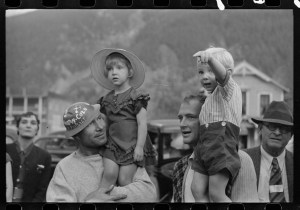
1940s-miners-with-children-in-colorado_8a29486v

Having the right to show up and speak are basic to survival, to dignity, and to liberty. Rebecca Solnit

People with courage and character always seem sinister to the rest. Hermann Hesse

The only kind of dignity which is genuine is that which is not diminished by the indifference of others. Dag Hammarskjold

On Friday as I was preparing to speak to a group of Bard College students about the UN and the ways in which it does and does not promote human dignity among the world’s peoples, I discovered an announcement on the UN Website informing NGOs like ours that access to UN Headquarters was being restricted for the entire month of September.

In that same announcement, NGOs were offered the option of huddling around a nearby street corner to (essentially) “beg” UN staff tasked with the onerous duty of providing half-day-only event passes to NGOs so that they could attend events – like one produced by UN Habitat and another sponsored by the Office of the PGA on a “Culture of Peace” – to which we and others would normally be invited as a matter of course.

There was no prior discussion known to us regarding this change to NGO access, no obvious consultations or negotiations amongst our erstwhile UN/NGO leadership.   Moreover, I would be shocked to discover that any member state – including those who routinely lift their voices in bland and non-specific praise of NGOs, had bothered to invest any political capital in preserving our access during a September period for which our presence has traditionally not been – and should not now be – an issue.

On that same day, on another part of the UN’s website, I discovered that tourists visiting the UN will be allowed access through September 18.  The “plan” for such access is the same arrangement that we and other NGOs had become accustomed to (and more or less accepted) in the past – a two-week hiatus in late September while Heads of State occupy the UN space for the opening of the General Assembly and seating (even for UN-based diplomats) is at a premium.

But let this sink in for a moment:  The money collected from tourists is apparently more important to the UN than the monitoring work of the handful of NGOs (including our own overseas guests) that bother to be present during important UN discussions, many of which do in fact take place in the days before the General Assembly formally opens. Aside from inspiring fresh allegations of hypocrisy regarding how the UN too often treats non-state actors, this move is likely to accelerate a trend which we have long rejected – NGOs that bypass the occasional indifference and indignities of this system by ingratiating themselves to governments – often as well their funders – governments that then ensure access by these NGOs as needed via their own credentials. These quasi-state NGO agents will find their seats at the table and will surely not be milling around on street corners waiting perhaps in vain for some magic entry pass.

Given all of the discouraging news in the world and the many millions of people under immanent threat from armed violence, flooding and starvation, it is imprudent at best (and a serious diverse at least) to worry excessively about one’s own deficits of access and respect.   We do routinely acknowledge both our privileges and our limitations.  But we also understand that access restrictions impact persons far beyond our own office, people who are seeking (and deserving) their own seat in UN policy space, but also the people who depend on folks like us to identify policy niches and opportunities into which a more diverse set of policy actors can hopefully become immersed.

And these manifestations of disregard or indifference are hardly confined to NGOs.  In the General Assembly this week, several states (including Mexico and Singapore) took the floor to complain that the annual Security Council report was both late in arriving to delegations and contained (once again this year) little analysis or reflection on how and why the Council made the decisions it did, and why more peace and security didn’t emerge as the result of so many of those decisions.

In the Council itself, during a week which featured an excellent debate on peacekeeping operations and a powerful statement by Uruguay’s Ambassador Rosselli in response to briefings on the political and humanitarian tracks in Syria, working methods frustrations also flared.  For instance, during a contentious renewal of the mandate for the UNIFIL peacekeeping mission (Israel-Lebanon), Italy’s Ambassador Cardi took the unusual step of chastising the resolution negotiations process – which apparently included veiled criticisms of the mission itself — in the name of the large contingent of Italian forces without which UNIFIL itself could barely function. Japan, which has ably chaired a committee on Council working methods, presented agreed recommendations that stressed matters such as briefers’ brevity and preparations for newly elected members rather than perhaps more fundamental deficits in communications and negotiations that raise frustration levels needlessly.

Like a number of states at the UN, we are fully committed to a framework wherein tradition assumptions of security – based primarily on weapons systems and power-politics – evolve steadily into a more “human security” perspective.  This evolution implies several important transitions, including the willingness to address security-related dimensions across issue frameworks as well as the determination to place human well-being at the center of our policy objectives, well-being that is fully inclusive of cultures and conditions, and that recognizes policy goals resonating far more with sustainable development than with arms races and endless “asymetrical” warfare.

But human security requires more than people promoting more inclusive, progressive policies. The key to successful human security is bringing out the best versions of human beings themselves, people of dignity and purpose who understand and nurture their connections to the communities around them, people who can and do contribute to secure futures in ways other than fearing adversaries, trading in explosive weapons, defending narrow national interests, appropriating resources not their own, or politicizing the application of rights and legal standards that could otherwise help to create fairer and more predictable social environments.

The importance we attach to enabling better people as well as better policy systems will lead us to “double down” this coming year on some evolving commitments in the US and beyond, including on “servant leadership” with colleagues at the Business School of Georgia Tech University; and on “Inner Economy” with a group on the US West Coast associated with Women in International Security, in the latter instance specifically on examining “the inner resources one gains, uses, and loses in the exchanges of daily life.” These and other commitments will hopefully help leverage and inspire more of the traits of character needed to build both sustainable communities and more trusthworthy state and international institutions.

While pursuing these aims, we won’t go begging for access this month on any Manhattan street corner.  As we gaze from this now uncomfortable distance at the policy drama soon to unfold across the street, we will however do our best to discern how yet another UN promise – this time to a cooperative and transparent relationship with non-governmental organizations both around and far beyond UN Headquarters — is currently being undermined.

We remain in this UN community, year after year, because we believe that this essential policy space can be healthier and more highly regarded as it better honors its commitments both to its global constituents and to diverse stakeholders beyond the diplomats: those like us who critique, compliment, cajole and complement the often good work which the UN does in the world; but also those who serve our coffee, clean up after our many messes, keep the heat and lights working, and provide a helpful, steadfast security presence, day after day.

This and more is labor worthy of the day we celebrate tomorrow. It is also labor that deserves more than bureaucratic indifference from an institution whose essential presence in the world we still very much acknowledge.