
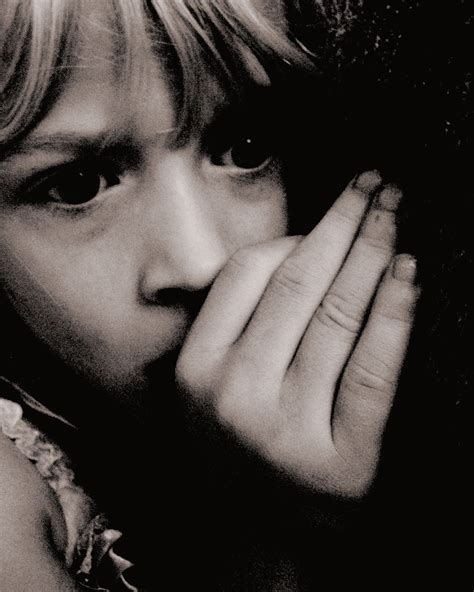
The cave you fear to enter holds the treasure you seek. Joseph Campbell
“Because fear kills everything,” Mo had once told her. “Your mind, your heart, your imagination.” Cornelia Funke
When we are afraid, we pull back from life. John Lennon
We can easily forgive a child who is afraid of the dark; the real tragedy of life is when men are afraid of the light. Plato
I have accepted fear as part of life – specifically the fear of change. Erica Jong
Here is the world. Beautiful and terrible things will happen. Don’t be afraid. Frederick Buechner
Do one thing every day that scares you. Eleanor Roosevelt
I was recently co-moderating a conference on climate and security in South Africa with financial support from my dear friend, Lois Whitman. The conference was the fourth stop in a journey which included rendezvous with several former and (hopefully) future friends and colleagues including inspirational Green Mapmakers in Johannesburg and Cape Town. It also included robbery and assault which left me without credit cards, very short of cash, and with a left arm needing attention which I could not figure out how to get while on the road.
But the show must go on and, with help from my friends including Hussein Solomon, Benji Shulman and Philip Todres, I was able to make every appointment, take care of conference participants and get back to the US for the treatment I would have done well to have gotten in South Africa if only I had the cash to pay for it.
The conference was organized (not entirely successfully) to provide African regional perspectives on how climate change impacts human security. The voices we had organized from places such as Algeria and Kenya, Cameroon and Lesotho were to be joined by MPs and civil society voices seeking to get a handle on context-specific climate threats with context-specific implications for agriculture, civilian protection, the well-being of children and much more. Climate change may not be the “cause” of instability in its diverse geographic settings but certainly is a multiplier of all that instability is and can be – people who can no longer work the land to benefit; people who must keep their children ever-close because of dangers associated with being out in public; people who see no way out of the climate vice except to pack their belongings and try to find more receptive pastures.
It becomes clear in conference events such as this one (despite visa problems affecting some on-site participation) that we know quite a bit about the current climate trajectory and its implications for the already vulnerable. But despite what we know, despite what scientists and others continue to warn, we seem generically incapable of moving beyond our comfortable habits, of taking the initiative to clean up our messes and prepare the table of life for those who will inherit all that we are destined to leave them – elements of progress to be sure, but also the errors that compound the grievance and mistrust which characterizes so much of our current social fabric.
One of the conference participants at the University of Free State took the floor to raise a similar concern – not to amplify the metrics of the trouble in which we now find ourselves but to wonder if we humans are up to the task of preserving and remaking a world on more sustainable terms. Do we actually have what it takes?
Such a pronouncement was not interpreted kindly by all participants, but it was music to my own ears. Our collective analysis, in the end, is often deficient in its integration of the human element, humans whose circles of concern are often seen to be collapsing, humans who can seemingly rationalize any abusive action, humans who are adept at circling the wagons but not so much at figuring out why anyone could possibly be upset with us in the first place. Except in relatively few instances, we refrain from moving in the direction of pain or deprivation. We convince ourselves much too often that there is nothing we can do about the current avalanche of threats from near and far and so we shut the doors and windows and hope that the cascading snowfall at least leaves us a hole to breathe.
We know enough about climate tipping points to know that time is of the essence. We know as well that we are reaching a tipping point on conflict – that global enmity and mistrust are pushing us closer to pointless wars waged with weapons capable only of unjustifiable carnage, unleashing a form of collective punishment which makes the horrors of Gaza seem like a warmup act.
In listening to my South African colleague, I began recalling the origins of my interest in the character – policy nexus, an interest by the way which has subsequently not always resulted in the character growth or policy savvy for myself which I had hoped.
For me, those origins can be tied in good measure to a slim volume published in the 1970s, “Between Faith and Reason: Basic Fear and the Human Condition,” by Francisco Jose Moreno. I was drawn to his adept synergies between the realms of psychology and philosophy, the importance of tying “what we want” to “who we are” including what he refers to as those “partial and self-serving explanations of ourselves” which we hide behind in an attempt to manage what he refers to as “basic fear,” the unfocused fear generated by the testimony of reason that there is much insecurity afoot about which we can seemingly do little, too many people, businesses and institutions seeking our undoing, too little trust in the context of solving problems whose severity is approaching points of no return.
What moved me about the book long ago, especially the earlier chapters, is his adept description of the “hide and seek” we commonly play as we deploy our rational capacities in a limited and circumscribed manner while engaging in what Moreno calls “the desperate search to find something to believe in.” In this context he highlights our predisposition to “attachment to the familiar,” attachment which is rarely the subject of rational scrutiny and which we often defend with vehemence and even self-righteousness. Criticism, even that which is thoughtful and well-meaning, is so often responded to with anger or dismissiveness, two sides of the same coin when we are committed to a life in which we tend to “feel first and then we justify.”
I won’t bore you here with a thorough review of this work (I wrote one in 1978 probably not worth referencing), but I do want to highlight some of his concerns and predictions which are still relevant almost 50 years later and which provides sobering analysis regarding the question of whether or not we are “up to the task” of shedding unhelpful habits and unthoughtful affiliations, up to the task of building healthier communities in a more sustainable world.
- Moreno has great regard (as well he should) for the rational capacities of humans, our ability to “see beyond our instincts” which is both the source of our hope but also the source of our fear. However, he also points out a problem that plagues us in the present – that we are as likely to employ reason primarily as justification for behaviors with dubious, non-rational motivations. Indeed his concern for society is grounded in his view that, for too many of us (and for all of us from time to time) we are committed to “not allowing reason to interfere with what we already believe to be true.” We are as likely to create misguided forms of propaganda through reason than clarity about the world and more especially about ourselves.
- Moreno rightly highlights the “psychological dependencies” that are akin to rooting interests, causing us in too many instances to over-rate those things (or groups) to which are attached and under-rate (or even disparage) the other. Such “under-rating” can take some nefarious forms, including in not-so-extreme instances discriminatory practices and inflammatory rhetoric. We all know this drill in the present: the essentializing discourse, the self-protectiveness, the self-serving judgments of anything that is “not us,” the privileging of our own entitlements and grievances.
- Moreno also laments what he saw as our devolving notions of “freedom,” something which we increasingly “idealize” but something we actually “make little use of.” He points out, rightly I think, that freedom now has less to do with assessment of potential choices and more to do with incarnations of personal preferences. “Doing what I want to do,” is now the principle characteristic of our freedom-laden ideological rhetoric, with “wanting” almost entirely a function of “how we feel,” and with reason lurking in the background mostly to help us ward off and altogether avoid anything which might cause us to pause, to reflect, to assess and, God forbid, to change course.
- The “God forbid” part leads me to the final insight from Moreno, the degree to which the “desperate search for security” has in large measure morphed from religious to political contexts. What some would claim to be a more “rational” pursuit inasmuch as politics are “in the world” rather than in institutions attempting to explain a resurrection, virgin birth or the parting of a sea, Moreno claims that this is more rightly understood merely as a shifting of “dependence.” As with much else in our modern world, the goal for many is not giving reason license to help sort out our lives, make our religion more compassionate and our politics more just, but in using reason as a tool for mask-making, to hide behind romantic love, professional status, material acquisition or religious/political affiliation in an effort to blunt the fear which our uncertain human existence is highly-suited to evoke and which seems to offer few remedial pathways other than “pulling back” or what Moreno called “plunging into dogmas.”
On this Holy Weekend for Christians it is not my intention here to disparage either religion or politics which I could surely not do with a straight face. The intent rather is to point out with more than a tinge of sadness, that the integration of reason and faith, the ability to examine and overcome our ossifying “habits of the heart” and chart a more peaceful and sustainable course, our will and capacity to eschew the unexamined life, this and more continues to elude our grasp, stoking frustration and mistrust in our communities and policy centers. More than we acknowledge, we humans are more than a bit stuck at this moment — stuck with our thoughtless rooting interests and affiliations, our policy resolutions that mean well but have no teeth (see Gaza), and our vast material and technological inequalities which undermine any viable prospects for trust in each other while creating demonstrably more horror than beauty in our world.
We can do better. We can be more thoughtful. We can plunge into practical compassion rather than into dogmas. We can unstick ourselves. We must try.


 gapwblog