
Tag Archives: teaching

Humane Harvest: A Labor Day Reflection, Dr. Robert Zuber

5 Sep
Primary view of object titled 'Wall Street Banquet, Court of Fiestas, Corridor of the Agrarian Revolution'.
Diego Rivera “Wall Street Banquet,” via UNT Digital Library

The air was hot, vivid and breathless–a final fierce concentration of the doomed and dying summer. William Faulkner

People who traveled for so many miles through such horrific conditions in order to find work cannot accurately be portrayed as lazy benefit-scroungers. Patrick Kingsley

The first thing that a new migrant sends to his family back home isn’t money; it’s a story.   Suketu Mehta

Every commodity, beneath the mantle of its pricetag, is a hieroglyph ripe for deciphering, a riddle whose solution lies in the story of the worker who made it and the conditions under which it was made. Leah Hager Cohen

Harvests are a time to remember your sacrifice. William Kamkwamba

The sun was made to light worthier toil than this. Henry David Thoreau

I’ve always been amused by the contention that brain work is harder than manual labor. I’ve never known a man to leave a desk for a muck-stick if he could avoid it. John Steinbeck

In the US we are in the midst of another Labor Day weekend, a time less to honor labor than to forget about it if just for a time.  One more drive with the family, one more picnic with the neighbors before everyone settles in to the routines and responsibilities of fall. For many in this part of the world, this is the end of a summer with many desperate to carve out spaces to reunite with long-isolated friends and relatives or to visit some of the places which inspire mind and soul, places which remind us all that we labor on a planet full of wonder, a planet very much worth more of our care than we currently offer.

While my own brain is still in fog recovery mode from a bout of Covid, it has not stopped appreciating all of the tasks that need to be accomplished in this world for my own life to have the unearned quality it enjoys.  For all of the inefficiencies brought about by (in this country for sure) crumbling infrastructure, bad health choices and off-the-charts levels of personal and communal grievance, there are many millions of people who dutifully teach our children to read, harvest and transport the crops that will sustain us through a long winter, who keep our trains on the tracks and our planes in the air, who ensure that (Flint and Jackson notwithstanding) water is safe from the tap, and who perform a myriad of other tasks whose reliability is perhaps even more essential as levels of social complexity increase and levels of trust in leadership and each other head decidedly in another direction.

I am grateful for all of this and more, even if appreciation sometimes wanes when the trains are running late yet again, my morning berries have been thoroughly colonized by fruit flies or when some other “first world problem” has consumed way more of my conscious life than should ever be the case.  Moreover, as retirement comes more sharply into focus, assessment takes its place alongside gratitude as a major consequence of a life lived long, if not always well.   For after all the writing and monitoring, the mentoring and challenging, the endless stream of houseguests and church guests, and the equally endless errands and other planning that such requires, what has come of all this?  What exactly was accomplished?  What piles were moved?  What policies were delivered to constituencies in a form they could recognize, beyond consensus resolution texts and mere promises of relief?

At this point, I honestly can’t say as I know.  We Global Action folks acknowledge the generosity of our friends and donors and cherish their belief that, at least episodically, we were able to help them preserve their own hopefulness, their own sense that despite all that we know, things are not as bleak for their progeny as they sometimes appear.  We know that many dozens of our interns are out in the world doing good work, often tilting at their own windmills, but also helping people to move towards possibility they might otherwise have forgotten they had.  We also know of the many groups at local level who we were able to help find a place at the table of global policy even if more than a few wondered at some point if the investment was worth the energy. We have worked really hard for many years, and it’s not over for us, but it’s also not been enough.  It was never going to be enough.

And yet despite the ephemeral nature of much of what we have done together, the “outcomes” of such mostly akin to fine sand slipping through slender fingers, there is a certain status (for want of a better word) which has long accompanied this journey.  We get less respect than we used to get, including in UN spaces, but we still get more than our portion.   We get more than the health care workers who endure horrific stresses to extend the lives of people who haven’t done enough to extend their own.  We get more than farm workers who labor in hot fields day after day so that our supermarket shelves can boast some faux abundance, workers with minimal access to health care let alone shade amongst the crops, workers who in many cases do not enjoy sufficient legal protections to allow them to visit family members whom they might not have seen in a generation, allowing them to share stories in person after long and sorrowful absences.  

And we get more than the teachers poised to receive a new crop of students, teachers who seem now to be suffering through one indignity after another, yet more assaults on an already-daunting profession by overly-anxious and/or entitled parents and by ideologues in legislative settings who have taken an often-warped view of “God’s will” as the pretext for curriculum which denies large portions of our history, establishes one version of faith as the “fertility cult” of choice, and ignores the pluralism in which a goodly portion of my own  society’s value to the world is grounded.

On this Labor Day weekend, we must admit that we live amidst a landscape of devalued labor, a landscape from which thousands of caring and devoted teachers and health workers flee their now-utterly politicized professions of choice, more and more people are plotting a permanent if perhaps unsustainable escape from their minimum-wage tedium, and those participating in the “great resignation” are only slowly finding ways to use their time on earth which do not involve months and years of soul-crushing, market driven, repetitive labor.  Moreover, we have not reformed our social status system beyond athletes, celebrities and political leadership, nor have we found the means to create genuinely multi-generational collaborations which allow younger people to gain their footing in a world they are destined to manage, while also allowing we older people facing our own inevitable decline to contribute (even sacrifice) meaningfully beyond the end of our formal employment.

As we in the northern hemisphere face the end of our “doomed and dying summer,” we also continue to face a crisis of labor – of people underutilized, too-often purchased and too-little respected, of status deserved but rarely conferred, people who now broadly threaten to withhold in one form or another the skills and engagement we simply cannot manage without.  As we conclude our seasonal and well-earned trips to the beach or mountains, and as folks like me look back over decades of work which accomplished barely a portion of what had been hoped for, it is clear that the multiple pains of our labor have yet to be adequately addressed.  We will need to more effectively respect and then harvest many skills of labor from all ages and backgrounds if we are to successfully climb out of the holes of acrimony and mistrust, of ethnocentrism and climate impacts, that we have dug for ourselves.  I am at a loss to see another viable path forward.
Logic Choppers: Ancient and Contemporary Threats to Civic Virtue, Dr. Robert Zuber

15 Dec

Euripides

You become just by performing just actions, temperate by performing temperate actions, brave by performing brave actions.  Aristotle

You can fake virtue for an audience. You can’t fake it in your own eyes.  Ayn Rand

There is perhaps no phenomenon which contains so much destructive feeling as ‘moral indignation,’ which permits envy or hate to be acted out under the guise of virtue.  Erich Fromm

When the rare chance comes, seize it, to do the rare deed.  Tiruvalluvar

Discourse on virtue and they pass by in droves. Whistle and dance and shimmy, and you’ve got an audience!  Diogenes

Few are those who wish to be endowed with virtue rather than to seem so. Cicero

May I never, I say, become that abnormal, merciless animal; that deformed monstrosity — a virtuous woman.  Mary MacLane

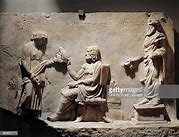
To be in Athens is evocative at so many levels, getting in touch with the ways in which we have far transcended the culture of Socrates, the Sophists and later Aristotle, but also the ways in which we have culturally digressed – failing both to learn some of their hard human lessons and to commit to walking a more virtuous path ourselves.

Such lessons (literally and figuratively) washed over me this week in places like the Ancient Agora, where persons of high intellect once debated profound matters but also (in the case of numerous Sophists) put their “wisdom” up for sale to the highest bidder, apparently after having become quite comfortable with the notion that one could make a handsome living by teaching matters of the heart and mind without having to commit much of oneself to such matters. 

For some of these thinkers (both Socrates and Euripides comes to mind) there was something seriously wrong with making money off ideas that the teachers themselves had largely kept at arm’s length. Thus the pursuit of wisdom, and the pursuit of civic virtue through which wisdom is made incarnate, made way to what James Jarrett referred to as “logic choppers,” people who seemed to love the sound of their own voices more than they actually sought to impact a world that had in some sense ossified into “accepted ways” that served only a sub-section of the public for which they were ostensibly intended.

One can argue (and these rhetoricians did endlessly) about matters that we modern sophisticates have largely abandoned – notions of “universal” truth untainted by culture and power (they surely are) as well as the ways in which our senses can deceive us on a regular basis  (they surely do).  But what some of the more sophisticated Sophists also understood is that, our need for permanence notwithstanding, the world is spinning in and out of acceptability.  And thus we have a duty to question what some would prefer to hold aloof from dialogue or critique – “certainties” revolving around their own needs and aspirations in so many instances. 

I was also able to revisit the responsibility, firmly understood by Aristotle and others, to invest part of ourselves in civic space as an indispensable element of civilized living.  Ours is hardly the first age which has largely abandoned civic virtue for ubiquitous distractions or mercenary applications of inherited wisdom.  But the pace of distraction has certainly intensified in our time as has the “value” that nothing matters except what can be bought and sold, what can be counted and commoditized.

What has clearly suffered in too many instances is the time and/or inclination to influence the civic culture that, in our collective absence, has become less thoughtful and more vulgar, and less “user-friendly” than some might have thought possible.  This is not mostly about people like me who have been granted the privileges of time to reflect with virtually-assured policy access on a regular basis. Indeed, this time in Athens has only strengthened my appreciation for other actors; especially for archeologists and art historians, for curators and translators, without whom none of the takeaways from this trip – even my half-baked ones – would have been even remotely possible.  That people such as these have not been properly honored or enabled in civic space is, indeed, a symptom of a greater alienation, a genuine civic malfunction. 

No, the enabling of access to public space, the striving for public effectiveness, isn’t about (or shouldn’t be about) competition for attention or status or “followers.”  It should be more about the willingness to engage and share beyond our zones of comfort, to force ourselves to “weigh in” on the most important social and political matters of our time with all of our cognitive and emotional skill, not just the matters that weigh more privately on our minds and hearts, on our careers and pay stubs.

And those matters are surely related to virtue, a term once deemed so high-minded that it caused some logicians around the Agora to wonder aloud if it could even be taught, a term now largely discredited due to the ways it has been “worn” by the unscrupulous and the mercenary, the vain and the self-righteous.  We all know of too many people who can “whistle and dance” for an audience but can’t reach them in some deeper place than the one that merely desires to be entertained. We also know people for whom virtue is merely a convenient gateway to envy or hate, an excuse to belittle or humiliate, a rationale for some version of “might makes right,” even (certainly in the case of still-too-many women) a means of holding people in place with no commitment to releasing their power.

The lessons to be learned for me from this Athens sojourn are that virtue, to the extent that it is still relevant in modern terms, must be practiced and made visible in public spaces.  It is not, it cannot be reduced to some private possession.  It is neither a jewel to protect nor a club with which to beat others over the head. In this context we must recognize that there are times in every life where we are called upon to repurpose at least part of our precious virtue for the sake of a greater good, to embrace the murkiness of leadership, to be willing to make the difficult decisions knowing that all the relevant facts are not in, while understanding that the decision might cause harm to some in the hope of possibly freeing many others from a worse fate. Such times as these are perhaps rare for most; but they are also emblematic of our still-potent ability to blend successfully the virtue we have cultivated with real-time solutions to real-world crises as they are made known to us. 

The other lesson is one which we have spoken of often in this space: that we are not who we proclaim ourselves to be as much as what we choose to practice in the world.  As Aristotle and others recognized, the path to bravery lies in brave acts; likewise the path to justice lies in just acts.   If there is a path back from the brink of lofty rhetoric that so-often in our time (and in times past) masks paper-thin commitments, it is through a thoughtful and resolute engagement with civic space. This invitation must be directed less at the professional class of do-gooders such as me, but at all who seek it, all who can contribute to making our civic life more civil, all who can still be tempted to join this party that might turn out to be key to keeping our very civilization civil.  

What the great thinkers and logic dissemblers around the Agora apparently could not recognize clearly enough is that the circle of civic concern essential to grow and sustain their vibrant culture was simply too small, certainly too male, and likely too addicted to the “rush” of rhetorical flourish.  We do indeed have the responsibility to teach as some of the ancients made crystal clear; teaching not only the things that will lead to “secure employment,” but the things that will lead to attentive and thoughtful lives, lives of purpose and intentionality, lives that can puncture the veil of civic space and demand a place for themselves.

And perhaps most of all, lives that resonate with those of their teachers who, in every sense of the word, seek to practice what they preach.