Archive | December, 2020

Class Act: Transition Time for Some Special Council Members, Dr. Robert Zuber

27 Dec
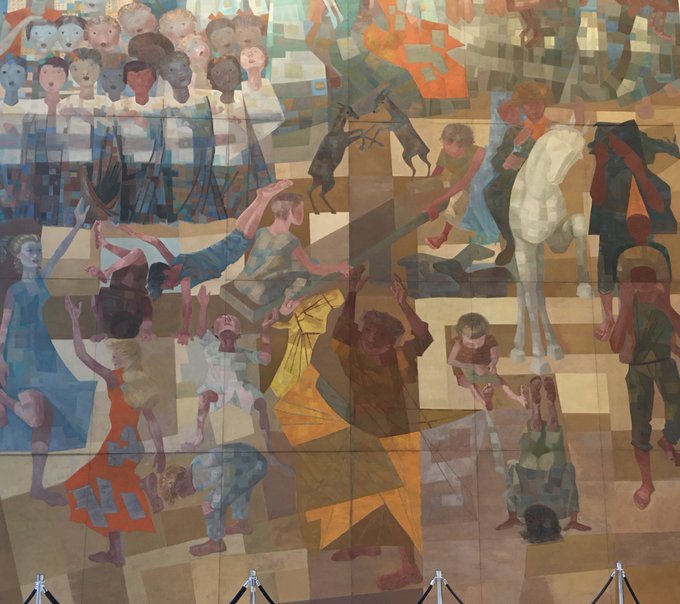
Mural in United Nations Security Council

Security Council Chamber Mural from Norway

What Modest Dreamers We Have Become.  Zadie Smith

Don’t spend time beating on a wall, hoping to transform it into a door.   Coco Chanel

I want you to listen to what your conscience commands you to do and go on to carry it out to the best of your knowledge. Viktor E. Frankl

It had long since come to my attention that people of accomplishment rarely sat back and let things happen to them. They went out and happened to things.  Leonardo da Vinci

Judge your success by what you had to give up in order to get it.  Dalai Lama XIV

Our greatest fear should not be of failure but of succeeding at things in life that don’t really matter.  Francis Chan

Accepting oneself does not preclude an attempt to become better.  Flannery O’Connor

It is common to this specific weekly resource that, while its origins are squarely within the framework of multilateral policy engagement in general and the UN in particular, posts about the UN are always among the least read of all our contributions.

Some of this resistance is understandable.  The UN has issued many resolutions, made many promises, that are candidates for “effort” awards more than achievement awards.  We “try” our best to mobilize governments on climate change, but global temperatures have actually risen since the signing of the Paris accords.  We “try” to get governments to honor their groundbreaking commitments to the sustainable development goals, but a combination of spreading COVID-19 infections and lukewarm intent to change what needs to be changed — and not just what we are “willing” to change — has set some of goals and targets back in ways we might not have anticipated. And on COVID itself, we are almost a year into a pandemic that has killed people on a scale that is generally reserved for our World Wars, a staggering total despite daily briefings and admonitions from UN agencies to better align our behavior on infections and vaccines with existing risks.

And this recitation does not even count the UN’s attempts to promote democracy and human rights in a world increasing seduced by authoritarians and their ethno-centric lenses, nor by the conflicts that continue to rage, year after year, resolution after resolution, tarnishing the Security Council’s reputation and creating humanitarian emergencies from Myanmar to Cameroon which drain massive amounts of member state resources and push the formidable skills and bravery of UN humanitarian personnel (and their NGO counterparts) to the breaking point.

Despite its many tentative-only successes and resolutions more ignored than embraced, the Security Council remains the focus of a UN system still struggling to convince its own members to abide by the values and obligations which underpin membership.   Council meetings and press briefings deliver routinely higher levels of press and NGO interest.  Council failures and successes are more likely to make front-page news than anything else that the UN does or tries to do (at least until the current pandemic exploded on to the scene). Council reform –whether related to its member-state composition or the use of the veto by its permanent five members – is always a “hot” topic among the general UN membership, most of whom feel, not without reason, that the Council represents the dynamics of a world long-gone and is simply no longer representative of current geo-political realities let alone of the security needs and interests of UN states.

And yet, despite disconnects within the Council itself and with the general membership, despite a legacy of half-successes which impacts virtually every aspect of the UN’s work –personnel and states largely without a voice regarding how the Council does its business — states frequently do not hesitant to campaign for an elected, two-year Council tenure.  Part of the motivation for this is clearly tied to national prestige and the right to chime in on security policy on a regular basis (either as individual states or as part of a group such as the African (A3+1), the “1” for this cycle being St. Vincent and the Grenadines).  But it is also a lot of work, especially in chairing “subsidiary organs” and especially for small missions such as the soon-to-depart Dominican Republic which managed to “punch well above its weight” but still had to work much-too hard to keep up with the other, larger members of their “class,” let alone with the likes of the US, China and Russia.

Complicating matters is the fact that the Council itself is currently lacking leadership commensurate with its lofty status. This is not a high-water mark for representation from the Permanent Five members, a situation which has created openings for elected members, especially so for the five members of this current, soon-to-depart class.  But it also has exacerbated tensions as elected members attempted to steer the Council into more productive if not calmer waters, to help move the world (as the Council chamber mural suggests we should) from greater conflict to a greater peace. In this class, Germany was the core provocateur, publicly chiding (mostly) Russia and China for ignoring the human rights dimensions of conflict and for enabling rights abuses on a virtually unprecedented scale in places like Syria.  However, the fact that Germany was perceived as stepping beyond protocol while largely ignoring abuses by other permanent and elected members was not lost on the Chinese whose final retort to the German Ambassador upon completion of his tenure was “good riddance,” a phrase which the Chinese might want to hold at the ready as a new group of feisty (we hope) elected members joins the Council on January 1:  India, Ireland, Kenya, Mexico and Norway.

This incoming group might do well to study the class they are replacing which, to my view at least, ticked off the boxes that make elected members key to Council effectiveness and, we can only hope, eventual Council reform.  Of these boxes, a couple stand out: First, elected members must be willing to expose willful limitations in the Council’s ability to fully grasp and address the manifold causes and implications of global conflict.  From Belgium’s extraordinary advocacy for children’s rights and welfare and Germany’s insistence on climate change and gender dimensions in all conflict analysis, to Indonesia’s constant reminder that the Council’s job is ultimately to “save lives” and that “neighbors know best” how to achieve peace in local and regional contexts, this group was not shy about the “thematic obligations” which can broaden and enliven the traditional security formulations which have defined the Council “bubble” for far too long. Add to this South Africa’s leadership on strengthening (and properly funding) African peace operations and the compassionate but insistent interventions by the Dominican Republic, including on the security challenges of Caribbean and other small island states, and this class was clearly prepared to expand security dynamics to embrace all that we need to address and not simply those that the permanent Council members are willing to address.

In addition, this class perhaps as much as any others, clearly understood its responsibility to the rest of the UN membership, indeed to the global community, to ensure that a range of current security threats remain in focus.  This group understands as well that its individual and collective responsibility for peace and security does not end when this calendar year does, but can be engaged in other multilateral forums, including the UN’s own General Assembly and Peacebuilding Commission. And by working with the new class of elected members as well as the class which rolls over into 2021, they can help keep pressure on the Council to end its sometimes petty bickering cloaked in national interest and demand successes in areas that really matter, especially areas of conflict prevention and resolution that can spare the people of this planet famine and displacement, trafficking and discrimination in multiple forms.

One of the fears coming out of the current pandemic and accompanying global insecurity is that we have collectively become “modest dreamers,” content to slog along in our own lives and excuse our institutions for doing likewise.  We have willingly lowered our own sights and simultaneously lowered the bar for places, like the UN Security Council, for which “success” is now too-often measured in small, tepid increments rather than in grander insistences.  For those who still care about such matters, and I think we all should, thanks must be extended to this outgoing class of elected Council members for reminding us that our bar for peace must always be set high, that the pandemic is not an excuse for failing to make and keep promises that matter to the world, that the Council can and must set a better example for others rather than wallowing, session after session, issue after issue, in the self-generated muck of its own politicized limitations, and that the values of the UN Charter are for the permanent members to aspire to as well — to improve their own performance — and not merely to serve as one more threat to hold over the heads of other states.

I didn’t always agree with the priorities and statements of this class of elected members.  But they were on the right track most of the time and, more than that, they cared about what the Council was doing and why, the messages that were being sent out from this chamber to those millions of women, men and children whose lives has been ravaged by the conflicts the Council was unable or unwilling to stop.  This was a group that wanted to “happen to things,” happen through their thoughtful clarifications but also through their willingness to make the necessary sacrifices, open every accessible door, and use all the tools in the toolbox – not only the coercive or threatening ones – to ensure both the well-being of global constituents and a UN community more compliant with the values which bound the community together in the first place.

We urge the new class of elected members to take up their responsibilities with that same sense of determination, to help prevent conflict whenever humanly possible but also to restore the full functionality of Council processes and insist on successes that are worthy of what might be still – and must become again – the world’s single most important chamber. 

And to those of you who care enough about the UN and its role in global security to wade through this post, our heartfelt gratitude is extended to you with best wishes for a healthier and more peaceful new year.

Rays of Promise: Post-Pandemic Goals Worth Winning, Dr. Robert Zuber

20 Dec
See the source image

People will do anything, no matter how absurd, in order to avoid facing their own souls. One does not become enlightened by imagining figures of light, but by making the darkness conscious. Carl Jung

One need not be a chamber to be haunted.  Emily Dickinson

I wonder if that’s how darkness wins, by convincing us to trap it inside ourselves, instead of emptying it out.  Jasmine Warga

Long is the way and hard, that out of Hell leads up to light. John Milton

They gave it up before they ever really even got started. J.D. Salinger

I am terrified by this dark thing that sleeps in me; all day I feel its soft, feathery turnings, its malignity.  Sylvia Plath

I need more of the night before I open eyes and heart to illumination. Denise Levertov

I’m writing this morning on the darkest day of the year in the northern hemisphere and from a city currently with the highest number of COVID infections in a state with the highest number of COVID infections in a country with the highest number of COVID infections.  Chants in the US of “we’re number 1” have never seemed as shallow to me as they do at this particular moment, a time which continues to put extraordinary strains on those few for whom caregiving is a vocation not circumscribed by what seem to be the ever-shrinking circles of concern of so many of the rest of us.

The media is chock-full of disturbing health-related and political messaging of late, pitched alongside the hope that the miraculously rapid development of COVID vaccines will stem the current tide of death and misery early in the New Year.  Will we in the north survive this infection-saturated winter? If so, will we be able to recover our human touch or will we remain secluded our smallish worlds, defined more and more by computer screens and video distractions? Moreover, will we make good on pledges for equitable access to vaccines for the entire global community?  It would seem to be almost a miracle of another sort if we could collectively walk back the fear and self-preoccupations which have defined us through much of 2020 and affirm – through policy and practice – this global responsibility (thankfully reinforced in large measure by UN agencies) to ensure global access to vaccines which offer hope, in the short-term at least, that we can dodge full-scale damage from this plague and, once again, manage to save ourselves from ourselves.

However, many social and media commentators now recognize publicly what many of us have feared privately – that the dysfunctional personal and political traits which have accelerated in this plague year – not birthed this year – will be hard for us to shake.  We have had another long year to justify turning our backs on each other, creating enemies from conspiracies, transforming climate denialism into an art form, holding fast to beliefs about the “myth” of COVID in some instances to our last dying breaths.  The vaccines will, if all goes well, keep the pandemic in check, but they will have no direct impact on the creeping “malignity” of our spirits, darkness which we have chosen to bury inside of ourselves and which is unlikely to be dispelled either by medical breakthroughs or by the sunlight now poised to oh-so-slowly return to our northern skies.

And, sad to say, we are getting scant assistance in confessing and overcoming our darkness from our institutions of governance, which often seem trapped in their own bubbles of self-importance and self-interest.  The US is only one of what seem to be a growing number of states seduced by authoritarians and their sycophants who seem to believe that holding power is about taking advantage of opportunity rather than serving the public interest.  And in so doing, such “leaders” are reinforcing for their publics values based on a nefarious “creed” described recently by Anne Applebaum: “Everyone is corrupt, everyone is on the take.” We’re living in a world without morals or principles and “all that matters is whether or not you win.”  Such a cynical, transactional view of the world has certainly taken root in the US, and those roots are now deeper and broader than some of us are willing to admit.

Thankfully, we know that corrupt practices and winning at all costs does not define us entirely, even in this plague year. Our own social media is inundated each week with incredible acts of courage and kindness that offer hope to our present and help ensure a post-pandemic quality of life for future generations.  From tree planting in the Sahel to emptying prisons of the politically incarcerated and tortured, initiatives are underway in so many global settings to stem the current tide of normative decay and blatant cruelty. In this the UN is doing its part beyond rigorously promoting the “global public good” of vaccines.  This week alone we witnessed some good movement towards a global moratorium on the use of the death penalty, some enthusiastic support for political and peace progress in countries such as Afghanistan and Sudan, and a couple of compelling events focused on the need for human rights-based approaches to counter-terror operations and more robust institutions of accountability for those who commit mass atrocity crimes.

But like the many countries at present whose social fabrics are fraying at the edges, the UN has also been subject to increasingly stubborn postures and nasty exchanges that seem a bit startling in an institution that generally reinforces diplomatic politeness (with occasional touches of passive-aggression.)  In the Economic and Social Council, diplomats hurled vague accusations, including at ECOSOC’s current president (Pakistan), over the fate of a still-unendorsed Political Declaration that is badly needed to help galvanize state support for the UN’s Decade of Acton on sustainable development. And in the Security Council, its often-ugly and rarely-impactful discussions on Syria’s long decade of violent abuses flared up even further this week, punctuated by China’s assertion that Germany’s soon-to-be-concluded humanitarian leadership on Syria and its overall Council tenure have been a “failure.”  

We don’t share China’s judgment in this, but we are mindful of what these exchanges represent – signs of further fraying of our standards of propriety and mutual responsibility.  States are now dabbling in what too many of us in our personal realms are doing as well – shutting the metaphorical doors and windows to divergent viewpoints and basking instead in the echo chambers of our self-selected, self-interested versions of “reality.” Whether in Washington, Brasilia, Moscow, Damascus or any number of other capital settings, our leadership is increasingly acting out a cynical script, less about inspiring people to be their better selves and more about keeping our darkness locked within where it can best “haunt” personal and collective potential.

Given this pervasive dearth of inspiration by much of our political leadership, the way out of our darkness, out of the hell that we have relentlessly manufactured for ourselves, will likely be long and hard.  And the near-miraculous vaccines now becoming available to those most vulnerable to infection will not by themselves bring the illumination that we so long for in this season.  But they might eventually help give our species one more chance – a chance to end corrupt practices in governance, increase responsiveness by our international institutions, guarantee better health and educational access, and make our political systems of checks and balances more reliable, our judicial systems better able to ensure accountability for the worst of human crimes, and our economics more equitable and eco-responsive.

Given where we now find ourselves and despite a bevy of pandemic-related disruptions and uncertainties, if winning is indeed, “everything” then surely this is the “winning” to which we should aspire. This is the “illumination” which we should now be preparing to welcome, illumination which can effectively dispel darkness to which we have become both conscious and committed to push out from our most remote inner spaces.  Indeed, if we are to reset our pandemic-infected, darkness-infused present, it will take more than governments, more than global institutions, certainly more than vaccines.  It will, as Jung noted, take more of us with the courage to “face our own souls,” to confess our dark spaces and then persevere to the brink of our capacities in illuminating and incarnating opportunities to make our world greener and less violent, opportunities that might just represent our last, best chance for life.

This evening in the northern sky, a rare convergence of planets will lead to the sighting of the “star of Bethlehem,” a “star” that was believed to settle over the manger where the baby Jesus lay many centuries ago, a mysterious star illuminating a sacred promise. This year’s version of manger season offers its own inspiration and guidance on how the promises that define our own time might best be implemented and sustained, how our current darkness might have its power over our values, priorities and actions finally and fully dispelled.  We would do well to urgently discern its message.

A Call for Devotion in Treacherous Times, Dr. Robert Zuber

13 Dec
See the source image

The desire to reach for the stars is ambitious. The desire to reach hearts is wise.  Maya Angelou

Live for each second without hesitation.  Elton John

True progress is to know more, and be more, and to do more.  Oscar Wilde

It doesn’t matter how great your shoes are if you don’t accomplish anything in them.  Martina Boone

We must do extraordinary things. We have to. Dave Eggers

They can’t see the distant shore anymore, and they wonder if their paddling is moving them forward. None of the trees behind them are getting smaller and none of the trees ahead are getting bigger. Donald Miller

Something – the eternal ‘what’s the use?’ – sets its bronze barrier across every avenue that I open up in the realm of hypothesis.  Gustave Flaubert

In this time of multiple crises affecting all corners of our planet, the UN finds itself in a place both pivotal and peculiar.  Despite restrictions due to a stubborn pandemic and resulting financial constraints, the UN has maintained its pivotal convening function, holding the attentions of states on issues (and the mix of stakeholders) that might otherwise slide further down the list of national priorities.  

Over the past several days, including a rare Saturday convening, UN officials and agencies converged around issues ranging from famine in Yemen and ensuring accountability for ISIL abuses committed in Iraq to the link between stemming illicit financial flows and silencing the guns across Africa, and a formal honoring of those often-beleaguered frontline health workers who help ensure our right to health care during a pandemic while putting their own right to life in daily jeopardy. 

Added to this was the main Saturday event, an assessment of our ambitions for achieving the Paris Climate goals five years after passage.  In several ways, the event was a let down, filled with statements and accompanying images of the climate emergency about which we really do not need a reminder, images offered with scant explanation of how some legitimately hopeful initiatives on renewable energy, reforestation, biodiversity protection and more will quickly add up to a successfully decarbonized planet. 

Indeed, in assessing the impact of this “Climate Ambition Summit,” the president of next November’s 26th UN Climate Change Conference of the Parties (COP26) in Glasgow, Scotland publicly lamented that while Saturday’s event resulted in some innovative climate commitments, we are also forced to face up to the fact that “this is not enough.”  We need higher levels of ambition, much higher in fact, to resist the coming wave of “climate catastrophe.”

Indeed we do.  But where is the “higher” going to come from?   How can we encourage more “urgency in action” with regard to climate and famine, conflict prevention and inclusive political participation? How do we compel more of this urgency and then link it, arm in arm, in a timely and effective manner?   What are the missing ingredients in our approaches?  What obstacles do we continue to place in our own way?

Part of the problem for us at the UN is related to the way in which we do our business and how the pandemic has, in some ways, reinforced some already dubious habits.   Having worked out some of the kinks in earlier iterations of our digital policymaking, we are now literally inundated with virtual policy events.  These are relatively easy to organize, carbon-friendly and allow diplomats to come away believing that something tangible has happened for the world while we non-diplomats imagine that we actually have some role in global governance and its functional priorities complements of zoom and other platforms. 

These digital events are certainly helpful to the organizers insofar as it allows them to “brand” their work and solicit funding based on the assumption that these events actually “make a difference.”  But do they really?  Do they actually get us closer to a world that is defined less by catastrophe and violence and more by inclusion, abundance and stability?  And if so, how does that happen?   And for whom does that happen?  

Recent events don’t allow for excessive optimism regarding impact.   In the case of the Climate Ambition Summit, we got what we are now accustomed to getting in our currently digitalize policy spaces – prerecorded (or pre-fabricated) messages by “global leaders” attempting to put their best feet forward, telling us what they want us to hear through presentation content that, for the most part, falls far short of what is needed if we are truly to avert climate catastrophe.  Such statements are generally measured, even formalistic, short on assessment of national policy measures and even shorter on inspiration.  The leaders represented at the Summit were speaking, not listening,  sharing what they are doing and what they plan to do — some of which is quite good –but mostly failing to reference the multiple levels at which change must occur and be enabled, especially those manifold initiatives at local level which remain key to habitat restoration, sustainable agriculture and a host of other planet-restoring measures.

There was also at this Summit a bit what has become ubiquitous gushing over “civil society participation” with some innovative and hopeful interventions from that sector, including several compelling short videos courtesy of the World Wildlife Fund.  In another part of the program, the voices of young people could be heard, voices of frustration due to their largely unheeded calls for robust and urgent climate action, for meaningful paths to policy participation, for taking with proper seriousness the warnings of science and then adopting measures that are not confined by the conveniences of bureaucracies or government agencies.

The pre-recorded statements by global leaders made no mention of this frustration.  They didn’t hear it.  And even if they had, there would likely be little penance forthcoming for the wasted opportunity of Paris, that moment five years ago when what we did in the Paris aftermath might have mattered more than it has, that time when we could have prevented more of the fires from raging, the ice from melting, the species from going extinct, the droughts and floods from spreading out their carnage, the ocean storms from achieving ever-higher categories of energy and destruction.  We could have done this, we should have done this, but we didn’t listen to the children.  Our commitment to their collective future has, to date at least, proven shamefully deficient.

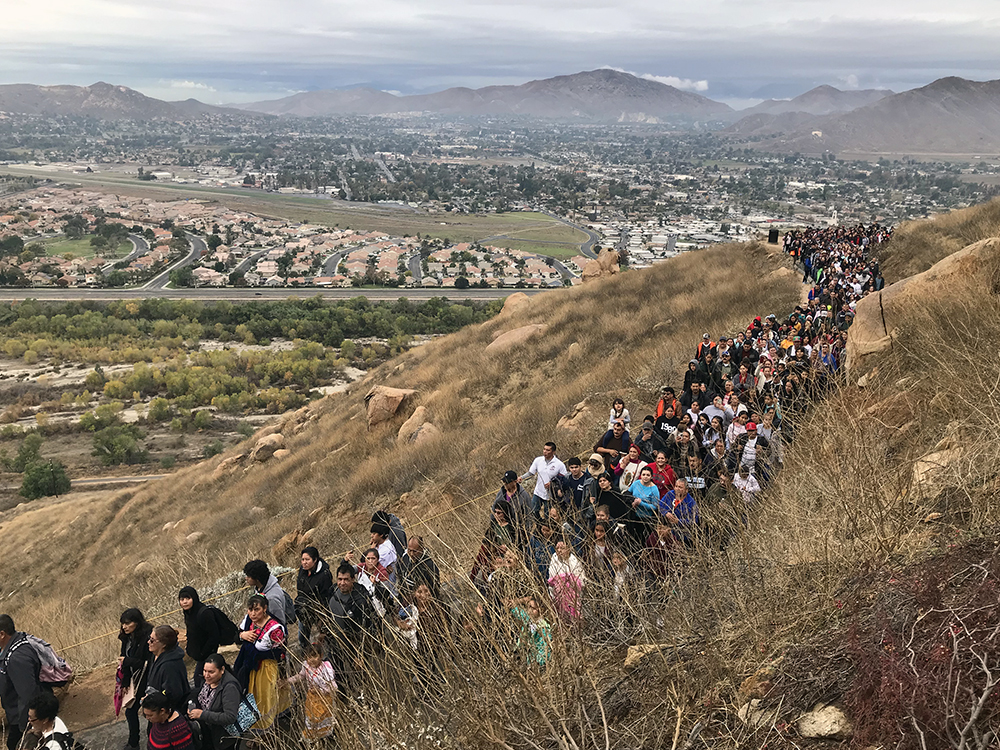
Perhaps ironically, far from our centers of policy influence, there was another call to movement on Saturday, a movement typically involving many thousands of persons by vehicle or on foot (even on their knees) whose lives are often directly impacted by climate change and armed violence, by corrupt practices in institutions large and small, sacred and secular.

On this Saturday was the Feast of Guadalupe, a time in past years for people across Mexico and beyond to practice their devotion to their blessed Mary, but also to share in that devotion energy with the many who gather at the Basilica in Mexico City and the many more who have drunk from this energizing reservoir of faith and commitment in years past.

I have seen this devotion first hand, enough to probe a few of its virtues and shortcomings, enough to see the looks on the faces of pilgrims who could not survive, would not wish to survive, without the sustaining energy that comes from a commitment deeper and more consuming than most of us could hardly imagine beyond the domain of our children and other close family members.

It is sad that this devotional energy, like so much else this year, has moved online due to the pandemic, a digital setting which cannot possibly convey the depth of devotion displayed by people from all walks of life, many of whom likely do not have digital access and wouldn’t accept the substitute if they had.  But there is a lesson still looming here for the rest of us, a lesson about the limitations of our bureaucratized discourse, about our inadvertently patronizing attitudes towards local initiatives and actors, about our tone-deafness towards the very stakeholders we routinely seek to bring into our midst.

When it comes to climate change or other global challenges, the need for urgent action is fully apparent as are some hopeful technologies and other initiatives developed to give us a puncher’s chance to shift course in a sustainable direction, to overcome the “bronze barrier” of our “what’s the use” cynicism that pervades too many persons and sectors, even in our churches and government agencies.  Still our current trajectory remains simply insufficient to the health and healing of the planet or of ourselves, and we should promptly cease defending levels of policy progress or personal dedication that appear unlikely to bend that curve.  

In this time of events running apace of outcomes, it would actually be helpful to hear a few honest expressions of remorse from our leadership, penance for opportunities missed that may not come our way again, expressions of devotion – real devotion – for our planet and its diverse inhabitants. It’s not good politics, I suppose, but If we are to convince the audiences that must be convinced – including the youth in climate vulnerable states, and the small-holder farmers, drivers and shop-keepers walking that long road to Guadalupe — we need to demonstrate our capacity to reach their hearts and not only their “interests,” to “wear” at least some of the devotion which they know full well is essential to getting us over the hump regarding responses to threats that we have merely dabbled in for far too long.

Metaphorically speaking, we’re actually now wearing the right shoes, but its long past time to do important things in them and to do those things without hesitation, without excessive weight from protocols and bureaucracies, without the excuses that stand in the way of learning, doing and being more than we now are. If our incessant policy “paddling” is ever to get us close to safer and saner shores, the craft we paddle must be fueled in greater portion by devotion, that energy which communicates to people everywhere and in all circumstances that their current and future lives, their current and future well-being, are genuinely worth paddling for.

Normal Range: Honoring a World of Difference, Dr. Robert Zuber

6 Dec
Image

If you are different from the rest of the flock, they bite you.  Vincent O’Sullivan

Everyone’s on the cliff edge of normal. Holly Bourne

In a society so governed by superficiality, appearances, and petty economics, dreams are more real than anything in the “real world.” Dominic Owen Mallary

Everything was perfectly healthy and normal here in Denial Land.  Jim Butcher

I claim to crave a bit of normalcy but now that I have some, it’s like I don’t know what to do with it. Gayle Forman

The normal world has no room for exceptions and always quietly eliminates foreign objects. Sayaka Murata

Though they may not (yet) have influenced your own life in ways that are tangible to you, the UN managed a quite remarkable week, albeit mostly in virtual formats, holding events on issues from aviation security and Africa security sector reform to transforming rural food systems and addressing the distinctive aspirations and circumstances of people of African descent.

Amidst this cacophony of policy deliberations and interests, two significant events grabbed headlines while another didn’t generate the interest it should have.  On Wednesday, the UN Secretary-General presented his “State of the Planet” address (at Columbia University) in which he detailed our “assault on nature” which continues largely unabated into the present, an assault that requires an environmental equivalent to “silencing the guns.” The SG passionately reminded us of the many “suicidal” climate impacts that we have done too-little to mitigate and which threaten us with both political instability and biological collapse. As he so often does, he ended his “world on fire” remarks by reminding us that we now have the skills and technology needed to right this ship, but both now require the most urgent application.

One of those aforementioned (what Peru referred to as “slow motion”) climate impact is directed related to human health, specifically the frequency of deadly pandemics or which COVID-19 could eventually prove to be merely a warm-up.  Thus, it was with great anticipation that we greeted this week’s General Assembly special session on COVID-19 response which focused on ensuring that approved vaccines are understood by states and stakeholders as a “global public good.” The other priority (with leadership from Latvia) was on reversing course with regard to the current “Infodemic,” the preponderance of misinformation and disinformation – some perversely intentional – which has complicated vaccine rollout and disappointed the researchers who spoke to the GA in humble (and sometimes frustrated) tones about their aspirations for the vaccines they helped develop, test and authorize for use at a remarkable, unprecedented pace.

These two were the highest of a series of high impact events, and rightfully so.  Both climate change and the current pandemic (and their overlapping “Infodemics”) are creating havoc in communities urban and rural, jeopardizing both our food security and our mental health, making life uncomfortable for the most privileged and literally unthinkable for the least privileged with more sliding into the latter category each and every day.

Such was the context for the annual meeting of the treaty body on the Rights of Persons with Disabilities that we look forward to every year, a time when the hallways of the UN are usually filled with people who are “disabled” in mostly physical ways but who have often struggled mightily and successfully in an attempt to overcome for themselves and others what are generally recognized as the primary barriers associated with disability – activity limitations and participation restrictions. 

The pandemic spread made it impossible to gather on site as we are often honored to do, to be in the presence of persons who come to the UN with their walking sticks and wheelchairs, with their hearing assistance and seeing-eye dogs to make the case that their “normal” is as entitled to rights, respect and recognition as that of any of the rest of us; that participation in social and political life is not a privilege to be bestowed but a right to be recognized; that the “soft bigotry” that Australia highlighted this week is related not only to the codification of a more conventional “normal,” but also to an arrogant ascription of low expectations for persons who can’t “do what we do” as though they might not also be able “to do what we can’t.” 

These misplaced codifications and expectations exacerbate struggles within communities of disability, mighty ones in fact.  Persons with physical disabilities must navigate a world designed largely to reinforce the comforts and conveniences of the conventionally abled, and we have heard story after agonizing story over many years as their largely inaccessible homes and communities makes timely relocation from bombing and flooding, from famine and insurgencies, particularly treacherous for both themselves and those accompanying them.  Moreover, especially in this time of pandemic, we recognize that “disability” in many global regions is taking some precarious and unwelcome turns towards higher levels of poverty, epidemics of narcotics dependency and mental illness, and other factors making it harder and harder to thrive amidst a host of still-potent accessibility and participation-challenged contexts.

This “soft bigotry” takes other forms, from our increasing reliance on the “normal” within our families and other social bubbles to the functional denial of the rights and skills of those billion + persons in our world who struggle to find their way within societies which seem to be designed and crafted around the abilities they don’t have and not the ones they do have.  

Some of this seems not so “soft.” The tendency to shrink “room for exceptions,” or even to insist that others hold their places on a “cliffs edge” of our own sense of what is normal, is sadly not unusual throughout our life cycles.  Parents of young children can experience high and sometimes even competitive levels of anxiety as they assess whether their children are following a “normal” development path.   Older children can certainly be prone to “biting” or otherwise intimidating classmates who for one reason or another fail to conform to “normal” social expectations, especially those of the “cool kids.”  Later in life, those sufficiently privileged can create domiciled havens in communities which virtually guarantee that the only people seen and heard on a regular basis are those who look and act “like us.”

While some of this is understandable, especially regarding the development of young children, the general pattern here is conducive to another sort of “Infodemic” – the (mis) communication that what is different is to be deemed alien or even threatening until proven otherwise, such “proof” being hard to come by.  In this time of pandemic and economic uncertainty the tendency to roll up the metaphorical rug of our lives; to restrict the circle of concern to a more “manageable” size; to let others worry about the access, participation and other rights of persons with whom we are rarely in contact; to restrict our experiences in the real world and then allow others to fill in reality gaps with conspiracies and other “information” designed to push people further into dens of grievance and retreat; all if this creates an unwelcome context for difference, including of ability/disability, one that reflects yet another, albeit largely unseen, barrier to rights and respect.

The irony here is that, as the pandemic and its economic consequences spread and deepen, as the impacts of a warming climate accelerate displacement and exacerbate insecurity and political tensions, the numbers of the “not normal,” the people who now find it harder and harder to cope in societies which seem habitually distracted at best and hostile to their needs and interests at worst, these numbers are certain to grow.  And as those who gathered around a largely virtual UN this week to assess the treaty guaranteeing the rights of persons with disabilities recognize, our responsibility is only deepening to ensure that those growing numbers of persons in all their aspects and circumstances, with all their levels and types of ability, are not also forced to cope with life challenges in some lonely, inaccessible, insecure isolation.  

Whether we like to admit it or not, we live in a world of “exceptions” beyond range of our ascriptions of normalcy, people whose diverse talents and abilities, whose broad and even uncommunicated aspirations and longings, are still not in sufficient balance with our “normal,” our taken-for-granted, than our fragile social, security and environmental networks can likely tolerate.  We need to honor these billion + life forces better than we do at present, to watch and listen to them, to consider more of what they have to teach the rest of us, even if they don’t realize they’re teaching! Moreover, we would do well to regain some of our misplaced sensitivity to the access and participation needs of others, protecting them as jealously as we guard our own. And we need to do this as though our lives depend on it.

More than many recognize, they do.