Archive | March, 2021

Water Slide: Tackling our Freshwater Deficits, Dr. Robert Zuber

28 Mar
See the source image

I am haunted by waters.  Norman Maclean

If you can’t go through an obstacle, go around it. Water does.  Margaret Atwood

Human nature is like water. It takes the shape of its container.  Wallace Stevens

Dip him in the river who loves water.  William Blake

He liked the darkness, but this was oppressing. It almost flooded his being. Dean F. Wilson

Water, like love, is good at finding where it’s meant to be. Corinne Beenfield

By early light I am asleep in a nightmare about drowning in the Flood. Billy Collins

The UN had a good week in some key aspects, including an excellent Arria Formula event on threats to UN peacekeepers from improvised explosive devices (IEDs) and a political declaration adopted by the General Assembly affirming  the need for “Equitable Global Access to COVID-19 Vaccines” (click here) at a time when “vaccine nationalism” is only slowly giving way to a more generous – if also economically self-interested — disposition on vaccine distribution, including to those nations which have still to administer a single shot.

It was also a week when the UN assessed its commitment to ensuring freshwater access to the millions of people for whom such access is tenuous at best.  On World Water Day, many sectors within the UN system paused to weigh responsibilities to the water and sanitation goals which are key both to sustainable development and to addressing the “conflict multiplier” which water increasingly represents as, in too many communities across the globe, access to safe water has become a luxury increasingly elusive to secure though ultimately more precious than silver or gold.

As the president of the UN Economic and Social Council, Ambassador Akram of Pakistan warned this week, at our current rate half the world’s population will likely suffer from severe water stress by the year 2050.  This was perhaps our most cited comment (on Twitter) in the past week, a testament to the misery, displacement and potential conflict which diplomats and the larger policy community recognize is looming on our collective horizon if we cannot find the urgent means to ensure safe and equitable water access.  We are reminded every day of the many people worldwide for whom mere hand-washing in the midst of a pandemic creates harsh water use choices, others for whom the dignity of adequate sanitation remains a distant dream. And as noted with regularity by our colleague in El Salvador, Marta Benavides, our response at policy level is often to talk too much and change too little. Water, despite what we wish to believe, is no longer “finding where it needs to be,” and we are yet doing too little to help restore lifegiving pathways.

Most of those who would read weekly missives such as this one don’t need to be reminded of the central role water plays in our contemporary world as the largest repositories of fresh water on our planet – the polar ice caps – continue to melt into the sea at unheard of rates, and as climate change imposes alternating jolts of flooding and drought on many millions of people living in poverty, undermining their food security and setting many on uncertain journeys to find places where this most basic of needs can be procured, albeit in unfamiliar and even hostile contexts. 

In many of our so-called developed countries, water-related imagery often infuses our artistic and unconscious lives though, as a pragmatic resource, we have largely taken it for granted.  While we occasionally recognize that vast differences in water quality exist in communities across a country like the US, we nevertheless anticipate that what flows from our taps remains both reliable and relatively safe, an entitlement of sorts for which there is simply no equivalent in war-torn or economically stressed communities.  Indeed, we know here that the water we have available for our own sanitation purposes is generally (and often needlessly) higher in quality than any water available at all to families in communities habitually threatened by the twin killers of flooding and drought.

There are “solutions” of sort for countries and communities facing water scarcity but they are often complex.  Moving water from where it is abundant to where it is lacking is a herculean task as is funding and installing technologies to desalinate sea water for coastal communities.  But NGOs and state partners are making welcome progress in creating community-based solutions to elevate water abundance – including catchment capacity to ensure that water availability remains accessible.  Lamentably, such solutions face obstacles from the shifting modalities of climate change to unregulated industries in our broken economies that raise the stakes such that water “caught” is often dangerous for personal use. In too many places, the “slide” of water, both of access and quality, continues unabated. A “dip in the river” in too many places is less a refreshing interlude and more an invitation to deadly disease.

Still, there is much that we in the “water entitled” world can do to sharpen our attentiveness to water-related concerns while contributing to a safe water environment for others.  Part of this relates to, as already noted, our personal water uses: watering less, flushing less, fixing leaks, restricting uses of toxic fertilizer and other products that are likely to enter – and degrade – our water supply.  One could add to this measures to mitigate the diverse impacts of climate change on our farms and ice caps – walking rather than driving to errands, shifting to green energy sources, doing more to restore watersheds or eliminate the river toxins that lead to ocean pollution (and fund those who lead on this work).  Our water savings may not make a dent in other, drought-stricken areas of the world, but greater water-use consciousness can lead to support for policies and practices that offer some tangible hope for the drought-affected.

But another aspect of our responsibility is related to an issue that we are often loath to discuss in these parts – our patterns of consumption – specifically consumption related to water demand, the uses beyond our sight, beyond our attention, even beyond our comprehension.  For those of you who have the time and interest, I urges you to click here for the website of Water Calculator which, along with sites such Foodnorthwest.org provides hard data on water usage and wastewater which accompanies the production of some of our most common consumer items.  From automobiles and leather goods to beef production and avocados, the vast quantities of water needed to produce our personal transportation and the items we voraciously pull from the shelves of our local big-box stores, can be shocking. 

One wonders: Would we willingly adjust our consumption patters if we knew that the leather shoes we have been coveting required an average of 3,626 gallons of water to produce?  Would we be so quick to replace our bed sheets if we recognized that an average of 2,839 gallons of water were required to make them soft and attractive? Would we adjust our eating habits if we knew that it takes as much as 450 gallons of water to prepare one cow for the grilling of steaks or the sandwiches of “we have the meats” Arby’s? And would it matter if we were to grasp that so much of what we in the “developed” world now consume is produced in communities which themselves are often water insecure, products made by the hands of women and men who use more water at work than they and their communities might ever be able to access in their non-working hours? And, if they were able to access it, knowing that it might well have been made more toxic through runoff/effluence from the very facilities which pay their often-meager wages?

These loops represent ethical and even spiritual dilemmas both “haunting” and unsustainable. As many of you recognize, this is the season of Passover for Jews and Holy Week for Christians, a time to celebrate divine gifts but also to reclaim the responsibilities commensurate with those gifts.  As one of my good colleagues put it, “No Sunday is sacred until we all have access to safe water and sanitation.” This is not an uncomplicated aspiration, to be sure, but it is an important one, and could well be a sacred one. Those of us who can choose to over-water our plants, luxuriate in our showers, and indulge in water-saturated consumption with impunity could stand to learn some new habits, habits which acknowledge our collective, growing water scarcity with grave implications for human health and global tension.

In a time when what relatively little fresh water remains threatens to be commodified, when this “global public good” is in danger of becoming one more resource to be controlled by wealthy individuals and states, we need to reset our water priorities at policy and personal levels without delay.  If we fail to do so, our ability to prevent our conflicts, feed our populations and protect our people from pandemics and other diseases will become increasingly impaired.  We are at a critical moment now regarding this most fundamental of resources.  Any further slide in access and quality jeopardizes many and ultimately serves the interests of none.

Open House: Strategies for Blunting Xenophobia, Dr. Robert Zuber

21 Mar
See the source image

Justice is what love sounds like when it speaks in public.  Michael Eric Dyson

All this because one race did not have the decency to be ashamed of dealing in human flesh.  Whitney Otto

Instead of being blind to race, color blindness makes people blind to racism.  Heather McGhee

Genie had sidestepped the daily trauma of the historical record, the sometimes brutality and sometimes banality of anti-Blackness, the loop of history that was always a noose if you looked at it long enough.  Danielle Evans

We must dissent from the indifference. We must dissent from the apathy. Thurgood Marshall

Yeah, I love being famous. It’s almost like being white, y’know?  Chris Rock

Later today, I will be speaking on a panel, organized by my friends at LINGAP – Canada intended to give a platform to the voices of people from diverse cultures – in Edmonton and beyond – who suffer violence, injustice and discrimination on a regular basis, much of which is directed at Asian and indigenous communities and which is only now finding a place on the mainstream radar.

I generally decline invitations like this.  I have had my “say” on matters of exclusion and discrimination many times over the years and I retain platforms such as this for those of you who still honor me with your reading.  But it’s not my turn now, if it ever was.  From our policy centers to our urban streets and rural pathways, the line of people waiting for a few moments at the global podium now stretches to the ends of the earth.  As people like me are fond of saying, the problem we face is not levels of talent, but of opportunity.  It is this latter privilege we still resist sharing, resist declaring, despite what we can amply chronicle about the former.

In the twilight years of my erstwhile “career,” I want to do my full part to link talent to opportunity in all global regions, to ensure that our emerging “global commons” is more than rhetorical, is more than a branding opportunity for groups like Global Action or a business opportunity for large corporate interests.  People have a right to voices that matter, voices which influence, voices with impact. They don’t need me speaking for them and they don’t need oversized influencers packaging sound bites from the policy margins to service unrelated interests.

Indeed, the more we try to engage and promote it, the clearer it becomes that the agenda of ensuring inclusiveness remains among the most challenging on our collective plate.  Our news feeds are filled to the brim with images of violence against people of Asian and African descent, violence which in many instances is the jarring manifestation of many years of covert discrimination, the ways in which what for a time was left to simmer in privatized settings has been released forcefully into the public domain. We now routinely see evidence of people wearing their xenophobia like a badge of honor, a badge woven deeply into souls rather than merely being pinned to outer garments.

Our personal and cultural bubbles have lost whatever measure of clarity and transparency they once might have had, substituting instead an opaqueness that allows our grievances to multiply like in some oversized petri dish until we are ready to burst out and confront the human objects of our scorn, indeed, the humans whom we have largely objectified and now turned into threatening caricatures of themselves, caricatures about which we feel the need to actually understand little. Indeed that is part of the discriminatory deal, isn’t it, turning complex human beings and their cultures into categories worthy not of respect but of suspicion, knowing just enough about people to “know” that they are essentially unworthy of dignity or respect.

This tendency to objectify and dishonor, certainly prevalent in the US, is not confined to any one political or ideological persuasion.   A series of maps published recently chronicles the degree to which people have increasingly segregated their domiciles by political affiliation, choosing to live (and isolate themselves) in areas where most folks are tolerant (if not always accepting) of their political, cultural and religious viewpoints.  At one level this approach is understandable, especially for families caught in the current cultural crossfire.  Clearly it is not the “job” of children of “First Nations” Asian or African descent to solve the embedded racism and xenophobia that rear their ugly heads in manifold ways and which have resisted the best efforts of some remarkable figures over time to finally end their reign of terror.  Nor is it their job to “take one for the team,” to absorb the epithets and bullying, the rejections and outright violence that we adults have not done nearly enough to prevent.  From the standpoint of protecting children from the worst of our collective behavior, our thickening demographic bubbles make some sense.

But of course, the bubbles themselves don’t resolve the violence and discrimination, the objectifying and the demeaning.   If inclusion is to mean anything more than rhetoric, it cannot be attained if people are not also willing to leave their corners of the ring and engage with others in the center.  How do we create safer spaces for people to engage, to invest more in each other, to understand more about the “other” besides the ways in which they allegedly “threaten” our own, entitled ways of being?

Part of the answer clearly embodies a policy dynamic.  I was pleased this week that at the UN, alongside excellent events on preserving water resources and the impact of climate disasters on agriculture, alongside as well the gender-focused inclusivity promoted at the Commission on the Status of Women, there were several events that highlighted the growing divides of race, religion and culture that continue to impact international peace and security.  During thoughtful discussions that highlighted the toxic effects of racism, xenophobia and discrimination against Jews, Muslims and persons of African and Asian descent, it is becoming more and more apparent that diplomats worldwide are worried – as well they might be – about the many ways we seem to be tearing each other apart, rupturing what remains of human unity in ways that policy can only partially heal.

Among the highlights for me of the week’s discussions were concerns expressed by New Zealand’s Ambassador and others of the extent to which COVID-19 has helped “open fractures” wider and deeper than we have seen in some time.  Indonesia warned against our sometimes “empty words” with regard to justice and tolerance. Pakistan noted during the Islamophobia event the importance of rejecting “distortions of our common humanity and their selfish motives.”  At that same event, UN Secretary-General Guterres warned about our spreading “epidemic of mistrust and discrimination” mirroring the admonition of Niger’s Ambassador to “build bridges not burn them.” A Rabbi at this week’s event on anti-Semitism was particularly graphic in his warning to the online audience that “those who burn books would also burn human beings.”

But perhaps the finest presentation of the week on this topic was offered by the new US Ambassador to the UN Linda Thomas-Greenfield.  Her remarks were personal, poignant, and challenging.  She described the racism she has lived through as an “ignored cancer,” encouraging those impacted by it to “stare it down,” to do everything in your power not to “internalize” its messaging.  She also pointed to a role for policy in efforts to minimize such messaging, noting that “we can’t always change peoples’ hearts, but “we can change the rules.”

Indeed, we must change the rules and then insist that those rules be followed.  But as this UN week made clear, as my own experience confirms, we must never abandon the task of changing hearts, the hearts of the racists and anti-Semites, the hearts of those pumping out grievance and affixing them to alleged, objectified threats, and yes, our own hearts as well.  Indeed, if we want better policies, policies that incorporate diverse voices and retain the trust of global constituencies, we who have regular access to policy processes must become better people ourselves.  The wider public will never fully trust our treaties and resolutions unless they can also trust those who craft them.  Opening safe space for other perspectives, other views, is one sure avenue to that trust.

And there is another dimension to this, one which some in the Edmonton community I will later address have taught me well – that the path to a genuine understanding of others across divides of culture, race and faith while long, is also rich.  To reach the finish line, we must be willing to get close enough to touch complexity, to replace assumptions with realities, to dwell in the nuances of other lives long enough to understand that our own personal challenges are not so different than theirs, and that we too have ideas, prejudices, assumptions and behaviors that would be better off relinquished than reinforced.

At the same time, we would do well to remember that there are things that you can never know about people unless you have spent time in their homes, to see first hand how people organize their lives and care for their families, to get a sense of their priorities and how they invest their precious hours, to better understand the multiple influences that inspire and guide what they care about more and less.

In my life, I have been multiply blessed by often-remarkable and honorable people from many global regions, people of diverse backgrounds and interests who have opened their homes to me, who have honored me with their hospitality and complexity, who have helped ensure that their joys and burdens become part of the backdrop of my own work in the world.  It is a gift I can never repay; indeed it is a gift that enlarges souls, expands minds, and makes hearts beat a little differently, and can do so for many others as it has done for me. As the UN diplomats themselves have attested, we can and must change the rules.  But we should also encourage others (and maybe even ourselves) to take a few more risks and engage more deeply those experiences, those stories, those voices that can inspire the changes we are obligated to make in the world and in ourselves.

Death Dancing: Choreographing a Mutually-Assured Future, Dr. Robert Zuber

14 Mar
See the source image
Fritz Eichenberg

If we didn’t move on, who could move in? William Sloane Coffin

Monsters don’t exist. It’s men you should be afraid of.  Niccolò Ammaniti

This is the stuff we’re made of, half indifference and half malice. José Saramago

And if we are sometimes accused of sins of which we are innocent, are there not also other sins of which we are guilty and of which the world knows nothing?  Iris Murdoch

 All that could be seen in him was the urge to hurt, and it was, as it always will be, the most dreadful sight in the world.  Susan Cooper

One doesn’t have to operate with great malice to do great harm. The absence of empathy and understanding are sufficient. Charles M. Blow

There is a reprint of the Eichenberg engraving posted above which has been pinned on a bulletin board in my messy home office for over a quarter of a century.

I have it there not because I entirely resonate with Eichenberg’s sometimes jarringly dark worldview but because I do embrace what I understand to be his core message. For much of our history, indeed for too much of our present, a perverse message of “child care” which the engraving seeks to parody has held sway. In this piece, we see a group of older men of grisly countenance joined by children whom they are purported to protect surrounded by the weapons we who work in the security space know all too well — the missiles and tanks, the war planes, the automatic rifles — that have long been used to threaten and intimidate, an expensive blanket of weaponized “protection” more likely to raise anxiety through the metaphorical roof than offer reassurance.

The children in the engraving are not being comforted so much as being egged on by grotesque caricatures of “caring” adults. One child is getting a ride in a tank; another is fondling a missile; a third is taking target practice on a hanging human figure cheered on by one of the adults. Others are merely seen pointing guns at others in the room, each with an older “mentor” ensuring proper technique, reinforcing the notion that the activities in this room are “normal,” that the children should become as comfortable, even reassured, around this arsenal of death as the determined and mostly uniformed adults have come to be.

Of course, this “comfort,” passed on from generation to generation has a price. Indeed, at times a very high price. I was intrigued and saddened this week by a story I was tipped off to about the F-35 fighter jet program in the US, a program that, according to The Hill, is likely to fully cost out at $1.7 Trillion. Yes, with a T. It is a dangerous world indeed and military planners are surely losing sleep trying to manage conflict threats that our skilled negotiators and mediators have not yet figured out how to mitigate, let alone resolve. But this weapon with its record-setting price tag and uncertain strategic value represents flawed decision-making that might even give the Eichenberg figures pause.

At a time when a pandemic has stripped local economies of trillions of dollars; at at time when a warming climate threatens both our biodiversity and our agriculture; at a time when trust among peoples in each other and in their institutions of governance is waning; at a time when a bevy of new security threats and conflict triggers cannot be solved through conventional military applications no matter the cost or technological sophistication; there is an urgency — especially in these moments — to rethink our security investments, to do more than merely pass on our weapons-related addictions to another generation as we might pass on an old vehicle or pocket watch.

The UN is figuring out the multiple ways in which armed conflict and its weapons are both a cause and consequence of so much misery in our world. Thanks in part to the persistence of a string of smart, vocal, elected Security Council members, the implications for security from still-insufficiently addressed climate change have become more and more apparent. And in the week just passed, a US-organized debate on famine and food security in the Security Council as will as a Swiss-chaired report launch from the Open Ended Working Group on “developments in the field of information and telecommunications in the context of international security” reminded us once again of the multiplying dangers we now face — dangers for which our omnipresent weapons are still in some quarters, by some flawed logic, seen as a solution.

There was much good discussion in the food security debate, including from both India’s Ambassador and the World Food Programme’s ED David Beasley, who reminded delegations that humanitarian assistance, while essential, is not a solution to grave food insecurity; rather it is the resolution of armed conflict. This point was taken up as well by Council members such as Niger and Mexico which are particularly vulnerable to the effects of the trafficking in and the still-under-regulated trading in weapons. Moreover, all members seemed in sync with the simple point made by SG Guterres that “if you don’t feed people, you feed conflict.”  

In another UN chamber, the cyber-report (and accompanying discussion) made several important points, including that “increasing connectivity and reliance on ICTs without accompanying measures to ensure ICT security can bring unintended risks, making societies more vulnerable to malicious ICT activities. While not named as such in the report, activities that should be mentioned under this rubric include the increasing ability of hackers to disrupt the functioning of all manner of civilian and military infrastructure including, as we saw earlier this year in the US, the safety and security of our most dangerous weapons.

Lamentably, some of the member states that ostensibly carry the flag for a more human security-centered approach, that are the most rhetorically engaged regarding our ever-evolving security responsibilities, continue to fuel conflict back-door through their abundant arms sales, their disproportionate emissions, their self-serving trade agreements, their reluctance to commit fully to multilateral agreements until it has been clearly determined that national interests are also served. Or at least those “national interests” as determined exclusively by national leadership. In this regard, we were sad to note, with OXFAM executive director Bucher, the number of states which mourn food insecurity but also make it more likely through their incessant acquisition of weapons. In this same vein, it was a bit jarring to hear the UK minister reject those states that, in his view, tend to see other human beings as “insignificant” while his government continues to sell weapons to most all who seek them, including to conflict-compromised Saudi Arabia.

While monitoring these discussion on the impacts of famine and malicious cyber actors on peace and security, we were reminded that one of the challenges that has eluded successful resolution for many years and which continues into the present is related to establishing the full costs of armed conflict. How do we “price out” misery in places like Yemen and South Sudan? How do we factor in costs related to trafficked and traded weapons let alone the damage they inflict on local education and agriculture? How do we calculate the costs of the fear that keeps people prisoners in their own homes or on the move in search of safer domiciles? How do we assess the costs from generations whose learning has been jeopardized or whose food and health deprivations are almost certain to require long-term care assuming their survival in the first place? And how do we factor the costs associated with depleted fish stocks and bee populations, of conflict-inducing discriminations of the basis of race, gender or culture, or of the increasingly sophisticated cybersecurity malfeasance that puts all of our civilian and military infrastructure at direct risk?

These are not hypothetical accounting issues. We are now modernizing nuclear weapons and planning to put some of our most deadly armaments in space under “dual use” cover, all at great expense in resources no longer available to to support vaccinations or habitat restoration, small farmers or safer, healthier schools. We are willing to spend trillions on a fighter plane with no obvious strategic advantage but balk at providing livable wages for workers or taking better care of the immigrant communities without which most “developed” economies would collapse. We want children in school but then tolerate the disincentives that lead many to leave school behind for dangerous jobs, for forced marriage, even for recruitment into armed groups.

And still our oceans fill with plastic, our children face depression from a loss of childhood, our communities live in fear of those who brandish trafficked weapons, our civilian and military infrastructure remains vulnerable to malicious attack, our children living in conflict zones face starvation, the consequences of which will linger even if food provisions ultimately arrive in time to keep their frail bodies alive.

This and more constitutes our own “dance of death,” movements (and choices) more complex than those engaged around Eichenberg’s militarized table, but which are more clearly recognizable in our own time. We know that weapons are not the solution to our endless political disagreements, our climate crisis, our biodiversity loss, our mass displacements, our pandemics now and to come, our increasingly vulnerable infrastructure. And yet we continue to make weapons of increasing sophistication, make them for recipients that don’t need them and probably shouldn’t have them, weapons that promise much more ruin than security, weapons which drain our national accounts for no clear human purpose. Our dance card continues to call for weapons. And so we build, and then build some more.

In this season of Lent for those of Christian persuasion, the stark rhythms of betrayal and loyalty, death and rebirth, are just some of the themes in play. Especially for those of us for whom the end is much closer than the beginning, death in this life is simply part of the deal, a deal which requires all of us to eventually “move on” such that others can “move in,,” such that others can take the lead and share their most creative impulses, can try their hand at solving the problems which generations before them left sitting on the table, can change the program such that we spend more time dancing for health and life and less time dancing for malice and indifference.

But their own dance card might well be too difficult to pull off unless we who are still here can choreograph the world as it is now to become less weaponized and intimidating, to abate our “urge to hurt” and demonstrate more empathy and understanding beyond our now pandemic-challenged rhetoric. The question for the international community is not whether we die, but whether or not we kill ourselves off through malfeasance or indifference, through grossly misplaced spending priorities and the failure to relinquish significant portions of national interest to solve life-or-death problems which, as the UN rightly notes on a regular basis, cannot be solved by any state alone.

Death may be inevitable. This current, complex iteration of our “deadly dance” need not be.

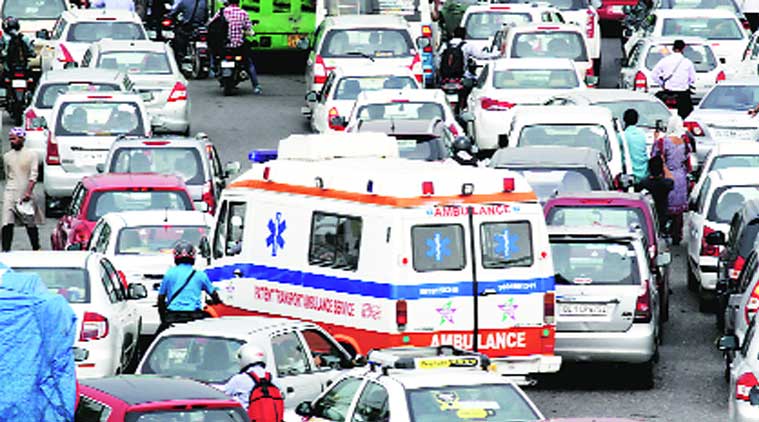
Ambulance Chasers: Clearing a Path for Policy Change, Dr. Robert Zuber

7 Mar
See the source image

They were partners. They were two halves of the same brain.  Margaret Peterson Haddix

It was an honor, to be listened to closely, to be heard. Meg Waite Clayton

She was hearing the words. They just weren’t registering on her Richter scale of sanity.  Dakota Cassidy

Life is a long preparation for something that never happens. W.B. Yeats

In a sense we are all prisoners of some memory, or fear, or disappointment – we are all defined by something we can’t change.  Simon Van Booy

Life is so constructed, that the event does not, cannot, will not, match the expectation. Charlotte Brontë

It wasn’t a particularly momentous week at the UN, though there was plenty of momentousness in the world to discuss, including the growing threat from hate speech and atrocity-crime level violence committed in the Tigray region of Ethiopia and against protesters on the streets of Myanmar.  In addition, while a session on the use of chemical weapons in Syria fell flat – largely due to the lack of new information from the existing investigative mechanisms – there was nonetheless a palpable sense of frustration in diverse sessions that 10 years into the Syrian conflict, the violence still continues, the disappearances and arbitrary detentions still continue, the foreign occupation still continues, the displacement and material deprivation still continue.

Those of you who still find some value in these weekly missives know of our preoccupation with a relationship between structure and outcomes, especially in multilateral forums.  We affirm that solutions to global problems, much like personal ones, are undermined by gaps between rhetoric and response; between promises made and promises kept; between the growing expectations of the parties and honest appraisals of what it is possible to achieve (or not achieve), including by the UN or any other institutional frameworks. Such appraisals would do well to point out other sources of potential relief beyond the most obvious, underscoring that the attainment of relief supersedes any other concerns, including the authority of the relief-giver.

If a child requires urgent medical assistance, the over-riding goal is to get the child to hospital.  It matters less who transports the child than that the child arrives in time to stave off disaster. 

In many ways, it seems, the international community has lost touch with that fundamental principle.  While public approval for the UN remains high within most of its member states, and while the UN maintains its singular function as a convener of dialogue regarding the world’s greatest challenges, there are also flaws in a system that is so heavily dependent on the permissions and funding of large states; that invests massive amounts of skill and resources providing assistance to people damaged by the conflicts we are too institutionally “conflicted” to stop; a system that is constantly “selling” its work to its state benefactors without clear assessments of where that work has gone off the rails, where we might actually be “unfit for purpose,” and where self-inflicted institutional and political impediments have become the erstwhile traffic jams that threaten to prevent constituents from receiving what we have given them every reason to expect from us.

We still insist on driving the sick child to the hospital ourselves even when there are other vehicles in better operating order and more at the ready.  We often insist on being at the center of things, at the core of solutions and resolutions.  Our institutional branding has become at times almost insufferable, people of considerable skill and integrity forced as a matter of professional protocol to tell us much about “what they’re doing” and little about how its working and, heaven forbid, what else needs to happen in the world beyond our bubbles and their aspirations to ensure that the metaphorical child reaches the hospital in time.

Thankfully, from various parts of the world in our zoom-saturated existence, officials and civil society still come into UN spaces to share and report, to attempt to put a human face on “global problems,” to remind diplomats and NGOs alike that what we’re doing isn’t quite working as we intended, that the vehicle holding the “sick child” is too often stuck in horrible traffic as the child’s vital signs plummet and with few willing to sacrifice their place in line to free up the ambulance ‘s path.

But if this week was any indication, those summoned to “brief” this UN community on global crises might be losing confidence in our ability to do more than “tick” our own boxes of concern, to hear and then file-away testimony as though we are somehow doing these leaders a favor by allowing them to present.  Twice in the span of a couple of days, two female NGO leaders – one from Syria and the other from South Sudan, shared frustration at the ways in which their testimony seemed as likely to enable inertia as galvanize a tangible, sustainable response.  Each in their own way they made clear the pressures they feel from colleagues who wonder what the point is of engaging the UN on issues it has failed to resolve over many long years.  What can the General Assembly and Security Council possibly need briefers to tell them about these longstanding crises that they don’t already know? After all, as Wafa Moustafa noted about Syria after questioning the value of speaking to a General Assembly session, “you’ve all seen the photos.”

Indeed they have. We all have. From Syria, from Yemen, from DR Congo, from Myanmar, discouraging images seen over and over to the extent that they are now insufficiently evocative except perhaps insofar that they remind us of the consequences of our collective inability to translate diplomatic dialogue into sustainable peace. As Jackline Nasiwa of South Sudan noted in the Security Council, “we are tired of sharing the same stories,” lamenting that what she highlighted as the considerable resilience of the South Sudanese people “is clearly fading” in the face of ongoing, persistent, unresolved trauma.

And once finished with their own statements, both of these women were expected to listen to a series of largely predictable responses from delegations, expressions of concern largely genuine but also untethered to much in the way of fresh thinking or fresher commitments, anything that might possibly register on the “Richter scale of sanity” of these women.  In many ways the responses from delegations merely confirmed the lament – that we are not only unable to fix what is so clearly wrong, but that we have few good suggestions for where relief might be found beyond our own walls and values.  We can’t fix the problem, or so it seems, and we really don’t know who can.

The concerns of these women and of the people they serve and represent deserve a better outcome than words falling to earth like seeds on concrete.

With all due regard for the mindset of civil society – hoping for more, insisting on more than we are ever likely to see ourselves – we are right to insist that there is something collectively the matter with us here, something which lies at the heart of  the frustration punctuated by the women briefers this week. We talk about the world as though we are in a race to survive a series of deadly pandemics but we act too often as though the world suffers merely from a simple head cold.  We take our sweet time, preferring to delay appropriate action until we reach consensus, forgetting that consensus is an aspiration not a demand, forgetting also that while national priorities differ, the fundamental obligation of this system to prevent violence in the first instance and alleviate the suffering such violence causes should never be up for grabs. Not here. Not in this place.

One suggestion for the UN going forward is that it thoroughly examines its use of the term “partnership,” a phrase so utterly overused and misunderstood that it has lost much of its “flavor,” has in fact degenerated into something akin to proximity and assistance. Our “partners” are the ones who are “around” and help us do our job. They are not, apparently, the ones who help shape what that job is, how it is conducted, how its successes are measured, what course corrections might be required. They are not, apparently, the ones whose briefings demand responses akin to “what we are going to do differently now,” what are we as a community prepared to rethink and renegotiate in order for women such as these briefers to take something of value away from the session, perhaps a sense that they were really listened to and, in these instances at the very least, an assurance that human misery trumps institutional protocol as the motivation and inspiration for our common work. Like most of the rest of us, these women are not “partners” in any real sense, not yet “halves of the same brain,” but voices that we solicit when we need them, voices that we tap when we need to show concern genuine at one level, intangible at another. This is not real partnership. This is not enough.

Public opinion polls regarding the value of the UN notwithstanding, there is a fair amount of cynicism afoot regarding the ability of the international community to ensure that our metaphorical ambulances are able to get to hospital in time to save their patients. When women such as Ms. Nasiwa and Moustafa question the value of their UN testimony — not its content but its audience — we need to take serious note. It may be that we all are defined by things we cannot change. But the violence, heartache and trauma embedded in their testimony, this must change. Most all of us have endured the experience of not being heard, of urgency more often patronized than acted upon. I worry that women such as these will stop speaking to us at all, will rather take up the search for settings where there is closer synergy between rhetoric and response, where there is a higher probability that the ambulance will reach its intended destination. This is an outcome the UN can and must do more to avoid.