
They were partners. They were two halves of the same brain. Margaret Peterson Haddix
It was an honor, to be listened to closely, to be heard. Meg Waite Clayton
She was hearing the words. They just weren’t registering on her Richter scale of sanity. Dakota Cassidy
Life is a long preparation for something that never happens. W.B. Yeats
In a sense we are all prisoners of some memory, or fear, or disappointment – we are all defined by something we can’t change. Simon Van Booy
Life is so constructed, that the event does not, cannot, will not, match the expectation. Charlotte Brontë
It wasn’t a particularly momentous week at the UN, though there was plenty of momentousness in the world to discuss, including the growing threat from hate speech and atrocity-crime level violence committed in the Tigray region of Ethiopia and against protesters on the streets of Myanmar. In addition, while a session on the use of chemical weapons in Syria fell flat – largely due to the lack of new information from the existing investigative mechanisms – there was nonetheless a palpable sense of frustration in diverse sessions that 10 years into the Syrian conflict, the violence still continues, the disappearances and arbitrary detentions still continue, the foreign occupation still continues, the displacement and material deprivation still continue.
Those of you who still find some value in these weekly missives know of our preoccupation with a relationship between structure and outcomes, especially in multilateral forums. We affirm that solutions to global problems, much like personal ones, are undermined by gaps between rhetoric and response; between promises made and promises kept; between the growing expectations of the parties and honest appraisals of what it is possible to achieve (or not achieve), including by the UN or any other institutional frameworks. Such appraisals would do well to point out other sources of potential relief beyond the most obvious, underscoring that the attainment of relief supersedes any other concerns, including the authority of the relief-giver.
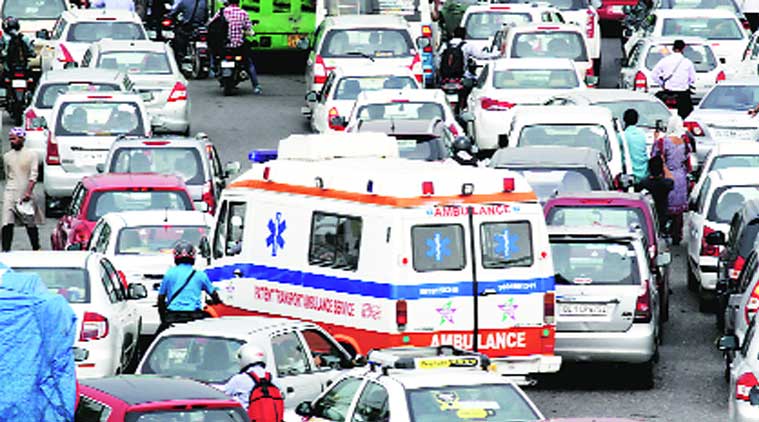
If a child requires urgent medical assistance, the over-riding goal is to get the child to hospital. It matters less who transports the child than that the child arrives in time to stave off disaster.
In many ways, it seems, the international community has lost touch with that fundamental principle. While public approval for the UN remains high within most of its member states, and while the UN maintains its singular function as a convener of dialogue regarding the world’s greatest challenges, there are also flaws in a system that is so heavily dependent on the permissions and funding of large states; that invests massive amounts of skill and resources providing assistance to people damaged by the conflicts we are too institutionally “conflicted” to stop; a system that is constantly “selling” its work to its state benefactors without clear assessments of where that work has gone off the rails, where we might actually be “unfit for purpose,” and where self-inflicted institutional and political impediments have become the erstwhile traffic jams that threaten to prevent constituents from receiving what we have given them every reason to expect from us.
We still insist on driving the sick child to the hospital ourselves even when there are other vehicles in better operating order and more at the ready. We often insist on being at the center of things, at the core of solutions and resolutions. Our institutional branding has become at times almost insufferable, people of considerable skill and integrity forced as a matter of professional protocol to tell us much about “what they’re doing” and little about how its working and, heaven forbid, what else needs to happen in the world beyond our bubbles and their aspirations to ensure that the metaphorical child reaches the hospital in time.
Thankfully, from various parts of the world in our zoom-saturated existence, officials and civil society still come into UN spaces to share and report, to attempt to put a human face on “global problems,” to remind diplomats and NGOs alike that what we’re doing isn’t quite working as we intended, that the vehicle holding the “sick child” is too often stuck in horrible traffic as the child’s vital signs plummet and with few willing to sacrifice their place in line to free up the ambulance ‘s path.
But if this week was any indication, those summoned to “brief” this UN community on global crises might be losing confidence in our ability to do more than “tick” our own boxes of concern, to hear and then file-away testimony as though we are somehow doing these leaders a favor by allowing them to present. Twice in the span of a couple of days, two female NGO leaders – one from Syria and the other from South Sudan, shared frustration at the ways in which their testimony seemed as likely to enable inertia as galvanize a tangible, sustainable response. Each in their own way they made clear the pressures they feel from colleagues who wonder what the point is of engaging the UN on issues it has failed to resolve over many long years. What can the General Assembly and Security Council possibly need briefers to tell them about these longstanding crises that they don’t already know? After all, as Wafa Moustafa noted about Syria after questioning the value of speaking to a General Assembly session, “you’ve all seen the photos.”
Indeed they have. We all have. From Syria, from Yemen, from DR Congo, from Myanmar, discouraging images seen over and over to the extent that they are now insufficiently evocative except perhaps insofar that they remind us of the consequences of our collective inability to translate diplomatic dialogue into sustainable peace. As Jackline Nasiwa of South Sudan noted in the Security Council, “we are tired of sharing the same stories,” lamenting that what she highlighted as the considerable resilience of the South Sudanese people “is clearly fading” in the face of ongoing, persistent, unresolved trauma.
And once finished with their own statements, both of these women were expected to listen to a series of largely predictable responses from delegations, expressions of concern largely genuine but also untethered to much in the way of fresh thinking or fresher commitments, anything that might possibly register on the “Richter scale of sanity” of these women. In many ways the responses from delegations merely confirmed the lament – that we are not only unable to fix what is so clearly wrong, but that we have few good suggestions for where relief might be found beyond our own walls and values. We can’t fix the problem, or so it seems, and we really don’t know who can.
The concerns of these women and of the people they serve and represent deserve a better outcome than words falling to earth like seeds on concrete.
With all due regard for the mindset of civil society – hoping for more, insisting on more than we are ever likely to see ourselves – we are right to insist that there is something collectively the matter with us here, something which lies at the heart of the frustration punctuated by the women briefers this week. We talk about the world as though we are in a race to survive a series of deadly pandemics but we act too often as though the world suffers merely from a simple head cold. We take our sweet time, preferring to delay appropriate action until we reach consensus, forgetting that consensus is an aspiration not a demand, forgetting also that while national priorities differ, the fundamental obligation of this system to prevent violence in the first instance and alleviate the suffering such violence causes should never be up for grabs. Not here. Not in this place.
One suggestion for the UN going forward is that it thoroughly examines its use of the term “partnership,” a phrase so utterly overused and misunderstood that it has lost much of its “flavor,” has in fact degenerated into something akin to proximity and assistance. Our “partners” are the ones who are “around” and help us do our job. They are not, apparently, the ones who help shape what that job is, how it is conducted, how its successes are measured, what course corrections might be required. They are not, apparently, the ones whose briefings demand responses akin to “what we are going to do differently now,” what are we as a community prepared to rethink and renegotiate in order for women such as these briefers to take something of value away from the session, perhaps a sense that they were really listened to and, in these instances at the very least, an assurance that human misery trumps institutional protocol as the motivation and inspiration for our common work. Like most of the rest of us, these women are not “partners” in any real sense, not yet “halves of the same brain,” but voices that we solicit when we need them, voices that we tap when we need to show concern genuine at one level, intangible at another. This is not real partnership. This is not enough.
Public opinion polls regarding the value of the UN notwithstanding, there is a fair amount of cynicism afoot regarding the ability of the international community to ensure that our metaphorical ambulances are able to get to hospital in time to save their patients. When women such as Ms. Nasiwa and Moustafa question the value of their UN testimony — not its content but its audience — we need to take serious note. It may be that we all are defined by things we cannot change. But the violence, heartache and trauma embedded in their testimony, this must change. Most all of us have endured the experience of not being heard, of urgency more often patronized than acted upon. I worry that women such as these will stop speaking to us at all, will rather take up the search for settings where there is closer synergy between rhetoric and response, where there is a higher probability that the ambulance will reach its intended destination. This is an outcome the UN can and must do more to avoid.


 gapwblog
Leave a comment