

Archive | October, 2021

WordPress: Pedagogy for an Ailing Planet, Dr. Robert Zuber

31 Oct
click here for larger version of figure 2 for PIA23403


The Jack-o-Lantern Nebula Courtesy of NASA

All you have to do is write one true sentence. Write the truest sentence that you know.  Ernest Hemingway

Much of what was said did not matter, and that much of what mattered could not be said.  Katherine Boo

No persons are more frequently wrong, than those who will not admit they are wrong.  François de La Rochefoucauld

Better a cruel truth than a comfortable delusion.  Edward Abbey

The truth is rarely pure and never simple.  Oscar Wilde

The truth isn’t always beauty, but the hunger for it is.  Nadine Gordimer

It is far better to grasp the universe as it really is than to persist in delusion, however satisfying and reassuring.  Carl Sagan

In a week when UN diplomats struggled, as they often do, to speak words that truly matter, that can truly inspire and clarify  – on climate change, on international justice, on the latest iteration of longstanding struggles for peace in the Sudan and Mali, on the need to protect educational opportunity from threats of conflict, on the role of technology (including in space) in enhancing our lagging sustainable development priorities – it was a series of compelling images that captured more of my own imagination, more of my own bandwidth as I try in my own small way to help guide our troubled path.

Among the many ways in which I seem to be no longer “fit for purpose,” is my own preoccupation with words, their meaning and impact.  I have tried over several years to “write the truest sentences I know,” not confusing “truest” with “true,” but also not reducing words to their instrumental value, as a means to some unconfessed end or as a mere tool for building a personal brand, staking out political turf or inflaming constituent grievance.  I have always believed in the value of what is becoming more and more of a dead art – the careful selection and arrangement of words can help both to clarify and inspire, that can remind people of the proper contexts for the “facts” we toss around with reckless abandon, but also provide the takeaways that leave a “taste” that lingers long after the initial presentation has concluded.

The UN, as most of you know, often drowns in words uttered by speakers whose need to “present” often far outstrips the pedagogical value of their presentations.  Speakers are assembled, and often over-assembled based on position and entitlement. Those who are authorized to speak are given every opportunity to do so, regardless of how familiar,predictable or even uninspiring their words are likely to be.  A few speakers do thankfully say things which linger, which clarify, which remind listeners that predictable statements of policy or token gestures of deference to academics or civil society leaders are not the same thing as thoughtful, mindful reflections on issues which are generally speaking more urgent and complex than our presentations imply.

The UN, like many other institutions, routinely struggles to “get its message out,” to connect with people in diverse circumstances who need more than provisions and peacekeepers.  More than we often recognize in this multilateral space, people also need a clearer sense that leadership “gets it,” gets the urgency of things, gets that “we” spend too much time speaking to funding sources and “excellencies” and too little to constituents, gets that “we” waste too much time and energy honoring protocol, including by expressing endless gratitude to speakers for episodically-inspiring remarks that “we” actually didn’t pay any attention to, remarks that often sound more like the political version of “nagging” than like a serious exploration of fresh options for resolving conflict and solving stubborn global problems to replace our largely stale ones.

Surely we recognize that our endless parades of “speakers” is more about protocol than substance, more about ticking the boxes of national or institutional interest than of exercising a pedagogical responsibility beyond institutional walls.  Surely we recognize that the worst way to influence anything is through endless speeches largely devoid of metaphor or of genuine invitations to co-create a better future.  Surely we recognize that much of what is said within UN confines does not matter enough in pratical terms and that much of what could matter cannot easily or readily be said, in part because no one is “authorized” to speak those words.

This week as in times past, the UN has struggled with the still-growing problem of disinformation and misinformation, largely focused on a pandemic that some still deny but also with regard to climate change that may or may not move beyond the pious words of global leaders who will soon convene in Glasgow and who continue to hedge their political bets regarding actions that might actually galvanize response at the levels now required.  On Friday, the UN held a side-event entitled “Empowering Civil Society in Strengthening Media and Information Literacy,” during which attention was given to the current “infodemic” wherein what were descreibed as “established facts” were being systematically ignored if not outright rejected.  A panel of journalists from different global regions made helpful, if sobering points, including highlighting the dangers facing journalists in this disinformation age, as well as the mass quantities of energy required to debunk errors and misconceptions, especially as those errors move from elements of cognition to lynchpins of identity.

As one of many who has abundant respect for the statistical and other expertise which the UN has gathered around itself; as one of many who deem the protection of journalists and other info-contributors to be of the highest priority; I still wonder if what heads of state referred to in the Security Council this week as “toxic narratives” (Kenya) and “demons” (Tunisia) reference a larger problem, one characterized by convenient condemnations of the narratives of others coupled with an over-confidence that our own narratives are somehow beyond reproach or even self-executing. 

I have deep confidence in science, but also understand its essentially evolving nature based on fresh evidence.  I believe in facts, but also understand that facts have a context, and that both require attention if “truth” is ever to become a less elusive goal.  I have deep confidence in the UN’s expertise, but do not assume the value of that expertise to every situation where it seeks to be applicable. I have a “hunger” to see the core values of the UN Charter enacted worldwide, including its “rule of law” aspects, but also understand the degree to which those values have been tread under foot by people, including people like me, who have misplaced at least part of the responsibility to narrow gaps between what we espouse and how we live. 

The narrative that too many of us now seem to adopt, deliberately or not, regarding some alleged chasm between “truth tellers” and “liars,” is itself unempirical, even dangerous.   It appears that, more and more, we are witnessing a struggle in part about the nature of truth itself but even more about those who authorize and promote it.  In such a scenario, the hill we need to climb seem to be less about facts themselves and more about cultivating minds open and receptive to their full complexity, minds attached to people able to demonstrate attentiveness to context, curiosity, courage, even (can we actually propose this) humility.  

How do we enable these traits of character in a time when ideas are more about social identity than attempts to understand our place in the universe, more about comforting delusions than about the courage to face up to the reality of things as they are and our collective responsibility to fix what is broken, to more deeply examine the complexities of the truths we espouse but incompletely understand, to embrace the contexts of the truths we promote without slipping into some careless relativism?

Maybe words are now becoming, in and of themselves insufficient to these tasks.  I mentioned at the beginning the “compelling images” from this week, and I am so very grateful to the contributions of some of our twitter followers who continue to send thoughtful and at times powerful images of art that can help us to see more deeply than we might be inclined to otherwise. I equally honor those who share extraordinary images from space – not the space that some now pay millions to visit for an hour-long joyride, but the origin of extraordinary images supplied by sources from Hubble to backyard astronomers, images of galaxies pulling each other apart or being slowly consumed by black holes, images of gaseous clouds allegedly containing enough alcohol to make 400 trillion pints of beer, images that stretch our hearts and minds beyond the moment, beyond the conventional, beyond the petty and familiar, images that remind us of just how much can go wrong in this vast universe and how very fortunate we are on this relatively isolated blue ball for the opportunity to push back hard against the life-threatening damage we have clearly been doing to ourselves.

This bit of the truth of our times was underscored by an enormously clever video produced by the UN Development Program (click here for the video), one which depicts a dinosaur making its way down the center aisle to the UN rostrum to remind diplomats of the obvious — that “extinction is not a good thing” — referencing both our habitual climate stupidity and the asteroids that created the extinction event for those large lizards.  The video does a fine job of reminding we humans that this particular extinction moment is something we are doing to ourselves. There is no space rock that we can credibly blame for our current climate predicament. As such it is past time, as the dinosaur-speaker notes, for we humans, especially those in positions of authority, to swiftly agree to stop making “excuses and start making changes,” to stare our complex realities in the face with firm and flexible resolve no matter how unsatisfying and unreassuring those realities are now likely to be.

There are times when I am so “old school” I’ve altogether forgotten where the school was in the first place.  But I can still recognize the genius of this video – its blending of jarring and unforgettable images with words (not gratuitious speeches) to match.  Clearly the changes we need to make, and urgently, are about correcting the mistakes we are currently disinclined to acknowledge, about changing habits of behavior we continue to justify instead.  But it is also about recalibrating the false dichotomies that allow us the indulgence of positing a world constituted by truth-tellers (ourselves) and liars (those others).

It is ironic that the light from those those birthing and exploding stars, those galaxies expanding and contracting, those nebula which we can anthropomorphize from a vast difference, that light left some of those celestial bodies during the era of the last major extinction event on earth. We don’t know with any certainty what has happened to those bodies since light was released from them so long ago. But we do have a good sense of where we are headed if we don’t put our petty political ambitions, gratuitious narratives and lifeless speech making behind us, if we do not take the risks we need to right this planetary ship before it finally tips over, ensuring at a minimum that all aboard will drown.

As one who has trafficked in words for most of his life, I am aware of how impotent words can be, especially when they fail to represent the “truest” that I know. We do need to identify and counter the “toxic narratives” and other disinformation with the best truth at our disposal, but we need to do so by ensuring “truth” that is rigorous, humble, attentive to context and pedagogically sound, truth that can help us make a more reliable, more inclusive, less-polarizing case for the world we can still have.

Ditch Diggers: Extricating Ourselves From Policy Ruts, Dr. Robert Zuber

24 Oct
Visual search query image

Staying locked into an image of how things are supposed to be can blind us to the grace of what is.  Elaine Orabona Foster

Constantly focusing on the limitations, instead of all the possibilities, is how people become stuck in their lives. It only serves to recreate the same old reality from day to day. And soon the days turn into years, and lifetimes.  Anthon St. Maarten

If you feel stuck, move. You’re not a tree.  Germany Kent

There is pain in staying the same and there is pain in changing. Pick the one that moves you forward.  Lee Rose & Kathleen McGhee-Anderson

The path of least resistance and least trouble is a mental rut already made. It requires troublesome work to undertake the alternation of old beliefs. John Dewey

Habit is necessary; it is the habit of having habits, of turning a trail into a rut, that must be incessantly fought against if one is to remain alive.  Edith Wharton

Everyone to whom much is given, of them will much be required. Luke 12: 48

There have been several times in my life when I have gotten myself in the kind of trouble that could have (and in some instances probably should have) put my life on an unwelcome trajectory.

On such event occurred many years ago on a particularly lonely road in Wyoming.  I don’t even recall why I was there but having come to the end of the line and proceeding to turn around, I ended up in a ditch, one that it would have been easy enough to avoid had I not been fussing over an unanticipated detour rather than concentrating as I should have in finding my way around it.

On this particular cold night, at the end of a line with no lights but the stars, the gravity of the situation was pressing in.  But true to form in a life punctuated by careless ruts and abundant responders, the property owner came home in his massive pickup truck, saw my plight and yanked me out of the ditch, shaking his head all the while.

Like many folks, I never seem to learn my lessons in real time, only after life has baked in what should well have been obvious at earlier stages – that ruts can and should be recognized and avoided, and that those who help us most directly to overcome ourselves and our limitations are not always obvious.  Sometimes they are the equivalent of a stranger with a big heart and a bigger pickup on a road he owned and on which I was, in essence, a trespasser.  

This is a nice little lesson, I suppose, but it is more than that.  None of us affiliated with Global Action is exactly living in a “rut-free zone.” Indeed, such ruts proliferate in our lives and livelihoods like weeds in unmanaged lawns.  Our personal life, the offices and organizations that demand our time and talents, the national and multilateral institutions which presume to be leading us out of the ditches we have clumsily backed ourselves into, all suffer to one degree or another from playing the same tune, over and over, because we’ve forgotten that what is familiar in a time of multiple crises, may sooth our frayed psyches a bit but is not nearly as impactful with regard to rut removal as we might wish for it to be.

As we at Global Action take our own step back to reconsider the value we hopefully add now and the value we could add going forward – the ruts we have acceded to and, perhaps more importantly, the skills needed still to extricate ourselves from whatever ditches we have inadvertently fallen into – we recognize that our primary institutional “cover” has its own issues.  Two events at the UN this week highlighted both its still-considerable institutional promise and the ruts we have collectively stumbled into which tend to suppress the flourishing of that promise.

The first of these was a Security Council meeting hosted by Kenya on Women, Peace and Security.  It has been 21 years since the original adoption of Resolution 1325, and while some decent progress has been made regarding women’s inclusion in the security sector and in peace processes, while some good work has been done in crafting “action plans” to implement core resolution provisions at national level, we continue to struggle with resolution implementation, hardly the deepest ditch we at the UN need to climb out of.  As Ecuador joined us and others in wondering, what exactly are the obstacles here?  Do we really want or need another 21 years of SG reports and high-level events? Is it simply, as an Irish Minister claimed, that we have yet to discern the right people to empower, the right voices to raise? Do UN member states really need to be reminded of the talents that women already bring to security sector functions?   Do they really need to be reminded of the responsibility to protect women’s rights defenders (or any other defenders for that matter) or that entertaining the testimony of women’s groups is not at all the same thing as heeding their recommendations?  After hours of (too) much solidarity talk and self-congratulations, this agenda is still sticking up out of a policy ditch, maybe not one as deep as before, but still formidable, still apparently beyond our collective skill set, let alone our collective will, to fully extricate.

And then there was the discussion hosted by the UN Peacebuilding Commission with the Secretary-General, a discussion focused on the peacebuilding implications of the SG’s recently-released “Our Common Agenda.” During this discussion, there was much appropriate attention to conflict prevention and, as noted by Saint Vincent and the Grenadines, on the need “to move beyond narrow peace and security lenses to address all relevant security threats,” this consistent with the SG’s call for delegations to invest in discerning “what peace now means in this world.” Fair enough. But as the UK Ambassador reminded the rest of us, this is all easier said than done as we do not yet possess the right tools, the right “architecture” to move our full, lofty and expanding peacebuilding agenda from aspiration to tangible progress. It is clear from our own long engagement with the Peacebuilding Commission just how many remarkable people worlwide are doing the good work, are helping build more sustainable communities and, by extension, ensuring the very futures of their neighbors. Is Our Common Agenda fit for their purpose? My best guess is that we will need more diverse contributions and more robust tools to make it so.

I want to use what remains of this space to honor some of the world’s unsung champions, the many women and men who cross our paths at those pivotal moments and rescue us – at least temporarily – from the practical and policy ditches from which we so often seem unable to free ourselves.  But also, closer to our home, I also want to honor those diplomats, NGOs and others who understand and communicate that our largely-avoidable ruts of policy and practice are needlessly threatening our future every bit as much as weapons and emissions; and that part of our “troublesome work” now is both to tell bold and fresh truths, and to recognize that those now excluded from policy spaces might have the solutions we badly need to reassure anxious and even traumatized populations that long-sought relief is finally at hand.

Shifting back to that lonely Wyoming road, what I required on that cold night (and surely didn’t deserve) from the man in the truck was more than his “solidarity,” more than his “sympathy” for my plight.  At that moment, I needed his sturdy bumper, his powerful engine and his formidable skill in maneuvering both.  And that is precisely what he provided. The lesson here is that the trails we have converted into ruts, the ditches we have backed ourselves into during these often-traumatic times, these too require skills we don’t always know we need supplied in part by people we don’t yet properly recognize, let alone honor.

Spare Change: Beyond Policy Convenience and Comfort, Dr. Robert Zuber

17 Oct

The world as we have created it is a process of our thinking. It cannot be changed without changing our thinking.  Albert Einstein

To know what people really think, pay regard to what they do, rather than what they say. René Descartes

Our ability to adapt is amazing. Our ability to change isn’t quite as spectacular.  Lisa Lutz

Nothing is so painful to the human mind as a great and sudden change.  Mary Wollstonecraft Shelley

The only crime is pride.  Sophocles

You can’t make them change if they don’t want to, just like when they do want to, you can’t stop them.  Andy Warhol

If you want to change the world, pick up your pen and write.  Martin Luther

When I was younger (no time recently) and cutting my teeth on nuclear and environmental activism, I was intrigued by notions being floated at that time to help complete the multilateral project through a significant reform of its infrastructure – practically and considerably modifying the statist assumptions of the UN and other institutions, assumptions which presumed that multilateralism was state business and only extended to others when states decided to invite their presence.

Those modifications were deemed necessary at that time by myself and many others not so much because of our demand for a “voice;” (after all, those of us working on nuclear and environmental issues were mostly people of privilege to begin with), but because it was unclear, absent significant pressure from non-government advocates, that states would be able to fully meet the moment – to shed their national pride, their diplomatic protocols, their sovereign concessions, their longstanding political grievances, their ideological predispositions and more — and demonstrate to the world that they are prepared to endure whatever pain is needed, do whatever is necessary, to heal our damaged planet, to move away from the precipice of nuclear and environmental catastrophe and  repair our damaged politics. 

A large component of fulfilling this agenda, of course, is the willingness to make use of all available wisdom and expertise wherever it might be found, to embrace the inconvenient as well as the comfortable, to shed the skin of predictability and replace it with innovation which – then as now – exists in far greater measure in cities and communities than individual governments and even multilateral institutions can apparently appreciate or assimilate (even if they would wish to do so). 

In this context, the pandemic-inspired call by some states, and acquiesced by some others, to return spaces like the UN to the primacy of “inter-governmental processes,” represents in our view a serious misreading of our current moment.  As many UN-based delegations themselves recognize, public trust in governance is lagging almost across the board.  Some of that trust deficit is related to states which seem completely out of touch with the needs and aspirations of their own people, acting as though political power is primarily an entitlement to be used to the benefit of leadership and their circles, that promises are what you use to get elected (or coronated) and then tossed into some metaphorical recycling bin in case they are needed at a later time in an attempt to prop up support for shaky regimes.

But part of this trust deficit is related to assessments of state competence, the fear that (much like in individual therapeutic contexts) some states are only willing to make only the “spare” changes they are comfortable making, not the changes that this current brew of climate change, pandemic spread, biodiversity loss, food insecurity and conflict-without-end now requires of us.  The UN, for instance, is a place where all the critical issues of our time are routinely discussed.  And yet there is also a sense more broadly held than many would like to admit that when it comes time to move from urgent discourse to meaningful change, the system too-often pumps the brakes.  Like the winter heat in my New York City apartment where the old radiators are permitted to emit only enough to stave off illness and frostbite, we are collectively still addicted to only the questions we are comfortable asking and those large, government-hosted events that produce only enough “heat” to keep some of us believing that this time – just maybe – the results will justify the vast expenditures of human energy and carbon emissions required to hold them.

As it was in my past, it is not clear that such a belief is now justified more than in part.  During the next few weeks, the UN will be seen co-sponsoring a series of major events – on sustainable transport, on biodiversity loss and on climate change – all of which have vast and direct implications for what UNSG Guterres has branded as our “suicidal war on nature.”  And while the Sustainable Transport event in Beijing produced some interesting remarks including calls to end “short-termism” by the Panamanian president, the Russia president used his time to tout the construction of new highways and designation of new air and sea corridors, reminding some of the very practices that made this event necessary in the first place.

This all-too-frequent confusion of roles and goals simply isn’t good enough to produce meaningful change, let alone to prevent a global “suicide.”  Every day that we voluntarily pump the brakes on the changes we know full well we need to make, every day that we accede to unnecessary compromises and political conveniences, the world is one step closer to a miserable and preventable end.  And every day our “leadership” fails to deliver progress on the challenges we are running out of time to resolve, it becomes harder and harder for individuals to choose the path of change and renewal in their own lives.  We live in this conundrum now — of more than a few states becoming too comfortable making “spare change,” but also (deliberately or otherwise) impeding those many individuals, organizations and institutions – including many experts in the UN Secretariat itself — who would urgently and willingly rise to to a higher calling, people who recognize that the changes required of us going forward will only become more sudden, more painful to behold.

As Global Action moves inexorably towards hibernation, it has been emotionally moving to hear from so many former colleagues struggling to forge more sustainable habits in the absence of consistent state leadership, to somehow succeed in transforming long-standing dreams of travel and other leisure activities into higher callings of solidarity with those many millions who will never board airplanes or stay in resort hotels, who will never be invited to Glasgow or Beijing or other centers of policy attention, but whose very lives are impacted by the actions we take, all of us, every day. 

I know that over this past pandemic year my own bucket list has shrunk to the size of a measuring cup.  Despite a long adulthood of (relatively) simple living, I have also been so privileged to see enough of the world to know something of its wonders and its struggles, but also to recognize the degree to which the former face precipitous decline while the latter continue to expand.  This is simply untenable.  We can’t presume to care about the future of our children as pride and greed stalk every corner of our planet, and as the gaps between our urgent words and carefully calibrated deeds continue largely un-narrowed.  Our excuses and rationalizations, clever though they may sometimes be, must come to a halt. 

I have had quite enough of my own hypocrisy, throwing spare change at former neighbors and using far more than my share of available resources.  But I have also had enough of “inter-governmental processes” that fail to deliver in proper measure what we all know we need with respect to every one of the UN’s core policy frameworks, from security and rights to climate and development.  The choice at this point for states in capitals or multilateral settings seems clear – find the courage and cooperative means to clean up the messes we’ve collectively made or open the doors to the rest of us with mops and cleanser at the ready and fortified with the full determination to use them.

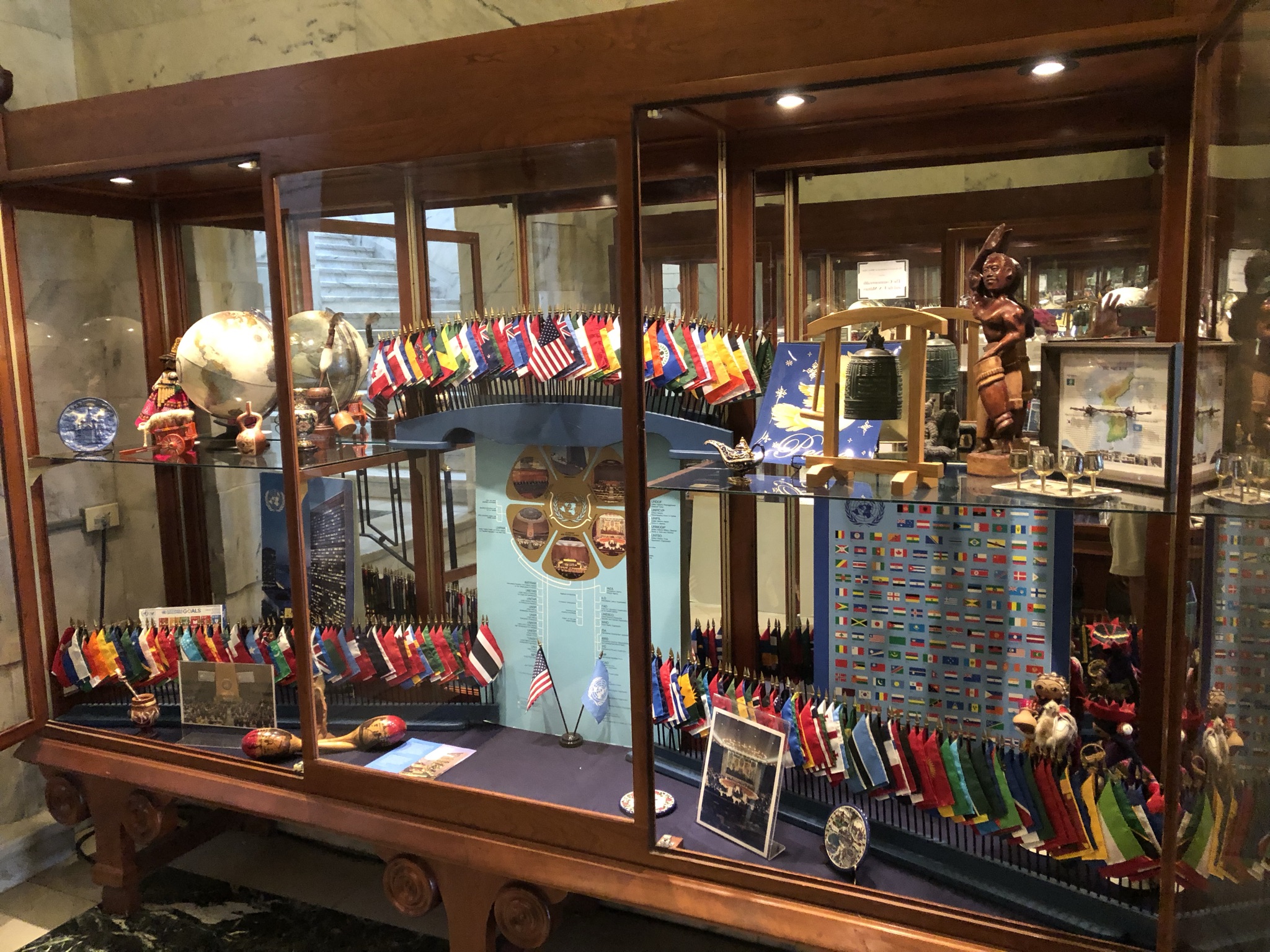
Kentucky Honors the UN

11 Oct

This from our friend and colleauge Bill Miller in Lexington warmed our hearts.

Roaring 20s: The Voices we Need Now, Dr. Robert Zuber

10 Oct

Next year’s words await another voice.  T.S. Eliot

The loudest words are the ones we live.  Mia Sheridan

If you can roar, roar for others.  M.L. Shanahan

She was a voice with a body as afterthought, a wry smile that sailed through heavy traffic. Don DeLillo

Speech is the voice of the heart.  Anna Quindlen

Their comfort isn’t worth your silence.  Rudy Francisco

Don’t let a loud few determine the nature of the sound. It makes for poor harmony and diminishes the song.  Vera Nazarian

Two things happened at the UN this week, both potentially quite positive and both related to each other at least in my mind, though perhaps only to my mind.  First off, amidst all the appropriate hand-wringing about the decline of both biodiversity and human agricultural health, amidst the gloom in some quarters (including ours) that the upcoming COP 26 meeting in Glasgow will not result in firm commitments to the changes we are running out of time to make, the Human Rights Council passed a resolution affirming that “access to a clean, healthy and sustainable environment is a human right.”  With leadership from Costa Rica and other states, this resolution will soon be passed on to the UN General Assembly for final consideration, hopefully in time to create even more pressure on the Glasgow delegations to negotiate urgently and act boldly while action is still a remedial option.

And in New York, a group of 61 countries with Denmark and Costa Rica (again) in the lead, urged through the Third Committee of the UN General Assembly to end what was deemed the “silence” of civil society, referencing groups that through their lived experiences, diverse range of expertise and feet on the ground, “enrich and improve the relevance and outcomes of our work.” This statement called both for UNHQ access for NGOs and a stronger online component to allow those far from New York to keep abreast of what the UN is doing and not doing to address global needs.   The statement also highlighted that while this silencing of NGO voices impedes engagements between delegations and diverse civil society backgrounds and expertise, it also sends a signal to abusive regimes that civil society involvement is no more than a marginal enterprise, and that attacks on human rights and environmental advocates, indigenous leadership, media professional and more can more easily be conducted absent UN rights scrutiny.  This is especially jarring with respect to civil society leaders who choose to cooperate with the UN in implementing its own human rights and environmental priorities.

Those of you paying attention so far might well have ascertained the linkage that forms the basis of this post.   But if not, please allow me to lay it out as best I can.

As welcome as the Human Rights Council resolution is in placing clean, healthy and sustainable environment squarely within the domain of the UN’s human rights pillar, questions of implementation stalk this resolution as they do most that emanate from this Council or the General Assembly to which it is tethered.  Questions go beyond how we can possibly guarantee such a right to other fundamental questions of how we should best pursue this fresh obligation.  Whose job is it to promote the kind of environment we increasingly do not now have, to enable the benefits of a healthy, sustainable environment to the communities most in need, those who are most threatened by eco-predators, whose fields are most rapidly losing their productivity as floods and drought ravage and pollinators have long since fled the scene?

In our own work and through wonderful partners such as Green Map, we have long advocated a localized approach to mitigate the impacts of environmental deterioration and climate change and have done our small part to develop and disseminate tools that can help recover both a sense of place and the full, healthy recovery of those places, recovery led by those who know their spaces and its diverse inhabitants better than any outsider or algorithm possibly could, leaders with homegrown ideas about how to address threats, including from mining interestes and other eco-predators, which are less likely to make circumstances for themselves and their families even more challenging.  

In this tech-charged and overly bureaucratized world we are fashioning for ourselves, it is relatively easy to romanticize local leadership.  We have certainly done so, though many of our previous travels and connections have led us to the conclusion that this is not a wholly inappropriate exercise.  People in these diverse settings may not always “know” what we know, but they certainly “know” differently, sometimes better, and what they know can be essential elements in both local environmental restoration and in building capacity to cope with shocks to come, shocks generally not of their own making but certainly the cause of their own suffering.  It is this ability to convince local others that restoration is still possible and then to grow the number of hands and minds devoted to that restoration which ultimately gives me hope, indeed as much hope as welcome resolutions emanating from Geneva and New York, some of which have mostly gathered dust after the initial energy generated by their passage has worn off.

We know that there are many such people of commitment and energy, many caretakers of locally-led organizations that offer tangible hope to people who may well feel let down or under-served by people like me, people like me who so badly want to get back inside the UN that we may have forgotten what we are there to do. We can forget what privilege requires of us as we return to a setting where our own voices have always had an outsized volume, a “roar” which is too often about our organizational mandates and not often enough about enabling those who seek and deserve the opportunity to roar for themselves, not only to speak at our conferences and zoom meetings but to have that speech be meaningful, actionable, influential.  We reference here voices that aren’t always required to be polite or driven by protocol, that are able to speak their accumulated truth firm in the knowledge that such is more than a mere exercise to gain status or funding, more than a one-off which moves an audience out of their comfort zones for a fleeting moment but which does not often enough result in real partnership based on the flow of ideas that better connect the norm-builders in our global centers with the people who, from their more local vantage point, don’t always experience those norms as amounting to enough.  

Given the time left for us, and despite my profound gratitude for those seeking to enable our UNHQ return, I don’t know for sure that I will ever again set foot inside the UN.  Our 20 months of remote online coverage has convinced me (and a few of our junior colleauges as well) that the UN has become akin to alien space, well branded, utterly state-centric, attracted to money and organizational heft like bees to honey, stubbornly holding on to antiquated fire codes while the world burns around it.  We have long fought thse trends as we have reisisted what we have seen as the “voice over” disease, the tendency to roar over the aspirations of others, the tendency also to forget that as our speech is the voice of our hearts, so too is it the voice of the hearts of millions of others. These are the millions whose own path to progress remains akin to navigating heavy traffic, overcoming one obstacle after another, one burnt field or frightened child after another, one crisis that they are late to solve before another crosses their path. But these are also some of the voices of persistence, the persistent convinction that sustainable progress is possible, that lands laid low can regain their bounty, that damaged biological chains can recover their predictability, and that the guns which have stood as an almost insurmountable barrier to any sustainable relief can finally go silent.

In a policy world of voices muted or unheeded, ours has mostly had a volume disproportionate to the size of our lungs and the strength of our vocal chords.  Given this, we have tried our darndest to let our lives drive our voice, to embed our values in our policy and organizational choices and less in our speeches. But we also recognize that the world has changed so much over 20 years. There are now so many voices in the queue waiting to roar, waiting for a chance to be heard, waiting to be taken with full seriousness.  Perhaps more than any time in our professional lives, “next year’s words await another voice,” another voice which can convince and contextualize, which can cajole and correct, which can sing an energetic tune demanding the more harmonious relations which have largely eluded us during our own tenure.  With whatever time we have left, and for the sake of a planet in multiple forms of distress, we will continue to do what we can to find and encourage those next voices.

Excuse Me: Owning our Policy Investments, Dr. Robert Zuber

3 Oct

I attribute my success to this: I never gave or took an excuse.  Florence Nightingale

To rush into explanations is always a sign of weakness.  Agatha Christie

There is no love apart from the deeds of love; no potentiality of love other than that which is manifested in loving.  Jean-Paul Sartre

The heart has its reasons but the mind makes the excuses.  Amit Abraham

For like a poisonous breath over the fields, like a mass of locusts over Egypt, so the swarm of excuses is a general plaque, a ruinous infection among men, that eats off the sprouts of the Eternal.  Søren Kierkegaard

Excuses and complaints are signs of a dreamless life. Bangambiki Habyarimana

An archer must never blame a target for missing it.  Matshona Dhliwayo

Sometimes you find yourself walking alone on the road.  That doesn’t mean you are on the wrong one.  Akol Miyen Kuol

This week, amidst policy concerns ranging from the daily abuses occurring in Tigray record high temperatures for late September in several global regions, and the more subtle crises related to our unsustainable agricultural practices and shocking levels of food waste, the UN witnessed some potentially important leadership shifts.  In the Security Council, Kenya has replaced Ireland as president, continuing a trend of high-profile and at times bold and outspoken leadership by elected members in a Chamber that has had more than its share of issues telling the truth about what it has and has not done, what it is able and unable to do, as it struggles to maintain the peace and security on which the dreams of a weary planet increasingly depend.

And, on Friday, the newly-minted president of the General Assembly, Abdulla Shahid of the Maldives, gave his first press conference in that role, conveying both the core priorities of his presidency and the importance of making the UN – and more specifically the GA – a stronger and more relevant player in solving a host of problems that we are running out of time to solve and that present to us obstacles which – once again as they have in the past — will surely test our collective mettle; indeed the very sincerity of our policy convictions. 

During his press briefing, president Shahid noted that he “would rather be seen as naïve than as a doomsayer.”  He would also rather invest energy in raising levels of GA engagement with obstacles to progress rather than getting bogged down in endless explanations for why we can’t act, why we can’t solve, why we can’t do more to restore a sense of possibility to the hungry and the skeptical.  His “presidency of hope” will surely absorb charges and challenges of naivete, but as his predecessors have often noted before him, the multilateral system of which we are all part must attend to the often self-inflicted wounds of suspicion and disinterest which are only growing as its policy bubbles thicken and become, in more than a few instances, both self-referential and tone deaf.  

The formula for making president Shahid’s “hope” more consequential, more believable beyond the boundaries of the bubble, is not complicated:  more delivery and less deliberation, delivery which is inclusive, thoughtful and contextual; delivery which does not require us to navigate an endless parade of political concerns, protocols, procedural impediments and state interests. Such delivery is more about our determination to solve and less about excuses when our “solving” is impeded by a gauntlet of national interests, funding expectations, and uneven levels of accountability both to stakeholders and to those who claim to represent them.

For those who have somehow forgotten this, the UN is largely beholden to the interests of its member states, and more specifically its most powerful and largest donor states.  Many UN briefings, in our view at least, take on the flavor of funders exchanges, with agencies trying to put their activities in the most favorable light such that pledging states will both honor and step-up their funding commitments.  This “dance” between skilled agencies and state donors is common in UN spaces, leading too often to discussions about “what we’re doing” rather than “what is working.”  It is also a dance which, over the course of the past 20 years, we have chosen to sit out, not out of any naivete regarding the power of money and politics, but because we recognize that these are not the only characteristics of a system that can covey hope to the hopeless, convey a sense that not only is a better world within our grasp but that the multilateral system is committed to doing what is needed, and all that is needed, to grasp it.

In our very way over many years, we have done our small part to contribute to a core mandate of the groups and organizations in our sector – increasing the transparency of the institutions with which we interact, holding them accountable to their promises, insisting that the sum of activities is designed to increase hope rather than dampen it through inaction or indulgence in the “swarm of excuses” which seems at times to hover over all our deliberations, an indulgence which seems perpetually to beckon as policy promises proliferate like bait on a hook, once attractive to metaphorical fish which have now largely wised up to its allures.

Regarding this indulgent path, needless to say, we are not exactly knights in shining armor. Our sector is equally prone to self-interest, to playing up to funders, to collapsing our policy attention even more tightly around organizational mandates.  We don’t always see carefully or deeply enough to contribute to the hopefulness which the UN system seeks to convey, indeed is morally obligated to convey. We also make excuses for our own failures or half-successes that could have been navigated more successfully. I have done so also.  It is unsavory at best. 

And yet, despite our serial over-branding and excuse making, it is hard to see how the promises of the GA president can be realized in our collective absence. Sadly, for almost two years now, we have been barred from the UN castle.  As I predicted might turn out to be the case back in spring 2020, the “excuse” of the pandemic has resulted in the complete barring of all NGOs from UN headquarters, with no plan as of this writing to restore access to us as it has long been restored for some other segments of the system; and with no platform for discussion established which would allow us to vet together the implications of procedures which allow unvaccinated diplomats to enter headquarters, but not vaccinated NGOs, including folks like us who previously spent as much as 10 hours a day walking those halls, each and every day, over an entire generation.

To be clear, our “drama” around access is a matter of petty concern when measured against the standards of famine and armed violence, genocide and ecological collapse.  Those victims could (and should) care less about whether we get our coffee in the Vienna Café or in the kitchens we are privileged to have in our homes.  But this serial denial of access is bad news all around, for our own work of course but also for the many groups – indigenous people, persons with disabilities, refugees and others – whose access to this policy space is a cardinal reassurance that the UN system is paying attention to them, that they are an integral part of our circle of concern rather than an afterthought.

As we have noted in other contexts, while the pandemic has set up many obstacles, it has also exposed longstanding flaws in our economic and social systems that, despite vast testimony from civil society leaders and others, have not been duly addressed.  But as the pandemic constitutes a genuine, far-reaching global crisis, it does not constitute an excuse.  It is not an excuse for any failure to fulfill the promises of the sustainable development goals. It does not excuse the weakening of our democratic norms, the fostering of hate speech, or our current (and too often violent) bursts of nationalist fervor. The pandemic is also not the cause of the conflicts we fail to resolve, the resolutions we pass that have no teeth, the disaster warnings we hear but fail to heed.  It is not an excuse for widening inequalities regarding health care access, opportunities for sustainable livelihoods, digital connectivity, and certainly not for our grossly unequal patterns of vaccine distribution.

And it is not an excuse for the thickening of our policy bubbles, for shifting the presence of diverse policy actors from in-person presence to online exile, certainly not in the absence of proper consultation.  Such represents an interruption of our work, especially with diverse young people looking forward to their time inside UN Headquarters.  But it is also represents a level of disrespect which no diplomat would rightly tolerate for themselves but which few have done much of anything to prevent from happening to others. We acknowledge that we chose this work, we chose these issues, we chose this institution in which to practice our evolving craft. Respect or no, such choices remain in operation, at least for now.

What we also know for certain is that, with whatever time we have remaining in this policy space, we are done with the “poisonous breath” of excuse making.  For the sake of a planet on the edge, for the sake of millions of people in the midst of an interminable wait for practical, loving acts of solidarity and relief, we will continue to walk whatever road is available to us, however isolated that road might sometimes be, encouraging others with access to the levers of policy and power to seize this moment, to stop “explaining” why we can’t honor our values and commitments, and to instead sustain the changes that much of the world is now begging us to make.