
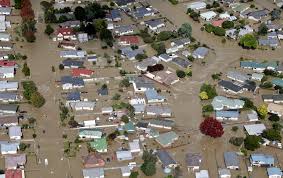
An Ode to the Ocean Conference:  A Poet’s Reflection, Elena Botts

14 Jun

Editor’s Note:   This from Elena Botts is both longer and more poetic than we usually post. Elena is indeed a full-length published poet as well as a student at Bard College.  She represented Global Action at the recent Ocean Conference and seemed both intrigued and perplexed by much of what she witnessed. Elena’s presence with us continues a long tradition of making space for young people with diverse skills, insights and interests beyond the remit of international affairs.  Their collective (and often provocative) “take” on what the UN is and is not, what we at Global Action are and are not doing, helps us chart our course in this policy space. (Title is mine, not Elena’s.)

Abstract

There is no city except a city in fog before anyone. Had woken as the trees moved in an otherworldly breeze. There is no ocean but the ocean. Before anyone was stranded on a distant shore overlooking the bluffs of crazy sorrow. And here is the horizon that first finds the sun and moon as they rise and no stars but these stars as cannot be traced. By anyone. I saw you in a dream but then it was only seeing you in a dream. When still the ghost of you walks this earth.

Body

We begin by stating (once more) that the ocean is the easiest thing to envision as “the beyond”. All of the delegates sat in a circle out on the windy dunes, some half-buried in the sand, others laughing like loons and spinning into the surf. We sat in the sun or sought a beyond in the waves like the way the people come to the beach just to sit facing the surf and sky without a prayer but the prayer of being alive and think nothing of it. We didn’t think anything of it. One ambassador asked another if they might have lunch and an NGO intervened to say hello and cast a distrustful eye on their shared national interests. An intern tried to find the right shoes. Of those around him, he thought to himself: “No, I wouldn’t say you all are selfish, just absorbed in your own perspectives and motivations. I’d say there’s always something to talk about. One can always trace the stars into a constellation, but will it catch on?  Will anyone talk about it? And then, will someone fly into outer space with billions of lines of bungee cord and-”

It is a motif in all our lives, the Secretary went on empathetically or perhaps nasally but probably not. He was only talking to the dim thunder of the surf.

He said something like this: “Given the immensity of the ocean, I can hardly think of the loss that our destruction of it represents. But instead of turning away, it becomes all the more important to calculate the effects of acidification, pollution, overfishing, resource extraction, and other human actions. A particular focus of conference is regional consequences for different countries whose representatives are in attendance. There is a portion focused on the Senegalese plan for facing these issues.”

The Secretary reminded us all that he was from Portugal and that Portuguese writer Vergilio Ferreira once had something to say about oceans. What Secretary quoted was that “A language is the place from where you see the World and in which the limits of our thinking and feeling are mapped out. From my language I see the sea.” What he did not say was that “From my language its murmuring is heard, as from others can be heard that of the forest or the silence of the desert. Therefore the voice of the sea has been that of our restlessness.” It wasn’t the real words, it was translated, as everything eventually is, into English. Are we made of the contexts we have forsaken? Do we meet here to discuss the world before we go out and find it?

Every country that has a statement on Sustainable Development Goal 14 (it calls for us to “conserve and sustainably use the oceans, seas and marine resources for sustainable development.”) has the right to make a scathing remark about how the U.S. is being an irresponsible bastard when it comes to climate and everyone knows it. Every day, the Americans renew their commitment to a carefully constructed guilt complex that has emerged in the aftermath of withdrawal from the Paris Agreement. We have never been good at national shame, however, so the guilt becomes new fodder for airing our differences and plastering our laptops with stickers just so everyone knows that our allegiance lies with not with the USA, nor with any special creed or conviction, but none other than the unimpeachable moon herself which we will soon colonize after we finish untangling Congress, our sense of morality (sometimes referred to as Guantanamo and other times called late stage capitalism, for more information, please take your local epileptic to Times Square), and the Dark Web.

So let’s talk acidification, pollution, overfishing, resource extraction, and other human actions (dumping especially), regional consequences for different countries whose representatives are in attendance, and let’s see what the Senegalese have to say. Today we are going to affect the lives of everyone on the planet. Don’t breathe or let your heart beat too loudly. I’ve heard that in sacred political spaces, the butterfly effect deafens. Let your heart beat too loudly.

Every organism is, in a way, representative of the whole ecosystem because something that impacts one, impacts all (much like the international system). I think most of us know this. It is hard I think to understand the depth of the human impact on the planet, sometimes I think scientists have only observed a small fraction of our influence. And even that which we have measured and can extrapolate from, in terms of climate change among other phenomena, is difficult to really process. I think it is emotionally numbing for many people to care about environmental problems just because they seem so insurmountable and the average person seems so powerless. However, it is important to overcome this attitude if only because it is through cooperative effort that we can enact real change, and this requires participation from all parties.

And what is the outcome of this? The delegates at the UN Ocean Conference are meant to determine and agree upon a set of voluntary commitments regarding marine life as a contribution to Sustainable Development Goal #14.

These commitments are put forward by nations and by NGOs and enacted as initiatives through governments or organizations. It is my personal hope that these initiatives are implemented, and expanded because the ocean is an immeasurable resource and critical for the continuance of that illimitably precious thing, life on earth. ‘The world’s oceans are key to sustaining life on the planet. They provide a range of benefits for human well-being and prosperity by providing food, jobs, habitats and biodiversity, and by moderating temperatures and capturing carbon.’

Later, you’d tell everyone that the greatest thing was the obliteration of sound when you fell into the collision of two oceans, midwinter in Africa. It was a yelling kind of frigid, your whole body syncopated.

Because afterwards, is the storm of doing but for nothing? What is this action plan, this nexus of hope but a ruse to tie us together when we are already tied together, when we are already threaded and indeed tired. ‘These are the action years’ says somebody, says probably the secretary of something. “This is the best opportunity we will have.” But I see you talking, sir. All I see is you talking. There is nothing happening here, all of the happening happens somewhere else through the efforts of people more committed than these. It is a vast and bureaucratic machine with no sense to soften it.

Suddenly, a group of scientists and researchers descends, all speaking excitedly of mangroves. Flood protection is vital they say, and economically viable. Eastern Caribbean states are especially vulnerable to storms and loss of coral reefs. Still, the Cook Islands might have trouble getting up. He and his people have, he says, “a disproportionate burden”.

And when the earth is destroyed, we will not inherit the earth, not even the scientists who were devoted will inherit but one shoreline in the shadow of a great beached whale. If it is as the minister of the Cook Islands has said, even his little heaven shall be underwater.

“Do unto others as you would have them do unto you!” He cries (sixty percent of his own territory is legally protected). The Cook Islands soon hope to transition to all renewables. “You know”, he says, as an aside, “we really do have more water than land.”

There is an actor here and for a moment I’m afraid he was hard to discern from the enthusiasm of the Canadians. He says that he is full of goodwill but that the “g” in “goodwill” is in uppercase. He is positively giddy. He talks for a long time. He says nothing of substance. It is just a hundred flickering signs on the backs of the chairs where it is written: “Save the Ocean.” Maybe this is hopeless optimism. Maybe this is willful pragmatism. Maybe this is all messaging and now that meaning is gone, we’re effectively underwater. Maybe this is someone was commissioned to create ocean-related sculptures outside so now we too must play our part and take pictures of their creative work. It isn’t creative work. It’s a bunch of waves or something. You act like you’re too postmodern for this.

Sri Lanka keeps taking it all very personally, as we all might do if avoiding confrontation regarding the human rights abuses incurred over the course of one’s own civil strife.

The Swedish would like some fish. Or they’d like their fish back, which is why they’re co hosting and altering their fishing regulations to improve sustainability. Fiji is co hosting because soon they’ll have nowhere else to be. All it takes is a few cyclones. Palau and Tuvalu also mention the importance of fishing  regulations and indigenous solutions to prevent further “exploitation of international waters.”

The Chinese nodded along like buoys in a harbor. Someone cheerfully metaphorized the stock market, comparing it to a tide, rising and falling.

All of the people of Bolivia came here in one person to fight against “the commercialization of biodiversity” and “capitalism as a threat to the earth that must be broken down.” It’s amazing what modernity can do. He thinks we must be the siblings that he lost to imperialism so every day, every hour we must remind him that we are his enemies, that we would like to take his soul and sell it and afterwards eat of the cocoa leaf too.

Bolivia is getting so tall lately, says one of the five, but finally they decide to maybe help the landlocked developing country renegotiate with Chile for fair sea access. Bolivia is forced to clarify that “brother” is not a pejorative but comes from a place of deep cultural sensitivity. He goes on to explain that not everyone is born rich and that cultural traditional is important to those of indigenous heritage.

The Gabonese Republic mutters about “discrimination” and sanctions and the oceans become a thematic backdrop for allegations of vote-rigging. The sea is apparently the new locale for international justice.

If Belgium is in a hurry then is everyone else in a hurry too? No, no one else is in a hurry. Belgium is simply confused. Because it is important that we all sit in a room emailing and texting each other while someone else grants us idealistic colloquialisms about the fate of the word and this is not a circle jerk because in between important meetings we all drift as by osmosis, colliding with one another like random, idea-generating particles. But random doesn’t apply here because we are caught and we are each a mess of intentions and I need you to be quiet here for a moment and watch the boats go by in the lounge where no food or drink is allowed so that I can think about the state of our world or maybe just my state afterwards (I must address my constituents somehow, they are more real to me than these walls and these people and these ideas which I cannot fully bear).

After all, when you had first entered the building, did you know that you are inside the inside of everything? You know you must have been here before that time before you were born. Once again it was very quiet and everyone moved like the wind.

It is important that you remember that you are not a real person. It is good that way, no one will see you. You are a political entity and should act as such. It is perfect; every bit of the space has meaning but no one knows what it is. It’s like a song that you make up as you go along, except that no one is singing anything, at least until some Pacific Islanders came to the front and howled in song and it was the most beautiful thing about it. Come to think of it, you’re all alone. Only Pachamama is watching.

A man with a vacuum emerges around the corner and vacuums all around but not under your feet. You avoid one another’s gaze. There is a solitary ship on the East River, dim lit bulbs strung at its helm. A diplomat watches as you pass, evaluating the import of your step. You say you have no message but the words stick in your breath. This is the part of the story where- “she’s trying to feed dragging the dead calf after her”- marine life suffers and dies due to discarded fishing gear soon to be followed by a teary-eyed conservation society proclaiming that greater fishing regulation is necessary for the health of our oceans.

If you were a real person, you know what you would do. First, you would get a new shirt. Then you would recycle, but really recycle, not only cans and jars or nets and plastic bags (floating like death for the mammals to bite into, floating like manufactured ghosts, on the high seas, floating), recycle all the great sorrow of the people and the earth (as though in some implicit suicide pact, we fall, by warming, we lose even our essence and are melded together in that final hour, maybe even wading through a rising ocean, and scarcity was uncompelling and in the end we didn’t know what it meant to be human, we just knew that we were dying if we didn’t find out) and turn it into something compelling like a solution or as they call it lately, these days, a multilateral agreement, like a great something (beached whale?) between nations.

Finally, you would ride on a foreign minister’s back like a strange monkey from far away. You would say hello to everyone that you saw in the hallway. It is not impractical to address every single human being here, it is like playing god without being divine and especially without any pride. In the morning, you wake with the realization that we sprung from the womb as fully formed solutions. Surely, we could write the whole thing off to existential rot. Surely we could say who’s bright idea was existence anyway? To hell with the oceans! To hell with her that is like my mother and my father and my whole world, all that I have ever loved.

Yeah I care about what the ocean thinks. The real problem here is that there is no wind inside the building. It is not like we went into the great wood and oh goodness it breathed, those stormy trees and a weighted breeze rippling the solid calm of lake. Here I can only beg you not to speak so quietly when all lives bend to the water but you do, oh you do. The united nations climbed a tree, fallen as it was and each spoke of how everyone was restrained in a mighty fear, like something that could not be named so we named it and the world shook out from under us until we entered the old earth.

Let’s be judicious. Let’s have a council. Let’s prepare statements while we sit on airplanes or jets shooting across the sky like renegade falling stars that somehow, and to find fuel, to combust and propel oneself from a thousand foreign countries, immersed as we all are, after all, in the oceans. This all makes so much sense we don’t have to say it aloud. We’ll say it aloud anyway, loudly and ad nauseum. Did anyone forget that we are here to, in fact, save the oceans? We’re here to save the oceans. We’re here and we’re naked and we want more than anything to gird ourselves in compliance and measures to limit pollution from industry and eventually we would like to succumb to the formalization of an international system that seems so increasingly unsteady like, forgive me, a captainless rudderless ship sailing out between the dead buildings of New York City.

And in ghost – walking the city one recalls that there are many organisms that think they are separate organisms. If the nations are united then is this just another city? No, because no one is eating here and no one is sleeping here but mostly no one is knowing here another thing, for what it is. It is inescapable, New York, as we walk into a unseasonable temperature, passing security guards who ask if we are okay or perhaps feeling a bit under the weather today.

Addendum

I keep thinking about the ruler of the universe, you know the one who controls the aquatic symphonies, the tides. He has a cat, a gingery thing that will leave his side and often but somehow remains like a piece of his face only you wouldn’t think of his face you’ll never remember his face quite even after you’ve met him and maybe it’s this way for a lot of people but for some reason. His face makes you remember a lot of things but these are as unspeakable as the planet in its slow revolutions of the sun and nothing ready to the mind, you cannot speak.

He lives in a small house. Here there is a table and a cat, a gingery thing that eludes him somehow more or less than all the ether that he cannot convince himself is real. He doesn’t believe in anything, he says. Most especially not himself and that is why I recall him so fondly, perhaps he is a generation of my own eroding. Maybe it is fond to know little or nothing or perhaps it is endearing to us who know mostly of failings and less of things that stick and stick and stick like stars or even the constellations of skin, so fixed is my vision on impermanence, so broken my bones by merely the thought of it and breath just another thing to carry me out of this world. Had I known myself enough here to know this place.

He lives by the sea, but we all do in our minds, anyway, ourselves forever wading or cresting. It depends on whether we are in it or of it, whether we could know it, or even the moon. He has a face like the moon and he breathes a cosmic wind that floats down and flutters us, our bones, our terrible unshakeable hearts that we do anything and everything to annihilate. As oblivion was the first true love.

When you embrace the ruler of the universe, he only shivers and admits that he doesn’t know if he exists, let alone if there is a universe. The others often aim at convincing him, that yes, there is great care in the cosmos, even rabid desire and the minds of animals, even the salivating human animal, and that the spinning suns burning out implode for something after all, even the nethers of us. But he is. The cat has lost itself in the wave but pads out again, slim flank and a trim fish in mouth or maybe an imaginary fish, a scintillating thing that the felid devours madly, streaking the bones and ravening. They comfort the body of the ruler, hold him tight though he is unmoved, moves little. His body doesn’t speak fathoms and his eyes are forgettable to each of us. We hold him like nobody until we are released. He smiles at us and says he will soon return to his little shack on the rim of the great ocean on this planet that is smaller than most but on which he is lonesome, that is if one can be alone, that is if he is what he is and there is a shack crumbling and an ocean also and a rim of all things, though he says, and skuffles a foot into a dune, I cannot suppose that is so. I do not know.

The Last Word:  The Security Council Mishandles its Audiences, Dr. Robert Zuber

11 Jun

There is never enough time to say our last word-the last word of our love, of our desire, faith, remorse, submission, revolt.   Joseph Conrad

It takes your enemy and your friend, working together, to hurt you to the heart: the one to slander you and the other to get the news to you.  Mark Twain

That most dangerous of opponents is the one who took pains to comprehend the position of his adversary.  Piers Anthony

One of the many lessons of life that I (and many others) with privilege and access struggle to learn is that, for all of the impediments in the world – the competition for attention or resources and the wildly divergent lenses on reality that give rise to so many of our struggles – the greatest impediments often lie within ourselves.   “The enemy within,” the stuff of literature and legend, is an adversary about which we often seem to know the least. And in a world currently preoccupied with externalizing responsibility rather than accepting it, these knowledge gaps are only likely to grow.

As many of you know, we are regular (and largely grateful) participants in what the Council refers to as its “public” sessions.  As we have noted on other occasions, these meetings are for us a bit like sitting in front of a large picture window through which we can clearly behold a meal we are never invited to join. Indeed, aside from “re-tweets” from select delegations seeking to brand themselves and their ideas – a matter which diplomatic missions have now largely taken into their own hands – we have little interaction with Council members.  They almost never acknowledge our presence in the room, even when we are the only non-diplomatic persons in it.

So why do we sit there, hour after unacknowledged hour, listening as we do to statements that require great attention on our collective part just to find a kernel or two of value or interest that we can transmit to (and beyond) our twitter following? Why do we track conflicts and controversies that routinely appear on the Council’s agenda and that, with some notable exceptions (such as Liberia and Colombia) are often locked within political struggles that prevent successful conflict resolutions or even hopeful transitions?

Some of it, especially for our interns and fellows, is related to the desire to be present at those moments when history is being made – an agreement on Iran’s nuclear capability, a comprehensive plan to degrade ISIL, a first ceasefire in Aleppo, a response to weapons threats by the DPRK.

But more of it is grounded in our organization’s contribution of “attentiveness” based in part on our recognition that the Council’s sometimes arcane working methods and intractable political disagreements can weigh heavily on the rest of the UN’s agenda. When the Council indulges a meaner spirit; when its power imbalances denigrate the prerogatives of its elected members, when Council members allow a few special representatives and other briefers to be “beaten up” by offended states, the discouragement – in my office but also in many parts of the UN system — is more than palpable.   Why, my interns ask, does anyone think this body, behaving in a manner at times invited by its own working methods, is sufficient to solve crises that in some key ways already impact their future?

Some of this discouragement was on display Thursday afternoon during a report on Darfur by the Prosecutor of the International Criminal Court, Fatou Bensouda.   Her presentation to the Council – and the 25th report on Darfur on which it was based – was a direct challenge to uphold Council resolutions based in part on the “trust” for justice that victims have placed in this body. The report was also recognition that there has been some progress on social, economic and human rights conditions in Darfur.  There has recently been reported, as the prosecutor noted, fewer clashes between the government and insurgents, fewer rapes of women in the displacement camps, fewer denials of access for humanitarian assistance or impediments to the movements of UNAMID peacekeepers.

The prosecutor in so many words reminded the Council of its failure to act in cases of non-cooperation with the Court, such as when states acceding to the Rome Statute allow indicted war criminals such as Sudan’s al-Bashir to travel beyond his own national borders, contravening obligations under the statute to have him arrested and turned over to prosecutors in the Hague.  But in the same session, the prosecutor reminded the Sudanese that while their recent positive overtures are noted, “better” does not imply “sufficient.” Moreover, such positive signs do not in and of themselves constitute pathways to immunity for crimes already committed and for which formal indictments have long since been issued.

Council members are decidedly mixed regarding their reaction to the International Criminal Court with firm supporters such as Italy, Uruguay, France and current Council president Bolivia making appeals for cooperation and resources to skeptical states such as China, Ethiopia, Russia and Egypt.  Some of this skepticism is grounded in a concern, not completely without merit, that ill-timed indictments lacking broad (in this case African) regional support undermine a peace process that is beginning to show progress, a peace that is ultimately in the best interests of Darfur.

But in our hearing, some of this skepticism took on more of the character of permission to “take on” the prosecutor; and the Sudanese Ambassador willingly obliged.  He followed up his own assertion that Madame Bensouda was using “abusive language” directed at both the Council and Sudan by ratcheting up the abusive rhetoric himself – calling for the complete shutdown of this “kangaroo court,” implying that the ICC is incapable of doing its job without “inventing evidence or bribing witnesses,” congratulating the UN secretariat for allegedly “distancing itself” from ICC interpretations, even suggesting that the ICC had met its match and was now “tasting the consequences” from having taken Sudan too lightly.

It was a show of contempt that, sadly, is not without precedent in this Council.  Moreover, in this instance as with too many others, the Ambassador’s remarks went unchallenged.  No one attempted to restore the context of the meeting, let alone defend the reputation of the prosecutor.   The session was quickly brought to a close.   The last word belonged to the Sudanese.

Psychologists have done some good and interesting work on the phenomenon of “the last word,” much of it in the context of arguments across gender lines.   Without diving into this too deeply here, there is broad consensus that the need for the “last word,” is a function of an over-exercised or (ironically) damaged ego: needing to be “right” all the time, or needing reassurance, over and over, that a passionate point of view is “being heard.”  But there is more to it:  the manner in which we humans tend to interpret the silence that too often follows a bold, even reckless accusation.  In that silence there is an assumption of acceptance, an assumption that maybe this last point of view had more going for it than we might have otherwise imagined. And in many instances, it is this last viewpoint – abusive or not, factual or not – that becomes the” take-away” for the audience.

In this Thursday meeting, the Council continued a pattern of institutionalized practice that ensures maximum impact for the opinions and accusations of some of the states that, by their own conduct and even their own admission, have demonstrated more than a bit of contempt for Council resolutions and often for international law itself. Such states certainly deserve to have their say.  They should not, however, be entitled to have the last word.

Oceans 14: Making Peace with Life Below Water, Dr. Robert Zuber

4 Jun

14

Global warming is the foreboding thunder in the distance. Ocean acidification is the lightning strike in our front yard. David Horsey

It is horrifying that we have to fight our own government to save the environment.   Ansel Adams

If you’re out someplace like the ocean on a capsized boat, it doesn’t matter if you have academic degrees, or if you’re a martial-arts ninja. Nature is a bigger force than you. Rachael Taylor

Monday, the UN is poised to welcome delegates from around the world, including many heads of state and foreign ministers from Small Island Developing States (SIDS). These leaders have come to profess their deep commitment to the vast and unique resource represented by our oceans.  They have come to share threats of desalination and sea water rise, of acidification, fisheries depletion, mass “islands” of plastic waste and growing species loss.  They have come to ask for justice and assistance to preserve their island homes and ways of life.

For months now, under the guidance of the president of the General Assembly, Fiji’s Peter Thomson, and with enthusiastic support from much of the UN system, our UN conference rooms been the scene of intense scrutiny of the consequences of our frivolous and longstanding misuses of our oceans, a resource that our western mythology has long cast as infinite and fearsome, but which we now recognize is showing grave strains that jeopardize the livelihoods, safety and well-being of all who live on its shores, all the families and communities who depend on its bounty.

The culmination of efforts by President Thompson and many other UN leaders is what is known as “The Ocean Conference,” or in its longer version, the United Nations Conference to Support the Implementation of Sustainable Development Goal 14: Conserve and sustainably use the oceans, seas and marine resources for sustainable development.

The larger policy backdrop for this meeting is a series of climate-related warning signs with implications for and from our oceans, including mass ice cap fissures, record high global temperatures, and increasing levels of food insecurity exacerbated by climate-related drought, flooding and damage from massive ocean storms.  And then there is the decision by the UN’s “host state” to pull out of the Paris Climate agreement, only one of a series of steps taken by the current US administration to roll back virtually all environmental protections for which the federal government has previously taken responsibility.

This isn’t the setting to undertake a thorough critique of the US president’s decisions on environmental protection, ocean health and climate change. From a multi-lateral perspective, though, we are inclined to reject the lens promoted by many in the media that US leadership is utterly indispensable to the urgent pursuit of ocean and climate health.   We have, in fact, both seen and welcomed the determination of many states around the world to step up their environmental commitments in partial recognition of the fact that the Paris agreement, for all of its hopeful policy urgency, establishes a still-shaky floor for climate health.  Many scientists believe that the targets established by Paris are probably not robust enough (a point also made by Nicaragua which has thus far refused to support the agreement); some scientists believe that we have already crossed a dangerous threshold and that much more will be needed from many corners of the globe if a permanent crisis is still to be averted. A bit of formal US government hostility towards environmental health may increase the shaking a bit, but thankfully others are doing more and pledging even more than that.  And the tide in the waters of US state concern can always turn again.

In this context, we should recall that a lack of formal US commitment to UN agreements has rarely, on its face, indicated an unwillingness to work with relevant UN mechanisms.   The US has long been a serial offender when it comes to ratifying UN treaties but not always a serial offender when it comes to honoring their spirit.  The US may never ratify the Rome Statute, for instance, but that doesn’t mean that the US won’t work with the International Criminal Court prosecutors to promote justice for mass atrocities.  There is wiggle room here to negotiate cooperative, if not binding arrangements on oceans and other climate-impacting resources, even with members of this fact-challenged administration.

Nevertheless, given recent threats to state support (at least for now in the US) for climate-healthy, environmentally-friendly policies, the onus must shift (and has shifted in many instances) to cities and communities, activists and academics, designers and farmers, people from all walks of life and their supporting organizations who have both skills and contexts to contribute to our urgent environmental tasks.  Indeed, one key feature of this week’s Ocean Conference is its focus on voluntary commitments from state and non-state actors, commitments ranging widely from efforts to rid the oceans of discarded fishing gear and micro-plastics to establishing new or larger ocean sanctuaries.  We will need to solicit and network many thousands more of these commitments by government and non-government actors, especially from within the major oceans-abusing and even climate-denying states.

One “commitment” that we value greatly is Green Map, which is now in the process of aligning its global iconography (170 core images) with the Sustainable Development Goals.   The point of this exercise is not to promote the icons themselves, but rather what the icons themselves promote – hopeful local sustainability initiatives taking place in communities worldwide.    There are many such initiatives underway and many more soon to take root.   We need them all, and then some.

If some states begin to lose their grip on the urgency of our ocean and climate risks, the rest of us must tighten our collective resolve.  We cannot survive as a species without our oceans.  We surely cannot meet our diverse obligations to the SDGs without healthy oceans. We cannot eliminate poverty, educate our children, resolve our governance-related issues, end discrimination and even solve climate change without oceans that can sustain its complex and still-undiscovered life forms while continuing to host our livelihoods and absorb our carbon excesses.

Many of us have had the experience of standing on an ocean shore staring at darkening clouds kissed by a setting sun.   Alarmingly, the thunder in those clouds is louder now; the lightning is getting closer than is comfortable.  The time has come, indeed past, for us to pause our grateful gaze and take up our urgent cause.


Budget Busters:  The UN Leverages Peace and Development in Leaner Times, Dr. Robert Zuber

28 May

Image result for Development and Peace Images

If everyone demanded peace instead of another television set, then there’d be peace.  John Lennon

Without leaps of imagination, or dreaming, we lose the excitement of possibilities. Dreaming, after all, is a form of planning.  Gloria Steinem

Problems do not go away. They must be worked through or else they remain, forever a barrier to the growth and development of the spirit.  M. Scott Peck

Among the many memorable things that happened at the UN this week, the highlight for me came courtesy of the Uruguayan Foreign Minister during an important Security Council debate on protection of health care facilities in conflict.   Calling the UN to invest more in inspiration to better honor the trust for a peaceful and sustainable world that others have placed in it, he noted that Martin Luther King was never once known to utter “I have a strategic plan today…”

The Minister’s comment, which evoked considerable applause in the Security Council chamber, was not intended to denigrate planning nor the difficult logistical and financial decisions that must be made every day in order to sustain this complex institution and its expanding agendas.   But it was good for participants in this Council meeting to be reminded that some of the “slog” of this place – its excessive statement making and consensus building, its endless discussions on finances and working methods – is tied to a larger vision, a higher purpose, a dream if you will of a cleaner, fairer, more peaceful, more prosperous planet where people spend more time sharing than scheming, more time listening than condemning, more time facing and addressing problems than pushing them off on others.

Disconnected from the larger dream that connects its three “pillars” and animates with urgency the numerous studies and resolutions that emanate from this place, the UN risks becoming just another multilateral bureaucracy, just another talk shop for states looking for change mostly on their own terms, just another institution yielding tepid and largely predictable responses to the unique crises (mostly of our own making) currently lapping at our shores.

For many of us, as we have noted on other occasions, the Sustainable Development Goals (SDGs) and their 169 targets represent this sort of dream: a world where agriculture is sustainable, governance is trustworthy, education is accessible, oceans and forests are healthy, migrants and refugees are respected, women speak their own policy voices, climate is stable, weapons are restricted and poverty is relegated to the history books.   We are a long way from this dream; indeed we may well need to raise trillions of dollars to meet the goals we have set out for ourselves, an overwhelming figure exceeded only by the trillions more we would need to spend in a last-ditch effort to save our species if we fail our current sustainable development responsibilities.

This week in the Economic and Social Council (ECOSOC), delegates and experts to the Forum on Financing for Development wrestled with the logistics of raising such vast sums in an uncertain climate.   In plenary sessions and numerous side events, Forum participants hit many important notes, including:

  • Mobilizing (and retaining) domestic resources, including through more equitable tax policies, better data disaggregation, and an end to government corruption
  • Creating investment partnerships with for-profit entities that encourage “triple bottom line” policies and reaffirm the applicability of human and labor rights frameworks
  • Reaffirming the importance of “remittances” to many developing countries and urging stabilization and even reduction in “remittance costs”
  • Increasing access to banking and other financial services, especially for too-often excluded women and the rural poor
  • Noting the risks to fragile economies of excessive debt and urging review of existing debt sustainability frameworks
  • Urging the growth of “south-south” cooperative frameworks to complement north-south funding and capacity support

Despite these and other hopeful measures, the Forum’s Outcome Document also took note of a series of challenging contexts – climate change, armed conflict, humanitarian crises, natural disasters and environmental degradation – whose remedial costs could easily overwhelm our most creative and constructive, development-related fiscal policies.  Such challenges are both urgent and vast in scope; each in their own way calls into question that elusive, “predictable” social and fiscal environment which makes fulfillment of the SDGs much more likely.

Indeed, current funding needs in settings from Yemen to Somalia — much of it tied to armed conflicts that we probably did not do enough to prevent in the first place – have created conundrums for global assistance.   In my time at the UN, I have never seen so many “pledging conferences,” so many requests for states to support efforts to ease misery borne of armed violence and terror; of climate-related drought and flooding; of forced migration and the human trafficking that too often follows in its wake.

While the human misery of our age often seems inexhaustible, the remedial funding is not.  In many instances, it is politically and fiscally taxing for states to address immediate crises while keeping funds in reserve to support their longer-term development responsibilities.   Something has to give.

Added to this, of course, is a US administration that has signaled its willingness to cut back on virtually all of its diplomatic commitments, including to the UN.  While it is unlikely that president Trump’s budget priorities will survive Congressional scrutiny as submitted, the threat of cuts has many in the UN on their heels.  And while we are skeptical of the publicly-articulated notion that the UN simply can’t function unless the US keeps writing large checks, any substantial US cutbacks will certainly complicate funding thresholds for each and every one of our sustainable development promises.

At the UN this week, there were at least two side events that offered some cross-cutting encouragement.  At a small Forum-related side event hosted by Norway and Indonesia, representatives of the UN’s development and peacebuilding sectors came together to stress the need for better use of existing resources to “catalyze” innovative responses and actions, as well as to clarify our responsibilities as a community in light of shifting conflict, climate and development threats.  All were in agreement that the development and peacebuilding communities need to “root harder” for each other and prioritize their interlinked mandates.  There was also broad recognition of the futility of development assistance in situations of active conflict as well as the irony of the UN’s essential but “under-resourced” peacebuilding architecture when so much funding is currently being poured into often unsuccessful “crisis response,” such as in the Central African Republic.

Also this week, Croatia led a “GA 4th Committee” discussion focused on the preventive value of Special Political Missions (SPMs), “special” in the sense that they are “upstream” responses that are carefully adjusted to context.   One delegation after another lauded the potential and cost-effectiveness of SPMs, “good offices” and other political and diplomatic tools designed to minimize prospects for larger conflict.  While offering his own validation, Ambassador Kamau of Kenya underlined the vast disparities between UN peacekeeping funding (which is largely oriented to conflict response) and the still-limited support available for full-spectrum peacebuilding and other conflict-prevention measures.

The UN prides itself (rightly so) on its many efforts to help states cope with a variety of shocks – including those related to climate change and threats of terror.  The test for this system now is whether it can swallow its own medicine, whether we can successfully prepare to meet our growing responsibilities in a time of fiscal shocks, to do all we can with what we have at our disposal.  While the Financing for Development community searches for its “trillions,” reducing conflict threats through effective peacebuilding and related tools would constitute an important, cost-effective contribution to the dream of peaceful, fair, inclusive and healthy societies underlying practical implementation of the Sustainable Development Goals.

A Distant Dawn: Sustaining Agency in Disconsolate Times, Dr. Robert Zuber

21 May

Deep Web 2

But there is nothing more beautiful than being desperate.  And there is nothing more risky than pretending not to care.  Rachel C. Lewis

So the darkness shall be the light, and the stillness the dancing. T. S. Eliot

As far as we can discern, the sole purpose of human existence is to kindle a light in the darkness of mere being. Carl Jung

One of the blessings of this small office – indeed perhaps the only real reason to keep it open – is the extraordinary range of people who regularly grace it.  Scholars and diplomats, policymakers and activists, people from all over the world come for a bit of conversation, advice on how to navigate the UN system, or to share ideas for projects or publications that can open more space for productive policy engagement in the global community.

Many of these visitors are young people, young not only by my standards (which more or less includes everyone now in existence) but young in the sense of being on the cusp of challenges and responses that will be “momentous” for their own lives at least and quite possibly also for the planet as a whole.

Thankfully, if tentatively, most of our visitors seek a larger version of momentousness; they have bills to pay and obligations to family to meet, but they also want their lives to matter in a broader sense.   They come to offices like ours (and to the United Nations) in part to test their skills, in part to assess the state of the world, in part to see if and how they can best direct their energies so they can sustain both their livelihoods and the health of the planet on which those livelihoods ultimately depend.

So they walk through UN security, passes in hand, and they sit and they listen.  Some of what they hear is interesting; some is hopeful. Some makes them wonder if the (mostly older) people who manage the global community and dominate policy discourse inside and outside the UN are committed enough – perhaps even desperate enough — to change what needs to be changed, fix what needs to be fixed, such that peoples and cultures worldwide can survive the current gloom and even thrive once a fuller light finally returns.

The verdict on all of this is mixed. This week alone, our current group of young people participated in UN events as hopeful as the redesign of cities and the promise of new technology for sustainable development and as troubling as the acidification of our oceans, sexual violence in conflict zones, the abuse of children in detention facilities, and the implications of diminished funding for Palestinian and other Middle East refugees.

Perhaps most disturbing of all was a Security Council Counter-Terror Directorate (CTED) briefing on ways to prevent terrorists from acquiring deadly weapons.   The event focused in part on the so-called “dark web,” a largely invisible part of the internet devoted to promoting clandestine access to all kinds of illegally trafficking goods, including of course weaponry.   This excellent event (as are virtually all CTED briefings) was almost a metaphor for our times:  helpful strategies to combat access to weapons and funding by terrorists and other “spoilers” while failing to note other hard (and relevant) questions – including those related to the quality and potency of our governance structures and the reckless enormity of our collective weapons production. In the end, there was for our interns a lingering sense that the dark and ominous forces seeking to undermine what remains of our social order seem to be moving more nimbly than those seeking to stop them.

Though this is clearly belaboring the obvious, current global circumstances are more than a little overwhelming.  There are so many needs to be met, so many issues to interrogate, so many tensions to resolve, so many “fires” to manage.   There seems to be darkness of one sort or another lurking in every corner, layers below layers,  making it both difficult to trust the light but also one’s own ability to help shine light on those dark places (in the world and in ourselves) that threaten even the best of our treaties, resolutions and other policy responses to global threats.

One of the challenges of befriending and mentoring younger people in this space is how to modulate the input, pointing out hopeful signs without over-selling them, sharing the occasional dis-ingenuousness of our multi-lateral system without reinforcing cynicism, introducing them to the full “truth” about our current unsettled circumstances without motivating them to “abandon ship,” to retreat into narrower career and personal interests that are more “bite-sized” and then convincing themselves that “bite size” is all they can handle.

Sometimes the UN does the little things to help us make this “sale.”   Other times not so much.

This past Friday, the UN hosted an event on “Investing in African Youth” that offered some promise that the aspirations, skills and frustrations of some of the young people from this largest-ever generation on our youngest global continent would help inform our policy direction.   The event focused on the African Union Roadmap on Harnessing the Demographic Dividend, based on the contention that “a peaceful and secure Africa requires an empowered generation of youth.”

While voices of such “empowered” youth did eventually take the stage – one in particular was particularly “put off” by the proceedings – the opening panel had already drained the room of much of its energy.  One after another, older persons (mostly male dignitaries) had ignored the call for brevity to such a degree that this panel alone set the schedule back by a full 80 minutes!

When it was finally time for younger voices, they were all on yet another tight leash, having now to share their views in an “august” UN setting while also compensating for older people who, quite frankly, had abused both their positions and the protocols of their “pulpits” in ways that are simply too common in UN conference rooms.   As a result, we were honoring youth by stifling their voices; we were collectively admonishing ourselves to listen to younger people while dominating their space, stealing their time, blunting their opportunity to make their case and not simply air their impatience.

Watching with us this past week was Lin Evola, the founder of the Peace Angels Project which (among other things) has mastered the art of reuse – in this case transforming the metal from used weaponry into compelling and hopeful images.   While she was with us, Lin took copious notes which she turned into drawings that represented the vast disturbances of the week, the crises we have yet to resolve.

The central focus of the drawing Lin contributed to Global Action was of people – including young people — standing mostly emotionless behind barbed wire, surrounded by warnings of famine, violence, forced migration and abuse.  For me, and for the current and past interns with whom I have already shared the drawing, the irony was apparent.  People bearing the brunt of crises, but lacking agency; people whose legitimate voices have been isolated, even barricaded; people who can barely adjust to the storms that surround them, let alone contribute to minimizing global shocks.

Such all-too-common constraints on human agency are, for me, more frightening than the dark web, more disturbing than any Security Council briefing.   When we overwhelm instead of support; when we allow others to slip blithely into complacency or cynicism; when we stifle the energies and voices that can help us reach the dawn, we are merely extending the reach of our own collective darkness.  If they are to locate and sustain their own agency in these difficult times, the many talented people — young and not-so-young — who pass through offices like ours need and deserve better from the rest of us.

Shake Shack:  Mothering in an Unpredictable Age, Dr. Robert Zuber

14 May

My mother had a great deal of trouble with me, but I think she enjoyed it. Mark Twain

My mother told me to be a lady. And for her, that meant be your own person, be independent. Ruth Bader Ginsburg

Motherhood was the great equalizer for me; I started to identify with everybody… as a mother, you have that impulse to wish that no child should ever be hurt, or abused, or go hungry, or not have opportunities in life.  Annie Lennox

Yesterday on my way to the office I stood on the subway near a seated mother –my guess is she was from somewhere in the Caribbean — and her young son. They were both visibly fatigued – it was early on a rainy and chilly Saturday and the boy was now becoming a bit agitated.  Without saying a word, without apparently being prompted by the son, the mother carefully fashioned a pillow on her lap and then gently coaxed the child to put his head down.  He was asleep within seconds.

Such acts as these, small but consequential, are much of what we honor on a Mother’s Day.  The comforting and feeding, the diapers and disinfectant, the telling of stories and issuing of warnings, the granting of untimely requests and the mediation of endless sibling squabbling, all of this and more in whatever form it takes is necessary for young vulnerable people of need to grow into older vulnerable people of promise.

Much mothering – whether conducted by biological mothers or “other mothers” – is intended in part to create secure and stable family environments, predictability that is still elusive for far too many children, and that now seems mostly to occur (when it does) within individual domiciles.  We know “where things are” in our homes, but in the world at large, peoples and cultures are now being tossed about as though we were living through a perpetual hurricane.

This represents part of the agony for many mothers I know. We can balance our children’s diet, tell them stories, buy them proper clothes and send them off to school, all the while holding our breath, praying hard and crossing our fingers; hoping that the center will hold long enough in these unstable times for our children to have a happy and productive adult life, that our multitude of small acts consistent with concerned parenting will somehow add up to prospects for prosperity and purpose.

But this hope, as it has for mothers across time and space, has one major caveat:  Most of what we teach our children, most of what we long for their future, depends for their fulfillment on a predictable social and security environment.  And whether or not we’ve actually ever had such a thing, we clearly don’t have that now. Despite what too many of our schools and advertisers and technological gurus need us to believe, the veil of predictability has been pulled back in so many ways, revealing a world that is shuddering if not shaking, increasingly fierce motions that are testing the nerves of both parents and the political leadership who now grace (or dis-grace) our halls of state.

Perhaps it is enough for mothers to teach what they know and hope for the best.   Perhaps that is the very best that can be done.  Or perhaps that is simply the recipe for yet another mother’s heartbreak, and another, and more after that.  Perhaps this recipe needs tweaking just a bit.

This week, in a UN building filled to the brim with talented women, three with lofty gravitas made high-profile appearances representing all three of what the UN calls its policy “pillars.” From the human rights and justice pillar was Ms. Fatou Bensouda, Prosecutor for the International Criminal Court, who briefed the Security Council on the difficulties in securing prosecutions for crimes in Libya and also met with her “friends” group to discuss ways to eliminate state “non-cooperation” and bring more diverse linguistic and cultural backgrounds into the work of the Court. UN Deputy-Secretary General Amina Mohammed, the custodian of the UN’s Sustainable Development Goals promises, provided an inspirational message to the “integration segment” of the Economic and Social Council devoted to meeting the “greatest global challenge” of poverty reduction. And on the peace and security front, High Representative of the European Union, Federica Mogherini, addressed the Security Council on the importance of expanding UN-EU security cooperation. Her remarkable presentation included a soft jab at the United States to both abandon its threatened withdrawal from multi-lateral engagements and to “find its own way” regarding commitments to heal our climate-threatened planet.

What all three of these remarkable women had in common this week is their vocal, passionate commitment to ensuring that our collective promises on justice, development and security will be met; that whatever can be done to calm our shaking planet will somehow become our collective priority.

They all have something else in common – they are all mothers.

I don’t know what kind of mothers they are, and I wouldn’t want to assume.  While you wouldn’t always know it from reading UN policy documents, there are thankfully many ways to be a woman, many ways to mother, many ways to nurture and inspire, many ways to mentor. Our pious certainties regarding “what mothers do,” or “what women want and need” can obscure any number of important struggles (and related conversations) on identity and responsibility.

For their part, I suspect that each of these three mothers of distinction has experienced in her own way more than a few moments of anxiety, perhaps even remorse, given that the demands of their high-order positions make absences from their children’s (or grandchildren’s) daily lives all too frequent.  Many professional women feel this, of course, immersed in meetings rather than in bedtime stories, eating on the run while children text that “daddy’s pancakes don’t taste right.”

But there is something about these particular mothers, something compelling about their vocal and pragmatic resolve to make a better world, one fit for all children not only their own.  Despite responsibilities in the world that place restrictions on family time, there remains the expectation — when their growing progeny have gotten some distance from social media addictions and raging hormones — that they will one day be able to look their children square in the eye and let them know that they did all that they knew to do to ensure a more stable, secure and sustainable world in which –collectively–their dreams and choices can continue to matter.

This is a powerful gift that, like inoculations and braces and homework, children might only be able to appreciate fully when they are old enough – and fortunate enough – to bear children of their own. There are no Hallmark cards devoted to mothers who help “stop the shaking.”  Perhaps there needs to be.

The many young people of diverse backgrounds who pass through our office each year have an eerily similar take on the world they are soon to inherit.  When I ask them if they feel prepared for all the chaotic motion characteristic of this current planetary phase, they almost always and without hesitation respond “no.”  It is difficult to know to what extent this is in response to the diverse threats they experience with us at the UN on a daily basis – wars and rumors of wars, climate change and our often tepid responses, traumatized children and families on makeshift rafts or reeling from the effects of famine. But it is unsettling that after so much parenting and so much schooling, even children of privilege feel inadequate to act on a stage that feels perpetually unsteady.

Also on this dreary New York weekend, I had a long Skype chat with a former colleague struggling in Mexico with the manifold contemporary responsibilities of being a mother – meeting her daughters’ needs, comforting their wounds and guiding their preparation for life outside the home while contributing in a larger sense to the stability of a world in which her parenting can hopefully have some impact.  Thankfully, she is finding that way, not on a global stage like Mohammed or Bensouda perhaps, but in community settings that matter and in ways that communicate – to both her children and the wider society – that there is still a sound basis for hope in our common future.

And like these three women of international prominence, the commitments of my former colleague will allow her one day to look her daughters in the eye and let them know that she also did her part – beyond the packed lunches and bandaging of scraped knees — to secure an unsteady planet.

Compound Fracture:  Addressing Poverty’s Multiple Wounds, Dr. Robert Zuber

7 May

ICRC

Loneliness and the feeling of being unwanted is the most terrible poverty.  Mother Teresa

The frustrations, hostility and anger generated by abject poverty cannot sustain peace in any society. Muhammad Yunus

Love conquers all things except poverty and toothache.  Mae West

The Chibok Girls, at least 82 of them, were released by Boko Haram this week. We’ll no doubt hear much more about this, including we hope from the ICRC: the stories of their captivity, the brutality and isolation they experienced, perhaps some of the despair and frustration they felt from having spent three long years of their relatively short lives wondering who if anyone was looking for them, why it seemed that they had been so completely abandoned?

As I stare at this ICRC photo and others, there is sadness, certainly in the faces of many of the girls, but in me as well.  This ordeal is not over for them.   They are thankfully freed from terrorist control, and they will be for a time the focus of international attention and support.   But the support will fade, most probably sooner than needed, and the girls will be left with their questions for families and government officials, their recurring nightmares and pervasive insecurities, their struggles to find meaning and material sustenance with psychic impairments as severe as any physical deformity.

And they will never get their childhoods back.

Many diplomats and observers at the UN rightly insist that poverty reduction must become what India this week called the “unrelenting focus” of the Sustainable Development Goals (SDGs).  Though poverty reduction per se is first in the listing of the SDGs, it is not the only SDG concern for the international community.  Climate and oceans, employment and gender discrimination, corruption and violence, health and employment all need attention and are all interlinked.   While the Security Council was away assessing the peace agreement in Colombia, the rest of the UN in New York was engaged in a dizzying array of events focused in whole or in part on diverse aspects of the poverty reduction challenge.  From global health and the health of our forest communities, to the rights of indigenous persons and the need for the UN (as noted clearly on Friday by UN Deputy-Secretary General Amina Mohammed) to streamline mechanisms for better coordination of poverty responses (including its conflict prevention dimensions), the UN’s grasp of the magnitude and diversity of its poverty-related challenges seems to be growing by the week.

Though relatively few persons in the UN community have endured poverty or lived in communities of material or psychic deprivation, the UN’s current levels of interest in all aspects related to poverty reduction are thankfully more than rhetorical, even more than material. Diplomats now widely grasp the peace and security implications of a world of large and growing inequalities, disparities which rightly annoy and largely inconvenience some but condemn others to an often-disheartening life with too few options.  As populations in global regions grow disproportionately, as drought and desertification expand their reach, and as water and other resource scarcities reach epidemic levels, our ability to manage stresses related to our systems of governance and security is certainly under strain.   So too is our ability to respond to the collective psychological needs of children and other victims of violence and deprivation.

And much of that need lies beyond the headlines. I recall vividly from my time in a Harlem parish in the 1990s some of the many ways in which poverty subtly and unhelpfully diverted the attention and energies of the community.   People didn’t dare to dream too much; they largely coped – with losses of income and relatives, with often unresponsive and even dismissive government bureaucracy, with schools that seemed design to keep students in their places rather than opening doors to a better place, with drug-induced street violence that erupted almost without warning.  Coping, adjusting, shielding, standing on endless lines, cutting your losses: It wasn’t always that dire, it wasn’t the plight of the Chibok Girls or of the families fleeing violence in Mosul, but it was often dire enough, disheartening enough.

For the children of Harlem at this time, it was also the dawning of the social media age and its multiple messaging.  On the one hand, cellular technology has opened new worlds for people and helped them overcome some of the pervasive limitations of the still-applicable digital divide.  The other side of course is that the new technology represents a handy medium for keeping close track of all that some people have that others do not.   The relentless marketing by “smart” phones that seem mostly “smart” for advertisers brings a world of affluent consumption into the personal spaces of so many millions, serving as a constant reminder of what it is possible to own and have in this world and, perhaps more insidiously, invites people to assess their own lives in accordance with the prevailing standards of luxury.

For a generation of Harlem children, let alone the Chibok girls and others fleeing violence without their families in makeshift life rafts, such reminders are most likely to aggravate their wounds, to compound their anger and frustration, to grow their sense of isolation and doubt that they are worthy of love and material support in a fair, predictable and secure global environment.

For us, there has always been truth in the maxim that assessment is largely a function of expectation.  And even in this increasingly climate stressed, resource scarce and violence-riddled environment, expectations for affluence have perhaps never been higher.  Nor have the many gaps of education, income and health care separating the affluent and those on the margins been so obvious.  If “inequalities” are permitted to herald our collective undoing, if our “share and care” capacities are left buried under mounds of trauma and material envy, if we can do no better than simply manage violence and “comfort” its many material and psychological impacts, then the carnage that currently fills our media screens will only become more frequent. The cycles of destruction and deprivation will tend to spin ever faster.

A World Health Organization representative on a UN General Assembly panel this week highlighted that agency’s “no regrets” model of detection and treatment, referring primarily to pandemics such as Ebola that, like armed violence and drought, both push people into poverty and dig a deeper hole for those already there.

This model seemed like a hopeful metaphor to inspire much of our sustainable development activity. “No regrets” on ending inequalities of rights and opportunities.  No regrets on efforts to prevent armed violence, genocide and war.  No regrets on creating conditions for safe and healthy communities. No regrets on ending assaults on the dignity, confidence and psychic integrity of our children.  No regrets on our messaging to next generations that balances acquisition and almost infinite distraction with a genuine hopefulness for the future and our own deep resolve to fix what we’ve broken.

Slowly but surely, our policy communities are coming to full recognition that lonely, angry, abused, unwanted children and youth can scuttle our development agenda as surely as super typhoons and cluster bombs.  We must resolve to keep all these challenges to the human spirit together at the center of our development policy and practice.

Community Watch: Localizing our SDG Responsibilities, Dr. Robert Zuber

30 Apr

If the government is big enough to give you everything you want, it is big enough to take away everything you have.  Gerald R. Ford

I don’t make jokes. I just watch the government and report the facts.  Will Rogers

If your dreams do not scare you, they are not big enough. Ellen Johnson Sirleaf

This past week, we were privileged to welcome Ms. Thalassa Cox from the office of the Solicitor-General of St. Lucia.  Thalassa has come to explore the UN, but also to learn what we are hopefully well-suited to teach – what the UN can and cannot do well, and how best a small state government can participate in (and in turn influence) global policy in this highly-complex and often self-referential institution.

And what a week it was for her to come.  The Security Council took on South Sudan, Syria and especially North Korea, in the latter instance drawing an oval punctuated with Foreign Ministers, some of whom (especially the US) seemingly determined to “act” instead of talk, but without a plan for managing the (perhaps dire) consequences that an as-yet-undetermined plan of action might itself create.  At the same time, the General Assembly was deeply engaged in its own revitalization, including its sponsorship of major upcoming discussions focused on human migration and the health of our oceans. The Peacebuilding Commission endorsed a peacebuilding plan for Liberia that can serve as a model for other states emerging from conflict. The Committee on Information met to review how the UN tells its story and in which languages it chooses to tell it.  And the Permanent Forum on Indigenous Issues brought splashes of color and moral resolve to the UN, including the presence of women in tribal costume holding their babies, reminders both of our collective, gendered responsibility to “First Nations” and, in the case of the babies, of precisely on whose behalf we do our policy work.

After years in this multilateral space, I am convinced that a more regular presence of persons representing different human abilities and cultural contexts — and their babies — would help us make better policy, and become better people as well.  People wearing headdresses or in wheelchairs, people walking with guide dogs or facing unique forms of discrimination; these and more come from families and communities with their own dreams, some of which can occasionally find expression at the UN, but others of which are even larger and more poignant than what we can routinely appreciate in this space.  

Also this week, in a mid-sized conference room and under the auspices of the Economic and Social Council, the Committee of Experts on Public Administration (CEPA) met in session to explore, among other matters, the role of local governance in the fulfillment of the Sustainable Development Goals (SDGs).  While we have covered a bit of CEPA in past years, we were gratefully present for more of the discussion this year, in large part due to Thalassa’s enthusiasm for the learning which the diverse CEPA experts were well-suited to provide.

As we have mentioned often in this forum, the SDGs represent a promise that we have made to the economically poor, the politically marginal and even to generations yet to come; a promise to define and implement a plan to level the social, political and economic playing fields, to eradicate persistent poverty, to empower women and cultural minorities to kick open doors to participation, to remove the dangerous masses of plastics and other toxins poisoning our oceans, to preserve our dwindling biodiversity and fresh water access,  and to create structures of sustainable production and consumption that can help reverse climate change and create desperately needed jobs for youth and families.

This grand promise holds direct and compelling implications for peace and security.   In our view, if we can collectively make our “best faith” effort on the SDGs, our chances of “sustaining peace” will improve dramatically.  But if our effort falls short of “best” then the crises that now overwhelm our existing peace and security architecture will only grow in numbers and complexity.  Moreover, and given our stubborn reliance on ever-more-sophisticated military arsenals, what is left of our credibility on conflict prevention and peace will likely have eroded as well.  Serial promise breakers are generally not highly sought after as conflict mediators.

We and our office colleagues often ask what else is needed if the promises of the SDGs are to find a satisfactory fulfillment.   The UN is working hard on appropriate stakeholder arrangements, on predictable funding (including increased and corruption-free domestic revenue), on comprehensive data and robust technology transfers.   All of this is necessary, though none by itself is sufficient.

What else is missing?  Some clues were offered by CEPA itself, which included the quite sensible notion that, as important as global norms can be, the promises embedded in the SDGs must attract large numbers of local champions if they are to succeed.  Such “champions” can provide context-specific remedies for habitats in need of restoration, lifestyles that need to be healthier, economies that can better respond to local consumer needs, schools that promote knowledge of hometowns and not only of other towns – even government officials who can back commitments to “open, inclusive” governance with specific measures to protect media and information freedom, promote access to justice, and guarantee fair and competent government services.

As the Moroccan expert in CEPA made clear, there is a need to “decentralize” our approach to the SDGs, not so much because the largest structures of global finance and multilateral governance are deemed serially indifferent, but because constituents in real danger of being “left behind” by behemoth institutions can more easily be identified and their development needs addressed through responsive local structures. In addition, from our own vantage point, such decentralization points the way to perhaps the most essential and largely missing ingredient in SDG implementation; the willingness of people worldwide, in areas rural and urban – including right here at the UN – to “up our game” in response both to immediate crises “created on our watch” and to warnings of disasters that would, if not prevented, weigh so very heavily on the skills, resources and dreams of future generations.

Local government can and does have its own limitations regarding accountability to the public and its financial obligations, as well as to genuine openness and fairness.  As obsessed as we sometimes are by globally-impacting events emanating from places like Washington and Beijing, there is plenty to watch and report on at local levels as well, some of it equally frightening and/or even at times a bit humorous.  But fear and laughter aside, unless we can improve at local levels standards of government transparency and inclusive service delivery; unless we can enable citizen-centered governance where people have a role to play and not just a complaint to lodge; unless we are willing to defer to local testimony regarding who actually remains “left behind;” then the SDGs will remain an elusive promise at best.  And the conflict potential emanating from a damaged planet and its chronically disappointed people will continue to grow.

In the often “nomadic” world of global diplomacy it is relatively easy to lose sight of local rhythms, those that promise social progress and others that impede it.   Despite the relatively small audience for its UN deliberations, CEPA is helping pave the way for closer and more effective SDG interactions among all levels of government, while continuing to insist that efforts at local level to eradicate poverty and fulfill other SDGs offer the most direct, most personal “diagnoses.” Moreover, as CEPA certainly recognizes, local initiatives are best suited to encourage and unlock opportunities for people from diverse cultures and with wide-ranging capacities to contribute directly to the fulfillment of a large and complex SDG promise, a hopeful dream for a better world that we simply cannot afford to ignore.

Inconvenient Truths: Spinning Obligations to our Planet and Each Other, Dr. Robert Zuber

23 Apr

25MARCH40-superJumbo

Memory is a complicated thing, a relative to truth, but not its twin. Barbara Kingsolver

The truth does not change according to our ability to stomach it.  Flannery O’Connor

The truth is not always beautiful, nor beautiful words the truth.  Lao Tzu

This was an often interesting and generally head-spinning week for the world and for the UN.  Alongside a bevy of unwelcome political and military tensions, one highlight for us was the scientific community (and supporters) taking the streets in support of facts, in part as an appeal to a society that too often believes what it wants to believe and prefers shiny branding and pious reassurances to the truths – about science, about the health of our planet, about ourselves — that disrupt our ambitions and inconvenience our personal schedules.

The marches were also an appeal to our political leaders who seem to believe that unless and until something is 100% settled (and much in science is not quite that), they are “free” to make up what they wish about our past and present, to carve whatever narrative they can use to convince people of things about which they would do better to be skeptical.  For too much of our leadership, truth more and more is about the capacity to convince based on pre-determined ideologies than about the weighted importance of evidence or the intrinsic value of curiosity – being open to new ideas, the next question, perspectives that can complete and enrich our own cognitive circles.

If we think we know everything that needs to be done, every lens that needs to be examined, every fact and challenge that needs to be integrated, we are probably too comfortable with small or incomplete perspectives; embracing half-measures when the recipe calls for a full portion, spouting stereotypical clichés when the times call for an honest disaggregation of the “truths” we espouse that might apply to some contexts in some measure but not to all contexts in all measure.

Despite our proliferating school degrees and professional certificates and across our political spectrum, we have seemingly never been so vulnerable to spin. As we are reminded on this World Book Day, we would all do well to read more and talk less, to think harder and argue softer.

While the science marches weren’t directed at the UN per se, we have plenty of our own “spin” in this space, officials too often embracing aspects of the truth that serve national (or bureaucratic) interests while ignoring elements that call for more flexible political or institutional positions. In the UN building as a whole, certainly in the Security Council, things unspoken are often more important than what is actually shared.  Delegations will often make perfectly valid but willfully incomplete contributions to policy, in more than a few instances hoping that the truth they convey will be enough to satisfy listeners, will distract people from all that is still needed if we are to complete the policy circle.

An example of this selectivity occurred this past Tuesday when US Ambassador Haley (serving as Council president for this month) introduced a Security Council discussion focused on “Human rights and prevention of armed conflict.” This was, as she noted, the first time that the Council had ever met to discuss as a stand-alone the “red flags” of human rights abuse that spill within and across national borders, a surprising if accurate claim to many (us included) who have long assumed (and pointed out) a consistent relationship linking human rights violations and the potential for armed violence.

Secretary-General Guterres was the primary briefer for the session. He restated his own personal commitment to work more closely with the Council on this and other issues, while also pointing out the “grave challenges” associated with efforts to reduce the “wounds of war.”   Guterres was clear, as Italy and other states were later in the afternoon, that the only way to address such wounds is to make war less likely. Thus attention to gross human rights violations — what France called the “sowing of hatred” — as a major contributing factor to armed conflict is therefore fully warranted.

But Guterres (and later Kazakhstan and Uruguay) also made plain the need to “depoliticize” both human rights and the related promotion of sustainable development.  It didn’t take long for this warning to be disregarded.   Amb. Haley herself used the occasion to lump together Cuba, Iran and the DPRK as human rights violators from which troika will arise “the next crisis.”  Shortly thereafter, the deputy foreign minister of Ukraine alleged Russia’s “phobia” on rights stemming in part from its military adventurism and occupation of Crimea.

Egypt was one of several states (including Russia) citing double standards and false interpretations lying at heart of our responses to many global issues.  They urged the Security Council to respect and work closely with other UN agencies (such as the Human Rights Council) specifically tasked with promoting human rights and –through the special rapporteurs, special procedures mandate holders, and direct examinations by the Human Rights Committee and other treaty bodies – working with states to improve their human rights performance.

In the end, the issue for the Council was not whether human rights should have a firm place in their deliberations.  As Sweden noted, there is no denying that rights violations are core contributors to social instability and violence; nor can we deny that our enduring “culture of impunity” and growing disregard for international law constitute major flaws in our peace and security architecture.   The question has to do with the proper role for the Council, a body that too often preempts effective action elsewhere in the global system and which too often exempts from criticism those very same Council members all too willing to point the finger beyond their own borders.

It was Ethiopia that seemed to offer the most concrete and sensible way forward, a way that combines receptivity to fact-finding from other UN colleagues; a pledge to support rather than undermine other relevant UN agencies; and attention to dimensions of “fairness” in the investigation and application of human rights concerns. In addition, Ethiopia urged what it called the “overdue” commitment of Council members to regular self-reflection and assessment regarding their mandated responsibilities, including the degree to which Council members uphold in their own practice the same Charter values they insist on for others.

Amb. Haley noted that there is “so much more to be done” in the Council on human rights, and at one level she is right.   But that “much more” is not about trying to control another core UN obligation, not about selectively and/or righteously beating up political adversaries for alleged abuses – as though any state is blameless on the rights scale. Rather it is about promoting and sharing the best information from across the UN system and beyond, ensuring that abuses can be identified and then addressed in their early stages as one means to head off conflicts whose resulting wounds are now far beyond our capacity to heal.

And also offering better protection to the vulnerable when our preventive efforts fail: Facts and information on the one hand; policy resolve and compassion on the other.

In the discussion’s aftermath, one of the most respected academic voices on Africa, Paul Williams, pointed out on twitter that the same person who chaired the Council meeting advocating for a larger role on human rights, including as a priority for peacekeeping operations, is an official of the very same government actively seeking to reduce those operations.  This highlights part of the obligation to truth-telling in the international community that offices like ours scrutinize and that lurks beyond the province of our carefully-crafted narratives – not just the truth that serves national interests, but the truth that reflects the general interest; the truth that is beholden to the full picture not simply the corner of the canvas that reinforces our national or organizational aesthetic.


Hedging Our Bets:  Tepid Responses to Existential Challenges, Dr. Robert Zuber

16 Apr

Haiti

With so much evidence of depleting natural resources, toxic waste, climate change, irreparable harm to our food chain and rapidly increasing instances of natural disasters, why do we keep perpetuating the problem? Why do we continue marching at the same alarming beat?  Yehuda Berg

The average person is a conformist, accepting miseries and disasters with the stoicism of a cow standing in the rain. Colin Wilson

Economic disasters or foolish wars are hardly guaranteed to bring about large-scale individual self-examination or renew the appeal of truly participatory democracy. Pankaj Mishra

It’s Easter Sunday and outside in UN Plaza it is likely to reach 85 degrees F today.   This July-like warmth, following a spell of January weather in March and a dramatic cool-down predicted for later this week, is what the climate change models I’ve seen routinely predict:  a lack of predictability and on a growing scale.  At a metaphorical level, we no longer know from one day to the next whether to put on sun-screen or grab the scarf.

But we can draw at least one predictable linkage between the Christian resurrection narrative and our rising global seas:  we tend not to take either seriously enough.

I’ve long maintained that participation in the Easter ritual should result in a greater tangible impact, certainly for Christians whose very faith is premised on a sacred hope.   This hope of resurrection, what Fox News apparently referred to today as “the greatest truth,” should mean more, change more, be more visible in our behavior and discourse, punctuate more of how we prioritize our time and action.  People shouldn’t have to guess if attentiveness, compassion, kindness and respect lie behind our Easter rhetoric and seasonal fashion statements; they shouldn’t have to wonder if our Easter devotion is anything more than simply “hedging a bet” on the possibility that at least some aspects of the resurrection narrative just might be turn out to be true.

And what about climate, another bet resolutely “hedged” by some governments and many global citizens but affirmed by a growing consensus of scientists, religious leaders and government officials?  At a policy level, the jury is still out.  As much as climate change is discussed at the UN and within many of its member states, it too easily gets crowded out of consciousness by more “hard” security concerns, including military confrontations and terrorist acts.

For example: While the failed Security Council resolution this week in response to chemical weapons use in Syria produced its share of sparks and grabbed several of the global headlines, plenty of news space was also reserved for the “mother of all bombs” used in Afghanistan, and even more for the escalating, potential “cloak and dagger” hostilities taking shape in the Korean peninsula.   In this last instance, the unpredictable story line is enhanced due to the erratic personalities in the US and North Korea (DPRK) leadership as well as some in the policy community who seem more concerned about how we’re going to respond to the humanitarian needs stemming from a potential conflict than our responsibility to prevent the conflict’s occurrence in the first place.

As hard as it is to sit in the Security Council and cover statements by members unified in theory over the DPRK’s nuclear ascendency but largely stifled in practice, it must be so much harder to sit in front of television screens and watch a major potential crisis unfold about which one can do virtually nothing.   This in some ways is the great paradox of our time:  more information pertinent to specific global emergencies – mostly security related — in response to which we remain essentially powerless.

But there are clear pathways to meaningful participation on climate health as there are pathways to a more thorough reflection on our responsibilities to the promise of Easter.  At individual and community levels, we do have power to take stock of ourselves, to examine lifestyles and personal choices, to demand less and give more, to renounce old patterns of consumption and march to a simpler beat, to find communities of concern and allow ourselves to “go on record” with our own, to live Easter values such that they become identifiable habits no longer constrained by the rhythms of a spring ritual.

At a policy level we can also do more and better.  At the UN, the Mission of Ukraine was quite visible this week, hosting both a Security Council “Arria Formula” discussion on the multiple interactions of climate and conflict, and another event linking environmental and human health with a focus on oceans.  Both were insightful, though our primary interest was in the discussion examining the multiple ways in which climate change and conflict interact, a growing concern within diverse sectors of the policy community, including notably by Refugees International.  As we now widely recognize, climate change can drive mass human mobility, but also exacerbate tensions over increasingly scarce water and other resources.   We also recognize that climate-inspired incidents such as massive, over-water storms are increasing in number and ferocity, threatening any and all efforts to rebuild state institutions or stabilize populations in vulnerable states already ravaged by poverty, corruption and conflict.

But when it came time this week for the full Security Council to discuss the downsizing of the UN’s peacekeeping mission in Haiti (MINUSTAH), such climate insights were surprisingly scarce.  The new mission (MINUJUSTH) will focus on important outcomes for a country that has been battered by earthquakes, invading forces and patterns of state corruption for so many years:  policing and security sector reform, rule-of-law institution building, and human rights monitoring and reporting.  But as Senegal was almost alone in pointing out, all of this good work presumes stable ground and clear skies – prospects for new earthquakes and ominous storm clouds can foretell massive setbacks for people who have already and often endured the worst.  And there is every science-supported reason to assume new and more dangerous levels of climate assault – for Haiti and for many other island nations.

So on this overly-heated Easter Sunday, we note with urgency the need for reflection in the policy community as well, within but also much beyond the Security Council. We must insist that climate impacts permeate our conflict prevention and resolution strategies.  We must make climate resilience a higher priority within our peacebuilding and migration-related policy planning and implementation.  And we must make full use of all capacities to address our current, urgent climate challenges, identifying and breaking bread with as many stakeholders as possible who demonstrate the will and skills to help heal a natural world under considerable siege.

For many and various reasons, climate health is a bet we cannot afford to hedge.  If we do, and if we lose, there may well be no resurrection narrative sufficient to rescue us from the condemnation and scorn of succeeding generations.