Promoting Servant Leadership in a World of Hurt, Dr. Robert Zuber

19 Nov

“The Closer you are to the Ground, the more Inescapable are the Inter-Linkages.”

Editor’s Note: Apologies for yet another post so soon, but we’re just starting to catch up with a fall season full of presentations. This is an edited version of a talk I was to have made to a class of Dr. Robert Thomas at the Scheller School of Business in Atlanta on Servant Leadership. If this was the talk that was given it would have been a much better experience for the students. But, alas, they didn’t get my best effort. Perhaps some of them will see this post and gain some benefit from it.

The assignment for today is some variation on the theme: How do we talk about matters like Servant Leadership in a world like this one?  How do we think about competent, attentive service to others in societies seemingly committed in these uncertain times to killing, starving, and marginalizing? How do we respond as a species given that we have not only failed to expunge the four horses of the apocalypse — war, famine, pestilence and death – but as Michael Offutt claims we have now added a fifth – misinformation – one made exceedingly more sophisticated in its potential for deception with the recent explosion in Artificial Intelligence.  

For me these questions are largely about synergy and self-scrutiny and have linkages to a longer personal history than it might otherwise appear.

When I was in graduate school, I participated in a Ways of Knowing project – based on a premise that what the disciplines do is different regarding how they gather knowledge and what constitutes knowledge from that perspective.  In conducting our investigations, we found that these differences are largely matter of priority and focus, not of kind.  There is enough overlap between what financiers know and what astronomers know that they can communicate with each other, beyond their unique expertise.  And it is better for the world, and certainly for the academy, that they do so.  People should be able to explain their methods and explore synergies with each other and should be encouraged to do so.  If Einstein could explain himself to the world, the rest of us have few excuses for note doing so.

This way of understanding the world in its inter-disciplinarity has had implications for what we have done for a generation at the UN which is to pay close attention to what diplomats are doing and saying and then remind them of the related conversations going on in other conference rooms which should be encouraged to enrich their own.  It isn’t “brain surgery” to recognize that poverty reduction, economies free of corruption and communities free of gender and racial discrimination are better prepared to pursue and keep the peace.  There are times at the UN, literally, when we seem to be among the few people who recognize – or cop to recognizing — that while we are talking about the Middle East in the Security Council, complementary conversations are taking place in General Assembly committees, in UNICEF, in the UN office of drugs and crime.  How do we explain away that apparent inefficiency? Why is it so difficult to have one comprehensive conversation, to put all our cards on the table in one conference room, to craft resolutions we can genuinely be proud of and which honor to full effect our promises to a world often in desperate need? Our perspective on these matters don’t make us particularly popular, but few would deny that the abstractions of policy we perpetuate at international level don’t always speak to concrete and interlinked needs and aspirations at local level.   

This third phase of the journey draws much from Dr. Robert Thomas of the Scheller School of Business and his “servant leadership” colleagues and is based on the belief that there is much to commend leadership that is directed fundamentally towards the well-being of colleagues and communities, that leadership succeeds best when the people tethered to such leadership are encouraged to thrive. Of course, the movement also recognizes that, in a variety of business and other contexts, we human beings don’t yet seem to be up to the challenges of these times, including the challenges related to servant leadership.  Too many of us shield our eyes from complexity.  Too many distract themselves from hard truths.  Too few sufficiently prioritize the well-being of others.  Too many accept the “logic” of current institutions and the judgements of peers too much at face value. Too many are suspicious of pretty much everything and everyone – except themselves.  Too many project on to others the faults which they fail (or refuse) to resolve in themselves.

And these aren’t just the folks hanging out at the Chick FilA in Decatur.  These are the people who are running our world, the people asking us for money and votes, the people who want us to believe that its just too much trouble for them to share and grow, to fix the inefficiencies and barriers that keep the world on pins and needles, that allow the headlines to be stolen, day after day, by media who believe that we consumers just can’t get enough of the shootings and invasions, not enough of the betrayals and corruption, not enough of the pictures of bodies piled up in morgues in part because people like me in the policy world simply haven’t kept our promises.

Of course, we can keep those promises, just like we can organize our businesses and other institutions to better care for colleagues and communities.  We can.  And there is no magic here.  We simply have to commit to being better people.  Me.  People like me.  People not like me. Better.

Well, saying it is one thing, but the proof is in the doing.  Again with full reference to the demands of servant leadership, we’ve embarked in support of a fresh initiative called by its founder Dr. Lisa Berkeley, “Inner Economy.”  Inner Economy: Recognizing our different intelligences, some which we greatly indulge in such as the conceptual and their abstractions which largely govern elite learning in a place like Scheller, but also the other iterations of intelligence in which we are largely left to fend for ourselves.  Cultural intelligence.  Ethical intelligence.  Even spiritual intelligence. We don’t often identify these as “intelligence” let alone pursue their distinctive forms of wisdom, their contributions to a life well-lived.  But they are essential to the relationship-building and skillful, pragmatic commitments to which servant leadership invariably points.

I want to focus on perhaps the most obvious and in some ways among the most neglected of intelligences, emotional intelligence.  In the world of our making, we don’t see the education of the emotions as part of the curriculum either of school or, increasingly, of life. 

Think about how we in education and policy approach the emotional realm.  Mostly we do with emotions what we do with most everything these days – we learn to brand and indulge and even weaponize.  People practice the “skill” of emotionally manipulating others, of “yanking their chains” as we used to say, so they will buy what is being sold, whatever that is.  Even to purchase things and ideas which may actually be against their own best interests, like folks who buy a car from Toyota because they think that Jan has a nice voice or purchase  a phone plan from AT & T because people think Lily is like the girl next door even though she is actually the girl from another continent.

There are a number of intelligences which have been identified and which fit snugly into a servant leadership framework. But none with quite the potential impact of emotional intelligence.

The fact is that, like our cognitive capacities, we can educate the emotions by which I mean helping to ensure that our feelings are understood by us and are relevant to circumstances we encounter in the world; that they are reality-based rather than based on habits of the heart that we metaphorically “drag” through our lives while trying – often with some sense of desperation — to both rationalize their existence and minimize their negative impacts.

What are some of the manifestations of under-educated emotions? This is a short and woefully incomplete list, but it does point to some of our emotional habits that impact our capacity for servant leadership, that we are reluctant to change, and that in some instances we don’t even recognize ourselves as having potential to change.  

  1. Jumping to conclusions based on limited and/or self-serving evidence.
  2. Positing and reacting to threats where none exist.
  3. Projecting on to others bad intentions which we are equally guilty of, or which we might in some instances be more guilty of.
  4. Creating enemies where they don’t and shouldn’t exist including by turning disagreement into disunity.
  5. Being overly sensitive to the moods of others and assuming that somehow, some way, those moods have something to do with us, even when they don’t.
  6. Using language primarily as a tool to create distance or establish hierarchies rather than to disclose or share.
  7. Assuming that people have more power over us than they do and that we have less power over ourselves than we have.
  8. Being overly suspicious of the motivations of others but not also of our own.
  9. Demanding more respect from others than we show to others.
  10. Talking yourself into making only the changes you are willing to make, not the changes you need to make.

I could go on. This list could easily be thirty items long or more. This is about you the reader, about me the writer, about those who run key aspects of your life and seek to run it going forward.

Here’s the rub.  We’re not going to have better policy until we have better policymakers.  We’re not going to have better communities and education systems until we insist on being better teachers, better mentors, better at empathy and discernment, better at putting the needs of young people and office colleagues in our front mirror rather than our rear one.   We are not going to have more supportive working environments until we master the skills of service and synergy based on a broader and deeper knowledge of ourselves and others, based as well on skills related to recasting more horizontal structures from our overly habituated verticals.  

This is good news and bad.  Good in that the changes we need to make are still within our power.  Bad in that we are running out of time to make them.  And every day that we fail to put the education of our emotions on our priority list is another day we threaten to drift further into emotional chaos, another day when the promise of servant leadership is undermined by a failure to reflect hard and practice harder. And in case you haven’t been paying attention to our increasingly frustrated, wary and traumatized communities, chaos is clearly hovering on our collective horizon.

Picking up the Pieces: Our Cautious Return to UN Spaces, Dr. Robert Zuber

16 Nov

Editor’s Note: This is a lightly edited version of a talk which I prepared as a contribution to the Fifth CoNGO Global Thematic Webinar organized by CoNGO president Levi Bautista and his colleagues. For several reasons, including being situated at the end of a long Webinar filled with interesting voices that did not always respect time, the session had to be concluded before I could share. Thus, I am posting here in case anyone is interested.

“Picking up the Pieces” is a reflection which tries to answer the questions, Why are you (GAPW) still here at the UN?  Why did you come back?

Indeed, after a year and a half of Covid exile, many of our closest colleagues decided to move on from the UN to other and perhaps “greener” pastures. 

We faced a similar set of choices, having lost funders, our office and much of our structure of associates and interns.  But unlike some, the decision we made was to find a way to put Humpty Dumpty “back together again,” or at least to create a facsimile of a program which looked enough like the previous iteration to reassure those who had come to expect a certain level of policy engagement from us.

And so, albeit tentatively, we wandered back inside a UN headquarters which had a very different “feel” to it than the place we left.  It was clear immediately that many of our favorite security officers and support staff had already taken their leave, to be replaced by people who often didn’t distinguish us from the tourists (or particularly care). It was also clear early on that many if not most of the diplomats were quite OK with our absence.  Indeed, the general indifference to our return (perhaps to others as well) seemed to be part of a larger “project” by some diplomats to return control of UN processes to their “rightful owners,” which is deemed to be the states themselves. Perhaps also to get out from under the “critique” that they once tolerated but no longer particularly needed or wanted. 

This “project” has actually intensified in more recent times as a group of influential states is resisting efforts by the UN secretary-general to create “multi-stakeholder” policy processes which, to their minds, threaten to undermine the state-centrism of the UN.  These states worry that “multi-stakeholderism” (as Harris Gleckman has referred to it) seeks to make too much space for both corporate entities (which in some of the largest instances pack a larger fiscal clout than a good portion of the UN membership) as well as to NGOs of various sizes, even including tiny groups like ours who value independence more than size and serving more than branding.  We recognize that we don’t “represent” a vast constituency nor are we likely to be held accountable for policy failures for which we haqve previously advocated.  We also recognize that we represent a demographic which is white and western, one which definitely needs to shift to younger and more diverse representation. We don’t have thin skin when we are rebuffed or ignored, but we also recognize that in some key aspects the policy world has moved on to a different phase if arguably not a better one. 

But back to the question at hand.  Why come back to the UN without either a salary or a welcome mat?  What can be said regarding our motivation here?

For one thing, being at the UN helps satisfy a deep need to contribute in hopefully distinctive ways, to engage a world of policy in a more personal and holistic way as we have advocated over many years. When you have the opportunity and ability to contribute to the alleviation of global threats, however modestly, you should find the ways and means to do so. When you have the opportunity to contribute to important matters across sectors and issues you should definitely find ways to make those contributions as well.

But beyond this, a UN-based option for discernment and service also has the tangible benefit of helping to preserve my own sanity. Whatever level of agency we are able to muster regarding a range of often-frustrating, globally challenging issues preserves more mental health than merely stewing over endlessly discouraging headlines from a newspaper or online feed. Agency is catharsis. This is true for us who are fortunate to experience some of that direct benefit, but it is equally true for the many who still lack their fair portion of impact and influence, a portion which must swiftly be made available to them. 

I am grateful to the UN for the places wherein we have been privileged to engage over many years. But the seats we occupy do not belong to us and we want them to be filled now by people who are younger, multilingual, more culturally and politically diverse.  With our institutional memory and general level of policy attentiveness, there is possibly always some way that we can help turn a tide or help someone get situated such that they might turn a tide instead. There might well be some chance that a young person who was thinking about a career in finance might decide to take their talents into the policy or even humanitarian domains.  There might also be a chance that a suggestion we have formed about a policy or institutional structure might be adopted by a state looking for new ideas or a new way to frame older ones.  

For us, inside the UN, there is always that chance, a chance to inspire someone to act beyond their mandate, a chance to put ideas in the ears of diplomats who can then send them up the policy food-chain to some tangible benefit, a chance that change can be facilitated in part through the simple acts of witnessing and providing feedback. And a chance to insist that the UN do all that it can to be one of those places that governments trust to help lead all of us out of our self-imposed wilderness. 

But it is the turn of others now, the turn of younger perspectives and energies to help save all of us from ourselves. I could die tomorrow and there certainly are some besides my landlord who would gladly welcome that outcome.  But there is so much to be done now through younger agency as our planet burns and explodes, so much bureaucracy and (dare it be mentioned) corruption to overcome, so much distrust among delegations under cover of diplomatic niceties, so much pro-forma honoring and thanking that needs to become both more genuine and action-oriented.

This system that we have resided in for a generation needs to breathe fresher air and we can hopefully still do our small part to help keep the windows open to new ideas, new aspirations and especially new solutions to our many threats and challenges.  We can also help provide  a bit of extra motivation, in the words of former-General Assembly president Csaba Kőrösi, for diplomats to craft resolutions that we can all be proud of, resolutions which not only sound good and achieve the consensus of member states but which bear within them prospects for implementation which any genuine promise requires.  When we announce a resolution, people expect that something important in the world will change – and so it should. And so it must. 

Yes, it would have been easy to throw in the towel after over a year in exile and the loss of an office, staff, funders and more.  And yet we were able to rebuild most of our modest contributions to global governance while also increasing the self-reflection that helps us be more honest and leads to more satisfying and inspiring relationships with global colleagues. Part of that self-reflection centers on what we who operate at UN headquarters owe civil society partners in other parts of the world, people struggling with a range of problems not of their own making, people who are not listened to nearly enough, people who have little input into resolutions which in turn represent promises with too little impact on the lives of the residents of their communities. 

These are the people who need to be able to represent themselves, to plot and pursue their own aspirations, to care for the people and places they love.  These are the people who need to sit with us, reflect with us, teach us, respond with us. With whatever time we have left, with whatever agency we are able to sustain now, we want to contribute to a system where this representation is both impactful and commonplace. I can’t promise that our species will make it until and unless this happens. 

Saving our Personal World, Dr. Robert Zuber

25 Oct

Dear All,

I have been having issues across all our communications mediums but have been writing a bit in response to the horrors taking place in and around Gaza, horrors which now occupy large swaths of public consciousness displacing, for the moment at least, other theaters of despair in Syria, in Sudan, in Myanmar, and in too many other global settings. Those who have felt compelled to “weigh in” on Gaza have too-often done so in ways that have created more enmity than clarity, providing views and “advice” which situations and peoples in crisis neither want nor need. My own response was probably too strong in its admonitions. This piece seeks to rectify as well as to clarify.

I wanted to follow up last week’s post which was not shared all that widely, perhaps for the best.  It was, as you may recall, focused on the vast iterations of “weighing in” which have taken place since the Hamas attack earlier this month, sharing which often “jumped the gun” regarding key facts and insights, but also sharing views which (as with the attack and response itself) often have a long history of their own. This horror story unfolding on our screens and feeds has many brutal precedents punctuated by occasional bursts of hope and sanity, brutality which surely could have been resolved long ago if the so-called “great powers” had a mind to do so.  It is unclear now who exactly has the courage at present to do more than put a cork in a bottle full of highly flammable liquid, to address the misery in drips and drabs (as we have now started to do) until the next wave of destruction seizes control of our minds and our media, ripping open the wounds which we have demonstrated the will to treat but not to heal.  

Amidst all the images of carnage in Gaza, amidst the settler-related and other violence taking place in the occupied territories and threatening to break out on other of Israel’s borders, two things struck me once again this week.  First off are the stories of people responding to circumstances they did not create with a kind of bewildered fortitude, digging through the rubble to help pull out neighbors and perfect strangers, awaiting death while standing between Hamas fighters and family members huddled in a bomb shelter, burying and mourning over children not their own, searching for words to compel their erstwhile “leaders” to suspend ideology and theology, to silence the guns in a way that is sustainable and dignified for all.  

Of course we have beheld stories of profound ugliness as well, people filling guns and missiles with hate as well as with explosives, seeking to vanquish the “other” altogether under cover of “protection,” people committed to punish far more collectively than their immediate adversaries.  This of course is no surprise as armed conflict is notorious for bringing out some of the worst of our human condition, the demons we tolerate and then seek to objectify, the demons which continue to control a more sizeable slice of human motivation than our faulty politics and religion would have us believe. 

In addition to these stories, for people who do what I do (and for an increasing number of others as well), the violence which floods our senses is no mere abstraction. We not only know about conditions of deprivation, we know people deprived.  We not only know about conditions of armed violence and its consequences, we know people whose very lives have been claimed by it.  While perhaps not about family members and close friends, the conflicts, the tragedies, the disasters, these and more have a human face, a face we can both see and recognize.  

I had few aspirations as a child aside from surviving childhood, but one of them was to have friends in all corners of the world.  This need to make and keep the world “personal” has been the source of great heartbreak and at times anger, but also of meaning, a connection to stories, values and practices about which I still know too little, but about which I would know nothing of importance if not for friends and colleagues in places from Brazil to Cameroon and from Lebanon to the Philippines.  And yes, from Israel and Palestine as well. 

It is just different when the crises about which we read have echoes in our own memories, our own circles of concern, when the flesh that decays in other places has connection to our own flesh, when the breaking of the international norms which now hang by a thread affect directly those with whom we have also broken bread. 

I do wish that people would take more care to ensure that their “sharing” on crises such as those unfolding in Gaza moves the needle on our common humanity rather than creating conditions and excuses for additional division. But this can be a tough sell, a tough ask, in situations where the overt violence of the moment is merely the latest movement in an endlessly long and discordant symphony.  But it is important not to compound division with divisiveness, not to compound the consequences of an increasingly suspicious and abstract world by relinquishing our own connection. 

One of the best stories from this week involved two friends of differing cultures who found themselves driven apart by the “sides” they had taken on Gaza.  The story was in part about the division stoked by opinions that were stronger than could be supported and which erected walls which were not immediately intended to be traversed.  But the real story was about the reconciliation, the “I love you” at the end of a sequence largely defined in the short-term by “I don’t understand or agree with you.”  

While the wounds of conflict continue to fester, and as we live in considerable and genuine dread over the state of the world and its victims some of whose paths we have crossed, we have a responsibility to preserve as best we can a world which is personal, a world where disagreement does not inevitably lead to division, a world where dignity and healing constitute the flow-through of our commitment to each other.  This is a bit naive to be sure, but I see no other way to get us across the self-inflicted abyss of violence, corruption and greed which are now swallowing up large swaths of human potential on our warming planet.

If you have other suggestions, I’m all ears. 

An Updated Agenda for Rights and Security, Dr Robert Zuber

17 Sep

Editor’s Note: Over the summer, I was asked by NGO colleagues to pen a contribution on this 75th anniversary of the Universal Declaration of Human Rights, one which links two of the UN’s three pillars – that of peace and security and that of human rights. The project seems to have, for now at least, gone “radio silent,” so I decided to post it here so it could be read and scrutinized as desired. Thanks to Jess Gilbert this is now more readable than the initial version. It is also considerably longer than usual . If you decide to give it a read you have my steadfast admiration.

While the UN’s human rights pillar remains in some ways the most unstable of the three – with challenges related to a rapidly expanding mandate with rapporteurs to match, limited enforcement options and sometimes severe push-back on women’s and other erstwhile “indivisible” rights, all referenced in more detail below – tenets of a  still- uneasy security-rights policy relationship which is my task to examine are “not news” to most of the diplomats and NGOs populating UN conference rooms.

Indeed, most all recognize the immense value of the (non-binding) Universal Declaration over many years in promoting the economic, social and cultural rights “indispensable” for dignity and the “free development of personality.” Moreover, the Universal Declaration also explicitly recognizes the importance of maintaining “a social and international order” in which the rights and freedoms it sets forth can be fully realized. And, perhaps most germane to my assignment, the Declaration Preamble makes plain that to ignore the protection of these rights is in essence to invite “rebellion against tyranny and oppression,” a clear sign that even 75 years ago, the human rights – security nexus had direct policy relevance.   

Thankfully, my “not news” task” was energized  a bit by the release of “A New Agenda for Peace” (https://www.un.org/sites/un2.un.org/files/our-common-agenda-policy-brief-new-agenda-for-peace-en.pdf), the ninth policy brief shared by SG Antonio Guterres under the broader rubric of “Our Common Agenda,” an agenda which in several key respects is a worthy successor to the Universal Declaration.

Many in our sector at least to some extent have already scrutinized this New Agenda and I won’t diminish their contributions through my own replication. I do agree with a former-diplomat friend that the Agenda is a “polite” offering, highlighting the dire straits we now find ourselves in (a strength of this SG) while outlining policy priorities which the UN for the most part is already addressing, albeit with uneven energy and success.

This SG has been increasingly vocal about the threats which many constituents still refuse to fully acknowledge. His is not quite a “chicken-little” approach to global threats, but such threats certainly loom large and have been growing in impact for some time. Still the body over which he presides has long been characterized by issuing clarion calls on a range of issues and concerns while diplomatic responses extend too-infrequently  beyond convening opportunities for performative statement making. For instance, this past July’s High Level Political Forum, ably presided over by Bulgarian Ambassador Stoeva, was a beehive of events and reflections on our current, common plight, and on our insufficient responses to sustainable development promises made in 2015 which span the UN’s agenda across its three policy pillars. But still a familiar pattern persisted of shedding more light than heat on our current malaise, more in the way of highlighting our seemingly declining options across these three policy pillars than concrete measures to help honor promises made 8 years ago to resolutely and tangibly deliver the SDG goods. 

For those of you who have not yet had time or interest in doing so, the New Agenda for Peace is worth a read. Some of the proposals have clear and urgent merit including on the need both to ban autonomous weapons (p.27) and to negotiate and adopt tenets of responsible governance over potentially “weaponized” AI and related ICT before those often-“lawless” horses (p.26) finally and forever flee the barn. Thankfully, the New Agenda does not skirt the issue of our grotesque military spending (p.4) which sucks trillions of US dollars out of the global system on an annual basis leaving the UN’s human rights mechanisms overly dependent on what is in essence volunteer labor and, over and over, leaving conflict-affected populations begging for the assistance we have given them reason to believe would be forthcoming.

Also welcome, the New Agenda urges states, yet again, to “look beyond narrow security interests” and embrace multilateral solutions to challenges associated with our “more fragmented geopolitical landscape.” (p.3) Indeed, as this Agenda makes clear, we may well have reached the limits of our capacity to heal the deep scars of war and armed conflict without putting an end to armed conflict altogether. We may have also approached the limits of our ability as currently organized to rebuild damaged infrastructure, revitalize economies and the agriculture damaged by bombs and warming temperatures, restore public trust or ensure that the discrimination, arbitrary detention, child recruitment, online harassment, sexual violence and other abuses now virtually synonymous with conflict in both cause and effect do not thereby lay the foundation for a return to the violence which virtually none on this planet can any longer endure. 

Gratefully, the core of the New Agenda for Peace lies in a commitment to prevention (p.11), easier said than done to be sure, but perhaps our only remaining opportunity  as a species to reset our financial architecture, revise our dangerous habits of consumption and suspicion, and heal our social relations; to create enough breathing room in our societies and their governance structures to ensure that biodiversity can be restored, climate risks can be mitigated and solidarity and other indicators of personal and collective responsibility can be ratcheted up. These and other global obligations would help ensure that barriers to the “universal” rights compliance advocated by the SG (such as the elimination of patriarchal structures as explicitly noted on page 7) can be duly removed, thus helping to ensure that policy promises made are more likely to be kept. 

All who spend time in and around the UN recognize that such “breathing room” is in fact is a high aspiration given the low levels of trust which are manifest in many UN policy spaces and the core values attached therein to sovereign interests which keep the UN largely confined to norm-creation. This norm-creation mode, as important as it can be, generally comes attached to little stomach for holding states accountable to commitments which in too-many instances they have scant intent on fulfilling while pushing off accountability for failures away from themselves and on to other states and entities.  It is commonplace to note this, but worth doing so in this context – among the words you will almost never hear in UN conference rooms are apologies for policy misadventures nor clear acknowledgement of national deficiencies in implementing UN norms prior to engaging in the more common practice of trying to “pin the tail on other donkeys.” 

Indeed, the UN often finds itself hamstrung insofar as it must walk a series of lines which recognize that, at the end of the day, even Charter-offending states are going to have the UN they want. They pay the bills. They set the agendas. Their sovereign interests remain paramount no matter how much they might claim otherwise. In the name of preserving universal membership, states permit discouraging violations of core UN Charter principles often with functional impunity. They often tend to talk a better game than play one given how easy it is to “spin” national performance on the assumption that few if any of the major policy players want their UNHQ representatives to make diplomatic trouble or shut off options for dialogue by “exposing” flaws in their own or others’ national narratives.  The value of diplomats lies, in part, as a function of their considerable ability to keep the policy windows open but this skill is regularly discharged despite the stale air which is too often allowed to settle into deliberative and negotiation spaces.

From my own vantage point in regards to reports such as the New Agenda I often find myself hoping to see an examination of the structural impediments facing what is actually an intensely political UN policy space, from resolutions divorced from viable implementation to “consensus” which too often constitutes a de-facto veto and results in language which, again, is more adept at identifying problems than addressing them with the urgency that the times require. The “lip service” (p.11) which the New Agenda identifies has a wider UN application than merely on prevention, though prevention remains a relatively easy matter to “service” in UN spaces. Regrettably, the prevention agenda can easily become a vehicle by which officials are encouraged and enabled to paint more pleasing national portraits of human rights compliance, development assistance, good governance and arms transfer restraint than the available data could ever support.

What I continue to yearn for, virtually always in vain, is a formal accounting of the gaps and limitations of a state-centric, multilateral system wherein the states make pretty much all the rules, including on levels of engagement on key policy relationships which many in our own NGO sector believe must remain more actively seized, such as those linking the human rights and security pillars. The SG does note the “failure to deliver” (p.2) in his New Agenda, but also refers to the UN as “vital” for harmonizing the actions of states to “attain common goals” (p.30).  Unpacking these challenging-to-reconcile claims could well lead to a stronger, more effective system on both security and human rights. We need to remain seized of what the UN is doing with regard to its security-rights nexus, but also what more is needed to succeed, what skills and human capacities are still lacking, how amenable we are to filling gaps (including at local level) rather than allowing them to fester?

Thankfully, in large measure due to the relentless scrutiny and mandate expansion of the Human Rights Council and its Human Rights Committee our understanding of the human rights/peace and security “nexus” is clearly finding expression in multiple diplomatic settings.  No longer is it necessary to explain how discrimination under law and in access to services, prison conditions which enable the practice of torture or other coercive means of extracting “confessions” (a focus of our good partner FIACAT), arbitrary arrests and disappearances and much more contribute to instability within and between states and thereby foment conflict.  And it certainly no unique insight to point to the numerous instances where armed conflict – from Ukraine to Yemen and from Myanmar to Burkina Faso – creates veritable engines of abuse, complicating peace processes and opening doors to conflict recidivism with xenophobia, hate speech and sexual violence to match, abuses which were likely among the causes of the conflict in its first instance.

However, those of us who still choose to hang out in multilateral conference rooms know the gaps that continue to separate acknowledgment of right violations and threats to peace and security across the human spectrum. Indeed, not every agent and agency of global policy is on board with the notion that human rights should be a central theme both informing and defining peace and security deliberations.

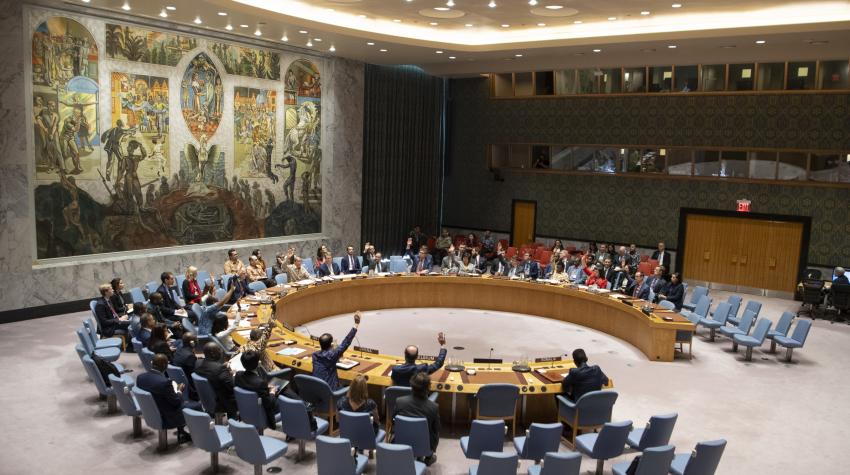
The Security Council (our primary UN cover) is one place where consensus on this relationship has been elusive given recent claims bu at least a couple of members (permanent and elected) that a focus on human rights disturbs what is maintained to be a traditional “division of labor” in the UN; that because the UN has a human rights mechanism – albeit overworked and improperly funded – such matters should essentially be left to their devices. Moreover, there is also a concern among a few members past and present that too much human rights scrutiny can easily become a sovereignty-threatening club that some states use to batter the actions and reputations of other states.

These concerns are not entirely without merit; however, they tend to overlook what we know about the place of human rights abuse in triggering conflict as well as the rights-related consequences of violence unresolved. This view also fails to acknowledge the differing levels of authority with which these diverse entities operate. The Security Council’s permanent members are well aware of the privileges of their membership – not only the vetoes which they occasionally threaten and cast, but the additional  ways in which they can manipulate policy outcomes, protect their allies and overstate with impunity the significance of resolutions which are claimed to be “binding” in the main but which were often negotiated and tabled with a clear (if cynical)  understanding of the client state interests to be protected. Without question and for good or ill, the Council’s vested authority is unmatched across the UN system (including by the International Court of Justice), a system which provides Charter-based options for coercive responses to many (not all) threats to the peace which are simply not options for other agencies and pillars.

Of course, anyone who is still engaged with this piece will likely know all this already.  But perhaps the following implications of this authority imbalance will pique interest. Those in the Council (often from among the 10 elected members) who wish to see the Council’s Programme of Work expanded to more regularly embrace contemporary themes and conflict triggers (such as climate change or as it is now known around the UN, “global boiling”) and areas of overlap (such as human rights enablers and consequences of armed conflict) thankfully have various means to do so including hosting Arria Formula meetings and taking advantage of modest presidential prerogatives when their month to occupy that seat comes around.

But these options remain insufficient to a full vetting of the rights-security nexus.  We have long advocated for a Security Council that is more representative, but also which is more in sync with the goals and expectations of the UN system on the whole.  A case can be made, and we would wish to make it, that the Council should embrace more of an enabling (in the positive sense) role relative to the system of which it is a part. Yes, there is a Human Rights Council. Yes, there are talented rapporteurs galore and human rights review procedures applicable to member states. But human rights performance seems a bit too optional and subject to sovereign interests, especially given that such performance is, if the New Agenda is to be believed, central to any sustainable peace.  At the very least, the Security Council could use its authority to encourage greater political and financial attention to a human rights system which strives for universal application across a “full spectrum” of rights obligations now ranging from ending torture to ensuring the right to a healthy environment.  The Council does not necessarily need to add direct discussions about these rights obligations to its already complex and often-frustrated agenda, but it can and should do more to indicate that the successful work of human rights and other UN mechanisms has a direct bearing on the success of its own peace and security agenda. 

It seems obvious perhaps, but bears repeating: none of us engaged at any level in international policy, neither the Security Council nor any of the rest of us, should ever divert our gaze from the painful reminders of just how many people remain under threat in this world and how much further we need to travel in order to make a world that is more equal, more inclusive, more respectful of each other and our surroundings, certainly even more mindful of our own, privileged lifestyle  “contributions” to a world we say, over and over, is actually not the world we want.  As difficult as it might be to contemplate, we in policy spaces are not always the “good ones.” Indeed, when states and other stakeholders refuse to own up to their own foibles and limitations, especially in areas of rights and security, their/our critiques of others, regardless of their conceptual legitimacy, are more likely to ring hollow.

One area of ownership in these times is related to elements of  the “human rights backlash” which we continue to experience in many countries, in many communities and their institutions, even in multilateral settings, as evidenced by an unwillingness to address the core funding needs of the human rights “pillar,” member state inattentiveness to legitimate requests for investigations by special rapporteurs and others, even attempts by a shocking number of state officials to link the activities of human rights advocates (and even of professional journalists) to those of the “terrorists.”

Clearly, the world we inhabit needs a full reset beyond truces, beyond grudging or even self-interested suspensions of hostilities. Such may well be helpful preconditions for the pursuit of security which simply cannot be obtained at the point of a gun. But the security that so many in this world seek remains too-often elusive despite these often-unstable agreements, including people whose farmlands have dried out or flooded, people forced into poverty, displacement and despair by armed violence and abusive forms of governance, people made vulnerable to the lies and allures of armed groups and traffickers, people who find that they can no longer trust their neighbors or inspire trust from them, people betrayed by officials whose hearts have long-since hardened to their pleas for help. These are just some of the people in our fragmented world whose rights deficits are tied in part to our weapons and power-related addictions but more to our failures as people to soften our hearts and raise our voices to the challenges it is still within our capacity to meet.

The Universal Declaration does not, as many readers know well, dwell on weapons or other security concerns.  But it does define the tenets of a sustainable human dignity, the rights that give people the best chance to pursue lives in keeping with their aspirations beyond their mere survival.  It reminds us, as does the New Agenda more explicitly (p.3) that “war is a choice;” indeed is a series of choices by states and communities to invest in the carnage of ever more sophisticated weaponry and the coercive humiliation which flows from the deployment of such weaponry rather than in ensuring a sustainable future for all our people. Those many rights activists and policy advocates who put their own lives on the line to protect the rights of others know how much of our current security policy and architecture threatens to lead us down paths of ruin.  If the New Agenda is truly to be “new,” it must inspire commitment to find the inner resources needed to pursue more sustainable outer actions that, as with the Universal Declaration, keep dignity at the very top of our conflict prevention and human rights menu.

The (In)Decencies of Work: A Labor Day Reflection, Dr. Robert Zuber

4 Sep

Courtesy of Hope Hanafin

Without a constant livelihood, there will be no constant heart.  Ueda Akinari

There are things that keep us alive, there are things we stay alive for.  Abhijit Naskar

Poverty is terror. Having your Social Security threatened is terror. Having your livelihood as an elderly person slowly disappearing with no replenishment is terror. Harry Belafonte

All across this world, especially within the African diaspora, we feel like there is a constant devaluing of our culture and our livelihood. Jidenna

Inequality is a poison that is destroying livelihoods, stripping families of dignity, and splitting communities. Sharan Burrow

The curse of our time, perhaps soon a fatal one, is not idleness, but work not worth doing, done by people who hate it, who do it only because they fear that if they do not they will have no ‘job’, no livelihood, and worse than that, no sense of being useful or needed or worthy.  John Holt

Do your work and I shall know you; do your work and you shall reinforce yourself.   Ralph Waldo Emerson

This is Labor Day Weekend in the US, a time for some at least to honor and assess the conditions of those among us who keep us fed and clothed, who respond to us during health or other crises, who keep our infrastructure repaired and transportation safe allowing some of us at least to experience one final weekend delicacy of these summer months.

But even those of us who are reasonably well maintained in this world, who have enough to eat, dependable shelter, a viable social network and work that has at least some meaning attached to it know that things are not well with labor. In our time.  As social inequalities rise, the gap between those who “work for a living” and those who decide the too-often dehumanizing conditions under which that work happens continues to expand.  More and more people, especially agricultural workers and others in the so-called “service industry,” work at jobs over which they have little or no control and which ensure that workers and their families do no better than “scrape by” from one minimum-wage paycheck to the next, many wondering if their children will be able to break the cycle of what are essentially “fixed income” jobs with little input, limited satisfaction, and with few or no clear pathways to progress.

The UN speaks much of “decent work,” which rightly attempts to identify impediments to labor which is “dignified” in all aspects – dignified in the sense that the conditions under which that labor occurs are safety and participation-oriented, that exploitation of those seeking opportunities including as migrants (forced or voluntary) is duly highlighted and eliminated, that child labor on and off the streets is replaced by educational and health care access, that those who toil in mines and fields have access to the fruits of their own labor, and that dependents are able to reap at least some benefit from the absence (and often bone-weariness as well) of their working parents. 

“Decent” by UN standards is intended as a floor not a ceiling, as well it should.   

As the UN itself is well aware, impediments to decent work are not limited to gaps in our labor laws and immigration policies, as unforgiving as these often can be.  Across the world, more and more people have been forced to abandon homes and local livelihoods, victims of one or more of armed violence, persecution and other human rights abuses, and climate change impacts running the gamut of drought, severe flooding and biodiversity loss. This is “terror” of a sort that most of us who can read and digest posts such as this one can scarcely imagine, the terror of poverty compounded by the loss of livelihoods and community, the loss of much of what keeps people sustained in body and spirit, the loss of that which keeps us alive and that we “stay alive for.”

For all its good efforts towards “decent work” for all, what the UN cannot do, cannot ensure, is labor which is honored and respected by others. The UN (or any other institution of its ilk) cannot ensure that we who are “well off” are willing to recognize in ways concrete the degree to which our own affluence is a product of the labor of others, those often toiling under conditions that might well break most of the rest of us. The UN cannot ensure that we have the courage to look into the eyes of children flooding the streets and markets, children often left to wonder if the grueling uncertainty of lives as vendors or cleaners will ever end.  And in turn, wondering if the worry and fatigue in the eyes of the parents of these children will ever be allowed to transition into lives characterized by more security, more dignity, even more time away from labor to pursue other ends.

I can almost hear the voices chanting that “this is capitalism,” that people have a right to get what they can get for themselves, that people who “made it” are under no obligation to embrace even the most modest principles of fairness and equity.  I’ve heard this many times, often accompanied by expletives which I myself use but would never subject you to in this space.  But let’s also be clear: capitalism does not require disrespect of those who harvest our crops, deliver food or packages in the midst of a pandemic, or leave their warm beds at 3AM to fix problems with water, power or transportation which they did not cause.   It does not require our indifference to those who teach otherwise ignored children or care for the frail and elderly as they approach their own worldly ends.  It does not require us to centralize money as the sole measure of “success” to the exclusion of identity, community and self-worth.  It does not require our ignorance of the needs of people involuntarily on the move, often with children who cannot fathom why parents decided  to leave the “security” of home for the hardship which is now their constant companion.  It does not require the invalidation of the “constant heart” which beats in response to what once was and could still be our “constant livelihoods.”

And as the anxiety around artificial intelligence reaches a fever pitch in our time, including some urgent norm development through the UN, we would do well on this day to consider the degree to which we have dehumanized so much of our labor force aside from the wealthy decisionmakers who have, creatively or nefariously, pushed their way to the top. We are currently in the midst of an avalanche of technological advance, much of it unrequested at community level and most all of it to the benefit of a few. It is disconcerting to me, rightly or otherwise, that we are on the verge of magnifying the impact of non-human intelligence as our own capacity for sound and attentive judgment continues to wane, as more and more of us, as noted recently by Jared Holt, choose to “glue our eyelids shut.”  Equally disconcerting to me is that we threaten livelihoods with technology with only scant effort to accommodate the “terror” of livelihood loss, the consequences from which cannot be alleviated through money alone.

Of my many oft-quotations of Wendell Berry, the one I utilize most often is that we have become cultures full of people “who would rather own a neighbor’s farm than have a neighbor.”  This fools errand lies at the heart of why we need to take this day more seriously, why the reconciliation of our peoples which is more and more up for grabs requires us to better validate both the labor and the laborer. This day and every day, we can and must do more to ensure that our still-serially disrespected workers have options for decency and dignity that they, like the rest of us, need in order to feel “useful and worthy,” including options of greater honor accorded to the work they do that the rest of us, at least in this time, simply cannot do without.

African Security in the Anthropocene: Book Discussion and Follow-up Interview, Dr. Robert Zuber

3 Jul

Dear Folks,

The following link takes you to an interview I did over the weekend with a South African investigative journalist, Chris Steyn. The interview followed a successful UN visit and book discussion led by Dr. Hussein Solomon of South Africa and Dr. Jude Cocodia of Nigeria. Their fine book, “African Security in the Anthropocene,” is one to which they graciously allowed me to contribute, albeit modestly.

The interview, which was very well handled by Chris and which includes a couple of “commercial interruptions,” was my attempt to link current events, including with regard to latest Wagner Group drama, to broader security interests which the book highlights and to which our New York-based work has long sought to contribute. It was an early-morning interview for which there was probably not enough coffee in my zip code, but I think there is some value here. I hope you will find it so. Bob

Sticking the Landing:  A Father’s Day Reflection, Dr. Robert Zuber

18 Jun

People protect what they love. Jacques Yves Cousteau

Power is no blessing in itself, except when it is used to protect the innocent. Jonathan Swift

Desperation, weakness, vulnerability – these things will always be exploited. You need to protect the weak, ring-fence them, with something far stronger than empathy. Zadie Smith

Idealism, alas, does not protect one from ignorance, dogmatism, and foolishness. Sidney Hook

If we do not step forward, then we step back. Paul Martin

Attend me, hold me in your muscular flowering arms, protect me from throwing any part of myself away. Audre Lorde

There can be no lasting prosperity for our people, if we do not protect our planet. Rishi Sunak

Some of you who follow these posts have commented on their recent, relative infrequency.  This should not be interpreted as a sign of a reduced engagement but rather of circumstance as we continue to adjust in many ways – programmatically, logistically, financially to the changes brought about in some measure due to the long pandemic.  The passion persists; the urgency even more so.  But there is so much in our world generating urgency now, so many threats from which we need to offer protection, both in our own present and for the sake of our often-anxious progeny.  It is harder now to keep track, harder to prioritize, even harder to fashion cogent arguments for public consumption that don’t merely ply familiar personal and policy terrain.  

But this is Fathers Day weekend which for some reason I have long associated with protection.  Not because women don’t protect as well, but because our patriarchal worldviews have long assumed that the men would do the bulk of the protecting, occasionally through keen awareness, negotiation and compromise, but, quite unfortunately, often navigating protection at the end of clenched fists, the barrel of a gun, or worldly investments which accrue benefit only to a few.

The notion of protection seems quite straightforward at first glance, but for many of the best fathers I know it is anything but, a combination of attentiveness to matters of the moment with a lively sense of what the future may well hold for their progeny and what can be done to minimize the challenge and maximize the tools (financial, educational, personal) needed to meet the challenge or at least to give children a fighting chance to do so.

For even those fathers particularly skilled in the nuances of protection’s complexities, the words “messy and fraught” used this Saturday by the Washington Post, seem appropriate.  We can ensure that children are fed and hugged, educated and housed; that they are properly “ring-fenced with something stronger than empathy.” Moreover, we can also do much to ensure that they experience the personal skills they will need to practice over the course of their lives, the attentive understanding, generosity and compassion that they would wish for others to bestow upon them. 

But most of the fathers I know understand well that their ability to protect is limited even if bound within the domains of family and community.  To be sure, they cannot always protect from disappointment and failure, from humiliation and bullying, from anxiety and heartbreak.   They cannot always ensure that their children will embrace a calling appropriate to these difficult and dangerous times or (to quote that beautiful phrase of Audre Lorde) that they can keep girls and boys “from throwing any part of myself away.”

Beyond this, many of the fathers I know often lament that they cannot better protect children from the larger threats to their future — the new technologies and their weapons that we can create but barely control, the climate change and related biodiversity loss and ocean warming that portends more violent weather patterns and evermore silent springs, the pandemics which poise like wolves outside our seemingly-secure dwellings, waiting to blow away the plans and dreams of the unprepared and unsuspecting,

On top of all, we live in a time when fatherhood itself is contested space, when “men” are judged more and more by their most problematic examples, when even those who try to be the best fathers that they are capable of being find themselves too -often frustrated; struggling with life-partners living out a “different page,” displaced by the allures and influences of social media platforms and celebrity culture, worried that the financial and lifestyle sacrifices made to raise and educate their progeny will prove to be bets no safer than those made in Las Vegas casinos – close your eyes, cross your fingers, take your chances, and hope for the best. 

Never having had to raise children myself, I am always a bit hesitant to write about something I have never experienced, those hour-to-hour duties and worries that I can only participate in vicariously.  But I also know many fathers, some mostly satisfied, some also regretful, some eminently grateful for their blessings, some occasionally despondent at the lack of understanding and forgiveness from children who are likely to get over that difficult hump, if they ever do, only when they have children of their own.  It is indeed a “messy and fraught” business this fatherhood thing, implementing uneasy promises of protection in relatively small spaces as the bees struggle to pollinate, the fish migrate far from their biological homes in search of properly oxygenated waters, the air turns orange as the far-away forests go up in flames, the weapons continue to discharge in classrooms, and those who would deign to govern have seemingly thrown more of themselves away than any of the rest of us could possibly imagine doing ourselves.

I myself am no “father,” neither in biological nor religious terms.  But in our own “messy and fraught” manner, I and my colleagues have been consumed over many years with the responsibility to “make the world fit for children,” to enable and inspire care, to privilege equity and access across the global community, to help ensure that institutions like the UN not only assess threats to the future but act on them and do so collaboratively and decisively.  We and many others have tried despite a bevy of external and self-inflicted limitations to ensure that fathers and mothers can do their level best with children with some semblance of expectation that the world they are preparing for their children to inherit is worthy of that effort, a world that is greener, more equitable, more inclusive, more peaceful, more respectful than we have often been led to believe is possible.

This is all within the realm of the rhetorical, of course, and time spent (as we do routinely) within international organizations paints an uncomfortable picture of compromised policy urgency, endless half-truths emanating from officialdom, and processes content to examine and assess problems without a corresponding responsibility to urgently remediate the worst of their influences.  If fathers and mothers are ultimately to continue to “stick the landing” on parenthood, again to quote the Washington Post this weekend, they will need more, much more, from we erstwhile global policymakers:  more clarity and honesty about the messes we have collectively made for ourselves, more courage to move beyond petty politics and trust-related “excuses,” more determination to overcome our own follies and better translate idealistic words on a page to an embrace and support for the growing complexities and challenges associated with transitioning from one generation to another.

Happy Father’s Day, folks.  I can’t understand all that you go through, and surely do not wish to compete with the gifts some of you will get today in the form of thank-you cards, neckties and power drills, but know that we will continue to do what we we are able to help ensure that your complex and loving investments in our common future have the best possible chance of bearing good fruit.

The Folly of Mediating Peace in Sudan, by Professor Hussein Solomon

8 Jun

Editor’s Note: For some time now, Dr. Solomon has held our attention on the swhifting situations facing Sudan from atrocity crimes in Darfur to the current, coup-influenced violence. We have been grateful for his probing commentary which has exposed conflict prevention and resolution flaws across the African continent and beyond. We are pleased that Dr. Solomon (along with Professor Jude Cocodia of Nigeria) will soon be in New York to launch their new book, “African Security in the Anthropocene.” Please contact me (zuber@globalactonpw.org) for more information about their New York events.

The carnage of war is evident in Sudan as the conflict between the Sudanese Armed Forces (SAF) led by General Abdel Fattah al Burhan and the paramilitary Rapid Support Forces (RSF) under the command of Burhan’s deputy – Mohamed Hamdan `Hemedti’ Daglo continues to escalate. The fighting is most intense around the three adjoining cities that make up the country’s greater capital – Khartoum, Omdurman and Khartoum North. However, it is also occurring in other parts of this blighted country.  After six weeks of fighting, 25 million require aid and protection according to the United Nations. Moreover, 1,1 million people are internally displaced whilst 350,000 fled across borders seeking refuge in neighbouring states.

Tensions between the SAF and RSF came to the fore in January 2023 during the discussions around the integration of the RSF into the regular armed forces. By April the tensions escalated into full-scale conflict. Ironically, the Sudanese Armed Forces assisted in the creation of the RSF from Janjaweed militias which it used to fight the anti-Khartoum insurgency in Darfur.

The RSF was estimated to be 5,000 strong in 2014. They grew stronger and by 2016, it sent 40,000 of its members to fight in the civil war in Yemen. By 2023 it was estimated to consist of 100,000 fighters – many battle-tested veterans of the Yemeni civil war. Its growing military strength also lay in its growing economic footprint – especially in gold mining. Consider here the case of the Jebel Amer mines in Darfur which stretch for more than 10 kilometres. Following the RSF wresting control over it, Hemedti was transformed into the most important player in Sudan’s gold industry.  Gold gave the RSF the ability the be financially self-sufficient and exist outside the military’s chain of command. This, of course, Burhan would not countenance. At the same time, it needs to be acknowledged that the SAF are also major players in Sudan’s economy and contribute to the military’s reluctance to hand power over to civilian authorities.

 From this perspective, the current conflict in Sudan should not be seen as beginning this year but relates to the problem of civil-military relations and the military’s penchant of getting itself immersed into the economy. Consider the following fact: Sudan has only had three short-lived attempts at civilian democracies – 1956-1958, 1964-1969 and 1985-1989. Following the ouster of Sudanese strong man Field Marshal Omar al-Bashir on 11 April 2019, there was a serious attempt on the part of Sudanese civil society to establish a civilian government. This, however, was prevented by the military coup in which both Burhan and Hemedti cooperated to thwart the democratic aspirations of the Sudanese people. Both Burhan and Hemedti are the problem together with the ongoing penchant of the military to involve themselves directly in the political and economic spheres.

From this perspective the Jeddah talks which Saudi Arabia and the United States were mediating was bound to fail. It simply did not go far enough to seek a lasting solution beyond the current crisis. The talks were also bound to fail since not enough attention was given by the mediators to the role of outside actors who may be stoking the conflict. For instance, it is alleged that the RSF gets support from the likes of a Libyan National Army strongman – Khalifa Haftar — as well as from Russia’s Wagner Group.

The talks were also bound to fail given the low-level delegations sent by these two Sudanese combatants to Jeddah. Both were attempting to use the Jeddah talks as a public relations exercise as well as to win brownie points in Washington and Riyadh. Embarrassingly for both Saudi Arabia and the United States, they have declared 6 times since the 6th of May when the mediation effort began that a humanitarian cessation of hostilities had been reached, only to have it violated each and every time. Burhan’s commitment to the peace talks was already in doubt when he wrote to the UN Secretary General seeking the removal of Volker Perthes, the UN’s Special Representative for Sudan. This followed Perthes criticizing both Burhan and Hemedti and warning of the “growing ethnicization of the conflict”. Burhan also formally removed Hemedti from his post as deputy and has brought in further army reinforcements in his fight against the RSF.

All these developments point to a further escalation of the conflict. These rivalries, meanwhile, are hastening the disintegration of Sudan. Given the fact that the armed forces are distracted by the RSF, there is a real danger that the banner of insurrection will once again be raised in the Darfur region as well as in Blue Nile and South Kordofan states.

Trust Busters: Interrogating the “Blossoms” of Distrust, Dr. Robert Zuber

7 May

You may be deceived if you trust too much, but you will live in torment if you don’t trust enough. Frank Crane

Trust dies but mistrust blossoms. Sophocles

When trust improves, the mood improves. Fernando Flores

How can people trust the harvest, unless they see it sown? Mary Renault

As you enter positions of trust and power, dream a little before you think. Toni Morrison

Trust, even when your heart begs you not to. Alysha Speer

To borrow against the trust someone has placed in you costs nothing at first. You get away with it, you take a little more and a little more until there is no more to draw on. Jeanette Winterson

Trust starts with truth and ends with truth.  Santosh Kalwar

This past week, under the Swiss presidency, the Security Council held a general debate on the topic, “Futureproofing trust for sustaining peace.”  This “debate,” chaired by the Swiss Minister of Foreign Affairs, gave delegations the chance to both assign blame for the current, largely dismal, state of multilateral affairs, but also to be more thoughtful than is often encouraged about how trust-building is a more essential element in the success of such affairs than has often been recognized.

Amidst the cold winds blowing through the UN since the height of the pandemic, specifically with regard to NGO and civil society access, we have noticed more and more delegations taking up – in rhetoric if not always  in practice – the normative elements that we and others have been promoting for some time.  More and more it is recognized that the comfort we share within our UN bubbles is often not shared by constituencies at large; that our predispositions to craft language (especially on peace and security) watered down by a misreading of “consensus” and then foisted on a needy world with little or no interest in how such language is to be implemented does not appear to others to be quite the breakthrough that we imagine it to be in the realtive conform of UN conference rooms.  Indeed, there are, and likely shall remain, trust deficits which will inevitably occur in situations where the norm-makers have little or no responsibility to ensure that norms crafted can actually breathe hope and life into the communities ostensibly served, communities who generally have little or no say in their crafting.

As we know from our own training and investigations, and as this week’s Council debate reinforced, trust is no simple matter.  Indeed, like “love” and many other of our cherished normative categories, trust is far easier to invoke than to either define or maintain.  Indeed, in a world which seems at times to be spinning out of control, the tendency in policy is to focus too much on the criterion govering our own trust issues rather than on criterion for cultivating and enabling trust in others.  Moreover, in the context of multilateral relations, it is too easy to forget that the priority of trust-building has a history, one in part of colonial powers and other large states which has “borrowed against trust,” over and over again, throwing their weight around, imposing values that they do not always practice themselves, telling only the part of the truth which serves national interests, crafting agreements with abundant loopholes which preserve options for some and limit them for many others, insisting on ending impunity for smaller, offending states while dodging accountability for themselves, insisting on a “rules-based order” without a thorough vetting of who made those rules and the starkly uneven ways in which they are often enacted.

We should be clear here.  We have sat in UN conference rooms with laptops open and mouths closed for a generation now.  Despite the aforementioned “cold winds” which we experience on a daily basis, we continue to believe that the flaws in this system, flaws which impede the full-flowering of what is still a rather remarkable experiment, can and must be fixed.  Despite the extraordinary diplomatic and learning opportunities occurring routinely within its walls, we have long since moved past honoring the resolutions which are dead on arrival, the endless COPs and other of what Kenya referred to this week as our “ceremonial meetings” which too –often deliver even less than half a loaf, those diplomats who insist that the UN is solely for its member states without reminding the small but attentive audiences that the decisions which hopefully bind are made mostly in national capitals not in UN conference rooms, the often-fruitful discussions which are now more frequently webcast but which are more likely to raise constituent expectations than satisfy them. 

Despite calls by the African Union and several other delegations speaking at the “Futureproofing” event to bring multilateralism closer to the people, gaps of trust remain, gaps which cannot be written off as the fruits of vaccine inequity or the painful Russian aggression against Ukraine.  These are gaps of “good faith” as noted by Mexico this week, of the absence of justice as Ireland insisted, of promises made and then broken as suggested by China, including the promise to break down “the high walls over small spaces” that more and more states seem desperate to maintain.  For its part, Brazil warned of the rapid spread of resentment (and we would add “grievance”) which is toxic to trust-building as is (well-put by the Swiss Minister of Foreign Affairs) our current climate of unpredictability which causes some states to retreat into an unhelpful “nostalgia” and others to dig in their heels and refuse to budge on policy until their own (largely un-named) trust issues are duly addressed.

It is not so difficult for each of us to grasp the complexities of trust; we only have to examine our own relationships, our own mishandling of the truth including the truth about ourselves, the unexamined hurts we carry around in our hearts which impede both the risks of trust but also a clear-eyed examination of the hurts we have inflicted on others.  Trust is no simple matter, neither for institutions like the UN nor in our own domestic contexts.  Whether local or global we continue to “borrow against trust” in ways that only serve to shrink our personal circles and policy worldviews, narrrowing options for both promise keeping and service provision.  

During the Council meeting on “Futureproofing Trust,” The UN High Commissioner for Human Rights, Volker Türk (who doesn’t pull many punches) cited what he called “atrocious ruptures in the social fabric” which make trust in governing institutions a high hill to climb.  Unfortunately, this “high hill” also applies to our personal and domestic contexts as well.  Study after study has chronicled a growing sense of loneliness and isolation amongst many of our populations, people whose primary companions have become cell phones and social media outlets, people who tend to place more trust in apps than in neighbors, people who wouldn’t dream of talking to a stranger but will bare their all in front of a camera to be consumed by thousands of perfect strangers

The “atrocious ruptures” chronicled by the High Commissioner thus have implications both within and beyond multilateral structures, pushing peoples and their representative into harder positions and more well-defended spaces from which stems too-little hope, too-little confidence, too-little trust, too-little courage.  The “torment” which verily comes from living in a world characterized by staggering levels of mistrust now constitutes a metaphorical “superbloom,” one which coveys little beautfy but rather continues to narrow personal and policy options and perspectives. This torment is simply something we must choose to live without.

If we are to scale the peaks on which are very lives likely now depend, we will need to replace the interminable “code red” warnings of our hearts with heart-friendly investments, refusing to be lonely and isolated, refusing to make promises we have no intention of keeping, refusing to pay lip service to the trust that we desperately require at the core of our souls and institutions, the trust that can “improve our collective mood” and bridge divides of truth and action that threaten to turn gaps into the ruptures which we all would do well to fear.

Switzerland opened a door this week in an eminent policy space to reflect on a topic both exceedingly complex and largely neglected.  The takeaway is that we are running short of time to adjust our ways and means such that we might trust with greater courage and improve prospects for maintaining the trust of others. Trust in the end is the glue which can hold together our increaingly unglued societies and their increasingly bewildered citizens. We must continue to make spaces conducive to exploring and examinuing ways to build and share the trust on which our collective future likely hinges.

Getting Us:  A Holy Season Reflection, Dr. Robert Zuber

7 Apr

Beautiful people do not just happen. Elisabeth Kübler-Ross

 In love there is no because, no reason, no explanation, no solutions. Anaïs Nin

The truly terrible thing is that everybody has their reasons. Jean Renoir

We are each other’s harvest; we are each other’s business; we are each other’s magnitude and bond.  Gwendolyn Brooks

Leave people better than you found them. Marvin J. Ashton

The opposite pole to narcissism is objectivity; it is the faculty to see other people and things as they are, objectively, and to be able to separate this objective picture from a picture which is formed by one’s desires and fearsErich Fromm

If you understood everything I said, you’d be me. Miles Davis

As soon as we start putting our thoughts into words and sentences everything gets distorted. Marcel Duchamp

If we are to love our neighbors, before doing anything else we must see our neighbors. Frederick Buechner

You do not really understand something unless you can explain it to your grandmother. Albert Einstein

I do not want the peace which passes understanding, I want the understanding which brings peace. Helen Keller

I sat with my anger long enough until she told me her real name was grief. C.S. Lewis

To most Christians, the Bible is like a software license. Nobody actually reads it. They just scroll to the bottom and click ‘I agree’. Bill Maher

In this week of many expressions of faith across many cultures, one of the few television commercials that has piqued my interest is the one suggesting that “Jesus Gets Us;” that the one whom at least some of us reverently acknowledge was, on this day, unceremoniously nailed to a cross, really understands who and what we are, notwithstanding perhaps also being a murdered victim of some profound misconceptions about who HE was, what he represented, the challenge of what he expected of us and what many of his followers in real time also expected of him.

If any of you identify in whatever way as Christians and want to find out more about this movement, you are encouraged to check out https://hegetsus.com/en. In fairness, there are things here to warrant a look, especially the reminder that Jesus seemed to reach out to those who experienced rejection from the society into which he was born as well as those facing great pain or need, people longing for a more dignified existence which the dominant social conventions of that time (as in our own) largely denied them.

So at one level, good for them. Good for not trying to turn Jesus’ ministry into version II of the vengeance-prone deity which so many of his contemporary followers seem to prefer, a deity whose central concern during the earliest expressions of the Jewish faith seemed to be more about punitively keeping people in line – especially with regard to matters of sexuality and procreation – than in keeping people on the path to a higher compassion and a deeper understanding of faith which incorporated but was not confined to the utterances of religious leadership.

I want to get to the issue of what it means to “get us,” but as way of confessional background it has been clear to me, or at least as clear as anything can be with regard to the “mysteries of faith,” that the main concern of Jesus’ ministry was less with “sinners” per se and more with the hypocrisy and self-referential nature of religious authorities. Time after time, together with his band of misfit disciples, Jesus reminded others that the ones who had strayed the furthest from the faith were the ones who deigned to represent it, those who largely failed to heal or inspire, those who were more concerned with keeping Rome out of “their” business than with attending to God’s business.

The scriptures – which I would remind you we only know as translation and also know primarily (and rightly in my view) as an aid to liturgy more than as a stand-alone book of hard rules – put the notion of “getting us” in a particular light.  I don’t wish to force an interpretation on the reader, though I do agree with Bill Maher when he joked about the bible akin to “software license” which we merely scroll to the bottom to then give the most superfifical of assents.  But it is also clear to me that there are at least two kinds of “getting” embedded in Gospel narratives which were intended for diverse communities in part by rearranging and then communicating different pieces of the oral and written testimony about Jesus available at that time.

This testimony surely gives some credence to the notion of “getting” from healing the apparently unhealable and feeding multitudes to acknowledging the humanity of criminals as he hung from the cross. That Jesus had made a ministry out of “getting” those whom the religious leadership of the time had largely forsaken, those who should never be brushed aside by houses of faith but should instead constitute the core of ministry for all who imagine ourselves to be following in his sacred footsteps. 

But scripture equally chronicles a “getting” which is less about him “getting” us than the other side of the relationship. We must resist the temptation to brush aside from the bibilical narrative the degree to which few during the earthly sojourn of Jesus seemed to grasp what exactly was going on in that here-and-now and why it mattered.  From the wedding at Cana to the capture of Jesus by soldiers prior to his crucifixion, even the people closest to Jesus (his mother, Peter, etc.) apparently missed large portions of the point of the mystery and ministry which he embodied. 

I would humbly suggest that in this time when faith is becoming more aggressive and tribal than thoughtful or compassionate, we would do well to contemplate less on how Jesus “gets” us and more on whether we actually “get” Jesus, actually “get” who and what he prioritized, how he left people better than how he found them, where and how he dispensed both his compassion and his challenge, what he most fervently wished for those who flocked to hear his message but who surely were left to guess (and probably guessed erroneously) where this preacher and healer came from and what he had ultimately come to accomplish.

At the same time, we would do well to reflect on how this notion of “getting” has punctuated our contemporary discourse, suggesting relationships which seek to blend understanding of “where we’re coming from” with a degree of acceptance which largely assumes that change and growth are unlikely to occur and should hardly even be encouraged.  Such “getting” may well be key to the maintenance of domestic harmony, but I’m not convinced that it is entirely what Jesus had in mind. Of course, as Miles Davis suggested above, if we understood everything Jesus said, we would be Jesus. That was not happening then.  That is not happening now.

But what can happen is forging a closer synergy regarding the healing, caring, inspirational ministry which Jesus embodied and what he seemed to encourage in others – a ministry of our own defined by compassionate understanding and a stronger commitment  to change and growth.  We are complex beings to which the quotes above and thousands of others attest, and part of this complexity which has been uprooted through modern psychology and medicine has underscored the power of habit, our almost genetic stubbornness with regard to the sometimes unhelpful values and practices which tend to govern our lives – many of which we can ably rationalize or passionately defend but not sufficiently explain, even to ourselves.

Jesus surely “got” that some of those who sought his forgiveness would likely return to behaviors which prompted the search for forgiveness in the first place. But for others, the encounters were life-changing in the most complete sense of that term – a turning point for people whose aspirations had been buried under social convention, foreign occupation and religious authorities more concerned about their own piety than about the well-being of those who legitimately felt abandoned by them.  For these, the testimony of Jesus, the touch of his garment, the meals he shared, the removal of afflictions which had turned sons and daughters into social outcasts, these were both manifestations of his ministry and invitations to grow and change, invitations as well to take up ministry ourselves, to “leave people better than we found them” in whatever ways we are able.

Jesus “gets” us enough to offer us pathways to companionship through this sometimes challenging life, but also “gets” the habits of our hearts, habits from which stem many outcomes including compassion, courage and caring but also violence and indifference, discrimination and self-deception. This Jesus who we claim to “get” but mostly don’t, this Jesus who constantly chided those nearest to him who understood his person and ministry largely through the lens of their own assumptions and expectations, this Jesus urges all — especially in these holy times — to see with greater clarity that we might truly become “each other’s harvest.”