Tag Archives: NGOs

Staying Engaged, Dr. Robert Zuber

29 Jun

Dear All, I wrote this short piece for another list, but thought it might be useful to some to post it here as well.

This will be a short message to all of you.  I’ve been asked on several recent occasions why I am not posting as many weekend messages as in the past.  It is a good question which requires me to “fess up” to what has been going on with me and with Global Action amidst the searing heat and personal health issues which have defined the summer so far. 

I want to remind all of you that I have never written for mass consumption, in large measure because in my case there is no “mass” to consume.  What there are is friends and colleagues, diplomats and even occasional adversaries, people who once thought we were crazy and have come around to see the benefit of what we do, people who once sided with us and now think we’re crazy.  Or worse. 

 I am grateful for all of you, more than you know. The fact is I have always written to people I know, at least in some measure, sharing challenge and hope and, if desired, a pathway to policy communities at times impactful and at times delusional.   We have written and contributed to a number of books over the years but the impact has mostly been modest as they weren’t really directed anywhere — perhaps towards some “community” of practice in disarmament or peacekeeping or human rights, but those communities are fractured at best and are sometimes resistant to the sympathetic critique which lies at the heart of our work.  

We all need critique, and I have surely benefited from yours.  We continue to bite off a lot especially inside the UN, reminiscent of the pelican whose “mouth can hold more than its Belly-can.”  And with all that is going on in the world now, there is a need to bite off even larger portions and chew them harder. This summer has been a test of endurance, dodging dramatic storms record heat and the impatience it breeds to get in front of policy actors and remind them of the consequences of the paths they have chosen and seemingly refuse to adjust.  There is a stubbornness about our sector,   a refusal to rethink the value of unimplemented resolutions, performative rhetoric and values which adorn the ice cream cone but don’t materially affect the ice cream. There is, as I reminded a group of NGOs a few days ago, a danger in sacrificing our dignity for the sake of access and acceptance in increasingly restricted UN spaces, a danger in forgetting that when our dignity suffers so does that of the constituents we are connected to, constituents who are often and already poorly placed on the lower end of the dignity scale.  

My wonderful summer intern, Tazia Mohammad, has quickly grasped the “tangibility gap” which characterizes much of what we witness and try in our own small way to amend.  As a gift to me and to others, her reaction to this “gap” has been less cynicism and more about trying to discern how Security Council members and other people with considerable authority in the world could invest that authority so timidly, as though there were no institutional values to uphold and as though previous practical investments — on climate, on weapons, on women, on conflict prevention, on the health of ocean and forests — had gotten us over even one future-challenging hump.   The numerous younger people who have passed through our program have felt the weight of a future which seems murky at best and frightening at worst.  Many have retreated into a world that politics can’t easily reach, including various cyber spaces where the world might actually seem more manageable.  Others want to know clearly and concretely what they and their future are up against.  Tazia is one of those. 

There were others like her this past week in a large auditorium at the New School where I joined Professor Peter Hoffman and two senior officials with the UN Department of Political and Peacebuilding Affairs to talk about the future of peacekeeping and related matters.  I always enjoy helping to explain to younger audiences the extraordinary complexity which accompanies the mandates, planning, discharge and eventual drawdown of such missions.  As with many things in life, relevant complexities are often hidden from view rendering the criticisms which inevitably follow lacking in both sympathy and context.  Indeed, one of my concerns about modern society is that we don’t know much about how things work — including how the things we rely on for our comfort, safety and general well-being actually come to pass..  We don’t know what it takes to get vegetables into our kitchens or water into our sinks.  We certainly don’t know what it takes to protect civilians in a conflict zone let alone protect an entire country from hostile attack.  I could fill pages with those things which are essential to our well-being which we merely take for granted, to which we are entitled but not cognizant.  In a complex and at times frightening world, the logistics of things need to remain fully in our sphere of appreciation and support. 

Beyond complexities, we New School speakers all took turns describing threats to peacekeeping from terrorism and budgetary limitations to the deliberate spreading of hate speech and disinformation and the concerns of more and more UN member states that peacekeeping must do more itself to blend its mandates with national priorities.  My own contribution to this part of the program (surprise, surprise) was a bit different, seeing the main threat in the form of a UN (and especially a Security Council) which refuses to uphold its own values, its own Charter, its own reason for being.  More and more, the Charter and international law violations of states are serving as cover for violations and abuses by other states.  If there is only impunity for breaking the most fundamental of organizational principles, then more states will cross those lines.  If there is only impunity for breaking those principles, then the UN’s reputation is sure to continue taking the “hits” with implications for how peacekeepers and their mandated tasks are perceived and trusted in the field. 

While we are well down the list of concerned parties, these reputational issues affect our sector as well.  Many of us have gotten the message in recent years (from inside and outside UNHQ) that our input is neither necessary nor particularly valuable, that our presence is more annoyance than appreciated, that our role is merely tolerated rather than cultivated.  But we also don’t have “thin skin” and we have no right to thin skin as we are duty bound to make the most of our place at the table even if at times we seem to have been relegated to the kiddie table.  People worldwide need to know what is going on in that large complex at Turtle Bay.  They also need to know how they can meaningfully connect to that daunting space.  These things we know how to do, and it is important in these times that we keep doing them without whining and with whatever tools and resources are at our disposal.  

While we continue, we offer to all of you our heartfelt thanks as well as access to our platform to get your best ideas and deepest concerns in front of global policymakers.  Certainly, we don’t have the best platform around, not by a long shot.  But we have penetrated the system deeply through many thousands of hours of listening and reflection.  We know what works and what doesn’t, and we know where to go with ideas and concerns even if we can’t always go there ourselves. 

We’ll report back again at the conclusion of the High-Level Political Forum in July.  Fingers crossed for bold policies and even bolder practices to help reverse some of our current slide.

Blessings, 

Bob

Voice Lessons: Ceding Space for Those Waiting Their Turn, Dr. Robert Zuber

11 Apr
See the source image

I know you can’t live on hope alone; but without hope, life is not worth living. Harvey Milk

No voice is too soft when that voice speaks for others.  Janna Cachola

Obviously these are some exceptional young people, but what they have in common is that they were ordinary people who cared. Morgan Carroll

You cannot protect the environment unless you empower people, you inform them, and you help them understand that these resources are their own, that they MUST protect them. Wangari Maathai

The people who are trying to be on our side have reduced us to a mere calculation. Sarah Kurchak

I was always taught that when you’re lucky enough to learn something or have some advantage you should share it.  Areva Martin

It is not loving to impose our own grid onto others.  Matt Perman

There have been a series of articles lately by journalists and academics expressing concern about the long-term affects of a pandemic that seems “determined” not to release us fully from its grip.  

We know about the COVID “long haulers,” those unlucky individuals who have been unable to shake the effects of the virus months after their initial infections.   But there are other “long haul” effects that we have only begun to assess, the economic, educational and psychological consequences that we have done our best to hold in abeyance, hoping for conditions that will allow our children back in school before they’ve forgotten what they’ve learned or lost touch with their dreams; conditions that will allow our small businesses to survive a year of numerous adaptations and little income; conditions that will allow some healing for those whose psyches have been battered over this past year by social isolation, fear of the loss of loved ones and incomes, and now concern about whether or not we have what it takes to successfully engage with people who seek to become for us, once again, more than a screen presence.  

Clearly, we are not “out of the woods” and are unlikely to be so even after available vaccines have finally been evenly distributed and this particular pandemic has been finally brought under control.  The sun will indeed rise post-COVID, but it will shine on a world that in many key aspects has lost its way, if not altogether lost its mind.   Despite our own privilege and general good fortune, we wonder if some of those aspects don’t equally apply to ourselves. 

It has been over 13 months now since we have set foot inside UN headquarters which, as most of you realize, is the setting for most of our work, the primary space where we have been “lucky enough” to learn some important things and then “using our advantage” to share what we think we’ve learned with others.  Over these long months, we have missed the personal diplomatic interactions, the rapid movements between conference rooms and issues more connected than acknowledged, the endless coffee breaks to discuss what we’ve heard, what we’ve failed to hear, who impressed and failed to impress, what comes next (or should come next) for our advocacy and outreach, and even the surprise visitors to UN spaces who allow us to better direct our energies and modest assets in the service of interests those visitors help to refresh.

Throughout this long physical hiatus, one which shows no signs of abating, we have managed to keep track of UN processes almost exclusively through digital means.  This past week, for instance, the United Nations and its excellent technical team managed a remarkable set of digital engagements, including a sober ceremony to mark the anniversary of the Rwanda genocide, important discussions in the Security Council on threats from landmines and the current crisis unfolding in Myanmar, and events celebrating the restoration of diplomatic engagements by the US, specifically on Climate and Security and on addressing the care of Palestinians through the United Nations Relief and Works Agency. 

All of these activities – and many others where these came from — are important markers of a global system alternately hopeful and discouraging, a system which, in the case of the UN, is often more political than thoughtful, whose “genius” lies in crafting consensus among states more than in creating urgent remedies for those decimated by armed violence or facing long-term food insecurity from what might be irreversible climate change impacts.  We who operate in UN contexts are sometimes surprised by something we should already know well:  that while the UN has a firm stake in many issues it has limited power to resolve them; indeed that the resolution engine of the UN is largely about persuasion rather than coercion; and that the many skilled and caring diplomats assigned to UN headquarters are as beholden to the aspirations of their foreign ministries, for good or ill, as they are to UN Charter obligations.

Through the use of twitter and other dubious means, we have been able to follow the ups and downs of multilateralism, at least in part, and we have continue to share views within and well beyond the UN community on what should happen, what is not happening, and how we might better integrate our ethical and caring impulses into our policymaking going forward.  I am quite sure that the UN doesn’t miss our physical presence, doesn’t miss our constant scrutiny of its promises and working methods, doesn’t miss our relentless concern that, especially in this time of COVID, branding has too often been allowed to crowd out substance and urgency in our policy deliberations.

The “zoomification” of policy has clearly been a boon to this sort of branding.  While we continue to encourage digital events by our younger colleagues to help them define generational issues and concerns within pandemic-imposed limitations, we are also mindful of how much easier it is to organize events in digital spaces than to ensure their follow-through.  While there is no shortage now of online images of diplomats and (mostly) large NGO leadership saying things which are perhaps meant to be profound but are often self-evident and self-referential, there is too little reason to believe that any of it matters as it should, to believe that the endless statements uttered by these leaders are actually tethered to real concerns in a broken world and reflect policy priorities they are fully determined to address.

This is the dilemma faced by our sector in this pandemic age.  How do we navigate the spaces between image and substance, between the rhetorical branding of global problems that concretely and painfully impact the lives of constituents and the brand-building that allows us to fund salaries and our endless publications, creating strands of expertise that rarely reach and connect beyond the borders of our mission statements?  And how do we ensure, in the name of constituency building, that we are not also constituency-gate keeping, that we are not also oblivious to the reality that people are much more than a “calculation” to substantiate our annual reports, that we recognize people who can only speak their truths to the extent that those of us with privilege and access speak in “soft voices,” and commit to sharing the microphone rather than endlessly grasping for it?

Our sector is fond of calling for change in the UN’s priorities and working methods, as well it should, but it often fails to address the need for reform within our own ranks.  Moreover, for reasons that are only tangentially related to our organizational missions, our collective tendency has become to suggest only the changes that won’t ruffle feathers or threaten funding sources, only the changes that can be incorporated into bureaucracies that it is surely not our principle job to placate.

The damage exacerbated by this pandemic and related crises is experienced broadly by the global community, including within our own offices.  More than a few of our colleagues are also depressed and hurting, are also burned out, are also angry and frustrated that the agencies and processes into which they have poured their live energy have been able to deliver only half a loaf when a full loaf was called for. And what of our colleagues with more direct engagement with the wounds and deprivations which characterize so many communities in this world? What do we in our relatively safe policy bubbles owe those journalists, mediators and humanitarian workers who have taken on the arduous and often dangerous task of reporting on our messes, cleaning up after our messes, or negotiating an end to messes that need not have occurred in the first place? What more do we need to do in our own spaces to bring hope to communities and those who serve them without “imposing our grid” on to lives where such impositions have historically been too frequent and where they simply don’t belong?

There is now a movement among some NGOs around UN headquarters, one which to our mind is not mindful enough of our complex debt to front-line advocates and constituents, a movement which has deployed the twitter hashtag #unmute through which it seeks to organize legitimate concerns regarding access and impact. To be sure, there are people around the world doing the work for real that we purport to be doing in principle, people under siege and threat, people doing their jobs while trying to protect their children and keep from languishing in prisons where guilt is largely fabricated and release is often serendipitous. To be sure as well, there are people around the world, some of whom we have been honored to meet over many years, who are literally models of resiliency and resourcefulness, extending hands of care and promises of empowerment well beyond the attention of UN conference rooms, beyond the reach of funding agencies and international NGOs, small and large.

Let’s be clear: We who function in and around UN spaces remain more privileged than muted. Our voices connect with policymakers beyond our size and volume, likely also beyond demonstrated impact. The doors to UN headquarters remain locked to us. The interactive life inside UN buildings is becoming something of a dim memory. But we are not muted. We have a say, we always have a say, even the smallest among us, even when we have nothing fresh to contribute, even through a flat screen in the middle of a stubborn pandemic which has otherwise exposed and compromised so much in us.

The key for us going forward in these treacherous times is not so much about branding but about sharing. How can we better help people affirm a hope that is based neither on wishful fantasy nor on some externally “imposed grid”, a hope which is grounded instead in a more generous reception for the truths they can convey, truths that can make our own work richer and more relevant to shifting circumstances? And how can we do our part to help “unmute” those whose voices truly demand more attention, those who have been hoping and waiting more patiently then perhaps they should for us to voluntarily mute ourselves, to make way for contributions we need and cannot replicate?

We have had the privilege to learn many things in this UN policy space. And we have enjoyed advantages of institutional access and respect, much of it unearned. As the pandemic continues its relentless eroding of our psychological health while enabling inequalities in so many forms, we will do what we can with what remains of our organizational capacity to help spread what others have come to know, the hopes they sustain and the skills they have accumulated, over our own policy deliberations. And to do so in their own voice.

Ambulance Chasers: Clearing a Path for Policy Change, Dr. Robert Zuber

7 Mar
See the source image

They were partners. They were two halves of the same brain.  Margaret Peterson Haddix

It was an honor, to be listened to closely, to be heard. Meg Waite Clayton

She was hearing the words. They just weren’t registering on her Richter scale of sanity.  Dakota Cassidy

Life is a long preparation for something that never happens. W.B. Yeats

In a sense we are all prisoners of some memory, or fear, or disappointment – we are all defined by something we can’t change.  Simon Van Booy

Life is so constructed, that the event does not, cannot, will not, match the expectation. Charlotte Brontë

It wasn’t a particularly momentous week at the UN, though there was plenty of momentousness in the world to discuss, including the growing threat from hate speech and atrocity-crime level violence committed in the Tigray region of Ethiopia and against protesters on the streets of Myanmar.  In addition, while a session on the use of chemical weapons in Syria fell flat – largely due to the lack of new information from the existing investigative mechanisms – there was nonetheless a palpable sense of frustration in diverse sessions that 10 years into the Syrian conflict, the violence still continues, the disappearances and arbitrary detentions still continue, the foreign occupation still continues, the displacement and material deprivation still continue.

Those of you who still find some value in these weekly missives know of our preoccupation with a relationship between structure and outcomes, especially in multilateral forums.  We affirm that solutions to global problems, much like personal ones, are undermined by gaps between rhetoric and response; between promises made and promises kept; between the growing expectations of the parties and honest appraisals of what it is possible to achieve (or not achieve), including by the UN or any other institutional frameworks. Such appraisals would do well to point out other sources of potential relief beyond the most obvious, underscoring that the attainment of relief supersedes any other concerns, including the authority of the relief-giver.

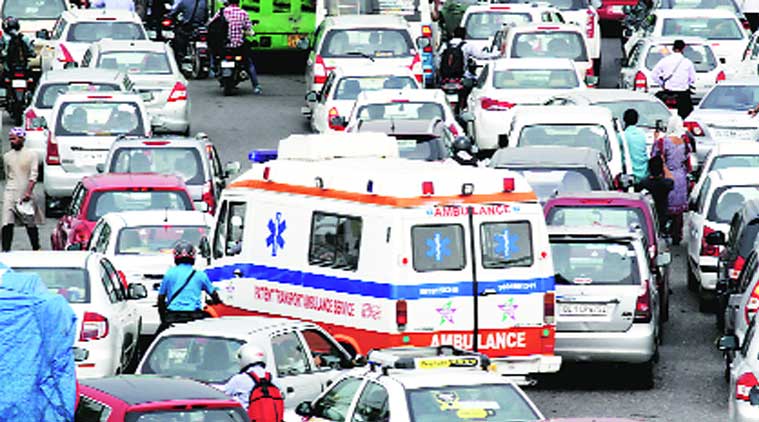
If a child requires urgent medical assistance, the over-riding goal is to get the child to hospital.  It matters less who transports the child than that the child arrives in time to stave off disaster. 

In many ways, it seems, the international community has lost touch with that fundamental principle.  While public approval for the UN remains high within most of its member states, and while the UN maintains its singular function as a convener of dialogue regarding the world’s greatest challenges, there are also flaws in a system that is so heavily dependent on the permissions and funding of large states; that invests massive amounts of skill and resources providing assistance to people damaged by the conflicts we are too institutionally “conflicted” to stop; a system that is constantly “selling” its work to its state benefactors without clear assessments of where that work has gone off the rails, where we might actually be “unfit for purpose,” and where self-inflicted institutional and political impediments have become the erstwhile traffic jams that threaten to prevent constituents from receiving what we have given them every reason to expect from us.

We still insist on driving the sick child to the hospital ourselves even when there are other vehicles in better operating order and more at the ready.  We often insist on being at the center of things, at the core of solutions and resolutions.  Our institutional branding has become at times almost insufferable, people of considerable skill and integrity forced as a matter of professional protocol to tell us much about “what they’re doing” and little about how its working and, heaven forbid, what else needs to happen in the world beyond our bubbles and their aspirations to ensure that the metaphorical child reaches the hospital in time.

Thankfully, from various parts of the world in our zoom-saturated existence, officials and civil society still come into UN spaces to share and report, to attempt to put a human face on “global problems,” to remind diplomats and NGOs alike that what we’re doing isn’t quite working as we intended, that the vehicle holding the “sick child” is too often stuck in horrible traffic as the child’s vital signs plummet and with few willing to sacrifice their place in line to free up the ambulance ‘s path.

But if this week was any indication, those summoned to “brief” this UN community on global crises might be losing confidence in our ability to do more than “tick” our own boxes of concern, to hear and then file-away testimony as though we are somehow doing these leaders a favor by allowing them to present.  Twice in the span of a couple of days, two female NGO leaders – one from Syria and the other from South Sudan, shared frustration at the ways in which their testimony seemed as likely to enable inertia as galvanize a tangible, sustainable response.  Each in their own way they made clear the pressures they feel from colleagues who wonder what the point is of engaging the UN on issues it has failed to resolve over many long years.  What can the General Assembly and Security Council possibly need briefers to tell them about these longstanding crises that they don’t already know? After all, as Wafa Moustafa noted about Syria after questioning the value of speaking to a General Assembly session, “you’ve all seen the photos.”

Indeed they have. We all have. From Syria, from Yemen, from DR Congo, from Myanmar, discouraging images seen over and over to the extent that they are now insufficiently evocative except perhaps insofar that they remind us of the consequences of our collective inability to translate diplomatic dialogue into sustainable peace. As Jackline Nasiwa of South Sudan noted in the Security Council, “we are tired of sharing the same stories,” lamenting that what she highlighted as the considerable resilience of the South Sudanese people “is clearly fading” in the face of ongoing, persistent, unresolved trauma.

And once finished with their own statements, both of these women were expected to listen to a series of largely predictable responses from delegations, expressions of concern largely genuine but also untethered to much in the way of fresh thinking or fresher commitments, anything that might possibly register on the “Richter scale of sanity” of these women.  In many ways the responses from delegations merely confirmed the lament – that we are not only unable to fix what is so clearly wrong, but that we have few good suggestions for where relief might be found beyond our own walls and values.  We can’t fix the problem, or so it seems, and we really don’t know who can.

The concerns of these women and of the people they serve and represent deserve a better outcome than words falling to earth like seeds on concrete.

With all due regard for the mindset of civil society – hoping for more, insisting on more than we are ever likely to see ourselves – we are right to insist that there is something collectively the matter with us here, something which lies at the heart of  the frustration punctuated by the women briefers this week. We talk about the world as though we are in a race to survive a series of deadly pandemics but we act too often as though the world suffers merely from a simple head cold.  We take our sweet time, preferring to delay appropriate action until we reach consensus, forgetting that consensus is an aspiration not a demand, forgetting also that while national priorities differ, the fundamental obligation of this system to prevent violence in the first instance and alleviate the suffering such violence causes should never be up for grabs. Not here. Not in this place.

One suggestion for the UN going forward is that it thoroughly examines its use of the term “partnership,” a phrase so utterly overused and misunderstood that it has lost much of its “flavor,” has in fact degenerated into something akin to proximity and assistance. Our “partners” are the ones who are “around” and help us do our job. They are not, apparently, the ones who help shape what that job is, how it is conducted, how its successes are measured, what course corrections might be required. They are not, apparently, the ones whose briefings demand responses akin to “what we are going to do differently now,” what are we as a community prepared to rethink and renegotiate in order for women such as these briefers to take something of value away from the session, perhaps a sense that they were really listened to and, in these instances at the very least, an assurance that human misery trumps institutional protocol as the motivation and inspiration for our common work. Like most of the rest of us, these women are not “partners” in any real sense, not yet “halves of the same brain,” but voices that we solicit when we need them, voices that we tap when we need to show concern genuine at one level, intangible at another. This is not real partnership. This is not enough.

Public opinion polls regarding the value of the UN notwithstanding, there is a fair amount of cynicism afoot regarding the ability of the international community to ensure that our metaphorical ambulances are able to get to hospital in time to save their patients. When women such as Ms. Nasiwa and Moustafa question the value of their UN testimony — not its content but its audience — we need to take serious note. It may be that we all are defined by things we cannot change. But the violence, heartache and trauma embedded in their testimony, this must change. Most all of us have endured the experience of not being heard, of urgency more often patronized than acted upon. I worry that women such as these will stop speaking to us at all, will rather take up the search for settings where there is closer synergy between rhetoric and response, where there is a higher probability that the ambulance will reach its intended destination. This is an outcome the UN can and must do more to avoid.

State of Play: Controlling Access and Discourse at UN Headquarters, Dr. Robert Zuber

4 Mar

Flags

Nationalism is an infantile disease. It is the measles of mankind. Albert Einstein

Time is a great teacher, but unfortunately it kills all its pupils.   Hector Berlioz

Every act should be performed as though all eternity depended on it.  Robert Grudin

As I’ve written previously, Global Action is in the midst of a temporary office move that is massively inconvenient on the one hand but quite enlightening on the other.

Sifting through a lifetime of commitments and mis-steps, both from the 19 years of Global Action’s existence and from the many other projects that I together with some extraordinary people have spawned over the years is a daunting process under any circumstance; but certainly in an instance such as this where mounds of books and paper lie begging for new habits of storage and access.

But the learning represented in the midst of this chaos is so very rich, perhaps not enough to justify the killing of God-knows how many trees, but certainly enough to help set the table for a new iteration of policy assessment, reflection and service.  And a core part of that learning is coming to terms with why we took on this task in the first place, why we placed ourselves in a position to tilt at windmills of violence, discrimination and poverty with little more than a blunt sword and a countenance often more stubborn than strategic?

As the documents lining the walls of my apartment are slowly reminding, I (with many others) joined this push during the Cold War, when global policy was dominated by two major powers to the degree that most other states, even at the United Nations of that time, could do little more – risk little more – than to align themselves behind their “block of choice.”  Despite being barely 30 years removed from the toxic nationalism that plunged much of the world into violence, we were still struggling with how to place “we the peoples” at the center of a genuinely multipolar policy community, a community that was both genuinely inclusive and fully responsive to emerging global challenges.   We wanted to see about making a world where everyone who wanted a voice had one; where everyone with a skill to contribute to a more just and sustainable world could find their place of practice.

Windmills indeed.    After all this time, all this expenditure of life energy, all this tilting, where are we now?

If one spends any time at all in the presence of our (much maligned and not entirely without cause) media – and I know many folks who now simply refuse to watch or listen – you are well aware that nationalism has made a remarkable comeback as a public policy force.  Walls are rising and patience is shortening; politicians are openly expressing interest in extending their “reigns” beyond constitutional limits; acts of violence perpetrated against those “not our people” are on the rise; speech that incites both fear and loathing has been let out of the closets where people like me naively believed we had safely locked it away.

At the UN, the current wave of nationalism takes a different tack.  The politics of the UN are both more progressive and more protocol-driven than is often the case in national capitals, certainly on many street corners across the nations.  Diplomats at the UN, albeit with significant variations, still understand the need for consensus, even if that often produces resolutions more facile than effective.   Diplomats still understand the many problems – including counter-extremism, migration governance and ocean health – that simply cannot be solved at national level no matter how powerful the government or patriotic the citizenry, even if UN effectiveness on such matters remains open for debate.   Diplomats still understand the pivotal role they can play in addressing global problems, though the working methods of the UN and the rapidly rotating doors of diplomatic missions tend to rob the system of institutional memory – and often of appropriate levels urgency as well.

And diplomats still largely understand the value of diverse voices in policy, though this aspiration often ends up in dialogues with large-budget NGOs that can take off some of the implementation pressure off of states; or NGOs funded by states to provide “guidance” on core branded issues such as peacekeeping, financing for development and the arms trade; or civil society reps that come from diverse settings to provide “one off” testimony about violence and abuse that the UN has failed to satisfactorily address.

The current situation is very much punctuated by what Barbara Adams noted this week during ECOSOC’s Operational Activities for Development segment wherein she described the trend at the UN towards “preferred partners,” mostly from the private sector, but with implications across the system of access for the smaller (and most numerous) NGOs.  These “preferred” partners are virtually guaranteed a seat on the plane, usually with upgrades.  And they always seem to be invited to the party, even when they come (though don’t always leave) empty-handed.

For the rest of us, the UN seems increasingly hostile to its own rhetoric on transparency and accountability.  There are days at the UN when there are virtually no “open” meetings for ECOSOC-accredited NGOs and those meeting that are open often take the metaphorical form of a large picture window through which we are able to see the feast that we are not invited to join, a feast seemingly always in preparation and where our own culinary skills are simply not requested.

These “closed” meetings have at times included General Assembly efforts to revitalize the UN Charter, a matter of urgency for virtually all global citizens, certainly well beyond the concern of government representatives alone. These discussions have many potential “fit for purpose” virtues, but certainly one of the benefits would be to remind the UN community – not just the states – of why we’re here, why we’ve gathered, why we persist in a building that is slow on the sustainable development goals (SDGs) uptake, cannot properly enforce its urgent human rights norms, and stumbles over many of its peace and security obligations despite reminders this week from France and others in the Security Council that “every minute we delay (on implementation of the recent Syria resolution) means the loss of more lives.”

Across UN conference rooms, SG Guterres is constantly reminding diplomats that “global problems require global solutions.” This shouldn’t need repeating.  We should be openly embracing the opportunity — as a policy community but also as a learning community – to make contributions to the resolution of global challenges commensurate with what we know about the many strains of “measles” affecting the planet and the relative ineffectiveness of some of our current strategies to affect proper healing. States, quite clearly, don’t have all the answers here no matter how much some of them try to manage and control discussions and outcomes.  Indeed, if we are to find the answers we seek, we will need a more expansive, urgent and humble engagement with both the questions and the skilfullness of our responses.   The “leave no one behind” mantra of the SDGs should be at least as much about agency as it is about assistance.

On Friday, we at the UN were treated to a side event organized by the Statistical Commission to discuss a “federated” approach to data collection and management for sustainable development.   This nerdy sounding event placed on display representatives of some of the leading “preferred partners for the UN.   But there was no arrogance here, no sense of institutional entitlement.   The speakers were often full of humor and just as often full of humility.  They lost their places in the presentations.  The slides didn’t always work.   They laughed at themselves. And they recognized that they were speaking about a topic of fundamental importance to our planetary future that makes many people feel disenfranchised and some others leap to outlandish claims about the power of data to “save us from ourselves.”

My own favorite was Haishan Yu from the World Bank who spoke personally and passionately about her “simple ideas” of making data more credible while making it “more convenient” for users.   But she also pointed to “the multiple strands of new technology” that are coming at us so rapidly, making it “arrogant to predict the future too boldly.”  She called for global data tied closely to national and local data and that can, within its own realm, help to improve our now-lagging prospects for full SDG implementation.

This was “open” conversation at its UN best, an invitation to participation that even someone like me who wouldn’t know the difference between Instagram and Instant Oatmeal, could appreciate and feel excited about.  I only wished that more state representatives could have been in that room to see how some of their “preferred partners” were doing their part to remind us of the value of our agency towards more preferred futures.

Treasure Hunt: An Advent Reflection on Pathways and Resources, Dr. Robert Zuber

3 Dec

Advent Image

For outlandish creatures like us, on our way to a heart, a brain, and courage, Bethlehem is not the end of our journey but only the beginning – not home but the place through which we must pass if ever we are to reach home at last. Frederick Buechner

Life in a prison cell may well be compared to Advent; one waits, hopes, and does this, that, or the other- things that are of no real consequence- the door is shut, and can be opened only from the outside.   Dietrich Bonhoeffer

To be human is nothing less than to be caught in the great congested pilgrimage of existence and to join ourselves freely to it in the face of the evidence of its never-ending troubles.  Eugene Kennedy

For where your treasure is there will your heart be also.   Matthew 6:21

I’m not usually asked to write things by others – more likely asked NOT to write things, actually.   But there was one recent exception – a valued colleague asked if I would comment on an important, recent NGO discussion on the “perils and challenges of a shrinking UN budget.”    Since it is also time for my annual Advent letter, I will attempt to conflate the two responsibilities.  (You might want to consider a stronger cup of coffee before proceeding further.)

At the UN, much of the constriction just alluded to is based on threats from the current US administration and some other donor governments, officials seeking a leaner system that can do “more with less.”  As we know, this often translates into “doing less with less,” a problem for an institution that is being pulled in a variety of challenging policy directions and is having more and more difficulty taking care of basic expectations to staff and constituents on top of evolving concerns related to issues as diverse as autonomous weapons, forced migration, mass climate incidents, ethnic and disability-based discrimination, species extinction and pandemic threats.  Our global community – even those parts that don’t much trust us here in New York – simply has no viable recommendation to offer for how we might, together, ever make it “home” to a world of peace and well-being without the UN’s occasionally clumsy – and now also funding-challenged — efforts to clear away some of the debris that inhibits our collective progress.

There are challenges as well for those of us who labor in UN confines, and not only for the institution itself.  Some of those have clearly “seasonal” references.

My profound admiration for the late Dr. Bonhoeffer notwithstanding, my own take on this season of Advent is less about “killing time” in a confined space waiting for some divine (or human) power to turn the lock, and more about discerning what we plan to do – and with whom we plan to do it – in order to bring this current, difficult and confining sojourn finally to an end.

Like many people with far better excuses for this neglect than I have, I don’t spend enough time in reflection or –if you prefer –prayer, in Advent or any other season.  I don’t spend enough time simply dwelling with myself – the good and uglier aspects of that – figuring out both where I want to go but, more importantly, where I want to invest my treasure and with what values?  Moreover, who do I wish to stand alongside, and for which causes and objectives shall we together stand?  How can we best point out the many structural and, at times, self-imposed obstacles that litter our path home without sounding shrill, or mean, or even self-righteous?

Beyond such self-analysis, the reflection time of Advent allows me to take at least partial stock of all the people in my life who matter, some of whom are facing their own trials of health or meaning,  others of whom now finding themselves killing time in mostly hopeless spaces with no obvious exit.  When I reflect — when I pray — I remember all the people I am usually too “preoccupied” to think about in the ways that they deserve. And in my best moments, I recall that capacity to care about people in practical ways commensurate with the genuine value they can and do add to my life (and my world).

Advent for me represents a time of longing, of the hope that the heavens will open revealing the way out of the tiny rooms in which we have, sometimes willfully, restricted ourselves.   But it is also a time for planning what we will do once our full release is secured, and with whom we will walk ahead on a path towards greater inclusiveness and equity.

For many of us, this planning and walking clearly has something to do with money.  In an expensive and economically skewed city such as New York, those of us who work in this UN vineyard have to pay attention more than we wish to the financial implications of our respective missions.   It is difficult at times to live with simplicity and generosity beneath a bevy of shining towers saturated with moneyed interests but with little or no concern for what we are attempting to accomplish with and for each other in the realm of global policy.  It is even more difficult to share this space in the way we should with the many stakeholders worldwide who can effectively “check” our elite realities but can’t foot most or all of the bills associated with their presence here.

The UN, as already noted, has many of its own fiscal laments, sometimes substituting slogans and scheming for thoughtful reflection on what are often utterly daunting program and funding tasks.   One of those slogans relates to the Sustainable Development Goals (SDGs) tag line of “leaving no-one behind.”  I have written previously about this once game-changing but now tired and overused formula that now represents an aspiration likely to exhaust our collective energy, probably also our powers of attention, certainly our currently available (and perhaps even projected) resources.

UN budget challenges, including the preference by some states for greater austerity and “earmarked funding,” have indeed been complicated by the ambition of the SDGs but also by the global events that make fulfilling these goals so essential to our very survival.   More and more attention is now being paid to addressing the massive price tag associated with our sustainable development promises, including through commitments to end state corruption, solidify domestic revenue streams, and integrate the so-called “private sector” in what must become a fully transparent and rights-based manner.  Military spending, much to our chagrin, remains an obvious and largely “off limits” source of potential SDG revenue.

Along with SDG-related imperatives, there are now frequent, UN-sponsored “pledging conferences” focused on forcibly displaced persons facing deprivation and trauma, the victims of discrimination and armed violence that we have done less-than-enough to prevent, the stranded and water-logged residents of coastal areas battered by storms made worse through our collective climate negligence.  A shockingly high percentage of funds pledged for disaster and humanitarian relief are actually never honored while the humanitarian and environmental crises-of-our-making seem continually to evolve.

It would seem appropriate at this point to apply some iteration of the biblical reminder regarding the links between our treasure and our heart to UN policy contexts.  To paraphrase:  where our treasure is withheld or withdrawn, where it is beholden to institutional politics more than to people, thus might well our hearts be hardened.

And there are NGO dimensions associated with current budgetary challenges.  Every time I walk into the UN, a place where I spend an average of 9 hours each day, I cost the UN money.  The security officers whom I often greatly admire, who are the “face” of UN hospitality, and who are often not treated with sufficient respect by diplomats or NGOs, are paid to make sure that people like me and my interns/fellows don’t trespass on diplomatic prerogatives, don’t get off the elevators on the wrong floor or sneak into closed meetings.  Moreover, we don’t pay for the earplugs we use in UN conference rooms; we don’t pay for the electricity or the wireless that allows us to communicate UN deliberations to the outside world; we don’t pay for any of the access passes I and my colleagues liberally bestow upon others; we don’t pay for the literature we collect and then stack up throughout our office.

And so part of the discussion about UN budgets must focus on the benefits (sometimes begrudgingly) enjoyed by offices like my own but, even more, about the financial limitations that even now impact the ability of others to sit where I sit – those many “outlandish creatures” worldwide who have every reason to insist on their place in this policy space, on their ability to “add value” in ways that I can only pray we do as well.  In a time of abundant and mean-spirited austerity threats, including towards the UN, there is little reason to believe that important and hopeful voices will find their way out of the spaces where they have for too long been confined and into UN conference rooms where “what they know” can and must inform “what we do.”   Little reason, that is, unless we commit more of our treasure to making that happen, to insist that our (still-intact if shrinking) institutional privileges are available for them as well.

For unless we all make more time for reflection on both our commitments and our own privilege, unless we are fully prepared to use whatever treasure is at our disposal to reach as far as we can to connect with those in need of both justice and a voice – and then stretch a bit further still – we are more likely to remain as “toothless plaintiffs” towards a system already well into its embrace of what Global Policy Forum calls “selective multilateralism.”  Our road home to a place of inclusion and equity is littered with debris that we have often scattered ourselves – our self-preoccupations and excessive material interests, our numerous distractions and competitive suspicions.  Ours is indeed a “congested pilgrimage,” albeit one we maintain (at least for now) the power to de-clutter.

Some of this business about sustaining multilateral policy space is about funding, specifically about a fair, predictable, transparent and depoliticized balancing of resources and expectations. And some is about reminding governments and other international stakeholders that their often-furtive and restrained financial commitments in the face of global crises tell us much about the size and health of their collective heart. But some of it is about us as NGOs as well:  our willingness to use opportunities — including the reflection space of Advent — to interrogate the promises we keep, the value we contribute, the conflict we prevent, the voices we enable—commitments that we must “own” each and every day regardless of the current health of our organizational balance sheets.

As we lobby for a sane, sufficient and promise-oriented allocation of resources based on something akin to what NGOs often refer to as “full funding” of the UN, we would also do well to ensure that our own treasure is fully engaged — that the self-reflection encouraged in this season begets some newly-minted, heart-felt and tangible commitments to inclusive access and a sustainable peace for more of the world’s people.

Labor Pains:  The UN Undermines Some Key Stakeholders, Dr. Robert Zuber

3 Sep

1940s-miners-with-children-in-colorado_8a29486v

Having the right to show up and speak are basic to survival, to dignity, and to liberty. Rebecca Solnit

People with courage and character always seem sinister to the rest. Hermann Hesse

The only kind of dignity which is genuine is that which is not diminished by the indifference of others. Dag Hammarskjold

On Friday as I was preparing to speak to a group of Bard College students about the UN and the ways in which it does and does not promote human dignity among the world’s peoples, I discovered an announcement on the UN Website informing NGOs like ours that access to UN Headquarters was being restricted for the entire month of September.

In that same announcement, NGOs were offered the option of huddling around a nearby street corner to (essentially) “beg” UN staff tasked with the onerous duty of providing half-day-only event passes to NGOs so that they could attend events – like one produced by UN Habitat and another sponsored by the Office of the PGA on a “Culture of Peace” – to which we and others would normally be invited as a matter of course.

There was no prior discussion known to us regarding this change to NGO access, no obvious consultations or negotiations amongst our erstwhile UN/NGO leadership.   Moreover, I would be shocked to discover that any member state – including those who routinely lift their voices in bland and non-specific praise of NGOs, had bothered to invest any political capital in preserving our access during a September period for which our presence has traditionally not been – and should not now be – an issue.

On that same day, on another part of the UN’s website, I discovered that tourists visiting the UN will be allowed access through September 18.  The “plan” for such access is the same arrangement that we and other NGOs had become accustomed to (and more or less accepted) in the past – a two-week hiatus in late September while Heads of State occupy the UN space for the opening of the General Assembly and seating (even for UN-based diplomats) is at a premium.

But let this sink in for a moment:  The money collected from tourists is apparently more important to the UN than the monitoring work of the handful of NGOs (including our own overseas guests) that bother to be present during important UN discussions, many of which do in fact take place in the days before the General Assembly formally opens. Aside from inspiring fresh allegations of hypocrisy regarding how the UN too often treats non-state actors, this move is likely to accelerate a trend which we have long rejected – NGOs that bypass the occasional indifference and indignities of this system by ingratiating themselves to governments – often as well their funders – governments that then ensure access by these NGOs as needed via their own credentials. These quasi-state NGO agents will find their seats at the table and will surely not be milling around on street corners waiting perhaps in vain for some magic entry pass.

Given all of the discouraging news in the world and the many millions of people under immanent threat from armed violence, flooding and starvation, it is imprudent at best (and a serious diverse at least) to worry excessively about one’s own deficits of access and respect.   We do routinely acknowledge both our privileges and our limitations.  But we also understand that access restrictions impact persons far beyond our own office, people who are seeking (and deserving) their own seat in UN policy space, but also the people who depend on folks like us to identify policy niches and opportunities into which a more diverse set of policy actors can hopefully become immersed.

And these manifestations of disregard or indifference are hardly confined to NGOs.  In the General Assembly this week, several states (including Mexico and Singapore) took the floor to complain that the annual Security Council report was both late in arriving to delegations and contained (once again this year) little analysis or reflection on how and why the Council made the decisions it did, and why more peace and security didn’t emerge as the result of so many of those decisions.

In the Council itself, during a week which featured an excellent debate on peacekeeping operations and a powerful statement by Uruguay’s Ambassador Rosselli in response to briefings on the political and humanitarian tracks in Syria, working methods frustrations also flared.  For instance, during a contentious renewal of the mandate for the UNIFIL peacekeeping mission (Israel-Lebanon), Italy’s Ambassador Cardi took the unusual step of chastising the resolution negotiations process – which apparently included veiled criticisms of the mission itself — in the name of the large contingent of Italian forces without which UNIFIL itself could barely function. Japan, which has ably chaired a committee on Council working methods, presented agreed recommendations that stressed matters such as briefers’ brevity and preparations for newly elected members rather than perhaps more fundamental deficits in communications and negotiations that raise frustration levels needlessly.

Like a number of states at the UN, we are fully committed to a framework wherein tradition assumptions of security – based primarily on weapons systems and power-politics – evolve steadily into a more “human security” perspective.  This evolution implies several important transitions, including the willingness to address security-related dimensions across issue frameworks as well as the determination to place human well-being at the center of our policy objectives, well-being that is fully inclusive of cultures and conditions, and that recognizes policy goals resonating far more with sustainable development than with arms races and endless “asymetrical” warfare.

But human security requires more than people promoting more inclusive, progressive policies. The key to successful human security is bringing out the best versions of human beings themselves, people of dignity and purpose who understand and nurture their connections to the communities around them, people who can and do contribute to secure futures in ways other than fearing adversaries, trading in explosive weapons, defending narrow national interests, appropriating resources not their own, or politicizing the application of rights and legal standards that could otherwise help to create fairer and more predictable social environments.

The importance we attach to enabling better people as well as better policy systems will lead us to “double down” this coming year on some evolving commitments in the US and beyond, including on “servant leadership” with colleagues at the Business School of Georgia Tech University; and on “Inner Economy” with a group on the US West Coast associated with Women in International Security, in the latter instance specifically on examining “the inner resources one gains, uses, and loses in the exchanges of daily life.” These and other commitments will hopefully help leverage and inspire more of the traits of character needed to build both sustainable communities and more trusthworthy state and international institutions.

While pursuing these aims, we won’t go begging for access this month on any Manhattan street corner.  As we gaze from this now uncomfortable distance at the policy drama soon to unfold across the street, we will however do our best to discern how yet another UN promise – this time to a cooperative and transparent relationship with non-governmental organizations both around and far beyond UN Headquarters — is currently being undermined.

We remain in this UN community, year after year, because we believe that this essential policy space can be healthier and more highly regarded as it better honors its commitments both to its global constituents and to diverse stakeholders beyond the diplomats: those like us who critique, compliment, cajole and complement the often good work which the UN does in the world; but also those who serve our coffee, clean up after our many messes, keep the heat and lights working, and provide a helpful, steadfast security presence, day after day.

This and more is labor worthy of the day we celebrate tomorrow. It is also labor that deserves more than bureaucratic indifference from an institution whose essential presence in the world we still very much acknowledge.

Oxygen Tank: Finding the Fuel to Stay on Mission, Dr. Robert Zuber

20 Aug

Oxygen

Basic human contact – the meeting of eyes, the exchanging of words – is to the psyche what oxygen is to the brain.  Martha Beck

Even the laziest person will fight for oxygen when drowning.  J.R. Rim

No one can find the rewind button, boys, so cradle your head in your hands. And breathe, just breathe.  Anna Nalick.

It is coming on late August in New York and the light of summer is beginning to wane, certainly more quickly than either the humidity or the bus fumes.  Along with the tourist-clogged sidewalks, endless construction (including outside my home windows) and mass transit that elevates sweat glands and blood pressure more effectively than it honors its public service obligations, it is hard to truly breathe here now, even harder than is usually the case.

In its corner of this breath-challenged city, the UN has been a bit quiet again this week. However, World Humanitarian Day was aptly commemorated on Friday both to honor those who have died in the service of those enduring armed violence, catastrophe or abuse, and to reaffirm in the strongest terms that civilians (and those who assist them) are not and must not become “targets.”

In the Security Council this interplay of armed violence and humanitarian risk was also in focus.  On Thursday, an otherwise predictable discussion on civilian protection and election preparations in the Democratic Republic of the Congo (DRC) was enriched by a report by Egypt on its “resource trafficking” initiative as well as by the participation in chambers of family members of two UN Experts — Zaida Catalán and Michael Sharp – brutally murdered in the DRC.  The promise of justice extended to these families is one that we should all do our part to ensure it is kept.

On Friday, the discussion on the grave humanitarian emergency that is Yemen seemed a bit more typical of the tenor of recent Security Council meetings.   Outgoing OCHA head Stephen O’Brien described a “maelstrom of death and destruction” in Yemen that does not seem to be improving despite his belief (shared by some around the oval) that this conflict is “deliberate” and well within our power to prevent. Outrage by the Council has had “little impact” on the misery of Yemen’s civilians as both O’Brien and Bolivia’s Ambassador Llorenti duly noted.   Outrage in and of itself rarely does.

This particular Council session was attended by Yemen’s Minister of Foreign Affairs who ignored Uruguay’s call for UN monitoring of entities deliberately endangering Yemen’s women and children, seeking instead to expose only the abuses committed by the Houthi “coup masters” who have “brought war to Yemen” and seek to spread Iranian-inspired “ethnic division” throughout the country. The occasional conciliatory tones expressed by the MFA were directed towards the Council and its resolutions rather than towards political opponents or the growing legion of victims in Yemen in need of healing and reconciliation.

As the meeting was gaveled to a close, a couple of my younger colleagues were taken aback. Is that it?  Is that all?   No firm commitments of human or material resources?  No concrete resolve to end the bombing and sustain a political process? No confession of the failed political maneuverings and reckless arms sales that have directly contributed to human carnage on a scale that relativizes even the sieges of Syria and famine-like conditions in Somalia and the Sahel?

There are times when UN meetings inside and out of the Security Council leave us literally gasping for air, wondering how diplomats and NGOs like us can sublimate so much of what we know about the precariousness of our world within statements and responses that are at times clever but not particularly compelling, insightful but not particularly urgent. In these UN buildings, in the city that surrounds, there is simply too much gasping, too much agitation and distraction, in part because we are not, literally not, “in our right minds.” We are running on fumes too much of the time, fumes which metaphorically represent the dregs of our remaining oxygen supply, the desperate need for which our ubiquitous challenges and frenetic paces have largely obscured.

Here at the UN we have our well-appointed buildings and conference rooms.  We have the respect of many based in part on the carefully-negotiated and heavily-scrutinized normative frameworks needed to stave off at least some of the catastrophes that verily threaten human possibility.  But something essential is missing here; its almost as though we have wilfully misplaced the advice of airlines stewards to, more often than is our habit, place on our own oxygen masks before assisting others.

At a small weekend retreat in New Jersey this weekend hosted by Adora and Levi Bautista, a small group of persons in various “caring contexts” took our own first steps towards oxygen replenishment, not only to enhance our own clarity and well-being, but to help refresh the people alongside whom we identify and address challenges both local and global.  As we slowly felt able to take deeper breaths, some truths hopeful and uncomfortable revealed themselves.  We became a thoughtful and engaged group who recognized that we, too, have not invested sufficiently in “eye contact,” attentiveness and other manifestations of human connection that can create the oxygen we need to clarify, to solve, to thrive.   We have neither “honored” nor shared sufficiently as our partial antidote to the cautiousness and competitiveness that ultimately rob us all of air.

On Monday, the moon will slide between our home planet and our sun in a once-in-our-lifetime occurrence, an anticipation that has people reaching out who might otherwise keep each other at a distance.   With any luck, this burst of eclipse-inspired human connection will also create a bit more oxygen, even in this city, even in these policy halls, allowing us to breathe a little easier for a little longer.

As I found out in the months before my heart surgery, it is hard to think clearly or fully appreciate our assets and blessings when we are habitually oxygen deprived.  Clarity and gratitude will be needed as never before as we seek to fulfill our global responsibilities and reassure the young and vulnerable that the current turbulence that shakes their confidence will eventually subside.

As the wonderful song by Anna Nalick reminds, we simply cannot hit the “reset button” on either our personal lives or our policy choices. But we can ensure that we learn what we can from both our mistakes and successes, that we seek to integrate more human kindness and connection into our policy work, and that we magnify opportunities for ourselves and others to connect the world to which we aspire to the people we aspire to become.

Just breathe.

Water Logged:  Maintaining Water Threats on the UN’s Collective Radar, Dr. Robert Zuber

26 Mar

Empty Chamber

Iron rusts from disuse; water loses its purity from stagnation… even so does inaction sap the vigor of the mind.  Leonardo da Vinci

Time is short and the water is rising.  Raymond Carver

Earlier this week, I agreed to contribute to an informal project the theme of which has long informed our larger work but not dominated our attention for some time:  the “state of play” in NGO relations with one another and especially with the issues and resources of the UN system.

Key to this effort, of course, will be the willingness of other NGOs to join us in what we trust will be an honest process of assessment.   The assumption of this community often is that our deficits – where they exist at all — are about our resources, not our energy or discernment.  We have attempted to bureaucratize this work but not taken account of the emotional toll it takes on all of us, inside the UN but in especially in diverse communities; not only because of the injustices and abuses we constantly engage, but also because of glacial pace at which meaningful change occurs. We do this work because we can and because we must; but we also want to be able to look our children and grandchildren in the eye and tell them that we did all we could to reverse levels of global threat.

Time indeed is short; and more than the waters are rising.

As with the UN itself, we in the NGO world spend much time branding the things we’ve done while ignoring those many things left undone, the questions we’ve misplaced, the policy connections we’ve refused to draw, the voices we have all-too-intentionally muted, the doors of innovation and reform we have simply refused to walk through.

The photo at the top of this post, taken by one of our longtime mentors in this work, could well be the starting point for an honest assessmen of our practices and priorities.  The photo was taken in the Trusteeship Council chamber in which the president of the General Assembly was hosting a system-wide dialogue on water-related goals and targets within the Sustainable Development Goals.

The photo shows the top (NGO) section completely empty.  There were a few water activists (bless them) in our row of seats below that section, but the blue seats were, for most of the day, completely and utterly vacant.

Granted it was an unusually busy week at the UN, with the Commission on the Status of Women and its focus on economic empowerment; two other important General Assembly dialogues on oceans (SDG 14) and climate (SDG 13); Security Council ministerial events on conflict in South Sudan and the protection of Cultural Heritage from terrorist trafficking; a special event to recall the moral darkness of the trans-Atlantic slave trade; and preparations for Monday’s opening of a conference to negotiate a legally-binding instrument to prohibit nuclear weapons.   While we were directly engaged with these and other events this week, we do understand that there are times at the UN when our metaphorical logs simply get saturated, when the volume of issues, options and injustices simply overwhelms our responsibility to be in all the rooms where our skills and attentiveness are needed.

But this particular GA session was about access to water, our most indispensable and (now) threatened resource, an issue that is as cross-cutting as the gender discussions that were happening in rooms below us, as grave an impediment to peace and security as the machinations of ISIL, as potentially existential a threat to our common survival as our most powerful weapons and damaged climate.  As our largest sources of planetary fresh water melt into the sea; as what remains of our domestic water supplies become ever-more subject to corporate hijacking and cross-border struggle; as water inequalities become even more pronounced than those involving personal incomes; as scarce coastal fresh water is contaminated, more and more, by climate-induced rising sea levels; the threats to agriculture, to public health, to security, to life itself continue to grow.

You might think that a conversation on such matters would have warranted a bit more attention, certainly from the communities that have formed around the UN to promote gender justice, sustainable development or international peace and security.   The photo leading this post tells a somewhat different tale.

Fortunately, the diplomats seemed to have a handle on at least some of the urgencies at hand.  For his part, PGA Thomson emphasized the implications of our current water crisis for all three core UN policy pillars.  The UN Secretary-General’s water Envoy made his own strong case for why water deficits must be understood as primary peace and security concerns.  The event’s co-chair, Ambassador Bogyay of Hungary reminded delegates that “acting now on water is a matter of human dignity, justice and survival.”  Both Brazil and the European Union specifically highlighted the gendered dimensions of our water policy, citing the degree to which water access burdens excessively impact the health, nutrition and safety of women most often responsible for water gathering tasks.  And the Holy See, ever blunt, made clear that “unresolved water issues are a likely cause of future war.”

Other experts and delegations highlighted the dramatic impacts of water in our evolving, climate-damaged reality: severe drought in some areas such as Somalia; severe flooding in others such as in Peru; both posing grave challenges to the health and food security of families and communities.  In response, Slovenia called on more effective “early warning” to help us anticipate water-related disasters.  Vietnam, Kazakhstan and other states urged greater regional and international cooperation and, in some instances, more robust forms of water governance to help states head off what Guatemala called “tragedies from water misuse.”   For his part, PGA Thomson linked all measures for such water governance to ongoing reviews of the overall effectiveness of the UN Development system.

To our mind, the event left dangling some important considerations related to the funding of capacity support as well as the most cost-effective structures to keep states fully focused on their collaborative water challenges.  Moreover, we agree with Cuba that protection of water resources would more effectively be grasped as an integral part of a more generalized responsibility to “protect the full richness of nature,” including our forests, oceans and wildlife.

But the urgency of our expanding water crisis – including its gendered, peace and security dimensions – thankfully very much survived the morning.   As Ambassador Bogyay reminded the gathering, “there is no life without water.”  Thus, failure to cooperate on water “is simply not an option.”  Hopefully such cooperation will not struggle to fruition in conference rooms with vast empty seats symptomatic of the insufficient attention of the UN’s NGO community.

Site Visit:  The UN Gives Way to its National Owners, Dr. Robert Zuber

25 Sep

eni

This week marked the UN’s annual showcase, the opening of the 71st General Assembly under the leadership of Fiji’s Ambassador Thompson.   As always, the week for us is characterized by endless barricades, “secondary” passes to events, standing on street corners waiting for motorcades to pass, and numerous checkpoints – mostly monitored by NYC and UN police who generally deserve high marks for their competence and patience.

This is also the week when UN missions are frantically attempting to accommodate their foreign ministers and heads of state – accommodate but also impress.  Important matters are at stake – from the rights of refugees and sustainable development goals to ensuring climate (and ocean) health, fighting terrorism and selecting the next Secretary-General.  During this week, many pledges were made, including welcome funding for the UN’s peacebuilding architecture, wholly consistent with the widely stated need for greater UN involvement in conflict prevention and mediation.  In addition, states welcome the abundant opportunities for private, bi-lateral meetings to head off conflict, resolve trade disputes, clarify diplomatic misunderstandings, and find common solutions to compelling, cross-border challenges.

Many careers are also on the line as diplomats attempt to demonstrate to national leaders that they have been making progress on issues that matter consistent with their national values and interests.

And NGOs are a part of that demonstration.   At one “side event” after another, NGOs were present in the room, making statements and moderating panels in an attempt to both demonstrate their “expertise” to world leaders and showcase the “wisdom” of states in funding and highlighting their work.    As one might expect, there was an overabundance of some all-too-familiar voices, mostly from large, well-branded, western NGOs whose organizational footprints, in many instances, supersede their social impacts.   That so many familiar voices are recycled over and over during this UN week has a bit less to do with their social or intellectual value – which in some cases is certainly considerable — and a bit more to do with their political value to the governments that support and fund their brand.

There were exceptions of course.  On September 19, Heads of State endorsed the New York Declaration for Refugees and Migrants in which states commit to “ensure a people-centred, sensitive, humane, dignified, gender-responsive and prompt reception for all persons arriving in our countries.”  The opening event featured a stirring address by the High Commissioner for Human Rights, H.E. Mr. Zeid Ra’ad Al Hussein, who boldly scolded leaders who have not done enough to prevent incitement, extremism, and xenophobia – including violations at their own hands.

But for me the highlight was a another address in the GA by Eni Lestari Andayani  Adi from the International Migrants Alliance in Indonesia, who compellingly reminded world leaders of the long years of “invisibility” experienced by so many displaced persons, and cited the dignity-compromising “nightmare” of refugees facing multiple exploitations, including forced breakups of their families.

The following morning, while the well-branded NGOs lined up across the street for their moments in front of the curtain, a small gathering of modest NGOs was meeting at the UN Church Center.  The purpose of this breakfast gathering – organized primarily by Liberato Bautista — was to assess the High Level event on Refugees the day earlier, but also to assess the degree to which NGOs like ours are currently fulfilling the role which we (those in the room at least) felt represents the best of our potential contribution.

Part of that role involves a recovery of the “prophetic” dimensions of NGO existence, calling all members of the UN community — all of us – to honor our promises to global constituents and create a kinder, fairer and more just UN structure that can accommodate the widest range of contributing voices.   This is not entirely a matter of “speaking truth to power,” as one of our “breakfast club” members put it – especially given the limitations of our grasp of “the truth” and of the UN’s institutional power as well.  But it certainly is about being attentive, exposing shallow analysis and unthoughtful policy pursuits, and ensuring that right mix of voices – not necessarily our own voices – is available to make policy better.

Eni was with us for this breakfast, a blessing that allowed us to process the Summit from the vantage point of one of its key participants.  She described in depth the process of bringing her to New York and what it was like being backstage with so many high-profile global leaders.   She seemed honored to have been given the podium at the GA, but also anxious to return to her work in Indonesia and uncertain if any of the benefits of this “honor” would accrue over time to her oft-discouraged constituents.   She took her honor in stride, but also seemed grateful for the possibility that those at our breakfast might remain her allies long after the others had returned to capitals or moved on to other concerns.

Of the many diplomatic “mantras” uttered around UN headquarters, one of the most frequent has to do with a call for more “involvement” by civil society.  Generally speaking it is unclear what this means beyond the desire to raise the profile of the groups with which states feel comfortable and to which they provide funds.   Certainly it is rare that diplomats will invest energy in helping to sort out a viable strategy to improved UN-NGO relations; indeed it is relatively infrequent that diplomats bother to know the names, identities or skills of more than a handful of the NGOs around UN headquarters, let alone the many excellent initiatives – like Eni’s – that exist worldwide.

A long time ago, a graduate school professor of mine reminded me that we teach others, especially the young, not because we are so wise and talented and kind, but because that is the mandate entrusted to us.   We do it because it is our responsibility, at least for this time.  For those of us with modest NGO brands, even more modest resources, and a bevy of logistical headaches associated with life in New York at the center of global governance, it is perhaps helpful to remind ourselves from time to time that this is the mandate entrusted to us.  When we do it well, when we pay kind attention and set up as many chairs at the policy table as we can put our hands on, we have a better chance to help create genuinely inclusive policy, the benefits of which can “follow home” all of the remarkable Eni’s of our world.