Tag Archives: Trauma

Burden Sharing: A Mother’s Day Reflection, Dr. Robert Zuber

12 May

What we don’t need in the midst of struggle is shame for being human. Brené Brown

To heal is to touch with love that which we previously touched with fear. Stephen Levine

The trauma said, “Don’t write these poems.” My bones said, “Write the poems.”  Andrea Gibson

There are wounds that never show on the body that are deeper and more hurtful than anything that bleeds. Laurell K. Hamilton

That was a long time ago, but it’s wrong what they say about the past, I’ve learned, about how you can bury it. Because the past claws its way out.  Khaled Hosseini

May your forgiveness still the hunger of the wound. John O’Donohue

The mistakes of the world are warning message for you.  Amit Kalantri

The wind will rise; we can only close the shutters.  Adrienne Rich

One of the highlights of my recent trip to South Africa was meeting Fr. Michael Lapsley, the founder of the Institute for Healing of Memories (www.healing-memories.org) a program which has resonated with communities from Durban to Detroit.  Fr. Lapsley has overcome his own trauma from violence inflicted during the transition from apartheid to a reasonably functional democracy.  He has turned his own affliction into ministry, helping mothers and others who carry great burdens through their lives to lay some of those burdens down, to swap out the toxic effects of trauma for healing and forgiveness, recovering some of the energy that their families and the world at large often require of them. 

This engagement with the Institute, which I hope will continue to develop, is the latest iteration of an organizational  priority to better balance policy and personal engagements which already includes work on Servant Leadership with Dr. Robert Thomas and on Inner Economy with Dr. Lisa Berkley.  While they differ somewhat in focus and intellectual underpinnings, all convey the truth that we have collectively struck an unholy alliance between policy and technology which largely bypasses dimensions of character, compassion and service which are essential attributes  of societies which refuse to give in to hatred, grievance and entitlement, which refuse to abandon the aspiration of a world in which humans and other manifestations of the created order can live in a better harmony, can nurture and celebrate the commons instead of seeking to control it, can cease the degrading march of green and public spaces into private ownership and exploitation.  

What does this have to do with Mother’s Day?  Several things I believe.

Amidst the annual panic to sign cards and buy grocery store flowers, amidst and annual blitz of commercial propaganda selling the aspiration of “all” women for the gift of diamonds and other jewelry, it is worth remembering that the person deemed most responsible for this annual faux tribute to mothers, Anna Jarvis, was so put off by the superficiality of the day – cards instead of conversations, diamonds instead of dialogue – that she petitioned to have the annual event which was designed to honor her own mother revoked.  But by that time, this latest in a sequence of transactional honoring had caught on. We had eagerly purchased another surface, created yet another opportunity to dive into a few hours of recognition which ought not to be calendar-induced nor satisfied by sparkling pieces of pressurized coal. 

Many of the mothers associated with programs such as Healing of Memories don’t have any reason to anticipate or welcome this annual bling.  They often bear the scars of a difficult and demanding  life, scars which many are determined to bear with dignity lest the children they seek to protect would have their own enthusiasm for life dampened by the struggles of their parents. These are some of  the mothers determined as they are able to “touch with love” even as the winds howl beyond the shutters and the mistakes of the world beat at their very doors. These are some of the mothers determined to live poetic lives even as hurts are deep and inspiration remains beyond reach.  These are some of the mothers for whom the storms all-too-rarely relent but who nevertheless accept the responsibility to quell the fear of those around them without exposing for family or public view the fear also raging inside themselves.

The three hopeful  program priorities of Healing of Memories – prevention, healing and empowerment – convey a complicated message for participating mothers, for all mothers really.   Yes, mothers know well of prevention, the injections that prevent childhood deaths, the clothes that buffer the hostile elements, the diets which help to guarantee proper physical development, the out-loud reading that paves the way for future learning.  But beyond the walls of domicile, there are threats of even greater consequence, threats from more sophisticated weapons and degraded agriculture, threats from the serendipity of climate disruptions and the hatred of humans given license to grow even more toxic.  These we must also do much more to prevent at the level of policy and governance if the prevention undertaken by mothers as mothers is truly to be honored.

And what of healing? Yes we can bind the scrapes of children as we are able.  And if we are fortunate enough we can enlist medical professionals to help ensure that the sicknesses of children don’t become chronic, even life threatening.  But children become physically and emotionally disabled. In some parts of the world they die in shocking, horrific numbers.  And in all parts of the world, children face disappointment, lonliness and heartache.  And they look to parents – to mothers – for succor and solace, for some modicum of healing from people who often struggle with their own wounds, their own pain, their own disappointment and heartache.  What a former teacher of mine, Henri Nouwen, referenced often (via Carl Jung) as “wounded healers” applies to many more of us, certainly many more mothers, than we generally acknowledge.

We must become clearer with ourselves about just how vulnerable a species we can be – how long the distance often is between the wounds we inflict and their healing.  We should also be clear about our collective creation of a world with many ways to inflict damage and fewer ways to heal what we have inflicted.  And so we must follow the inclinations of those mothers seeking to become more accomplished healers, to invite unburdening rather than trying (largely in vain) to seal off our wounds, trying to sequester them in those deep places away from public scrutiny or even consciousness itself, forgetting that the pain of children – much like our own — will eventually find the means to “claw its way out.”

Ultimately, we must find a more effective way to turn off the spickets of destruction and abuse that complicate and undermine healing in all its forms.  We must do more in our policy engagements to ensure broader spaces where the bombs no longer fall, the storms no longer rage, the relentless soiling of our own habitats is at least suspended, making spaces more conducive to healing, to reconciliation, even to empowering young people and others to face the strong winds and invest more of themselves in making a better life, not only a better living. We have learned much from mothers about how this is done, how they inspire more courageous, empowered and intentional living despite the “hungry wounds” they often experience in their own souls and bodies.

This burden sharing is what we strive to better achieve but also to better honor, this day and every day.


Reviving Respect for Nurses and their Caregiving Colleagues, Sarah Sicari

15 May

Editor’s Note: Psychiatric Nurse Sarah Sicari was a former intern in our joint office and was a keen observer of both UN policy and of who and how respect is conveyed for contributions and sacrifices made for others. In this short piece, she calls attention to an important truth about the women and men who continue to serve on the frontlines of medical care, including caring for many thousands still getting COVID-19, still dying alone, in some cases still angry that a disease they might have once dismissed is now calling for their lives. We aren’t banging pots and pans any longer, but the nurses who attend to our fragile health and crumbling sanity still deserve our highest respect. The pandemic may be “over” for some of us, but not for nurses. Their skills and energies are as essential as ever and, in too many instances, continue to be stretched to their breaking point.

This past week was nurse’s week, and there has barely been a whimper of acknowledgement, especially considering the trauma we have faced during the pandemic. Nurses are interesting characters to be sure. I personally have felt a love-hate relationship with the profession since I started, and I started officially on March 2020 as a new graduate nurse. We are either ignored or hailed as angels who are subservient to everyone including our patients; or sometimes we are even seen as fascists who like to have control over our patients (check out any out-of-touch youtuber these days and their opinions on nurses). The thing with nursing is, it is a mixed bag. We are humans who have all experienced immense trauma with COVID 19. It is still hard to say to this day what it was like in March of 2020 and then the following winter wave and then delta and then omicron. It felt like punch after punch after punch with no relief in sight. One article I came across mentioned a nurse who left during the middle of his shift and never came back and was never seen again- perhaps he committed suicide. No one wants to talk about our trauma, and I often wonder why that is? Is it because we are your moms, your sisters, your neighbors, your brothers and fathers? Is it because no one really care what nurses have to say or what we have been through?

During the first wave of COVID the only person who stood with your dying family member was the nurse. Doctors would come in but then were able to quickly leave the room, barking orders at nurses who inevitably stayed at the patient’s bedside for nearly 12 hours straight. As I reflect on nurse’s week, I believe that what I would like to hear and my fellow oddball nurses, would be one of appreciation on a universal and grander scale, from the president to my neighbors. The best way to show appreciation is for all nurse’s student loans to be cancelled. Some of us may have questionable views but that is not all nurses and despite the difference from person and person and the politics, nurses went through an immense trauma that only other nurses can fully appreciate and understand. I stand by my colleagues, and I hope that during this nurse’s week others will stand by them along with me.

Two Truths: A 9/11 Reflection, Dr. Robert Zuber

12 Sep
See the source image

The hole that swallowed so much of ourselves.

Those who do not weep, do not see.  Victor Hugo

Chase away sorrow by living. Melissa Marr

Twenty years ago we were credulous and blundering. Now we’re sour, suspicious and lacking in discernible ideals. Michelle Goldberg

Half the night I waste in sighs. Alfred Tennyson

Every angel is terrifyingRainer Maria Rilke

Are we to spend the rest of our lives in this state of high alert with guns pointed at each other’s heads and fingers trembling on the trigger?  Arundhati Roy

Terror had them all for a moment, and it ravaged them, and when it was finished, shock had its way with them, and left them cold and helpless.  Dean Wilson

As these years of weekly posts begin to wind down towards a culmination of sorts later this year in Advent, the question of what is left to say looms large for me.  Our global community is literally drowning now in opinion and commentary of all stripes and conclusions, opinions more or less attentive to circumstances around their owners, more or less grounded in reality, more or less helpful in moving the needle towards healthier, more peaceful futures.

Commentary for us has never been a competition.  We don’t make money from it.  We don’t brand it.  We also don’t believe that ours is the only way for the policy community to proceed.  Instead, we’ve looked for fertile entry points for ideas that are surely not always our own but that deserve to be considered as policy is crafted and implemented.   Amidst a cacophony of “interested” opinions, we have never had an interest beyond creating cultures of policy more conducive to honoring promises to those who have felt the blunt end of armed conflict and other ills for far too long.

As this interest unfolds, it is sometimes valuable to find a platform a bit outside the fray.   We have ideas to promote, but we are not salespeople engaged in zero sum activities – my product or yours in the basket on its way to checkout.  The point of sharing ideas in policy settings is to make better ideas, more responsive ideas, more accountable ideas.  The exercise is – or should be – complementary not predatory.  We don’t “win” in this business.  The only question of relevance in this work is whether or not our constituencies win.

Apologies for the digression, but it is important as background to what will be attempted here – a modest contribution to a seemingly endless stream of commentary on the 20th anniversary of the 9/11 attacks.  I’ve been reading quite a bit of other people’s ideas this week – mostly emanating from a grief in some ways larger than the twin towers, a grief motivated by the reality that, 20 years on, the bombs are still falling, the ethnic violence persists, the famines rage, the vaccines are yet to be distributed, the conspiracies and stiff-necked perspectives continue to multiply, the children still search for comfort in a world which, in some key ways, is simply not fit for them.

My own grief is only one grief among millions and perhaps among the more self-indulgent of them.  Like many of you, I have my own 9/11 stories, but these pale among the stories of that “first truth,” those whose loved ones went to work that day and never returned; the firefighters and police ascending stairs in the towers that were about to collapse around them; their colleagues sifting through rubble that would jeopardize their mental and physical well-being for the rest of their earthly lives; the passengers struggling with kidnappers to divert a deadly flight over Pennsylvania knowing that their own fates were largely sealed; the people from a distance who watched helplessly as the last vestiges of their “national security” came unraveled, a security which, whatever its merits, would never feel quite the same as the towers fell and victims jumped to their deaths.

This is the always the first truth of armed conflict, whether conducted by gunships or commercial aircraft, whether taking place in Lower Manhattan or in central Kabul.  The human toll of conflict is as ubiquitous as it is persistent.  We pause to remember, even to shed tears, because a generation later there are still many holes to fill, holes as large as those at the center of the 9/11 Memorial; places at the family table still being held for those who will never again occupy them, but also the struggles of responders and others whose lungs have still not expelled the toxins in the rubble, have still not fully come to terms with what they saw and heard as they sifted through a gnarly aftermath that produced numerous corpses and poisonous exposures.

This is the first and most important truth of 9/11 but it is not the only one.  For the misery we experience is tied inextricably, in this instance and others, to the misery we inflict in turn.  9/11 was not the alpha moment of global conflict, but was one point in a long chain of violence, retribution, righteous indignation, nationalistic fervor and self-justifying aggression that, in the case of the US and other major powers, had long taken a consequential toll greater than the conflicts to which it was pegged, violence  which was often alleged to be “preventive” in nature but which we have come to realize has bred more of the threat our sophisticated weaponry was allegedly intended to mitigate.

This second truth is the truth about us, about what we did in response to 9/11, what we have justified in the name of those collapsed buildings, and what that justification has uncovered and unleashed in ourselves.  We remain grateful to those who have helped ensure that, over 20 years, it has been safe to fly in airplanes and take long elevator rides to the top of our ever-larger office towers. We should also be grateful for those at the UN who pursue elements of counter-terror policy – promoting border controls and aviation safety, ensuring accountability for terror crimes and addressing the uneasy status of Foreign Terror Fighters – all with the understanding that basic human rights must always be protected, that we cannot remove a blight on the global commons by adding to the volume of abuse ourselves.

At the same time, we have become a people, certainly often in the US, who more and more seem intent on “eating its young,” a people suspicious to the core of everything but our own motives, a people whose movements are constantly scrutinized in the name of “security” but whose freedom “red line” is not the powers that manipulate our tastes and violate our privacy but those who insist on basic hygiene to ward off a deadly pandemic; a people who routinely tolerate deadly violence undertaken in their name so long as it doesn’t screw up Sunday church or karaoke night; a people at war with ourselves in a manner that can be every bit as vicious and self-serving as the force we inflict –and mis-inflict on those of other nations.

This second truth of 9/11 is wrapped around a reminder that we have not gotten over this, have not gotten over the need to lash out in retributive and even ethno-centric violence, have not yet shed the tears that actually promise some relief and closure, that allow us to move forward and release the better of our “terrifying” angels rather than those mostly ready to lash out in anger and revenge in response to the “shock” of circumstances we share in common with others more than we allow ourselves to realize.

The justifiable tears we have collectively shed during this 20th anniversary of the 9/11 attacks have not, it would appear, made us see more clearly, feel better about ourselves, or risk more closeness with others. They have not cleared our hearts of malice, our lungs of toxins, or our brains of conspiracy.  They have not made us rethink our role in the world as a superpower fading in too many aspects save for our technology and military hardware. They have not made us less sour in our affluence and entitlements, less suspicious of everything and everyone but ourselves, less confused about our role and responsibilities in the world, less able to own up to our mistakes as a nation as a way of rebuilding trust and becoming what we still have it within ourselves – somewhere, somehow – to become.

The legacy of 9/11 is in large part about the losses we’ve suffered, but perhaps more about the impacts of those losses we’ve ingested and then tolerated for too long, losses that much too often, we have then chosen to inflict on others.  It is about what we have allowed an attack to do to ourselves, the spread of our self-justifying and reality-challenged views about our own people let alone about those in the world around us, views which continue to stunt our emotional growth, impair the pursuit of our ideals, widen our divides, keep us sighing and fretting at night rather than sleeping, and too often leave us feeling “cold and helpless.”

Much as we ask of individual clients in counselling, how long do we want the events of the past to maintain control of our current lives, to impede our zest for living and our capacity for closeness and care? This is a question for us all, one that holds the key to lives who can never forget, who will always need spaces for mourning and tears, but who can also refuse to renounce their responsibility to families and communities across this country and around this troubled world, including duties of solidarity towards those many millions who barely know a single day free from hunger, disease and “fingers trembling on the trigger” of guns that may well have originated in our own factories.  

The two realms of 9/11 truth are not mutually-exclusive; we can honor them both if only we would.

Waiting Room: Ending the Global Frustration on Small Arms, Dr. Robert Zuber

1 Aug

I aimed at the public’s heart, and by accident I hit it in the stomach.  Upton Sinclair

I guess that’s what disappointment is- a sense of loss for something you never had.  Deb Caletti

To make someone wait: the constant prerogative of all power.  Roland Barthes

Life is a long preparation for something that never happens.  W.B. Yeats

He had the look of one who had drunk the cup of life and found a dead beetle at the bottom.  P.G. Wodehouse

Disappointment’ s cousin is Frustration, the second storm. Chetan Bhagat

Deep under our feet the Earth holds its molten breath, while the bones of countless generations watch us and wait.  Isaac Marion

I have a (bad) habit of indulging in what is known in the radio business as “sports-talk,” a phenomenon characterized by mostly men calling in to show hosts – also mostly men – and airing mostly grievances about things which, in the grand scheme of things mostly don’t matter.  In this media format, people lose their minds over such important things as how far someone can throw an American football, whether or not so-and-so has the “clutch gene,” or how some player can possibly “earn” a salary which might be, literally speaking, 1000 times larger than those of the callers.

But for all its stunning banality, sports-talk is also a window on culture, a culture which seems increasingly unhinged, where external grievance has almost completely obliterated internal gratitude; where we engage the outside world mostly to satisfy our rooting interests rather than to root out the fear and suspicion causing many of us to build walls rather than open doors, indulge emotions that might otherwise be considered unseemly, and utterly confuse the petty and the profound.

Some of this was on display this week regarding a decision by gymnast Simone Biles to forgo Olympic events she was expected to win due to concerns over her own mental stability and thus her ability to participate in jumps and twists and twirls with high potential for injury if your mind “isn’t right.”  While some radio callers were sympathetic, many others were in the “throw some dirt on it” and get back to business crowd, based on some underlying sense that Biles “owes” the rest of us a performance regardless of her mental state, regardless of the threats her high-wire acts actually pose to herself, and regardless of how many times she has honored her talents – and her audience – in the past.

It occurred to me that these are the kinds of comments we make when there is not enough of life washing over us, when the social isolation of the times breeds what we might expect it to – a suspicion of everything outside our bubbles save for the thing we do well to be most suspicious of in these precarious times – the bubbles in which we have immersed ourselves.  Yes, some of us may well have gotten a bit too “soft” in these times, giving up and giving in, pulling the bed covers over our heads when it is time to get up and face the world to the best of our current capacity.  But many of us have also lost a bit of speed on our metaphorical “fast balls,” a bit of confidence, a bit of judgment, a bit of energy, a bit of perspective, a bit of connection. Many of us are not even close to our mental-best now and, unlike Simone Biles, seem incapable of recognizing as much. Some would seemingly rather lose their proverbial lunches over mask wearing — the current societal equivalent of sports-talk grievances – as though a patch of blue material and two white strings constituted an existential threat to our well-being, as though our “freedom” to consume our metaphorical meals as we alone wish also includes the “freedom” to stick a fork in the stomachs of others.

As the United Nations also recognizes, we are collectively facing a mental health crisis which mirrors and is directly affected by our pandemic-related physical health threats.  Over the past 18 months the losses have been both numerous and challenging to chronicle – people losing their homes and plunging into poverty; people facing grave food insecurity and social isolation; people having to make decisions they thought they would never have to make as incomes evaporate, schools close and threats from armed violence, traffickers, political instability and climate change leave millions in situations beyond precarious.  For too many in our world, the pandemic has done more than merely interrupt our personal goals and aspirations but is more akin to “piling on,” heaping trauma on top of deprivation and fraying a social fabric which represents a mortal loss to people less and less able to meet their own basic needs.  

It is hard even to imagine the mental strains associated with this confluence of grave challenges, but to some degree, this is the business of those of us who work in multilateral policy settings. We are mandated to identify at least some of the pain and to ensure that at least some of our policy work is germane to its easing, is at least adequate to those waiting for the relief and restoration that they are unable to effect for themselves.  This week, the UN reflected on those languishing in COVID-infected prisons in Syria, those daring to take to the streets in Myanmar seeking to pry governance from the bloodied hands of the military junta, those in Tigray and Yemen waiting desperately and relentlessly for provisions which have become tactical elements in a larger conflict.  These are just some of the people whom we have encouraged to assume that we have their back, that we have some of what is needed to free them from suffering and help restore them to health, including and especially mental health, health which they will need if they and their loved ones are to navigate a world with high threat levels beyond the immediate levers of misery.

But exposing mental health deficiencies and calling for more “services” is only part of the equation.  At  UN events this week focused on victims of food insecurity and human trafficking, speakers from the UN and from field-based NGOs noted the urgent need for victims to be “seen beyond their trauma,” to be regarded as agents of change and healing and not only recipients of assistance, to underscore the strong desire of many to be “the last victim” of exploitation and deprivation, and thus to be the forefront of efforts to move people to places of self-sufficiency and dignity, aspects long-denied people seeking (and sometimes failing) to outrun the “storms” that seem forever to form on the horizon.

The power of victim testimony was evident this week, insisting on a place at the policy table, noting how much easier it is to “walk strange roads” towards health and recovery alongside others who have walked them previously, affirming with actress Mira Sorvino that the ” bravery and lived experience” of survivors can be amplified and thus help to inspire the international community to do more to prevent and restore what Sorvino referred to as “decimated lives.”  Others, including at the UN Food Systems pre-Summit underscored the urgency of the times, the “children who face starvation while we sit here and make speeches,” our half-measures that too-often reinforce the trauma from the long waiting we have, at some core level, pledged to reduce.

Such half-measures also punctuated what was one of the signature events of the UN week, the 7th Biennial Meeting of States on Small Arms and Light Weapons, a meeting intended to push forward implementation of the Programme of Action (PoA) to combat illicit weapons and prevent their diversion from authorized to unauthorized sectors.

Like other aspects of our collective work, this PoA while not legally binding nevertheless constitutes a promise to communities awash in weapons illicit and otherwise, weapons which intimidate and coerce, weapons which undermine development progress and effective parenting, weapons which in the hands of the stable and (increasingly) unstable cause deaths for some and enable other abuses much easier to commit at the point of a gun.

As I often do, I wondered while watching some of this PoA unfold, how this scene might appear to those in diverse communities begging for relief from armed violence threats, waiting and waiting some more for the solutions that they cannot effect by themselves, wondering if it is the lot of their children to spend their lives dodging bullets and the intimidation of armed bullies, wondering also if those seeming to place national interest before human interest will ever understand the relationship between the global saturations of weapons and the trauma those weapons engender and which are routinely experienced by millions.

There were some excellent proposals put forward by Costa Rica, South Africa, Colombia and others regarding the need to expand the scope of the PoA to include ammunition (the “bullets that kill”), to affirm closer synergies with the Arms Trade Treaty and other international instruments, to affirm that the PoA is related at its core to implementation of the Sustainable Development Goals, to fully integrate women’s participation and victim-centered perspectives into this work, and most importantly, to reinforce the view that reducing production of weapons is the most direct path to ending the diversion of weapons; that the more weapons in circulation the harder they are to manage. 

All of these proposals seemed worthwhile to us, in fact seemed indispensable to fully meeting the promises embedded in the PoA.  And yet resistance to each was considerable, at times fierce, perhaps even borderline irrational from the perspective of those who seek to honor those waiting and waiting for evidence of a reawakened sanity on arms proliferation. Demands to uphold “consensus” rained down on the PoA conference room, claims often made by states with only tepid interest in abiding by the actions which the prevailing BMS consensus had already advocated. This was hardly the “right signal” to the world which Mexico hoped to send, certainly not to those frustrated hearts we are trying to convince regarding our commitment to understand and scale back the growing small arms threat.

Perhaps no reaction to this resistance was as poignant as that of the PoA Chair, Ambassador Kimani of Kenya.  In his closing remarks, he vetted his “learning” from this often-contentious week challenging the value and viability of prevailing notions of consensus and coming to a fresh if disquieting understanding of the frustration of global communities regarding the UN’s alleged ability to “solve their problems.”

He could also have wondered, if he dared, if our global institutions were now destined to magnify trauma and other threats to mental and physical health rather than mitigate them, if we have become hard-wired to use the power at our disposal to force other people to wait – even unto death — until we get our act together, until we recover our full policy sanity, until we recognize who we actually work for and what they now require of us. The victims of gun violence – like those of trafficking, famine and a deadly pandemic –need us to heed their voices and honor their efficacy, need us to walk with them down unfamiliar paths and refuse to contribute to yet more disappointment or loss; but also to do the jobs we’ve been entrusted with, to restore credibility jeopardized or even lost among those who find themselves in situations where there is simply no more time to wait.  

Our still-declining mental health requires increased services and the policy participation of the traumatized; but it also requires safer and more predictable environments in which to feed, educate and raise our children.  A world awash in weapons simply cannot ensure such settings.  We who profess to care about those persons waiting for weapons-related relief simply must find the means to provide it.

Baby Face: A Christmas Reflection, Dr. Robert Zuber

24 Dec

Christmas

I don’t need a holiday or a feast to feel grateful for my children, the sun, the moon, the roof over my head, music, and laughter, but I like to take this time to take the path of thanks less traveled. Paula Poundstone

I have accepted a seat in the House of Representatives, and thereby have consented to my own ruin, to your ruin, and to the ruin of our children. I give you this warning that you may prepare your mind for your fate.  John Adams

If we had paid no more attention to our plants than we have to our children, we would now be living in a jungle of weed.  Luther Burbank

Christmas represents an outlier moment for many persons, including those who work on “peace and security.”  After months of pondering solutions to some of the existential threats that we have manufactured for ourselves –the clever ways we have concocted to subjugate and humiliate each other – the attention of many of us turns to a baby in a barn, a baby in whom some invest mountains of hope, but a baby nonetheless; a baby as shocked and bewildered by the profound implications of the short voyage from womb to world as the rest of us were; a baby experiencing its first chills in the evening air, its first experiences of “distance,” its first uncomfortable naps in some seasonally dry hay, its first hiatus between desire and accommodation.

Yes, that baby: a miracle at one level; a life form struggling to cope with unfamiliar “rules” and surroundings at another.

In the Christian tradition, we tend to sentimentalize this singular newborn.   We just assume that this baby can manage the frosty air filling its lungs; we just assume that this baby has no genetic predispositions to childhood disease, is not allergic to his mother’s milk, is invulnerable to the many germs hovering around the barn to which he has not had nearly enough time to develop a resistance.

This baby apparently is the beneficiary of some divinely-procured pathogen defiance, apparently exhibits some innate ability to tolerate changes of 20 degrees C or more from the womb where it lay snugly only hours before; this baby –with blanket protections but no proper blanket — has taken on sacred significance in ways that have captured the imagination of persons from all monotheistic faiths and a fair number of others besides.

A baby so much like other babies of his time; so much like other babies of our time; yet underscored by such a hopeful and enticing narrative, such a different set of expectations.

This hope is not so different from the hopes we have for the babies born in settings from modern hospitals to tents in refugee camps.  When a child is born, there is a real sense in which the world begins anew.  It begins “anew” because of all the potential locked up in that squirming ball of humanity that has survived perhaps the most dramatic and difficult transition it will ever face over the course of its life, potential that too-often neglected and even traumatized parents must find some way to unlock.

It is this potential that we continue to squander, at times neglectfully at other times intentionally and even murderously.   We cut off health care to children at their most critical developmental moments. We bomb hospital and schools creating mass trauma while eliminating the institutions that might help children recover some measure of their emotional bearings.  We lie to our progeny (and to ourselves) about the future these babies are destined to inherit; a melting, more militarized, more divided world that is virtually guaranteed by the reckless, self-interested decisions that we (and our erstwhile leadership) make each and every day.

With all due respect to the UNICEF team here in New York, it still amazes me after all these years that the human community needs some large multilateral agency (and its numerous national counterparts) to guarantee a modicum of respect and care for children, a modicum which, by the way, we are a long way from ensuring.   What is the matter with us?   How can we pour so much sentimental significance into a long-ago baby in a makeshift manger and then so little into the babies – in Yemen, in Honduras, in rural areas of Central Africa, in urban favelas around the world, even in our own neighborhoods – whose life-enhancing potential is being undermined the second their umbilical cords are severed?

I don’t get this.  It remains for me a Christmas mystery matched only by the star that functions like a GPS device and parents gathering around a manger in rapt attention despite what might well be their own hunger, fatigue, nausea and chills.

In trying to get through this mystery, I have benefited greatly from contributions from two friends of mine (and this office), two of the many women of great substance and thoughtfulness who have helped me (and many others) interpret the times and navigate a way forward in both personal and institutional aspects.

Marta Benavides reminds us frequently from El Salvador about the degree to which “greed and ambition are clouding vision and action,” blinding us to the inequalities we create and the human potential we rob in the name of power and “progress.”  In a similar vein, Lisa Berkley has noted that “If there is one thing the #metoo movement is showing us, it is just how wounded we all are.”

There is, of course, much beyond greed and ambition that clouds our vision, much beyond #metoo that exposes the wounds to which we give so little attention and which are thereby likely to become a most unwelcome slice of our babies’ inheritance.  The greed and personal ambition that we won’t curtail results in decisions that barely benefit the present but surely undermine our prospects.  In the same way, the wounds we will neither confront nor heal in ourselves will surely morph into infections for which no metaphorical antibiotics will ever be sufficient.

Being a baby in this world – not to mention caring for them – is simply too challenging now.  We are as a species, indeed, too damaged, too greedy, too smug; we are too ambitious for our own interests and too little concerned with the general interest.  These deformations of character are things we can address.  Indeed we must, as the consequences of our folly will consume the elders as readily as they will our youngest.

This year, my Christmas prayer for our “lands of confusion” is that our reverence for the manger child becomes not a substitute for, but an enabler of our active reverence for all the babies who enter this world, most entering not under a star but a cloud.

Compound Fracture:  Addressing Poverty’s Multiple Wounds, Dr. Robert Zuber

7 May

ICRC

Loneliness and the feeling of being unwanted is the most terrible poverty.  Mother Teresa

The frustrations, hostility and anger generated by abject poverty cannot sustain peace in any society. Muhammad Yunus

Love conquers all things except poverty and toothache.  Mae West

The Chibok Girls, at least 82 of them, were released by Boko Haram this week. We’ll no doubt hear much more about this, including we hope from the ICRC: the stories of their captivity, the brutality and isolation they experienced, perhaps some of the despair and frustration they felt from having spent three long years of their relatively short lives wondering who if anyone was looking for them, why it seemed that they had been so completely abandoned?

As I stare at this ICRC photo and others, there is sadness, certainly in the faces of many of the girls, but in me as well.  This ordeal is not over for them.   They are thankfully freed from terrorist control, and they will be for a time the focus of international attention and support.   But the support will fade, most probably sooner than needed, and the girls will be left with their questions for families and government officials, their recurring nightmares and pervasive insecurities, their struggles to find meaning and material sustenance with psychic impairments as severe as any physical deformity.

And they will never get their childhoods back.

Many diplomats and observers at the UN rightly insist that poverty reduction must become what India this week called the “unrelenting focus” of the Sustainable Development Goals (SDGs).  Though poverty reduction per se is first in the listing of the SDGs, it is not the only SDG concern for the international community.  Climate and oceans, employment and gender discrimination, corruption and violence, health and employment all need attention and are all interlinked.   While the Security Council was away assessing the peace agreement in Colombia, the rest of the UN in New York was engaged in a dizzying array of events focused in whole or in part on diverse aspects of the poverty reduction challenge.  From global health and the health of our forest communities, to the rights of indigenous persons and the need for the UN (as noted clearly on Friday by UN Deputy-Secretary General Amina Mohammed) to streamline mechanisms for better coordination of poverty responses (including its conflict prevention dimensions), the UN’s grasp of the magnitude and diversity of its poverty-related challenges seems to be growing by the week.

Though relatively few persons in the UN community have endured poverty or lived in communities of material or psychic deprivation, the UN’s current levels of interest in all aspects related to poverty reduction are thankfully more than rhetorical, even more than material. Diplomats now widely grasp the peace and security implications of a world of large and growing inequalities, disparities which rightly annoy and largely inconvenience some but condemn others to an often-disheartening life with too few options.  As populations in global regions grow disproportionately, as drought and desertification expand their reach, and as water and other resource scarcities reach epidemic levels, our ability to manage stresses related to our systems of governance and security is certainly under strain.   So too is our ability to respond to the collective psychological needs of children and other victims of violence and deprivation.

And much of that need lies beyond the headlines. I recall vividly from my time in a Harlem parish in the 1990s some of the many ways in which poverty subtly and unhelpfully diverted the attention and energies of the community.   People didn’t dare to dream too much; they largely coped – with losses of income and relatives, with often unresponsive and even dismissive government bureaucracy, with schools that seemed design to keep students in their places rather than opening doors to a better place, with drug-induced street violence that erupted almost without warning.  Coping, adjusting, shielding, standing on endless lines, cutting your losses: It wasn’t always that dire, it wasn’t the plight of the Chibok Girls or of the families fleeing violence in Mosul, but it was often dire enough, disheartening enough.

For the children of Harlem at this time, it was also the dawning of the social media age and its multiple messaging.  On the one hand, cellular technology has opened new worlds for people and helped them overcome some of the pervasive limitations of the still-applicable digital divide.  The other side of course is that the new technology represents a handy medium for keeping close track of all that some people have that others do not.   The relentless marketing by “smart” phones that seem mostly “smart” for advertisers brings a world of affluent consumption into the personal spaces of so many millions, serving as a constant reminder of what it is possible to own and have in this world and, perhaps more insidiously, invites people to assess their own lives in accordance with the prevailing standards of luxury.

For a generation of Harlem children, let alone the Chibok girls and others fleeing violence without their families in makeshift life rafts, such reminders are most likely to aggravate their wounds, to compound their anger and frustration, to grow their sense of isolation and doubt that they are worthy of love and material support in a fair, predictable and secure global environment.

For us, there has always been truth in the maxim that assessment is largely a function of expectation.  And even in this increasingly climate stressed, resource scarce and violence-riddled environment, expectations for affluence have perhaps never been higher.  Nor have the many gaps of education, income and health care separating the affluent and those on the margins been so obvious.  If “inequalities” are permitted to herald our collective undoing, if our “share and care” capacities are left buried under mounds of trauma and material envy, if we can do no better than simply manage violence and “comfort” its many material and psychological impacts, then the carnage that currently fills our media screens will only become more frequent. The cycles of destruction and deprivation will tend to spin ever faster.

A World Health Organization representative on a UN General Assembly panel this week highlighted that agency’s “no regrets” model of detection and treatment, referring primarily to pandemics such as Ebola that, like armed violence and drought, both push people into poverty and dig a deeper hole for those already there.

This model seemed like a hopeful metaphor to inspire much of our sustainable development activity. “No regrets” on ending inequalities of rights and opportunities.  No regrets on efforts to prevent armed violence, genocide and war.  No regrets on creating conditions for safe and healthy communities. No regrets on ending assaults on the dignity, confidence and psychic integrity of our children.  No regrets on our messaging to next generations that balances acquisition and almost infinite distraction with a genuine hopefulness for the future and our own deep resolve to fix what we’ve broken.

Slowly but surely, our policy communities are coming to full recognition that lonely, angry, abused, unwanted children and youth can scuttle our development agenda as surely as super typhoons and cluster bombs.  We must resolve to keep all these challenges to the human spirit together at the center of our development policy and practice.

Future Shock:  Traumatized Youth and Prospects for Sustaining Peace, Dr. Robert Zuber

29 Jan

save-the-planet-for-me

Let us put our minds together and see what life we can make for our children, Sitting Bull

As many of your recognize, part of our task in these weekly missives is to blend events at the UN that are too-rarely blended – to help people inside the UN become more conscious of policy linkages and to help people outside the UN discern what this institution is uniquely suited for – and perhaps not so terribly well suited for.

In both aspects, this week presented multiple venues and options for reflection.

The highlight of the week was probably the 1+ days devoted by the President of the UN General Assembly (PGA) to “sustaining peace,” a welcome effort to link implementation of the Sustainable Development Goals (SDGs), arguably the UN’s most ambitious current project, to the promotion and maintenance of peace, arguably the UN’s most important overall mission.

The events, including a relatively uninspiring, pre-event, “brainstorming” session, attracted the highest levels of officials across the UN system.  Brainstorming is not what we do best here, but this particular session at least put on the table the notion that funding the SDGs will require some adjustments to our rapacious patterns of military spending, and that such adjustments are more likely if we can demonstrate as much capacity to prevent armed conflict as we currently expend to clean up the debris left behind in armed conflict’s aftermath.

The main “sustaining peace” event in the Trusteeship Council was devoted in part to what GA President Thompson called the “disastrous consequences” that conflict inflicts on development prospects. On his last day as chair of the Peacebuilding Commission, Kenya’s Ambassador Kamau urged capacity development for what he called a “diplomatic surge” that could help all UN member states address threats in their earliest and most manageable stages.  And Switzerland’s Minister Baeriswyl was one of several voices advocating for an end to our policy “fragmentation” so that we can impact the security and development fragility of states with greater efficiency and effectiveness.

By the end of these sessions, there was a bit more clarity on what “sustaining peace” means in theory, especially regarding the reinvestment of our energies more towards conflict prevention and less towards the rehabilitation and reconstruction that have proven so costly and with uneven consequences for human and ecological well-being.  Nevertheless, the Mexican Ambassador made his own plea – urging that we quickly move beyond “beautiful political concepts” to embrace the hard, practical work of peacemaking whose success has eluded our grasp in more instances than we are publicly willing to acknowledge.

And much of the failure of that work directly impacts future prospects for our children.

During both the main and side events on “sustaining peace,” states as diverse as Cambodia, Jordan and Andorra all advocated for education to raise levels of SDG awareness among youth.  Such education is welcome especially if it then leads to more direct participation by youth in the implementation of these diverse goals.  And indeed speakers did advocate more pathways to involvement, led by the PGA himself who noted that youth have a greater “skin in this game” since they are the ones who will inherit the fruits of our policy labors, for good or for ill.   In that context, the PGA lamented what he called the “selfishness” of too many adults that inhibits gender balancing and other hopeful prospects for his own (and for many others’) “female grandchildren.”

Indeed, the “selfishness” of adults currently takes so many insidious forms that result in long-term physical and psychological damage to our young.   At a small side event this week seeking funding pledges for a badly-needed “Global Study on Children Deprived of Liberty,” a roster of UN and NGO experts highlighted the horrific and lasting impacts on children who find themselves in often inhumane, punitive detention facilities: some who have been victims of organized crime and traffickers; some who were living on the street having been separated from their families; some exhibiting clear signs of mental illness or drug dependency; some seized by government or insurgent forces during armed conflict.  These “invisible and forgotten” children include many who had already been victimized through sexual violence or recruitment into criminality, a second-helping of trauma for lives that are literally being drained of promise.

We can now only guess how many children are currently deprived of liberty in facilities that are dispiriting at best.  In this as in other areas of children’s rights, we need better data to guide our policy and focus our concern.  But what we are already able to predict is the long psychic climb that these deprived children must make if they are ever to live “healthy and constructive” lives, if they are ever to achieve their full capacity to help guide this planet through what remain treacherous waters.

As is noted often at the UN, this generation of youth is the largest in human history.   But it is also a generation characterized by deep distress in many of its sub-groupings.  When damage in the world is mirrored by — — even at times surpassed by — damage absorbed by our children and young people, both education and participation are sure to be negatively impacted by a trust- and confidence-eroding trauma that we can and must collectively do more to prevent.

The UN already recognizes its responsibility to promote “mental health for all” in part through SDG-related initiatives led or supported by several member states including Panama, Belgium, Canada, Liberia and especially Palau.  Indeed, at a UN side event this week co-hosted by the NYC Mayor’s Office for International Affairs, Palau’s Ambassador Otto reiterated his plea for mental health services and priorities, noting that it is not only in places like Aleppo and Sana’a where services are needed, but also in the midst of our own hometowns.  Otto recognizes the value of spiritual resources in mental health, but also acknowledges the longer-term threats to peace and development that present themselves when youth and families are abandoned to cope with the impacts of trauma and mental illness that, if anything, are clearly still on the rise, still represent a distressing “shock” to a collective, sustainable future.

In a not-so-charming opening gambit, the new US Ambassador to the UN Nikki Haley began her tenure here with a threat – that the US would be “taking names” of states that do not “watch the back” of the US and its interests.   We’d like to suggest that the “names” that Ambassador Haley should take first are those of agencies and governments that deliberately inflict – through policy and practice — traumatic damage on children and youth, thereby creating deprivations of mental health that will impede “sustaining peace” efforts long past the tenure of any of our UN offices – or national administrations.

Justice Matters:  The UN Explores Multiple Pathways to Human Dignity, Dr. Robert Zuber

17 Jul

Roman

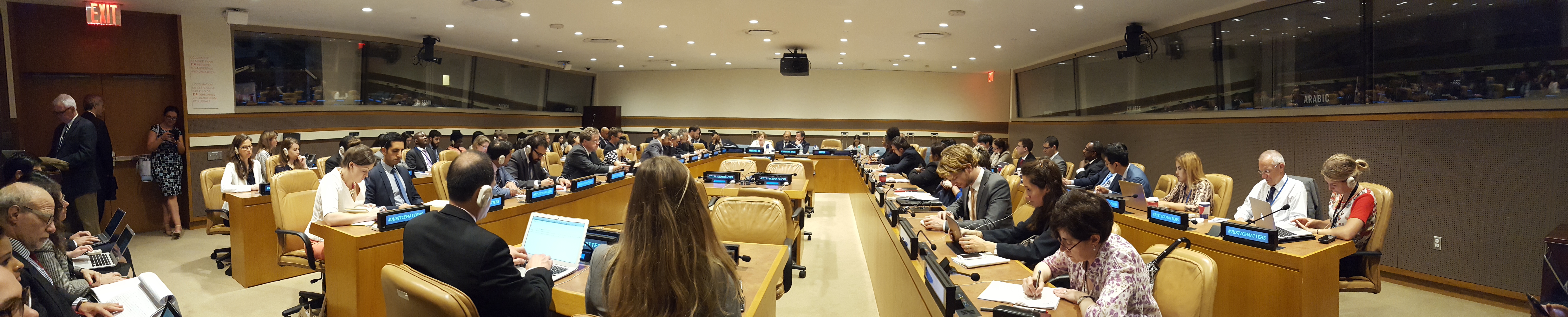
On July 14, Judge Silvia Fernandez de Gurmendi, president of the International Criminal Court (ICC), spoke to a packed conference room at UN Headquarters.  The event was chaired by Italy’s Ambassador Cardi and was intended as part of the UN’s acknowledgment of the International Day of Criminal Justice which falls each year on July 17.

The president hit many important notes during her address, including reminding the audience that the ICC is a court of “last resort” for the “crimes against humanity” under its jurisdiction, including the use of child soldiers, sexual violence as a tactic of war, the wanton destruction of cultural property, and soon the crime of aggression.  It is up to member states, she rightly noted, to help the ICC establish a “consistent pattern of accountability” for international crimes, in part by taking greater national responsibility for the investigation and prosecution of such crimes and in part through efforts to deter and punish those who seek to undermine the administration of justice through the ICC, including the interference with/harassment of witnesses.

The president did not take up several questions that some of us might otherwise have expected.  The ICC’s relationship to the Security Council, for instance, has been a contentious one that has included untimely referrals, massive security restrictions on investigations, significant budgetary limitations, and the Council’s refusal to sanction states that fail in their responsibilities to arrest indicted criminals.  Moreover, the president chose not to ‘call out’ states parties which have hosted – rather than captured – those very same criminals.

But what she did suggest was important: that credible international justice is essential to the restoration of rule of law, to human development, indeed to the dignity of victims.   She recognized that a “global system of justice” has many facets that are tied to the activities of courts, certainly to the vigorous promotion of internationally recognized human rights but also to a development and conflict prevention system that can uphold dignity and help ensure that the worst of crimes can be addressed in their potential before they unfold in grotesque practice.

As the president also recognized, other UN events during this past week touched on key elements of a global system of justice.   In the General Assembly, PGA Lykketoft convened a high level event to assess the human rights performance of the UN as it concludes its 70th year.   Fittingly, states used the occasion to promote the need to, as New Zealand and others noted, examine the implications of human rights across the three UN “pillars.” States from Panama and Chile to France and Estonia noted the many rights dimensions that affect people in overt conflict situations, but also highlighted those suffering from torture, discrimination, incarceration-related abuses and many other violations.   And while Liechtenstein rightly lamented that disregard of the ‘rules of war’ seems now to be reaching epidemic proportions, there was broad agreement with the Netherlands and others that we can do more  — and must do more — to ensure that people can finally live in a world “free from armed conflict.”

Last Wednesday in another small conference room, an “A” list of UN officials was brought together by Uruguay and Portugal to discuss the economic and social rights implications of the 2030 Sustainable Development Goals (SDGs).  ASG Šimonović set a collaborative tone, urging all of us “to bring human rights to the core of our development work.”  ASG Gass went ever farther, noting that the SDGs represent a “new social contract,” while lamenting a “shortage of tools” with which we can hold states (and others) accountable to their SDG promises.   Happily, Gass rightly suggested that the integration of human rights into the SDGs would help make accessible the more fully developed capacities within the human rights community which are already doing much to hold states accountable to rights-based obligations.  As it turns out, tools for SDG accountability need not be created.  They can be borrowed.

As for the convening states, there was enthusiasm for SDG-rights linkages but also cautious tones.  Uruguay’s Ambassador responded to those who see economic and social rights as “vague,” noting that genuinely sustainable development requires ‘dignity work’ in the form of ending gross social and economic inequalities.  Portugal’s Ambassador urged member states to show more leadership on core Charter values while simultaneously urging NGOs to help ensure that values espoused are values enacted.  But he also painfully referenced the many millions of persons in our world for whom rights and dignity remain only “a mirage.”

During his report on Friday in the UN Security Council, Special Representative Jan Kubiš made reference to the upcoming efforts by Iraq and its military partners to liberate the city of Mosul from ISIL control.   While clearly supportive of reducing all manner of ISIL’s influence, Kubiš also predicted that such liberation would likely trigger a humanitarian crisis that could dwarf the already horrific stories of deprivation and rights abuses (including by Iraqi forces) now emanating from Fallujah.  In many instances, it seems, “liberation” bears the potential to create and magnify trauma and deprivation in the name of eliminating them.  The Council, the government of Iraq and the entire UN community must leverage additional capacity to address the psychological and physical dimensions of victim’s assistance in all their aspects.

And of course to do more to ensure that the “pipelines” of trauma are effectively sealed, that relief is more than a fleeting mirage.

As the week’s events underscored, the struggle for sustainable human dignity is a long road, easier to claim than to protect.  As the ICC president noted, we live in a world in which “many perpetrators continue to be untouched.”  Sadly, there are millions more victims in our conflict zones who also remain “untouched.”   Our commitment – on sustainable development and international justice, on poverty reduction and trauma response – is to find the means and the will to touch them all.

Without a Trace:  The Security Council Examines a Trauma that Lingers, Dr. Robert Zuber

31 Jan

Missing things, missing people is a part of life for all of us.   Our popular music is punctuated with the emotional residue from our empty spaces – especially from loves gained and then lost. The singer John Waite once mourned “there’s a storm that’s raging through my frozen heart tonight.”  Sometimes the ache from the loss of a loved one is too much to bear, even when you know where they’ve gone, even when you knew a separation was coming.

In an age characterized by so many scattered peoples – from war and drought, or from seeking economic opportunity in a hopefully more peaceful context – larger and larger numbers of us are separated from much of what we had previously come to love.  Our growing social and economic mobility, for some motivated by a determination to save their children from the ravages of conflict and abuse, has increased the distances separating so many of us from the objects (and subjects) of our hearts’ desire.

This pain is greatly magnified when the separations are imposed, arbitrary and secretive, when people awake to find that one or more of those in their most intimate social circles has disappeared without a trace.  In such instances “frozen” hearts are often accompanied by frozen hands and lips, the consequences of a trauma that can produce almost coma-like effects, sometimes lasting for many years.

This week, in addition to much other Security Council business, Ambassador Rycroft of the UK convened an “Arria Formula” meeting to look into the consequences of these traumatic disappearances as they relate to international peace and security.   The meeting featured the welcome presence of Ambassador Diego Arria of Venezuela who was responsible for the idea of having more Council-sponsored, informal discussions to allow members to examine security linkages and implications without scrutiny from the media or pressure to agree on resolutions.

For his part Ambassador Rycroft affirmed his preference for these sorts of engagements.  Indeed, he has been one of the Council members most inclined to pressure colleagues around the oval to come out from behind their prepared texts and engage each other as policy and learning partners in their essential but highly challenging endeavor – maintaining an often elusive peace. Rycroft noted that the Arria process allows members the “chance to hear from people in the know” and to do so in interactive fashion.  It is hard to disagree that such chances should be pursued as often as possible within the limitations of the Council’s already weighty schedule.

There is more to say on the “working methods” implications of this Arria process, but it is also important to acknowledge here the crushing burdens that persons separated from their loved ones and communities due to armed conflict must bear.  The US, which at Council meetings often miscalculates the bonds linking stories of abuse and remedial policy measures, aptly cited in this Arria the “searing pain, trauma and impotence” that accompanies persons who have had loved ones taken from them in situations of armed violence, taken without any apparent rationale or information regarding their whereabouts.

As noted by the ICTJ’s Tolbert, this missing represents a deep ache with broad implications, correctly referencing the “social trauma” that so often takes up residence in communities where people have been “disappeared.”  For his part, the UN High Commissioner for Human Rights Zeid noted the “grave abuse potential” that exists when women and girls go missing. And he encouraged more “truth telling” by authorities (a point also made by New Zealand) to help loved ones cope with their losses and displace with more concrete information some of the horrific fantasies regarding the whereabouts and treatment of loved ones that often accompany coping efforts. Such information allows for the lifting of the “veil of silence” that reinforces fear and social isolation, subtly perpetuating what Zeid called “the sharp edges of abuse.”

But of course our task in all of this is not to examine this pain but rather, as urged by Mexico rights activist Sr. Consuela, to “ensure that this becomes part of our past.”   And many of the voices in this Arria Formula meeting, including the High Commissioner, Italy, Japan and Uruguay, maintained that the efforts to end the trauma of disappearances is indeed “directly relevant” to the Council’s core responsibilities, that Council attention can accrue tangible benefits towards the final resolution of this agonizing abuse.

That noted, this Arria event was not without controversy.  As they have done previously when discussing other attempts to extend the Security Council’s policy concerns, Russia essentially rejected the relevance of this “disappearances” discussion to those concerns.  Russia is for now the most vocal critic of what it considers to be the habit of “politicized” application and even expansion of core Council principles, resolutions and mandates.  Other Council members, including February’s president Venezuela, have also cautioned against taking on less “central” issues when so much of the core peace and security mandate of the Council (read Syria, Yemen, Mali, etc.) lies unresolved.

In fairness, Russia of course also “politicizes,” also uses the format of the so-called “open” meetings to brand its preferred versions of the truth, rather than truth’s more comprehensive incarnation.   Moreover, it is not uncommon, as core policy matters get in a rut and pressures mount, that persons or governments seek out problems to which they can make a real contribution, hoping perhaps that efficacy in more “marginal” realms can translate somehow into efficacy in core responsibilities.

Having sat through hundreds of Council “open” branding sessions — which January’s president Uruguay (at Friday’s wrap up session) rightly noted produces little in the way of policy movement or even clarity regarding national positions – it almost seems reasonable to share skepticism regarding the motives and politics of Council engagement.  However, the solution to such skepticism is not to cease holding Arria Formula events. It remains important for Council members to consider testimony on issues such as disappearances “from people in the know,” and Arria is the best format currently available to make that happen.

The caveat here is that Council working methods have, as noted frequently by many non-members, long under-estimated the efforts, activities and even mandates of other key UN actors.  Council members are quite grateful to their briefers – who now encompass a wider range of UN issue area interests– but much less often seem conversant with the activities and priorities of the agencies these briefers represent.

There is a significant distinction between “adding value” to the resolution of issues such as the scourge of missing persons, and being seen as undercutting relate efforts of colleagues elsewhere in the system.   This seemingly habitual tendency of the Council to “vacuum up” any and all security-related topics raises concern from many non-member states; those seeking to keep the Council focused on its “primary” responsibilities, yes, but also those understanding that lasting solutions to security problems involve diverse capacities inside of and beyond the UN, solutions not to be found solely within the texts of the Council’s mandates and resolutions. And to be clear, the primary purpose of the Council must be to resolve threats to peace and security, not to bolster its own prerogatives – outcomes not status.

If the Arria Formula option is to reach the potential that Ambassador Rycroft rightly feels it can, the introduction of new issues and perspectives to Council members must be accompanied by a more sophisticated and generous grasp of existing UN agencies and their capacities.  Traumatic abuses such as forced disappearances are likely to be addressed with greater effectiveness when the Council states its clear and primary intention to add value rather than control outcomes.

No Time for Child’s Play: The UN Hones its Child Protection Responsibilities, Dr. Robert Zuber

26 Jul

This past Friday, the UN held a celebration of the 10th anniversary of UN Security Council resolution 1612 on Children and Armed Conflict (CAAC).

The most direct institutional consequences of resolution 1612 are the Working Group on CAAC originally chaired by France, later by Germany, Mexico and Luxembourg, and now by Malaysia.  In addition, an office for CAAC was established, headed first by Olara Otunnu and now by Leila Zerrougui.  This office has had its share of controversy over 10 years, in part due to its (at the time) groundbreaking relationship to the work of the Council, and in part because of its methods (including listings) to expose states’ willful tolerance or even direct mistreatment of the children under their jurisdiction.

Both the WG and Office for CAAC successfully expanded global interest in the security dimensions of the broader children’s rights outlined in the 1990 Convention on the Rights of the Child.  The Convention boasts record setting state ratifications. Moreover, virtually all other development, peace and security resolutions now highlight the special care and protection needs of the most vulnerable of persons.  The Convention itself was not without controversy, especially among those who feared the ability of children to assert rights in direct contradiction of parental wishes or who were concerned with an expansion of “compelling state interests” that ostensibly prioritized “the best interests of the child” over the wishes of family members or other guardians.  Nevertheless, the Convention and Resolution 1612 together have done much to address some of the residual “instrumentalizing” of children as mere extensions of adult expectations and needs that still exists within many societies.  In addition, as the UN’s responsibilities to protect civilians have evolved, the special protection needs of children have more readily been identified if not always addressed with sufficient urgency.

At Friday’s celebration, assessments of past practices and expectations regarding future objectives were mixed.   Many speakers representing a broad array of member states and UN agencies, including Ms. Zerrougui herself, highlighted the “architecture” that now exists to help promote CAAC objectives at country level, including national task forces and action plans, and what Luxembourg referred to as the “global horizontal note”. Along with child protection officers in peacekeeping missions and CAAC office efforts to identify and publicly list offending parties – a particular concern in this session for both Myanmar and Israel – this architecture represents elements of an evolving, system-wide commitment to end abuses committed against (and by) youth at the tip of a gun or edge of a blade.

In this instance as in others, child protection is impacted by some of the limitations characterizing our general “protection of civilians” assumptions and strategies.  We sometimes forget, as Morocco reminded event participants, that child soldiers must always be seen as victims (rather than as enemies) regardless of the crimes they were coerced to commit.   Sometimes, though thankfully in rare instances, those mandated to protect children are guilty of adding to their abuse.  Sometimes, efforts of child protection advisors to peacekeeping missions are compromised or overlooked by virtue of overstretched, under-resourced and increasingly coercive operations.  And our lack of a viable preventive strategy too often results in placing response capacities in the field long after such placement is optimal, with implications for the emotional and physical safety of children even more dire than for their guardians.

This lack of prevention goes beyond unhelpful limitations in UN capacity for early warning and mediation.  It also, as we have written previously, involves insufficient regard for effects of trauma of children in conflict zones for which the only viable remedial strategy is one that ensures their absence from such zones.   Calls during this Friday celebration from UNICEF’s Yoka Brandt, the Russian Ambassador and others for more rehabilitation services were welcome, with Brandt reminding the audience that the release of children from armed groups is only the first step in child reintegration and rehabilitation.  Children can be remarkably resilient, but for many of these abducted, brainwashed or otherwise abused children, attaining anything approaching mental health will require a long and treacherous climb.  The abuses inflicted on children will likely be visited upon their own children as well as the communities of which they are a part. There are only so many tools (and funds) at our disposal to redirect that dangerous course once it has been embarked.

On top of all this, we are often slow to adjust to a rapidly shifting security environment with active child recruiters such as ISIL and conflict-motivated migration patterns that blur lines of individual state responsibility.  The shifts to which we must respond are numerous. The representative of UNRWA highlighted the increasing uses of explosive weapons and the devastation these cause to civilian populations.  The representative of UNHCR highlighted the special monitoring and protection challenges that impact children moving across borders with our without their families.  And of course we are now regularly confronting what the French rightly noted as “shocking” instances in Syria and elsewhere where children are essentially being held hostage to conflicts that cannot even be convinced to pause in order to feed and bandage the desperate.

Despite these challenges, it appeared to be the will of most diplomats that child protection from armed violence, recruitment and related abuses become even more of a cross-cutting, systemic obligation of the UN system and its member states, an obligation assumed to bind permanent Council members as much as other UN stakeholders. Such insistences were part of what made the early work of Otunnu’s CAAC office such a breath of fresh air from the start.  That the consensus promise has yet to culminate in a consensus strategy for successfully ending abuses of children in conflict zones is a situation that many in the global public (including diplomats) can neither understand nor tolerate for much longer.

As Luxembourg noted, we need to do all we can to ensure that CAAC is much more than a “side event” to the core UN agenda, while avoiding what Belgium referred to as a “creeping cynicism” regarding our ability to fully implement the CAAC mandate. Indeed, a bit of cynicism-invoking sentimentality crept into the celebration in the form of one or two presenters saying things such as, “even if we save one child, our efforts were worth it.”  It was Canada who bluntly noted that ending CAAC violations completely and without reservation can and must be our objective.   To employ an over-used UN phrase, we fully align ourselves with Canada’s statement.

We simply must continue to set the bar high for children in armed conflict.  With all the global problems now tugging at our diplomatic shirt sleeves, it is worrying indeed that so many needlessly damaged children will become adults likely to be still reeling from the gaps between their own emotional capacity and the increasing logistical complexities of modern life.  We have full confidence that Malaysia will keep child protection issues in full view of the Security Council during its peacekeeping mandate renewals and related deliberations.  We urge other diplomats, NGOs and child advocates to keep CAAC issues in front of all relevant UN and government actors to whom they have access.