Care Package: A Mother’s Day Reflection, Dr. Robert Zuber

9 May

Please don’t judge me too much until you are older and know more things. Ann Brashares

She gave me everything before she gave me nothing.  Rebecca Solnit

Motherwhelm isn’t a problem, it’s a rite of passage. Beth Berry

My daughter, my mother, her mother, her mother’s mother. It is as if they have left footprints in the snow. Try as I might to deviate, my feet fall gently but firmly into their well-worn grooves. Pippa Grace

For a woman to birth something other than children and then mother it with the same sense of purpose, attention, and care came as an astonishment, even to me.  Sue Monk Kidd

She caught herself working so hard at mothering that she forgot to enjoy her children. Susan Wiggs

I have seen him climbing a tree while she stood beneath him in unutterable anguish; she had to let him climb, for boys must be brave, but I am sure that, as she watched him, she fell from every branch.  J.M. Barrie

There is always the fantasy of maternal love, but it does not accommodate a mother’s fear of her children.  Stephanie Bishop

Earlier this week, I spent a few hours with a dying cousin, a wonderful younger man who was surrounded by extended family and health professionals offering all manner of caregiving. My role amidst this glorious frenzy of care was a relatively simple one, to help ease his transition from this life to whatever might come next.

Part of my intervention involved a series of familiar (to him) prayers and readings directed not only to him in his time of need but to those who are still ministering to him in various ways, who makes sure he eats what he can, takes what medicines are prescribed, and even ensures that stories, affections and even tears are shared while he is here to share them. Those who have cared for the sick and dying know how much can be required of them more than they imagined, more than they might even feel that they have in them.

In this time of COVID-19, many millions around the world, including so many mothers, have had their caregiving capacities pushed beyond their limits. In various global regions, in places wracked by a spreading and largely unvaccinated pandemic, in places often characterized by gross economic inequalities, empty schools, unproductive farmlands and threats to home life and health access from armed groups, mothers and other caregivers wonder how they can get their children back on track, how to summon the energy to guarantee sustenance in an environment that continues to pile challenge on top of challenge, all of which have at least one thing in common – they are not the fault of the caregivers themselves.

In this regard, I recall an image from yesterday of an Afghan man clearly doing all that he could do to hold it together as he stood alongside the bloody, lifeless body of his daughter, one of the victims of yet another senseless shooting spree in that country. Another child taken from the world much too soon. Another family having to cope with a murderous end to their season of caregiving. There are hardly words to express such sadness.

Such loss, albeit with less-tragic lines, is also a feature of more “developed” parts of the world, places where caregiving has also mutated under the pandemic cloud of these past 15 months. This week, many mothers have taken to social and mainstream media to reflect on a year of caregiving in an environment over which they have little control and have often lost much, including their careers, their self-esteem and their chunks of their mental health. One of these mothers noted the vast sums of her energy trying (and sometimes failing) to preserve her income and continue to “birth” things in the wider world; to keep her children focused on learning though games and digital screens; to show tangible support and concern over zoon as parents “distantly” age and even succumb to the virus; and to hold on to sanity amidst logistical challenges which were both unplanned and wholly unpredictable.

A second mother wrote about having to accept being “merely OK” in meeting these logistical challenges. A third noted the strains that come with spending more time together with nuclear family than they ever imagined would be the case. A fourth spoke of shrinking circles of concern as friends and family struggle to maintain connective tissue during this long season of fear, uncertainty and isolation. Still another, a mother who just recently gave birth, described herself as almost “invisible” at a time when friends and family members would normally be flocking to hold the baby and offer whatever practical assistance they were able. One particularly thoughtful writer, Sari Azout, described the challenges of keeping the many dimensions of her life afloat while “mothering humans who never sleep,” a situation which may or may not be adjustable in the short-term, but one which is certainly unsustainable.

If “motherwhelm” is indeed a rite of passage, it is a rite accompanied by levels of anxiety, fear and disappointment to at least rival any time in our past. Some mothers in this time of pandemic are so busy working at being mothers that they have forgotten how to enjoy their children. Other mothers, who may not have seen their children for months on end, struggle to maintain connection to lives in flux, lives that they fear might be slipping away from them, slipping into a mode more forgetful and inattentive.

While it might not seem automatically relevant, the fears and courage of caregivers have bear a direct message for those of us who ostensibly create policy norms for the global community. While there is surely much to discuss, we talk endlessly in UN spaces about women, but rarely about mothers. We talk endlessly about children, but rarely about those who struggle to provide that practical, tangible care that can be so tenuous but which is indispensable to keeping alive their physical, emotional and cognitive well being. And it is much too easy for many of us in policy settings, especially those of us not actively caring for children or aging parents, to ignore or forget about the vast gulf which often separate our resolutions (even with their sometimes considerable protection and humanitarian consequences) and the often-relentless logistics of caregiving at local level, especially care administered under a cloud of multiple stressors.

Amidst all of the policy concerns at the UN this week, including not-unproblematic elections for senior leadership, eliminating the still-vast disparities of global digital access, and the horrific, unresolved violence affecting people in Tigray, on the streets of Myanmar and in the mosques of East Jerusalem, Estonia hosted a Security Council Arria Formula meeting to asses the impact of COVID-19 on children and communities already under strain from armed violence, climate change and a lack of health, protection and other government services.

We were grateful for the discussion as we are for the diverse UN capacities in the field seeking to end child recruitment by armed groups, restore educational options, address chronic food insecurity and much more. While conflict prevention remains an elusive goal in the Council and other UN chambers, the organization has done much to provide lifesaving assistance and advocate state responsibilities for children too often under siege.

That said, and as we noted at the time, talking about children in distress is low-hanging fruit for all of us in policy settings. There may be no other space in which we can easily appear so sincere while under-playing the specific policy changes that we need to both enable and enforce, part of which involves accompanying mothers and other caregivers whose interactions with children and community are so intensely practical, who continue to find ways to “make do” when the logistics of “making” are so fraught with difficulty.

Yes, as noted by Canada (Group of Friends) during this Arria session, we need more child protection advisors in the field alongside UN peacekeepers and experts. Yes, as noted by Saint Vincent and the Grenadines, we need better verification and monitoring mechanisms to track and address abuses against children. Yes, as noted by the US we must prioritize services to support children with disabilities whose prospects in conflict and pandemic zones are even more dire. Yes, as noted by Tunisia, we must do more to ensure that children under “suspicion” of being part of armed groups are freed from prisons where they routinely “languish in unsafe and unsanitary conditions.” And yes, as noted by UNICEF’s Fontaine, we need more “sustained engagement” with armed groups on child protection and release and, despite the pandemic, we must also pledge to “stay close to where children need us.”

All good, but these are needs which are not news to us and as several states willingly acknowledged, have yet to receive sufficient capacity response either in personnel or in funding. Moreover, in the two hours which I was engaged in this meeting, I don’t recall a single reference to caregivers; not the valiant UN responders but the mothers and others who are doing the hard, practical work — and often making the hard decisions — regarding how to maintain some modicum of tangible progress in enhancing the best interests of the child.

These are the questions looming for us over this otherwise fine policy session. What is likely to change in the field in response to events such as these? Will there be more funding? More protection advisors? More international accountability for child-abusing states and armed groups? More determined effort to stem the violence which does more than anything else to limit options for children? But beyond this, how do we support caregivers, the mothers and others whose bag of remedial ideas might well have largely emptied, caregivers who can barely attend to children and others in their circle while their own mental and physical health is in demonstrable decline? How do we support the care that mothers often struggle to provide, care which is both indispensable for children and for which no UN agency can possibly be a reliable surrogate?

I wrote a piece a few years ago entitled “Other Mothers,” an ode to caregivers who share love and perform services normally (and not without reason) associated with biological mothers. As we recognize, there remain numerous, viable paths to caregiving, even in this time of pandemic limitation. But while many of those paths are now strewn with debris and explosive remnants of various sorts deposited by the more selfish, narcissistic and violent among us, these are paths that still merit risking the journey. Indeed these are the paths which bear the promise of a future less-affected by the emotional and physical scars of the present; a future that is healthier and safer for both children and caregivers; a future that can restore the promises embedded in the “well-worn grooves” of our snowy footprints; promises to children who may now never seem to sleep but who are also free to play and learn, to risk and dream; a future where caregivers need never again confront the blunt and unimaginable end of young lives snuffed out long before their time.

During this pandemic, many mothers worldwide have felt obliged to take a step back in lives which were already under considerable stress, some of whom might even be doubting if the children who now pack the spaces inside their multiple dwellings will ever have a chance to overcome sickness, trauma and disappointment, will ever again be able to enjoy lives of nutrition and education, of health access and economic opportunity. These are the caregivers who need more of our attention, those who hold the key to children who no longer need to hide from the assaults of a world which seems to be spinning out of orbit. We owe these caregivers more, on Mothers Day for sure, but everyday.

Fighting Terrorism in the Sahel Requires Democratic Governance, by Dr. Hussein Solomon

4 May

Editor’s Note: As those of you who frequent this blog recognize, Hussein Solomon has been our “go-to” for many years in helping us understand the implications of colonial rule on contemporary manifestations of African governance. The context for this piece is the recent killing of Chad’s president Deby Itno, a man who served several presidential terms and maintained the support of numerous foreign governments for his “anti-terror” contributions despite some very sketchy governance priorities. Clearly, as Solomon implies, we in the west need to think harder about our support for governments, in Africa and elsewhere, that maintain colonial legacies under the guise of rejecting them.

In 1905, John Ainsworth, a British colonial official based in Kenya wrote how the British administration governed their dominions first by finding a strong local personality who was also loyal to the Crown. They would then do everything possible to increase this person’s power relative to other “natives” and finally conspire to make this person’s continued rule totally dependent on the colonial power. This process was euphemistically termed “indirect rule”. This same pattern could be seen as colonial powers carved out other parts of Africa into their fold. The legacy of this colonial plan then was a type of local authoritarianism in which incumbent post-colonial elites were dependent on foreign powers in order to maintain the levers of their own power.

I reflected on this legacy as I recently watched tragic developments in Chad unfold. On the 19th April 2021, Chad’s president – Idriss Deby Itno – was killed while fighting rebels alongside his troops. His death was immediately lamented within the region as well as in some Western capitals as a major set-back for counter-terrorism efforts in the Sahel. Chad, after all, is an integral contributor to the 5,000 strong Sahel G-5 force closely allied with French Operation Barkhane troops aiming to robustly engage and defeat Islamists in the region.

Unfortunately, the reaction in several quarters to the Chadian President’s death explains in part why counter-terrorism is failing across the Sahel despite the training and equipping of armed forces, the expenditure of hundreds of millions of dollars and the stationing of Western troops across the vast expanses of this desert region.

Despite being lauded for his counter-terrorism stance against radical Islamism, the late Chadian president, by his actions, actually served to fuel some of the fire of extremism in his country. Here it is instructive to recall that Deby had just begun his sixth term as Chad’s president. He originally came to power via a coup against the brutal dictatorship of Hissene Habre whom he served as Commander-in-Chief of the Armed Forces. Following his ascent to power in December 1990, Deby promised democratic reforms and for a short period of time he was treated as a savior. Despite Deby and his Patriotic Salvation Front winning six presidential election and four parliamentary elections, all of these were subsequently alleged to be marred by fraud.

And the fraud alleged for this government went beyond the political sphere. Despite Chad having the tenth largest oil reserves in Africa, it is one of the world’s poorest countries, ranking a measly 187 out of 189 countries on the Human Development Index. Much of the oil revenues were redirected towards Deby’s own pockets and those of his family and the wider Zaghawa clan which constitutes only 4 percent of the population. Other funds were redirected towards dubious purchases of weaponry while many of Chad’s citizens languished in abject poverty. Despite all this Deby maintained the support of the former colonial power France as well as other Western allies.

His exclusionary, corrupt and authoritarian rule encouraged rebellion as ordinary Chadians lost faith in the power of (and results of) the ballot box. Deby crushed rebellions to his rule in 2006, 2008 and 2019. In the midst of this chaos, various Islamist groups spread their pernicious influence among Chad’s Muslims who constitute 55.3 percent of the total population. It remains clear that a close relationship exists between terrorist expansion and the persistence of deep mistrust and even conflict among citizens and groups. In 2019, for instance, 96 percent of all deaths resulting from terrorism occurred in countries already experiencing such turmoil.

We now know that an effective counter-terrorism strategy involves more than merely focusing security assets against the threat posed by a particular terrorist group itself, but also must reduce impacts from conflict dynamics in the country as a whole. Effective counter-terrorism entails not only counter-insurgency but also conflict resolution, economic development, political accommodation and social inclusion. Conflict de-escalation not only includes short-term measures like the demobilization, disarmament and reintegration of former combatants but also entails structural and governance improvements to sustain reforms in the medium to long-term.

Across the vast arid expanses of the Sahel, there are worrying trends that political violence is becoming acceptable practice as groups feel that there exists no reliable institutional means for redress of grievances. This is especially the case where group grievance exists – whether the Kanuri in Nigeria, the Tuareg in Mali or the Fulani – and then are allowed to spread across the region.  The sad truth is that terrorism is often a reaction to the historical violence and exclusion associated with the state and should be understood as such. Consequently, governance must become less elitist and more popular. It must become more responsive, tolerant and inclusive – politically, economically and culturally. The influential Global Terrorism Index is emphatic that “…governance is the most important factor that determines the size, longevity and success of a terrorist group”.

Good governance is a potent antidote for the likes of militant Islamist groups exploiting local grievances, whether based on social alienation, economic marginalization or political disenfranchisement, as they seek to gain a pernicious foothold amongst the local population growing tired of an uncaring and unaccountable government as we have witnessed time and again across the Sahel. Rather than honoring and supporting despots seeking to maintain their power, foreign countries who seek to defeat terrorism in this troubled region should utilize their leverage over incumbent elites to open up democratic space and otherwise challenge – rather than reinforce — the malevolent legacies of colonialism.

Mash Unit: Treating our Multiple Health Emergencies, Dr. Robert Zuber

2 May
Funeral homes struggle to keep up with rising deaths | Hindustan Times
Hindustan Times

What happens when people open their hearts? They get better.  Haruki Murakami

I think that little by little I’ll be able to solve my problems and survive.  Frida Kahlo

The question is not how to get cured, but how to live.  Joseph Conrad

As soon as healing takes place, go out and heal somebody else. Maya Angelou

I think I have served people perfectly with parts of myself I used to be ashamed of. Rachel Naomi Remen

And here you are living despite it all.  Rupi Kaur

Poetry heals the wounds inflicted by reason.  Novalis

Inside and outside the UN, health-related matters continue to occupy center stage in our collective consciousness.   Some good medical news related to infection levels in the US and remarkable progress reported from Oxford (UK) on a potential malaria vaccine was more than offset by news of devastating health emergencies in countries from Brazil to India – overwhelming existing health infrastructure and sending front-line health care workers in these and other countries to their emotional breaking point.  It was unnerving to read of doctors in India describing the “mental torture” they now experience from treating what even they depict as India’s “hopeless” COVID crisis.  

This “torture” is reminiscent of what medical personnel have experienced over this past year in community after community, country after country, places where political leaders have routinely bungled pandemic responses both within and across borders. Their not-infrequent politicizing of a public health menace has left medical workers with little option but to pick up the pieces from infected persons who, in many instances, refused to adhere to public health warnings and protocols. Such workers have been left to cope with waves of variants that are sure to multiply as cases explode in areas of the world largely (and sometimes willfully) excluded from adequate vaccine coverage, areas which in some instances are also coping with water shortages, limited sanitation and health access limitations which compromised local health outcomes long before the onset of COVID-19.

This pandemic isn’t over.  Through our science-suspicion, our short-sighted policy choices, and our lack of solidarity across borders and regions, we have seen to that.  And this is clearly not the only health-related threat to which we should now be paying attention.

The UN system has done some robust and cross-cutting policy work on matters of disease control, health access and the protection of health infrastructure.  This past week alone, the outlines of a comprehensive response to the current health crisis facing our planet once again came into focus.  For instance, in the Permanent Forum on Indigenous Issues, the outcome document referenced the grave health disparities which indigenous communities face worldwide, noting both the diminishing health infrastructure in more remote rural areas and the important work done by rural caretakers to protect the forests and other natural resources that remain under severe threat, protection which is indispensable to biodiversity preservation and might even help us avoid future pandemics.

And in the General Assembly, the GA president hosted a high-level dialogue on Antimicrobial Resistance, a challenge to what the PGA called “our over-dependence and over-use” of antibiotics which have in many instances compromised our ability to stem infections and prevent the evolution and spread of antibiotic-resistant bacteria.  As speakers noted from across the UN system, the combination of threats including substandard sanitation systems, lack of access to potable water, and high levels of antibiotics in the meat some of us routinely ingest are enabling preventable outcomes, including making people with under-treatable bacterial infections more susceptible to COVID-19 threats. 

What was particularly hopeful about this GA discussion is the degree to which it enabled an assessment of other health-related concerns to which states and the rest of us should be more mindful.  The GA president, for instance, used the opportunity to call once again for states to commit to “universal health access.”  The Deputy Secretary-General Amina Mohammed used her speaking time to call for “alternatives to antibiotics” and increased investment in health infrastructure as one means of “getting our commitments to sustainable development back on track.”  Dr. Tedros of WHO reminded delegations of the primary health-related responsibility of states to ensure fresh water and sanitation access, while the director of FAO noted the importance of ensuring food security and related measures we can and must take to improve public health instead of simply “waiting around for new medicines” to be developed. 

And in the Security Council, a session on the “protection of indispensable civilian objects” hosted by Vietnam’s president highlighted the extent to which, as Ireland’s Foreign Minister noted, “war is the enemy,” the enemy of trust and confidence, the enemy of person-centered funding priorities, the enemy of stable and effective health infrastructure, the enemy of brave doctors and nurses forced to “work from caves” in a herculean (and often futile) effort to heal wounds of war in settings far less conducive to caregiving than the now hollowed-out hospitals where they used to work. The makeshift mash units to which some transitioned have too often become targets of armed violence as well, causing many medical personnel to once again and quite literally flee for their lives.

And it isn’t just hospitals.  As noted by the Foreign Minister of St. Vincent and the Grenadines – a country now coping with health consequences from a major volcanic eruption — attacks on civilian objects by parties to conflict now directly target water and other infrastructure with growing frequency, leading inexorably to the spread of otherwise preventable diseases, including cholera.  Such infrastructure looting and outright destruction endangers both short and longer-term health care access, gravely imperils the growth and development of children, skews our funding priorities towards more military hardware and away from health facilities, and exacerbates displacement-related miseries that most of the rest of us can scarcely imagine.  War, indeed, is the enemy of healthy societies in multiple ways.

The question now for UN stakeholders is whether or not we have the collective will to hear and heed the advice from this week of policy discussions, to internalize and respond in kind to the mental burdens of front line workers and the misery and insecurity of those suffering under what one health aide this week referred to as a “genocide” of pandemic and other disease-related casualties. Such a “genocide” affects all sectors of society, but especially those persons with disabilities, the economically marginalized, the aged and those in relative rural isolation.  It is obviously that much harder to appreciate sunsets and spring flowers or the wonders of poetry and art while carrying around wounds that won’t heal or dealing with sickness that drains away energy while children cry out for a proper meal.

The remedial blueprint is clear but it will require much from us. Tangible commitments of persons, priorities and treasures are required if we are fix currently-grave health disparities given, as this pandemic has reminded us, that an out-of-control virus in one part of the world affects health outcomes in every corner of the world.  We must make forest protection (and its protectors) a priority.   We must demonstrate levels of solidarity required to distribute vaccines and health resources fairly and evenly across all areas of need.  We must do more to counter health disinformation and, while doing so, help to restore public confidence in both science and governance.  If we insist on eating meat, we must also insist on options for more humanely-treated and less antibiotic-infested animals.  We must invest more in community health with a focus on prevention, nutrition and alternatives to the medicines which once reliably saved lives (including twice my own) but which our overuses have made increasingly unreliable.  We must cease our relentless dismantling of health infrastructure, especially in rural areas, due in part to our skewed funding priorities and tax policies which have put money into dubious outcomes such as nuclear weapons modernization while also lining the pockets of those whose investment accounts are already filled to overflow.    

And we must protect the infrastructure we already have, ensuring that “indispensable civilian objects” and those brave souls determined to provide the essential services within them are spared the horrific impacts of armed conflict, impacts from indiscriminate air raids and explosive weapons which must be removed in practice as their legitimacy has long been “removed” under international law.  War, indeed, “has rules” as many noted this week in various UN digital “conference rooms,” but those rules are increasingly disregarded.  The Security Council must do more to enforce them.  And war as an alleged enabler of anything remotely constructive for civilians in either the short or long term must be thoroughly debunked.

We are now facing a health crisis with multiple dimensions and causes highlighted and exacerbated by the current pandemic.  As someone who is serially blessed by vaccinations and adequate health care access, I fear for those increasingly desperate for the portion of health care that should rightly be theirs, persons perpetually shouting (or praying) away the wolves of disease and violence baying outside their dwellings on a daily basis. 

Unless we take the recommendations from this week seriously, unless we step up regarding practical manifestations of genuine solidarity, my fear is that their desperation will eventually become our common franchise, their misery will spread as quickly and defiantly as our own self-interestedness. Then, the stench from so many burning bodies will fill our nasal cavities as thoroughly as those who manage the fires of India’s now-overloaded funeral pyres. I was stunned this week by a 1961 photo of a Russian doctor preforming a self-appendectomy while stranded on a base in Antarctica.  How many in this world are forced into similarly desperate measures to treat personal and family health emergencies without access to any of the technical skills and training possessed by that doctor? 

For their sake, for our own as well, we simply cannot allow this desperation to persist any longer. Our hearts need to open wider, our blessings shared more liberally. We know what needs to be done to enable healthier outcomes for all. We are collectively, undoubtedly, urgently on the clock.

Wobble World: Calming our Personal and Planetary Shaking, Dr. Robert Zuber

25 Apr
See the source image

Wake up. If your eyes are sleeping then wipe them gently. You need to be awake for this. It is a matter of life and death.  Kamand Kojouri

Longer than an earthquake, a pandemic shakes your life and living. P.S. Jagadeesh Kumar

There is nothing stable in the world; uproar’s your only music.  John Keats

On what slender threads do life and fortune hang!  Alexandre Dumas

As anywhere else, political instability provided an opportunity for local scores to be settled, for personal grievances to be aired, for heroes to be acclaimed and discarded.  Charles Emmerson

Instead of a stable truth, I choose unstable possibilities. Haruki Murakami

Humans can’t be strong because of the comfort & can’t be comfortable because of instability.  Sonal Takalkar

April is my favorite month of the year.  The gentle rains.  The longer sunlit days. The moderating temperatures.  The lightening of human moods, even in the midst of a pandemic that has lasted longer than most could have predicted or imagined, at least the moods of those of us privileged by health care access and vaccinations in a world still waiting – and waiting some more – for its fair turn.

And of course the trees and flower beds bursting with color.  In the north, April is the month that reminds us city dwellers of nature’s capacity – assisted in many instances by some truly remarkable urban gardeners – to regenerate itself and thereby tweaking the human race regarding the need for its own regeneration, its own need to recalibrate its relationship to the rest of the natural world, to (as UN SG Guterres says) “stop our war on nature.”

All this “Earth Week,” amidst a bevy of UN meetings alternately hopeful and maddening, I have been taking multiple, daily walks through nearby daffodil hillsides and under cherry blossoms and tulip trees.  I’ve also been spending evenings binge watching (for me) the stunningly filmed BBC nature programs hosted by the indefatigable David Attenborough.  I can’t get enough of either, not this week, not this month.

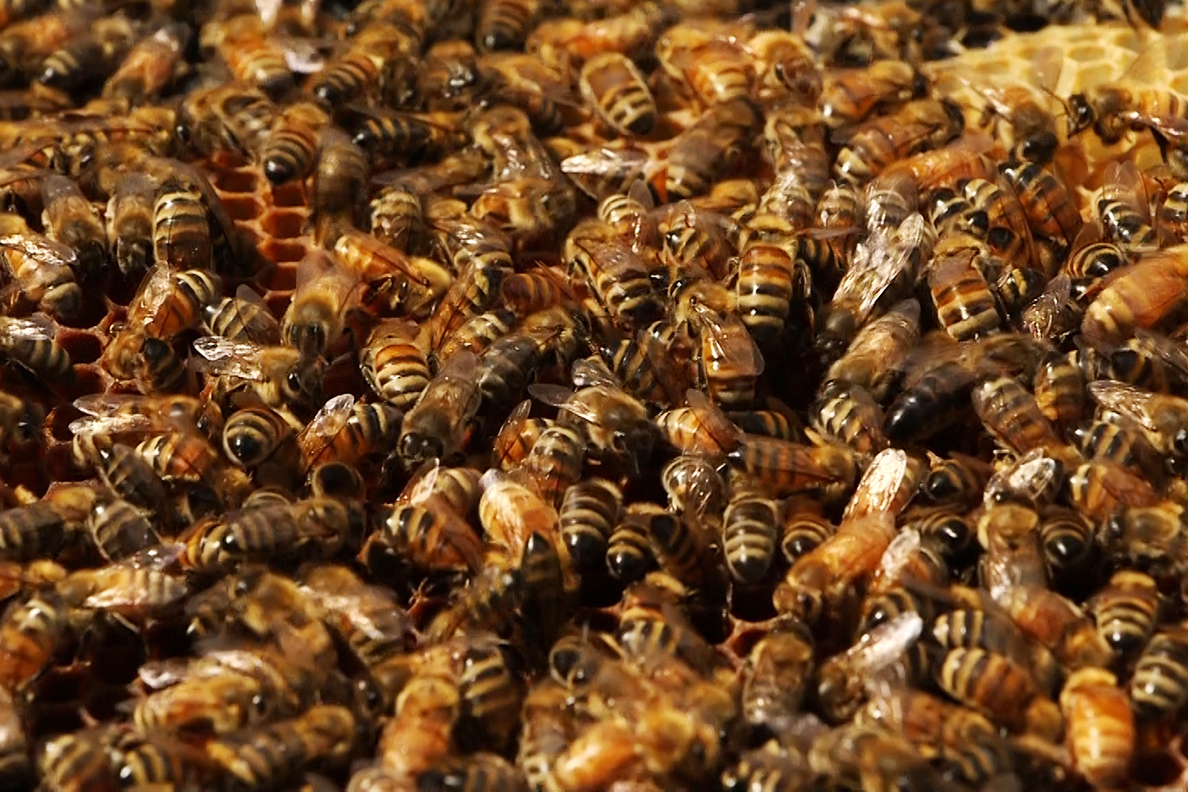
But all the color and the natural drama, the beautifully manicured parks and other scenes of a natural world bursting with new life also come attached to a blinking warning light, a warning that the flowers and species that make our hearts race are now under siege.  The biological rhythms that keep life in balance, indeed that help keep potential pandemics in check and our agriculture functional, are increasingly out of whack.  As our lands dry and our seas warm, species from bees to whales must find alternate survival settings on a planet increasingly hostile to their interests.

This “uproar” in the natural order, largely a consequence of human activity, is increasingly hostile to our own survival as well.  Those of us who are trying to stay vigilant, trying to stay awake and focused on our increasingly wobbly planet, seem so often to possess in our persuasive arsenal more warnings than we have solutions.  We know that deforestation ruptures food chains, destroys biodiversity and increases the likelihood of future pandemics at a moment when we have barely regained any firm footing from the current one. We know that our collective food security is regularly undermined through conditions from drought and flooding to soil erosion and the absence of pollinators. We know that levels of ocean plastics threaten to contaminate sea harvests on which many of the world’s peoples depend.

And we know that a warming planet continues to release both abundant methane into our atmosphere and vast quantities of precious fresh water into our oceans, altering both temperature and pH. In addition, a recent article by Brian Kahn chronicles the growing evidence that a combination of ice cap melting and groundwater depletion is causing a “wobble” in the very stability of our planet, a shifting (subtle for now) in the movements of the “rotational poles,” shifts in gravitational pull related largely to rapidly rising sea levels.

As the world wobbles on in response to our carbon addictive warming, so too do many of our fellow humans.  As noted at the UN this week, the current pandemic has been a boon to garden-variety narcissism but also to criminality in diverse forms – trafficking in persons and weapons, violence against cultural minorities, even the consolidation and expansion of extremist movements.   As the representative of the Maldives reminded this week during a UN General Assembly event on “urban crime,” cultivating a “sense of belonging” remains key to effective crime prevention. In its absence, criminal elements can establish (and have established) an increasingly malevolent, destabilizing presence, widening social divides and increasing levels of insecurity and anxiety within and across populations.

Such a “sense of belonging” has certainly been hard for us to come by during this pandemic.  So many of us, even the vaccinated and otherwise privileged among us, even those of us who have not been victimized by crime or lost those we love to a creeping virus, even we are now less stable, more wobbly, than we might otherwise admit.  Many of us have retreated to places that offer more comfort than growth; many of us have recalibrated relationships and passions and made the decision to shrink our circles rather than pushing them outwards; many of us have abandoned the goals and gifts that once animated our lives and provided hope for others as we “ride out this storm” that never seems to run out of destructive consequences.  We have at times allowed the insecurities in our immediate spaces rob our attentiveness to the almost unimaginable insecurities of others bereft of health care, bereft of security from traffickers and other criminal elements; bereft of food security as once viable croplands turn into non-productive deserts. 

And yet, despite our efforts to protect ourselves and those closest to us, it is not at all clear that we have put the threat from wobbles to rest. As the pandemic evolves and as our long social isolation and chronic uncertainty slowly begin to lift, many of us find that some aspects of our competence, our confidence, even our essential sanity, have taken a hit. 

As the buds and flowers of April spring open, they communicate what should be a hopeful signal to the rest of us:  If they can open to the world, so can we.  If they can spread their color, sharing the best of what they have to offer to brighten our sometimes dismal, lonely spaces, we can do the same for others.  If they can honor their annual biological commitments despite the wobbles of pollution, temperature and pollination, we can overcome our own struggles; indeed we can address the anxiety and even depression that will otherwise continue to impede our engagement with a human-saturated world that needs our sustainable caregiving input as much as it ever has.

Perhaps the signature event of this past week available on UN Web TV was actually not a UN event at all, but a Climate Summit convened by the US White House, bringing a range of global leaders together (virtually) to strengthen commitments to stem the steady march of a warming, species-threatened, plastics-inundated planet.  Despite a stream of largely predictable statements long on concern and short on change; and despite the opening warnings of UN SG Guterres that we are now risking a “mountain of debt on a broken planet,” there were a few genuine bright spots.  US VP Harris opened the Summit with surprising references to the “indigenous insight” and “nature-based solutions” that offer a tangible path forward, much of which was reinforced this week at the UN’s Permanent Forum on Indigenous Issues. Later on, the president of the Marshall Islands, stressed the need for his oft-vulnerable people to find “safe harbor” amidst the current tempest, noting that the safest of all would be policies and actions to keep global temperature rise at or below 1.5 degrees C.  He also noted the importance, as did other leaders, of using this “rare chance” provided by pandemic recovery to “to reset our economies and societies.” Perhaps reset ourselves as well.

All of this was helpful and hopeful, but as German Chancellor Merkel intoned, we face a “herculean” task requiring a thorough revision of the ways in which we now do our business.  Indeed, her statement raised questions, for me at least, about the sufficiency of our institutions, the wisdom of our policies, but even more about the resilience of our collective psychology, our ability to shed our pandemic cocoons, to find ways to stop our shaking and steady our wobbling, to do our best to overcome the anxieties and insecurities which have taken root during our long hibernation, to lay aside grievances born of social isolation and chronic instability and remain awake to a world which has been waiting anxiously for us to take up, once again, our engaged and caring roles, providing inspiration for healing that other people need and that might not exist if we don’t find the courage and capacity to share such ourselves.

As our world wobbles on, as we struggle to recover our economic and emotional health, the tasks lying before us seem to be growing in intensity not shrinking.  Of all these current “herculean” matters, perhaps the most daunting relates to recovering our own strength to overcome the after-effects of a most difficult time and play our role in this “life or death” moment for our world, embracing possibilities that might appear uncertain on the surface while making space for a wider and healthier range of global constituents to enter the conversation and share their own revision strategies.

The clear, consistent messaging coming from this UN week is that “we are running out of time” to change the way we do our business, to ensure that there will be more flowers and buds in springtime, more species able to dodge extinction, more people freed from pandemic anxieties and access inequities that continue to take such a heavy toll. We are running out of time to stabilize our now-wobbly planet and we urgently need to enable and support more of us still-shaken humans to remain awake to that task.

Revise and Consent: Enabling a World of Change, Dr. Robert Zuber

18 Apr
See the source image

We were revisionists; what we revised was ourselves.  Margaret Atwood

Not everything that can be counted counts, and not everything that counts can be counted. Albert Einstein

Improperly documented history, or more precisely, fraudulent versions of history not only deprive the victims of pasts injustices due recognition of their suffering, but also rob the living of a fair chance at a future free from the dangers of repeating past injustices.  A.E. Samaan

We have learned primarily by tinkering. Curt Gabrielson

In talking about the past we lie with every breath we draw. William Maxwell

If we don’t have real answers, it is because we still don’t know what questions to ask. Our instruments are useless, our methodology broken, our motivations selfish.  Jeff VanderMeer

It is in this childishly speculative state of mind, so different from common sense and its logic, that we know the world to be good. Vladimir Nabokov

Thanks to the confidence placed in me by a colleague, Barbara Adams, I recently published an article in a journal of development policy entitled “A Volatile Context: A Revisionist Lens on Good Governance.”

I’m not going to invite you to read the piece. It’s not dis-similar to the themes of this weekly post, but it is longer and surely more dense. It also reflects an assignment which I only accepted due to the editorial staff’s embrace of the “what if.” What would the world look like if our structures of governance were devoted to fostering care and equal access among constituents? What if governance were as competent and transparent as it often claims to be? What if governance were as concerned — in terms practical more than rhetorical — with the needs and aspirations of constituents as it is with its own protocols and power dynamics?

These and other, similar questions punctuated my piece, for better and worse. To be honest, I’m surprised it got published at all. In an age driven by data and branding, by professionals seeking control over smaller and smaller domains of human experience, speculative writing of the sort I indulge in has become a bit of a reach, and not an altogether welcome one. People in our governance and educational bureaucracies are rather preoccupied — and not without reason — with the accumulation and management of data, data that can establish trends and help ensure that, in the realm of policy and to the extent we are able, human and financial capital are directed towards the holes in security and justice that need to be filled and can be filled.

But it is clear in many places, including at the UN, that data of varying levels of sophistication and reliability does not always bring us closer to governance that is caring, responsive and trustworthy. Indeed, the pursuit of data can be its own endgame, accumulating “information” that in many instances is untethered to strategies to both unlock and incarnate its power to effect change; moreover, such data is often in flux as its gaps are only slowly recognized and fresh experiments are conducted that render the previous “truths” subject to a revised consent.

One of the smartest statements coming from youth climate activist Greta Thunberg was when she said, “don’t listen to me, listen to the science.” Yes, listen to the science, listen to those with data pertinent to the rendering of what are often dire predictions for our common future if we do not mange to revise our ways. But as Greta already knows, as any of us who ply our wares in the halls of global governance knows, such governance is as likely to render the power of science to something akin to a “petting zoo” as it is to unleash its full and furious influence over all our actions.

Simply put, we now know more than we do. Just this week, several good UN events underscored the degree to which having accurate data and incarnating relevant policy commitments are still at loose ends. We “know” that hording vaccines is ultimately detrimental to both the global economy and to the suppression of future variants — as noted this week in a special, high level event on “Vaccines for All” hosted by the president of the UN Economic and Social Council — and yet our commitment to equitable vaccine access remains well short of the need. We “know” as was stated often during an important UN event this week on “Financing for Development,” that a combination of debt burdens, limited investment access and illicit financial flows has made pandemic response and recovery a mere pipe dream, and yet our commitment to a revised, more inclusive financial system remains more the subject of speechmaking than practical application. We “know” as a civil society advocate from South Sudan testified in the Security Council this week that the wide availability of often-trafficked arms fuels so much of the violence and abuse in her country (and many others), and yet our addiction to the production and trade in deadly weapons shows little signs of abating. We “know” the many thousands in Yemen whose lives remain threatened after years of war by famine and economic collapse, and yet the Security Council remains largely impotent to end the violence let alone the impunity to which it has given rise. We “know” that we are unlikely given our current course to forestall the biology-altering consequences of a rapidly warming planet, but we continue to take more credit for our limited climate responses than to earnestly prepare to enact what the president of the UN General Assembly this week urged: “a greener and more equitable recovery that can keep our SDG commitments on track,” including and especially our lagging climate actions.

These disconnects between knowing and doing should not be laid at the feet of scientists, many of whom have no doubt had more than a few sleepless nights over these past months as emissions continue to rise and policymakers continue to defy reasonable, pandemic-related limitations in the name of disinformation or “freedom.” The same scientists who developed safe and effective COVID-19 vaccines in record time and implemented health protocols to keep many more virus victims alive than was the case last spring — including no doubt many COVID-deniers — know that such measures alone won’t end the pandemic if large segments of the public remain uncooperative and revision-phobic, and they certainly won’t help us prepare for the pandemics sure to come as we continue to wantonly disrupt the planet’s biological safeguards.

It may be the case, as suggested above by Curt Gabrielson, that we learn primarily by “tinkering,” through small-scale revisions to what is known and seen, small-sale adjustments in what is given. But for the policy community such revisions at small scale are no longer suitable, if they ever were, as they don’t sufficiently address the diversity of threats facing our current world. They don’t sufficiently address the barriers that keep so many human skills — of youth, of cultural minorities, of women, of persons with disabilities — on the sidelines of policy deliberations and decisions. And they don’t address the deficits of trust which are themselves a legacy of promises deferred or ignored, assistance barely rendered, entitlements and privileges not shared or even acknowledged.

If we are not careful, if we are not sufficiently vigilant, the “bubble” that institutions like the UN are accused of operating within will morph into an “island” to which we in the policy community might well be exiled. Such exile would complicate positive change as it would cut off large swaths of the global community from a UN system which still connects, still convenes, still calls attention to looming threats and policy options — and often with considerable skill. But the threat of exile looms, primarily from constituencies who feel that they can no longer believe in us or in the words we speak, who display an eroded confidence in our ability to distinguish between what can be counted and what counts, to prioritize those responses that truly matter to human and planetary well-being.

In this regard, I worry most about any potential erosion among the youth, this large and diverse generation trying to organize their lives and dream their dreams under clouds of pandemic, climate change, weapons proliferation, and massive debt. Despite all the outreach the UN does to young people, do they –will they — find the UN sufficiently responsive, sufficiently committed to their future, sufficiently savvy on matters from technology access to policy inclusion? Will they find value in our answers to compelling crises let alone consent to at least some of the questions we are actually willing to ask? Will they find in their interactions with us evidence that the world is good and beautiful, and will they continue to feel that it is worth their time and energy to preserve that beauty and extend that goodness?

On this the jury is out. Among the formal events on the UN’s calendar this week was a side discussion, organized by the Youth4Disarmament initiative of the UN’s Office for Disarmament Affairs, which brought together diverse young people — including several of our colleagues — to examine that elusive “what if,” their dreams of a world that is fit for the aspirations and well-being of both this large generation and those who will come after. What if nuclear weapons were abolished? What if emissions could be brought firmly under control? What if the discrimination and incitement to violence highlighted by France and others this week could finally be stricken from the human register? What if our grand institutions — so often stuck in the mud of their own cultures and working methods — could be made to truly breathe again, breathe the air enveloping a human race which finally understands that care for the planet and solidarity with each other are practices, not premises?

At this “what if” event, the invitations to youth were sincere: to share stories from diverse contexts that need to be heard even if those stories (like many of my own) wouldn’t always pass the muster of fact-checkers; to envision (as High Representative Nakamitsu invited) what the world might actually look like if we spent less on weapons and more on people; to imagine as well (as Costa Rica’s Ambassador Chan advocated) a world “where “people no longer felt compelled to take up weapons in the first place,” where we were able to educate every child, where climate change impacts could be mitigated and even reversed? Can we envisage and then build a world where (as Pakistan noted) “power rivalries are disavowed,” where impacts from human selfishness are not a foregone conclusion, where injustices and atrocity crimes are no longer in mortal danger of endless repetition?

As the older speakers at this event noted, the policy and legal groundwork has been laid for such aspirations, including at the UN. But many traps have already been set in the form of crises we should have seen coming, crises that we failed to prevent in the first instance or forthrightly addressed in the second. There is still much for us to revise in our institutions and in ourselves, much in our own, sometimes “fraudulent” versions of personal and cultural history to clarify and confess, much in the stories of young people — especially those compelling “what ifs” — that can guide and inspire their practice but that must be better honored by the rest of us if they are ever to achieve their full flowering.

For better and worse, prospects for a more caring, trustworthy and visionary governance are still in old and worn hands like my own. We who are attached to such hands must undertake the revisions that history and circumstances now demand of us, revisions to our institutions and to ourselves, as we seek to deposit data and dreams into the anxious, younger hands of others.

Voice Lessons: Ceding Space for Those Waiting Their Turn, Dr. Robert Zuber

11 Apr
See the source image

I know you can’t live on hope alone; but without hope, life is not worth living. Harvey Milk

No voice is too soft when that voice speaks for others.  Janna Cachola

Obviously these are some exceptional young people, but what they have in common is that they were ordinary people who cared. Morgan Carroll

You cannot protect the environment unless you empower people, you inform them, and you help them understand that these resources are their own, that they MUST protect them. Wangari Maathai

The people who are trying to be on our side have reduced us to a mere calculation. Sarah Kurchak

I was always taught that when you’re lucky enough to learn something or have some advantage you should share it.  Areva Martin

It is not loving to impose our own grid onto others.  Matt Perman

There have been a series of articles lately by journalists and academics expressing concern about the long-term affects of a pandemic that seems “determined” not to release us fully from its grip.  

We know about the COVID “long haulers,” those unlucky individuals who have been unable to shake the effects of the virus months after their initial infections.   But there are other “long haul” effects that we have only begun to assess, the economic, educational and psychological consequences that we have done our best to hold in abeyance, hoping for conditions that will allow our children back in school before they’ve forgotten what they’ve learned or lost touch with their dreams; conditions that will allow our small businesses to survive a year of numerous adaptations and little income; conditions that will allow some healing for those whose psyches have been battered over this past year by social isolation, fear of the loss of loved ones and incomes, and now concern about whether or not we have what it takes to successfully engage with people who seek to become for us, once again, more than a screen presence.  

Clearly, we are not “out of the woods” and are unlikely to be so even after available vaccines have finally been evenly distributed and this particular pandemic has been finally brought under control.  The sun will indeed rise post-COVID, but it will shine on a world that in many key aspects has lost its way, if not altogether lost its mind.   Despite our own privilege and general good fortune, we wonder if some of those aspects don’t equally apply to ourselves. 

It has been over 13 months now since we have set foot inside UN headquarters which, as most of you realize, is the setting for most of our work, the primary space where we have been “lucky enough” to learn some important things and then “using our advantage” to share what we think we’ve learned with others.  Over these long months, we have missed the personal diplomatic interactions, the rapid movements between conference rooms and issues more connected than acknowledged, the endless coffee breaks to discuss what we’ve heard, what we’ve failed to hear, who impressed and failed to impress, what comes next (or should come next) for our advocacy and outreach, and even the surprise visitors to UN spaces who allow us to better direct our energies and modest assets in the service of interests those visitors help to refresh.

Throughout this long physical hiatus, one which shows no signs of abating, we have managed to keep track of UN processes almost exclusively through digital means.  This past week, for instance, the United Nations and its excellent technical team managed a remarkable set of digital engagements, including a sober ceremony to mark the anniversary of the Rwanda genocide, important discussions in the Security Council on threats from landmines and the current crisis unfolding in Myanmar, and events celebrating the restoration of diplomatic engagements by the US, specifically on Climate and Security and on addressing the care of Palestinians through the United Nations Relief and Works Agency. 

All of these activities – and many others where these came from — are important markers of a global system alternately hopeful and discouraging, a system which, in the case of the UN, is often more political than thoughtful, whose “genius” lies in crafting consensus among states more than in creating urgent remedies for those decimated by armed violence or facing long-term food insecurity from what might be irreversible climate change impacts.  We who operate in UN contexts are sometimes surprised by something we should already know well:  that while the UN has a firm stake in many issues it has limited power to resolve them; indeed that the resolution engine of the UN is largely about persuasion rather than coercion; and that the many skilled and caring diplomats assigned to UN headquarters are as beholden to the aspirations of their foreign ministries, for good or ill, as they are to UN Charter obligations.

Through the use of twitter and other dubious means, we have been able to follow the ups and downs of multilateralism, at least in part, and we have continue to share views within and well beyond the UN community on what should happen, what is not happening, and how we might better integrate our ethical and caring impulses into our policymaking going forward.  I am quite sure that the UN doesn’t miss our physical presence, doesn’t miss our constant scrutiny of its promises and working methods, doesn’t miss our relentless concern that, especially in this time of COVID, branding has too often been allowed to crowd out substance and urgency in our policy deliberations.

The “zoomification” of policy has clearly been a boon to this sort of branding.  While we continue to encourage digital events by our younger colleagues to help them define generational issues and concerns within pandemic-imposed limitations, we are also mindful of how much easier it is to organize events in digital spaces than to ensure their follow-through.  While there is no shortage now of online images of diplomats and (mostly) large NGO leadership saying things which are perhaps meant to be profound but are often self-evident and self-referential, there is too little reason to believe that any of it matters as it should, to believe that the endless statements uttered by these leaders are actually tethered to real concerns in a broken world and reflect policy priorities they are fully determined to address.

This is the dilemma faced by our sector in this pandemic age.  How do we navigate the spaces between image and substance, between the rhetorical branding of global problems that concretely and painfully impact the lives of constituents and the brand-building that allows us to fund salaries and our endless publications, creating strands of expertise that rarely reach and connect beyond the borders of our mission statements?  And how do we ensure, in the name of constituency building, that we are not also constituency-gate keeping, that we are not also oblivious to the reality that people are much more than a “calculation” to substantiate our annual reports, that we recognize people who can only speak their truths to the extent that those of us with privilege and access speak in “soft voices,” and commit to sharing the microphone rather than endlessly grasping for it?

Our sector is fond of calling for change in the UN’s priorities and working methods, as well it should, but it often fails to address the need for reform within our own ranks.  Moreover, for reasons that are only tangentially related to our organizational missions, our collective tendency has become to suggest only the changes that won’t ruffle feathers or threaten funding sources, only the changes that can be incorporated into bureaucracies that it is surely not our principle job to placate.

The damage exacerbated by this pandemic and related crises is experienced broadly by the global community, including within our own offices.  More than a few of our colleagues are also depressed and hurting, are also burned out, are also angry and frustrated that the agencies and processes into which they have poured their live energy have been able to deliver only half a loaf when a full loaf was called for. And what of our colleagues with more direct engagement with the wounds and deprivations which characterize so many communities in this world? What do we in our relatively safe policy bubbles owe those journalists, mediators and humanitarian workers who have taken on the arduous and often dangerous task of reporting on our messes, cleaning up after our messes, or negotiating an end to messes that need not have occurred in the first place? What more do we need to do in our own spaces to bring hope to communities and those who serve them without “imposing our grid” on to lives where such impositions have historically been too frequent and where they simply don’t belong?

There is now a movement among some NGOs around UN headquarters, one which to our mind is not mindful enough of our complex debt to front-line advocates and constituents, a movement which has deployed the twitter hashtag #unmute through which it seeks to organize legitimate concerns regarding access and impact. To be sure, there are people around the world doing the work for real that we purport to be doing in principle, people under siege and threat, people doing their jobs while trying to protect their children and keep from languishing in prisons where guilt is largely fabricated and release is often serendipitous. To be sure as well, there are people around the world, some of whom we have been honored to meet over many years, who are literally models of resiliency and resourcefulness, extending hands of care and promises of empowerment well beyond the attention of UN conference rooms, beyond the reach of funding agencies and international NGOs, small and large.

Let’s be clear: We who function in and around UN spaces remain more privileged than muted. Our voices connect with policymakers beyond our size and volume, likely also beyond demonstrated impact. The doors to UN headquarters remain locked to us. The interactive life inside UN buildings is becoming something of a dim memory. But we are not muted. We have a say, we always have a say, even the smallest among us, even when we have nothing fresh to contribute, even through a flat screen in the middle of a stubborn pandemic which has otherwise exposed and compromised so much in us.

The key for us going forward in these treacherous times is not so much about branding but about sharing. How can we better help people affirm a hope that is based neither on wishful fantasy nor on some externally “imposed grid”, a hope which is grounded instead in a more generous reception for the truths they can convey, truths that can make our own work richer and more relevant to shifting circumstances? And how can we do our part to help “unmute” those whose voices truly demand more attention, those who have been hoping and waiting more patiently then perhaps they should for us to voluntarily mute ourselves, to make way for contributions we need and cannot replicate?

We have had the privilege to learn many things in this UN policy space. And we have enjoyed advantages of institutional access and respect, much of it unearned. As the pandemic continues its relentless eroding of our psychological health while enabling inequalities in so many forms, we will do what we can with what remains of our organizational capacity to help spread what others have come to know, the hopes they sustain and the skills they have accumulated, over our own policy deliberations. And to do so in their own voice.

Spring Forward: Realizing Renewal Amidst the Gloom, Dr. Robert Zuber

4 Apr
See the source image

Things are always better in the morning.  Harper Lee

It is in this difference between returned and replaced that the price of renewal is paid.  And as it is for spring flowers, so it is for us.  Daniel Abraham

There is something infinitely healing in the repeated refrains of nature – the assurance that dawn comes after night, and spring after the winter.  Rachel Carson

When this ultimate crisis comes… when there is no way out – that is the very moment when we explode from within and the totally other emerges: the sudden surfacing of a strength, a security of unknown origin, welling up from beyond reason, rational expectation, and hope.  Émile Durkheim

It is by means of our own victories, if we are not regenerated, that the work of Nemesis is wrought: doom breaks from the shell of our very virtue.  Joseph Campbell

We become influencers, leaders and teachers in this world, by performing within ourselves the purging that we wish to see take place in others.  C. JoyBell C.

Let the whole world see and know that things which were cast down are being raised up, and things which had grown old are being made new. Anglican Book of Common Prayer

In the northern hemisphere, there are indications that, as obstinate and habituated as we have often demonstrated ourselves to be in both personal and institutional contexts, renewal is in the air.  Flowers adorn parks and gardens.  The songs of migrating birds enrich the spring cacophony.  And our religious communities once again determine to maintain their relevance as the world groans under burdens of hunger, violence and virus while public institutions in too many instances encourage the mistrust and misinformation we need them so desperately to counter.

On this Easter Sunday, we in the Christian community have a special obligation to look ourselves in the mirror, to ask (as we would of all our institutions) if we are actually being faithful to both our founding spirit and the specific, concrete needs of our constituents; indeed if our institutions are able to “get over themselves,” rendering the services and promoting the hope and conduct which are in large part the point of having such institutions in the first place. 

And when reforms are warranted (which they almost always are) such that our personal and institutional life can prevent more effectively and respond more efficiently, we must ask if we up to that task?  Or do we take the path that we see so very often during personal counseling, individual leaders and their institutions willing to consider only the changes they are prepared to make, not the changes they need to make?  

In addition, again with analogies to counseling settings, how many of us are actually willing to engage in the “purges” which we are quite certain are required for others?  How many are committed, paraphrasing Christian scripture, to removing the log in our own eyes such that we can better see the specks in the eyes of others?  How many of us are sufficiently committed to vigilance and renewal as doom threatens to break, yet again, “from the shell of our virtue?”

These are two of the impediments to a renewal that is more than rhetorical, that is more than a tepid commitment to close the gaps between expectation and performance, between the people we are capable of being and the people we have become too comfortable being. We are collectively too comfortable with acts of discrimination against the categorical other, too comfortable with lifestyles that imperil survival both current and prospective, too comfortable with institutions, even churches, that are wrapped so tightly within their bubbles, that continue to justify protocols and practices that have long lost their relevance, that have become as some of us used to sing during childhood, the “chewing gum which has lost its flavor on the bed post overnight.”

Part of renewal for our time must be about recovering those bursts of “flavor” when we metaphorically bite into a sacred or cherished pursuit; appreciating and sharing those bursts of color and fragrance as the blossoms of spring almost magically return to life and our sunrises signal yet another chance for us to grow and change; magnifying those acts of human courage and capacity which now sadly tend to manifest themselves mostly during times of crisis, when our backs are truly against the wall, when there is no more wiggle room for us, no more opportunity for a sane and rational dismissal of what our collective narcissism and indifference have literally brought to a boil.

We are in such a moment of boil now.  Our human community has backed ourselves into places where we no longer have the room to maneuver we once imagined ourselves to have; where our self-deceptions about who are the good ones and who are the evil doers serves only to magnify evil and suffering; where our institutions mostly play at renewal, moving some of the pieces around but not changing the game in any significant way, not sufficiently reassuring those crying out for assistance that help is on the way, a “help” that is more predictable and which leads to peace, health and self-sufficiency, well beyond the stasis of mere survival.

We know we can do better.  Even in protocol-saturated institutions such as the UN, we know that we can renew what is now holding us back.  We can demonstrate with our time and treasure that we are determined to honor the trust that other still place in us, fulfill the expectations that we have led constituents to anticipate from us.  We can pull some of the “weeds” that choke off some of what promised to be a verdant garden; eliminating more of the numerous unfulfilled financial pledges, both institutional and humanitarian; the misguided applications of consensus that constitute de-facto vetoes, the habit by some states of sponsoring resolutions that they have no intention of honoring; the actual vetoes and threats of veto by permanent Security Council members which have become tools of politics not of statecraft, tools which do not prevent mistakes in conflict response so much as inhibit conflict response itself. 

There are times when it seems as though numerous states don’t actually want the UN to honor its many promises, don’t actually want it to take the leadership we rhetorically bestow upon it to anticipate and then prevent the tragedies that take such a huge toll in blood and treasure in our world. SG Guterres noted this week in an interview that “multilateralism has no teeth.”  I won’t belabor the extent to which the SG has insufficiently pushed back against this longstanding reality, but I do know that metaphorical dental implants are at the ready if and when states and stakeholders decide to commence the procedure.

For those of us who delight in this Easter Sunday we should also acknowledge a responsibility beyond predictable family dinners, religious rituals, egg hunts and bonnets; a responsibility to incarnate the renewal which anchors the promise of this season, to manifest the hope in all our worldly undertakings, including in our institutions, that “things which were cast down are being raised up, and things which had grown old are being made new.” 

If Jesus were once again to emerge from the tomb to which his body was once confined, scanning the current terrain of our flailing human commitments, he might face temptation yet again, this time to head back inside the cave, fire up the Neflix, and just forget about this whole renewal thing.  Except that he knows us, knows the complexity of our hearts, knows what he had willingly gotten himself into from the dawn of time, knows as well what needs to happen in this current moment  — what can with grace happen — such that the promise of renewal, indeed the fate of our species to which renewal is now tethered, can stand a reasonable chance.

We are quickly running out of time and space to turn the promise of renewal into a discernable reality, to raise up those many people and species which have been cast down, to infuse those institutions which have lost their way with fresh energy and care, to revitalize a global public which has grown so weary of coups, displacements, discrimination and deprivation, a public increasingly gloomy regarding the prospect of institutions that can truly help restore communities beyond the edges of their own bubbles. We can’t wait for recognition of some “ultimate crisis” in order to release our better selves into a world starved for relief and reassurance. Indeed, that “crisis” is likely already at hand.

The bursting buds in our northern parks and gardens remind us that renewal is possible, that color and life can return to even the most barren of personal and institutional landscapes.  May this Easter serve up portions of energy and grace sufficient to keep on track the renewal our times so desperately require.

Water Slide: Tackling our Freshwater Deficits, Dr. Robert Zuber

28 Mar
See the source image

I am haunted by waters.  Norman Maclean

If you can’t go through an obstacle, go around it. Water does.  Margaret Atwood

Human nature is like water. It takes the shape of its container.  Wallace Stevens

Dip him in the river who loves water.  William Blake

He liked the darkness, but this was oppressing. It almost flooded his being. Dean F. Wilson

Water, like love, is good at finding where it’s meant to be. Corinne Beenfield

By early light I am asleep in a nightmare about drowning in the Flood. Billy Collins

The UN had a good week in some key aspects, including an excellent Arria Formula event on threats to UN peacekeepers from improvised explosive devices (IEDs) and a political declaration adopted by the General Assembly affirming  the need for “Equitable Global Access to COVID-19 Vaccines” (click here) at a time when “vaccine nationalism” is only slowly giving way to a more generous – if also economically self-interested — disposition on vaccine distribution, including to those nations which have still to administer a single shot.

It was also a week when the UN assessed its commitment to ensuring freshwater access to the millions of people for whom such access is tenuous at best.  On World Water Day, many sectors within the UN system paused to weigh responsibilities to the water and sanitation goals which are key both to sustainable development and to addressing the “conflict multiplier” which water increasingly represents as, in too many communities across the globe, access to safe water has become a luxury increasingly elusive to secure though ultimately more precious than silver or gold.

As the president of the UN Economic and Social Council, Ambassador Akram of Pakistan warned this week, at our current rate half the world’s population will likely suffer from severe water stress by the year 2050.  This was perhaps our most cited comment (on Twitter) in the past week, a testament to the misery, displacement and potential conflict which diplomats and the larger policy community recognize is looming on our collective horizon if we cannot find the urgent means to ensure safe and equitable water access.  We are reminded every day of the many people worldwide for whom mere hand-washing in the midst of a pandemic creates harsh water use choices, others for whom the dignity of adequate sanitation remains a distant dream. And as noted with regularity by our colleague in El Salvador, Marta Benavides, our response at policy level is often to talk too much and change too little. Water, despite what we wish to believe, is no longer “finding where it needs to be,” and we are yet doing too little to help restore lifegiving pathways.

Most of those who would read weekly missives such as this one don’t need to be reminded of the central role water plays in our contemporary world as the largest repositories of fresh water on our planet – the polar ice caps – continue to melt into the sea at unheard of rates, and as climate change imposes alternating jolts of flooding and drought on many millions of people living in poverty, undermining their food security and setting many on uncertain journeys to find places where this most basic of needs can be procured, albeit in unfamiliar and even hostile contexts. 

In many of our so-called developed countries, water-related imagery often infuses our artistic and unconscious lives though, as a pragmatic resource, we have largely taken it for granted.  While we occasionally recognize that vast differences in water quality exist in communities across a country like the US, we nevertheless anticipate that what flows from our taps remains both reliable and relatively safe, an entitlement of sorts for which there is simply no equivalent in war-torn or economically stressed communities.  Indeed, we know here that the water we have available for our own sanitation purposes is generally (and often needlessly) higher in quality than any water available at all to families in communities habitually threatened by the twin killers of flooding and drought.

There are “solutions” of sort for countries and communities facing water scarcity but they are often complex.  Moving water from where it is abundant to where it is lacking is a herculean task as is funding and installing technologies to desalinate sea water for coastal communities.  But NGOs and state partners are making welcome progress in creating community-based solutions to elevate water abundance – including catchment capacity to ensure that water availability remains accessible.  Lamentably, such solutions face obstacles from the shifting modalities of climate change to unregulated industries in our broken economies that raise the stakes such that water “caught” is often dangerous for personal use. In too many places, the “slide” of water, both of access and quality, continues unabated. A “dip in the river” in too many places is less a refreshing interlude and more an invitation to deadly disease.

Still, there is much that we in the “water entitled” world can do to sharpen our attentiveness to water-related concerns while contributing to a safe water environment for others.  Part of this relates to, as already noted, our personal water uses: watering less, flushing less, fixing leaks, restricting uses of toxic fertilizer and other products that are likely to enter – and degrade – our water supply.  One could add to this measures to mitigate the diverse impacts of climate change on our farms and ice caps – walking rather than driving to errands, shifting to green energy sources, doing more to restore watersheds or eliminate the river toxins that lead to ocean pollution (and fund those who lead on this work).  Our water savings may not make a dent in other, drought-stricken areas of the world, but greater water-use consciousness can lead to support for policies and practices that offer some tangible hope for the drought-affected.

But another aspect of our responsibility is related to an issue that we are often loath to discuss in these parts – our patterns of consumption – specifically consumption related to water demand, the uses beyond our sight, beyond our attention, even beyond our comprehension.  For those of you who have the time and interest, I urges you to click here for the website of Water Calculator which, along with sites such Foodnorthwest.org provides hard data on water usage and wastewater which accompanies the production of some of our most common consumer items.  From automobiles and leather goods to beef production and avocados, the vast quantities of water needed to produce our personal transportation and the items we voraciously pull from the shelves of our local big-box stores, can be shocking. 

One wonders: Would we willingly adjust our consumption patters if we knew that the leather shoes we have been coveting required an average of 3,626 gallons of water to produce?  Would we be so quick to replace our bed sheets if we recognized that an average of 2,839 gallons of water were required to make them soft and attractive? Would we adjust our eating habits if we knew that it takes as much as 450 gallons of water to prepare one cow for the grilling of steaks or the sandwiches of “we have the meats” Arby’s? And would it matter if we were to grasp that so much of what we in the “developed” world now consume is produced in communities which themselves are often water insecure, products made by the hands of women and men who use more water at work than they and their communities might ever be able to access in their non-working hours? And, if they were able to access it, knowing that it might well have been made more toxic through runoff/effluence from the very facilities which pay their often-meager wages?

These loops represent ethical and even spiritual dilemmas both “haunting” and unsustainable. As many of you recognize, this is the season of Passover for Jews and Holy Week for Christians, a time to celebrate divine gifts but also to reclaim the responsibilities commensurate with those gifts.  As one of my good colleagues put it, “No Sunday is sacred until we all have access to safe water and sanitation.” This is not an uncomplicated aspiration, to be sure, but it is an important one, and could well be a sacred one. Those of us who can choose to over-water our plants, luxuriate in our showers, and indulge in water-saturated consumption with impunity could stand to learn some new habits, habits which acknowledge our collective, growing water scarcity with grave implications for human health and global tension.

In a time when what relatively little fresh water remains threatens to be commodified, when this “global public good” is in danger of becoming one more resource to be controlled by wealthy individuals and states, we need to reset our water priorities at policy and personal levels without delay.  If we fail to do so, our ability to prevent our conflicts, feed our populations and protect our people from pandemics and other diseases will become increasingly impaired.  We are at a critical moment now regarding this most fundamental of resources.  Any further slide in access and quality jeopardizes many and ultimately serves the interests of none.

Open House: Strategies for Blunting Xenophobia, Dr. Robert Zuber

21 Mar
See the source image

Justice is what love sounds like when it speaks in public.  Michael Eric Dyson

All this because one race did not have the decency to be ashamed of dealing in human flesh.  Whitney Otto

Instead of being blind to race, color blindness makes people blind to racism.  Heather McGhee

Genie had sidestepped the daily trauma of the historical record, the sometimes brutality and sometimes banality of anti-Blackness, the loop of history that was always a noose if you looked at it long enough.  Danielle Evans

We must dissent from the indifference. We must dissent from the apathy. Thurgood Marshall

Yeah, I love being famous. It’s almost like being white, y’know?  Chris Rock

Later today, I will be speaking on a panel, organized by my friends at LINGAP – Canada intended to give a platform to the voices of people from diverse cultures – in Edmonton and beyond – who suffer violence, injustice and discrimination on a regular basis, much of which is directed at Asian and indigenous communities and which is only now finding a place on the mainstream radar.

I generally decline invitations like this.  I have had my “say” on matters of exclusion and discrimination many times over the years and I retain platforms such as this for those of you who still honor me with your reading.  But it’s not my turn now, if it ever was.  From our policy centers to our urban streets and rural pathways, the line of people waiting for a few moments at the global podium now stretches to the ends of the earth.  As people like me are fond of saying, the problem we face is not levels of talent, but of opportunity.  It is this latter privilege we still resist sharing, resist declaring, despite what we can amply chronicle about the former.

In the twilight years of my erstwhile “career,” I want to do my full part to link talent to opportunity in all global regions, to ensure that our emerging “global commons” is more than rhetorical, is more than a branding opportunity for groups like Global Action or a business opportunity for large corporate interests.  People have a right to voices that matter, voices which influence, voices with impact. They don’t need me speaking for them and they don’t need oversized influencers packaging sound bites from the policy margins to service unrelated interests.

Indeed, the more we try to engage and promote it, the clearer it becomes that the agenda of ensuring inclusiveness remains among the most challenging on our collective plate.  Our news feeds are filled to the brim with images of violence against people of Asian and African descent, violence which in many instances is the jarring manifestation of many years of covert discrimination, the ways in which what for a time was left to simmer in privatized settings has been released forcefully into the public domain. We now routinely see evidence of people wearing their xenophobia like a badge of honor, a badge woven deeply into souls rather than merely being pinned to outer garments.

Our personal and cultural bubbles have lost whatever measure of clarity and transparency they once might have had, substituting instead an opaqueness that allows our grievances to multiply like in some oversized petri dish until we are ready to burst out and confront the human objects of our scorn, indeed, the humans whom we have largely objectified and now turned into threatening caricatures of themselves, caricatures about which we feel the need to actually understand little. Indeed that is part of the discriminatory deal, isn’t it, turning complex human beings and their cultures into categories worthy not of respect but of suspicion, knowing just enough about people to “know” that they are essentially unworthy of dignity or respect.

This tendency to objectify and dishonor, certainly prevalent in the US, is not confined to any one political or ideological persuasion.   A series of maps published recently chronicles the degree to which people have increasingly segregated their domiciles by political affiliation, choosing to live (and isolate themselves) in areas where most folks are tolerant (if not always accepting) of their political, cultural and religious viewpoints.  At one level this approach is understandable, especially for families caught in the current cultural crossfire.  Clearly it is not the “job” of children of “First Nations” Asian or African descent to solve the embedded racism and xenophobia that rear their ugly heads in manifold ways and which have resisted the best efforts of some remarkable figures over time to finally end their reign of terror.  Nor is it their job to “take one for the team,” to absorb the epithets and bullying, the rejections and outright violence that we adults have not done nearly enough to prevent.  From the standpoint of protecting children from the worst of our collective behavior, our thickening demographic bubbles make some sense.

But of course, the bubbles themselves don’t resolve the violence and discrimination, the objectifying and the demeaning.   If inclusion is to mean anything more than rhetoric, it cannot be attained if people are not also willing to leave their corners of the ring and engage with others in the center.  How do we create safer spaces for people to engage, to invest more in each other, to understand more about the “other” besides the ways in which they allegedly “threaten” our own, entitled ways of being?

Part of the answer clearly embodies a policy dynamic.  I was pleased this week that at the UN, alongside excellent events on preserving water resources and the impact of climate disasters on agriculture, alongside as well the gender-focused inclusivity promoted at the Commission on the Status of Women, there were several events that highlighted the growing divides of race, religion and culture that continue to impact international peace and security.  During thoughtful discussions that highlighted the toxic effects of racism, xenophobia and discrimination against Jews, Muslims and persons of African and Asian descent, it is becoming more and more apparent that diplomats worldwide are worried – as well they might be – about the many ways we seem to be tearing each other apart, rupturing what remains of human unity in ways that policy can only partially heal.

Among the highlights for me of the week’s discussions were concerns expressed by New Zealand’s Ambassador and others of the extent to which COVID-19 has helped “open fractures” wider and deeper than we have seen in some time.  Indonesia warned against our sometimes “empty words” with regard to justice and tolerance. Pakistan noted during the Islamophobia event the importance of rejecting “distortions of our common humanity and their selfish motives.”  At that same event, UN Secretary-General Guterres warned about our spreading “epidemic of mistrust and discrimination” mirroring the admonition of Niger’s Ambassador to “build bridges not burn them.” A Rabbi at this week’s event on anti-Semitism was particularly graphic in his warning to the online audience that “those who burn books would also burn human beings.”

But perhaps the finest presentation of the week on this topic was offered by the new US Ambassador to the UN Linda Thomas-Greenfield.  Her remarks were personal, poignant, and challenging.  She described the racism she has lived through as an “ignored cancer,” encouraging those impacted by it to “stare it down,” to do everything in your power not to “internalize” its messaging.  She also pointed to a role for policy in efforts to minimize such messaging, noting that “we can’t always change peoples’ hearts, but “we can change the rules.”

Indeed, we must change the rules and then insist that those rules be followed.  But as this UN week made clear, as my own experience confirms, we must never abandon the task of changing hearts, the hearts of the racists and anti-Semites, the hearts of those pumping out grievance and affixing them to alleged, objectified threats, and yes, our own hearts as well.  Indeed, if we want better policies, policies that incorporate diverse voices and retain the trust of global constituencies, we who have regular access to policy processes must become better people ourselves.  The wider public will never fully trust our treaties and resolutions unless they can also trust those who craft them.  Opening safe space for other perspectives, other views, is one sure avenue to that trust.

And there is another dimension to this, one which some in the Edmonton community I will later address have taught me well – that the path to a genuine understanding of others across divides of culture, race and faith while long, is also rich.  To reach the finish line, we must be willing to get close enough to touch complexity, to replace assumptions with realities, to dwell in the nuances of other lives long enough to understand that our own personal challenges are not so different than theirs, and that we too have ideas, prejudices, assumptions and behaviors that would be better off relinquished than reinforced.

At the same time, we would do well to remember that there are things that you can never know about people unless you have spent time in their homes, to see first hand how people organize their lives and care for their families, to get a sense of their priorities and how they invest their precious hours, to better understand the multiple influences that inspire and guide what they care about more and less.

In my life, I have been multiply blessed by often-remarkable and honorable people from many global regions, people of diverse backgrounds and interests who have opened their homes to me, who have honored me with their hospitality and complexity, who have helped ensure that their joys and burdens become part of the backdrop of my own work in the world.  It is a gift I can never repay; indeed it is a gift that enlarges souls, expands minds, and makes hearts beat a little differently, and can do so for many others as it has done for me. As the UN diplomats themselves have attested, we can and must change the rules.  But we should also encourage others (and maybe even ourselves) to take a few more risks and engage more deeply those experiences, those stories, those voices that can inspire the changes we are obligated to make in the world and in ourselves.

Death Dancing: Choreographing a Mutually-Assured Future, Dr. Robert Zuber

14 Mar
See the source image
Fritz Eichenberg

If we didn’t move on, who could move in? William Sloane Coffin

Monsters don’t exist. It’s men you should be afraid of.  Niccolò Ammaniti

This is the stuff we’re made of, half indifference and half malice. José Saramago

And if we are sometimes accused of sins of which we are innocent, are there not also other sins of which we are guilty and of which the world knows nothing?  Iris Murdoch

 All that could be seen in him was the urge to hurt, and it was, as it always will be, the most dreadful sight in the world.  Susan Cooper

One doesn’t have to operate with great malice to do great harm. The absence of empathy and understanding are sufficient. Charles M. Blow

There is a reprint of the Eichenberg engraving posted above which has been pinned on a bulletin board in my messy home office for over a quarter of a century.

I have it there not because I entirely resonate with Eichenberg’s sometimes jarringly dark worldview but because I do embrace what I understand to be his core message. For much of our history, indeed for too much of our present, a perverse message of “child care” which the engraving seeks to parody has held sway. In this piece, we see a group of older men of grisly countenance joined by children whom they are purported to protect surrounded by the weapons we who work in the security space know all too well — the missiles and tanks, the war planes, the automatic rifles — that have long been used to threaten and intimidate, an expensive blanket of weaponized “protection” more likely to raise anxiety through the metaphorical roof than offer reassurance.

The children in the engraving are not being comforted so much as being egged on by grotesque caricatures of “caring” adults. One child is getting a ride in a tank; another is fondling a missile; a third is taking target practice on a hanging human figure cheered on by one of the adults. Others are merely seen pointing guns at others in the room, each with an older “mentor” ensuring proper technique, reinforcing the notion that the activities in this room are “normal,” that the children should become as comfortable, even reassured, around this arsenal of death as the determined and mostly uniformed adults have come to be.

Of course, this “comfort,” passed on from generation to generation has a price. Indeed, at times a very high price. I was intrigued and saddened this week by a story I was tipped off to about the F-35 fighter jet program in the US, a program that, according to The Hill, is likely to fully cost out at $1.7 Trillion. Yes, with a T. It is a dangerous world indeed and military planners are surely losing sleep trying to manage conflict threats that our skilled negotiators and mediators have not yet figured out how to mitigate, let alone resolve. But this weapon with its record-setting price tag and uncertain strategic value represents flawed decision-making that might even give the Eichenberg figures pause.

At a time when a pandemic has stripped local economies of trillions of dollars; at at time when a warming climate threatens both our biodiversity and our agriculture; at a time when trust among peoples in each other and in their institutions of governance is waning; at a time when a bevy of new security threats and conflict triggers cannot be solved through conventional military applications no matter the cost or technological sophistication; there is an urgency — especially in these moments — to rethink our security investments, to do more than merely pass on our weapons-related addictions to another generation as we might pass on an old vehicle or pocket watch.

The UN is figuring out the multiple ways in which armed conflict and its weapons are both a cause and consequence of so much misery in our world. Thanks in part to the persistence of a string of smart, vocal, elected Security Council members, the implications for security from still-insufficiently addressed climate change have become more and more apparent. And in the week just passed, a US-organized debate on famine and food security in the Security Council as will as a Swiss-chaired report launch from the Open Ended Working Group on “developments in the field of information and telecommunications in the context of international security” reminded us once again of the multiplying dangers we now face — dangers for which our omnipresent weapons are still in some quarters, by some flawed logic, seen as a solution.

There was much good discussion in the food security debate, including from both India’s Ambassador and the World Food Programme’s ED David Beasley, who reminded delegations that humanitarian assistance, while essential, is not a solution to grave food insecurity; rather it is the resolution of armed conflict. This point was taken up as well by Council members such as Niger and Mexico which are particularly vulnerable to the effects of the trafficking in and the still-under-regulated trading in weapons. Moreover, all members seemed in sync with the simple point made by SG Guterres that “if you don’t feed people, you feed conflict.”  

In another UN chamber, the cyber-report (and accompanying discussion) made several important points, including that “increasing connectivity and reliance on ICTs without accompanying measures to ensure ICT security can bring unintended risks, making societies more vulnerable to malicious ICT activities. While not named as such in the report, activities that should be mentioned under this rubric include the increasing ability of hackers to disrupt the functioning of all manner of civilian and military infrastructure including, as we saw earlier this year in the US, the safety and security of our most dangerous weapons.

Lamentably, some of the member states that ostensibly carry the flag for a more human security-centered approach, that are the most rhetorically engaged regarding our ever-evolving security responsibilities, continue to fuel conflict back-door through their abundant arms sales, their disproportionate emissions, their self-serving trade agreements, their reluctance to commit fully to multilateral agreements until it has been clearly determined that national interests are also served. Or at least those “national interests” as determined exclusively by national leadership. In this regard, we were sad to note, with OXFAM executive director Bucher, the number of states which mourn food insecurity but also make it more likely through their incessant acquisition of weapons. In this same vein, it was a bit jarring to hear the UK minister reject those states that, in his view, tend to see other human beings as “insignificant” while his government continues to sell weapons to most all who seek them, including to conflict-compromised Saudi Arabia.

While monitoring these discussion on the impacts of famine and malicious cyber actors on peace and security, we were reminded that one of the challenges that has eluded successful resolution for many years and which continues into the present is related to establishing the full costs of armed conflict. How do we “price out” misery in places like Yemen and South Sudan? How do we factor in costs related to trafficked and traded weapons let alone the damage they inflict on local education and agriculture? How do we calculate the costs of the fear that keeps people prisoners in their own homes or on the move in search of safer domiciles? How do we assess the costs from generations whose learning has been jeopardized or whose food and health deprivations are almost certain to require long-term care assuming their survival in the first place? And how do we factor the costs associated with depleted fish stocks and bee populations, of conflict-inducing discriminations of the basis of race, gender or culture, or of the increasingly sophisticated cybersecurity malfeasance that puts all of our civilian and military infrastructure at direct risk?

These are not hypothetical accounting issues. We are now modernizing nuclear weapons and planning to put some of our most deadly armaments in space under “dual use” cover, all at great expense in resources no longer available to to support vaccinations or habitat restoration, small farmers or safer, healthier schools. We are willing to spend trillions on a fighter plane with no obvious strategic advantage but balk at providing livable wages for workers or taking better care of the immigrant communities without which most “developed” economies would collapse. We want children in school but then tolerate the disincentives that lead many to leave school behind for dangerous jobs, for forced marriage, even for recruitment into armed groups.

And still our oceans fill with plastic, our children face depression from a loss of childhood, our communities live in fear of those who brandish trafficked weapons, our civilian and military infrastructure remains vulnerable to malicious attack, our children living in conflict zones face starvation, the consequences of which will linger even if food provisions ultimately arrive in time to keep their frail bodies alive.

This and more constitutes our own “dance of death,” movements (and choices) more complex than those engaged around Eichenberg’s militarized table, but which are more clearly recognizable in our own time. We know that weapons are not the solution to our endless political disagreements, our climate crisis, our biodiversity loss, our mass displacements, our pandemics now and to come, our increasingly vulnerable infrastructure. And yet we continue to make weapons of increasing sophistication, make them for recipients that don’t need them and probably shouldn’t have them, weapons that promise much more ruin than security, weapons which drain our national accounts for no clear human purpose. Our dance card continues to call for weapons. And so we build, and then build some more.

In this season of Lent for those of Christian persuasion, the stark rhythms of betrayal and loyalty, death and rebirth, are just some of the themes in play. Especially for those of us for whom the end is much closer than the beginning, death in this life is simply part of the deal, a deal which requires all of us to eventually “move on” such that others can “move in,,” such that others can take the lead and share their most creative impulses, can try their hand at solving the problems which generations before them left sitting on the table, can change the program such that we spend more time dancing for health and life and less time dancing for malice and indifference.

But their own dance card might well be too difficult to pull off unless we who are still here can choreograph the world as it is now to become less weaponized and intimidating, to abate our “urge to hurt” and demonstrate more empathy and understanding beyond our now pandemic-challenged rhetoric. The question for the international community is not whether we die, but whether or not we kill ourselves off through malfeasance or indifference, through grossly misplaced spending priorities and the failure to relinquish significant portions of national interest to solve life-or-death problems which, as the UN rightly notes on a regular basis, cannot be solved by any state alone.

Death may be inevitable. This current, complex iteration of our “deadly dance” need not be.