Rift Valley:  Embracing a More Common Cause, Dr. Robert Zuber

3 Nov

Rift

Never confuse a clear path with a short distance. Daren Martin

The pendulum never swings one way.  Audra Lambert

Everything seems simpler from a distance. Gail Tsukiyama

The rules say that to tell a story you need first of all a measuring stick, a calendar, you have to calculate how much time has passed between you and the facts, the emotions to be narrated.  Elena Ferrante

I’m going to distance myself until the world is beautiful.  Tao Lin

This has been an extraordinary if unsettling week for the world.  From Algeria to Chile and Iraq to Hong Kong, and from the insistence on good governance to calls for climate sanity, people in large numbers are taking to the streets to make their demands heard, their skepticism of governance and its structures tangible.  The unmet needs, the denied aspirations, the betrayals and broken promises, all of this and more has pushed people into places of protest that they might never have imagined themselves occupying.

This is not to ascribe uniformity to their motives or deprivations. Political considerations may be driving much of the protest, but many protesters have also made personal commitments to a deeper engagement with the world they want, the world that is still possible, the world they were once promised by political elites and their cohorts.  All of the personal stories that helped give form to the protests, all of the wounds and fears that must be accounted for by whatever structures and leadership will in the end emerge, all of this reflects longings for safe, healthy and prosperous spaces for which the protests themselves are merely the most visible expression.

The UN is not immune to the need for such intimate reminders. In this robustly political space, we seem perpetually in danger of privileging the distant and the categorical to the neglect of the immediate and personal.  It is indeed our “occupational hazard” that the “political eye” with which we see the world is inclined to “essentialize” much of the reality we seek to legislate, creating categories out of personal narratives and imposing stereotypes on constituents and adversaries to combat stereotypes imposed on us by others.  We work a bit too hard at times to keep our distance from people and problems in the hope that we can maintain sufficient “simplicity” and clarity to get our resolution-related work accomplished, to somehow convince ourselves that we can contribute to a more beautiful world from an intentionally remote location.

In the process, we have misplaced the truth that “distancing” represents positioning that must then be defended from alleged “attacks” by those who neither understand what we’re doing nor appreciate the essential “goodness” of the path we’ve chosen.  One of the more toxic phrases in play at the UN these days – especially in the context of recent Women, Peace and Security (WPS) discussions – is the admonition to “pushback against the pushback.”  There is truth in this, of course.  The pendulum does indeed “swing both ways,” and some of the current “swinging” is clearly a mean-spirited, stubborn, misogynistic effort to restore privilege to its full masculine glory.

But the assumption that “pushback” is inevitably misguided and hostile is itself so.  Such a posture presumes instead that we are invariably “on the right path,” that our causes and working methods are fully just and effective, that we are somehow avoiding the creation of new “rifts” under the guise of eliminating old ones, that we are not guilty of “patting ourselves on the back” for our attention to agendas that could well have been pushed much further, agendas that have been useful for political purposes but that have fallen far short of implementation seriousness, let alone of securing pathways to that still-elusive social and economic inclusiveness we repeatedly say we desire.

As already suggested, Women, Peace and Security was once again on the agenda of the UN Security Council this week, an agenda so popular among delegations (often more in rhetoric than performance) that the UK (November president) will be hosting another session tomorrow to accommodate all of the delegations still seeking to share views.  Such enthusiasm is surely not without its complementary insight. This includes the important concerns expressed by FemWise-Africa and several delegations that so long as women’s voices are excluded from peace processes and negotiations there is the very real danger that, as in places like South Sudan and Central African Republic, women’s rights will be “bargained away” as a concession to armed groups who seek to maintain patriarchal structures or avoid accountability for abuses of sexual violence in conflict, and with whom the governments in question “need” to negotiate if a viable peace agreement is to be reached.   Any such “bargaining” must be fully interrogated by diverse women participants and, as circumstances require, resolutely rejected.

Canada also made an interesting and welcome point regarding the need to “reach across silos,” to be more “intentional about inclusion,” and place additional burdens on the “excluders.”  One is left to wonder, however, why after 19 years on the UN agenda, we haven’t seen more progress – on participation of course, but also on the willingness to tie the wholly-legitimate inclusion demands of women to other demands by persons (surely also including women) discriminated against by race, ethnic background or religion;  persons marginalized by disability or disease; persons forced to flee their homes once farms have been scorched or water supplies have been rendered toxic; persons hanging by a thread from economic margins that are inexorably receding from contact.

We have long ago stopped expecting WPS debates to address this (“other”) inclusiveness with any regularity nor make references to discussions elsewhere in the UN (including the 3rd Committee discussion on racial discrimination going on at the same time) where other key lenses of inclusion and exclusion are in focus, lenses as critical to peace and security as any, lenses about which women also have a clear and compelling stake.  That there is so little discussion in the long hours of WPS engagement regarding the multiple strands of exclusion that impede peace and security progress is discouraging at best, more it seems to us about branding the rifts than actually overcoming them.

This post is clearly not a referendum on the WPS agenda nor is it an indictment per se of its discourse. Indeed, we honor the multiple groups worldwide that have helped many thousands find their voice.  But it is important for us to point out that there are also more nuanced “gendered” discussions happening elsewhere around the UN.  For instance, my mostly-female interns are often excited by UNFPA discussions that smartly understand reproductive health and rights as gateways to the empowered choices of women and girls in many global regions.  And they were also inspired this week by two events – one a well-deserved celebration of ten years of the office of Sexual Violence in Armed Conflict and another focused on integrating “gender” into counter-terror activities and responses, especially its panel on “drivers of female radicalization.”  Here, speakers (especially UNCTED’s Dier) cited the multiple incarnations of women’s associations with terror movements – including as victims and perpetrators of violence – and urged the audience to remove our “blind spots” regarding the diversity of women’s motivations and impacts. On that same panel, USIP’s Erdberg counseled the audience to resist overly-simplistic “tropes” that deny the complexity of women’s values and roles.  And Interpeace’s Simpson warned against romanticizing young women and their peacebuilding roles, urging momentum instead towards more nuanced strategies (and complex and compelling stories) of empowerment.

In our power-obsessed policy frameworks that are often more about politics than personhood, this was refreshing sharing.  Like the rest of us, women express a complex range of values, aspirations, needs and commitments.  They travel along different paths, including on the quest for meaning and interpretations of the obstacles, abuses and opportunities they encounter.  Their full inclusion suggests multiple positive (and even planet-saving) valuations – as is true for other inclusions – but there are no hard promises of such. As Angola noted this week, discrimination lies “deep in our mentalities where it is challenging to confront.” The path to full inclusion may be clear to us, but the road is frustratingly long: too long for us to navigate with a playbook full of essentialist certainties that substitute neat categories for multi-faceted persons.

The Chair of the Committee on the Elimination of Racial Discrimination noted in 3rd Committee this week that “hatred is the true danger facing our world,” a hole both deep and seemingly spreading, spewing racism, sexism and other discriminatory and isolating energies like an active volcano.  We must, he insisted, focus our attention and resolve on solutions to hatred not on denials of its still-potent force.

Most who participate in the women’s groups with which we are honored to be associated see that hole clearly.  Their individual and collective responses represent a tapestry not a monolith. In our various spaces of cause and concern, it is this diversity that we must continually honor and that is best suited to fill the holes that still threaten us all.

Sin City: The Uses and Misuses of Human Rights Discourse, Dr. Robert Zuber

27 Oct

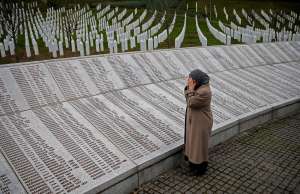
Bosnia

No evil dooms us hopelessly except the evil we love, and desire to continue in, and make no effort to escape from.   George Eliot

The only sin is mediocrity.  Martha Graham

Talking about pollution, nobody’s holy.  Toba Beta

There exists a limit to the force even the most powerful may apply without destroying themselves. Judging this limit is the true artistry of government.  Frank Herbert

The last temptation is the greatest treason: to do the right deed for the wrong reason. T. S. Eliot

In looking over the quotations above, it might appear as though I have pushed the calendar to prepare for the annual Advent letter several weeks early.   Indeed, these weekly posts have long sought to blur the lines that many others actively seek to maintain, blending responsibilities to policy and traits of personal character that tend to make that policy more inclusive, more urgent and more attentive to context.

Moreover, this is a birthday week for the UN (for me as well), a time to celebrate accomplishments, but also to acknowledge that the clock that continues to tick on our opportunities to realize our promise, to make amends for inattentive mis-steps and outright wrongdoing, to straighten out still-crooked structures and, to the best of our ability, apply our “true artistry” to the global problems and human needs that forever yearn for our attention.

Of all the UN functions in this busy month, among the greatest drama and intrigue takes place in the General Assembly’s 3rd Committee which is devoted in large measure to the promotion and protection of human rights.   Such is a noble venture albeit one replete with issues and controversies that have both captivated our interns and won well-deserved respect for the patience of the Chair, Luxembourg’s Ambassador Braun.

In this time of budget constraints, widespread violations of international law, and growing skepticism about the value of multilateral institutions, the promotion and protection of human rights would seem to be an increasingly difficult sell.  We live in a world now where too many states and individuals “dare” the international community to challenge their behavior, dare them to insist on the upholding of norms that constitute the primary “glue” that holds institutions like the UN together.

At the same time, our understanding of the intersectional and often complex web of rights obligations that binds us is also increasing.  From discrimination against persons with albinism or physical limitations to girls subject to sexual slavery; from victims of terrorism and its responses to journalists and environmental defenders threatened for simply doing their jobs; the multiple facets of human rights inquiry and implementation pose both  challenges and strains.  Much too often, we humans maintain our not-so-clever march to incarnate the “evils we make no effort to escape from” and this puts enormous pressure on our too-often-disregarded and largely-underfunded human rights mechanisms.

There are issues with pursuing human rights to be sure, including the tendency to prioritize the rights concerns of in-groups to the relative neglect of out-group concerns.  I do know people in this world (including diplomats and UN officials) who maintain a sense of general equilibrium regarding the scope and pursuit their own and others’ rights, but in fairness many of these people are not directly subject to abuses themselves.  It is, indeed, a high bar to expect fairness of application when people and communities are under direct attack, including and especially at the hands of their own “legitimate” governments.

It is also seems increasingly difficult for states themselves to listen to each other on rights abuses, especially when they feel “lectured to” by states with their own unacknowledged human rights limitations.  Indeed, there is a considerable amount of self-righteousness that rears its unfortunate head in the Third Committee chamber on many rights issues, but especially when it comes to “country –specific” reporting on states such as Myanmar, Iran, Burundi and Israel (on the Palestinians).  This exercise, more than the thematic obligations of most Independent Experts and Rapporteurs authorized in Geneva by the Human Rights Council, tempts states to make political points under the guise of upholding human rights standards, an often-strained exercise which certainly qualifies as doing the “right deed for the wrong reason.”

States present in the Third Committee – and especially those under direct examination and their supporters — routinely resort to “constitutional defenses” of their behavior, the spurious notion that if a right is guaranteed in a national constitution that it must, de facto, be guaranteed in practice.   Several states also resort to the “principled position” that country-specific discussions should not take place in the Third Committee at all, that the Universal Periodic Review (UPR) process in Geneva is the best place for states to receive recommendation and guidance on their human rights responsibilities based on dialogue, mutual respect and a bit of “shadow reporting” from NGOs and activists on the ground.  We concur with that point, with the caveats that the UPR process does not generally lend itself to the levels of intensive rights investigations which the Rapporteurs and (especially) the Independent Experts are mandated (and trained) to conduct.  Moreover, we and others have noted that these “principled positions” on country-specific mandates magically disappear altogether when Israel’s rights violations are in focus.

The UN is clearly and unapologetically a state-centric system, one which privileges (and at times even justifies) state prerogatives, even in situations where such states are clearly in violation of UN Charter norms.  It is also a system which too often, as noted by several Rapporteurs this week, hasn’t the “stomach” to hold the most egregious abusers to account.  And, as our system of human rights faces fresh allegations questioning its inherent biases and limitations, based in part on policy disconnects that persist between Geneva and New York, attempts to manage and overcome differences between what one delegation referred to as the “goodies and baddies” take on intensified meaning.   Iran’s comment this week questioning why they should accept human rights lectures from “racists and colonists” was a bit over the top but not by that much. When states refuse to own up to their own rights limitations, their critiques of others, regardless of their legitimacy, are more likely to ring hollow.

What tends to ring even more hollow is the calls to “urgent action” uttered by the Myanmar Rapporteur and others this week.  These experts know well the suffering endured by so many and the long waits for accountability and justice that only serves to magnify the original abuse.  They also recognize that none of us nor our governing entities are “holy,” and that fixing this system requires some combination of raising our rights expectations, engaging in resolute dialogue that is more about disclosing and healing wrongs than political ridicule, and acknowledging the ways in which our individual and collective actions fall short – at times far short – of what those suffering from discrimination and exclusion, from abuses in factories and prisons, from harassment and torture at the hands of state authorities, from climate-induced displacements and from increasingly stark economic and social equalities need from us.  It also wouldn’t hurt our common cause if more New York delegates sought to refresh their understanding of how human rights treaty bodies function, or that more requests by Rapporteurs and Experts to visit countries of concern were welcomed rather than rejected.  Indeed, as soon-departing ASG Andrew Gilmour has said often of late, if you don’t like what we’re reporting about you, “let us in.”

This much-maligned, insufficiently understood and vastly under-resourced human rights apparatus of ours ironically still holds the key to the credibility of a multilateral system that people still look to for relief and justice.  As our colleagues (FIACAT and others) striving to improve the function of human rights treaties and states party reviews in Geneva know well, “mediocre” responses from us in this time of high political anxiety and wanton disregard of rights norms — responses politicized or indifferent — is as close to “sin” as our secular institutions of global governance would ever acknowledge.  We must avoid such responses at all cost.

Pajama Party: Impediments to Rescuing the Commons, Dr. Robert Zuber

20 Oct

Spy

The way things are supposed to work is that we’re supposed to know virtually everything about what they [the government] do: that’s why they’re called public servants. They’re supposed to know virtually nothing about what we do: that’s why we’re called private individuals. Glenn Greenwald

To claim the affection and to do the spying. It is something not wrong, but the danger. Ehsan Sehgal

Of course I’m not going to look through the keyhole. That’s something only servants do. I’m going to hide in the bay window. Penelope Farmer

Harry swore to himself not to meddle in things that weren’t his business from now on. He’d had it with sneaking around and spying.  J.K. Rowling

On Friday afternoon, in the presence of Dr. John Burroughs of the Lawyers Committee on Nuclear Policy and Dr. Bonnie Jenkins – formerly the US National Threat Coordinator – we met with a group of our younger activists regarding threats to their future and what older folks like me need to do differently such that their stake in a future clouded by weapons, climate and other threats can be better magnified and encouraged.

We try to have these conversations on a regular basis, in part because of our deep respect for the people we are blessed to attract into our space, in part because the list of threats seems ever to be growing and shifting, and in part because few (in this work at least) offered us the same opportunities for sharing and disclosure way back when we were the younger ones.

I have often said, jokingly, that when I was younger, I spent most of my time catering to whims of older persons; now that I am older I spend a good bit of time catering to the whims of young persons.  Perhaps it has always been so.  Perhaps it must always be so.  Indeed, one of the tests of character that we subtly employ here is the “test” of concern for generations to come, the recognition that those in their 20s and 30s are not, in fact, the last generation but merely the latest in a sequence to “come of age” with younger persons nipping at their heals, needing guidance from them now about how to navigate the treacherous spaces relentlessly unfolding in the global commons.

Part of this mentoring responsibility involves the courage to assess the risks coming into view and not only the ones that are widely known.  We “know” about threats from nuclear weapons and other weapons of mass destruction.  We “know” about threats from climate change and biodiversity loss, though we often organize our lives as though we don’t.  We “know” that economic and social inequalities are still growing, though here in NY’s privileged spaces we tend to evaluate the success of our lives within narrow peer bandwidths, failing to appreciate the many advantages that have allowed us entry into the economic and policy “pods” we now jealously guard.

And we seem to assume (or wish) fervently that technology will somehow enable our collective rescue, that we will find the precise coding that will allow our machines to deflect incoming meteors, “eat” the carbon that is warming our atmosphere, skim the plastics off the surface of our dying oceans, and “blockchain” our way to more efficient and ethical means to link productive capacity and consumer demand.

And it might eventually be able do all of those things.  But in the meantime, we are also guilty of enabling technology of a different sort, enabling it to essentially run amok beyond the control of government and multilateral institutions, making more and more decisions for us that, at both a personal and institutional level, we feel less and less able (and inclined) to resist. From self-driving cars and autonomous weapons to highly sophisticated surveillance that, more and more, relies on the phones that have become deeply embedded in our psychology as well as our logistics, we have largely abandoned scrutiny of a force that to some now seems as inevitable as our genetics and hormones.

The UN has not remained entirely aloof from these concerns. In a report recently released by the UN Conference on Trade and Development, the authors made clear that, for all their potential and realized benefits, global digital platforms tend to further  “accentuate and consolidate” wealth and power rather than “reducing inequalities within and between countries.” Moreover, at a Mexico-sponsored “Youth Migration Film Forum” event this week, the highly moving films about the value and dignity of migrant youth were punctuated by cautious referrals to the high-tech surveillance on both sides of the US-Mexico border that mostly reinforces caricatures of migrants as disembodied threats rather than as human beings with families, aspirations, skills and faith.

And during a session of the UN General Assembly Third Committee, the ever-thoughtful Philip Alston gave his final report as the UN Rapporteur on Extreme Poverty, during which he spoke about the ways in which technology is now insulating and intimidating rather than liberating persons living in poverty.  He spoke passionately about the largely “human rights-free zone” characteristic of much big technology, the degree to which surveillance of the poor (and the rest of us) is being used by the governance and investment classes to “punish” persons who use “our” money for purposes that the authorities don’t approve of.  As he (sadly for us) ends his mandate, Alston urged creation of a “shared language of human rights” that can help us avoid the collective (and very real) danger of “stumbling zombie-like into a “digital welfare dystopia” where decisions about human beings are based on algorithms rather than relationships, on the need to control rather than the need to assist. Indeed, in a world where many people trust their phones more than their neighbors, this “dystopia” warning is not as far-fetched as it might initially appear.  Our interns certainly took it very seriously.

Part of the solution clearly lies in technological oversight, in resurrecting the role of the state to protect people from excessive interference from the technologists – and from the governments themselves. Clearly, the “surveillance culture” of our time has impacts, not only for migrants and the poor, but for others who seek to defend their rights and interests, to any effort to reaffirm the importance of public spaces and values not subject to private priorities. Much time at the UN now, including this week, is properly devoted to increasing attacks on civil society, activists or journalists, anyone who dares to defy “the norm.”  But in too many instances, under-regulated state interests and private-sector technologies are aligned in a desire to shrink and securitize public spaces.  Even UN spaces.

At another event at the UN this past week on “public space in a digital age,” UN-HABITAT brought together a variety of experts who critiqued “sanitized, securitized” and highly expensive development priorities such as NYC’s “Hudson Yards.” Such priorities often lead to the neglect of public spaces more conducive to personal engagement, spaces that can help people connect to each other and inject dimensions of “playfulness and plurality” into communities in ways that enable and enhance both personal connection and the “emotional health that we in this city (and in so many others) badly need.

This session was full of insight, much of which was directly relevant to this post:  the suggestion that “citizens are not aware of how social media now allows private actors to create, define and surveil public space,” the degree to which digital space encourages narrow mindedness while public space tends to cultivate “broad mindedness,” and the sense that in healthy environments, personal relationships must take sequential precedence over their digital counterparts.  Amazon, one speaker half-joked, “wants us to live our entire lives in our pajamas,” engaging the digital realm as consumers of goods and gossip while eschewing the risks associated with that “playfulness and plurality” which only public spaces can deliver.

I can only speak for myself here, but I don’t want a life without risk, nor do I want a life dominated by technology over which I have no control, one which offers me products I don’t want and promises to “save” me from “threats” that, to my mind at least, are less threatening than the steady erosion of personal freedom, respect for diverse voices, and some semblance of privacy.   I would also much rather sit in a Bronx park watching children play than walk the High Line with tourists and their selfie-sticks.

As one of the youth delegates at the “Migration Film Forum” rightly noted, technology can in fact create new contexts for inclusion.  But this is mostly true when we sequence it properly, when technology becomes merely the means to extend connection, not give it birth.  We may be collectively too addicted now to our devices, too willing to forgive them for digitalizing our complex life preferences, keeping us in our sleeping clothes, and spying on every idea and action our lives are capable of generating.

But unless we can find the courage to resist and reshape that addiction, to re-personalize the spaces and relationships that are now, too-often, providing little more than digital fuel for Alston’s “dystopia,” this self-inflicted “pajama party” is not going to end well.  We cannot go on “claiming affection” while spying on each other, judging each other by what we find in some random database rather than what we know from our own direct engagements.

The lesson here seems clear: when we cease to trust our own senses and experiences, we risk losing a good chunk of our remaining capacity to trust one another.  There is, perhaps, no risk facing the global commons greater than this.

Moneyball: Sustaining the UN’s Mission in a Funding Crunch, Dr. Robert Zuber

13 Oct

Pay attention. It’s all about paying attention. attention is vitality. It connects you with others. It makes you eager. Susan Sontag

Our actions run as causes, and they come back to us as effects. Herman Melville

Any fact becomes important when it’s connected to another. Umberto Eco

When we know ourselves to be connected to all others, acting compassionately is simply the natural thing to doRachel Naomi Remen

That I can have my toe in the ocean off the coast of Maine, and a girl my age can have her toe in the ocean off the coast of Africa, and we would be touching. On opposite sides of the worldMegan Miranda

As many of you who read these posts are aware, October is a busy, stressful and sometimes inspirational month inside UN headquarters.  The heads of state have all gone home, leaving it to the UN-based diplomats and those who have their ear to formulate proposals, craft resolutions and release reports that keep the UN as on task as it can ever manage to be.

We have noted this before and likely will again, but the frenetic activity generated largely by the six General Assembly Committees is perhaps unique in its scope, if not in its connectivity to constituents or complementary issues.   Whatever else one might say about the UN, it has established processes to examine and address virtually every conceivable threat to human dignity and planetary health.  In the past week alone, delegations weighed in on issues from food security and the rights of migrant children to nuclear weapons modernization and the international law implications of counter-terror operations.  And there was plenty more where that came from.

Moreover, the Peacebuilding Commission and the GA’s Fourth Committee held separate sessions focused on an examination of (often controversial) prospects for self-governance for the islands of Guam (US), Gibraltar (UK), French Polynesia and in what promises to be a particular success story for the PBC, Bougainville (Papua New Guinea).  As it was in the early years of the UN, self-governance has become a bit of a lightning rod issue for the UN, necessitating the organization of referendums on independence but also on plans for post-independence economic and social transition.  Getting small, self-governing territories to be viable as well as independent is a challenge that the UN is increasingly skilled in navigating.

And it wasn’t all talking either.  Several important reports and policy statements from non-state actors (or consortia of state and non-state groups) were also released, including Guidelines on Investigating Violations of International Humanitarian Law from the ICRC and Geneva Academy, and a Global Study from Independent Expert Manfred Nowak and NGO partners on Children Deprived of Liberty.  These studies have filled important gaps in a timely manner as we confront both more frequent violations of the laws of war and still-high levels of public indifference regarding the long-term psychological and physical impacts for children tossed into caged area or other unsafe facilities as though they were somehow less than human.

The UN, indeed, is taking on its full portion of human suffering and aspirations for a healthier, safer, more prosperous planet.  But busyness does not always translate into productivity, as we know, and the building suffered several “shocks” that called into question the UN’s ability to turn attention into sustainable relief for beleaguered global constituents.

One of these “shocks” is a familiar foe – the inability of the UN (specifically the Security Council) to maintain international peace and security, most recently in Cameroon, in Burundi and in the northern areas of Syria currently being “cleansed” of Kurds.  The costs of conflict remain staggering and not just in military hardware and logistics.   The climate implications of military operations, the toll of human suffering and displacement, the damage to the reputation of UN and the rest of the international community, the setbacks to sustainable development and an end to any pretense that we might have “graduated” as a species from our predispositions to predation and short-termism – this and more requires self-scrutiny of the entire UN community

The other “shock” is less familiar but not unpredictable – the announcement this week by the Secretary-General that the UN is facing a major financial shortfall for the remainder of this year that will force a curtailing of all but the most essential operations and possibly jeopardize payroll for UN staff, including those trying to raise children in the serially-expensive sites of major UN operations in and beyond New York.   This “record level shortage of cash” will likely have impacts not only on the work of the UN in diverse settings and contexts but, perhaps ironically, on the reforms set in motion that show promise in terms of making UN operations more efficient and, yes, cost effective.

Meetings of the 5th Committee of the General Assembly this week were sober but, unlike the SG, proceeded to “name names.”  As it turns out, only 35 UN member states have paid all of their assessments in full.  Other states have failed to pay their general assessments; still others are in arrears for responsibilities such as peacekeeping or criminal tribunals.  For all the talk about “preserving multilateralism” this would appear to be a classic case of “not putting your money where your mouth is.”

In fairness, however, assessments are only part of the UN funding story.  As we have noted previously, states have many specific funding interests (earmarked projects) and existing responsibilities to the UN, from trust funds to emergency humanitarian appeals for conflict-affected populations.  And of course they face the massive burdens associated with the Sustainable Development Goals, including assistance to states that need help with matters from food security to preserving domestic revenue.   Add to this a global economy showing signs of strain and a “host state” that has fallen behind most severely on its own pledges and you have a recipe for high anxiety around UN headquarters.

In addition, the UN’s many pockets of planet-saving activity have been in a funding competition for some time.  Indeed, virtually every side event which the UN hosts is as much an appeal to potential funders than to thoughtful clarity of how these pieces of welcome policy support and complement the UN’s overall mission.   Moreover, calls for “private sector” involvement are becoming more numerous and more urgent, raising serious questions about the ways in which corporate interests are rapidly becoming, next to large states, the most influential (and equally opaque) factor in how the UN does its business.  As the need for funds to sustain salaries and operations becomes more acute, the attractiveness of corporate lifelines is sure to grow, for better or worse.

For small operations such as our own,  funding is always precarious, thereby necessitating a certain flexibility regarding what we are compelled to do and what we must (temporarily we trust) put aside.  When resources dwindle, we can compensate in part through some combination of attentiveness, collaboration, gratitude and connection, making sure that the steps we take are intentional and directional, and that our means for conducting triage on the priorities that our resources and energies can sustain remains fully operational.

As a massive, multi-pronged and mostly cost-efficient global institution, the UN can’t replicate our ‘sit around the table” triage.   But funding limitations can force helpful conversations about what is at the core of our mission, how to sustain our promises to constituents for whom our lifestyles are hardly a major concern, nor for that matter is the lofty resolution language that only rarely touches the ground.

The busyness of October at the UN is both energizing and distracting.  We are engaged with so much now, seemingly more than we can process, more than we can communicate and, for now, more than we can afford.  As armed conflict rages and sustainable development goals head in the wrong direction, we will need to set clearer priorities, privilege connection over competition, and reset our bearings such that the relationship between the ’causes and effects” of this grand place will remain ever in front of us.

We are reminded that this current financial shortfall is only in part about the sources and implications of our funding.  It is also a test of our collective character, our ability to share what we have, continue to eagerly do the work to which we have been entrusted, and even make visible displays of compassion towards those many persons all around the world whose lives are a constant struggle to do more with less.


Coaches Corner: The Quest for Generational Solidarity, Dr. Robert Zuber

6 Oct

students-918296__340

Anyone who keeps the ability to see beauty never grows old.   Franz Kafka

The surest way to corrupt a youth is to instruct him to hold in higher esteem those who think alike than those who think differently.   Friedrich Nietzsche

I am the way a life unfolds and bloom and seasons come and go and I am the way the spring always finds a way to turn even the coldest winter into a field of green and flowers and new life.  Charlotte Eriksson

He stood at the window of the empty cafe and watched the activities in the square and he said that it was good that God kept the truths of life from the young as they were starting out or else they’d have no heart to start at all.  Cormac McCarthy

Adolescence is like having only enough light to see the step directly in front of you. Sarah Addison Allen

As is so often the case now, there was an interesting, if sometimes uneasy mix of ages and age-related perspectives on display at the UN this week.

In the Security Council on Wednesday, current president South Africa led a good discussion on “Mobilizing youth towards silencing the guns by 2020” featuring three presenters (ages unknown but certainly not anywhere near their teens) who gave what most considered to be masterful presentations focused on the talent residing in young people across the African continent, the skills that are being cultivated in many quarters and that are increasingly impatient to find sufficient expression.

Youth briefers from the African Union, Uganda and Kenya skillfully pointed out the condition of “wait-hood” that many African youth feel trapped within, the sense that they are capable of more than their circumstances permit, forcing them too often to “hustle” as a precondition for being recognized, accepted, encouraged.  The Kenyan Peacebuilder was explicit in seeking “proactive” youth policies that resist “containing” the energies and aspirations of youth.  Recognize the good work we are already doing, she demanded, the responsibilities we already shoulder.  In a similar vein, the Ugandan youth representative noted that, as societies, we are getting more comfortable with the “language of participation” but not as much in identifying and sharing power.  He cited a certain kind of “exhaustion” from criticizing “war mongers” rather than engaging in peacebuilding, which he now believes is the “better way.”

As Peru rightly noted during this Council session, echoing the presentation by the AU Youth Advisor, we must all move beyond the flawed narrative and stereotypes that posits African youth as either instigators or victims of violence.  And as South Africa itself suggested, we must do more to release the “cultural expression” of youth as a contribution to peace and security, understanding that the creation and recognition of beauty is essential to peaceful societies.  Several Council members affirmed the need to take account of the diverse and altogether negative consequences for youth – including the many children considerably younger than these briefers – of armed violence and the trafficking in weapons and narcotics that often accompanies it.   As the Ugandan briefer rightly noted, war “turns everything upside down.” Violence isn’t by any means limited to conflict zones, but all violence has diverse and negative implications for the health, well-being and participation of youth, as of course if does for all in communities of conflict, those who participate directly and those who don’t.

Elsewhere in the UN, the Third Committee (human rights and social development) of the General Assembly also resumed its work this week, and one welcome feature of the initial social development- focused presentations was the presence of youth voices which, in many instances, punctuated this often dry segment of delegate statements with more passionate, impatient references to a world where sustainable development is not proceeding nearly quickly enough and is often not particularly “social” regarding achieved levels of inclusiveness.

The young people who spoke in Third Committee had many good ideas on promoting educational and employment opportunities for youth and, as Mexico’s youth delegate urged, “activities that promote a “just and democratic” society without discrimination.”   The Republic of Korea’s youth delegate garnered significant attention by proclaiming that, for her at least, “looking good” is not as important as “doing good.”  That same delegate, however, cited the many social development priorities, including employment, health and “marginalization,” for which youth have many suggestions and energies for change, suggestions which are too-often “heard but not listened to” by elders.

The youth in the Third Committee, much like those in the Security Council, did not represent what you would call a “random sampling” of their generation.  The UN tends to be highly-choreographed space and the voices given the floor were forceful, well-educated, on the older side of “youth,” and confident above all else. They rightly sought greater inclusiveness for their voices and recognition for the progress they are already making but in a manner that, ironically, seemed under-attentive to other dimensions of inclusiveness, including the aspirations of those younger than themselves and the needs and accomplishments of older persons also featured in that day’s Committee discussions.

Given this, it was the youth delegate from Thailand who made the biggest impact on me of all the young representatives we heard.  Not only did she make helpful distinctions between the “citizenship education” young people need and the “something less” they are likely to receive in formal classrooms, but she also referenced her chronological peers’ social responsibility in a kind and nuanced way, highlighting the commitment to “carry the torch” of sustainable development to succeeding generations.

This “carrying” is part of what we must locate if the elusive “intergenerational solidarity” called for during the week in this Committee is to be realized.  It’s not simply about resolving the “tug of war” between millennials and their elders.  It is more a struggle for the integration of aspirations across the human spectrum, from those taking their first steps to those breathing their last breath.  And beyond chronology, to open ourselves to the needs of those not in our own social groupings, to build more common interests that open safe spaces for migrants (as Norway’s youth delegate recognized)  and those (mostly other) persons habitually further from centers of policy influence than the youth speakers at the UN could possibly ever imagine themselves being.

Tendencies exist in our world now which impede the promotion of this highly-prized intergenerational solidarity: people who talk more and listen less than they think they do; people who judge the worth of “insider” groups by their best examples, and outsider groups by their worst; people keen to make too much of their own accomplishments and too little of the accomplishments of others. There is also the trend to be plaintiffs in only a limited, personal sense for the too-many ways in which people’s aspirations and ideas have been patronized or blocked altogether by those in authority; thereby abandoning the large majority of people (of all ages) to process the unsettling reality that leadership won’t fix what needs to be fixed and won’t let anyone else try to fix it either.

And there is a trend, one perhaps more toxic than the others, to “essentialize” groups of people, to blithely assume common characteristics for “youth,” or “women,” or “white men,” or “Mexicans” that tend to sweep away – often in a self-serving manner — the distinctive characteristics, aspirations, frustrations and failures that each brings to life, the unique “light” in others that we often can’t see because we have allowed ourselves to be blinded by our own erstwhile “brilliance.”

What has been clear inside and outside of UN conference rooms is the urgent need for an infusion of young energy, enthusiasm, determination, ideas and skills (perhaps minus the over-confidence and proliferation of Instagram photos).  Equally clear is that those of us who are older need to spend more time coaching and less time lecturing, coaching for character that encourages reliability and builds capacity to rebound from loss and failure; coaching in anticipation of long winters that eventually give way to a more bountiful spring; coaching others to “carry the torch” for generations to come rather than hording it’s light for themselves and their peer group; coaching that remains conscious of the need to “change the game” such that the mistakes of one generation are not simply camouflaged by the next under some clever new costuming.

My generation hasn’t always coached well; we have sometimes resisted too mightily getting off the playing field and allowing that space to be creatively occupied by younger others. But there is still time to fix this. We must start by recognizing that, literally and figuratively, it is “their time” now, albeit with many more young still to come, some already lying in wait, anticipating their own chances to be heard.  We older folks can surely do more to ensure that this “time” is well spent; that development becomes more sustainable and that social inclusiveness extends well beyond the age, race and social class of the “usual suspects.”  At this juncture in these unsettled times, this is quite possibly the best investment we can collectively make.

Island Get-Away: Heeding the Call of the Climate-Vulnerable, Dr. Robert Zuber

29 Sep

thumbnail_Screen Shot 2019-09-28 at 8.18.20 PM

Delays and laziness are the two great gulfs in which multitudes of souls are drowned and perish. John Fox

You cannot prove your worth by bylines and busyness.  Katelyn S. Irons

Nathan thought people needed to wash dishes by hand sometimes. Prepare their own meals more often. And take walks.  Eileen Wilks

We cannot put off living until we are ready….Life is fired at us point-blank. Jose Ortega Y Gasset

If you want to save some money at Christmas, you can say Santa Claus died in a wildfire. Chuck Nice

This year’s high-level week at the UN has come and gone.  Barriers designed to separate those invited and not-invited to this grand political party are coming down as I write and most of the dignitaries (and their entourages) have had their say and boarded planes for home. The time will soon come for the diplomats and other stakeholders who walk the UN’s halls daily to translate some of the promises made into concrete policies, as well as to attempt to soften some of the bravado of heads of state who came to the UN to air their grievances and/or to use their platform to, in some instances, defend the indefensible (as with Brazil) or attempt to undermine the value of multilateralism from multilateralism’s most cherished podium (as with the US).

It was a frenetic scene from early Monday’s opening of the Climate Summit through Friday’s high-level event focused on some of the growing, existential threats posed to small-island states from climate change.  Indeed, some of the most significant take-away messages from this UN week were from those very same events.  The widely-reported, emotional statement uttered to dignitaries by Greta Thunberg (“how dare you”) at the Climate Summit underscored the absurdity of middle-age diplomats of privilege putting “hope” in a teenager who should be home and in school, a teenager who is asking only that leaders listen and respond to the science of climate change and not their own polling numbers.  For her part, Greta might well have been one of the only persons in that Summit (not living within walking distance of the UN) whose mode of transport did not contribute to the problem that the dignitaries had ostensibly gathered to address.  Indeed, the vast environmental “footprint” associated with this event (a fact not lost on some skeptics) should have led less to “hope” in the singular determination of a teenager and more to shame regarding the behavior of political leadership who, in too many instances, still lacks the fortitude to practice what they preach.

Friday’s event focused on the growing climate urgency felt by small-island states couched within a mid-term review of the SAMOA Pathway.  This review highlighted the plight of states staring “point blank” at rising sea levels and ever-angrier storms, and gave rise to frustrations with the limited ability of UN leadership to evoke practical climate commitments from the heads of several large-emissions states. But the event also underscored the degree to which the UN remains highly valuable as a platform to appeal for and garner support for island states which have contributed little to the climate problem but which, in too many instances, suffer from its most severe impacts.  In some ways, this event represented the best (as Sweden’s Foreign Minister referred to the UN) of this “global public good” – passionate, honest, helpful and thoughtful –offering hope to small islanders that big-power interests would not be allowed to deflect responses to the now-existential fears that the economies and cultures of their small-island homes could soon be added to our rapidly-growing list of global extinctions.

There were many important messages emanating from this event that highlighted the urgency of the times and the “lazy delays” that have often characterized our common commitments.  Ireland’s President Michael Higgins spoke well of the dangers of “recurrence” of our collective challenges which he believes can only be prevented through a new ecological-social “compact.”  A native speaker from Hawaii was more graphic, noting that there are more plastic objects in the ocean “than stars in the Milky Way” and highlighting the greed that makes us the only species that “forces disharmony” with the natural order.  Climate problems for one, he noted, soon become “problems for all,” underscoring the hope of UN SG Gutterres that if we can find the courage to solve climate change at its most difficult point, we can solve it at other points more readily.

And in a remarkable SAMOA event statement, Barbados’ Prime Minster wondered aloud how long her taxpayers would continue to authorize trips to New York to continue to say and hear the same things over and over, statements with political value perhaps but also with limited practical impact, statements which merely provide cover for the “arrogance” of too-many leaders and other stakeholders who apparently believe that we are already doing enough to stave off our own extinction when we clearly are not.

Back in the General Assembly, Palestinian President Abbas might well have put the matter before us most succinctly:  “Be careful. Be careful,” he warned, “you must not deprive the people of hope.” The following day, also in the GA, the Prime Minister of Lesotho highlighted the role of the UN in saving people from the “follies” of their leaders, surely including the folly of those who tout “patriotism” and “nationalism” as some “magic-bullet” antidote to the limitations of the multilateral order, an “order” that can clearly still attract a crowd but which its own leadership acknowledges has not yet lived up to its lofty billing. We should be so very grateful for the confidence that people continue to place in these hallways despite evidence that the UN’s signature, high-level segments still care too much about themselves and not enough about the yearnings of global constituents.

In a Lower Manhattan park this week, removed from the traffic jams and crowds of people with credentials trying to push their way into UN conference rooms, a small group of people led by Green Map’s director toured a small and now-threatened area once dominated by drug culture but now an oasis of hopeful possibilities – sculptures and a turtle pond, chickens, recreation areas and gardens full of native plants. The tour highlighted the sustainable development goals and was accompanied by park rangers who know just how far this strip of land has come, how much love and attention it has received from current and former neighbors, how much would be lost if the city’s plans to denude the park ostensibly to make it more “climate resilient” would take effect.

It is an emotional and intellectual challenge, for us and others, to balance the “bylines and busyness” so very much valued in the crowded halls of the UN with the millions of local actions (and actors) struggling to overcome impediments imposed by some of the very same global leaders who should be opening pathways to well-being instead.  These actors, the ones perhaps more likely perhaps to “wash their own dishes and prepare their own meals,” the ones who must find walking destinations to restore and refresh in local contexts, are also the ones who need the promises made by leaders during this high-level week to translate — somehow, someway — into fresh motivation and inspiration for local, climate-related progress.

Greta and her youthful colleagues have laid out before us a science-informed path where practical hope in a healthier and more sustainable future is still feasible.   With all the power and influence at their disposal, global leaders can do better than defending their political and “national” interests and (in some instances) casting dispersions on young actors who have taken into their hands responsibilities for climate changes which too many leaders have neglected for too long and which now threaten virtually every island and coastal community on this fragile planet.

Simply put, we need to see more urgent leading from leaders well in advance of the next UN high-level party in 12 months time.

Youth Group: Passing the Torch on Climate Health, Dr. Robert Zuber

22 Sep

strike

You’re learning that you do not inhabit a solid, reliable social structure – that the older people around you are worried, moody, goofy human beings who themselves were little kids only a few days ago.  Kurt Vonnegut

One cannot, without absurdity, indefinitely sacrifice each generation to the following one; human history would then be only an endless succession of negations which would never return to the positive.  Simone de Beauvoir

The last generation’s worst fears become the next one’s B-grade entertainment. Barbara Kingsolver

Respect the young and chastise your elders. It’s about time the world was set aright.  Vera Nazarian

A mistake, committed for a few generations, becomes a tradition.  Nitya Prakash

This past week, the UN Security Council endured a dismal and discouraging session punctuated by an sobering briefing by ASG Ursula Mueller followed by a veritable cat fight among Council members ostensibly committed to easing suffering and reducing levels of threat enduring by the people of Idlib, Syria.  This erstwhile “deconfliction zone” has been the subject of all-too-routine bombing raids by Syria and its allies despite a provisional cease fire, bombing conducted ostensibly to root out terrorist elements and their foreign fighter allies (what Syria referred to as “monsters”) who allegedly have been holed up in schools, hospitals and other civilian infrastructure.

This principled (though not always practiced) concern for protecting civilians and upholding international law by (most) Council members has often run afoul of the concerns of a few to fully prosecute the terror war until all terrorist elements, including foreign military and intelligence capabilities, have been defeated.   In this instance, the disagreements spilled over in a spectacle of competing resolutions on Idlib, one submitted by the “humanitarian penholders” Belgium, Germany and Kuwait, and the other seemingly cobbled together at the last minute by China and Russia and focused more on the necessity of continued, robust counter-terror operations.

Needless to say, neither resolution passed.  Another opportunity to forge a consensus that would spare the people of Idlib from yet another round of violence and displacement was lost.

My own response to this policy carnage was to urge Council members to “burn the tape” of this meeting lest the people of Idlib see for themselves how their urgent interests have been set aside by a body that at times makes more trouble than it resolves – both inside and outside the UN.  Conflicts fester, sometimes for generations, and some of the core lenses that contribute to conflict in our time – especially threats from climate change – have yet to achieve supportive consensus in that body. There is now a “tradition of inaction,” that belies the dignity that still applies within the Council chamber, including the failures to fulfill its own resolutions, hold permanent members to account for acting above the law, and reassure the rest of the international community that Council members are prepared to pull their weight in resolving crises that have sometimes gone on too long and which directly affect prospects for future generations.

Those specific representatives of future generations who have sat with me over the years in the Council chamber have taken note of the political culture which the Council perpetuates and they are by no means reassured.  The clock is ticking while more and more pundits are proclaiming that it might now be “too late” to save ourselves from ourselves. For these young people it is not too late.  It cannot be.

Thankfully reassuring to them has been the recent explosion of climate-related protests, many thousands of people worldwide taking to the streets to “strike” for action and justice, action based on an increasingly firm scientific consensus and justice based on the reality that many who will suffer the most from climate impacts had the least to do with creating the problem in the first place.  Indeed we are now witnessing the scenario of the wealthy trying to buy their way out of the path of severe climate impacts while millions struggle to eke out a living on the margins of rising oceans and expanding deserts.

Inspired by Greta Thunberg and others, there is action on a large (not yet large enough) scale to mitigate climate impacts and redress related imbalances. We do have global policy frameworks to limit emissions and care for climate refugees, though these frameworks are voluntary in nature and thus easily put aside when they allegedly “compromise” the national interest.   We also have a bevy of technologies that have come (and are coming) on line that can promise some relief from excess emissions and other manifestations of our still-excessive environmental footprints. We see every day more corporate and financial interests recognizing that sustainable business requires sometimes dramatic changes in how they “take care of their business.”

And we have seemingly come to grips with the fact that climate mitigation and adaptation can and must be localized, that the challenges people face must be fashioned to context in the form of concrete actions grounded in what we are now missing in too many of these contexts — an abiding commitment to the surroundings that house our ambitions.  In too many instances, we have lost connection with the places we call home, the rhythms of life that we too often take for granted or neglect altogether, the places that demand our immediate and specific attention and get it less and less.   We are a culture full of people who know more about the abstracted feeds on our phones than the habitats and watersheds that surround us daily, the farms and gardens that sustain our bodies and souls in ways that Instagram could never do, the threats to biodiversity (including to essential pollinators) that have sometimes-severe local impacts and that caring and attentive people have the means to address locally.

In pointing this out, I recognize that it is relatively easy for me to examine personal choices and help mitigate climate impacts.   I am not raising children and thus am not bombarded by the desires of children stoked by endless commercial interventions.   I do not need to own a car, or even ride in one, whereas the lives of many others are almost entirely dependent on such vehicles. Indeed, I can walk to markets of all kinds, including places that will gratefully take my copious collection of weekly compost. I can bus or train to work, or even walk if the frustrations of mass transit become too much.

And I can indulge my own amnesia, including with regard to the economic predation characteristic of the most “successful” parts of the city I live in.  I can deceive myself that there is some virtue in growing and producing nothing on my own.  There are few in my life now to remind me of the skepticism and frustration of my earlier years, the energy wasted on investments and behaviors that were sketchy at best and certainly not sustainable in any sense that we now understand that term.

As amnesia is overcome, it becomes a bit easier to accept the skepticism and self-protectiveness of the younger people who allow us to get close to them.  It is easier to forgive the occasional over-indulgence in “first-world problems” and entitlements, the frustration that comes from a life spent in school that, in some ways, produces outcomes just as disappointing as anything the Security Council can muster.  It was interesting that, at Friday’s climate rally in Battery Park, while I was one of the older people present and wearing my “UN costume” of jacket and tie, I was not scolded once, not from the audience and not from the podium.   It was a testiment to the kindness and focus of those strikers that I was able to “escape” so easily.

Indeed, the energy in that park was hopeful, even electric, and the voices of Greta and others were strong, clear and resolute.  Ready or not, it is their turn now, their turn on the playing field, their turn to see if they can overcome their own habituated responses and generational prejudices to effect rescue in a world that is good for them, but also good for those many whom will follow; thereby helping to ensure that their fears and skepticism can be repurposed into actions that will offer more than “B list entertainment” to subsequent generations.

In the shadow of New York’s financial district, Greta reiterated a warning to those who have been made uncomfortable by what they might well interpret as the “bad news” associated with the recent surge in climate activism.  “This is just the beginning.” If we are to preserve our own lives and the “chains of being” on which our lives depend; if we are to eliminate this major contributor to the violence, food insecurity and displacement that now characterize too many global settings; if we are to boldly and urgently mitigate where we can and adapt where we must; then our responsibility is laid out before us, including doing more to ensure that the mistakes of generations past don’t become the “traditions” tying the now-eager and determined hands of the young.

The many voices worldwide insisting on a healthier planet “fit for children” believe, as do we, that this is simply not too much to ask.

Choir Practice:  Making Melodies for Multilateralism, Dr. Robert Zuber

15 Sep

I would like to see anyone, prophet, king or God, convince a thousand cats to do the same thing at the same timeNeil Gaiman

Don’t let a loud few determine the nature of the sound. It makes for poor harmony and diminishes the song. Vera Nazarian

Humor is a universal language that topples walls, connects hearts, and opens the door to communication and cooperationL.R. Knost

Cooperation is very often furthered by segregating those who do not fit in. That creates some superclusters of cooperation among the quality cooperators and a fair amount of chaos and dysfunctionality elsewhereTyler Cowen

Because in the hot and stormy future we have already made inevitable through our past emissions, an unshakable belief in the equal rights of all people and a capacity for deep compassion will be the only things standing between civilization and barbarismNaomi Klein

This week marks the end of what we believe to have been the remarkable General Assembly tenure of Ecuador’s María Fernanda Espinosa Garcés, a too-rare female president who brought to her tasks abundant energy, thoughtfulness and honesty about our common responsibilities and the impediments to growth and change that we so often place in our own way.  She has been, in our humble view, just what this organization needed and, indeed, what it would have been good to hold on to for just a bit longer.

If this week was to be her swan song, the PGA did her best to ensure it was one to remember, doubling down on key concerns that have defined her leadership:  promoting a culture of peace based on fulfillment of our sustainable development promises; integrating the skills and aspirations of women and youth in social, political and economic life; and especially upholding the value of multilateral engagement at a time when a toxic nationalism has swept through our political fabric, pulling in the reigns of diplomatic cooperation and substituting “rooting interests” for a broader sense of civic participation and human solidarity.

The events sponsored by the PGA were not the only signs of multilateral energy this week:  A Swiss-moderated , Working Group discussion on threats to cyber security and a Peacebuilding Commission session on promoting “south-south cooperation” both underscored the futility of attempting to solve problems that are global in nature with solutions that are tailored to the now-competitive and distrustful national frameworks in which more and more of us seem a bit too comfortable.   Clearly, as noted in these and related sessions, there is no cure for the ills of unaddressed food insecurity, cyber crime, ocean pollution, climate-related disasters or forced displacement that is strictly (or even primarily) national in nature.   We simply will not fulfill our promises to future generations unless we can free up now-clogged pathways of communication and mutual support. We have dug too deep a hole to think it can be filled with only one brand of shovel.

But this PGA (and some of those whom she has inspired and been inspired by) also understands that much of the current “push-back” on multilateralism represents a self-inflicted wound.  The push to metaphorically abandon the choir for a solo career has its roots in an international system that has at times been too smug, too complacent, too removed from the needs and aspirations of constituents.  We have allowed criticism to take root of a UN “too much about talk and not enough about action;” we have passed resolutions without a sincere commitment to implement their provisions; we have played with peoples’ expectations, making promises (especially but not only on peace and security) about which we then continue to “hedge” our bets; we have only begun, as the director of the UN Office for South-South Cooperation noted this week, to “break the taboo of looking sideways,” only timidly acknowledging that all states and other stakeholders have much more to both share and receive.  Such patterns have contributed to what the Ugandan Ambassador called his “nightmare,” the fear that 75 years from now we will still be fussing over language at the UN while yet another generation of opportunities to promote lasting peace, development, climate health and global solidarity goes by the boards.

And perhaps of greatest concern from the standpoint of rescuing multilateralism from its increasingly vocal and dismissive critics, we have sanctioned reforms of this system without a commensurate commitment to change ourselves, to recover and then display some of the passion, curiosity and discernment that led us to choose this path of service in the first place.   We have heard often in this policy space, especially with regard to persons with disabilities and indigenous persons, that there must be “nothing about us without us.”  We need to apply a version of this to our current, urgent struggles to re-establish the credibility of multilateral engagement.   No restoration of multilateralism without a commitment to amend the ways we do our own business.  No restoration without, as the Secretary General stated well during the dialogue on multilateralism, the reform of how we communicate with each other, the degree to which we can be convincing in this difficult moment that others also have a voice in this space, that others also matter in this space, that others also have the ability to influence what happens in this space.

As the director of the Interparliamentary Union noted this week during a “culture of peace” panel, “the world is changing every day, tolerance is eroding every day, loud voices are calling for national solutions to global problems every day.  We must thus make the decision to change ourselves every day.”  The truth of the matter which she recognizes, which the outgoing PGA certainly recognizes as well, is that no sustainable reform of this institution, no “comeback” for multilateralism, will likely occur without the willingness to reform ourselves and, more specifically, the nature and content of our “contract” with both constituents and each other.  As the Russian Ambassador plainly reminded on Wednesday, this is collectively our UN. If we don’t like what we see “we need to look in the mirror.”  This goes for all of us who give less than we are able and dismiss more than we imagine.

And “we must get beyond acronyms,” the PGA chimed in, reassuring the global public that we in this still-august policy space are conversant with and have the will and the skills to tangibly and positively impact real human needs. To get there, as the SG noted, we must demonstrate the willingness to move beyond our current, unhealthy preoccupation with “coalitions of the willing,” eliminating the segregation associated with our modernist “super-clusters of cooperation.” And, we would add from out vantage point, we need to convince constituents that we are willing to take them more seriously — and ourselves less so.

Indeed, this “choir” of ours won’t be ready for its next moment in the spotlight until and unless all of us –states and stakeholders alike — agree to practice harder at blending our voices and thus bring to a close the “poor harmony” which is needlessly draining the patience and enthusiasm of our global audience.

Baby Face:  Ensuring the Well-being of those who Are (and Bear) Children, Dr. Robert Zuber

8 Sep

Babies II

Remind me that the most fertile lands were built by the fires of volcanoes. Andrea Gibson

Having a baby’s sweet face so close to your own, for so long a time as it takes to nurse them, is a great tonic for a sad soul.  Erica Eisdorfer

A baby’s cry is precisely as serious as it sounds.  Jean Liedloff

For all that has been, thanks. For all that will be, yes.  Dag Hammarskjöld

Babies are such a nice way to start people.  Don Herold

A good bit of our collective energy in this part of the world was focused last week on the many miseries inflicted by Hurricane Dorian which stalled over the Bahamas before lurching towards and then away from the US (and now Canadian) East Coasts.

The potential violence and threatened frequency of such storms was not lost on a group of young people (including Greta Thunberg) who sat outside the UN in Hammarskjöld Park at mid-day Friday holding up signs and enthusiastically chanting as part of an effort to stave off the potential extinction which the rest of us are still not taking seriously enough.  The youth sat huddled as the windy arms of Dorian swept over the park, bringing both intermittent rain and modest attentiveness from the UN community and other passersby.

Before joining the youth in the park I and many colleagues had just left what was billed as a “pledging event” for candidates for election to the Human Rights Council.   All candidates (save for Venezuela) were in the Trusteeship Council Chamber to explain to their colleagues why they should be elected to this important if controversial body.   Most focused less on their current human rights performance (especially Brazil) than on their fidelity to the mechanisms through which the Council conducts its oversight and assessment, including and especially the Universal Periodic Review.   But some candidates such as Armenia and the Netherlands, but also current Security Council members Germany, Indonesia and Poland, stressed the importance of human rights to peace and security progress, merely one dimension of the “cross cutting” manner in which UN agencies and member states increasingly seek to do their business.

We couldn’t agree more with such cross-cutting interests.  As Germany noted during the session, our human rights commitments should flow from a deeper commitment to the values and responsibilities of multilateralism (more on this next week); that they should not be seen as the “hobby horse” of western societies but as an essential means of ensuring health and well-being, safety and justice for more and more of the world’s peoples.  Whether on an existential threat like climate change (stressed in this session by the Marshall Islands and Poland) or on ensuring safety and access to reproductive health for mothers and girls, the UN’s human rights agenda must continue to evolve as a web of connected concerns that binds us in mindful, practical compassion as much as in policy.

Earlier in the week the director of the UN Population Fund (UNFPA), Dr. Natalia Kanem, made presentations on her agency’s work as part of a “joint executive board” session with the UN’s Development Program (UNDP) and Program Services (UNOPS).  Dr. Kanem has ably steered UNFPA through some difficult waters, having taken over in 2017 upon the sudden death of her predecessor, Dr. Babatunde Osotimehin.  One highlight of her formal presentation was when she conveyed a message by young girls to their political leaders:  “We want to stay in school, marry only when we are ready to do so, and seek and receive help from others to fulfill our dreams.”

More than other UN agencies, UNFPA remains sensitive to the “unfulfilled promises” of reproductive rights and health made 25 years ago at an international conference in Cairo:  delivering a world (as UNFPA’s mantra goes) where “every pregnancy is wanted, every childbirth is safe and every young person’s potential is fulfilled.” But as UNFPA prepares for another major event this November in Nairobi, there is no escaping some unpleasant facts about our current world: too many exploited child brides having children they are not ready for; too many mothers without access to adequate pre-natal care before birth or adequate child care afterwards; too many babies born in less-than-sanitary conditions or conceived as the result of conflict-related sexual abuse; too many women suffering life-threatening complications from childbirth in societies that don’t prioritize their wellbeing; too many babies entering this life under discouraging conditions that could well color their educational and material prospects throughout their entire life spans.

And, as the UK noted during a UNFPA side event co-sponsored by Albania, there are too many states now in retreat regarding their commitment to reproductive health and rights, a phenomenon that is perhaps less about wishing ill health on babies and more about seeking to maintain some vestige of control over mothers and their reproductive choices, control over their educational and economic options, control over the autonomy and independence that our world badly needs to expand.

As Dr. Kanem would surely agree, we need to get over it.  We need to stop denying the links between babies being born under conditions of armed violence and other severe stresses, girls and boys whose dreams remain continually under threat, and mothers struggling to make ends meet while seeking to direct their children on a safer, healthier and more economically stable path.  As many of our societies seek to cope with an ageing demographic, and as we all seek to find a path forward towards sustainable development and climate health, we need to honor better those with the resolve to bear children in this messy world, in part by helping ensure that children are wanted, that the conditions of child birth are much less perilous, and that the entire reproductive cycle is both as empowering as possible for its participants and adequately resourced.

One of the very few positive stories emerging from Dorian was the births of several babies in Jacksonville, Florida hospitals as the storm passed by that region.   Whether or not the plunging barometric pressure associated with a massive arriving storm caused these women to go into labor, the benefits of childbirth in a modern hospital – with attending nurses, ample medicines and in the worst case scenario, a hospital built to code complete with backup generators – virtually ensured that even babies born in the midst of a hurricane were safe and (we assume) wanted.

But in too many conflict and crisis zones, in too many places of material and social deprivation, babies and their mothers have no such assurances, nor do the girls who survived their own early childhood challenges.  We desperately need healthy and hopeful children who can take their places alongside the youth now striking for climate healing and a more peaceful planet.  And we desperately need more empowered mothers who can show us – and their progeny – the way forward on political empowerment, peacebuilding and sustainable development.

We have yet to fully embrace these obligations, let alone satisfy them.  As Dr. Kanem rightly said during the UNFPA side event, “enough is enough.”   This should be the message that adorns every doorway when diplomats meet in Nairobi later this year.

Union Station:  A Labor Day Reflection, Dr. Robert Zuber

1 Sep

If suddenly the whole workers of the whole world disappear then the whole world will stop!  Mehmet Murat ildan

And there are so much easier ways to destroy a woman. You don’t have to rape her or kill her; you don’t even have to beat her. You can just marry her. You don’t even have to do that. You can just let her work in your office for thirty-five dollars a week.  Marilyn French

What our generation failed to learn was the nobility of work. An honest day’s labor. The worthiness of the man in the white socks who would pull out a picture of his grandkids from his wallet. For us, the factory would never do. And turning away from our birthright – our grandfather in the white socks – is the thing that ruined us.  Charlie LeDuff

Butter was plastered on to the roll with no regard for the hard labor of the cowKate Atkinson

I was in a large international airport recently with a bit of time on my hands to watch a British Airways flight park at the gate and then be literally surrounded by service workers helping people off the plane, refueling and re-servicing the aircraft, downloading luggage and then cargo, wandering around the perimeter looking for cracks in the hull or worn tires or some other problem that would require immediate attention before the plane could fly again.  Close to where I was standing, people were selling coffee, newspapers and duty free items.  Flight attendants in colorful uniforms chatted with gate agents while waiting their turn to manage an outgoing flight.  TSA agents were on break from dealing with long lines of passengers anxiously (and in some instances angrily) waiting to be screened before take off.  In the distance, men and women were working in the receding but still-hot sun to repair a run-down runway that can stand up to the demands of heavier planes and more frequent landings.

It has been quite some time since I could register as a “fan” of flying.  Planes are cramped.  Service is uneven.  Screening lines can be interminable.  Transportation options to and from the airports I am most inclined to use are stuck in some bygone era.   We all know the drill and we mostly all know that flying should be less of an option given its contribution to climate change.

But this is Labor Day weekend and the airport scene has given rise to a couple of positive thoughts.  First, that part of why flying is an occasionally miserable experience is because it has become a more accessible one.  While they might not ever qualify for “elite status,” more people can find the means – and the fares – to visit some of the places they have perhaps long dreamed of; they have been able to turn a bit of hard-earned and sometimes even hard-fought income into a bit of family pampering.  Flying may not be romantic anymore, nor is it eco-friendly in any sense, but planes are now routinely filled with people making trips of a lifetime alongside fellow travelers making something more akin to trips of the week.

Beyond that, my airport scene was a reminder of just how many competent people are required to make the travel experience safe and relatively convenient.  From the chefs and mechanics to the pilots and gate agents, that so many planes filled with so many people get to their destinations more or less on time and in one piece is something of a miracle.  That most of these airport magicians work for wages which would shock many of us; that most are given absolutely no thought by the rest of us until and unless our baggage is missing or our coffee is cold; that most are considered marginal to this complex process when, in fact, the process would utterly break down without them; this is part of the modern mind-set with respect to labor, the trend to grant respect as a function of income and title rather than of competency and collaboration.

For in an age of gross and growing economic inequalities, in a time when more people have college degrees (with loans and expectations to match) than viable career options, we are strangely inclined to “root for riches,” to long for those times when we can “rub shoulders” with the wealthy and famous, the people who have “made it,” in too-many cases by putting their own interests – and those of their investment partners – well ahead of the well-being of their fellow workers.

I have no metric at hand to calculate the degree to which this current “gilded age” is more or less corrupt and mean-spirited than previous iterations.  But it has surely set a high bar for celebrity worship and stoked an often-petty competition for economic and educational opportunity at local levels.   Somehow, despite the testimony of our own senses, we have managed to misplace the basic insight that our celebrities and economic elites will be nowhere to be found when a tire punctures on the highway or our children need to overcome reading deficiencies; when our groceries need to be bagged and carried to our vehicles, or when our blood pressure starts soaring to dangerous levels.   Moreover, we seem remarkably content to let our commerce and consumption flow through our ubiquitous “devices,” ensuring that “we” get what “we” want without worrying about having to put a human face on any part of that transaction, including on the labor needed to produce our purchase in the first instance.  Indeed the only “face” associated with what is often highly complex and very human consumption is the fake smile on the ubiquitous brown boxes now waiting outside our doors; perhaps also adorning the bill that we will pay when and if we are able.

One of our favorite UN agencies is the International Labor Organization, an entity that actually pre-dates the UN and which has long advocated for labor standards that are rights-based, increasingly applicable to workers of all backgrounds (including migrants), dedicated to eliminating all forms of forced labor and economic slavery, and which allow for the bargaining that can help to ensure a livable wage for all, including and especially the toil of “all” who, among their other miracles, make today’s obscene riches and middle class conveniences possible.  The institutional memory of the ILO can call up many instances of abuses directed towards workers, as well as boardroom and state decisions to enhance shareholder value and consumer access at the expense of those who toil in fields and warehouses, with sometimes grave implications for their families and communities as well.

I have often walked or driven down major streets in parts of my still-affluent country — New Jersey or Oklahoma, Florida or North Carolina — and paid close attention to the small businesses and chain stores that occupy storefronts or populate small shopping malls.   And while I’ve had my share of jobs in such places, I cannot imagine what it must be like to work behind those counters and cash registers day after day, year after year, trying to keep a business or even a simple livelihood afloat while also preserving the often-fragile security for their families.

And, perhaps ironically, I who sit daily and help navigate policy in a powerful place have greater need for some of these people than they will ever have for me.   I need the socks they are selling to replace the ones with holes in them; I need the pizza they are selling when I forget to eat lunch; I need their skills to service our balky copy machine; I need the dish soap and paper towels that keep my semblance of an apartment reasonably clean; I need others to respond when I have interns to credential or taxes to prepare; I even need their baseball opinions while I’m cashing out my beer purchases.

Our lives are punctuated by an ever-increasing tapestry of skills and capacities that we barely recognize and often denigrate, the people whose labor should (but often doesn’t) confer the dignity that my own work confers routinely; and this despite the fact that it is sometimes unclear what we do, practically speaking, for anyone else. Indeed, if we add value beyond the confines of our UN bubble, it is shining a supportive lens on the marginal and forgotten, not as a category of need but of promise, the promise of skills, energy and passion that can contribute more to making the world we say we want and are in serious danger of losing.

The other day in the paper, a couple of CEOs were quoted in ways that appeared to reverse what has been a generation of economic orthodoxy — that the role of business leadership was primarily to serve the interests of the investment class.  As our friends at Georgia Tech’s Scheller School remind us regularly, the “servant leadership” we (and they) speak of often seems to be catching on in some of our previously “tone deaf” board rooms.  Perhaps we are finally coming to recognize that the “status” of labor is not intrinsic to the task but is a function of our ability to honor both the hard work that sustains our lives and the positive identities that accrue when work is duly respected and fairly compensated. Perhaps we are coming to recognize that a social and economic system capable of weathering the current storms that threaten will require much more from us – including more “horizontal” care and respect – than our current stew amply seasoned with overly-branded leadership and bloated salaries to match.

Perhaps a bit like the rest of us, people at or near the top of our current economic food chain like to think that they have “earned” their lofty place in the world.  But an honest review of any one of our increasingly complex institutions and social structures makes clear that we are where we are – no matter who we are — because other people helped place us there. I cannot do what I am so fortunate to do in this world without the contributions of countless (often under-compensated and under-appreciated) people – in my neighborhood of course but also in places like El Salvador where too many toil under conditions over which they have little control and from which they receive insufficient benefit.

In this condition of dependency, I am not at all an isolated case; but hopefully becoming a more mindful and grateful one.