Mad Men: A Father’s Day Reflection, Dr. Robert Zuber

16 Jun

Suddenly, I’m not half the man I used to be. Paul McCartney

A real man is one who fears the death of his heart, not of his body.  Ibn Qayyim Al-Jawziyya

Death smiles at us all, but all a man can do is smile back.  Marcus Aurelius

To be a real man is to be unattached – not from responsibility or justice – but from those dependencies that inhibit responsibility and justice. Tarek William Saab

Real men don’t conform to the beliefs of others, even when society has concluded on what is good and true but maintain the integrity of their own mind. Ralph Waldo Emerson

A man should be able to hear, and to bear, the worst that could be said of him. Saul Bellow

The final test of a gentleman is his respect for those who can be of no possible service to him. William Lyon Phelps

The first step to be a good man is this: You must deeply feel the burden of the stones someone else is carrying. Mehmet Murat Ildan

In every real man a child is hidden that wants to play.  Friedrich Nietzsche

For better or worse, and I believe I know which, this is my season of sports watching, a feast of athletes performing at levels I could only have imagined for myself, striving for tangible goals in the form of trophies and championships, tangibility which too-often eludes this current incarnation of myself.

But beyond the competition of sports there is another competition embedded in the commercials which have become more and more numerous during broadcasts, which increasingly disrupt the “pace of play” and which seek to attract business through words and images which generally portray a very different view of men than the one suggested by the quotations above.

For those of you who have better things to do than indulge in an endless stream of sports broadcasts, allow me to share a bit of what I see through the lens of corporate image making.  Men looking like complete fools as they gush over “good deals” and bungle assignments both domestic and public.  Men shooting/punching/knifing other men and blowing up public infrastructure in movie trailers, men driving trucks at recklessly high speed through natural areas with no perceptible interest in nature beyond the playground it provides, men purporting to “save the day” while failing to acknowledge that the “day” which needs saving is largely of their own making.

It’s quite a show.  It’s also a distortion of how many of the men I know conduct their lives, how they demonstrate the values and commitments which convey hopefulness, honor and compassion in their children, how they express  the desire to play without demolition, how they incarnate the will to fulfill commitments which do not require vanquishing others, commitments which are not distracted by petty annoyances or conspiratorial beliefs that have little or no foundation in reality, which do not posit grievances and associated enemies  as part of efforts to recapture a version of manhood that is as much concoction as fact, which eschews predation misdefined as some erstwhile dimension of courage.

Clearly there is no one way to be man as there is no one path to being a caring, competent father.  The stereotypes which we continue to inflict across cultures and genders do us no favors but rather rob us of options for sound living that we badly need in these treacherous times. In more ways than most of us are aware, or want to be, we have made a mess of a great many things, messes which will not be sorted successfully with automatic weapons, smarter phones or trucks with indestructible chassis. Nor will they be sorted through a bloated and even unjust financial system which practices little or no transparency even as it maintains access to all of your own personal and purchasing preferences.

As part of the current madness, there are many (as there always seem to be) who want to return to a sanitized version of the “good old days” when “men were men” and others were subservient.  I don’t recall those days as being particularly “good,” but I do remember men who did really hard jobs, day after day, in an attempt to provide for their families; men who pushed their children along in part so that they might attain some respite from war and its consequences, or lungs filled with coal and smog, or backs thrown out of whack by crumbling roads and infrastructure, even some distance from financial insecurity and class snobbery, children who might have a few more options than the fathers who helped raise them to enjoy the life they have  been granted. 

We have come a long way, but only in some ways.  We are not particularly adept at the play which encourages rather than threatens spontaneous joy and cooperation.  We are also not particularly skilled in educating and managing emotions without suppression, allowing us to feel deeply the burdens of others, to accept criticism without retribution, to fear the demise of the heart as much as the body, to stand for beliefs which are more than figments of our imagination, to smile at death as that fate which binds us all, to reject transactional living which reduces respect to utility, to examine the dependencies in our lives which impede our pursuit of more courageous living. 

I have never been a father.  And much like the world as a whole, it could reasonably be said that I am barely “half the man I used to be.”  But with the half that remains there is work to do, care to provide, values to uphold, madness to mend, faith to explore, narratives to correct, climate to heal, discrimination to expose, children to support and inspire. Half a loaf, after all, is still a loaf.

Thanks to all of you fathers, to all of you men, who have chosen to pursue a higher calling, who are trying to do more and better within the circumstances in which you find yourselves and with the people in your orbit, even those who in some instances and for whatever reason may be disinclined to honor your otherwise honorable journey.  

Pressure being placed on South African Universities to Take a Stance on Israel-Palestine, by Hussein Solomon

19 May

Editor’s Note: This is a thoughtful piece by Dr. Solomon regarding the pressure being placed on university faculties to “take a stand” on the Gaza conflict. While he and I would have some quibbles about the role of universities in these treacherous times, he is right to wonder why Gaza and not Sudan? Why Gaza and not Yemen, or DRC, or Myanmar? And what value does a university vote or any resulting statement in and of itself add to efforts to reverse the violence, end occupation or ensure justice? Is the value merely limited to support of students rightly agitated by this latest incarnation of gross abuse? Agree or disagree at the end of the day, Solomon raises important questions about university advocacy and efficacy which need to be sincerely deliberated.

On the 6th May 2024, the South African Minister of Higher Education and Training, Dr Blade Nzimande expressed his “dismay and disbelief” at the decision of Stellenbosch University’s Senate when it voted against a motion of `Genocide and Destruction of Scholarship and Education in Gaza’. He labelled the decision shameful and called on “all progressive members of the Council, the alumni, the workers, and the student leadership at Stellenbosch University to condemn this morally bankrupt and profoundly racist decision by the Senate”. Three days later, Foreign Minister Naledi Pandor appealed to students and university administrators in South Africa to follow the lead of their US and other international counterparts to join the Palestinian solidarity cause. Leaving aside the thorny question of the autonomy of universities, should we follow the lead of these two cabinet ministers? My answer is a DECISIVE NO!

Often the full important of an event or set of events is known to us only years later. In conflict situations disinformation from all sides is real. How can universities respond to a conflict which we do not fully understand. Universities are not intelligence services, they are not militaries, humanitarian agencies or foreign ministries. In this polarizing world, one needs the dispassionate, reasoned and reflective nature of universities even more to understand the roots of conflict.

According to the Geneva Academy of Humanitarian Law and Human Rights, there are 110 armed conflicts currently taking place in the world. Should South African university senates respond to all of them? Should we issue 110 statements on all these conflicts? The pressure being placed only on Israel gives rise to the question of why is Israel being singled out? This in turn opens South African universities up to the charge of anti-semitism.

It also raises the question of what we hope to achieve with these statements? Just between 2015 and 2024, there have been almost 200 UN resolutions again Israel. What has been achieved? Will Jerusalem shake if a South African university condemns their actions in Gaza?

It is also abundantly clear that certain conflicts are privileged over others. No South African university had any discussion of the 377,000 people killed in the war in Yemen or our government’s complicity in arming those countries involved in attacking Yemen. How about the 6 million people killed in the Democratic Republic of Congo with 31,000 more deaths being added every month? Do they get a mention? What about a statement on the brutal civil war in Sudan where tens of thousands have been killed, millions have been displaced and famine has seized the country. Far from condemning the actions of murderers, the South African President Cyril Ramaphosa hosted General Hemedti in his official residence in January this year. Hemedti has a long history of human rights abuses. He was a commander of the Janjaweed militia in Darfur committing unspeakable crimes against a defenceless population. In that instance, South Africa chose to protect his boss, Field Marshal and President Omar el Bashir from an international warrant for his arrest from the International Criminal Court. 300,000 lives were lost in Darfur and South Africa did its utmost to protect the guilty.

This begs the question: do African lives matter less than Palestinian lives for South Africa?

It seems to me that the ANC has politicized the issue of Israel-Palestine in a cynical attempt to shore up their faltering support base. Others have suggested more malevolent reasons for Pretoria’s stance. Last week, 160 lawyers wrote a letter to the US Secretary of State, Anthony Blinken urging Washington to investigate the allegations that the South African government accepted bribes from Iran to accuse Israel of genocide at the International Court of Justice. If true, consider this foreign policy capture – a variation of state capture – with grave implications for our foreign policy and our country.

In this situation, what should the role of universities be? In my view, no statement should be issued on any conflict. Universities are not activists nor ideologues. This position goes to the heart of what a university stands for. We engage in critical reflection. We stand for diversity, intellectual engagement and tolerance. We promote peace by teaching our students to respect the proverbial other and divergent opinions. We nurture empathy and shatter stereotypes by approach our subject matter in an even handed manner.

Returning to Israel-Palestine, the only breakthrough in the peace process was the Oslo Peace Accords facilitated by Norwegian academics in a track two peace initiative. They could successfully engage with both sides, since both parties trusted their impartiality. Should South African universities issue a statement at the urging of our cabiner ministers, we will surrender this impartiality and foreclose any opportunity to constructively engage in this conflict, end the carnage and create the conditions for an enduring peace for all.

Perhaps more importantly, no South African university should sacrifice their detached academic stance in favour of the ruling party’s agenda in a short-term attempt to bolster electoral support. No South African university should surrender their autonomy to a state which has so spectacularly failed its citizens.

Burden Sharing: A Mother’s Day Reflection, Dr. Robert Zuber

12 May

What we don’t need in the midst of struggle is shame for being human. Brené Brown

To heal is to touch with love that which we previously touched with fear. Stephen Levine

The trauma said, “Don’t write these poems.” My bones said, “Write the poems.”  Andrea Gibson

There are wounds that never show on the body that are deeper and more hurtful than anything that bleeds. Laurell K. Hamilton

That was a long time ago, but it’s wrong what they say about the past, I’ve learned, about how you can bury it. Because the past claws its way out.  Khaled Hosseini

May your forgiveness still the hunger of the wound. John O’Donohue

The mistakes of the world are warning message for you.  Amit Kalantri

The wind will rise; we can only close the shutters.  Adrienne Rich

One of the highlights of my recent trip to South Africa was meeting Fr. Michael Lapsley, the founder of the Institute for Healing of Memories (www.healing-memories.org) a program which has resonated with communities from Durban to Detroit.  Fr. Lapsley has overcome his own trauma from violence inflicted during the transition from apartheid to a reasonably functional democracy.  He has turned his own affliction into ministry, helping mothers and others who carry great burdens through their lives to lay some of those burdens down, to swap out the toxic effects of trauma for healing and forgiveness, recovering some of the energy that their families and the world at large often require of them. 

This engagement with the Institute, which I hope will continue to develop, is the latest iteration of an organizational  priority to better balance policy and personal engagements which already includes work on Servant Leadership with Dr. Robert Thomas and on Inner Economy with Dr. Lisa Berkley.  While they differ somewhat in focus and intellectual underpinnings, all convey the truth that we have collectively struck an unholy alliance between policy and technology which largely bypasses dimensions of character, compassion and service which are essential attributes  of societies which refuse to give in to hatred, grievance and entitlement, which refuse to abandon the aspiration of a world in which humans and other manifestations of the created order can live in a better harmony, can nurture and celebrate the commons instead of seeking to control it, can cease the degrading march of green and public spaces into private ownership and exploitation.  

What does this have to do with Mother’s Day?  Several things I believe.

Amidst the annual panic to sign cards and buy grocery store flowers, amidst and annual blitz of commercial propaganda selling the aspiration of “all” women for the gift of diamonds and other jewelry, it is worth remembering that the person deemed most responsible for this annual faux tribute to mothers, Anna Jarvis, was so put off by the superficiality of the day – cards instead of conversations, diamonds instead of dialogue – that she petitioned to have the annual event which was designed to honor her own mother revoked.  But by that time, this latest in a sequence of transactional honoring had caught on. We had eagerly purchased another surface, created yet another opportunity to dive into a few hours of recognition which ought not to be calendar-induced nor satisfied by sparkling pieces of pressurized coal. 

Many of the mothers associated with programs such as Healing of Memories don’t have any reason to anticipate or welcome this annual bling.  They often bear the scars of a difficult and demanding  life, scars which many are determined to bear with dignity lest the children they seek to protect would have their own enthusiasm for life dampened by the struggles of their parents. These are some of  the mothers determined as they are able to “touch with love” even as the winds howl beyond the shutters and the mistakes of the world beat at their very doors. These are some of the mothers determined to live poetic lives even as hurts are deep and inspiration remains beyond reach.  These are some of the mothers for whom the storms all-too-rarely relent but who nevertheless accept the responsibility to quell the fear of those around them without exposing for family or public view the fear also raging inside themselves.

The three hopeful  program priorities of Healing of Memories – prevention, healing and empowerment – convey a complicated message for participating mothers, for all mothers really.   Yes, mothers know well of prevention, the injections that prevent childhood deaths, the clothes that buffer the hostile elements, the diets which help to guarantee proper physical development, the out-loud reading that paves the way for future learning.  But beyond the walls of domicile, there are threats of even greater consequence, threats from more sophisticated weapons and degraded agriculture, threats from the serendipity of climate disruptions and the hatred of humans given license to grow even more toxic.  These we must also do much more to prevent at the level of policy and governance if the prevention undertaken by mothers as mothers is truly to be honored.

And what of healing? Yes we can bind the scrapes of children as we are able.  And if we are fortunate enough we can enlist medical professionals to help ensure that the sicknesses of children don’t become chronic, even life threatening.  But children become physically and emotionally disabled. In some parts of the world they die in shocking, horrific numbers.  And in all parts of the world, children face disappointment, lonliness and heartache.  And they look to parents – to mothers – for succor and solace, for some modicum of healing from people who often struggle with their own wounds, their own pain, their own disappointment and heartache.  What a former teacher of mine, Henri Nouwen, referenced often (via Carl Jung) as “wounded healers” applies to many more of us, certainly many more mothers, than we generally acknowledge.

We must become clearer with ourselves about just how vulnerable a species we can be – how long the distance often is between the wounds we inflict and their healing.  We should also be clear about our collective creation of a world with many ways to inflict damage and fewer ways to heal what we have inflicted.  And so we must follow the inclinations of those mothers seeking to become more accomplished healers, to invite unburdening rather than trying (largely in vain) to seal off our wounds, trying to sequester them in those deep places away from public scrutiny or even consciousness itself, forgetting that the pain of children – much like our own — will eventually find the means to “claw its way out.”

Ultimately, we must find a more effective way to turn off the spickets of destruction and abuse that complicate and undermine healing in all its forms.  We must do more in our policy engagements to ensure broader spaces where the bombs no longer fall, the storms no longer rage, the relentless soiling of our own habitats is at least suspended, making spaces more conducive to healing, to reconciliation, even to empowering young people and others to face the strong winds and invest more of themselves in making a better life, not only a better living. We have learned much from mothers about how this is done, how they inspire more courageous, empowered and intentional living despite the “hungry wounds” they often experience in their own souls and bodies.

This burden sharing is what we strive to better achieve but also to better honor, this day and every day.

Unfocused Fear: Threats to Persons and Policies, Dr. Robert Zuber

29 Mar

The cave you fear to enter holds the treasure you seek. Joseph Campbell

“Because fear kills everything,” Mo had once told her. “Your mind, your heart, your imagination.”  Cornelia Funke

When we are afraid, we pull back from life. John Lennon

We can easily forgive a child who is afraid of the dark; the real tragedy of life is when men are afraid of the light.  Plato

I have accepted fear as part of life – specifically the fear of change. Erica Jong

Here is the world. Beautiful and terrible things will happen. Don’t be afraid.  Frederick Buechner

Do one thing every day that scares you.  Eleanor Roosevelt

I was recently co-moderating a conference on climate and security in South Africa with financial  support from my dear friend, Lois Whitman.  The conference was the fourth stop in a journey which included rendezvous with several former and (hopefully) future friends and colleagues including inspirational Green Mapmakers in Johannesburg and Cape Town. It also included robbery and assault which left me without credit cards, very short of cash, and with a left arm needing attention which I could not figure out how to get while on the road.

But the show must go on and, with help from my friends including Hussein Solomon, Benji Shulman and Philip Todres, I was able to make every appointment, take care of conference participants and get back to the US for the treatment I would have done well to have gotten in South Africa if only I had the cash  to pay for it.

The conference was organized (not entirely successfully) to provide African regional perspectives on how climate change impacts human security.  The voices we had organized from places such as Algeria and Kenya, Cameroon and Lesotho were to be joined by MPs and civil society voices seeking to get a handle on context-specific climate threats with context-specific implications for agriculture, civilian protection, the well-being of children and much more.  Climate change may not be the “cause” of instability in its diverse geographic settings but certainly is a multiplier of all that instability is and can be – people who can no longer work the land to benefit; people who must keep their children ever-close because of dangers associated with being out in public; people who see no way out of the climate vice except to pack their belongings and try to find more receptive pastures.

It becomes clear in conference events such as this one (despite visa problems affecting some on-site participation) that we know quite a bit about the current climate trajectory and its implications for the already vulnerable.  But despite what we know, despite what scientists and others continue to warn, we seem generically incapable of moving beyond our comfortable habits, of taking the initiative to clean up our messes and prepare the table of life for those who will inherit all that we are destined to leave them – elements of progress to be sure, but also the errors that compound the grievance and mistrust which characterizes so much of our current social fabric.

One of the conference participants at the University of Free State took the floor to raise a similar concern – not to amplify the metrics of the trouble in which we now find ourselves but to wonder if we humans are up to the task of preserving and remaking a world on more sustainable terms.  Do we actually have what it takes?

Such a pronouncement was not interpreted kindly by all participants, but it was music to my own ears.  Our collective analysis, in the end, is often deficient in its integration of the human element, humans whose circles of concern are often seen to be collapsing, humans who can seemingly rationalize any abusive action, humans who are adept at circling the wagons but not so much at figuring out why anyone could possibly be upset with us in the first place.  Except in relatively few instances, we refrain from moving in the direction of pain or deprivation.  We convince ourselves much too often that there is nothing we can do about the current avalanche of threats from near and far and so we shut the doors and windows and hope that the cascading  snowfall  at least leaves us a hole to breathe.

We know enough about climate tipping points to know that time is of the essence.  We know as well that we are reaching a tipping point on conflict – that global enmity and mistrust are pushing us closer to pointless wars waged with weapons capable only of unjustifiable carnage, unleashing a form of collective punishment which makes the horrors of Gaza seem like a warmup act.

In listening to my South African colleague, I began recalling the origins of my interest in the character – policy nexus, an interest by the way which has subsequently not always resulted in the character growth or policy savvy for myself which I had hoped.   

For me, those origins can be tied in good measure to a slim volume published in the 1970s, “Between Faith and Reason: Basic Fear and the Human Condition,” by Francisco Jose Moreno.  I was drawn to his adept synergies between the realms of psychology and philosophy, the importance of tying “what we want” to “who we are” including what he refers to as those “partial and self-serving explanations of ourselves” which we hide behind in an attempt to manage what he refers to as “basic fear,” the unfocused fear generated by the testimony of reason that there is much insecurity afoot about which we can seemingly do little, too many people, businesses and institutions seeking our undoing, too little trust in the context of solving problems whose severity is approaching points of no return.

What moved me about the book long ago, especially the earlier chapters, is his adept description of the “hide and seek” we commonly play as we deploy our rational capacities in a limited and circumscribed manner while engaging in what Moreno calls “the desperate search to find something to believe in.”  In this context he highlights our predisposition to “attachment to the familiar,” attachment which is rarely the subject of rational scrutiny and which we often defend with vehemence and even self-righteousness. Criticism, even that which is thoughtful and well-meaning, is so often responded to with anger or dismissiveness, two sides of the same coin when we are committed to a life in which we tend to “feel first and then we justify.”

I won’t bore you here with a thorough review of this work (I wrote one in 1978 probably not worth referencing), but I do want to highlight some of his concerns and predictions which are still relevant almost 50 years later and which provides sobering analysis regarding the question of whether or not we are “up to the task” of shedding unhelpful habits and unthoughtful affiliations, up to the task of building healthier communities in a more sustainable world.

  1. Moreno has great regard (as well he should) for the rational capacities of humans, our ability to “see beyond our instincts” which is both the source of our hope but also the source of our fear.  However, he also points out a problem that plagues us in the present – that we are as likely to employ reason primarily as justification for behaviors with dubious, non-rational motivations.  Indeed his concern for society is grounded in his view that, for too many of us (and for all of us from time to time) we are committed to “not allowing reason to interfere with what we already believe to be true.”  We are as likely to create misguided forms of propaganda through reason than clarity about the world and more especially about ourselves.
  2. Moreno rightly highlights the “psychological dependencies” that are akin to rooting interests, causing us in too many instances to over-rate those things (or groups) to which are attached and under-rate (or even disparage) the other.  Such “under-rating” can take some nefarious forms, including in not-so-extreme instances discriminatory practices and inflammatory rhetoric.  We all know this drill in the present: the essentializing discourse, the self-protectiveness, the self-serving judgments of anything that is “not us,” the privileging of our own entitlements and grievances.
  3. Moreno also laments what he saw as our devolving notions of “freedom,” something which we increasingly “idealize” but something we actually “make little use of.” He points out, rightly I think, that freedom now has less to do with assessment of potential choices and more to do with incarnations of personal preferences.  “Doing what I want to do,” is now the principle  characteristic of our freedom-laden ideological rhetoric, with “wanting” almost entirely a function of “how we feel,” and with reason lurking in the background mostly to help us ward off and altogether avoid anything which might cause us to pause, to reflect, to assess and, God forbid, to change course.
  4. The “God forbid” part leads me to the final insight from Moreno, the degree to which the “desperate search for security” has in large measure morphed from religious to political contexts.  What some would claim to be a more “rational” pursuit inasmuch as politics are “in the world” rather than in institutions attempting to explain a resurrection, virgin birth or the parting of a sea, Moreno claims that this is more rightly understood merely  as a shifting of “dependence.”  As with much else in our modern world, the goal for many is not giving reason license to help sort out our lives, make our religion more compassionate and our politics more just, but in using reason as a tool for mask-making, to hide behind romantic love, professional status, material acquisition or religious/political affiliation in an effort to blunt the fear which our uncertain human existence is highly-suited to evoke and which seems to offer few remedial pathways other than “pulling back” or what Moreno called “plunging into dogmas.”

On this Holy Weekend for Christians it is not my intention here to disparage either religion or politics which I could surely not do with a straight face.  The intent rather is to point out  with more than a tinge of sadness, that the integration of reason and faith, the ability to examine and overcome our ossifying “habits of the heart” and chart a more peaceful and sustainable course, our will and capacity to eschew the unexamined life, this and more continues to elude our grasp, stoking frustration and mistrust in our communities and policy centers. More than we acknowledge, we humans are more than a bit stuck at this moment — stuck with our thoughtless rooting interests and affiliations, our policy resolutions that mean well but have no teeth (see Gaza), and our vast material and technological inequalities which undermine any viable prospects for trust in each other while creating demonstrably more horror than beauty in our world.

We can do better. We can be more thoughtful. We can plunge into practical compassion rather than into dogmas. We can unstick ourselves. We must try.

Memory Lane: The Pretense in Our Political Leadership, Dr. Robert Zuber

18 Feb

The longer life goes on, the fewer are those around to challenge our account, to remind us that our life is not our life, merely the story we have told about our life. Told to others, but—mainly—to ourselves. Julian Barnes

I discovered that my obsession for having each thing in the right place, each subject at the right time, each word in the right style, was not the well-deserved reward of an ordered mind but just the opposite: a complete system of pretense invented by me to hide the disorder of my nature. Gabriel Garcia Marquez

If you never tell anyone the truth about yourself, eventually you start to forget. The love, the heartbreak, the joy, the despair, the things I did that were good, the things I did that were shameful–if I kept them all inside, my memories of them would start to disappear. And then I would disappear. Cassandra Clare 

Remembrance of things past is not necessarily the remembrance of things as they were. Marcel Proust

There was a long hard time when I kept far from me the remembrance of what I had thrown away when I was quite ignorant of its worth.  Charles Dickens

People’s memories are maybe the fuel they burn to stay alive. Whether those memories have any actual importance or not, it doesn’t matter as far as the maintenance of life is concerned. They’re all just fuel.   Haruki Murakami

Scars are just another kind of memory.  M.L. Stedman

Take a deep breath before you begin talking.  Argue with the world. Salman Rushdie   

As some of you have recognized, perhaps with a sense of relief, I haven’t been writing that much in this space over the past two months.  I’ve been trying to recapture my voice, working on longer pieces, resolving endless technology challenges, helping to organize events in South Africa focused on climate change and security concerns, getting some medical issues resolved, finding summer interns, meditating on the most salient contributions to make in my remaining years, scrutinizing the UN Security Council on a daily basis for some signs that the major powers are able to adjust their political and military ambitions to current global circumstance, including from my perspective the “circumstance” of urgency for a more cooperative and effective, multilateral security framework. 

In the case of the UN, what we get these days are well-intended but too-often unrequited calls for urgent, tangible responses to looming climate, food and security crises (such as in Gaza) for which our largely progressive rhetoric serves as merely the opening act for the too- many “compromised on arrival” resolutions which we collectively seem to have more interest in transcribing than in honoring.  The cautious rhetoric of diplomats in multilateral spaces, caution which to an extent serves the interests of consensus resolutions and treaties, is not as well equipped to negotiate commitments that have real teeth, that commit the system of which they are a part to binding, urgent action that has, as we msut surely acknowledge, rarely enough been the outcome of our negotiations and deliberations.  Binding action to provide hope and relief to those who suffer mightily and often needlessly.  Binding action as well in support of younger folks who will soon inherit our generational menu punctuated by a bevy of unappetizing options.

OK.  You’ve heard this from me before just like you’ve heard from me about climate and racism, weapons and biodiversity, children and water resources.   At the same time, I remain more than a bit preoccupied with forms and modalities of leadership – not grounded in unaccountable power and unchallenged authority, but leadership that genuinely and practically prioritizes the well-being of those being led, leadership which is in significant measure about service and attentiveness, about directing persons and enterprises in a manner which eschews pretense, tells the truth about ourselves and the world as much as any of us are able, and which knows to hold the place for the leadership modalities and personalities soon to arrive in more youthful forms.  

In the political realm such leadership is harder and harder to find, certainly in my own country where aspirants spend considerable energies undermining the success of the other, insisting that only the solutions “we” can claim for ourselves are valid for others, regardless of the levels of pain and indignity which those intended by those oft-delayed and flawed solutions are forced to further endure.  Our current leadership across the political aisle has invested considerably less in effective governance than in partisan bickering and has encouraged the same in their primry constituents.  “Winning” in some sophomoric manifestation of the term is apparently what truly matters. In our current “political class,” the ends do indeed justify the means.  In our current political climate, “zero sum” has become the defining mantra of our national engagement.

As we acknowledge and promote the needs of next-generation political leadership we need to take stock of our current, ageing options. As someone who is close enough to transiting across his own rainbow bridge and who was reminded on Ash Wednesday of my relatively imminent return to the “dust” from which I came, I understand well the unrelenting speed at which the sand continues to pass through the hourglass.  The pace of life on a daily basis no longer slows down for me but the speed at which life passes seems if anything to accelerate no matter how often I attempt to tap the brakes. 

For those in other phases of life this reflection might seem self-indulgent, to which I plead some measure of guilt.  But it is a useful segue to a topic which seems to be on the minds of many these days, certainly within the US but also outside as government officials and more “ordinary” residents contemplate and assess levels of US reliability and capability in a world of manifold disruptions.

The topic of course is related to the age of our two main candidates for election, old white men with what seem to be faltering memories and proclivities (as with all of us) to become more of what they always were, the “what” that for most who aspire to political leadership in our time is to a significant degree an invented narrative the details of these “things which never existed,” these bits and pieces of our inventive story telling, we tend to have a harder and harder time keeping track as we age.

These are the stories that we try to convince others ostensibly such that they will have confidence in our claims to leadership.  These are the stories we have also told ourselves, stories that fudge reality in ways that somehow justify the ambition and the adulation, stories which paint a portrait more courageous, engaged, prescient and caring than was likely ever the case, indulging a “system of pretense” more akin to painting over what could well have been a masterpiece to create an image whose major benefit is its broader public appeal.

I’ve told enough of those stories myself, albeit minus the ambition and the adulation. It’s disheartening at times.

And so we in the US, surely not the most emotionally educated people on this planet, struggle to make sense of political candidates who seem to be in cognitive decline, at least relative to the burdens of the office they seek.  Both struggle to distance themselves from at least part of their own pasts, including in at least one instance a past of staggering levels of narcissism which sees this presidential aspirant now constantly and defiantly tripping over guardrails of morality and legality.  Becoming more of what they were.  Becoming more of what they have forgotten they were.

What we have now here in the good old USA is a spectacle of dueling dysfunctions designed to pin tails of cognitive decline on the “less desirable” candidate.  Every slip of the tongue, every hostile or misleading statement, every unstable physical act is seized on by much of the press and by political opponents as evidence of “unfitness.”  How can we possibly justify placing our trust in a “doddering old fool” and then move on to place our trust in another doddering old fool?  Back and forth it goes, one pretensious accusation after another, projecting unfitness on political opponents while attempting to deflect attention from the unfitness uncomfortably closer to our ideological homes.

If this all weren’t so dangerous, it would be comical.

But dangerous it is.  Foolish as well.  We need to get younger in our political leadership as we do in many areas of leadership across the social spectrum.  But we also need leadership that can help to heal and angry and divided electorate, which seeks to serve the cause of reconciliaton as much as to rule.  We need leadership which dismantles patriarchal constructs, not only in terms of the gender of leaders but in their focus – less on being the singular, know-it-all “decider” and more on building teams of competent, caring, thoughtful persons who are genuinely committed to carrying out more than merely politicized agendas. 

Such team-building is imperative for leaders regardless of age.  Teams of people who embrace their role as more than partisans.  More than sycophants.  More than spinners of their own personalities and successes.  More than narrators  of a past that largely never happened in the way it has been narrated. More than defining a present that promises in excess of what it could ever deliver to people anxious and/or aggrieved regarding past, confirmed deliveries which simply never arrived. It really does matter who we surround ourselves with, at any age. It really does matter what we expect from those we surround ourselves with, at any age. As we lose touch with those who can remind us of the half-truths embedded in our own memories, we can at least insist on colleagues who can protect ourselves and others from the potential damage caused by an eroding memory, especially important regarding the dangers of this moment and the endless campaign-related claims of what might have actually taken place and what surely did not.

This electoral cycle is for me a reminder of our sometimes confused and/or ethically compromised candidates, but also about how much the very soul of this country has suffered damage in recent times, damage from greed and grievance; damage from “values” shoved down the throats of others by people who fail to live up to those values themselves; damage from partisanship blinded to its own thoughtless limitations of policy and practice; damage from false narratives about persons – citizens and immigrants alike – about whom we know little and care to know ever less; damage from militaristic mindsets and the military spending priorities which drain the national coffers and undermine the international principles we once helped to create; damage from religious convictions which are increasingly self-selective, self-serving and which too-often seek to substitute the rhetoric  of vindication and supremacy for the practice of compassion and reconciliation.

It’s not all a mess, but it’s plenty messy. And it is beyond the capacity of any go-it-alone leadeship to successfully address.

I have my own, clear favorite for this upcoming electoral cycle as anyone who reads this is likely aware, albeit with caveats beyond a mere preference for the narratives spun by one old white guy over the narratives of another. My metrics of choice go beyond those associated with who stumbles down the most stairs, who forgets  the most names of close family members or allied heads of state, who gets confused most often about the city they  are in or why they have come there in the first place.  One party now often offends me deeply and unequivocally, but the other party inspires less and less confidence as time goes on, confidence that they can see clearly enough do what is required  to lead us through the challenges that lay before us in this moment, not the ones headlined in past narratives now attempting to cover themselves in more believable garb.

There are, indeed, many ways that even old white guys can contribute to a political culture that can inspire confidence more than stoke grievance, that can reassure anxious populations about the fresh directions which urgently need to take place, contributions which can offer up a generous spirit in response to our hard-hearted age, that can remind the populace of the many good things in our past that we have foolishly  tossed aside but might actually recover, the trust and respect we have squandered without purpose, the reckless manner in which we have plundered  a planet we otherwise profess to love.

But mostly, realistic or not, I need to see evidence of maturity and wisdom from these erstwhile elderly leaders, evidence which takes the form of stepping away from the misleading narratives of a political lifetime, evidence of real commitment to the nurture of next generation leadership, evidence of an ability to breathe before speaking and to argue with the world when we are about to run ourselves off a cliff, evidence of a plan to build teams of smart, humble and committed people who  can create more horizontal and generous leadership frameworks to help restore confidence in governance and solicit a wider range of contributing skills and aspirations from our increasingly anxious and aggrieved public.

It seems clear to me which of the two old guys is most capable of supplying such evidence before the ink is dry on our presidential ballots.  For the sake of a country in considerable distress, for the sake of a democracy largely relegated in this moment to some metaphorical sick bay, I hope I’m right. 

The Ripening of the Human Community: a New Year’s Reflection, Dr. Robert Zuber

31 Dec

It is New Year’s Eve in the US, an erstwhile flipping of the calendar which offers more old symbolism than fresh content as almost all of what we have done – and failed to do – in 2023 will carry forth into 2024.  There is no flipping here so much as dragging, dragging behind us elements of a year which for many was less than they had hoped and for others more fraught with violence and despair then we “civilized” humans should ever tolerate.

For some the past year also brought about reminders of how little we humans seem to have the capacity to shift our present course.  We have invented shiny new tools to generate vast amounts of both wealth and disinformation.  But beyond the realm of the technological, and surely in the realm of politics and policy, we have often offered more lip-service than tangible progress such as when organizing massive, cost-ineffective international conferences only to witness more global warning, more food insecurity, more violence in more places.   

Moreover, we have still not demonstrated the political courage needed to place the aspirations of global youth and the multiply vulnerable on a par with our own.  We have willingly kicked multiple cans down the road, leaving to our children the task of making urgent changes in the midst of crises we could well have resolved — in part if not in full — in our own time.  We have closed the curtains so as not to be worldly distracted from our more repetitive, domiciled distractions.

None of this is news to those of you who still read these posts.  But what to do about this?  What to do (for us at least) about the prospect of another year of polarized politics across national entities, of diplomatic statements by the thousands largely lacking self-awareness, urgency or inspiration, characterized by responsibility frequently projected but rarely  assumed?

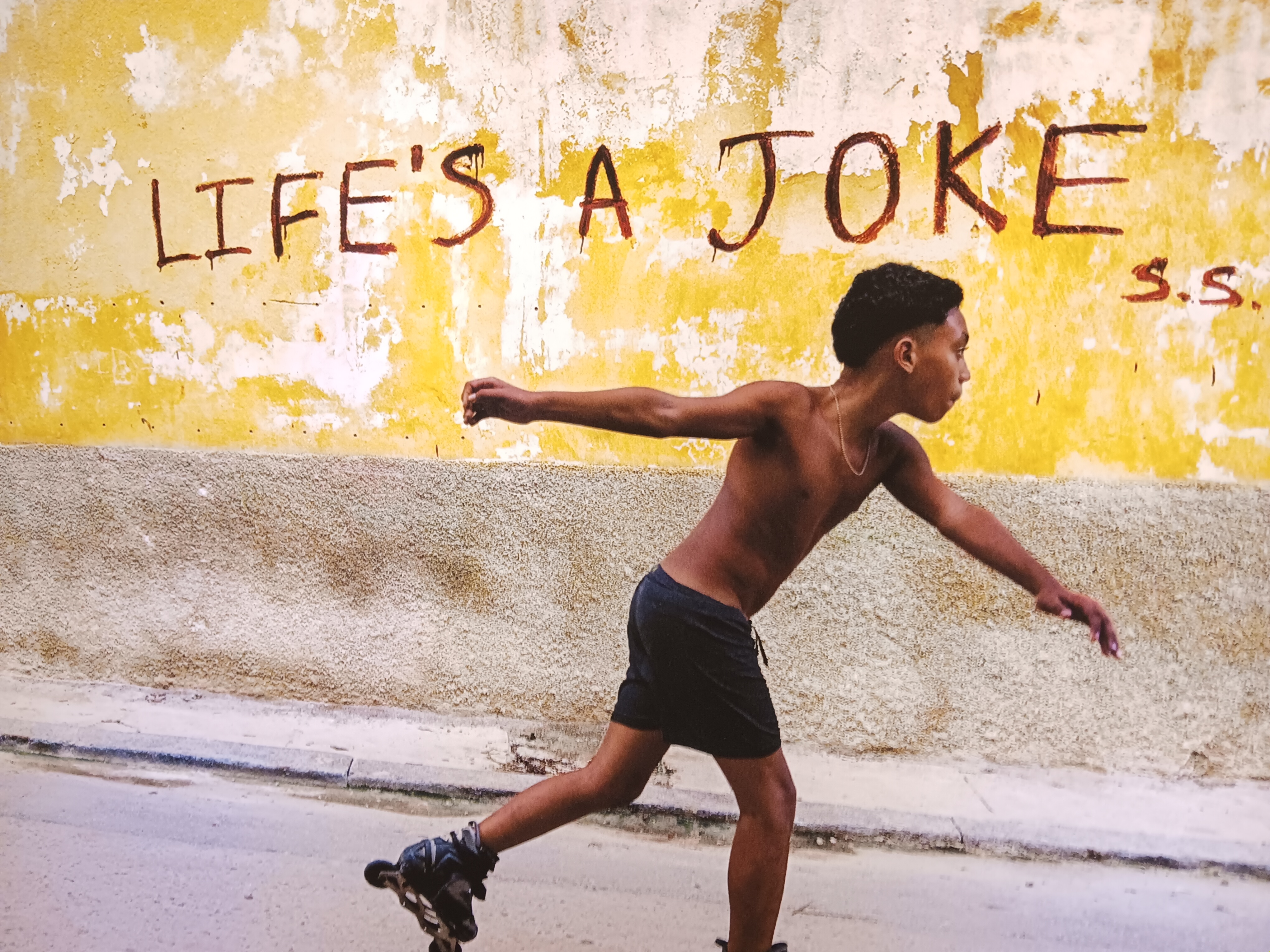
It is all that many young people can do to maintain their belief that “life is NOT a joke,” that it is worth trying, worth deferring, worth caring.  The relative cynicism and indifference of our age has clearly and much too often been visited on the young.

In response and in my own small way, what I try to do in these posts is to highlight “takeaways,” images or ideas that might stick with people long after they have logged off this blog.  The quotations which often adorn the front sections of these pieces are designed for that purpose.  You might have little use for what I have to say but also might have your week’s enthusiasm salvaged by excerpts from the accumulated wisdom of women and men who have struggled – in their time and ours – to reinforce the value of arising from slumber and facing life’s challenges, those which affect us directly and those not.

Today’s wisdom appropriate for this calendar flipping comes from Rilke’s “Book of Hours,” lovingly translated by Anita Barrows and Joanna Macy.  Among the glorious and passionate imagery in these poems, especially in the “Pilgrimage” section, I have been most captivated by the image of ripening (reift).  For indeed, despite the calling of great minds and artists in diverse cultures and over many generations, we have surely, by temperament and intent, remained an unripe species, stubbornly clinging to familiar vines and branches, refusing to mature as we were intended to mature, even taking pride in the metaphorical hardness generally characteristic of the unripe.

As Rilke reminds, we as a species continue to “entangle ourselves in knots of our own making,” knots which in essence cut ourselves off from the nutrients which ripeness requires.  Thus we continue our collective struggle, increasingly lonely and confused, scratching our heads as we seek to discern how yet another “well-meaning” policy has crashed and burned, how a species with so many reminding us of our potential for caring and justice could routinely practice such cruelty and indifference.

Folks, we can choose to make this the year to untie the knots and allow our species to ripen, to become what we were intended to become, what we must urgently become if our children and their children are to have a fighting chance of life as we know it.  This can be the year to ripen and then to harvest the best of us. Let us strive to make it so.

Wondrous and Mundane: An Advent Reflection, Dr. Robert Zuber

3 Dec

Space is still filled with the noise of destruction and annihilation, the shouts of self-assurance and arrogance, the weeping of despair and helplessness. But round about the horizon the eternal realities stand silent in their age-old longing.  Alfred Delp

The thing I love most about Advent is the heartbreak. The utter and complete heartbreak. Jerusalem Jackson Greer

Demons are like obedient dogs; they come when they are called.  Remy de Gourmont

There are wounds that never show on the body that are deeper and more hurtful than anything that bleeds. Laurell K. Hamilton

We don’t heal in isolation, but in community. S. Kelley Harrell

We were refugees from ourselves.  Chris Cleave

One should be kinder than needed.  R. J. Palacio

The science behind nudging is little more than a thin set of claims about how humans are “predictably irrational,” and our policies and systems should heavily divest from its influence. Leif Weatherby

This mere snippet of our Milky Way, for me and others, serves as a daily reminder of the incomprehensible vastness of our universe as well as the extraordinary “constellation” of ingredients – including our relative planetary isolation – which has given life on this “third rock from the sun” at least a “puncher’s chance” of sustainable survival.

For me, images such as the one above courtesy of Hubble and Webb, speak to both the nature of Advent and to the complexities of our human condition.  Somehow, someway, we are the beneficiaries of life-permitting distance from the black holes, massive meteor incursions, supernovas and other solar instability which punctuate our galaxy and which could easily hasten the end of life as we know it.  That we have not treated our planetary abundance with the reverence that our galactic positioning warrants is yet another example of our genetic and temperamental limitations, one more reason for all of us to pay closer attention to who we are, what we long for, what we actually cherish, and who we might still become, timing, courage and intention permitting.

Little of the above, of course, would make sense to those long ago, praying under galactic illumination for something or someone to come and redirect the course of humanity, any more than would the eventual, incarnate embodiment of this redirection – a child of cosmic implications and modest means huddled in a barn.

This Advent as with others, I have tried to highlight what for me is a compelling image of a figure in “lonely exile” sitting on the edge of hill beholding the vastness of space in a world without artificial light and the conveniences and distractions which it brings to our own time. How do we make sense of the brilliance and awesomeness of the firmament juxtaposed against the drudgery of much of life then as now, drudgery punctuated by the longing that something or someone can come to us – to our families and communities – providing balm for our seasonal heartbreak while restoring our largely broken hope, a hope that many of us have almost given up believing we have what it takes to bring it home for ourselves and those we cherish.

This “lonely exile” motif highlights some of the complexities of our earthly sojourn, reaching for the stars and yet compelled to attend to some oft-mundane human needs, scanning the heavens for signs of hope while remembering to plant the crops, feed the livestock, prepare the meals, wash the utensils, and change the diapers (or whatever passed for diapers in those times).  Even in Advent, for some of us especially in Advent, we are constantly being dragged back into the habits of our pragmatic busyness, our preparations for the season of the manger which are more about material satisfaction than about spiritual consumption, more about getting our worldly goods in their preferred alignment than honoring the one we had long had the temerity to anticipate, the hope for humanity born into a thinly veiled chaos of social discrimination, straw bedding and bitter cold.   

There is little that would help most in times past to anticipate or even make sense of THAT child in THAT manger at the end of a sequence of longing, reflection and even heartbreak. For more than a few, it makes even less now as we have more or less resigned ourselves to our addictive and even counter-productive politics and diplomatic convenings, accepting the production of ever-new weapons that can kill ever-more antiseptically, threatening the future of the children we proclaim to love in order to satisfy current cravings, and introducing ever new technological manifestations such as “Artificial Intelligence” which among other things underscores the failures of humans to fully cultivate the full range of our indigenous capacities, the memory, reason and skill which constitute our inheritance- — genetic and divine – and which should have placed us long ago on a saner, kinder, less predatory, more just and peaceful path than the one we now routinely tread.

My personal “path” to Advent has not always been as aware nor as productive as it could have been.  I often spend Sunday mornings in New York engaged in a combination of activities which help to cleanse my often-clogged, spiritual palate, and which almost always include skype calls with friends and colleagues and a visit to a nearby farmer’s market with my best neighbor. But another Sunday ritual with Advent implications involves a walk to a neighborhood park to take in the bells of Riverside Church. Sitting under a rendition of Gabriel and his trumpet, I often find myself wishing that the stone could magically turn to flesh and that the trumpet could finally sound out its urgent notes, signaling some desperately needed backup from the beyond, some fortification of our now tepid and at times even duplicitous efforts to reverse climate impacts or halt our various predations and the conflicts from which they stem.  Even I who have thrown my life (alongside so many others) into an unsettled pot of policy and service can at times give in to the temptation – indeed the heartbreak – of fearing that we (and I) just don’t have what it takes to straighten out the messes we have made, that the elements of our cognitive and emotional inheritance are simply insufficiently practiced and cultivated to save us from ourselves. 

But save us we must, with whatever human capacities we can bring to bear, hopefully to include the full range of skills and intelligences that we have been endowed with but have yet to fully energize.  To help this process along in my own life, when I am able and when the darkness enveloping me grants opportunity, I join the “lonely exile”in peering into the vastness of space as a means of recovering my sense of place in all its blessings and limitations, perceiving light reaching the end of its unintentional sojourn to earth spanning many thousands, even millions of our earthly years, light emanating from celestial bodies which now bear only provisional resemblance in real time to what the light reveals to us in our own time, light which also suggests that maybe we are not so imposing a species after all, indeed as much of our treatment of the natural world (and of each other) would already suggest.

For me, such revelations from the great void tend to shake me to my core. For is it not the miracle of Advent that despite our “failure to launch” as a species, despite our often lazy and self-referential engagements with our otherwise formidable capacities, despite our persistent bouts of “self-assurance and arrogance” in the material plane which routinely call out the demons of greed and indifference but less often the courage or the wonder, is it not a miracle of sorts that the vastness of cosmos and divinity has been mindful of us, has bothered with us in this time and place, has perhaps even taken us to heart at times more than we seem to have taken ourselves?

Indeed, is this not also the wonder of the manger from the standpoint of faith, this incarnate blending of the divine and the mundane, the peace which passes all understanding informing a peace to which we only occasionally give expression and which we often do not know how to effect even in our most intimate spaces? We have, to quote a Christian prayer book, “erred and strayed from thy ways like lost sheep.” But even more, we have set ourselves on the path to become “refugees to ourselves,” unsure how to fuse the wonder of the heavens and the chores of our immediate circumstances; how to reach for the stars and fetch the waters essential to this life; how to integrate humility and show kindness beyond that which is immediately required; how to heal wounds — together — which are often deep but which never physically show themselves; how to incarnate, cultivate and sustain skills and capacities which our world still needs and which we still have at the ready, albeit in forms too-often reminiscent of beautiful gardens overcome with weeds or sumptuous foodstuffs contaminated with mold. 

This is too much about we refugees and our limitations perhaps.  But if so, Advent can serve as a reminder to ensure that our reflections on the season are also about the best of us, the best of what we can imagine, the best of what we can desire, the best of what we can accomplish. The longings and mysteries of Advent and the coming of the manger child, for me at least, bear witness to many things, perhaps the most significant of which is that our collective best of skills and capacities remain as a formidable conduit for mercy and healing, for peace and caring. And somehow, by some measure of the grace we can barely comprehend, all this lies still within our grasp.

Promoting Servant Leadership in a World of Hurt, Dr. Robert Zuber

19 Nov

“The Closer you are to the Ground, the more Inescapable are the Inter-Linkages.”

Editor’s Note: Apologies for yet another post so soon, but we’re just starting to catch up with a fall season full of presentations. This is an edited version of a talk I was to have made to a class of Dr. Robert Thomas at the Scheller School of Business in Atlanta on Servant Leadership. If this was the talk that was given it would have been a much better experience for the students. But, alas, they didn’t get my best effort. Perhaps some of them will see this post and gain some benefit from it.

The assignment for today is some variation on the theme: How do we talk about matters like Servant Leadership in a world like this one?  How do we think about competent, attentive service to others in societies seemingly committed in these uncertain times to killing, starving, and marginalizing? How do we respond as a species given that we have not only failed to expunge the four horses of the apocalypse — war, famine, pestilence and death – but as Michael Offutt claims we have now added a fifth – misinformation – one made exceedingly more sophisticated in its potential for deception with the recent explosion in Artificial Intelligence.  

For me these questions are largely about synergy and self-scrutiny and have linkages to a longer personal history than it might otherwise appear.

When I was in graduate school, I participated in a Ways of Knowing project – based on a premise that what the disciplines do is different regarding how they gather knowledge and what constitutes knowledge from that perspective.  In conducting our investigations, we found that these differences are largely matter of priority and focus, not of kind.  There is enough overlap between what financiers know and what astronomers know that they can communicate with each other, beyond their unique expertise.  And it is better for the world, and certainly for the academy, that they do so.  People should be able to explain their methods and explore synergies with each other and should be encouraged to do so.  If Einstein could explain himself to the world, the rest of us have few excuses for note doing so.

This way of understanding the world in its inter-disciplinarity has had implications for what we have done for a generation at the UN which is to pay close attention to what diplomats are doing and saying and then remind them of the related conversations going on in other conference rooms which should be encouraged to enrich their own.  It isn’t “brain surgery” to recognize that poverty reduction, economies free of corruption and communities free of gender and racial discrimination are better prepared to pursue and keep the peace.  There are times at the UN, literally, when we seem to be among the few people who recognize – or cop to recognizing — that while we are talking about the Middle East in the Security Council, complementary conversations are taking place in General Assembly committees, in UNICEF, in the UN office of drugs and crime.  How do we explain away that apparent inefficiency? Why is it so difficult to have one comprehensive conversation, to put all our cards on the table in one conference room, to craft resolutions we can genuinely be proud of and which honor to full effect our promises to a world often in desperate need? Our perspective on these matters don’t make us particularly popular, but few would deny that the abstractions of policy we perpetuate at international level don’t always speak to concrete and interlinked needs and aspirations at local level.   

This third phase of the journey draws much from Dr. Robert Thomas of the Scheller School of Business and his “servant leadership” colleagues and is based on the belief that there is much to commend leadership that is directed fundamentally towards the well-being of colleagues and communities, that leadership succeeds best when the people tethered to such leadership are encouraged to thrive. Of course, the movement also recognizes that, in a variety of business and other contexts, we human beings don’t yet seem to be up to the challenges of these times, including the challenges related to servant leadership.  Too many of us shield our eyes from complexity.  Too many distract themselves from hard truths.  Too few sufficiently prioritize the well-being of others.  Too many accept the “logic” of current institutions and the judgements of peers too much at face value. Too many are suspicious of pretty much everything and everyone – except themselves.  Too many project on to others the faults which they fail (or refuse) to resolve in themselves.

And these aren’t just the folks hanging out at the Chick FilA in Decatur.  These are the people who are running our world, the people asking us for money and votes, the people who want us to believe that its just too much trouble for them to share and grow, to fix the inefficiencies and barriers that keep the world on pins and needles, that allow the headlines to be stolen, day after day, by media who believe that we consumers just can’t get enough of the shootings and invasions, not enough of the betrayals and corruption, not enough of the pictures of bodies piled up in morgues in part because people like me in the policy world simply haven’t kept our promises.

Of course, we can keep those promises, just like we can organize our businesses and other institutions to better care for colleagues and communities.  We can.  And there is no magic here.  We simply have to commit to being better people.  Me.  People like me.  People not like me. Better.

Well, saying it is one thing, but the proof is in the doing.  Again with full reference to the demands of servant leadership, we’ve embarked in support of a fresh initiative called by its founder Dr. Lisa Berkeley, “Inner Economy.”  Inner Economy: Recognizing our different intelligences, some which we greatly indulge in such as the conceptual and their abstractions which largely govern elite learning in a place like Scheller, but also the other iterations of intelligence in which we are largely left to fend for ourselves.  Cultural intelligence.  Ethical intelligence.  Even spiritual intelligence. We don’t often identify these as “intelligence” let alone pursue their distinctive forms of wisdom, their contributions to a life well-lived.  But they are essential to the relationship-building and skillful, pragmatic commitments to which servant leadership invariably points.

I want to focus on perhaps the most obvious and in some ways among the most neglected of intelligences, emotional intelligence.  In the world of our making, we don’t see the education of the emotions as part of the curriculum either of school or, increasingly, of life. 

Think about how we in education and policy approach the emotional realm.  Mostly we do with emotions what we do with most everything these days – we learn to brand and indulge and even weaponize.  People practice the “skill” of emotionally manipulating others, of “yanking their chains” as we used to say, so they will buy what is being sold, whatever that is.  Even to purchase things and ideas which may actually be against their own best interests, like folks who buy a car from Toyota because they think that Jan has a nice voice or purchase  a phone plan from AT & T because people think Lily is like the girl next door even though she is actually the girl from another continent.

There are a number of intelligences which have been identified and which fit snugly into a servant leadership framework. But none with quite the potential impact of emotional intelligence.

The fact is that, like our cognitive capacities, we can educate the emotions by which I mean helping to ensure that our feelings are understood by us and are relevant to circumstances we encounter in the world; that they are reality-based rather than based on habits of the heart that we metaphorically “drag” through our lives while trying – often with some sense of desperation — to both rationalize their existence and minimize their negative impacts.

What are some of the manifestations of under-educated emotions? This is a short and woefully incomplete list, but it does point to some of our emotional habits that impact our capacity for servant leadership, that we are reluctant to change, and that in some instances we don’t even recognize ourselves as having potential to change.  

  1. Jumping to conclusions based on limited and/or self-serving evidence.
  2. Positing and reacting to threats where none exist.
  3. Projecting on to others bad intentions which we are equally guilty of, or which we might in some instances be more guilty of.
  4. Creating enemies where they don’t and shouldn’t exist including by turning disagreement into disunity.
  5. Being overly sensitive to the moods of others and assuming that somehow, some way, those moods have something to do with us, even when they don’t.
  6. Using language primarily as a tool to create distance or establish hierarchies rather than to disclose or share.
  7. Assuming that people have more power over us than they do and that we have less power over ourselves than we have.
  8. Being overly suspicious of the motivations of others but not also of our own.
  9. Demanding more respect from others than we show to others.
  10. Talking yourself into making only the changes you are willing to make, not the changes you need to make.

I could go on. This list could easily be thirty items long or more. This is about you the reader, about me the writer, about those who run key aspects of your life and seek to run it going forward.

Here’s the rub.  We’re not going to have better policy until we have better policymakers.  We’re not going to have better communities and education systems until we insist on being better teachers, better mentors, better at empathy and discernment, better at putting the needs of young people and office colleagues in our front mirror rather than our rear one.   We are not going to have more supportive working environments until we master the skills of service and synergy based on a broader and deeper knowledge of ourselves and others, based as well on skills related to recasting more horizontal structures from our overly habituated verticals.  

This is good news and bad.  Good in that the changes we need to make are still within our power.  Bad in that we are running out of time to make them.  And every day that we fail to put the education of our emotions on our priority list is another day we threaten to drift further into emotional chaos, another day when the promise of servant leadership is undermined by a failure to reflect hard and practice harder. And in case you haven’t been paying attention to our increasingly frustrated, wary and traumatized communities, chaos is clearly hovering on our collective horizon.

Picking up the Pieces: Our Cautious Return to UN Spaces, Dr. Robert Zuber

16 Nov

Editor’s Note: This is a lightly edited version of a talk which I prepared as a contribution to the Fifth CoNGO Global Thematic Webinar organized by CoNGO president Levi Bautista and his colleagues. For several reasons, including being situated at the end of a long Webinar filled with interesting voices that did not always respect time, the session had to be concluded before I could share. Thus, I am posting here in case anyone is interested.

“Picking up the Pieces” is a reflection which tries to answer the questions, Why are you (GAPW) still here at the UN?  Why did you come back?

Indeed, after a year and a half of Covid exile, many of our closest colleagues decided to move on from the UN to other and perhaps “greener” pastures. 

We faced a similar set of choices, having lost funders, our office and much of our structure of associates and interns.  But unlike some, the decision we made was to find a way to put Humpty Dumpty “back together again,” or at least to create a facsimile of a program which looked enough like the previous iteration to reassure those who had come to expect a certain level of policy engagement from us.

And so, albeit tentatively, we wandered back inside a UN headquarters which had a very different “feel” to it than the place we left.  It was clear immediately that many of our favorite security officers and support staff had already taken their leave, to be replaced by people who often didn’t distinguish us from the tourists (or particularly care). It was also clear early on that many if not most of the diplomats were quite OK with our absence.  Indeed, the general indifference to our return (perhaps to others as well) seemed to be part of a larger “project” by some diplomats to return control of UN processes to their “rightful owners,” which is deemed to be the states themselves. Perhaps also to get out from under the “critique” that they once tolerated but no longer particularly needed or wanted. 

This “project” has actually intensified in more recent times as a group of influential states is resisting efforts by the UN secretary-general to create “multi-stakeholder” policy processes which, to their minds, threaten to undermine the state-centrism of the UN.  These states worry that “multi-stakeholderism” (as Harris Gleckman has referred to it) seeks to make too much space for both corporate entities (which in some of the largest instances pack a larger fiscal clout than a good portion of the UN membership) as well as to NGOs of various sizes, even including tiny groups like ours who value independence more than size and serving more than branding.  We recognize that we don’t “represent” a vast constituency nor are we likely to be held accountable for policy failures for which we haqve previously advocated.  We also recognize that we represent a demographic which is white and western, one which definitely needs to shift to younger and more diverse representation. We don’t have thin skin when we are rebuffed or ignored, but we also recognize that in some key aspects the policy world has moved on to a different phase if arguably not a better one. 

But back to the question at hand.  Why come back to the UN without either a salary or a welcome mat?  What can be said regarding our motivation here?

For one thing, being at the UN helps satisfy a deep need to contribute in hopefully distinctive ways, to engage a world of policy in a more personal and holistic way as we have advocated over many years. When you have the opportunity and ability to contribute to the alleviation of global threats, however modestly, you should find the ways and means to do so. When you have the opportunity to contribute to important matters across sectors and issues you should definitely find ways to make those contributions as well.

But beyond this, a UN-based option for discernment and service also has the tangible benefit of helping to preserve my own sanity. Whatever level of agency we are able to muster regarding a range of often-frustrating, globally challenging issues preserves more mental health than merely stewing over endlessly discouraging headlines from a newspaper or online feed. Agency is catharsis. This is true for us who are fortunate to experience some of that direct benefit, but it is equally true for the many who still lack their fair portion of impact and influence, a portion which must swiftly be made available to them. 

I am grateful to the UN for the places wherein we have been privileged to engage over many years. But the seats we occupy do not belong to us and we want them to be filled now by people who are younger, multilingual, more culturally and politically diverse.  With our institutional memory and general level of policy attentiveness, there is possibly always some way that we can help turn a tide or help someone get situated such that they might turn a tide instead. There might well be some chance that a young person who was thinking about a career in finance might decide to take their talents into the policy or even humanitarian domains.  There might also be a chance that a suggestion we have formed about a policy or institutional structure might be adopted by a state looking for new ideas or a new way to frame older ones.  

For us, inside the UN, there is always that chance, a chance to inspire someone to act beyond their mandate, a chance to put ideas in the ears of diplomats who can then send them up the policy food-chain to some tangible benefit, a chance that change can be facilitated in part through the simple acts of witnessing and providing feedback. And a chance to insist that the UN do all that it can to be one of those places that governments trust to help lead all of us out of our self-imposed wilderness. 

But it is the turn of others now, the turn of younger perspectives and energies to help save all of us from ourselves. I could die tomorrow and there certainly are some besides my landlord who would gladly welcome that outcome.  But there is so much to be done now through younger agency as our planet burns and explodes, so much bureaucracy and (dare it be mentioned) corruption to overcome, so much distrust among delegations under cover of diplomatic niceties, so much pro-forma honoring and thanking that needs to become both more genuine and action-oriented.

This system that we have resided in for a generation needs to breathe fresher air and we can hopefully still do our small part to help keep the windows open to new ideas, new aspirations and especially new solutions to our many threats and challenges.  We can also help provide  a bit of extra motivation, in the words of former-General Assembly president Csaba Kőrösi, for diplomats to craft resolutions that we can all be proud of, resolutions which not only sound good and achieve the consensus of member states but which bear within them prospects for implementation which any genuine promise requires.  When we announce a resolution, people expect that something important in the world will change – and so it should. And so it must. 

Yes, it would have been easy to throw in the towel after over a year in exile and the loss of an office, staff, funders and more.  And yet we were able to rebuild most of our modest contributions to global governance while also increasing the self-reflection that helps us be more honest and leads to more satisfying and inspiring relationships with global colleagues. Part of that self-reflection centers on what we who operate at UN headquarters owe civil society partners in other parts of the world, people struggling with a range of problems not of their own making, people who are not listened to nearly enough, people who have little input into resolutions which in turn represent promises with too little impact on the lives of the residents of their communities. 

These are the people who need to be able to represent themselves, to plot and pursue their own aspirations, to care for the people and places they love.  These are the people who need to sit with us, reflect with us, teach us, respond with us. With whatever time we have left, with whatever agency we are able to sustain now, we want to contribute to a system where this representation is both impactful and commonplace. I can’t promise that our species will make it until and unless this happens. 

Saving our Personal World, Dr. Robert Zuber

25 Oct

Dear All,

I have been having issues across all our communications mediums but have been writing a bit in response to the horrors taking place in and around Gaza, horrors which now occupy large swaths of public consciousness displacing, for the moment at least, other theaters of despair in Syria, in Sudan, in Myanmar, and in too many other global settings. Those who have felt compelled to “weigh in” on Gaza have too-often done so in ways that have created more enmity than clarity, providing views and “advice” which situations and peoples in crisis neither want nor need. My own response was probably too strong in its admonitions. This piece seeks to rectify as well as to clarify.

I wanted to follow up last week’s post which was not shared all that widely, perhaps for the best.  It was, as you may recall, focused on the vast iterations of “weighing in” which have taken place since the Hamas attack earlier this month, sharing which often “jumped the gun” regarding key facts and insights, but also sharing views which (as with the attack and response itself) often have a long history of their own. This horror story unfolding on our screens and feeds has many brutal precedents punctuated by occasional bursts of hope and sanity, brutality which surely could have been resolved long ago if the so-called “great powers” had a mind to do so.  It is unclear now who exactly has the courage at present to do more than put a cork in a bottle full of highly flammable liquid, to address the misery in drips and drabs (as we have now started to do) until the next wave of destruction seizes control of our minds and our media, ripping open the wounds which we have demonstrated the will to treat but not to heal.  

Amidst all the images of carnage in Gaza, amidst the settler-related and other violence taking place in the occupied territories and threatening to break out on other of Israel’s borders, two things struck me once again this week.  First off are the stories of people responding to circumstances they did not create with a kind of bewildered fortitude, digging through the rubble to help pull out neighbors and perfect strangers, awaiting death while standing between Hamas fighters and family members huddled in a bomb shelter, burying and mourning over children not their own, searching for words to compel their erstwhile “leaders” to suspend ideology and theology, to silence the guns in a way that is sustainable and dignified for all.  

Of course we have beheld stories of profound ugliness as well, people filling guns and missiles with hate as well as with explosives, seeking to vanquish the “other” altogether under cover of “protection,” people committed to punish far more collectively than their immediate adversaries.  This of course is no surprise as armed conflict is notorious for bringing out some of the worst of our human condition, the demons we tolerate and then seek to objectify, the demons which continue to control a more sizeable slice of human motivation than our faulty politics and religion would have us believe. 

In addition to these stories, for people who do what I do (and for an increasing number of others as well), the violence which floods our senses is no mere abstraction. We not only know about conditions of deprivation, we know people deprived.  We not only know about conditions of armed violence and its consequences, we know people whose very lives have been claimed by it.  While perhaps not about family members and close friends, the conflicts, the tragedies, the disasters, these and more have a human face, a face we can both see and recognize.  

I had few aspirations as a child aside from surviving childhood, but one of them was to have friends in all corners of the world.  This need to make and keep the world “personal” has been the source of great heartbreak and at times anger, but also of meaning, a connection to stories, values and practices about which I still know too little, but about which I would know nothing of importance if not for friends and colleagues in places from Brazil to Cameroon and from Lebanon to the Philippines.  And yes, from Israel and Palestine as well. 

It is just different when the crises about which we read have echoes in our own memories, our own circles of concern, when the flesh that decays in other places has connection to our own flesh, when the breaking of the international norms which now hang by a thread affect directly those with whom we have also broken bread. 

I do wish that people would take more care to ensure that their “sharing” on crises such as those unfolding in Gaza moves the needle on our common humanity rather than creating conditions and excuses for additional division. But this can be a tough sell, a tough ask, in situations where the overt violence of the moment is merely the latest movement in an endlessly long and discordant symphony.  But it is important not to compound division with divisiveness, not to compound the consequences of an increasingly suspicious and abstract world by relinquishing our own connection. 

One of the best stories from this week involved two friends of differing cultures who found themselves driven apart by the “sides” they had taken on Gaza.  The story was in part about the division stoked by opinions that were stronger than could be supported and which erected walls which were not immediately intended to be traversed.  But the real story was about the reconciliation, the “I love you” at the end of a sequence largely defined in the short-term by “I don’t understand or agree with you.”  

While the wounds of conflict continue to fester, and as we live in considerable and genuine dread over the state of the world and its victims some of whose paths we have crossed, we have a responsibility to preserve as best we can a world which is personal, a world where disagreement does not inevitably lead to division, a world where dignity and healing constitute the flow-through of our commitment to each other.  This is a bit naive to be sure, but I see no other way to get us across the self-inflicted abyss of violence, corruption and greed which are now swallowing up large swaths of human potential on our warming planet.

If you have other suggestions, I’m all ears.