
Tag Archives: biodiversity

Earth Year: A Call to Clarity of Hands and Hearts, Dr. Robert Zuber

2 Apr
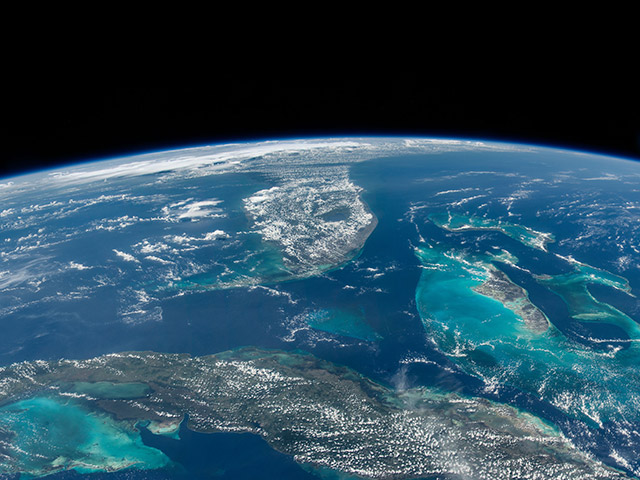
Florida, the Bahamas and Cuba as seen by the International Space Station.

From NASA

The holy men say we are entering a period of clarity. Rigoberta Menchu

The greatest privilege is to live well in flourishing lands. Hamza Yusuf

Virtue can only flourish among equals.  Mary Wollstonecraft

For millions of years, this world has been a great gift to nearly everything living on it. Rebecca Solnit

If beautiful lilies bloom in ugly waters, you too can blossom in ugly situations. Matshona Dhliwayo

Peace is the creation of an environment where all can flourish regardless of race, color, creed, religion, gender, class, caste or any other social markers of difference. Nelson Mandela

Around the globe, people from all walks of life are holding their breath in the hope that a flurry of activity at all levels of policy and human community will be sufficient to reverse what is commonly known at the UN as the “triple” planetary threats from climate change, biodiversity loss and pollution (especially plastics pollution).  

The UN has seen its own frenetic activity as leaderships tries to both make up for precious lost time while encouraging member states to take more political risks and step-up ambitions to find more robust and cooperative measures to address threats which clearly are not inclined to wait for us to make the change we need to make in order to secure a future for our children, especially those children residing in the most climate-vulnerable regions.

The UN has certainly created numerous spaces for member state deliberations on virtually all aspects and dimensions related to the “triple threat,” including implications for human health (mental, physical and nutritional), for international peace and security, and for more inclusive processes which not only heed the voices of women, youth and indigenous people but which actually seek to incorporate their learning and insights into policy decision making.    

Some of these processes, as many of you recognize, take the form of large, carbon-intensive events which create some consensus-driven movement but generally lacking in practical implementation of pledges which fully mirror their rhetorical origins.   Case in point is the fund for “loss and damage” agreed to at COP 27 in Egypt, an important step which has yet to generate the remedial funding which the most climate affected states had anticipated (and still anticipate).  Diplomats also agreed recently on elements of a treaty to impose structures of governance on ocean areas beyond national jurisdiction (BBNJ), a theoretically important framework to mitigate at least some of the “wild west” mentality which has encouraged massive ocean dumping and deep-sea mining and has also precipitated a decline in ocean species as waters warm and the remains of our collective overconsumption now reach the furthest ocean depths. The recently concluded UN Water Conference resulted in over 600 pledges (albeit voluntary) to strengthen “trans-boundary water cooperation, promote universal sanitation and explore security and other implications of severe access challenges regarding this most precious of resources.  The General Assembly for its part passed a unanimous resolution (sponsored by Vanuatu and others) seeking clarity from the International Court of Justice regarding the legal obligations of states whose production and consumption patterns, as noted during the week by UNEP director Inger Andersen, now serve to threaten the very existence of other states.   Even the Security Council got into the act recently as Mozambique chaired an Arria Formula discussion on protecting water-related infrastructure.  But despite what (to us at least) seems like an obvious linkage between a dangerously warming climate and prospects for armed conflict, several Council members past and present remain unconvinced that climate concerns should be folded into the Council’s peace and security mandate.

This bevy of activity (we didn’t even mention the biodiversity conference in Montreal or the Forum on Forests) is welcome but can also obscure the fact that most of these commitments are voluntary, are unenforceable or constitute some subtle form of “greenwashing” which leads people beyond UN confines to think that more is happening to forestall disaster than is actually the case. Having been around the UN for what seems like forever, we understand well that in large multi-lateral spaces facilitated by the UN, spaces filled with diplomats representing national positions and increasingly insisting on elusive consensus, progress is likely to be slow, perhaps too slow given crises weighing down human community like a bad case of COPD.  It certainly seems as such to the growing number of youth environmental activists who, despite their energies and practical commitments across the globe, still struggle for their place at the policy table to help ensure progress that is more than textual and rhetorical.  Indeed, as one youth activist noted during the days of the UN Water Conference, holding these large eco-events in expensive UN cities literally ensures that many of the people who wish to present testimony regarding the effects of and responses to climate change, pollution and biodiversity loss in their communities – testimony unmediated by diplomats and NGOs like me – will continue to experience great difficulty in doing so.

While some turn red at the suggestion that the UN isn’t doing enough on a range of environmental challenges, the troubling consensus of senior UN leadership (and many of the rest of us) reveals a serious disconnect between what is needed, what is being proposed in response, and the risks that member states – including some of the world’s largest polluters – are willing to take in order to preserve healthy options for succeeding generations.  And because states in the main are not doing enough despite some claims to the contrary in UN conference rooms, the rest of us are thereby encouraged to not do enough also.  Indeed, to our minds at least, the mass of discouragement experienced about the state of the world by many is another unfortunate consequence of rhetoric that is not matched by concrete policy support for the actions at community level, actions which ultimately have the most to do with whether or not the current “triple threat” becomes what Costa Rica referred to recently as a full-on “death sentence.”

Thankfully, there are many communities and individuals from all walks of life who have refused to have the potential for abundant living by their families and communities sidetracked by misleading policy utterances including those from senior officials which are insufficiently hopeful or mindful  of the vast and increasing web of environmentally healing measures proliferating worldwide.  From habitat restoration and community composting to organic agriculture, bee-keeping and tree planting on a massive scale in countries like Pakistan and across the Sahel, people of all ages and cultures are seeking a new clarity, refusing to be distracted by either doom and gloom or passive indifference.  They have not given up on prospects for a world which can genuinely flourish for many more people, a world which remains plausible despite the circulating metrics from competent researchers associated with insects decline, plastics inundation and sea level rise.  

The UN, for all its contributions and deliberations, is not really in the “flourishing business;” indeed it is at its best a place which provides a policy platform to support and enable work which needs to take place elsewhere. But we know how easy it is to get distracted by the glamour of UN conferences or discouraged by the sometimes-dismal reports emanating from UN sources which such conferences often do too little to address.  We must remind ourselves that what both glamour and doom have in common is that they are poor recruiters for hopeful, virtuous, collaborative activity at community level which can do much to rebalance our world of sometimes gross inequalities, a world which we have been told much too often has reached or even exceeded survival “tipping points.”   

In this momentous year for the earth and our presence within it, we must not allow ourselves to be deterred by the eminence and capacity of our large institutional frameworks and spokespersons nor allow ourselves to retreat into smaller circles of life in an attempt to protect what is closest to us from the “ugly” storms looming over an uncertain horizon. We cannot survive the storms by ourselves, but the truth is that neither can they be survived without us.  In this Earth Year, we all need to urgently recalibrate the sustainability of our own lives; but perhaps even more importantly we need to help ensure that millions more people now situated firmly on the sidelines of climate action are encouraged and supported to lend hands and hearts to prospects for planetary abundance, such that more and more of us and other life forms might “live well in flourishing lands” on a planet we are running out of time to truly love. 
COP Out: Rebalancing a Fractured Harmony, Dr. Robert Zuber

23 May
See the source image

The goal of life is to make your heartbeat match the beat of the universe, to match your nature with Nature.  Joseph Campbell

Food and the human spirit have become estranged.  Masanobu Fukuoka

You must answer the call and pick your way. And there is no reverse.  J.R. Ward

We are the witnesses through which the universe becomes conscious of its glory, of its magnificence.  Alan Watts

In the end we shall have had enough of cynicism, skepticism and humbug, and we shall want to live more musically.  Vincent Van Gogh

If nature were not beautiful it would not be worth knowing, and life would not be worth living.  Henri Poincaré

It is one of the ironies of our time that, while concentrating on the defense of our country against enemies from without, we should be so heedless of those who would destroy it from within. Rachel Carson

As most of you know, a week of violence in the Middle East ended with yet another cease fire, an agreement that stopped (for now) the aerial assaults from Israeli bombers and Hamas missiles but which had little immediate impact on the bitter fruits of occupation, the settlements and demolitions, the ethnic cleansing which proceeded apace in areas of Jerusalem on which, apparently at least, the cease fire agreement was presumed to have no palliative impact.

And then there is the wreckage across Gaza, a postage-sized land already suffering from human deprivation and environmental degradation which now lies once again in ruins, a testament to the diverse and damaging consequences of armed conflict that a cease fire exposes but hardly cures. In Palestine as in so much of the rest of the world, there is a misleading quiet now, one bearing little prospect of harmony with our adversaries or with the planet we share.

I know that this lack of harmony, this willingness to cast aside cynicism and “humbug” and live more “musically,” is not unique to this moment. Certainly since the beginning of the industrial age, and likely much longer, we have demonstrated an almost genetic predisposition to unharmonious relations with our world and with each other, exploiting resources for personal gain, defending even when defense wasn’t necessary, justifying aggression in the name of religion or nation, taking more than we need and sharing less than we should.

But this time feels different. The warning sirens blare more loudly now, especially on climate change and species extinction. The bombs we use to punish adversaries are are both more explosive and more technologically clever now. The policy promises we make to each other are increasingly subject to caveats and political expediency. The institutions we have established to protect us from ourselves are proving incapable in many aspects of adjusting to evolving threats, including from extremist groups, climate risks and community-killing drought.

Our world seems often like a band that is not only out of tune but where the musicians seem committed more to compete for attention than to share in the “glory and magnificence” that our music can generate, that our world can generate as well if only we would commit to being its reliable and sensitive agents. Indeed, there is a concern in many quarters that the shrill notes emanating from our competitive and self-serving actions are drowning out the sirens that continue to blare their unsettling omens, blasting messages of urgent appeal to those who are still able to listen and heed the warnings, messages indicating that our time is limited to bring more harmony to our fractured world, to finally and sustainably make our own heartbeats “match the beat of the universe.”

Needless to say, this is no easy task. Many who used the opportunity of pandemic lockdown to establish a better work-life balance or shift their personal priorities know a bit of how difficult it can be to reset ourselves, to practice and then maintain vigilance regarding those things about each of us that threaten “destruction from within.” And once we move from our domiciles to the wider society, harmony becomes a far greater challenge. Indeed much of our personal “resetting” has as one of its objectives increasing our ability to manage the demands and stresses of a human world often spinning out of control, often failing to fulfill even the most fundamental of its values and commitments.

And yet the desire and demand for this greater, global harmony has not entirely disappeared, does not entirely verge on the edge of the extinction that now threatens so many of our fellow-species. Even in the hyper-political environment of the United Nations, a place where we routinely confuse resolution with commitment, consensus with harmony, there are growing community concern about the consequences of human “estrangement,” from our food to be sure, but also from the complexities of the natural world and even, perhaps especially, from each other.

The UN Secretary-General Antonio Guterres and the president of the Economic and Social Council, Pakistan’s Ambassador Akram, seem determined to convince the UN community of the “war on nature” that we insist on conducting, a “war” we are ultimately waging on ourselves, a “war” that too-easily spills over into active armed conflict and enables future pandemics, a “war” we are simply incapable of winning. And yet, amidst the week’s policy oxygen consumed by the violence in the Middle East, UN events also took place that reminded us of the ticking clock signifying our current, potentially-irreversible course as various human practices damage biodiversity across the spectrum, not only the large species we tend to identify with but a large food chain of both enormous complexity and increasing susceptibility to the onslaughts of our current, unsustainable levels of production and consumption.

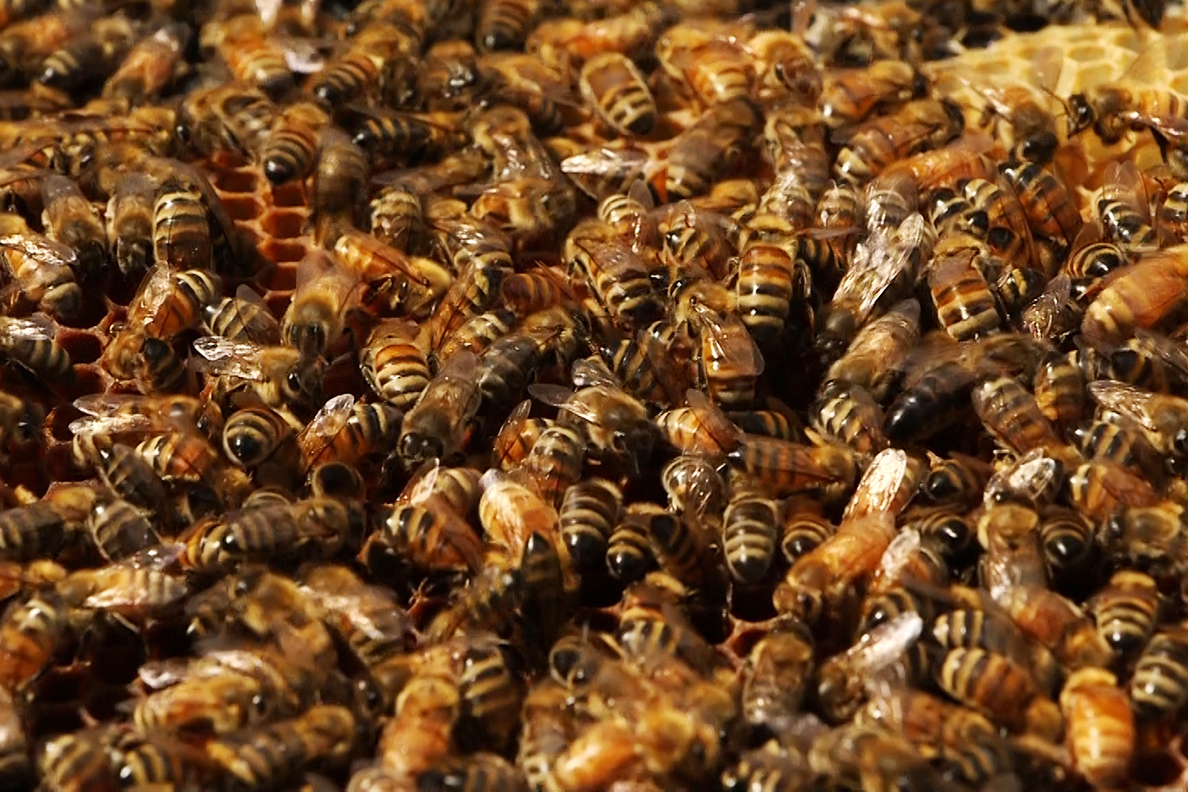
One of those was the annual event sponsored by the Mission of Slovenia to honor “World Bee Day,” a session that could easily seem trivial alongside a week of coups and famines, missile launches and crimes against humanity. But as my friends who keep bees and raise plants that attract their numbers recognize, bees and other pollinators are both endangered and crucial to life on earth. Indeed as this event noted, perhaps 80% of what nourishment humans consume requires essential input from bees. Moreover, the concept note crafted by Slovenia links endangered bees to a range of other biodiversity and ecosystem threats, noting that “current negative trends are projected to undermine progress towards a high number of the assessed targets of the Sustainable Development Goals related to poverty, hunger, health, sustainable consumption and production, water, cities, climate, oceans and land.” As we continue to pave over wetlands, degrade farmland, plant non-native species and denude forests, the damage we inflict on the smallest of our life forms exacerbates conditions which directly threaten the largest and most clever among us.

The other event of note on this theme was a preparatory meeting, hosted by the Mission of China, to encourage enthusiasm for the “COP15” meeting on biodiversity protection to be held next October in Kunming. China’s Minister of Foreign Affairs along with senior UN officials lent an air of gravitas to this session which was thankfully less about advertising and branding and more about our urgent biodiversity decline and the immediate need, as expressed at this session by the president of the General Assembly, to both enhance local ownership of biodiversity protection and factor in the importance and value (writ large) of nature into all our policymaking.  Too often, he noted, a tree is only ascribed value in this world once it has been felled.

And many trees continue to be felled in all global regions. In a discouraging report released this week by Forest Trends, it appears that trees have incredibly been brought down faster in the years since companies and governments promised to stop cutting them down. And another report recently released by a consortium of European researchers put the spotlight on one of the underlying drivers of biodiversity loss, namely our willfully and habitually “unsound” management of chemicals and waste, once again despite formal promises to the contrary.

It is reports such as these than temper the enthusiasm of myself and others for these large COP events, which tend to create environmental footprints far deeper than their policy impacts and promise far more than they ultimately deliver. Yes, we need immediate, tangible progress on biodiversity as we do on climate change and ocean health. But are the upcoming COP events any more likely than previous ones to shift policy dynamics in discernable ways? Are they at all likely, to paraphrase the GA president, to enable more robust action at local level, to help local activists, in the recent words of one, build bridges wide enough for everyone to cross over our current abyss and reach another side characterized more by harmony than chaos? Are they likely to sustain the buzzing of bees and other insects that still manage to overcome our collective assaults and fill our markets with produce? Are they sufficient to reset our notions of value such that we understand more than we apparently do now that a beautiful, harmonious and balanced world is ultimately essential to current and future lives worth living?

With full regard for activists struggling to maintain their voices and their sanity in this “kill the messenger” time, we in our sector must do more, will do more, to insist that these COP events serve interests beyond the branding of host states, that their ecological expense is calculated in more than mere dollars and cents, that their deliberations are as urgent as the problems which have merely multiplied on our watch, that their outcomes don’t simply add to the long list of promises misplaced or incompletely kept. We need more than political declarations from our leadership, more than grand sessions leading to perfunctory outcomes. If indeed, as Ambassador Akram noted on Friday, this war on nature is actually a war on ourselves, then we have no excuses for postponing a truce, ending our deep estrangement from nature, and reversing the biodiversity loss we are running out of time to address.

This band of ours needs to be brought back in tune without delay. Our farewell tour as a species may be closer than we think.

Bee Keepers: Bending the Curve of Life under Stress, Dr. Robert Zuber

4 Oct

By the Late Tara Tidwell Bryan

If your daily life seems poor, do not blame it; blame yourself, tell yourself that you are not poet enough to call forth its riches.  Rainer Maria Rilke

That bird sat on a burning tree and sang the songs that this creation had never heard before. Akshay Vasu

The monster I kill every day is the monster of realism. Anaïs Nin

 If we take care of the world of the present, the future will have received full justice from us.  Wendell Berry

I don’t know how one can walk by a tree and not be happy at the sight of it?  Fyodor Dostoyevsky

We were all forged in the crucible.  Gayle Forman

Because God took one look at Adam and said, ‘Wow. This guy’s going to need all the help he can get.’ And here we are.  Nancy Mehl

I had a lovely and important message this week from a former intern now working in Vienna.  A Polish citizen great of skill and big of heart, she lamented her current assignment with a multilateral agency, not out of ingratitude so much as impatience to move beyond bureaucratic maintenance towards those issues in the world that now beckon so many in her generation.  As she put it to me, “I wish one day I could do something that actually matters.” 

The stakes are high for this generation and the need to matter is often acute.  Indeed, I think we under-estimate the longing of many people of all generations and life-circumstances to have or recover lives that matter more, incorporating higher levels of significance and even adventure than their daily routines and “realisms” generally encourage.

Many of us scoff at people of middle age who harken back to secondary school as the highlight-reel of their lives.  But there is a clue in this that we are in danger of missing and are, in turn, endangered by missing.  I remember listening to family members talking about their military service with a fondness that exceeded most all of their story-telling.  That fondness, I was quite convinced, was related not to the violence of war but to the significance of service.  This was a time in their lives when what they were doing really mattered, when the merits of their sacrifice were both encouraged and honored in a way that, in many instances at least, had not happened to them since.  Few listened to them anymore.  Few sought out their advice or paused to hear their stories.  Their service was “past tense” but so was its mattering.  What was “forged in the crucible” of war had become voices largely of nostalgia, almost empty of any larger impact.

Staying on this theme, I have seen so many photos since the recent, dismal US presidential debate of “patriots” who have been dubbed (and denigrated) as right-wing warriors, folks apparently preparing for some sort of “war” with their fellow-citizens, testing the limits of official response (and implicit permission) by grabbing their guns, donning military-style gear and taking to the streets to “defend” some makeshift iteration of morality, order and legacy.  Without endorsing one iota of the tendency to conspiracy and lawlessness, I also wonder how long what I see in their faces and hear in their words has been simmering?  But it is apparent that, in part due to a self-serving shout-out by the US president, these folks matter now, more than they have perhaps mattered in many years.  Their ideas and actions have consequence again, both for their own self-worth and – as they see it at least – for the future of their country.

There is no part of that truth-defying intimidation and incitement that I can support; but as someone whose ideas and opinions on global issues and the “psychology” of our collective responses carry more weight than they surely deserve, I don’t overlook the fact that the people who do matter in this world continue to represent an all-too-small subset of the people who should matter. And some of these folks, in ways that are sometimes both violent and reality-challenged, are now declaring their insistence to matter.

The irony for me in all of this is that there are now so many crises vying for higher levels of attention and response, many of which have been either enhanced or exposed by virtue of the current pandemic.  At the UN this past week alone, three events of existential importance, mostly virtual, called attention to threats that we have not done nearly enough to mitigate and for which we lack both full disclosure from leadership and sufficient hands-on-deck to truly care for our present and do “full justice” to our future.

All three of these High Level events were dripping with opportunities to matter, and all attracted a bevy of senior leadership from the world’s governments.   Friday’s discussion on nuclear disarmament highlighted the dangerous expansion and/or reintegration of “modernized” nuclear weapons capability into national strategic defense doctrines, complete with threats to resume nuclear testing and move offensive capacity into outer space.  There was also some reflection (mostly by Palau and other small states) on the impact of excess military spending on funding access for development needs and related global concerns including those highlighted in the UN General Assembly earlier in the week.

One of those concerns took center-stage on Thursday as states convened to assess the impact, 25 years on, of the Beijing Platform for Action on women’s equality.  With statements (mostly by men) lasting well into the evening, one leader after another delivered prepared and often unremarkable statements seeking to convince us that gender equality is both indispensable to peaceful societies  (surely right) and  lies at the very heart of their domestic policy — though equality progress in many of these societies remains limited at best.  Perhaps the presidents of Luxembourg and Costa Rica put it most helpfully as they focused their remarks  on enhancing the “practical dimensions of equality” at a time when “not one nation” can claim to have achieved the goals of Beijing.  “Not one.”

Lastly, Wednesday’s High-Level event was, to my mind at least, the most urgent of the three.  On this day, world leaders and others convened virtually to assess the rapidly declining health of global biodiversity  on land and in the sea, a decline so precipitous that it directly threatens the health of our agriculture, indeed calls into question the viability of the entire food cycle, not only for ourselves but for the still-abundant life forms with which we are still privileged to share this planet.  And while most of us are rightly appalled by the sight of slaughtered elephants and emaciated polar bears, biodiversity loss is felt most acutely at the lower levels of the biological chain:  the bees which are disappearing from our farms and gardens, the insects whose presence is no longer in sync with the birds who need them to sustain their migrations, the coral reefs which have been bleached into oblivion by warming seas. The image offered up by the director of the UN Development Program, of trucks full of bees traveling  to save California farms from unpollinated crops, was a stark reminder of how disruptive we collectively continue to be to the natural rhythms and needs of our now abundance-challenged planet.

The science on this potential mass extinction event we seem determined to create is clear.  As UNSG Guterres noted on Wednesday, we must now find a way to “bend the curve” on biodiversity loss and we are running out of time to do so. Such bending requires more thoughtful attention to economies pitched more to destruction than protection. But it also requires more initiative and activity at local level, urgently appealing to those many people (including and especially indigenous people) with the energy and skill to matter: to help lay the groundwork for a future in which loaded guns, clenched fists, predatory economics, bloated military budgets and unresolved inequalities and exclusions no longer have pride of place.

Such a future must also be more attuned to the very human though often unrequited desire to matter.  A young woman from India speaking at the biodiversity summit responded to what she interpreted (and not without reason) as a string of often “empty statements” by global leadership:  “We are ready to do our part,” she intoned, “Are you?” 

Like my former intern, this young woman is clearly determined to matter, and there are many millions more like the two of them. Our task now is to get back to work on what ails us as a species and as a planet, in part by getting to the heart of what it means to matter, what people of diverse backgrounds require such that they can call forth more of the “riches of life” for themselves and for all with whom they come in contact. It also means learning how to better accompany each other as we “sing the songs that creation has never heard before,” including songs revering the presence of the bees, the trees and other life forms on which our own survival depends and that we simply must do more to keep.  

Animal Planet: The UN seeks more Effective Governance of a Natural World in Crisis, Dr. Robert Zuber

8 Mar

This space is normally taken up with grave matters like Security Council disagreements over Ukraine and the shape to come of peacekeeping operations.   But this week, another dimension of global gravity took center stage, one with security implications that go significantly beyond the urgent needs of Small Island (SIDS) and Lesser Developed States.

On March 4, the General Assembly held an informal plenary to commemorate World Wildlife Day.   Much of the content of this event was welcome, including Germany’s efforts on behalf of a ‘group of friends’ to remind other states, to quote the UK, “that we overlook wildlife trafficking at our peril.” There was also an admission by the US that ‘we have been part of the problem and wish to be part of the solution’ and a warning by Kenya that unchecked wildlife poaching could threaten fulfillment of the SDGs in many countries.

The next day, a group of states sponsored a ‘One Ocean’ event that was ostensibly focused on the value of ‘ocean sanctuaries’ but which also issued a deeper call for a more profound biological sensitivity than we are currently practicing.

One current theme in the “One Ocean” event was the important role of science in alerting us to environmental threats and helping to provide data sets to guide sound remedial policy.   As Ambassador Thomson of Fiji science can provide evidence of negative human impacts on climate and help us mediate the space separating “prophecies of doom” and living with our “heads in the sand.”

The two events were complementary in some measure, primarily in their insistence on more effective governance of eco-threats. The tenor of the “Wildlife” event was less about appreciation of the complex web of life we are still privileged to enjoy and more about the economic and security implications of insufficiently protected animals such as Tigers.   Needless to say those implications are considerable especially for states for which wildlife-related tourism is a major source of income as well as states fighting the insurgencies for which trafficked wildlife parts constitutes a major source of potential revenue.

But as the BBC reminded us recently in the context of a program on China’s elephants, the greatest threat to their existence (if not our own) is no longer poaching but habitat destruction.   In other words, while there are still threats from criminal elements and terror groups seeking to pad their accounts through the sale of Rhino horns and such, the larger threat of habitat loss is one that is our common legacy. And it is a quite dangerous matter, as we are now by many accounts in the beginning of what some describe as an epic species extinction, the repercussions of which elude firm scientific forecasting.

‘Habitat’ seems like a fairly simple matter, like putting up an A-frame house and turning on the heat and water. But in the natural world, life forms struggle to adapt to and synchronize with other life forms on which their very existence depends.   This linkage was especially highlighted at the “One Ocean” event. We have undermined functional synchronicity with an appalling lack of sensitivity, threatening to extinguish ourselves as much (if not as quickly) as the many other essential contributors to our web of life. In that context, the Netherlands’ insistence seeing oceans through a biodiversity lens as much as an economic or development lens was most welcome.

In addition, the words of Palau’s president Remeingesau rang particularly true when he insisted that the SIDS “are already living what science is telling us.” Science can, indeed, tell us much about the climate impacts of what Ambassador Thomson referred to as our “blind exploitation of resources,’ the status of our dwindling fish stocks and ice caps, the sources of pollutants that are affecting migrating ocean wildlife, and much more. And we need to listen carefully, as one senior diplomat after another insisted. But science can’t always forecast implications, it does not have the power by itself to “regenerate” entire oceans, and it certainly cannot provide actionable incentives to large scale behavior change. Science can (and thankfully does) provide ample evidence of our folly, but it can offer no clear remedial pathway. Such a pathway must come from another place, a place open to inspiration towards meaningful change. As Israel noted, we simply must do more at many levels to better help us resist “spoiling a world that none can fix.”

Human beings have become, sometimes even with glee, reckless predators that not only crowd out other life, but compromise our own existence.   With all due respect to the need for more global governance on oceans and biodiversity, we now seek to govern the movement of horses in a barn whose door has long been ajar.   We migrate to cities in record numbers, in part for economic opportunity but perhaps also in the mistaken belief that cities represent a fortress against an influx of degraded biodiversity that has our fingerprints all over it. Our policymaking is now very much a product of our increasingly urban mindset – ignoring the needs of farmers, consuming with little recognition or remorse, mistaking the predictability of our urban parks for genuine attempts to reacquaint ourselves with natural processes. This pattern is clearly not the pathway we seek.

When I was a child, I discovered that the only way to get out of a swamp when you’ve lost your way is to back out the way you came.   Trying to outsmart the swamp only gets you in deeper with even less control of potentially unsavory outcomes.   It may be time for us collectively to back out the way we came, to abandon the current obsession with using technology to ‘battle’ our way through global challenges rather than retreat to firmer ground on which we can reflect and assess. If we continue to defy and disrespect this ‘swamp’ of our own making, we might one day find that we and our closest, domestic animal companions are all that remains of a planet once teeming with life.

During the “One Ocean” event, Ambassador Sareer from Maldives reminded the audience that there are cultural and “national identity” implications of climate health. Ambassador Cardi of Italy insisted that the health of future generations was much more likely to be guaranteed with healthier oceans.   All of this is true and none of it is sufficient.   We need better eco-governance and more scientific input at every stage.   We also need more compelling norms to stimulate more urgent climate-healthy behavior. As a principle, norm-making, global institution, and as the origin of much of the international community’s current climate change interest, the UN’s role and responsibility in species and biodiversity protection should remain in the spotlight going forward.