
Tag Archives: climate

The UN Security Council and Climate Change:  Struggling  to Connect the Dots, Dr. Robert Zuber

6 Jul

Editor’s Note: This piece was written in response to an invite from a university in Kenya, a zoom presentation which never materialized due to communications issues related in part to the unrest which had exploded in Nairobi in late June. So….here it is for you to read if you so choose. I hope its worth your time.

I want to begin this presentation to all of you with a sober look at where we are vis a vis the climate crisis.  Put simply, we have collectively failed to address climate risks and, in the case of the wealthier countries, have failed to meet our obligations to climate victims.  The burdens of climate change are felt by all including displaced women and an increasing number of women farmers, but they are not responsible for the growing climate-related carnage.  These people, like most of you, are suffering from a crisis they did not cause.   

Here at the UN, we continue to pass resolutions with levels of enthusiasm  for implementation which tend to drop as soon as those resolutions are adopted. On climate, the threat is felt acutely in small island states and in the Sahel, but not quite as much in most middle income and wealthy states, precisely the states responsible for the bulk of global emissions. Even when the rhetoric is sufficiently urgent, Council climate action continues to fall well short of what is needed.  Young people have in some instances filled the leadership gap created by older persons on addressing climate risks; and yet for many young people the preparations they are taking in their lives, their studies, family matters and more  are likely confronting a future of extreme heat, equally extreme weather events, growing threats of  food insecurity and I would add life insecurity as well.  You in this university audience didn’t do this to the planet, and you don’t deserve the consequences  either.

It is commonplace to note this, but how we assess in life is largely a function of what we expect, and it is the expectation of many young people that we aging folks from the west in our relatively comfortable contexts should have done more, could have done more to stem the increasingly inevitable climate tide.  What were we thinking?  Were we thinking at all? 

And if we were thinking at all, what were we thinking about?  About gender-balancing our climate action? About helping to unleash the diversity of youthful  talents across the world that can break through some of the policy bubbles and stale air which exist in the diplomatic world?  Were we metaphorically thinking about “sharing the ball” with youth and others which is the only way human civilization can possible win this game of climate ruin?

There is  at least a growing sense within the international policy community that climate change is, at least, a conflict multiplier that the climate is evolving much quicker than we have the ability to address, including its impacts on international peace and security.  But there is also a growing sense, and I agree with it,  that we have mis-positioned our climate action, focusing much too much on the activities of officials and diplomats making (and often failing to make) climate policy largely through resolutions without “teeth” or through large international events which burn more carbon than make change, rather than on communities seeking pathways to more resilience and abundance.

From our base in New York, we have identified and assisted programs around the world which are attempting to promote inclusive, gender sensitive local lenses on sustainability.  My favorite of these is Green Map (greenmap.org), a set of tools including culture-specific iconography to help local communities identify environmental assets and liabilities,  to use mapping to reintroduce people to the resources and habitats which are worth protecting and which make their communities special.   Our slogan – think global, map local – is symbolic of a deep belief that we will never fulfill our climate or sustainability goals without pragmatic engagement by local leaders in all global regions, including many more women and youth participants.

While affirming local action in all we do, I often sit in a very different place, in the UN Security Council, which has an uneven relationship with the climate issue.  It could even be said that the Council also has an uneven relationship with its own Women, Peace and Security agenda, an agenda 24 years old with a host of gendered gaps and discriminations still largely unaddressed.  On climate the pattern is similar: recognition by some Council members, especially elected members, that climate is a major contributor to conditions which make conflict more likely.  On the other hand some members simply don’t see the linkage, or  think that climate issues should be handled by the UN agencies tasked specifically with climate or other environmental matters.  The concern here, made most forcefully at the moment by Russia, is that there is a division of labor in the UN and that these divisions should be respected.

But while mandates may have similar force, the mechanisms of enforcement do not.  Russia and other Council members know full well that while Council resolutions are often ignored, the Council at least has Charter-mandated coercive tools at its disposal that other UN agencies do not.  And if the Council cannot make states uphold their promises on issues such as gender and climate, then the hands of the full UN are surely tied in terms of enforcing any agreements whatsoever – including climate agreements. 

Some Council members are fighting back, more and more, recognizing that we have set forces in motion that promise more violence, more misery, more displacement and that we must robustly address those forces. These states recognize that the Council can fulfill an important enabling role vis a vis the UNs climate priorities without usurping the authority of the agencies tasked with responding to this crisis.

One example of this “fight back” occurred during its Council presidency of the United Arab Emirates in June 2023, as that delegation tried to rally Council colleagues to take climate risks and their implications for peace and security with the urgency they deserve.  It should also be noted that the UAE at that time was also prepping the Council as well for its COP 28 presidency which ultimately turned out pretty much like all the other COP events – burning more fossil fuel than changing the course of climate threats and making promises of change that are generally  not kept.  But this meeting was at least asking the right questions about the Council’s role in ensuring more diverse climate action and remaining seized of the many ways in which climate change makes conflict more likely.

This quote from the UAE’s Concept Note set a proper tone:

Climate change is the defining challenge of our time. Its interconnected consequences – intensified extreme weather, rising sea levels, food and water insecurity, biodiversity loss and heightened health risks – jeopardize human life, livelihoods and ecosystems and have an adverse impact on national, regional and global stability.

And, as also noted in the Concept Note, climate change has implications for the entire peace continuum including those who are unjustly excluded from participation in peace processes:

The gendered impact of climate change has significant implications for international peace and security. Women and girls are disproportionately affected by the adverse effects of climate change, including food insecurity, displacement and increased rates of conflict-related sexual violence. Moreover, women are often excluded from decision-making processes related to climate change mitigation and adaptation. Evidence shows that, by leveraging the role of women as agents of change, gender-sensitive work on climate change and peace and security can serve to advance both stability and gender equality.

This is good policy language from the UAE but of course it is only language.   Little or nothing changed as the result of this meeting.  Little or nothing changes as the result of most Council meetings as much as the global community, sometimes desperately, needs to see evidence of change. Is there a missing ingredient here beyond politics?

I think there is.  As we discuss often here in NY, there is a human dimension to this crisis which we ignore at our own peril.

Whether the Council or other international institutions embrace their responsibility to address climate risks in a timely manner or not, the changes to our world are coming quickly, more quickly than we had originally anticipated, and we seem unable as a species to respond in kind.  We are in many ways, and more than we generally acknowledge, creatures of habit, and those habits make it difficult indeed to shift our course, even when we want to do so, even when are survival depends on us doing so.

Those of us in the west and beyond know of threats to agriculture from multiple climate related impacts including increased drought and flooding, but we (especially in the west) continue to eat and otherwise consume largely as we always have.  We know of threats to biodiversity but we continue to cut down forests, destroy habitats, and plant non-native and fertilizer-intensive plants in our gardens.  We know about  increasing prospects of climate-related disasters including massive storms and pandemics, but we continue along as though we possess some immunity from those impacts.  We know of threats to our ocean environments, but our collective addiction to plastics waste remains largely unchallenged. 

The climate-conflict nexus is in part about the effectiveness of our global policy and in part about we as members of local communities, the sustainable examples we set, the people and actions we inspire, the habits we are prepared to change.  We know something is very wrong.  We feel the heat.  We experience the growing frustration, anger and suspicion at community and national levels. But can we adapt?  Can we learn new skills, can be more mindful and compassionate towards the created order, can we break out of unsustainable habits?  Can we take the data urgently provided by scientists and turn them into sustainable amendments of both policy and life? The jury is clearly out on this.

As we contemplate our resistance to change, I want to end with a couple of quotes from a recent report from UNICEF on climate impacts affecting future generations, which likely directly  applies to you. The report notes that,  “Environmental degradation, including the climate crisis, is a form of structural violence against young people and can cause social collapse in communities and families. Poverty, economic and social inequalities, food insecurity and forced displacement aggravate the risk that children will experience violence, abuse and exploitation.”

There is also a quotation in the report from a young interviewee:  “The environment is our life.” Adults [should] stop making decisions for the future they won’t experience.”  

Taken together, this is quite an indictment of our collective failure to meet this urgent moment. Yes, we should stop making decisions for people and start making decisions with them, with the people who will have to live with the threats we have left for them, threats of gendered and racial discrimination, threats from abusive governments, threats from an overheated world which can no longer preserve biodiversity or support healthy agriculture. And yes we old folks and our institutions of choice (including the Security Council) have reinforced, inadvertently or willfully, strubborn conditions of structural violence which make it harder than it ever should be for young people across the world to chart a more sustainable course for their lives.

A world of increasing climate threats, including threats of armed conflict,  is a world we are running out of time to prevent, and it is the country I call home along with other large consuming states which need to make changes on emissions and consumption quickly and permanently.  We the people of largely undeserved privilege  owe it to the rest of the global community  to somehow reverse our current, unsustainable course, reminding ourselves frequently that the clock on such reversal is loudly ticking.
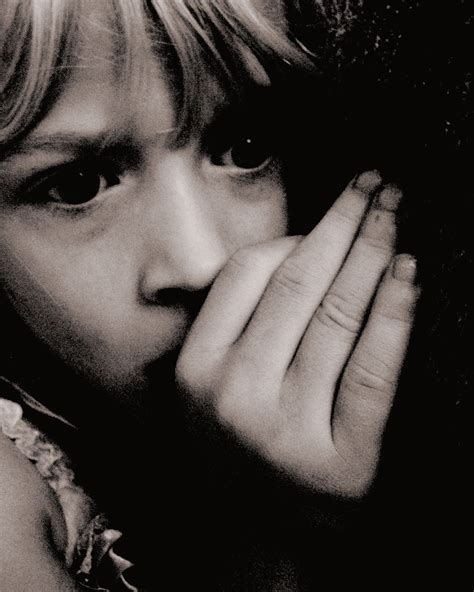
Unfocused Fear: Threats to Persons and Policies, Dr. Robert Zuber

29 Mar

The cave you fear to enter holds the treasure you seek. Joseph Campbell

“Because fear kills everything,” Mo had once told her. “Your mind, your heart, your imagination.”  Cornelia Funke

When we are afraid, we pull back from life. John Lennon

We can easily forgive a child who is afraid of the dark; the real tragedy of life is when men are afraid of the light.  Plato

I have accepted fear as part of life – specifically the fear of change. Erica Jong

Here is the world. Beautiful and terrible things will happen. Don’t be afraid.  Frederick Buechner

Do one thing every day that scares you.  Eleanor Roosevelt

I was recently co-moderating a conference on climate and security in South Africa with financial  support from my dear friend, Lois Whitman.  The conference was the fourth stop in a journey which included rendezvous with several former and (hopefully) future friends and colleagues including inspirational Green Mapmakers in Johannesburg and Cape Town. It also included robbery and assault which left me without credit cards, very short of cash, and with a left arm needing attention which I could not figure out how to get while on the road.

But the show must go on and, with help from my friends including Hussein Solomon, Benji Shulman and Philip Todres, I was able to make every appointment, take care of conference participants and get back to the US for the treatment I would have done well to have gotten in South Africa if only I had the cash  to pay for it.

The conference was organized (not entirely successfully) to provide African regional perspectives on how climate change impacts human security.  The voices we had organized from places such as Algeria and Kenya, Cameroon and Lesotho were to be joined by MPs and civil society voices seeking to get a handle on context-specific climate threats with context-specific implications for agriculture, civilian protection, the well-being of children and much more.  Climate change may not be the “cause” of instability in its diverse geographic settings but certainly is a multiplier of all that instability is and can be – people who can no longer work the land to benefit; people who must keep their children ever-close because of dangers associated with being out in public; people who see no way out of the climate vice except to pack their belongings and try to find more receptive pastures.

It becomes clear in conference events such as this one (despite visa problems affecting some on-site participation) that we know quite a bit about the current climate trajectory and its implications for the already vulnerable.  But despite what we know, despite what scientists and others continue to warn, we seem generically incapable of moving beyond our comfortable habits, of taking the initiative to clean up our messes and prepare the table of life for those who will inherit all that we are destined to leave them – elements of progress to be sure, but also the errors that compound the grievance and mistrust which characterizes so much of our current social fabric.

One of the conference participants at the University of Free State took the floor to raise a similar concern – not to amplify the metrics of the trouble in which we now find ourselves but to wonder if we humans are up to the task of preserving and remaking a world on more sustainable terms.  Do we actually have what it takes?

Such a pronouncement was not interpreted kindly by all participants, but it was music to my own ears.  Our collective analysis, in the end, is often deficient in its integration of the human element, humans whose circles of concern are often seen to be collapsing, humans who can seemingly rationalize any abusive action, humans who are adept at circling the wagons but not so much at figuring out why anyone could possibly be upset with us in the first place.  Except in relatively few instances, we refrain from moving in the direction of pain or deprivation.  We convince ourselves much too often that there is nothing we can do about the current avalanche of threats from near and far and so we shut the doors and windows and hope that the cascading  snowfall  at least leaves us a hole to breathe.

We know enough about climate tipping points to know that time is of the essence.  We know as well that we are reaching a tipping point on conflict – that global enmity and mistrust are pushing us closer to pointless wars waged with weapons capable only of unjustifiable carnage, unleashing a form of collective punishment which makes the horrors of Gaza seem like a warmup act.

In listening to my South African colleague, I began recalling the origins of my interest in the character – policy nexus, an interest by the way which has subsequently not always resulted in the character growth or policy savvy for myself which I had hoped.   

For me, those origins can be tied in good measure to a slim volume published in the 1970s, “Between Faith and Reason: Basic Fear and the Human Condition,” by Francisco Jose Moreno.  I was drawn to his adept synergies between the realms of psychology and philosophy, the importance of tying “what we want” to “who we are” including what he refers to as those “partial and self-serving explanations of ourselves” which we hide behind in an attempt to manage what he refers to as “basic fear,” the unfocused fear generated by the testimony of reason that there is much insecurity afoot about which we can seemingly do little, too many people, businesses and institutions seeking our undoing, too little trust in the context of solving problems whose severity is approaching points of no return.

What moved me about the book long ago, especially the earlier chapters, is his adept description of the “hide and seek” we commonly play as we deploy our rational capacities in a limited and circumscribed manner while engaging in what Moreno calls “the desperate search to find something to believe in.”  In this context he highlights our predisposition to “attachment to the familiar,” attachment which is rarely the subject of rational scrutiny and which we often defend with vehemence and even self-righteousness. Criticism, even that which is thoughtful and well-meaning, is so often responded to with anger or dismissiveness, two sides of the same coin when we are committed to a life in which we tend to “feel first and then we justify.”

I won’t bore you here with a thorough review of this work (I wrote one in 1978 probably not worth referencing), but I do want to highlight some of his concerns and predictions which are still relevant almost 50 years later and which provides sobering analysis regarding the question of whether or not we are “up to the task” of shedding unhelpful habits and unthoughtful affiliations, up to the task of building healthier communities in a more sustainable world.

  1. Moreno has great regard (as well he should) for the rational capacities of humans, our ability to “see beyond our instincts” which is both the source of our hope but also the source of our fear.  However, he also points out a problem that plagues us in the present – that we are as likely to employ reason primarily as justification for behaviors with dubious, non-rational motivations.  Indeed his concern for society is grounded in his view that, for too many of us (and for all of us from time to time) we are committed to “not allowing reason to interfere with what we already believe to be true.”  We are as likely to create misguided forms of propaganda through reason than clarity about the world and more especially about ourselves.
  2. Moreno rightly highlights the “psychological dependencies” that are akin to rooting interests, causing us in too many instances to over-rate those things (or groups) to which are attached and under-rate (or even disparage) the other.  Such “under-rating” can take some nefarious forms, including in not-so-extreme instances discriminatory practices and inflammatory rhetoric.  We all know this drill in the present: the essentializing discourse, the self-protectiveness, the self-serving judgments of anything that is “not us,” the privileging of our own entitlements and grievances.
  3. Moreno also laments what he saw as our devolving notions of “freedom,” something which we increasingly “idealize” but something we actually “make little use of.” He points out, rightly I think, that freedom now has less to do with assessment of potential choices and more to do with incarnations of personal preferences.  “Doing what I want to do,” is now the principle  characteristic of our freedom-laden ideological rhetoric, with “wanting” almost entirely a function of “how we feel,” and with reason lurking in the background mostly to help us ward off and altogether avoid anything which might cause us to pause, to reflect, to assess and, God forbid, to change course.
  4. The “God forbid” part leads me to the final insight from Moreno, the degree to which the “desperate search for security” has in large measure morphed from religious to political contexts.  What some would claim to be a more “rational” pursuit inasmuch as politics are “in the world” rather than in institutions attempting to explain a resurrection, virgin birth or the parting of a sea, Moreno claims that this is more rightly understood merely  as a shifting of “dependence.”  As with much else in our modern world, the goal for many is not giving reason license to help sort out our lives, make our religion more compassionate and our politics more just, but in using reason as a tool for mask-making, to hide behind romantic love, professional status, material acquisition or religious/political affiliation in an effort to blunt the fear which our uncertain human existence is highly-suited to evoke and which seems to offer few remedial pathways other than “pulling back” or what Moreno called “plunging into dogmas.”

On this Holy Weekend for Christians it is not my intention here to disparage either religion or politics which I could surely not do with a straight face.  The intent rather is to point out  with more than a tinge of sadness, that the integration of reason and faith, the ability to examine and overcome our ossifying “habits of the heart” and chart a more peaceful and sustainable course, our will and capacity to eschew the unexamined life, this and more continues to elude our grasp, stoking frustration and mistrust in our communities and policy centers. More than we acknowledge, we humans are more than a bit stuck at this moment — stuck with our thoughtless rooting interests and affiliations, our policy resolutions that mean well but have no teeth (see Gaza), and our vast material and technological inequalities which undermine any viable prospects for trust in each other while creating demonstrably more horror than beauty in our world.

We can do better. We can be more thoughtful. We can plunge into practical compassion rather than into dogmas. We can unstick ourselves. We must try.

Bomb Shelter: Deferring the Risks We are Expected to Face, Dr. Robert Zuber

24 Aug

All choices are fraught with peril, but inaction is the most perilous of all.  Frewin Jones

To become spring, means accepting the risk of winter. To become presence, means accepting the risk of absence. Antoine de Saint-Exupéry

A bend in the road is not the end of the road…Unless you fail to make the turn. Helen Keller

To really ask is to open the door to the whirlwind. The answer may annihilate the question and the questioner.  Anne Rice

To save all we must risk all.  Friedrich von Schiller

The desire for safety stands against every great and noble enterprise.  Tacitus

Burning bridges behind you is understandable. It’s the bridges before us that we burn, not realizing we may need to cross, that brings regret.  Anthony Liccione

I have been asked often over these past two weeks by widely dispersed colleagues about the 10th Nuclear Non-Proliferation Treaty (NPT) Review Conference taking place this month in New York.

While I no longer expend enough energy on the issue of nuclear weapons to be branded anything but an active onlooker, I have spent more time in these NPT sessions than I might have done otherwise.  This is due to the (relative) lack of policy activity inside the building, the exceptions this past week including some appropriately moving tributes to humanitarians killed or injured in the service of others and another policy event designed to extend treaty protections for the oceans and its biodiversity to areas beyond national jurisdiction (BBNJ). 

While many stakeholders came to New York in the hopes of informing the NPT and BBNJ negotiations, to ensure that urgency rather than propriety dominated the affective policy landscape, processes continued the post-pandemic trend in UN spaces of calling for NGO involvement on the one hand while marginalizing it on the other.  Despite a few glimpses courtesy of short, infrequent plenary sessions, the BBNJ has been conducted almost entirely in informal sessions to which our collective participation is largely unwelcome.   The NPT has offered more opportunities to watch the proceedings but rarely to challenge their content or direction.  Moreover, the most important of the discussions, those taking place in the “subsidiary bodies” have been almost completely off-limits to those, many with considerable expertise themselves, who dared (foolishly or otherwise) to risk time and treasure (and burn considerable carbon)  in yet another attempt to ensure that delegations embrace a larger portion of their generally under-implemented treaty obligations and otherwise “meet the moment.”

Aside from stakeholder marginalization, what the NPT and BBNJ process have in common is that both are treaty processes dealing with what are widely regarded as existential threats to our very survival as a species.  The humanitarian consequences of nuclear weapons use have been in full view since the “duck and cover” days of my youth, and more contemporary efforts to modernize arsenals (as opposed to de-commissioning them) have produced weapons which are quicker to deploy, more powerful, better able to avoid detection and other features which provide little comfort to those tracking the impacts of nuclear explosions on our already violence-prone and over-heated planet. 

In much the same manner, our oceans are rapidly approaching their own tipping points as water temperatures and sea levels rise, as the PH of the oceans continues to slide towards unhealthy metrics and as the open ocean remains in some of its areas a massive water-borne dump for ocean-going vessels and other polluters with degraded plastic becoming an increasingly prominent feature of the diets of marine wildlife.  As we need an NPT which is functional and accountable, especially to its disarmament obligations, so too do we need a BBNJ process to result in treaty obligations that extend and amplify our concerns for the oceans beyond national jurisdiction to the ubiquitous areas of our inter-connected seas negatively impacted by human activity.

In both instances, there are grave reasons for concern.  The clock is ticking on both existential threats, and it is clear from the vantage points that we are still able to occupy that there is insufficient urgency on the part of delegations and negotiators to create and/or move existing agreements forward in ways that both speak to this uneasy moment and serve to bring us back from the brink of a ruin which we (including our policy leadership) have literally brought upon ourselves. We have created space to deliberate on this ruinous state of affairs but have largely failed to ask the questions that might set off a “whirlwind” of change beyond the narrow confines of diplomatic control. We have spent much energy (and wasted the energy of others) in an attempt to justify the unjustifiable, such as recent Russian nuclear weapons threats against Ukraine and the US position that, despite all evidence to the contrary, my government is upholding its commitments under Article 6 of the NPT.  For those of you fortunate to have escaped previous iterations of this double-speak, Article 6 is the disarmament pillar of this treaty, a condition which has been piously flaunted for the most part by the nuclear weapons states since the NPT first entered into force.

When colleagues ask us about the status of treaty negotiations and/or review, they are largely asking about functional levels of urgency in evidence amongst the delegations.  Do the people responsible for creating normative and/or legal frameworks to help ensure a future for human and other life genuinely understand the dynamics of this precarious moment?  Do they understand that the “inter-governmental processes” which they increasingly seek to protect from the undiplomatic utterances of those of us focused on doomsday clocks rather than UN clocks, that these processes and the “consensus” outcomes which more often ensure non-compliance than inspire its opposite have simply not yet delivered the goods, have not allowed constituents to rest easier or, in many cases, to rest at all?

After countless hours in UN conference rooms, I still wonder myself.  More to the point, the colleagues reaching out to us about these treaty processes are generally expressing more anxiety than confidence, more skepticism than gratitude. They are asking, as we might also, questions more human than diplomatic, questions that go beyond the diplomatic calculus of sufficiency to the wider concern of a world in flames that those tasked with response have done too little to remediate.

Is the diplomatic community both authorized and willing to turn a corner when a corner urgently needs to be turned?  Are they prepared to engage the hard (and possibly unauthorized) questions and not only the ones which will “cause no trouble” to their permanent missions or careers?  Can they properly assess the bridges we have carelessly burned such that we also avoid burning the ones we will need to cross over to escape the damage wrought by our endlessly tepid policy outcomes and the sometimes-misleading promises they communicate to constituents?

The polarities of the UN community’s relationship to risk have been clearly evident over the last week.  On the one hand are the humanitarians, those who feed and protect under dangerous conditions, those who lay their lives on the line to compensate for the policy failures of the states who pay the UN’s bills and largely – increasingly unilaterally – govern its policy processes.  And while peacekeepers are being attacked and humanitarian workers are being abducted, we fail to resolve the conflicts which threaten them (let alone prevent their occurrence). We continue to speak in repetitive tones in this UN space about “leaving no one behind” without communicating clearly that we understand the dramatic political and economic risks which need to be taken  in order to address what in our complex human history would be the fulfillment of a genuinely unprecedented SDG mandate.

And so we go forth in a system made up of often-bewildered civil society organizations, NGOs who too often reinforce a game we are running out of time to change, and diplomats who represent positions, often ably, which they largely do not create themselves.  Ours (if I might be so presumptuous) is a system which privileges consensus, not as an aspiration but as a de-facto veto, resulting in resolutions and other obligations likely to be implemented only in part if at all, documents couched in language likely to inspire only states already walking the pathways which our oft-compromised resolutions and treaties seek to define.

 As diplomats continue their work to create documents on which all can agree if not commit to actually implement, we continue to send willing soldiers, security officers and aid workers into the field, people who have worked through their need for safety in order to feed and clothe, house and protect those facing the ravages of war and terror, of drought and flooding, of environmental degradation, of exile from familiar people and places.  We continue to send them into the conflict zones we have not been able to resolve through political means, into zones of deprivation courtesy of endemic economic inequalities and a climate crisis which we are seemingly willing to allow to devour what is left of our forests, biodiversity and ice caps.

We know that diplomats around the UN generally work hard.  They are skilled at compromise, at pouring over text that would make the eyes of the rest of us glaze over.  They are also able to keep the windows of diplomacy open, to refuse to allow personal or national grievances to impede the potential for negotiating progress.  But their energy is not the energy that global constituencies can easily relate to, the energy that communicates that we are genuinely in trouble, and that we are willing to do what is needed and all that is needed to remove threats to our existence while we are still able to do so. 

Moreover, that we are willing to put more of ourselves on the line; we who function mostly within our bureaucratic and career bubbles, we who cannot pretend not to know, not to know what is coming, not to know what will happen once it comes, once the tipping points of violence and environmental degradation have been crossed for good.

If the processes at the UN these past two weeks are any indication, especially with regard to the NPT, it is still unclear if delegations can move beyond their training and instructions and convince the global public that they truly understand the moment.   We will find out tomorrow if global constituents have been misled once more by rhetoric insufficiently backed by devotion, the sort of energy that keeps humanitarian actors seeking out lives to save in our numerous killing fields.  Given the likelihood of insufficient movement, it behooves us to remind delegates that constituents deserve more than summary overviews of a month-long engagement, more than pledges “to do better next time.”

They deserve an apology. 

Wobble World: Calming our Personal and Planetary Shaking, Dr. Robert Zuber

25 Apr
See the source image

Wake up. If your eyes are sleeping then wipe them gently. You need to be awake for this. It is a matter of life and death.  Kamand Kojouri

Longer than an earthquake, a pandemic shakes your life and living. P.S. Jagadeesh Kumar

There is nothing stable in the world; uproar’s your only music.  John Keats

On what slender threads do life and fortune hang!  Alexandre Dumas

As anywhere else, political instability provided an opportunity for local scores to be settled, for personal grievances to be aired, for heroes to be acclaimed and discarded.  Charles Emmerson

Instead of a stable truth, I choose unstable possibilities. Haruki Murakami

Humans can’t be strong because of the comfort & can’t be comfortable because of instability.  Sonal Takalkar

April is my favorite month of the year.  The gentle rains.  The longer sunlit days. The moderating temperatures.  The lightening of human moods, even in the midst of a pandemic that has lasted longer than most could have predicted or imagined, at least the moods of those of us privileged by health care access and vaccinations in a world still waiting – and waiting some more – for its fair turn.

And of course the trees and flower beds bursting with color.  In the north, April is the month that reminds us city dwellers of nature’s capacity – assisted in many instances by some truly remarkable urban gardeners – to regenerate itself and thereby tweaking the human race regarding the need for its own regeneration, its own need to recalibrate its relationship to the rest of the natural world, to (as UN SG Guterres says) “stop our war on nature.”

All this “Earth Week,” amidst a bevy of UN meetings alternately hopeful and maddening, I have been taking multiple, daily walks through nearby daffodil hillsides and under cherry blossoms and tulip trees.  I’ve also been spending evenings binge watching (for me) the stunningly filmed BBC nature programs hosted by the indefatigable David Attenborough.  I can’t get enough of either, not this week, not this month.

But all the color and the natural drama, the beautifully manicured parks and other scenes of a natural world bursting with new life also come attached to a blinking warning light, a warning that the flowers and species that make our hearts race are now under siege.  The biological rhythms that keep life in balance, indeed that help keep potential pandemics in check and our agriculture functional, are increasingly out of whack.  As our lands dry and our seas warm, species from bees to whales must find alternate survival settings on a planet increasingly hostile to their interests.

This “uproar” in the natural order, largely a consequence of human activity, is increasingly hostile to our own survival as well.  Those of us who are trying to stay vigilant, trying to stay awake and focused on our increasingly wobbly planet, seem so often to possess in our persuasive arsenal more warnings than we have solutions.  We know that deforestation ruptures food chains, destroys biodiversity and increases the likelihood of future pandemics at a moment when we have barely regained any firm footing from the current one. We know that our collective food security is regularly undermined through conditions from drought and flooding to soil erosion and the absence of pollinators. We know that levels of ocean plastics threaten to contaminate sea harvests on which many of the world’s peoples depend.

And we know that a warming planet continues to release both abundant methane into our atmosphere and vast quantities of precious fresh water into our oceans, altering both temperature and pH. In addition, a recent article by Brian Kahn chronicles the growing evidence that a combination of ice cap melting and groundwater depletion is causing a “wobble” in the very stability of our planet, a shifting (subtle for now) in the movements of the “rotational poles,” shifts in gravitational pull related largely to rapidly rising sea levels.

As the world wobbles on in response to our carbon addictive warming, so too do many of our fellow humans.  As noted at the UN this week, the current pandemic has been a boon to garden-variety narcissism but also to criminality in diverse forms – trafficking in persons and weapons, violence against cultural minorities, even the consolidation and expansion of extremist movements.   As the representative of the Maldives reminded this week during a UN General Assembly event on “urban crime,” cultivating a “sense of belonging” remains key to effective crime prevention. In its absence, criminal elements can establish (and have established) an increasingly malevolent, destabilizing presence, widening social divides and increasing levels of insecurity and anxiety within and across populations.

Such a “sense of belonging” has certainly been hard for us to come by during this pandemic.  So many of us, even the vaccinated and otherwise privileged among us, even those of us who have not been victimized by crime or lost those we love to a creeping virus, even we are now less stable, more wobbly, than we might otherwise admit.  Many of us have retreated to places that offer more comfort than growth; many of us have recalibrated relationships and passions and made the decision to shrink our circles rather than pushing them outwards; many of us have abandoned the goals and gifts that once animated our lives and provided hope for others as we “ride out this storm” that never seems to run out of destructive consequences.  We have at times allowed the insecurities in our immediate spaces rob our attentiveness to the almost unimaginable insecurities of others bereft of health care, bereft of security from traffickers and other criminal elements; bereft of food security as once viable croplands turn into non-productive deserts. 

And yet, despite our efforts to protect ourselves and those closest to us, it is not at all clear that we have put the threat from wobbles to rest. As the pandemic evolves and as our long social isolation and chronic uncertainty slowly begin to lift, many of us find that some aspects of our competence, our confidence, even our essential sanity, have taken a hit. 

As the buds and flowers of April spring open, they communicate what should be a hopeful signal to the rest of us:  If they can open to the world, so can we.  If they can spread their color, sharing the best of what they have to offer to brighten our sometimes dismal, lonely spaces, we can do the same for others.  If they can honor their annual biological commitments despite the wobbles of pollution, temperature and pollination, we can overcome our own struggles; indeed we can address the anxiety and even depression that will otherwise continue to impede our engagement with a human-saturated world that needs our sustainable caregiving input as much as it ever has.

Perhaps the signature event of this past week available on UN Web TV was actually not a UN event at all, but a Climate Summit convened by the US White House, bringing a range of global leaders together (virtually) to strengthen commitments to stem the steady march of a warming, species-threatened, plastics-inundated planet.  Despite a stream of largely predictable statements long on concern and short on change; and despite the opening warnings of UN SG Guterres that we are now risking a “mountain of debt on a broken planet,” there were a few genuine bright spots.  US VP Harris opened the Summit with surprising references to the “indigenous insight” and “nature-based solutions” that offer a tangible path forward, much of which was reinforced this week at the UN’s Permanent Forum on Indigenous Issues. Later on, the president of the Marshall Islands, stressed the need for his oft-vulnerable people to find “safe harbor” amidst the current tempest, noting that the safest of all would be policies and actions to keep global temperature rise at or below 1.5 degrees C.  He also noted the importance, as did other leaders, of using this “rare chance” provided by pandemic recovery to “to reset our economies and societies.” Perhaps reset ourselves as well.

All of this was helpful and hopeful, but as German Chancellor Merkel intoned, we face a “herculean” task requiring a thorough revision of the ways in which we now do our business.  Indeed, her statement raised questions, for me at least, about the sufficiency of our institutions, the wisdom of our policies, but even more about the resilience of our collective psychology, our ability to shed our pandemic cocoons, to find ways to stop our shaking and steady our wobbling, to do our best to overcome the anxieties and insecurities which have taken root during our long hibernation, to lay aside grievances born of social isolation and chronic instability and remain awake to a world which has been waiting anxiously for us to take up, once again, our engaged and caring roles, providing inspiration for healing that other people need and that might not exist if we don’t find the courage and capacity to share such ourselves.

As our world wobbles on, as we struggle to recover our economic and emotional health, the tasks lying before us seem to be growing in intensity not shrinking.  Of all these current “herculean” matters, perhaps the most daunting relates to recovering our own strength to overcome the after-effects of a most difficult time and play our role in this “life or death” moment for our world, embracing possibilities that might appear uncertain on the surface while making space for a wider and healthier range of global constituents to enter the conversation and share their own revision strategies.

The clear, consistent messaging coming from this UN week is that “we are running out of time” to change the way we do our business, to ensure that there will be more flowers and buds in springtime, more species able to dodge extinction, more people freed from pandemic anxieties and access inequities that continue to take such a heavy toll. We are running out of time to stabilize our now-wobbly planet and we urgently need to enable and support more of us still-shaken humans to remain awake to that task.

Playing Taps: Honoring Beleaguered Humanitarian Responders, Dr. Robert Zuber

23 Aug

See the source image

A ship is safe in harbor, but that’s not what ships are for.  John A. Shedd

I have gone ahead despite the pounding in the heart that says: turn back. Erica Jong

Ultimately, thickened skin leaves you numb, incapable of feeling the highs and lows of life. It leaves you rough like a rock and just as inanimate. Michael Soll

If you want relief from pain just strive to touch more of every part of life.  Bryant McGill

The Doctor knew exactly what to do when he heard horrible screaming – run towards it and help.  A.L. Kennedy

May we always be burdened with thinking of the suffering of others, for that is what it means to be human.  Kamand Kojouri

He presented justice as a psychological relief.  Jill Leovy

This past Wednesday was World Humanitarian Day as declared by the UN, a time to reflect on those who, unlike most of the rest of us, run towards the screams of the distressed and unfolding emergencies rather than away from them; who bring skills and determination to often-complex crises that make the survival of persons in grave need more likely even as they make their own survival less so.

For persons, like myself, who now spend too much of our lives “tapping” on a keyboard and too little time immersed in the multi-dimensional struggles of real persons in real time,  we can experience bits of lingering sadness that are hard to shake.   My social media accounts are filled with stories of misery that humans insist on inflicting on each other, lives sacrificed to the pursuit and maintenance of power, victims of a wide range of causes including and especially armed conflict but also what the Dominican Republic (and other Security Council members) referred to this week as a “triple threat,” (to Somalia in this instance, but applicable to other peoples and places as well) — COVID infections, climate-induced flooding/drought and locust plagues.

From Cameroon to Yemen and from Afghanistan to Syria, the carnage that fills my various feeds and those of other “keyboard tappers” can be hard to process.  Moreover, the institutions we have collectively entrusted to manage conflict threats have succeeded in little more than “baby steps” towards measures that can ease humanitarian burdens for both those who provide relief and especially for those who require it.  We often fail to prevent conflict or stem it in its earliest stages.  We often fail to heed the climate-related warnings that make it harder and harder for subsistence farmers to subsist and coastal islands to survive.  We often fail to protect children from violent extremism and abuse with no effective plan for how to manage the trauma that will impact their decisionmaking long after their surface wounds have healed.  We often fail to swap out militarized responses to community unrest with more nuanced approaches to policing that better balance community mediation, conflict prevention, last-resort coercion and a commitment to the justice which is its own “psychological relief.”

These diverse and persistent ills represent cries of pain, injustice and deprivation that cause some to close their hearts and others to leap forward in support. In this latter category are those providing provisions for those displaced by storms or violence and now confined to makeshift shelter; the bomb squads carefully defusing explosives placed in public squares; the medical care provided in facilities shaking from bomb blasts; the drivers of convoys running a gauntlet of roadside threats including well-disguised explosive devices; the peacekeepers attempting to keep the peace even when there is clearly no peace to keep; the police effecting emergency rescue of persons trapped in cars involved in horrific crashes or sinking quickly to the bottom of lakes; the military units sent in to free victims from the control of terrorists; the NGOs risking their own lives to ensure that persons traumatized under rubble are freed or that persons with disabilities can escape harm once the warning sirens sound.

We do not do enough to honor this work even if we don’t always approve of every tactic deployed, even as we feel compelled to echo sentiments of the UN’s Counter-Terrorism Executive Directorate this past week that all efforts to address terror threats and even provide support for victims must be more cognizant of obligations to respect and uphold human rights.   Those who run towards people in crisis have a special place in our hearts, especially as some of us “tappers” are no longer equipped to respond to crisis-related need in the way that we once might have done.

And yet in this time of unresolved violence, insufficiently addressed climate threats and a pandemic that shows little sign of vanishing, we fear that too many have allowed ourselves to become “rough like a rock,” blaming our legitimately-frustrating personal circumstances for the decision to touch less of life, not more, to listen a bit too much to the “pounding” in our hearts rather than to the cries of those whose rights and aspirations have been steamrolled by power-obsessed governments, their overly-muscular security forces, and the economic, social and health-related unrest that are keeping all of us on razor’s edge.

It would take more than an annual day to sufficiently appreciate the motives of those who respond first and best to the crises that beset so many in our human family.  At the same time, we must acknowledge that such crises seem to be expanding, not shrinking; that the numbers and needs of people in distress are growing, not diminishing.  For all the remarkably courageous work being done by those who care more when too many of the rest of us could care less, there seems to be no end in sight to the burdens that global circumstances place on these responders. We create food insecurity faster than we can deliver provisions.  We create war victims faster than we can provide physical and psychological healing.  We traumatize children faster than we can guarantee their safety (or their education for that matter).  For all the metaphorical babies we pull from the river, more and more are being thrown in at its source.

One gets the clear sense in these times that our hero/heroine responders are waging a struggle destined to be forever exasperating, doing what they can to rescue populations from oblivion while policymakers and those of us who “play taps” around them largely fail to stem the deadly tide, to remediate the injustice, to care sufficiently for those enduring what UN Special Envoy Pedersen this week referred to as “mass indignities” inflicted too often in large measure through our own collective negligence.

At its most appropriate, the courage of humanitarian responders should facilitate the plugging of temporary gaps until those with power and influence establish and implement the norms and laws that can ensure longer-term relief.  However, such responders and their clients have largely been consigned to a Godot-like wait for policies to take effect which can ensure that our current emergencies have an actual end point.

As such there is still work for those of us who perhaps “tap” too much and respond too timidly. For it is clear, to me at least, that honoring humanitarian and other first responders is in large measure about reducing the burdens which often overwhelm their craft.  From mask wearing and other counter-COVID measures to mitigate the strain on overwhelmed hospital workers to more women-led mediation efforts to transform community conflict before it graduates into armed violence, there are many burden-reduction strategies we can help to identify that offer hope to besieged persons and their care-givers.  But we must also insist on more from political leadership, including more urgency on conflict and climate, on poverty and biodiversity, threats that already strain humanitarian and peacebuilding responses to their breaking point.

We “tappers” in our mostly safe harbors indeed have an important role here, albeit a subordinate one: to insist that governments and policymakers cease misappropriating humanitarian assistance as an excuse to ignore their urgent peace and climate responsibilities, urging leaders to do much more to keep all those metaphorical babies from being thrown the river in the first place. After all, doctors working in makeshift clinics cannot make the bombing cease.  Convoy drivers cannot heal the climate that now steals crops and livelihoods.  Peacekeepers and aid workers cannot force governments and non-state actors to fairly and expeditiously honor peace agreements.

We are probably getting all we can expect from our first responders and humanitarian workers.  However, we still have a right to expect more from our political leadership at national and multilateral levels. Security Council members this past week discussed in the context of Syria whether cross-border closures or sanctions were the primary cause of the misery of Syrians.  The true answer of course is a decade of horrific armed violence which neither sanctions nor cross-border relief has the capacity to resolve.

Thus we “tappers” must play our role in ensuring that expectations for sustainable peace take the form of tangible policies to bring relief for besieged peoples, offering communities both a safer and more prosperous path forward and granting some well-deserved respite for the humanitarians who have put so much on the line to give communities that chance.

Risky Business:   Finding the Right Button to Push on Climate Change, Dr. Robert Zuber

7 Jul

Monkey on Ice

The second they stopped caring for each other is when they sealed their fate.  Courtney Praski

Anger, confusion, and a willingness to engage in bullying to get one’s way; these are all results of the current hot house climate we find ourselves in.  Diane Kalen-Sukra

Chad could put a solar panel on every roof in the country and yet become a barren desert due to the irresponsible environmental policies of distant foreigners.  Yuval Noah Harari

To save all we must risk all.  Friedrich von Schiller

All choices are fraught with peril, but inaction is the most perilous of all.  Frewin Jones

I’m spending much of this long holiday weekend sitting in front of both a computer and a fan running at full speed.  Though the most severe heat promised over the next two months has not yet come here, this current, muggy iteration is energy-sapping enough.

A quick indulgence of my Weather Channel obsession gives some indication of where we in New York might soon be headed.  From Japan to Western Europe and from India to Australia, devastating heat waves have brought much of life to a standstill.   In Anchorage, Alaska temperatures this week climbed to record levels evoking images of far-away Florida more than of the nearby Arctic.  And in Greenland, so much ice has melted that residents are now assessing the economic opportunities of selling sand to fortify the coastlines of other climate-impacted communities.

And it is not only the heat, but the storms that inevitably follow in its wake.  Already in this summer season we have followed Hurricane Barbara off the Pacific coast of Mexico. And while the Atlantic is relatively quiet so far, forecasters have predicted at least a dozen “named” storms for late summer and fall, with perhaps as many as four of these causing significant damage to places like Haiti and Puerto Rico which have only barely recovered from the destruction of last year’s hurricane season.

As temperatures and sea levels rise, as storms form more frequently and violently, the external risks to “communities of life,” human and other, become more apparent.   What is less obvious, perhaps, is the internal dimensions of risk, finding and acting on the fortitude and courage to match the severity of a deteriorating physical environment with what could only be called a fierce response, a fierceness that is not unlike how parents respond to a gravely sick child, or how neighbors respond to a catastrophic fire or flood.

This is not quite the same as the “panic” recently called for by youth activist Greta Thunberg.  Panic short-circuits a healthy and engaged relationship between our cognitive and emotional faculties.  Panic tends to freeze attention on threats in ways that undermine helpful responses.  It is an emotion well-suited to Hollywood horror films, but not as much to mobilizing the broad and determined public actions – from mass plastics removal and tree planting to ending our fossil fuel addictions – which the current “extinction rebellion” in which Greta is so prominent rightly demands of us.

Like most large institutions, the UN exists largely as a “panic-free zone.”  There is little hand-wringing here, few fiery speeches or raw emotions that might endanger diplomatic relations or resolution negotiations.   Indeed, one piece of consistent feed-back from the many young people with whom we have shared UN space over the years is the surprising lack of emotional content of most UN messaging.  What we collectively seem to be communicating, or hoping to communicate in any event, is that “we’ve got this,” that our strategies and assessments are at levels appropriate to the threats we now face.

Such messaging is not without its truth.  This past week alone, two events highlighted the strengths of UN policy response to the gravest of our current threats.   One of these was a dialogue on “special political missions” convened by Liberia as chair of the General Assembly’s Fourth Committee.  As budgets for UN peacekeeping are being slashed, SPMs are touted as the “one of the most effective tools…to advance preventive diplomacy, conflict prevention and peacebuilding” in partnership with national governments and regional organizations.   For us and for many in the room, the hope is that field-based SPMs can both help keep the peace and provide another pipeline of local knowledge and perspectives on how, as one example, threats from climate change are affecting local residents in real time – the storms and flooding, the droughts and related water emergencies – threats provoking local misery and forcing displacement on a vast scale.

In a smaller UN conference room, Switzerland and the UN’s office for Disaster Risk Reduction held a session focused on a review of the 2019 Global Platform for Disaster Risk Reduction.  With remarks from UN Deputy Secretary-General Amina Mohammed, the event underscored the need for broader, more inclusive risk assessments that utilize the best available science and promote institutional and community resilience in the places most likely to be directly affected by climate-related threats.  Most important to us was the expressed view that “risk is complex and systemic, and can no longer be addressed hazard-by-hazard.”  Such systemic risk, as underscored by Swiss Ambassador Lauber, can best (and perhaps only) be managed within multi-lateral frameworks.

But management strategies on climate alone, no matter how clever and science-based they might be, are unlikely to stem this toxic and urgent tide.  Unless we are prepared to explain to our children why “adaptation” is the best our fragile societies are now capable of, we must keep our focus on climate change mitigation, on raising both our level of urgency (not panic) and the fierceness of our individual and collective responses.   We must change more behavior (beginning with our own), fix our broken politics, plant more trees, diversify our agriculture, create opportunities for greater citizen engagement, and tell more of the truth about the distances our clever, modern societies have fallen, and how we keep contributing to the decline.

And we must insist that our leadership embraces in its pronouncements and policies more clear-eyed and action-oriented assessments of the messes we have collectively gotten ourselves into.

This coming week, as many as 2000 academics, journalists and civil society representatives will descend on the UN for the 2019 High Level Political Forum (HLPF), a time to assess levels of progress (and deficiencies) related to our 2030 Development Agenda commitments at both national and international level.  Notwithstanding the deep ecological footprint associated with conducting this assessment, it is critical that we make the best effort we can to move beyond funding requests and organizational mandates, to remind diplomats of the virtual absurdity of sustainable development in a world where seemingly-intractable conflict rages, human rights are gleefully trampled upon, and more and more societies bake to a golden brown under a relentless sun.

Put simply, we need to risk more, to care more, if we are to restore more.   Inaction, or even action that is simply not commensurate with our current challenges, will not get us to a better world by 2030, a world where guns are silent, storms are milder, the displaced have recovered their homes, and panic is no longer an option.  We have a decade left to demonstrate the fierce commitments that can forge a genuinely sustainable path linking the management of climate crisis and its (for now) still-possible mitigation.

Of all the buttons on our policy console, this is the one that now needs to be pushed.

Lonelier Planet: Keeping the Natural World and Each Other at Arms-Length, Dr. Robert Zuber

29 Jun

UN Signing

Broken vows are like broken mirrors. They leave those who held to them bleeding and staring at fractured images of themselves. Richard Paul Evans

The loneliest moment in someone’s life is when they are watching their whole world fall apart, and all they can do is stare blankly.  F. Scott Fitzgerald

Maybe ever’body in the whole damn world is scared of each other.  John Steinbeck

Even for me life had its gleams of sunshine. Charlotte Brontë

We’re all islands shouting lies to each other across seas of misunderstanding.  Rudyard Kipling

As some of you already know, I have often asked younger folks, including interns here, to find and read a newspaper from the day they were born, to get a clearer (and perhaps more empowering) sense of how much has changed on their still-youthful watches — for better and for worse — opportunities seized and neglected, promises fulfilled and ignored, connections strengthened and severed.

My own family had a habit of holding on to old newspapers, especially those with headlines that seemed to convey more than short-term importance.  As a result, I have in my possession (and have added myself) original papers from some of the key moments of my now-longish life, including the assassination of key political figures from Kennedy to King, the Iranian hostage situation that turned the US presidency over to Ronald Reagan in 1980, the multiple successes of the US space program leading to a first-ever moon landing, the shocking images of oil-stained wildlife that led to the early environmental movement, nations arming and disarming, and much more.

Beyond the headlines, the newspapers – some now over 50 years old — reveal the fabric and narrative of life in those times: a different set of consumer choices and sometimes petty political disagreements, of course, and certainly plenty of long-outdated technology, but also events and movements that shaped more than the generation of which they were a part. These would include a vicious war in Vietnam and marches for racial justice on the streets of US cities; the stubborn persistence of colonial rule, of discrimination against Palestinians and of the apartheid system in South Africa; a Cold War that simmered for years and divided us (including at the UN) beyond geographical boundaries; women (primarily but not exclusively in the west) who were starting to bust out the cultural straightjackets that defined those eras.

I am not a sentimental person by nature, but I do appreciate the glimpses into our human habits and complexities as revealed through these newspapers.  That the papers are discolored and badly frayed now is highly symbolic, for our world is a bit like that now – still harboring human possibility but also crumbling at the edges, badly discolored and threatening to disintegrate altogether.  We’ve largely forgotten where we came from, what has connected and distanced us as nations and peoples, the foolishness of those earlier times that has not had nearly enough impact in mitigating the foolishness of these current times.

Inside the UN, we still struggle with echoes of mistakes past, including the last vestiges of colonial rule focused on challenging and contentious issues around the Malvinas (Falklands), Western Sahara, Gibraltar and Puerto Rico. In this same week, the Security Council renewed/expanded robust mandates for MINUSMA in Mali and MONUSCO in DR Congo as well as a 4 month extension on the drawdown of UNAMID in Darfur, all while three permanent members conspire separately to reduce funding for peacekeeping operations.  The General Assembly hosted a moving discussion on anti-Semitism, but with the backdrop of our collective reluctance to bridge divides and end discrimination in a sustainable manner.  A meeting with the chairs of human rights treaty bodies failed to properly acknowledge the creeping disregard for human rights norms and international law obligations that makes the task of these (volunteer) chairs almost unmanageable.  The deadlock in the Security Council over the Iran Nuclear agreement (JCPOA) threatens to unravel remaining compliance levels while fresh violence in Idlib (Syria) in the name of “countering terrorism” is creating new levels of displacement among many already displaced by previous violence.

And then there is the matter of climate, an “emergency” of epic proportions that has yet to be declared as such by most UN member states that have heard the warnings but have been slow to adjust mindsets and policies.  Indeed, at an event this week on “water and disaster risk reduction,” speakers lamented the growing and largely unaddressed threats from rising sea levels and climate extremes — from severe drought to massive storms.  Such extremes threaten coastlines and, in some cases, entire nations, but also impact access to now-scarce fresh water in ways that, as one speaker noted, “constitute a major and growing threat to states.”  A presenter from Japan put it even more bluntly, suggesting that cooperation levels on water, climate and disaster risk/response will tell us much going forward about “whether or not we have become a global community.”

The testimony on all of this is sobering.  It appears that we may have already transitioned from climate mitigation to adaptation, leaving us with the challenge of adjusting to new global circumstances without making matters for planetary life much worse. As our newspapers and “smart” phones have made plain for some time, we are certainly a clever (if not particularly wise or reflective) species, able to build back from disaster and create new technologies to solve problems “on spec” if not always on time.

But cleverness may not be enough. The current dilemma for us is related both to our current isolationist dispositions and to the fact that our own adaptive pace is not reflected in the rest of the natural order.  Animals don’t have the capacity to adjust quickly to disruptions in their food supply.  Plants can’t magically find the means to self-pollinate or self-hydrate.   If indeed we are at or near an adaptive tipping point, we might well find ourselves increasingly alone as we witness a chain reaction of natural extinctions with prospects for global community and solidarity as remote as ever.

Thankfully, there are competent and inspirational voices inside and outside the building where we work every day who understand the degree to which the fraying of our climate  and our normative structures is pulling us further and further apart, leaving us to stare endlessly at our own “fractured images,” encouraging our retreat behind physical walls and into virtual realities, making us unreflective consumers of both endless reassurance and almost intolerable levels of suspicion – about our leadership, yes, but about most of the people and policies that are not in our obvious self-interest.

In one attempt to revive pragmatic hope, the president of the General Assembly, María Fernanda Espinosa Garcés, convened an event on Wednesday for which we have long advocated – a “renewal of vows” by UN member states.  The event was reminiscent of the original charter signing in San Francisco almost 75 years ago; indeed the backdrop for this event was a film depicting the original signing.  And much like that first signing,  the PGA invited states, one-by-one, to ascend to an area in front of the podium and reaffirm through signature their commitment to the UN Charter and the values it espouses.

It was a moving event, but the PGA is no fool. There are no “blank stares” in her repertoire.  She sees up close the fraying of institutions and relationships, the retreat from norms and practices that affirm the “common good” to places where an often self-protective and rights-indifferent version of national interest predominates.  But she was also able to point to “echoes of San Francisco” in the 2030 Development Agenda, the Paris Climate Agreement and other multilateral policy measures.  As threats multiply, she maintained, “we must rekindle the spirit of 1945 and our service to the world’s people.”

A collection of state signatures is not going to save us from the self-inflicted loneliness of a world barren of species save for the survivors of wary, fearful and distracted humans.   But it is important for states and stakeholders to recall why a group of (almost all) men once sat in a California city and declared their intent to save us from the scourge of war.  As the PGA noted on Wednesday, these UN’s founders “were not dreamers but pragmatists, well aware of the unacceptable costs of conflict.”

If anything, the costs and consequences of our conflict and related challenges are higher now.  Our weapons are more destructive and seemingly omnipresent.  Our oceans are struggling to hold the life on which we depend.  Our politics are increasingly “seas of misunderstanding,” and our climate is functioning more like a microwave than a thermostat.  Thus the question remains:  Have we or have we not become a global community?   The well-being of millions of species as well as human generations to come will likely depend on how (and how quickly) we respond.

Women’s Wear:  Sharing the Burdens of Those Who Defend and Inform, Dr. Robert Zuber

17 Mar

Afghan II


To stand up for someone was to stitch your fate into the lining of theirs. Tom Rob Smith

Every human is fated to have one moment in their lives in which they can change their own destiny. Takayuki Yamaguchi

If I don’t help the women in Afghanistan, they won’t be around to help me. Cheryl Benard

It would be a way of denying that the problem of gender targets women; that the problem was not about being human, but specifically about being a female human.  Chimamanda Ngozi Adichie

The end of this past work week was dominated by images that pointed human potential in vastly opposite directions.  In New Zealand, a mass killing in two mosques grabbed world headlines and caused many institutions – including the UN Security Council – to pause for a moment of silence, a moment that underscored both concern for victims and viceral unease at our collective inability to address — let alone eradicate — this “other terrorism.”  Indeed, the relative indifference evidenced by the government of the UN’s host nation stood only partially in contrast with the mostly muted levels of shock emanating from other states, shock perhaps due more to the startling location of this violence than to its severity.   We are collectively becoming numb to the incessant carnage, it appears, renouncing violence only when it hits too close to home, and often not even then.

On the same day, many thousands of teen-aged young people prepared to leave their classrooms and fill the world’s streets, taking adults like me to task for our negligence on climate threats.  Despite the warnings of insufficient responses, despite the scientific consensus on a threat more immediate and widespread than previously thought, we have mostly gone about our regular business as though our concerns were primarily grounded in rhetoric rather than in survival.  Moreover, we have inflicted this “business” on succeeding generations mostly stuck in classrooms and consumed with admission to next educational levels while the planet melts, millions are on the move, rights are being violated with impunity, and violent tensions are on the rise.

That said, it is especially good for all of us that young people take to the streets to protest some portion of the absurdity of “preparing for life” on a planet that might not be able to sustain life as we know it for that much longer.  Among their contributons, their presence on our avenues and boulevards is a reminder to the rest of us that the greatest gift to climate deniers is the lifestyle indifference of we who claim to accept the “reality” of climate threats, our unwillingness to reduce our ecological footprint, to care for the displaced and discriminated, to hold erstwhile “leadership” accountable for what is coming and not only what is.

The UN of course takes regular notice of threats from terrorism and violence even if it must often wait for states, especially powerful ones, to take up their own portions of global responsibility.  For this week, however, threats to and opportunities for women dominated the UN during the 63rd convening of ECOSOC’s Commission for the Status of Women (CSW), ably chaired by Ireland.  Thousands of women from around the world made the trek to New York, filling virtually every available UN space in plenary sessions and copious side events to discuss the merits of “social protection” and link “women’s empowerment” to sustainable development goals previously promised to the world through the 2030 Development Agenda.

The CSW is both a major branding opportunity and a bit of a “mixed bag” for the UN, which failed once again to secure guarantees from the host state for access by all the women registered, while also largely failing to provide levels of hospitality that women who have traveled long distances to participate surely deserve.  What these CSW delegates found instead is endless lines for coffee and basic sustenance, standing room only side events, and rest room configurations that had not been adjusted in any way to accommodate the thousands of women now in the building.  The security officers tasked with screening and providing direction for these women have often been no less stressed than the visiting women themselves.

Moreover, there is a sense in which delegates seem to have been led to believe that the CSW is breaking new ground for the UN in terms of ending impunity for sexual violence in conflict, ensuring women’s participation in political and peace processes, and guaranteeing educational opportunity and social protection for women and girls.   These matters already constitute a significant portion of our regular discourse here at the UN.  This is as it should be, with the caveats that our gendered jargon (how do we know when someone is “empowered?”) might actually impede a deeper, connected understanding of the many layers of exclusion that infect our collective interests.  For all the barriers faced by women in diverse cultural contexts, theirs is but one ample portion of a number of often-interlocked exclusions associated with race, religion, ethnicity, poverty, disability and social class. These factors contribute to complex and multi-layered patterns of discrimination that impact women to be sure, but hardly women alone.

It is in the CSW side events where the complexities of human lives – women’s lives – are mostly likely to find their voice.  Two such side events stood out for us this past week.  The first, “Current Challenges and Opportunities for Women Human Rights Defenders,” featured women from Syria, Myanmar, Sudan, Nicaragua and elsewhere who literally put their lives on the line to defend rights and public interests in places where most of us – including many who reside in our UN safe spaces – would not be anxious to tread.  The powerful and largely humble testimony of these women did not downplay either the threats they face in the field (including gender-specific threats) or the limited reach of UN protections against reprisals for their activities (duly acknowledged by the UN officials present).  Women defenders are expected to “navigate layers of power” while insisting that their own “layered” and often-traumatic experiences inform what one defender referred to as women’s rights discourse that has become “too predictable,” a “tool for repressive states,” alienating for many women on the front lines of change.

Another side event this week, “Journalism and the empowerment of women,” featured women journalists whose difficult work is both facilitated and imperiled by their deep connection to and reliance on “social media.” Such platforms have become havens for “anonymous” and mean-spirited trolling of the journalists who tell the public things they would rather not know, trolling sometimes accompanied by gendered threats of overt violence that, in some instances, morph into physical attacks against individuals and families.  One of the free-lance panelists who is dedicated to covering right-wing movements cited “staggering” amounts of anti-Semitic, derogatory responses on social media in response to her body of reporting. Another journalist capably extended the discourse on exclusion and abuse, noting that when you examine issues of race, “you put a target on your back,” a target for which there is scant protection, especially from online assaults. Male journalists, it was noted, are also subject to abuse, but are generally regarded as “hated equals,” a courtesy rarely extended to women in the profession.

I was so grateful for the women on both these panels who were generally able to speak clearly about the extraordinary pressures they face without demonizing others or minimizing the generalized impacts of the recrimination and violence that characterize much of our current social climate.  But I also wondered: What keeps them going when their energy and hope have worn thin?  What allows them to do their work, day after day, knowing that they and their families risk being “hung out to dry” by those of us in much safer spaces who can simply redirect our energy to other matters?   Is it pride and determination? Have they simply “stitched their fate” with those serially oppressed?  Do they feel the hurt that can only be healed through intention?   We need to know more about their motivations and feed off their examples.

With an absence of essentialist jargon and with the recognition that too much global policy is like rain that forms in the clouds but never reaches the parched earth, women defenders and journalists are boldly sharing stories and contexts that some want to kill and too many others ignore.  If we want a world where families are safe to worship and children are confident in the health of a planet that will house their adult aspirations, we must all pledge to do whatever it takes to offer mechanisms of protection and solidarity with the eye-opening and often life-saving work of these people of courage.


Cool Spa:  Endorsing Emotions Appropriate for Urgent Times, Dr. Robert Zuber

27 Jan

panic

It was like when you make a move in chess and just as you take your finger off the piece, you see the mistake you’ve made, and there’s this panic because you don’t know yet the scale of disaster you’ve left yourself open to.  Kazuo Ishiguro

But there’s another sort of terror: the terror of failure, of being blamed for some disaster, or of assuming responsibility.  David Weber

The two of them, the smart ones, the clever ones, the great defenders of truth and fairness and justice, had done nothing while others had worked themselves to exhaustion.  Michael Grant

It’s a cruel fact of war that it takes little more than applying pressure to one finger to end another person’s life. More than that, it’s a cruel fact of life that we are hardwired to follow the crowd in a moment of panic.  Trevor Richardson

This was potentially a tide-turning week for the world and the UN found itself at the epicenter of much of it.

Yesterday the Security Council held a rare Saturday session to focus on the situation in Venezuela.  The conversation attracted numerous ministers and other senior diplomats, both Council members and many interested regional states, and featured the presence of US Secretary of State Pompeo who stuck around long enough to bash Cuba and issue a warning to countries still on the fence regarding the legitimacy of the Maduro presidency that it is “time to choose.”  He was replaced around the oval by Elliot Abrams of Iran-Contra infamy who was making his debut as chief adviser on Venezuela to the current US president.

The optics of this were not ideal for the US, for whom the presence of Abrams and the bullying tactics of Pompeo underscored fears of some states that the US is now resurrecting a modernist version of the Monroe Doctrine and its “backyard” justifications for aggressive intervention.   There is still vast, lingering pain throughout the region regarding prior “arrangements” between the US and its client states, governments at times willing to throw their own people under the bus to enable the policy objectives of its larger neighbor over which they essentially have no say.

And yet, many states were clear that the current situation in Venezuela, one which has resulted in mass displacement, rights violations and widespread economic ruin, has conspired to delegitimize the Maduro government.  European states at this meeting went so far as to propose an “eight day” window within which Maduro must arrange for new elections, a proposal subsequently mocked by the Russians.  Others preferred the “path of negotiations” approach with facilitation offered by Mexico and Uruguay.  Regardless, emotions were raw during much of this five hour session. Tensions among states seeking to transition the situation in Caracas and do justice to the many thousands of currently displaced (and the neighboring countries hosting them) as well as among states fearing the return of a more hostile US “backyard” remained consistently high.

Surprisingly a bit less “raw” was Friday’s Council debate on the climate-conflict nexus organized by January’s Council president the Dominican Republic.  In a discussion that spanned eight uninterrupted hours and involved 82 state speakers, both the urgency and the politics of climate response were on display. While there were no “climate denying” statements made (the US spoke effectively on disaster response but failed to utter the “C” word), many states (including Germany and some Council colleagues) noted that while climate change might not be the cause of conflict, its impacts have a “multiplier” effect on political and security tensions, adding flooding, drought, storms and other “disasters” to a worrisome global mix characterized by still-too-high levels of poverty and mass displacement, too much plastic in our oceans, and too many hands grabbing at the “cookie jar” of dwindling natural resources.  While some states shared concern about Council energy being “diluted” by excess attention to this particular “thematic obligation,” the Fiji representative rightly noted that we have reached the “tipping point” on climate, echoing Japan’s call for climate considerations integrated “throughout the conflict cycle” and Ireland’s call to explore the climate-conflict nexus across the spectrum of UN policymaking.

Beyond the UN this week was the annual World Economic Forum meeting in Davos, bringing together the elites of the planet –complete with their copious entourages and private jets — to deliberate on the fate of a world they (in the aggregate) have done much to destroy on behalf of global citizens about whom too many of these “leaders” seem to actually care little.  This toxic (in my view) event which draws media attention as though this were the policy equivalent of a Super Bowl or Academy Awards, provides yet another reminder of the residual “vertical” dimensions of global governance, placing on display guardians of the planet who, so far as we can tell, are principally skilled at guarding their own privilege.  Media coverage this year focused on the “gloom” of Davos as elites contemplated the uncertainty of these times – as though much of the rest of this largely “exhausted” planet doesn’t cope with higher levels of uncertainty all the time!

But something did come out of Davos this year that grabbed considerable media interest and not without reason.  Perhaps my favorite quotation of the entire week came from a Swedish teenager, Greta Thunberg, whose warning to the Davos elites seemed to prompt at least a bit of soul-searching:

Adults keep saying: “We owe it to the young people to give them hope.” But I don’t want your hope. I don’t want you to be hopeful. I want you to panic. I want you to feel the fear I feel every day. And then I want you to act. I want you to act as you would in a crisis. I want you to act as if our house is on fire. Because it is.

Preaching panic and culpability to generations (including diplomats and elites) that so often go out of their way to “keep cool,” that too-often misconstrue the difference between “keeping your head” and willful indifference to anything that might cause someone to actually and practically care, surely seems like risky business.  But in these times it is also essential business.

Let’s put this “panic” in some perspective.  The “playing it cool” game, like most other games we now indulge, has positive and negative repercussions.  To the extent that it implies keeping your head while others around you are losing theirs, this is surely a skill worth cultivating.  But the degree to which “cool” and its attendant platitudes become the mask behind which we hide from seeing, from feeling, from responding, then such “cool” becomes merely the latest iteration of a narcissistic pattern that too-easily hardens into inattention and dismissiveness; indeed into a potential “disorder” in its own right.

A similar distinction can be attributed to “panic.”  If panic is, as it so often is these days, a sub-set of our now-chronic anxiety, then it is related primarily to our perceived incapacity to control outcomes and/or to recover our brand from ill- advised movements “on the chess board.”  Panic in this sense is more likely to drive an irrational herd than to drive productive outcomes, concerned more with finding “spas” and other niches of personal relief and escape than urgently using those skills and capacities available to help resolve whatever crises make their appearance before us.

As much as we might like to think otherwise within our bastions of “cool,” there are many times when “panic” represents the more accurate reading of circumstance: the parent hovering over a desperately sick child; the homeless person on the cusp of a deadly hypothermia; a family evading traffickers as they seek fresh water and arable farmland, or escape from political instability; an entire nation watching helplessly as melting ice caps raise ocean levels, breeching fresh water supplies with salt and shifting fish stocks away from the access on which local populations depend.  These circumstances are not diminishing in frequency; indeed they threaten to carry us to our collective demise unless we grasp both the urgency they represent and our still-potent (for now) capacity for contructive response.

If some of the “small island” and other states who participated in Friday’s Council debate on climate change and conflict are correct; if their growing and still-unheeded concerns are indeed justified by circumstance; if the warnings uttered in Davos by Greta Thunberg have the merit that many seem to think they do; then “panic” in its most urgent and productive sense is fully warranted.  Not the panic of the herd, but neither the “cool” detachment of persons who don’t (or refuse to) understand that the metaphorical house fire whose potential and implications they fear has long been burning.


Weather Vane: Gauging Directions of Multilateral Threat, Dr. Robert Zuber

16 Sep

Weather

Justice will not be served until those who are unaffected are as outraged as those who are.  Benjamin Franklin

We are not to simply bandage the wounds of victims beneath the wheels of injustice; we are to drive a spoke into the wheel itself.  Dietrich Bonhoeffer

Dislike in yourself what you dislike in others. Hazrat Ali Ibn Abu-Talib

When culture is based on a dominator model, not only will it be violent but it will frame all relationships as power strugglesbell hooks

This has been a tough week for many.  As storms in the Atlantic and Pacific lined up like aircraft at an international airport, two of them created a special havoc – one in the Carolinas and another in the Philippines, two of the seemingly growing number of places in the world frequented by storms that, over and over, undermine lives and livelihoods.

Though my own inconveniences are minimal, I like others have friends and family in these stormy places.  I have also done work in those places and helped others do their own.  In many of these communities, a lifetime of struggle to raise families and improve living conditions has been drowned and battered yet again by forces that humanity as a whole has done plenty to unleash but to which these residents, themselves, have contributed little.  For them, displacement might become their storm-driven outcome.

The uneven misery from these climate events was underscored by a local reporter covering what is now only the first wave of Florence’s impacts on the Carolinas.

In most disasters, the poor suffer disproportionately, and it is no different here. The neighborhoods struggling to rebuild after Matthew are the same neighborhoods most at risk to flood again. Haggins was barely getting by back then, crashing with friends. After the water receded, she tried to go collect the little she owned from her friends’ houses, but they’d all flooded and everything she had in the world was gone.

Most of us — even those of us who should know better — have a hard time grasping the concept of “everything gone,” indeed often have a hard time grasping the degree to which those bearing the brunt of horrific storms this week were barely “making it” while the sun was still shining and the breezes were gentle.  There is little justice where climate shocks are concerned, no court to hold the likes of Florence and Mangkhut accountable.  There is mostly just a bevy of folks trying to save what’s left amidst the sobering outlook of more storms revving up their deadly engines and blowing away any reasonable prospects for recovery.

But while we can’t hold these storms and their climate incubators responsible, there are mechanisms of justice  (however imperfect they might be at present) that promise some hope for persons victimized by neighbors, insurgents and governments — humans whose collective predation seems recently to have exceeded in intensity and intentionality anything that we have yet witnessed elsewhere in the animal kingdom.  Inside the UN, there has been a steady recognition that impunity for the most serious crimes represents a stain on our collective system of justice; that the failure to hold individuals and states accountable for their crimes – committed against many of the same people victimized by climate shocks – is a glaring mark against the rule of law that undermines what remains of our robust multilateral system of governance.

To its credit, the UN recognizes the danger and is doing its part to build or restore competent, impartial justice systems and create special criminal tribunals from Haiti to Central African Republic, partially in keeping with the general belief that such justice competence is essential for building a world consistent with the our 2030 Development Agenda aspiratons.   The UN has also pushed for accountability on chemical weapons use in Syria through the General Assembly; has created a “residual mechanism” to handle pending cases from the criminal tribunals established for Rwanda and the former Yugoslavia; and has (largely through the Security Council) worked to ensure that the use of coercive sanctions is more carefully targeted to punish perpetrators without endangering civilians. The UN and many member states have also continued to vocally support the International Criminal Court despite challenges (including some testy moments with the ICC Prosecutor) from some permanent members of a Security Council which issues ICC referrals and (ostensibly) ensures that states cooperate with the Court’s investigations and warrants.

Unfortunately, we are now in danger of turning our current political “climate” of ethno-centrism, border defensiveness and general suspicion into an art form, leading to a host of double standards – including at the UN – regarding divergent levels of accountability for actions undertaken by powerful states relative to “lesser” countries that simply find it hard to protect themselves from large-state whims.  As evidenced by this week’s tirade by John Bolton, the US is fully committed to joining the ranks of prominent states seemingly “doubling down” on advocacy for an international “justice system” predicated less on the rule of law and more on narrow perceptions of national interest.

Efforts by the International Criminal Court to level the accountability playing field has incurred the wrath of some of the more powerful governments seeking to justify and preserve that age-old entitlement utilized in a somewhat different form by parents content to push their children into a lifetime of therapy – “we do what we want, you do what we say.”

Through dedicated efforts from states (including current and soon-to-be Council members) and civil society organizations, the ICC has in fact improved its investigative and prosecutorial procedures while expanding its focus into the realms of conflict-based sexual violence and, most recently, the crime of aggression.  It has successfully prosecuted criminals such as in the recent (albeit controversial and expensive) case of the DRC’s Bemba Gombo, and has recently accepted jurisdiction on matters related to the forced deportation of Rohingya from Myanmar to Bangladesh.  It’s Trust Fund for Victims has reinforced on the international agenda (despite current funding limitations) the need to ensure reparations and psycho-social support for those victimized by the atrocity crimes that are still much too pervasive in our world.

The ICC’s limitations and growth edges are widely known, and include the aforementioned limitations of state and Security Council cooperation and the Court’s inability to gain traction on crimes committed by the world’s major powers.  That said, it must be noted that the ICC is intended to be a “court of last resort,” to be invoked only in situations where domestic courts are unable or unwilling to prosecute war criminals and other purveyors of mass atrocities.  If John Bolton, for instance, were more interested in ensuring that the conduct of US military operations was in accordance with international humanitarian and human rights law, the alleged jurisdictional threats and related “power struggles” involving the ICC would be quite less alarming.

Nevertheless, these attacks on the ICC remain dangerous at multiple levels. They undermine confidence in international law, especially on the part of victims whose avenues for redress are already far-too-limited.  They undermine confidence in international peace and security still the province of largely unaccountable state powers.  And they undermine confidence in the international system that now seeks to build commitments to action on a wide range of fronts – and specifically to address the climate threats which have this week turned fertile areas of the Carolinas and the Philippines into unusable swaths of water and mud, motivating many to consider abandoning communities that had nurtured their families for many years.

It has been a theme of this space for some time, but it bears repeating here.  We are responsible not only for what we propose, but for what our proposals enable for others, the consequences that ensue when others “take up our cues” and apply them in other contexts.   This week’s ICC-focused “cue” from Bolton is one that the causes of international justice and multilateral effectiveness on climate and other global threats could well have done without.