Tag Archives: peace

Manger Motivation: A Christmas Reflection, Dr. Robert Zuber

21 Dec

To handle yourself, use your head; to handle others, use your heart. Eleanor Roosevelt

Our chief want is someone who will inspire us to be what we know we could be. Ralph Waldo Emerson

Keep your fears to yourself but share your courage with others. Robert Louis Stevenson

You will see a great chasm. Jump. It is not as wide as you think. Joseph Campbell

Example is not the main thing in influencing others. It is the only thing.  Albert Schweitzer

If your actions inspire others to dream more, learn more, do more and become more, you are a leader. John Quincy Adams

Leadership is not about a title or a designation. It’s about impact, influence, and inspiration. Robin Sharma.

Last week under the presidency of Slovenia, the UN Security Council held a debate on the topic “Leadership for Peace.” 

Needless to say I was intrigued though recognizing that these terms connected by “and” are not straightforward; indeed they often cover up more light than they reveal.

Peace is ostensibly what Global Action was created to promote and inspire.  Our track record over 20+ years is mixed to be sure.  We haven’t sufficiently inspired people to transcend their own anger and grievance, nor governments to honor their political agreements and commitments; nor groups like ours to self-reflect on how endless fundraising compromises integrity and effectiveness.  Peace, after all, is something we do as much as something we promote.  As Albert Schweitzer intimated above, we have done a better job of advocating for peace than setting a peaceful example, forgetting at times that any success in our chosen  realm requires an intentional, thoughtful blending of both.

And what of leadership?  For many of the delegations present in the Council chamber, the issues which consumed their interest were related to whom the next Secretary-General might be after Antonio Guterres’ two terms in office.  This is not an irrelevant consideration given the current state of the UN and given the complex role that the SG plays in that space; a role as many others have noted, more “secretary” than “general, more implementer of the wishes of the large and powerful states than enforcer of the UN Charter and international law.  The current SG has a bit of “chicken little” in him, constantly pointing out the ways in which international law and the basic rights of civilians have been trampled, climate change threats have  largely been ignored, and conflicts continue to rage under the umbrella of large power interests and in clear violation of the UN Charter. He has surely been in a tough spot. Nevertheless, pleading for change and constructing a system which can inspire, make and sustain change are not synonymous. The next SG must do some of both but the latter tasks constitute a higher bar.

I am in the process of writing a longer piece on leadership as a contribution to a project which we will help unveil in Kosice, Slovakia in February, a project tentatively entitled the Carpathian Leadership Fellows Program and currently being facilitated by our board members Dr. Robert Thomas.  The project will focus on various aspects and incarnations of leadership pertinent to Ukraine and surrounding areas, organized around key questions including, What does leadership entail for post-conflict Ukraine?  What does it require for the various stakeholders – teachers, engineers, clergy, architects, police, merchants, artists, farmers, health workers and more – who will be asked to play prominent roles in helping Ukraine and the region recover from damaged and aging infrastructure, from young people whose education and hope for the future have both been compromised, from people internally and externally displaced by violence waiting more and less patiently to return to their communities?

I will briefly share aspects of this project (and this season) which are of particular importance to me – some relevant to the UN and others more directly relevant to the baby in the manger which is our one and only Christmas point of origin.

On leadership, what the UN cannot easily accommodate, indeed most bureaucracies cannot, is leadership’s organic nature.  Quotation after quotation at this stage of my investigation highlights this aspect of leadership, organic in the sense that it is intimately related to the active consent of those being led and is entirely related to context and condition, requiring administrative skill but also the inspiration that comes from the heart and connects to the heart.  The testimony I have found reflects leadership which inspires us to jump over chasms which seem too daunting; leadership which insists that there is a better part of ourselves yet to be revealed to self and others;  leadership which not only knows what needs to be done but also who needs to do it and how to inspire the energy, trust  and perseverance to rebuild schools and communities, hospitals and transportation; leadership which makes hope more tangible especially for people whose need to believe again in the hope of a better world, hope which has too long been buried under rubble of various forms and not of their own making. 

At the UN, leadership claimed is undermined by several factors including the machinations of the large global powers, the disconnect between policymakers and constituencies, but especially by  the promises which we make through that policy, promises which elevate many more expectations than they satisfy, promises unkept which damage the trust needed for our leadership, such as it is, to inspire broader-based action for the more peaceful, just and prosperous world we claim to want, for our children and grandchildren if not for ourselves.

And this leads me back to the Christmas manger and the inspiration of a child.  There is a lovely and oft-quoted passage from the Talmud, shared by sages as remarkable as Martin Buber and Abraham Joshua Heschel, that with the birth of each child, “the world begins anew.”  Indeed, with each child the hope of the world is restored in measures small and large.  Leadership of course should also be about instilling and growing that hope, helping people find a reason to believe that their lives and labors matter beyond fiscal outcomes.  In this way, leadership can reinforce what I understand to be a Christmas call to reach beyond the confines of what we imagine ourselves to be, to demonstrate skill and courage in larger measure in whatever contexts and conditions we find ourselves. 

For me and for many others, it is the child in the manger, the child of meager circumstance and divine significance, who remains my foundational source of hope especially through what for us has been a long season dark and cold in aspects far beyond climate.  For me, this incarnation of hopefulness lies well beyond the province of officialdom and bureaucracy. It points us towards what we often long for but also find elusive, the power and grace to be more than we are now for the people who need our example as they seek to call out more from themselves as well. These bonds of influence and inspiration now seem to be in serious need of repair. The promise and power of Christmas make such repair well within our remit.

Blessings to all in this season,

Bob

Irregular Times: Narrowing the Rhetoric-Delivery Gap, Dr. Robert Zuber

27 Jun
See the source image

An irregular heart beat

So many distractions, when all she wanted was silence, so she could understand what was going on. Rehan Khan

It seems as if people were worn out on the way to great thoughts and can never enjoy them because they are too tired.  George Eliot

The only people who achieve much are those who want knowledge so badly that they seek it while the conditions are still unfavorable. C.S. Lewis

Love is that condition in which the happiness of another person is essential to your own.  Robert A. Heinlein

But can we dispel “unusefulness” as worthless? For some, art and play may be “useless” but yet are fundamental ways and means for survival. Erik Pevernagie

Be beautiful if you can, wise if you want to, but be respected. Anna Gould

The UN was a veritable hive of activity this week, allowing those who logged in on the limited basis to conclude either that the world has either completely lost its mind or that it has found at least some of its ethical and policy bearings.  

Many of the “faithful remnant” who still consult these posts know a fair bit about the “lost mind” part.  The puzzling struggle in the Security Council over cross-border humanitarian access for Syrians; the seemingly endless US blockade of Cuba despite annual global condemnations; the crackdowns on journalists and civil society actors in settings from Turkey to Mynamar; the fresh casualties from our collective failure to stem the spread of new COVID-19 variants in part due to rhetorical support for vaccine access not matched by reliable deliveries; the armed groups, including forces made up entirely of children, taking lives with impunity in Burkina Faso and across the Sahel; the arms trafficking and lax measures on access and acquisition which are turned sections of the US and Latin America into weapons fortresses.

You get the point.  Even in a UN week dedicated in part to Counter-Terrorism it became clear that, despite some welcome progress on border control, weapons smuggling, human trafficking, and airline passenger data collection, terror groups often seem to be one step ahead of efforts to control their movements, restrict extremist rhetoric, and stem the recruitment of youth living in areas that offer little in the way of alternative hope.  That government actions too often feed terrorist narratives, as in the horrific example of Tigray where civilians are raped, tortured and starved and the lives of humanitarian workers are under constant siege, undermines at face value claims by some state and UN authorities that the pandemic – and not our own self-serving political interests and attendant rationalizations, is the underlying cause of our security-related breakdowns.

These are irregular times, but surely not primarily evil ones.   It is true that we have often hidden behind our bureaucracies and national interests, burying endless praise under protocol and seeking to call attention to what we are doing more than what is working, what comes next, what we need (besides money) that we don’t have, what role the rest of us should be playing to complement, and at times challenge, the decisions of states and diplomats.  It is also true that, disregarding regular calls for global and national cease fire arrangements, guns and various explosions continue to claim lives. Despite this, we continue to inadequately funnel our various human security activities, including on health, food and water access, into a more robust peace and security framework and then insist, here and now, that those tasked with such matters, especially the Security Council, do their jobs to maintain the peace or throw their collective weight behind agents and institutions that might have a better go of it.

Yes these are irregular times, but we are actually learning things, perhaps not enough and perhaps not in time, to stem the tide of violence and embrace the complex efforts of so many who are in the best sense of the term “essential workers.”  We have commented previously on the ways in which the UN honors the efforts and sacrifice of peacekeepers and other UN field staff, and has done so in ways beyond mere honoring, including mandates that narrow the gap between what is expected of peacekeepers and the training and capacity support required to do what is asked.  We also applaud that personnel able to engage communities and their most vulnerable members – including child and women protection advisers – are available to build trust and ensure context-specific protection in ways that soldiers with guns themselves cannot always do.  In this time, the honoring of peacekeepers and other field actors has evolved into something more than ceremonial, more than rhetorical, as their demands increase and threats to their safety proliferate.

And what of our front-line health workers, the “essential” professionals of this extended time of pandemic threat, those who found (and still find) themselves at the edge of exhaustion and despair trying to keep loved ones together and families and communities intact? Even more, what of those who perform these services not in modern hospitals but in makeshift clinics in urban and rural settings at times characterized by antiquated equipment, limited provisions for hungry families or vaccines for communities ravaged by the virus, and by the sounds of bombs which often distract from healing thoughts and sometimes even target their very facilities?  

In two events this week, one in the General Assembly and another in the Economic and Social Council, the UN sought to both honor these essential workers and to assess the state of affairs surrounding their grueling and often dangerous work.  We heard this week from many remarkable people, including a Ugandan woman helping to protect and empower persons with disabilities in the remote north of her country along with a bevy of other powerful policy and healing voices, some urging us in essence “to spare a thought” for those victimized by torture, pandemic, famine or sexual violence, but also for those who seek to rehabilitate them, to heal their wounds and restore some measure of the fulness of life after unimaginable ordeals.

But what made these events successful is that underlying the honoring of these workers – and we need to honor more often, more broadly, more sincerely – was the unambiguous recognition that “sparing a thought” was not nearly enough, not enough to change circumstances on the ground, not enough to restore hope in these “irregular times,” not enough to fulfill our responsibilities and ensure that we are better prepared for health and other threats to come; and thus our policy priorities must become as clear, distraction-free, respectful and sustainable as we can make them.

Where essential actions are concerned, there were in fact many urgent calls this week from UN officials and diplomats, calls for greater and more practical solidarity with front-line workers (from Costa Rica and the Caribbean community), for fresh and robust investments in health infrastructure (from the president of the General Assembly), for higher levels of mental health services for traumatized health and humanitarian workers and the victims they seek to serve (from the World Health Organization) and for a swift end to child marriage, child labor, child abuse, school attacks and other child-unfriendly practices which we should be ashamed to tolerate even one day longer (from the ICRC).

And for peace, blessed peace, that elusive commodity which, in its absence, makes every problem we face that much more difficult to solve, the armed violence which as noted this week by Acting USG Rajasingham complicates every aspect of health care and humanitarian access, ratcheting up dangers and demands for front-line workers in the field, and dampening hope and enthusiasm of traumatized community members who wonder amidst the noises of war if there will ever be a peaceful silence which grants them space to figure out other things, space to think great thoughts, make more culture, watch children play, and attend to other pressing needs within and beyond their own families.

Amidst the global carnage and policy partial-truths which punctuated this policy week, there were also some valuable lessons that rose to the surface, lessons grounded in dedicated efforts to heal our irregular hearts in part by narrowing the gaps between our rhetoric and our delivery.  We know that we must spend more time honoring and heeding the people who both care for us and hold up the promise of our world. We know that we must increase the solidarity needed to create more safe spaces for what can hopefully become a less harassed and stressed roster of front-line workers. We know that we must commit to build higher quality health infrastructure and take other measures to ensure that we are better focused and prepared to head off the next health crisis than we were for this one. We know we must increase access to vaccines, to potable water, to safe schools and to other measures which too many communities have been denied for far too long.

And we know that we must determine to make more peace in this world, peace in our communities, our schools and cultural institutions, our national and multi-lateral agencies.  It is a cliché to be sure, but it is hard to see how any of the problems we now face, any of the crises — current and looming — that now scar our planet and too many of its human inhabitants, can be resolved in sustainable fashion unless the guns have finally and fully gone silent.

Of all the rhetoric-delivery gaps which currently define our policy and practice, of all the misplaced promises that continue to stoke “unfavorable conditions” in our irregular world, the seemingly-endless cry for peace remains at the top of our attentions.  It is the cry, almost 18 years on in this current NGO arrangement, which we continue to hear the loudest and which we most encourage others of all ages and backgrounds to hear as well.

Class Act: Transition Time for Some Special Council Members, Dr. Robert Zuber

27 Dec
Mural in United Nations Security Council

Security Council Chamber Mural from Norway

What Modest Dreamers We Have Become.  Zadie Smith

Don’t spend time beating on a wall, hoping to transform it into a door.   Coco Chanel

I want you to listen to what your conscience commands you to do and go on to carry it out to the best of your knowledge. Viktor E. Frankl

It had long since come to my attention that people of accomplishment rarely sat back and let things happen to them. They went out and happened to things.  Leonardo da Vinci

Judge your success by what you had to give up in order to get it.  Dalai Lama XIV

Our greatest fear should not be of failure but of succeeding at things in life that don’t really matter.  Francis Chan

Accepting oneself does not preclude an attempt to become better.  Flannery O’Connor

It is common to this specific weekly resource that, while its origins are squarely within the framework of multilateral policy engagement in general and the UN in particular, posts about the UN are always among the least read of all our contributions.

Some of this resistance is understandable.  The UN has issued many resolutions, made many promises, that are candidates for “effort” awards more than achievement awards.  We “try” our best to mobilize governments on climate change, but global temperatures have actually risen since the signing of the Paris accords.  We “try” to get governments to honor their groundbreaking commitments to the sustainable development goals, but a combination of spreading COVID-19 infections and lukewarm intent to change what needs to be changed — and not just what we are “willing” to change — has set some of goals and targets back in ways we might not have anticipated. And on COVID itself, we are almost a year into a pandemic that has killed people on a scale that is generally reserved for our World Wars, a staggering total despite daily briefings and admonitions from UN agencies to better align our behavior on infections and vaccines with existing risks.

And this recitation does not even count the UN’s attempts to promote democracy and human rights in a world increasing seduced by authoritarians and their ethno-centric lenses, nor by the conflicts that continue to rage, year after year, resolution after resolution, tarnishing the Security Council’s reputation and creating humanitarian emergencies from Myanmar to Cameroon which drain massive amounts of member state resources and push the formidable skills and bravery of UN humanitarian personnel (and their NGO counterparts) to the breaking point.

Despite its many tentative-only successes and resolutions more ignored than embraced, the Security Council remains the focus of a UN system still struggling to convince its own members to abide by the values and obligations which underpin membership.   Council meetings and press briefings deliver routinely higher levels of press and NGO interest.  Council failures and successes are more likely to make front-page news than anything else that the UN does or tries to do (at least until the current pandemic exploded on to the scene). Council reform –whether related to its member-state composition or the use of the veto by its permanent five members – is always a “hot” topic among the general UN membership, most of whom feel, not without reason, that the Council represents the dynamics of a world long-gone and is simply no longer representative of current geo-political realities let alone of the security needs and interests of UN states.

And yet, despite disconnects within the Council itself and with the general membership, despite a legacy of half-successes which impacts virtually every aspect of the UN’s work –personnel and states largely without a voice regarding how the Council does its business — states frequently do not hesitant to campaign for an elected, two-year Council tenure.  Part of the motivation for this is clearly tied to national prestige and the right to chime in on security policy on a regular basis (either as individual states or as part of a group such as the African (A3+1), the “1” for this cycle being St. Vincent and the Grenadines).  But it is also a lot of work, especially in chairing “subsidiary organs” and especially for small missions such as the soon-to-depart Dominican Republic which managed to “punch well above its weight” but still had to work much-too hard to keep up with the other, larger members of their “class,” let alone with the likes of the US, China and Russia.

Complicating matters is the fact that the Council itself is currently lacking leadership commensurate with its lofty status. This is not a high-water mark for representation from the Permanent Five members, a situation which has created openings for elected members, especially so for the five members of this current, soon-to-depart class.  But it also has exacerbated tensions as elected members attempted to steer the Council into more productive if not calmer waters, to help move the world (as the Council chamber mural suggests we should) from greater conflict to a greater peace. In this class, Germany was the core provocateur, publicly chiding (mostly) Russia and China for ignoring the human rights dimensions of conflict and for enabling rights abuses on a virtually unprecedented scale in places like Syria.  However, the fact that Germany was perceived as stepping beyond protocol while largely ignoring abuses by other permanent and elected members was not lost on the Chinese whose final retort to the German Ambassador upon completion of his tenure was “good riddance,” a phrase which the Chinese might want to hold at the ready as a new group of feisty (we hope) elected members joins the Council on January 1:  India, Ireland, Kenya, Mexico and Norway.

This incoming group might do well to study the class they are replacing which, to my view at least, ticked off the boxes that make elected members key to Council effectiveness and, we can only hope, eventual Council reform.  Of these boxes, a couple stand out: First, elected members must be willing to expose willful limitations in the Council’s ability to fully grasp and address the manifold causes and implications of global conflict.  From Belgium’s extraordinary advocacy for children’s rights and welfare and Germany’s insistence on climate change and gender dimensions in all conflict analysis, to Indonesia’s constant reminder that the Council’s job is ultimately to “save lives” and that “neighbors know best” how to achieve peace in local and regional contexts, this group was not shy about the “thematic obligations” which can broaden and enliven the traditional security formulations which have defined the Council “bubble” for far too long. Add to this South Africa’s leadership on strengthening (and properly funding) African peace operations and the compassionate but insistent interventions by the Dominican Republic, including on the security challenges of Caribbean and other small island states, and this class was clearly prepared to expand security dynamics to embrace all that we need to address and not simply those that the permanent Council members are willing to address.

In addition, this class perhaps as much as any others, clearly understood its responsibility to the rest of the UN membership, indeed to the global community, to ensure that a range of current security threats remain in focus.  This group understands as well that its individual and collective responsibility for peace and security does not end when this calendar year does, but can be engaged in other multilateral forums, including the UN’s own General Assembly and Peacebuilding Commission. And by working with the new class of elected members as well as the class which rolls over into 2021, they can help keep pressure on the Council to end its sometimes petty bickering cloaked in national interest and demand successes in areas that really matter, especially areas of conflict prevention and resolution that can spare the people of this planet famine and displacement, trafficking and discrimination in multiple forms.

One of the fears coming out of the current pandemic and accompanying global insecurity is that we have collectively become “modest dreamers,” content to slog along in our own lives and excuse our institutions for doing likewise.  We have willingly lowered our own sights and simultaneously lowered the bar for places, like the UN Security Council, for which “success” is now too-often measured in small, tepid increments rather than in grander insistences.  For those who still care about such matters, and I think we all should, thanks must be extended to this outgoing class of elected Council members for reminding us that our bar for peace must always be set high, that the pandemic is not an excuse for failing to make and keep promises that matter to the world, that the Council can and must set a better example for others rather than wallowing, session after session, issue after issue, in the self-generated muck of its own politicized limitations, and that the values of the UN Charter are for the permanent members to aspire to as well — to improve their own performance — and not merely to serve as one more threat to hold over the heads of other states.

I didn’t always agree with the priorities and statements of this class of elected members.  But they were on the right track most of the time and, more than that, they cared about what the Council was doing and why, the messages that were being sent out from this chamber to those millions of women, men and children whose lives has been ravaged by the conflicts the Council was unable or unwilling to stop.  This was a group that wanted to “happen to things,” happen through their thoughtful clarifications but also through their willingness to make the necessary sacrifices, open every accessible door, and use all the tools in the toolbox – not only the coercive or threatening ones – to ensure both the well-being of global constituents and a UN community more compliant with the values which bound the community together in the first place.

We urge the new class of elected members to take up their responsibilities with that same sense of determination, to help prevent conflict whenever humanly possible but also to restore the full functionality of Council processes and insist on successes that are worthy of what might be still – and must become again – the world’s single most important chamber. 

And to those of you who care enough about the UN and its role in global security to wade through this post, our heartfelt gratitude is extended to you with best wishes for a healthier and more peaceful new year.

Money Matters:  An Easter Reflection on the World We Don’t Yet Have, Dr. Robert Zuber

21 Apr

Make the World Better

A fine glass vase goes from treasure to trash, the moment it is broken. Fortunately, something else happens to you and me. Pick up your pieces. Then, help me gather mine.  Vera Nazarian

Be aware of the place where you are brought to tears.  Paulo Coelho

With age, gone are the forevers of youth. Gone is the willingness to procrastinate, delay, to play the waiting game.  Joe Wheeler

Change won’t happen because everyone wishes it happens. It happens only when people decide that we’ll never stop digging until we find our gold.  Israelmore Ayivor

For where your treasure is, there will your heart be also.  Matthew 6

On a rare spring weekend when the end of the Christian Holy Week and the beginning of the Jewish Passover coincide, I was at the Cathedral of St. John the Divine in New York, a place where I did ministry many long years ago.

Amidst the beautiful choral interludes and reflections on crucifixion – a practice which we would now unhesitatingly characterize as torture – a member of the clergy read a long prayer, known as the “Collects.”   Half way through, I heard something that piqued my interest beyond the beautiful petitions that I had once come to know intimately.

We pray for the “members and representatives of the United Nations.”

I don’t know if I technically fit that description, but I do know that many people have “prayed for me” over the years, most to highlight things I was doing that they didn’t like or those times when I was leading myself –or others – astray.   Occasionally I was also “prayed for” in the hope that I would somehow reach my “potential,” would get beyond the childish ways that I dragged far too long into adulthood and assume the responsibility that my education and privilege would suggest and my peers had a right to demand. Mostly in my case, unfortunately, people seemed to assume that they were praying for a “lost soul” rather than for the rapid completion of my somtimes-jagged path towards maturity.

It was in this second sense that this prayer for the UN was intended, “that they may seek justice and truth, and live in peace and concord.” No lost cause here, but rather the fulfillment of an essential and even planet-healing potential.

Surely, this is one hefty solicitation, one which the UN and its diverse stakeholders have yet to reach.  We have, in fact, been a bit too complacent as respect for the rule of law has become an endangered species.   We have too-often replaced jargon and bureaucracy-speak for honest discussion about the future we want and, perhaps more importantly, what stands in our way.   We have allowed politics to taint our primary responsibility to prevent conflict and maintain the peace.  We have refused to play fair in matters of finance and trade thus pushing smaller states into client relationships that force “bargains” that are anything but grand.

At times, the great privilege of working in this policy space for the sake of all life on this stressed planet gets buried under orders from capitals and home offices, and by a “bubble” culture that allows those of us who should know better to believe that the good we are doing is somehow good enough.  Despite frenetic UN activity, despite the many global challenges that rightly find our way into our reports and conference rooms, there is as the Collect goes “too-little health in us.”  As we have noted often, beyond the inspiration of these holy seasons, institutional reform must be accompanied by personal reform; in this instance, the courage to crawl out from under our respective mandates and insist that the good the UN and its member states already do evolves into the good that the times demand.

Such a struggle of potential was on display in several UN venues this week, including a mostly compelling Peacebuilding Commission (PBC) session with Sri Lankan officials on progress made in the realms of development and justice.  As many of you know, the often-horrific violence from earlier this century that officials have already done much to overcome, reappeared this weekend in the form of a series of deadly bomb blasts that tore through churches and hotels.  This is no time or place for second-guessing, but it is worth noting that during this PBC, while the Sri Lankan Finance Minister lauded the “cultural diversity” of his country and praised PBC and other international support for this “maturing democracy,” he and others from the government harshly referenced the “extremists” who pronounce “unfounded criticism” of government development and reconciliation efforts, including the pace of accounting for those still “missing” from the long war. Clearly, the political “co-habitation” envisioned by the Minister in the PBC session still has many miles to go.

And then there was the Financing for Development Forum organized by the president of the Economic and Social Council, Ambassador Rhonda King.  Four days of packed programming, including numerous side events, examined options (with varying degrees of effectiveness) for financing the 2030 Development Agenda, an agenda both daunting and indispensable if we are to emerge from our current malaise of distrust and apathy and forge a healthier, fairer, more secure world.

We were not present for many of the plenary discussions which we were thankfully able to follow through the Global Policy Forum and other of our policy friends.  Some of the side events held greater interest for us, including on “gender-lens impact investing,” on “financial inclusion for the forcibly displaced,” and a hopeful, humble discussion led by El Salvador on creating “feminist foreign policy.”  But the plenary discussions we were able to follow revealed some interesting fault lines on development financing. Some (like us) continued to point out that, despite some success in increasing domestic revenue streams through tax policy reform and the elimination of state corruption, global financial investment is still heavily tilted towards those with incomes, with collateral, with infrastructure already well into development.  Moreover, as noted by several NGOs, the international trading system is similarly skewed towards those states with power and leverage to set the rules.  As some states and civil society worried, the current fiscal ledger for the 2030 Agenda leaves too many inequalities intact, too many skills and voices stranded on the margins, too many waiting for someone to help them “pick up the pieces” before they can move forward.

For all of the well-meaning talent gathered in the Trusteeship Council chamber, it was quite possible to come away from the discussions wondering if this UN commitment is headed in the direction of too many others, a commitment led by people who know well how to “manage” this development race but who apparently have little enough stomach to do what is needed for all of us to reach the finish line.

As the four days of financing for development talk ended, both hopeful and cautionary tales were shared. The eloquent Zambian Ambassador who co-facilitated the draft outcome document eventually approved at this meeting, cited the “beautiful commitments” of the SDGs for which there is surely “enough money in the world.” Without citing bloated defense budgets or other untapped funding sources, he made plain that “we can fund the SDGs if we really want to do so.”  He was followed by Deputy Secretary-General Amina Mohammed who cited 2030 Agenda funding gaps “larger than we had anticipated” while warning against any hint of abandoning yet another promise, this truly grand promise of sustainable development which is tethered to peace and reconciliation in Sri Lanka and elsewhere, the respect for rights and the rule of law, the nurture of our children and care of our oceans, and ultimately (as she well noted) the vitality and credibility of the multilateral system itself.

We return to the prayer of this holy weekend, a prayer to remember where our collective treasure truly lies: in justice and truth, in peace and concord.  This is the agenda for which delay and procrastination are no longer an option.  This is the gold for which we must never stop digging. This is the place of responsibility and service that must “move us to tears” until our jobs are finally done.

River Monsters:  The UN Seeks Higher Ground on Peace, Dr. Robert Zuber

23 Sep

Higer Ground II

Another world is not only possible, she is on her way. On a quiet day, I can hear her breathing. Arundhati Roy

You cannot find peace by avoiding life.  Michael Cunningham

Dad, how do soldiers killing each other solve the world’s problems?   Bill Watterson

You have peace, the old woman said, when you make it with yourself.  Mitch Albom 

Every person needs to take one day away, a day in which one consciously separates the past from the future.  Maya Angelou

This past Friday at the UN was the annual commemoration of the International Day of Peace.  The day was marked, as has been the case in past years, with a brief ceremony at the Peace Bell which included hopeful remarks from SG Antonio Guterres and newly-minted General Assembly President, Ecuador’s María Fernanda Espinosa Garcés.  The day was also dedicated to a system-wide memorial to honor the late Kofi Annan and an unscheduled (and mostly dismal) Security Council meeting on the still-deteriorating humanitarian situation in Yemen, a situation invoking (as happens too-frequently in this chamber) little truth-telling about the broken politics and massive weapons sales that now leave millions on the brink of famine and despair.

To say the least, the mood of these Friday UN events could not have been more different.   The Peace Bell ceremony happily called to mind Ms. Espinosa Garcés stirring first remarks to the General Assembly as president, remarks punctuated by commitments to ocean health, to persons discriminated against based on gender or disability, to preserving and enhancing the cultural and “knowledge” diversity of the United Nations, to expanding the role of youth in conflict prevention, to adaptation to the climate change we should have done more to prevent, and to strengthening the role of the General Assembly as “codifier of the most salient aspects of international law.”

“Life is better,” she rightly noted, “when all can live on an equal footing.”  In this, the importance of the UN – in principle if not always in practice — was directly affirmed.  Ms. Espinosa Garcés reminded delegates that, whether we wish to see it or not, “we are making history in this place” and must learn better to do so in a “responsible and caring manner.”   As such, she insisted that what goes on inside this UN bubble must become “more relevant for everyone,” more of a factor in terms of improving daily life for all whom we presume to serve in this place.

It was to our mind a helpful blueprint of sorts towards a more peaceful world; a blend of elements some of which are about our norms and policies, some of which are about ourselves — how much we actually care about the fate of others and the planet as a whole, how attentive we are to the implications of our decisions (and especially our non-decisions) on the people whose lives our decisions impact, for better and for worse.

We have been in the business of suggesting, proposing and prodding on peace for many years now.  And what we have come to learn is that this “peace business” is a truly breathtaking, multi-dimensional task.  It is surely, as we and others have warned over many years, in part about disengaging from our longstanding infatuation with weapons: the misery they threaten and permit, the needless diversion of funds (which we need to fix the world) to unsustainable arms production and modernization, the mindset that coercive solutions to conflict and breaches of international law should remain a default response no matter how often we proclaim allegiance to preventive diplomacy and negotiated settlement.

But peace is thankfully moving to higher ground, requiring us to lay down more than our weapons.   We are now tasked with putting aside our narrow-mindedness masquerading as “focus,” our propensity to discriminate outside our self-appointed “tribe,” our lifestyle choices that require greater and greater amounts of self-indulgence, our propensity to punish and humiliate as a substitute for reconciliation and healing, our lack of courage to face challenges rather than inundate consciousness with distraction.

These other dimensions of “laying down” represent an essential but heavy burden for those of us who have (by personal choice or professional duty) acclimated to the values that now drive so much of our social and political life.  Stay cool.  Get yours.  Keep your distance.  Live in your head, not your heart.  Focus with envy on those who have more, not with compassion on those many more who have less.  Justify and defend all decisions, regardless of their embedded absurdity.  Contextualize reliability and promise keeping.   Hide from threats to truth and safety rather than hold a compassionate, creative and determined ground.

If peace is to stay safe and dry above the murky floodwaters of our current, collective dysfunction, we need now to learn how to navigate those waters more skillfully and mindfully. We must, as my friend Marta Benavides puts it, stop our frenetic “doggie paddling” and remind ourselves how to swim.  And this reorientation of our current policy panic surely requires, as suggested by Maya Angelou, periods of reflection to ensure that we can stay above the floodplain and make the most of our peacemaking activity; to take occasional leave of those people and processes that ostensibly “can’t live without us,” so that we can “consciously separate the past from the future,” separate in such a manner that the ties that once bound our aspirations and actions are restored and energized more by what is coming than what has been.

May it then be as suggested by Arundhati Roy, that “another world is coming” despite our space weaponry and other collective foolishness; despite our self-serving “opinions” and policy-options; despite our failures of nerve when confronted with almost unimaginable inequalities of power and income, marine life “feasting” on our plastic waste, and refugees searching for safe and dry ground for their often-traumatized children.

She can sometimes hear the breathing, she claims, breathing that signals the prospect of a more peaceful and abundant life for our planet at the back end of our current madness.   We must make time to hear and share that sound as well.   And remember how to swim.

Modeling Agency:  The Gift of a Father’s Inspiration, Dr. Robert Zuber

17 Jun

My father would take me to the playground, and put me on mood swings. Jay London

I believe that what we become depends on what our fathers teach us at odd moments, when they aren’t trying to teach us. We are formed by little scraps of wisdomUmberto Eco

Beauty is not who you are on the outside, it is the wisdom and time you gave away to save another struggling soul like youShannon Alder

I should no longer define myself as the son of a father who couldn’t or hasn’t or wouldn’t or wasn’t.  Cameron Conaway

A few weeks ago in this space, I posted an essay honoring mothers for their sometimes heart-wrenching task of accompaniment — helping children to overcome the challenges that we can no longer “fix” for them.   The images of refugee mothers dragging their children across hostile terrain, away from everything familiar but no longer safe, is a gut-clutching narrative that is repeated, in tone if not in substance, millions of times over in our fragmented world.

Fathers, of course, are hardly excluded from such painful and emotionally-draining experiences.  Indeed, two images in these past days have moved me beyond the dull ache that often results from long days in UN conference rooms.  The first is perhaps the more familiar:  a Honduran man who brought his child across the US border only to have them immediately separated by US agents. The man was subsequently taken to some sort of prison facility where he apparently hanged himself, taking with him we can only assume portions of shame and remorse for daring and then failing to seek a safer and perhaps even more prosperous environment for his family.

As angry as this story of separation made me, the other image was in some ways even more tragic.  A young Syrian boy awakens after surgery to discover that the landmine that prompted the surgery in the first place has left him dazed and confused, but also blind.  As he flails away in his makeshift bed, his father attempts to comfort that which might never be comforted, a boy who must now deal with the double trauma of injury and darkness, and the father who knows that, despite the destruction all around punctuated by the threat of more landmines, his son will now need more from him – and for a longer period — than he ever imagined.

The insights here for me are twofold and apply to most all parents and caregivers. The first is the extraordinary violence and indifference that characterizes our treatment of so many children in this world. How do we rationalize children forcibly separated from parents, having to play in a field with un-exploded landmines, recruited into armed insurgencies and brothels, forced to beg for provisions that might sustain their lives but won’t allow their brains – let alone their hearts – to grow?

And the second insight is the burdens that all of this places on caregivers – on fathers who take their protective and provider responsibilities seriously – parents and others who must bear to watch an often heartless world plunging their children into darkness and despair.  As many parents now recognize, we can stand sentry on the porches of our homes, but the storms that make more of our eyes suspicious and our souls frustrated are unlikely to be frightened away.  The wolves, it seems, have gained strength of wind and a more strategic predatory interest since they first appeared in our fables.

And our now-apparent propensity for short-term policy fixes is only likely to make our long term prognosis more alarming; that time, past our time, when our collective lack of vision and kindness that jeopardizes any sustainable peace will come home to roost.

I am not a father myself, and many of my closest father-friends know to take some of my reflections on fathering as worth only the smallest grain of salt.  But I think most would agree that if we want children of character, children who care about things other than themselves, children who have the courage and resilience both to face up to the threats from storms and rebuild better in their aftermath, then we have much that we now need to model for them.

The best fathers and others who accompany children known to me do this as a matter of course.  They eschew the “do as I say not as I do” method of child influence for lives that are transparent and accountable, lives that seek to demonstrate the perseverance, resourcefulness, kindness, duty and integrity that they would be pleased to see more of in the world, certainly more of in the children they raise and know.  These fathers and others inspire lives of sustainability and service by living lives of sustainability and service, lives of strength and resilience by adapting and persevering.  They know to fill an increasingly barren and distracted landscape, not with words but with active hands and a big heart.

If there was ever a time for us to reboot our responsibilities to the next generations, this just might be it.  As it turns out, the “little scraps of wisdom” that fathers impart are often the very scraps that get children out in the world rather than shrinking in the corner, that help them create circles of concern as large as their hearts can bear, that help them cash in their anxiety and suspicions for a curious, compassionate and confident engagement with life.

Today is the World Day to Combat Desertification, a day for me to reflect on both the reality and the metaphor of our creeping deserts; the lands that can no long support a harvest, the souls that can no longer sustain meaningful connection, sometimes not even to our closest of kin. In our climate-damaged world, we are losing more and more precious land by the day, thus sending more and more families on a perilous journey to find safe spaces for children, land that will yield its fruits and strangers willing to risk becoming neighbors.

At the end of our days, as those of us who dare to make policy for others will also discover, our children are unlikely to ask why we didn’t buy them the latest gadgets to distract them from life, but why we didn’t do more to fix what’s broken in our world and why we didn’t prepare them better to fix things once we’re gone?

For all the fathers out there who are prepared to fully and lovingly answer those questions, we are forever in your debt. Through your strength of character and willingness to model, you are doing your part to make the desert bloom again.

Service Contract:  Sharing the Burdens of a World At Odds, Dr. Robert Zuber

3 Jun

Service

You don’t have to make your subject and verb agree to serve. You only need a heart full of grace, a soul generated by love. Martin Luther King Jr.

I slept and dreamt that life was joy. I awoke and saw that life was service. I acted and behold, service was joy.  Rabindranath Tagore

One of the most important things you can do on this earth is to let people know they are not alone. Shannon Alder

I’m starting to think this world is just a place for us to learn that we need each other more than we want to admit. Richelle Goodrich

The UN had its moments of schizophrenia this week:  An historic decision to approve by consensus the Secretary-General’s proposal for reform of the UN Development System occurred on the same day that the chairs of the UN Human Rights Treaty Bodies held a rare and important discussion on the crucial role of these treaties in fulfilling our sustainable development goals, a discusson that few bothered to attend.   The Security Council, due in part to a US veto, fumbled away an effort by Kuwait to ensure a measure of international protection for Palestinians enduring deprivation and violence –especially in the Gaza strip– on the same day that the UN highly honored peacekeepers who sacrificed their lives attempting to stabilize and offer protection in what have become increasingly volatile and unpredictable conflict zones.

This particular honoring of fallen peacekeepers through the Hammarskjöld Medal Award Ceremony had special significance, both because of this being the 70th anniversary of UN peacekeeping and because the list of casualties to which we all properly call attention seems to be growing longer each and every year.  From Tanzania and Pakistan to Ethiopia and Morocco, troops volunteer to be placed in harm’s way to stabilize and protect only to find themselves on the receiving end of a bullet or explosive device.  As is well known, Mali (MINUSMA) has been a place of particular vulnerability for peacekeepers.  As explained by USG Lacroix during the honoring ceremony, MINUSMA forces directly experience one violent incident on the average of every five days.  These forces, much like their counterparts in places like the Central African Republic and Democratic Republic of the Congo, are not “keeping peace” so much as buying time for political agreements to be reached and take full effect, for armed elements to lay down their weapons and for national governments to assume not only control but also responsibility for the well-being of their citizens.

This is not the time or place to review in any detail the current status of peacekeeping operations, including ways in which such operations must be more tightly bound to “good faith” political dialogue, as well as the degree to which “protection” measures run the risk of appearing to be a “partisan” rather than a neutral activity, “taking the side” of the state or a particular party to the conflict.  There are also issues regarding troop reimbursements and equipment procurements that continue to plague at least some of these operations. But what is more important in this space (without assuming motives) is the remarkable sacrifice, the decisions that some make to place themselves in situations where they can remind the desperate and victimized that they are not alone, who choose the service of peace in settings where there is little or no “peace to keep.”

The notion of sacrifice itself now seems “old school” to many, in part because we have allowed ourselves to be overly determined by “preferences,” personal to be sure but also professional.   There is a Subway sandwich commercial now playing over and over on the few television shows I have the time to watch, in which the words “I want” crop up endlessly in the jingle accompanying the imagery.  Far beyond the food industry, “wants” it seems are being reduced at an accelerated pace to the immediate objects of our desire, more about fulfilling a craving than defining a relationship let alone a purpose.

Moreover, it seems, we have become more and more disconnected from the people who have made these often difficult choices to serve and protect. We might take the time to “honor” those who fight our fires, drive our emergency vehicles, report on dangerous conflicts and human rights abuses, or keep erstwhile “enemies” at bay, but we generally have little interest in the practical details of their lives, what it takes for men and women — often inspired by those who love and support them—to choose to place themselves in harm’s way for the sake of others, including “others” choosing to pursue “what they want” with hardly a second thought.

Even in the small sessions this week with the UN Treaty Body chairs, people who have indeed made choices to serve and defend the rights of others, there was evidence of this tendency to petition the skills and authority of others without sharing their sometimes considerable burdens. Indeed, some of the few NGOs who attended the Treaty Body meetings this week got a bit of blowback from the chairs, one of whom remarked a bit tongue-in-cheek that every time NGOs share their thoughts “we end up with more work to do.” The human rights pillar of the UN’s mission continues to buckle, in part because a lot of genuinely good and talented people have yet to fully master our “sharing of service” burdens, the requirement to participate more directly in the challenging and at times even dangerous activities undertaken “in our name.”

Over and over during the Hammarskjöld honoring ceremony, attention was given to the urgent need to increase peacekeeper safety including highlighting all that DPKO is proposing to better ensure that troops and other personnel sent to the field are returned intact to their families and communities.  Appropriate equipment would help.  Flexible command authority in the field would as well.   And certainly the Security Council can do more to ensure that peacekeeping mandates are clear, attainable and tied to both viable political negotiations and timely exit strategies.

But there is more to examine here, the culture behind the logistics.  We have written often (as have others) about the UN’s general propensity for being “slow on the uptake,” in terms of its attentiveness to potential conflict situations.  For instance, we and colleagues have been calling attention for some time to the still-ignored dangers of a wider conflict in Cameroon, but also to the cultural issues that prevent situations like this one from receiving UN attention at a stage when conflict is most likely to be contained.

Some of this problem will hopefully be resolved as the SG’s reform proposals for the UN’s peace and security pillar are rolled out.  But some is related to the institutionalized resistance of the UN system to invest in domestic security concerns until they have clearly reached a boiling point.  In this instance, the creeping tensions within states like Cameroon can be likened to someone with a smoking addiction.  Smokers might be told over and over by doctors, friends and others to quit their habit, but refuse the advice until the first cancer screens come back positive, at which point they frantically seek assistance from the very persons whose advice they originally scorned.

This pattern, one which has permitted so much pain and grief in the wider world, must give way to a system characterized by greater levels of institutional trust, better early warning and conflict prevention skills, and a greater commitment to the service which is indeed at the heart of the joy and meaning of life, helping to ensure that smokers can lay down their cigarettes before they need to consult an oncologist.

One of the most “liked” lines on our twitter feed this week came courtesy of the Department of Field Support which reminded the Hammarskjöld Ceremony audience that “the best way to honor the memories of fallen peacekeepers is to renew the commitment to peace that motivated their sacrifices.”  But beyond that, we should consider expanding our commitment to the service of others, service that the times now calls for and on which our own lives depend, service that can make available the skills and “grace” needed to build the sustainable peace that many millions worldwide now long for.

Land of Promise:  The UN Takes Stock of an Underestimated Continent, Dr. Robert Zuber

22 Oct

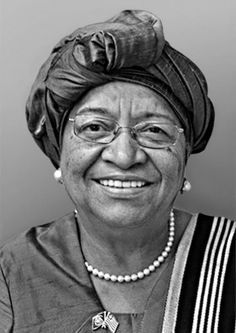
6f7aa1924a94396ad883d5fca7e5c469--ellen-johnson-sirleaf-peace-building

Where a woman rules, streams run uphill.  Ethiopian proverb

Do not let what you cannot do tear from your hands what you can.  Ashanti proverb

I dream of an Africa which is in peace with itself.  Nelson Mandela

There is always something new out of Africa. Pliny the Elder

This was “Africa Week” at the UN, a time for this entire community to stake stock of our debts to African peoples but also to celebrate the many ways in which Africans are truly developing and then implementing home-grown solutions to their own problems.

Despite the many responsibilities associated with the six General Assembly Committees that meet all this month, most all UN hands were “on deck” for all or part of this week long assessment of the roads that African states have tread and what they might still become.  This included as well the UN Security Council, which bears the brunt of responsibility for resolving conflicts from South Sudan (on which it met this past week) and Mali to Nigeria and now Cameroon. The Council is currently in the Sahel region (today in Mali) on mission to assess the status of the P-5 Sahel Force which it authorized and which is intended to bring stability to a region threatened by a “cocktail” whose ingredients include insurgency, climate stresses and food insecurity.

The stated goals for Africa week, “an integrated, prosperous, people-centered and peaceful Africa” draws heavily on the UN’s 2030 Sustainable Development Agenda as well as Africa’s own Agenda 2063.  These goals were articulated in a thoughtful manner throughout the week, avoiding clichés and “quick wins” in favor of clear sighted examinations of what African states and their peoples need and what stands in the way of their progress.    Part of that discussion is related to finance, not only to the preservation of essential remittances, but to the ways in which states can better protect their own natural resources from exploitation and increase sources of domestic revenue, including through reducing “tax avoidance and profit shifting.”

Beyond finance, the week highlighted a variety of challenges, including forced migration patterns exacerbated by climate-related drought and multiple iterations of armed violence.   There were also important discussions on creating more opportunities for affordable credit and “decent work” — in many instances highlighting the degree to which the African labor force is now both robust and youthful  — as well as on the challenges in harnessing Africa’s unprecedented “demographic dividend.”

The implications of this “dividend” go well beyond employment. Over the years at Global Action, I have been blessed to visit and work in most every region on the continent, including Egypt in the north, South Africa in the south, Senegal in the west, Kenya in the east, Cameroon in the center.   And while all of these countries have much cultural and ecological diversity to commend, one of the things they seem to have in common is young people who are anxiously and even impatiently prepared to assume mantles of economic and political leadership.   There is a “leadership dividend” across Africa as well, people who hope to soon turn their aspirations into higher offices, people who refuse to choose between integration and sovereignty, between economic development and environmental protection, between reliable governance and local participation. These are people with the fresh ideas about how Africa might be and are prepared to make the changes needed to ensure that the goals enumerated in the UN’s Africa Week are more than just another set of multilateral promises.

The Concept Note for this Africa Week highlighted two particular challenges for this new generation of African leader.  The first of these is “integration” of a continent divided by deserts and jungles, but also by culture and language, even at times by levels of openness to continent-wide initiatives focused on security, trade and other matters essential to sustainable development.  Despite positive efforts by the African Union on security and sub-regional entities such as the Southern African Development Community on African trade, optimal levels of integration remain impeded by a series of issues that have long resisted resolution, including providing dependable access by land-locked countries to seaports in neighboring states and creating a more reliable transportation network linking those states.   In this regard, the ambitious (and costly) proposal floated this week for an Integrated High Speed Train Network is welcome, especially by persons who have long struggled to move themselves (and their agricultural products and other commodities) around Africa’s vast spaces.

And then there is the security (threatened by both insugencies and excessive state responses) on which all intra-and inter-state development depends.  On numerous occasions, reference was made this week to the African Union initiative Silencing the Guns by 2020, with outcomes considered by many (rightly in our view) as essential to a sustainable future.  Many African states are now awash in weapons both licit and illicit.  And as the AU’s “Silencing” report notes, “the continent has hosted, and continues to be home to, a number of deadly conflicts that jeopardize human, national and international security and defy efforts to resolve them.”  Such conflicts involve state and non-state actors, and often draw on sources of weapons located far from the scenes of the violence.   The “fuel” for these conflicts often takes the form of governance that is unfair or even unjust; food, water and health insecurities that force families into heartbreaking choices; exploitative employment in sectors such as extraction that provide little economic relief and poison local ecosystems;  and rights violations that keep so many women, youth and indigenous persons locked into senseless, disempowering social roles.

The “leadership dividend” which we have seen first-hand in many African regions seems capable of both drying up access to weapons and healing many of the social and economic causes that cause people to reach for weapons in the first instance.  This “dividend” must remain at the center of any UN discussions on African issues and capacities going forward.

The World Economic Forum noted this week the strong possibility that by the year 2100 one third of all people on earth will reside in Africa.   Assuming that we don’t bomb or melt ourselves into extinction before then, this is a staggering statistic, one that will impact every aspect of African governance, security, economy and ecology.   The “strongly intertwined challenges” that currently characterize areas such as the Lake Chad Basin, the Horn of Africa, and the Central African states will evolve in unforeseen ways across the continent, calling for gender and culture-balanced leadership that can inspire hands and hearts that “know what they can do” and commit to doing it.

For the rest of us — during Africa Week and every other week – we must do what we can and all that we can to ensure that Africa has every opportunity to be at peace and, as Mandela noted, to be at peace with itself.


Peace Day:  Turning Aspiration into Inspiration at UN Headquarters, Dr. Robert Zuber

17 Sep

Evola

Without peace, all other dreams vanish and are reduced to ashes. Jawaharlal Nehru

It is not enough to say we must not wage war. It is necessary to love peace and sacrifice for it. Martin Luther King, Jr.

You cannot find peace by avoiding life. Virginia Woolf

September 21 is designated each year by the UN as the International Day of Peace.  Given the centrality to the UN’s mission of eliminating war and armed violence,  mediating and protecting peace agreements, and otherwise “maintaining” international peace and security, one might imagine that the entire UN building would be given over to inspirational discussions and hopeful commitments under this rubric.

Well, sort of.  For this is also the week that heads of state make their way to New York to represent their countries in a range of high level discussions on issues related to the tools, stakeholders, funding sources, and aspirations that we are ostensibly (and hopefully) to address as a global community.   While the primary purpose of many heads of state is to address the General Assembly, there will also be opportunity for an array of bilateral meetings and more general program gatherings on topics relevant to peace and security ranging from peacekeeping reform and human trafficking to ocean health and “south-south” cooperation for sustainable development.  And to show more tangible support for the millions of migrants forced from their homes and communities by violence, discrimination, drought and other threats to peace, dignity and social inclusion.

As is the case every year, this week serves as a reminder that while UN diplomats are skilled at developing global norms, the decisions needed to turn norms into peace-promoting actions, aspirations into inspirational practices, are mostly made in national capitals.  So too are the decisions to adopt arms treaties and security-related resolutions without teeth, to turn the power of state security-sector capacities against civilians, to jeopardize in a myriad of ways the global interest in the name of national interest.  In that light, one can only hope and pray that global leaders will see fit to lobby each other – and by extension instruct their UN ambassadors – to do more to resolve ongoing crises in South Sudan, Myanmar, the DPRK and Yemen; to reduce arms production and not simply control its flows; to turn away from weapons technology that abstracts the processes and consequences of killing; to endorse reformed UN peace and security architecture that replaces downstream coercion with upstream mediation, conflict prevention and early warning; to double down on international justice and reconciliation as viable means to end impunity for high crimes and restore citizen faith in governance.

It is noteworthy that the UN decided to honor this international peace day –with both a youth summit and the annual observance held at the Peace Bell — on September 15, prior to when global leaders were set to gather in our neighborhood.   With all due regard for the youth representatives who chimed in from New York and Bogota, it seemed like an opportunity missed not to have presidents and prime ministers get to join hands in solidarity with the UN officials who now labor for peace under difficult political and bureaucratic circumstances.  A photo op to be sure; but perhaps one with more influence and staying power than some of the interminable images this week as heads of state climb to the GA podium in an attempt (sometimes futile) to convince us that they are already doing everything needed to solve global problems, and that circumstances in their countries (or in the world) really aren’t as dismal as they seem…

Global Action, like many NGOs around UN headquarters, has a strong vested interest in how these global leaders assess and support their country’s UN presence.   In such a political and (now) overly branded environment as this one, it is nevertheless relatively easy to spot disconnects between the policy priorities emanating from missions and those from foreign offices.   One of the reasons that we value multi-lateral policy spaces is that it does bring out progressive impulses in delegations that might not play so well at home.  Those same impulses, however, can at times mask domestic concerns that would do well to receive more concerted international attention:  the delegations for instance that champion “peace” in UN conference rooms while their capital counterparts are laying plans to bomb civilians, arrest journalists, suspend constitutional freedoms or otherwise undermine the rule of law.

We also have a vested interest in promoting full spectrum policy engagements that can contribute to the resolution of concrete threats inflaming larger existential worries such as climate warming, another world war, or the death of the oceans on which we all rely. To the extent we (collectively) are able to do so, we need to make peacekeeping and atrocity prevention more reliable and less political.  We need to make better use of the UN’s growing peacebuilding expertise including moving it from its current, post-conflict ghetto into a broader, prevention-oriented, consultative role with states.    We need to invest more stakeholders in the “worldly tasks” of violence prevention, conflict mediation and environmental care – inclusive stakeholders operating well beyond the remit of states, corporate interests and erstwhile “experts.” We need to endorse in practical terms the peace and security implications of all obligations under the 2030 Development Agenda – from education and gender equity to healthy forests and sustainable cities – not only the targets listed within Sustainable Development Goal 16.

And we need to insist in every conceivable forum that resolutions and treaties to manage weapons flows must overtly support the goal of reductions in weapons production.   Despite our normative efforts, the world remains awash in weapons that enrich traffickers and arms merchants while emboldening criminality and insurgency.  States that encourage weapons production while simultenously endorsing efforts to end weapons diversion need to rethink the implications of those commitments without delay. The more weapons we produce, the more will escape even our best efforts at management and control.

As the International Day of Peace approaches, we are keenly aware of intractable conflicts in places like Central African Republic and Libya, but also of hopeful transitions to peaceful futures in places such as in Liberia and Colombia.  We are aware of the many unheeded resolutions emanating from the UN Security Council, but also of capacities within and outside the UN system based on the premise that “maintaining” international peace and security implies more skillful proactivity and less coercive reactivity – more attentiveness to the smoke rather than waiting for the fire.

Whether we like it or not, the global public tends to judge us here on our peace and security effectiveness – not how many victims of violence we assist so much as how successful we are in stopping violence in the first place. This is the standard which the current UN leadership has overtly endorsed.  We will be anxiously listening for openings from global leaders that will help all of us plot the next preventive path.  We will be anxiously listening as well for commitments from these leaders that we can use to help inspire more inclusive, global peace participation – integrating inspiration from diverse issue advocates and from peace-oriented artists such as Lin Evola — and renew at least a bit of global confidence in the UN’s commitment and effectiveness regarding its (more urgent than ever) core peace and security responsibilities.


Show and Tell: Advertising Tools and Progress on the Sustainable Development Goals, Dr. Robert Zuber

16 Jul

Memories

I regard it as a waste of time to think only of selling: one forgets one’s art and exaggerates one’s value. Camille Pissarro

I wish that television would stop selling our hatred of ourselves, and start seducing us with our love of ourselves. Dan Harmon

If government were a product, selling it would be illegal. P. J. O’Rourke

This was “experts” week at the UN’s High Level Political Forum (HLPF), organized under the auspices of the Economic and Social Council.  The task of the HLPF is “follow-up and review of the 2030 Agenda for Sustainable Development and the Sustainable Development Goals” (SDGs) with an emphasis on six of the goals (such as health, gender, oceans), as well as on voluntary national reviews of SDG progress.

The global backdrop for this HLPF cried out for clarity and inspiration. For  instance, many readers of this blog will have seen footage of an iceberg the size of the state of Delaware breaking off from Antarctica, an event that might not have been the direct result of climate change per se but which portends additional ice-shelf cleavage with ever-greater risks to the rising (and desalinization) of our seas.

Moreover, the Security Council gathered this week to assess the ever-deteriorating situation in Yemen, now characterized by almost unimaginable rates of famine and cholera.  As is often the case in the Council, Uruguay issued its thoughtful warning, looking permanent Council members (the UK and US) in the eye while reminding them that it is their weapons sales that are enabling so much of the Yemeni carnage.

And of course, there are the ubiquitous nuclear provocations emanating from North Korea (DPRK) with resulting (and also provocative) military exercises from the US and South Korea, a scenario as likely to spark new conflict as to calm its prospects.

The “experts’ week” of the High Level Political Forum largely dodged such security and climate concerns – a well-attended, early-morning side event on the human rights dimensions of development was a relatively rare exception.  Instead, other helpful sessions called attention to gaps in data and access to scientific research relevant to sustainable development. Moreover, some of the “spotlight” on development funding added excellent value, especially that which sought to understand the nature and challenges of corporate finance in the overall development agenda.  What was missing for us is analysis of the implications from the vast sums already being pledged by state and non-state entities to clean up horrific messes in the aftermath of the devastating climate disasters and armed conflicts raging worldwide.  The more funding is required for such victim response, the less is available to build the health, nutrition, and gender architecture, let alone for poverty alleviation and infrastructure development.

Despite a spate of human-made crises testing the limits of human response, there was in evidence a fair amount of “salesmanship” at this HLPF “experts’ week.” We are used to some of this at UN Headquarters – endless events promising audience “dialogue” but which are really opportunities for UN agencies and carefully selected NGOs to promote their relevance to the governments on which they largely depend for funding.  These podium-focused, statement-driven, speaker-overloaded events, which largely obscure what is often considerable audience expertise, often add more sales potential than policy significance.  Indeed, much of this HLPF “experts week” was more like “show and tell” and less like an open-ended conversation about relevant tools, needs and challenges with diverse peer stakeholders.

The nature of “the sale” has always been an interest of mine, in part because I’m so inept at it.  Unlike some people who scroll through commercials to get to the programs, I will spend occasional evenings doing the opposite – focusing on commercials instead of programs and discovering the following:

  • There are some incredibly clever people working in advertising; in an age that is suspicious of organized religion and has largely abandoned psychology, advertisers seem to have forged the principle path to our souls, convincing most of us that, in essence, “we are what we own.“
  • Where advertisers target young people, and they do quite often, they clearly see them mostly as distracted narcissists. According to commercials, young people do little but party, drive hot cars on deserted urban streets, stare at their phones and go on holidays; all with ample quantities of time and money.  Aside from their consumption patters, they apparently aren’t to be taken seriously any more than poor, disabled or indigenous people are to be taken seriously.
  • The essence of advertising remains as it has been – describing/inventing a problem for which a particular product becomes a kind of “savior.” Sadly, the problems that advertisers address seem as petty and distracting as ever, especially problematic given the global crises clamoring for attention.
  • Advertisers don’t worry about whether their products are actually needed or particularly relevant to the lives they touch. And they certainly don’t concern themselves with the implications of acquisition for emotional or fiscal health, let alone for the ability to obtain more essential goods and services.  Once advertisers convince you to purchase, the job is done.
  • Advertisers keep tight control over their narrative. There is little doubt expressed, no shortage of enthusiasm for the brand, no contrariness emanating from the “real people” who increasingly populate commercials.  With few exceptions (and there are some) advertisers only acknowledge competitors to expose their flaws, their limitations, none of which apparently pertain to the product they themselves are offering.

Given this overview, it might seem impertinent to call attention to the “salesmanship” of something as important as the HLPF, but the reference is not completely without merit.  Most HLPF events were, indeed, tightly managed with emphasis on what we’re doing more than on what we’ve neglected.   Discussions on specific tools too often obscured the contributions of the larger sector and even more often neglected discussion of the tools we still need and have yet to develop.  And while some states (Belgium, Finland, Argentina and others) tried to open up space for youth and persons with disabilities, grumblings in the hallways regarding the absence in sessions of the people living in poverty, indigenous persons and other “marginal” stakeholders were frequent.

And through all of this, as our interns would likely attest, there was a decided lack of bold inspiration, a clear show of unscripted determination that we can get through this deep valley  of deprivation if only we can find ways  to commit more and pull together better, to include more and listen better.  (Indeed, this was the way in which the HLPF was least like a sales event.)

Starting Monday, a steady stream of ministers will come to the UN to report on progress on national implementation of the Sustainable Development Goals.  These ministers will surely tell us what they’re doing to achieve SDG targets or, more to the point, what they want us to believe they are doing.  What we are sure to hear less about (and need to hear more) is which of their commitments are actually taking root, actually mobilizing public participation, actually impacting public attitudes and the behaviors that flow from them.

And many UN agencies and NGOs will be following these potential funders with interest, anxious to convince officials that what these stakeholders are doing is good (which it certainly is) and sufficient (which it certainly is not).  Indeed, we are collectively losing ground in several critical areas, including with regard to the security arrangements that can provide a predictable and rights-based development environment, and the climate arrangements that can possibly keep us under the 2 degree threshold on which our future upon this planet likely depends.

With all due deference to the many, mostly useful policy tools and suggestions on display at the HLPF, and while endorsing the importance of preserving the indivisibility of the SDGs, we must not take our eye off these larger threats.  If we fail on climate and security, we risk an endless string of gender-balanced armed conflicts; technologically advanced cities under water; sustainable farms “baked to a crisp;” and educated children who find themselves graduating without a viable, livable planet to inherit.

This would be the ultimate, tragic irony for our global system: so many billions having been spent to promote community well-being and political and economic inclusion on a planet that at times seems on its way to becoming a war-ravaged hot-house. Unless we can together find ways to inspire deeper commitments to peace and climate health, including among our development and other UN sales partners, this is one irony that we might not be around long enough to assess.