
Tag Archives: Rule of law

The Sahel Crisis: Politics, Prevention and Lessons Learned

10 Jul

Editor’s Note:  The following is the first blog post from Vanessa Mosoti, a talented junior associate from Kenya who has joined us for the summer from Princeton University, where she will finish her undergraduate studies beginning in September. In this post, Vanessa reflects on several UN events, including Security Council briefings, where issues involving states of the Sahel have been addressed.  Vanessa’s recommendations for moving beyond the current impasses and embracing a prevention-oriented framework are wise and worthy of adoption by UN officials with responsibility for Sahel response. 

The eruption of the crisis in Mali, a foreseeable denouement of a decades-long protracted conflict in Northern Mali coupled with a series of internal governance problems, should not have come as a surprise. Despite early warning signs, there is a marked lack of preventive diplomacy in the narrative of the Malian crisis. The international community had specific and identifiable opportunities in which to limit the eruption of conflict, but the statecraft was flawed, inadequate, or absent. Perhaps there is no amount of preventive measures that could have completely preempted the eruption of the crisis in Mali, but there certainly exists a litany of missed opportunities in which timely interventions at several key junctures might have significantly reduced, defused, and contained the violence.

UN dialogue surrounding the Malian crisis focuses understandably on the symbiotic relationship between security and development. And while the recovery of security and the realization of developmental goals must remain a top priority, issues relating to government legitimacy and accountability alongside the creation of a viable economy must also be addressed with similar vigor. As stressed in U.N. event “Countering Violent Extremism and Promoting Community Engagement in West Africa and the Sahel: Strengthening Multilateral Engagement” co-hosted by the governments of Burkina Faso and Denmark on the margins of the June 2014 review of the UN Global Counter-Terrorism Strategy, state fragility remains one of the biggest challenges to sustainable peace in the region. Any coherent response to the crisis must prioritize the building of a coordinated state from the bottom up—with national checks and balances, as well as participation from all citizens. Indeed, seeking a comprehensive response by all relevant actors underscores the challenge that the crisis in Mali is inherently political in nature. Of course, divergent views on the political roadmap to be adopted have had an impact on the crisis response, but continued Tuareg exclusion, as well as the exclusion of other marginalized groups (particularly in the North, where people remain bereft of critical security and social services), in the Malian political system virtually guarantees the continuation of the conflict and/or outbreak of future conflict.

A thorough solution requires that the Malian state address the fragmentation of Malian national identity. They are not alone, however. Issues relating to national identity pose challenges with which no African state is unfamiliar. The global spread of the nation-state is arguably the most significant institutional transformation of the modern era. The world today is a conglomeration of diverse nation-state driven societies. The rise of the modern nation-state, one can argue, precipitated the current world order and, subsequently and perhaps more importantly, modern formulations and understandings of concepts relating to identity—national, or otherwise.

A nation-state can be defined as a form of political organization under which a relatively homogenous people inhabit a sovereign state. Societies create national identities that separate people, suggesting fundamental differences between members of different nations. The formation of states and the ability of states to deploy their powers in a variety of social, economic and security contexts create these concepts of national identity. It is from the construction of a state that a nation is created, and not the other way around.  However, this requires important economic and political processes as a condition for the establishment of this combined nation-state—as it is, imaginably, difficult to create a homogenous community to replace the multiple communities of various faiths, peoples, and languages characteristic of preceding empires/kingdoms/colonies/chieftaincies. The nation-state attempts to form a singular identity from these multiple identities; therefore, national integration, the purpose of state power, requires a strong state—defined especially by military power—and the formulation of an image of a shared past based on some common experience and/or of a projected common destiny. African nation-states, however, are the legacy of Europe’s cavalier partition of Africa and their disregard for the complexities of African social, political, and geographic autonomous orchestration. National integration and the perception of this image of a shared past, reflective of the ability of a state to construct a singular identity and project power and legitimacy to all regions of said state, are especially difficult in the African setting—and the Republic of Mali is no exception. Thus, the eruption of conflict, when viewed in context, is utterly unsurprising.

At the Counter-Terrorism event, speakers also emphasized the need for a national infrastructure for peace—citing Ghana’s National Peace Council as one example. Multilateral engagement is key to sustainable regional peace. The purported goals of various interventions in Mali include at least some aspects of humanitarian aid, peacekeeping, and nation building. The intervening bodies seek to mitigate the conflict, alleviate some of the pressures of desertification, and create some semblance of a functional and peaceful governmental structure with high prospects of longevity. The establishment of security, obviously, also remains a priority. As I attended various U.N. meetings dealing with violent extremism, counter-terrorism, and specifically the Sahel crisis, it occurred to me that there are a series of lessons the international community can gather from these endeavors (implemented with varying degrees of success) that can inform future policies concerning intervention in conflict situations similar to that of Mali (i.e.: in the Wider Sahel):

1. Malians must possess ownership of their own peace processes. Ownership refers to Malians determining objectives, scheduling, and negotiation procedures. International actors, while critical, should play peripheral roles (as facilitators) to local and regional actors during negotiations.

2. There needs to be a thorough understanding of political and cultural norms by all parties involved. There is also a need to understand the range of local and regional actors involved in the crisis. There was, in negotiations and interventions in Mali, a lack of understanding of the nature of the conflict, the diversity of the actors, and the nature of the cultural processes behind individual and collective actions and decision-making.

3. Complete representation in mediation—of the wider Malian community and all parties involved in the conflict, civil society, military, etc.—matters in the success of negotiations. There needs to be a general, nation-wide consensus if there is to exist any hope of easy facilitation and long-term implementation of any denouements.

4. Mediators should develop strategies to better deal with spoilers—intrinsic spoilers (those who don’t want peace as it is not in their self-interest) as well as situational spoilers (those who don’t agree with specific provisions/arrangements but are generally seeking peace).

5. There should be provisions for political space for opposition in which groups can express their unhappiness without being shut out, termed rejectionist, or otherwise excluded from the entire process.

6. Regional bodies should provide adequate support to state institutions in crisis. Long-term commitment to provide resources and support after an agreement has been reached and a framework is implemented may be key to stabilization. This help should come in the form of new/repaired infrastructure as well as civic and civil society building measures, but not necessarily in the form of arms transfers or other incentives to state violence. It is nearly impossible to impose a victor’s peace in Mali, and providing the means for a monopoly on the use of violence to a fragile state increases the probability of the rise of rejectionists and spoilers.  Good societal structures and institutions can uphold the peace, legitimize the government, and establish an effective system of governance that serves as a model for the rest of the region.

7. Responsibility for carrying out any agreed upon terms of negotiations should fall onto local institutions as well as the government. The international community should assist these local actors especially (in ways delineated above) for as long as possible/necessary.

8. All potential solutions to the conflict should be derived from public opinion or they will not hold in the long-term. Negotiators/mediators/facilitators should make sure that the opinions of the public are well represented and prioritized in all peace discussions

As the Malian crisis is but one in a wider regional crisis, the biggest ‘lesson-learned’ is that preventive diplomacy is key. “Actions and inactions of international actors have a major impact on whether domestic actors make a conflict or cooperation calculus”[X]. Early action can lead to early cooperation. Trying to contain a conflict after it has already erupted is much more expensive (in terms of time, money, resources, and lives lost) than trying to prevent the conflict from erupting in the first place. Signals of impending conflict, as was the case in Mali, can be very clear. Policy should be geared towards the execution of preventive diplomacy at this time, before the situation is too difficult to contain. However, it is imperative that efforts of preventive diplomacy do not actually create additional incentives for violence, or exacerbate tensions in already fragile periods. The U.N. tends to act as a response agency instead of a prevention or containment agency—that is, the U.N. reacts to spills, instead of working to prevent the spills from happening in the first place. The world expects more than a glorified cleanup agency. More could have been done early on, so more should have been done.

[X] Hamilton, L. H., George, A. L., Goodby, J. E., Holl, J. E., Hurlburt, H. F., Jones, B., … & Zartman, I. W. (1999). Opportunities Missed, Opportunities Seized: Preventive Diplomacy in the PostDCold War World. B. W. Jentleson (Ed.). Rowman & Littlefield Publishers.

Vanessa Mosoti, GAPW Junior Associate
 

The Emotional and Psychological Trauma to Our People Can’t Be Measured In Real Terms

31 May

Editor’s Note:  Lia Petridis Maiello is a frequent contributor to this blog.   John Burroughs of the Lawyers Committee on Nuclear Policy is both an office mate and is also deeply involved with the Marshall Islands suits. 

The Republic of the Marshall Islands in the northern Pacific Ocean is not only a breathtakingly beautiful island state, but has recently moved into the public eye by starting a bold initiative that is widely interpreted as a “David against Goliath” undertaking.

The Marshall islands were subjected to dozens of nuclear tests, carried out by the U.S. after 1945.

According to the Associated Press, the island group filed suit in late April against each of the nine nuclear-armed powers in the International Court of Justice in The Hague, Netherlands. It also filed a federal lawsuit against the United States in San Francisco.

The Marshall Islands claims that instead of negotiating disarmament, the nine countries are modernizing their nuclear arsenals, spending $1 trillion on those arsenals over the next ten years.

“I personally see it as kind of David and Goliath, except that there are no slingshots involved,” David Krieger, president of the California-based Nuclear Age Peace Foundation, told AP. The Foundation is acting as a consultant in the case and is hoping that other countries will join the legal effort, Krieger points out.

Russia, Britain, France, China, Israel, India, Pakistan and North Korea are included in the indictment. The last four are not parties to the 1968 Nuclear Nonproliferation Treaty (NPT), but appear to be, according to the lawsuits, bound by its provisions under “customary international law.” The NPT, considered the cornerstone of nuclear disarmament efforts, requires negotiations among countries in “good faith” on disarmament, AP reports.

None of the countries had been informed in advance of the lawsuits. The case found broad recognition within the international press.

The Foreign Minister of the Marshall Islands, Tony de Brum, explains in an interview the impact the nuclear tests had and still have for his citizens and what he hopes this lawsuit can achieve for the island state and the world community.

You grew up on the island of Likiep during the 12-year period when the United States tested 67 atomic and thermonuclear weapons in the atmosphere and under water in the Marshall Islands (1946-1958). What are your memories on the impact these tests had for the island of Likiep and its inhabitants? Environmentally, politically and psychologically?

My memories of the tests are a mixture of awe, of fear, and of youthful wonder. We were young, and military representatives were like gods to our communities and so our reactions to the tests as they took place were confused and terrifying. We had no clue as to what was happening to us and to our homelands. Our elders, including my grandfather, tried to stop the tests in petitions and communications to the UN but were not successful. I personally witnessed the injuries to some of our countrymen from Rongelap and to this day cannot recall in words my sense of helplessness and anxiety without severe emotional stress. But for as long as I can remember, the explosions and the bizarre effects that lit up our skies are still a source of pain and anger. How could human beings do this to other humans?

While in later life many attempts have been made, both in good and bad faith, to reconstruct the impact of the testing on our people, only the physical and environmental effects can be discussed with some confidence. The emotional and psychological trauma to our people, both young and old, cannot be measured in real terms. The pain is real and the uncertainty is overwhelming. As a young lady said to me when showing me pictures of her dead deformed infant child, “God did not create my baby. He cannot be so cruel.”

The Republic of the Marshall Islands recently filed an extraordinary lawsuit at the International Court of Justice in The Hague, suing all nine nuclear weapons possessors for failing to eliminate their nuclear arsenals. But only three of the nine nuclear states named by the lawsuit generally accept the rulings of the International Court of Justice. What do you hope for the outcome of this case?

My country has exhausted all means within our limited power to bring attention and closure to our outstanding nuclear issues with our former Administrative Authority, the United States. Mechanisms jointly established for dealing with outstanding claims for physical injury and property damage have fallen way short of satisfying even the basic findings of the Nuclear Claims Tribunal formed under treaty agreements. This is due mostly to the withholding of critical information necessary for us to make informed decisions regarding our nuclear past and our uncertain future. To this day the United States still refuses to release information we have identified and requested under established processes. All the while we have to cope with displaced communities, skyrocketing medical costs, dangerously radioactive environments, and deprivation of use of traditional lands.

The United States tells us they have satisfied their obligation under the Free Association Compact, a Treaty, and that they will not entertain any claims or requests for meaningful assistance in this issue. In fact, the US Supreme Court refused to hear the cases of the People of Bikini and the People of Enewetak seeking damages for their destroyed homelands. After seeing what mere testing of these terrible weapons of mass destruction can do to human beings it makes sense for the Marshallese People to implore the nuclear weapons state to begin the hard task of disarmament. All we ask is that this terrible threat be removed from our world. It is the best we can do as collateral damage in the race for nuclear superiority. Our sacrifice will be for naught if the nuclear countries do not stand up and take notice of the evil that nuclear weapons present to our earth.

Do you think that this case can help to create enough international momentum for the Non-Proliferation-Treaty (NPT) to be treated — due to its near universal adherence — as part of customary international law by which all states must abide, regardless of whether or not they actually signed the treaty?

We believe that it is sensible and logical for the world community to consider this matter as one of customary international law. To do otherwise is to gamble with the future of the world.

What effects would that have on the discourse of nuclear disarmament worldwide?

It should stimulate intelligent discourse and wise solutions. For what would it gain the world for instance, to be protected from climate change, only to suffer massive destruction from nuclear weapons? All our efforts to be sane about the future must be connected to survival and peace. The right hand cannot be out seeking climate peace while the left is busy waging nuclear war.

Looking at the status quo of this discourse, how do you evaluate the outcome of the recent NPT PrepCom at United Nations’ headquarters in New York City which closed without adopting the Chair’s draft recommendations to the Review Conference?

The outcome of the recent NPT PrepCom appeared to be more “business as usual,” with the nuclear-armed parties to the treaty essentially evading their Article VI obligations or claiming they were fulfilling them in a step by step manner, while at the same time continuing to modernize their nuclear arsenals and relying upon them in their military strategies. It is clear that the nuclear-armed states are not pursing negotiations in good faith to end the nuclear arms race and to achieve complete nuclear disarmament, as they are obligated to do under Article VI of the treaty.

You have also been advocating on the issue of climate change, a grave concern that affects not only the Pacific Islands, but has obvious global consequences. Are there linkages between nuclear disarmament and climate change? Considering that both issues climate change, as well as nuclear disarmament are political matters of tremendous significance, which one, in your opinion, has the capacity of being addressed faster by the international community?

I hit upon this somewhat in question four but clearly one cannot isolate climate change from the other most pressing issue of world security today. They go hand in hand, and must be dealt with in a coordinated and universally accepted pathway. As a country that has seen the ravages of war, suffers the lingering effects of nuclear tests, and facing the onset of a rising sea, we see all these to be threats of equal force against world peace and human life. But finger pointing and challenges of who goes first must now stop and sane and intelligent human beings must confront this insanity with firm confidence and clear peaceful intentions.

Lia Petridis Maiello, Journalist

A Call for Stable and Peaceful Policies

4 May

On April 25, Global Action joined with other civil society organizations (WFUNA, FES, WILPF) in launching an initiative to support the work of the Office of the President of the UN General Assembly in promoting the cross-cutting theme, “Ensuring Stable and Peaceful Societies.”  These organizations affirm the important value of this theme as the UN seeks adoption of a new (and hopefully expanded) set of sustainable development goals.

Our event immediately followed a day and a half long Thematic Debate in the General Assembly on ‘Ensuring Stable and Peaceful Societies’ that sought to field comment outlining both state aspirations and responsibilities within this dynamic normative framework.

As one might anticipate, the range of lenses that diplomats sought to include in their analysis of ‘stable and peaceful societies,’ was quite broad.   This is as it should be.  The normative framework suggested by this Thematic Debate touches on all facets of the UN’s work as diplomats were quick to acknowledge.   Some, like Qatar and Israel, noted the need for more ‘honest and responsible governance.’ Cuba underscored the deep divides that must be overcome between rich and poor.  Switzerland called for dramatic improvements in accessible public space.  Japan called for more attention to the management of ‘disaster risk.’ Australia, Nicaragua and others highlighted the need for more efforts to empower women.  Ecuador called for restraints on over-consumption and the end of what it called ‘speculative economies.’  Argentina affirmed the need for more attention to ‘rule of law’ obligations.  Egypt called for more efforts to address ‘massive refugee flows.’  Kenya noted challenges to peace represented by both illicit weapons and shortages of precious water.  The US and others clarified and solidified the linkages between violence and impediments to the fulfillment of development priorities.  Indonesia called for internal UN reforms to better serve the interests of a ‘rebalanced’ economic system.

On and on it went for over a day: states sometimes being provocative but mostly pointing out diverse elements of the massive, multi-dimensional undertaking that is ‘stable and peaceful societies.’   The Thematic Debate in the GA underscored the degree to which challenges associate with all three pillars that delineate the UN’s primary responsibilities – peace and security, human rights and development –   must be addressed in tandem.  Indeed, our growing populations and shrinking access to available resources; our increasingly sophisticated, digitally-driven military tools; and a new set of often-gruesome human rights responsibilities from Damascus to Bangui are more than sufficient to keep the policy community engaged at multiple levels.    The bar is set high here. The expectations for action coming from beyond UN headquarters are considerable.   This is not a ball we can afford to drop.

We know from the NGO side that we need to do more to support states and UN secretariat officials in keeping linkages relevant to the promotion of ‘stable and peaceful societies’ fresh among diverse stakeholders.  This involves a deeper level of partnership commitment, more than simply telling diplomats what’s missing and what ‘they’ need to do about it.    Through our own related initiatives, we seek to take more responsibility for goal setting and implementation, to do more to redress imbalances and end violence than merely pointing out the limitations of others.

As the presidency of the General Assembly shifts from year to year, we can do our part to be both facilitator and ‘institutional memory’ when it comes to ‘stable and peaceful societies.’     This involves a commitment to work closely and effectively with the new GA president’s staff on another round of diplomatic engagements with this thematic issue.  But it also involves a commitment to take account of broader fields of inquiry and their stakeholders, to perceive wider relevance and open doors to different kinds of constituent participation. ‘Stable and peaceful societies’ represents both a compelling aspiration and a profound test of our policy commitment and maturity.   This is one test we need to study hard for.

Dr. Robert Zuber

Why Disarmament Matters — and the Need for Constant Reminders

15 Apr

Editor’s Note:  This piece was originally published in Huffington Post. 

Recently a group of disarmament scholars and policy experts met in New York City to honor Peter Weiss, President Emeritus of the Lawyers Committee on Nuclear Policy (LCNP), for his lifelong commitment to a subject of permanent gravity that often remains in a political, legal and generational stalemate. Equally importantly, the function served as a reminder to the public that in particular, an emotionally compelling topic such as nuclear disarmament needs be at the forefront of not only continuous scholarship but policy discussion and, more importantly, civic action.

Five speakers representing legal approaches to nuclear disarmament analyzed the global status quo and portrayed a very realistic picture of urgency. They also evaluated the role of the United Nations and, in particular, the role of the UN Security Council.

Virginia Gamba, Director of the UN Office for Disarmament Affairs, reiterated the importance of the five multilateral norms that the international community identified as a standard for a feasible disarmament agreement, which can be found in the Nuclear Non-Proliferation Treaty (NPT). Those principles are verification, transparency, irreversibility, bindingness, and universality, standards that are mutually reinforcing and essential for trust building among states, particularly keeping in mind the ongoing issue of verification in relation to nuclear haves and have-nots alike. “Disarmament commitments must be bound to the law,” Gamba summarized.

Professor Roger Clark from Rutgers School of Law in Camden referred in his remarks to the significance of the 1997 draft model Nuclear Weapons Convention (NWC), resulting from the unanimous ICJ declaration from July 1996. “There exists a legal obligation to pursue in good faith and bring to a conclusion negotiations leading to nuclear disarmament in all its respects,” he said. The draft convention underwent a review and update in 2007 and would, in its current state, supplement existing treaties such as the Nuclear Non-proliferation Treaty (NPT) and the Comprehensive Test Ban Treaty (CTBT).

The James Martin Center for Nonproliferation Studies at the Monterey Institute of International Studies describes the model NWC as follows:

Under the 2007 model NWC, all States would be prohibited from pursuing or participating in the “development, testing, production, stockpiling, transfer, use and threat of use of nuclear weapons.” Those States that possess nuclear weapons would be obligated to destroy their nuclear arsenals in a series of phases. These five phases would progress as follows: taking nuclear weapons off alert, removing weapons from deployment, removing nuclear warheads from their delivery vehicles, disabling the warheads, removing and disfiguring the “pits” and placing the fissile material under international control. Under the model convention, delivery vehicles would also have to be destroyed or converted to a non-nuclear capability. In addition, the NWC would prohibit the production of weapons-usable fissile material. The States Parties would also establish an Agency for the Prohibition of Nuclear Weapons that would be tasked with verification, ensuring compliance, decision-making, and providing a forum for consultation and cooperation among all State Parties. The Agency would be comprised of a Conference of State Parties, an Executive Council and a Technical Secretariat. Declarations would be required from all States Parties regarding all nuclear weapons, material, facilities, and delivery vehicles in their possession or control along with their locations.

Applying the model NWC to a current political situation, Clark wondered, “Imagine what a powerful, international inspection regime would have brought about for the situation in Syria?”

Ambassador Hans Corell, former Under-Secretary-General for Legal Affairs and the Legal Counsel of the United Nations from 1994 to 2004, focused in his address on nuclear disarmament and Security Council reform and did not shy away from pointing out clear obstacles and how they can be transferred to the ongoing crisis with Russia.

Corell sees the need for a “cooperative, rules-based international order” enforced through multilateral institutions, headed by the UN Security Council as the “ultimate global authority,” in order to pursue disarmament and nonproliferation effectively.

Corell refers to the problems the UN Security Council would have executing this position adequately by stating the fact that the UNSC is in need of “radical reform,” a topic that is widely discussed among international scholars. Based on former Mexican President’s Ernesto Zedillo’s comments, Corell agrees with the skepticism toward the addition of more members to the UNSC, a viewpoint shared by many involved with various Council reform proposals.

Describing Russia as a current aggressor by violating Ukraine’s sovereignty and annexing Crimea, Corell points out that the veto option of the permanent five members to the UNSC can significantly slow down if not hinder political decision making in times of crises. “Personally, I am seriously concerned at the negative effects that the Russian annexation of the Crimea peninsula will have on the political climate in the future. And we certainly do not know what President Putin may be up to next.”

Honoree Peter Weiss shared some good news before releasing the audience, saying, “During the follow-up conference to Oslo held in Nayarit, Mexico, Feb. 13 and 14, Sebastian Kurz, the foreign minister of Austria, announced that he would convene a conference in Vienna later this year because the international nuclear disarmament efforts require an urgent paradigm shift.'”

In May 2008 Dr. Hans Blix gave me an interview in which he explained:

Al Gore woke up the world with the reality of one inconvenient truth, but I think that the second inconvenient truth exists, namely the remaining nuclear weapons of mass destruction. There is something like 37,000 of them still around. And with the increasing tension in the world it is time to discover that we need to move swiftly back to the disarmament table.

Because of the subjects’ ongoing relevance, communicating this urgency to the next generation of not only policy makers but youth with political aspirations or interests should be a big part of disarmament/nonproliferation events going forward.

Lia Petridis Maiello, Journalist 

Making Persons ‘Reappear’ in El Salvador

27 Mar

As many readers of this blog know, the vicious civil war that raged for years in El Salvador left many victims, including the mostly unhealed scars of families seeking knowledge of the whereabouts of children (now adults) who were ‘disappeared’ during military operations in the 1980s.  The combination of the sudden loss of a loved one followed by years of silence regarding their whereabouts is a pain that only few of us can imagine.   The pain only deepens when the ‘disappeared’ are children.

GAPW just spent an important afternoon with the staff of the Pro- Búsqueda Association (www.probusqueda.org.sv/), a group of mostly younger professionals dedicated to lifting the veil of disinformation and deceit imposed by those seeking to cover up the truth of many hundreds of childhood disappearances.  Using sophisticated tracking software, Pro- Búsqueda has successfully reunited hundreds of disappeared children (now adults) and their loved ones. The organization also provides counseling services for families.  Many of these extraordinary stories can be founded on their website.

Staff at Pro- Búsqueda have noted with appreciation the cooperation they have received from many international experts as well as from the Inter-American Court for Human Rights.   Pro- Búsqueda is assisting now on what will be only the fourth case to come to the Court from El Salvador.  However, the organization believes that over 900 cases of disappearances are entitled to their day in court, with the strong potential for reparations as well.

A major violation occurred in November 2013 when three armed men entered the Pro- Búsqueda offices, stole computers and set fire to some documents and files.  The attack, which was condemned at the time by the Inter-American Commission on Human Rights, has thankfully not proven to be a fatal setback.  The offices we visited were filled with deep resolve, but also with the sounds of laughter.

One recommendation from Pro- Búsqueda and other groups working in this area is for El Salvador to ratify the International Convention for the Protection of All Persons from Enforced Disappearance (www.ohchr.org/EN/HRBodies/CED/Pages/ConventionCED.aspx) and fully abide by its provisions, including ensuring “that any individual who alleges that a person has been subjected to enforced disappearance has the right to report the facts to the competent authorities, which shall examine the allegation promptly and impartially and, where necessary, undertake without delay a thorough and impartial investigation.”

That states have not done due diligence on matters of fact finding, investigation and ending impunity is why the work of Pro- Búsqueda and others working on enforced disappearances is so important.  Disappearing children is a grave crime.   From the standpoint of promoting peaceful societies, giving the disappeared from El Salvador the opportunity to return to their families and communities is among the most hopeful work we have witnessed anywhere.

Dr. Robert Zuber

UN Panel Discussion Highlights Rule of Law Obligations

6 Mar

The Rule of Law thematic has been on the UN’s agenda frequently this winter with open debates and panel discussions taking place across complementary processes. From the post-2015 development agenda to the work of peacekeeping missions in conflict and post-conflict settings, it seems that there is ample space and opportunity for this issue to be integrated in many important security, human rights and development discussions.

Following up to the Declaration of the High-level Meeting of the General Assembly on the Rule of Law at the National and International Levels, a panel discussion was held on 27 February 2014 focusing on rule of law, peace and security, human rights and development. The Deputy Secretary-General Jan Eliasson provided the introductory remarks and moderated the discussion. In his remarks, he highlighted that “[t]he rule of law, based on human rights, underpins peace and security.” Reflecting on the rule of law at the international level, he highlighted the role of the UN Charter and peaceful settlement of disputes while at the national level, justice and law are important in preventing conflict and mitigating grievances accordingly. Rule of law also makes significant contributions in fostering and promoting economic growth and building strong institutions which are integral to sustainable development and to the well-functioning of societies.

Specifically focusing on rule of law and human rights, Ms. Louise Arbour, President of the International Crisis Group, made the case for how rule of law and human rights are not interlinked because they are the same. Mr. Muna Ndulo, Professor of Law at Cornell University raised important questions about the conditions necessary for the rule of law to become a reality (in a peace and security context) and how its implementation can be monitored, including efficiency of services and accountability systems.

Speaking in her capacity as Director-General of the IDLO, Ms. Irene Khan iterated that the links between rule of law and development are mutually reinforcing. It is not enough for laws to be adopted, but they have to be properly enforced because there is risk that both laws and legal institutions can be mismanaged. Thus, it is hard to separate rule of law from development because it provides the basis for empowerment, eradicating poverty, and equitable access to services and resources.

During the discussion, many member states raised thought-provoking questions, including complying with the compulsory jurisdiction of the International Court of Justice as well as the need for judicial review of the Security Council decisions. Moreover, further to the role of the Security Council, questions were raised as to what further steps can be taken to promote equal and effective implementation of all Security Council resolutions, including the peaceful settlement of disputes. Finally, questions arose about what to do to ensure that there is no duplication of efforts, between the UN and member states on addressing some of these issues. Emphasis was placed on national ownership, national sovereignty and ensuring that the concepts that are promoted by the UN, including in peacekeeping missions, are agreed on by member states and are based on practical situations.

The aforementioned discussions are welcomed both in increasing visibility around this issue but also in promoting rule of law as an integral part of good governance and functioning societies. At the same time, more attention could be given to identify how to increase awareness over this issue at the national and international level; and how to promote strong rule of law at the international level while fully respecting national sovereignty. These are some, among a plethora of similar questions that deserve more careful analysis, in hopes of fully integrating this concept among complementary agendas and promoting fair, safe and just societies.

Preparations are currently underway to shape the high level meeting this summer discussing Contributions of Human Rights and the Rule of Law  in the post‐2015 Development Agenda. Given the significance that was highlighted in this meeting regarding the role of rule of law in the development processes, perhaps there will be scope in the upcoming high level to build on current discussions to contemplate how the UN and member states can join efforts in strengthening rule of law at the national and international levels so as to promote the post-2015 development goals, from a human-rights centric approach.

Global Action is committed to following the development of this thematic in complementary and cross-cutting agendas very closely, especially as it pertains to peace and security which is integral to our mandate. Further inquiries and discussions about this matter are welcomed.

–          Melina Lito, Legal Adviser on UN Affairs, Global Action, melina.gapw@gmail.com

Practice Makes Perfect: Another Step towards Effective Prevention of Mass Violence

13 Feb

Yesterday’s Security Council debate on Protection of Civilians in Armed Conflict under the presidency of Lithuania was the latest in a series of efforts by Council members and other states to outline the road ahead regarding what has become a welcome, urgent preoccupation of diplomats and policymakers – strategies to effectively protect civilians from violence perpetrated by state and non-state actors.

Valerie Amos and Navi Pillay, among others, gave their typically comprehensive and passionate overviews of what, for them and for many of their colleagues, are surely quite painful markers on the long road ahead until responsibilities under international humanitarian and human rights law are fulfilled by all relevant actors as a matter of course. Ms. Amos in particular noted unresolved ‘stresses’ between humanitarian workers and PKOs implementing coercive mandates, and also reflected on the fact that, despite increased social media scrutiny, ‘siege’ strategies to terrorize and humiliate civilians are still prevalent.

States, too, were thoughtful about the policy directions that should be pursued and the infrastructure gaps and working methods that need to be addressed. Uruguay underscored the need for accurate information to assess POC operations and reassurances that coercive measures such as the DRC Brigades – which tend to blur the lines between traditional peacekeeping and atrocity crime response — adhere to core PKO values.  Indonesia highlighted the need for POC mandates to do more to understand local contexts and work with local conflict prevention capacities.  Both Slovakia and Cuba linked POC to larger efforts to abolish war, while Brazil underscored the ‘mirage’ of military solutions and urged more attention to conflict prevention strategies. As they have done previously, the UK rightly urged that ‘politics and protection’ not be mixed, though without what would surely be a helpful confession of the numerous, diverse incarnations of that ‘mixture’ to date.

In the end, while many delegations conveyed helpful insights, it was New Zealand which most forcefully reminded Council members and others in the room that we already have many Council statements on POC that are not yet fully integrated into country-specific resolutions.   Nor, we might add, are they fully reflected in Council working methods which continue to encourage ‘deliberations’ without the necessary feed-back loops to help identify any concrete impacts from such discussions.  While resolve was in evidence throughout this debate, it still seemed more rhetorical than practical.   For those who make a living around the UN, this hardly constitutes a surprise.

Thankfully, though, this debate was more than a ‘talk shop,’ more than yet another effort to build support for additional coercive mandates. The resolve in the room was mostly directed towards helping the UN system to ‘get on the same page’ regarding protection responsibilities, available (and required) implementation tools, the need for more robust and transparent regional partnerships, etc.   It was also (between the lines) about getting capacities such as the C-34 to take more leadership on POC; about states cooperating more through the PoA process to stop illicit arms flows; about the Council paying closer attention to the Special Advisers on genocide prevention and RtoP — and to others with expertise on development and climate — providing early warnings of potential humanitarian disasters; about listening more closely to working journalists doing important and dangerous reporting in volatile country contexts.   There are many more steps to be taken and, if yesterday’s debate was any indication, sufficient skill and capacity to take them.

The small part of the wider world that tuned in for this debate surely came away with the sense that, despite the desperate headlines from CAR and Syria, the international community really is trying to address their POC responsibilities with proper seriousness.   One next step is to ensure full-system accountability for those in danger of being victimized.   As Italy noted during the debate, we must say ‘loud and clear’ that there is no excuse for abusing civilians. The UN must ‘grab the reins’ if states will allow it.   Despite misgivings about the working methods of the Council, the clarity and ‘selectivity’ of POC mandates, or the ‘inconsistency’ of much of the UN’s general response to conflict, many states seemed ready to support Italy’s call.

Dr. Robert Zuber

Rule of Law in Disarmament Discourse

30 Jan

The UN Secretary-General (SG) maintains that rule of law is a principle of governance in which all persons, institutions and entities, public and private, including the State itself, are accountable to laws that are publicly promulgated, equally enforced and independently adjudicated, and which are consistent with international human rights norms and standards.”[i]

Generally, strong rule of law mechanisms can promote robust national constitutions which grant equality to all, dependable security and judicial institutions, transitional justice and strong civil society.[ii] “These are the norms, policies, institutions and processes that form the core of a society in which individuals feel safe and secure, where legal protection is provided for rights and entitlements, and disputes are settled peacefully and effective redress is available for harm suffered, and where all who violate the law, including the State itself, are held to account.”[iii]

The important role that the UN plays in the promotion of rule of law has been highlighted in the Declaration on Principles of International Law Concerning Friendly Relations and Co-operation Among States in Accordance with the Charter of the United Nations. The principles highlighted in the UN Charter of maintaining international peace and security and peaceful settlement of disputes go to the heart of robust rule of law policies and mechanisms.[iv] The role of peaceful settlement of disputes within rule of law discussions was highlighted at the Sixth Committee of the General Assembly, as Global Action has previously reflected.[v] If robust institutions and policies exist that protect the security and rights of individuals, and if alternative dispute resolutions exist to peacefully resolve conflict, then modern day uprisings that rise to the level of threats to international peace and security may be limited and even eliminated.

In addition, the so-called “International Bill of Human Rights” accords to individuals a set of rights that must be respected at the international and national levels. The work of treaty bodies to implement these commitments and rights is key to strengthening strong rule of law by promoting robust national-level legislation and mechanisms that protect basic human rights obligations.

More recently, the concept of rule of law was further developed in the High Level Declaration on Rule of Law. The Declaration reinforced the rule of law as a cross-cutting issue linking peace and security, human rights and development, and likewise acknowledged “strengthening justice and security institutions that are accessible and responsive to the needs and rights of all individuals and which build trust and promote social cohesion and economic prosperity.”[vi] Additionally, the Declaration “emphasize[d] the importance of the rule of law as one of the key elements of conflict prevention, peacekeeping, conflict resolution and peacebuilding.”[vii]

With all this in mind, it is not surprising that the Secretary-General’s 2013 report on Responsibility to protect: State responsibility and prevention focused on strengthening mechanisms to prevent mass atrocity crimes. Amidst the many risk factors that can contribute to the commission of mass atrocity crimes, the SG highlighted that “the risk of genocide and other atrocity crimes can be increased by a Government’s lack of capacity to prevent these crimes and the absence of structures or institutions designed to protect the population. Risk factors include…. weak legislative protection of human rights; and weaknesses in the judiciary, national human rights institutions and the security sector.”[viii] Among the options highlighted to prevent atrocity crimes include strengthening national institutions that promote rule of law through human rights protections, as well as effective security forces.[ix]

Building on this focus, the relationship between the security sector and the rule of law is timely and important given a series of disarmament processes in the spring 2014. As Former High Representative Sergio Duarte noted in his 2008 address to the American Bar Association Section on International Law, the rule of law has contributed to disarmament by essentially providing the framework and the tools to shape, interpret and implement commitments.[x] More specifically, it provides a set of legal instruments that shape the elimination of weapons of mass destruction and constrain the flow of conventional arms.[xi]

The forthcoming Disarmament Commission (DC) has been mandated to propose recommendations to the GA on diverse issues within the disarmament agenda and is set to discuss during its April session recommendations for achieving the objective of nuclear disarmament and non-proliferation of nuclear weapons and Practical confidence-building measures in the field of conventional weapons.

While it is generally known that the DC has not been able to reach consensus in proposing recommendations since 2000, nevertheless as the opening of the Commission is fast approaching, it is timely to underline that any outcome reached could also prove imperative for strengthening rule of law, in addition to advancing the broader disarmament agenda.

Specifically in the context conventional arms, one need not think long to realize the pervasive, negative effect of weapons, especially the illegal flow of small arms and light weapons, on local communities, including disrupting feelings of safety and security; getting in the way of peaceful settlement of disputes; and interfering with the maintenance of strong and reliable security sectors.

A recent Chair’s Paper on confidence-building measures (CBMs) outlines obligations to instruments ranging from the UN Programme of Action on Small Arms and Light Weapons to the Arms Trade Treaty etc.[xii] Ideally, the objective of CBMs around conventional weapons would be to promote transparency, implementation of the obligations therein, principles of good faith, and “eliminating the causes of mistrust, fear, misunderstanding, and miscalculation with regard to conventional weapons.”[xiii]

Transparency within and between States and compliance with disarmament commitments can contribute to strengthening security institutions, responding to the needs and rights of individuals to feel safe and fully participate in society, and promoting the rule of law at the national level.

– Melina Lito


Nigerian-American Artist and LGBT Activist Addresses Nigeria’s Criminalizing of Gays

24 Jan

Editors Note:   This piece by GAPW’s Lia Petridis Maiello, originally written for The Huffington Post, represents another effort to explore the ways in which state-sanctioned discrimination violates human rights obligations but also poses security threats — specifically to those being discriminated against, but also to others who might find themselves the next to be ‘singled out.’   

As an immediate reaction, U.S. Secretary of State John Kerry deplored the “Same Sex Marriage Prohibition Act” in Nigeria, signed into law this month by Nigerian President Goodluck Jonathan, calling it a “dangerous” restriction on freedom. “The United States is deeply concerned by Nigeria’s enactment of the Same Sex Marriage Prohibition Act,” Kerry explained. “Beyond even prohibiting same-sex marriage, this law dangerously restricts freedom of assembly, association, and expression for all Nigerians.”

Ever since, arrests have risen quite dramatically in Nigeria where dozens more people that have been under the suspicion of being homosexual have been herded up and interrogated. In the last few days, more than 30 people were arrested, with a higher number coming from the Southern states of Nigeria that are predominantly Christian. So far prosecution of gay people had largely been centered on the Muslim North, where gays can get lynched and beaten to death under Shariah law.

Nigeria’s more than 160 million citizens are almost equally scattered in the North and mainly Christian South, with a widespread damnation of homosexuality all over the country. “Under the Islamic Shariah law that prevails in nine of its 36 states gay people can get lynched and beaten to death, or legally executed by stoning for the offense. Sodomy was already illegal, but the bill signed into law January 7 bans all gay associations and gay marriage, with penalties of up to 14 years’ imprisonment for marriage”, AP reports.

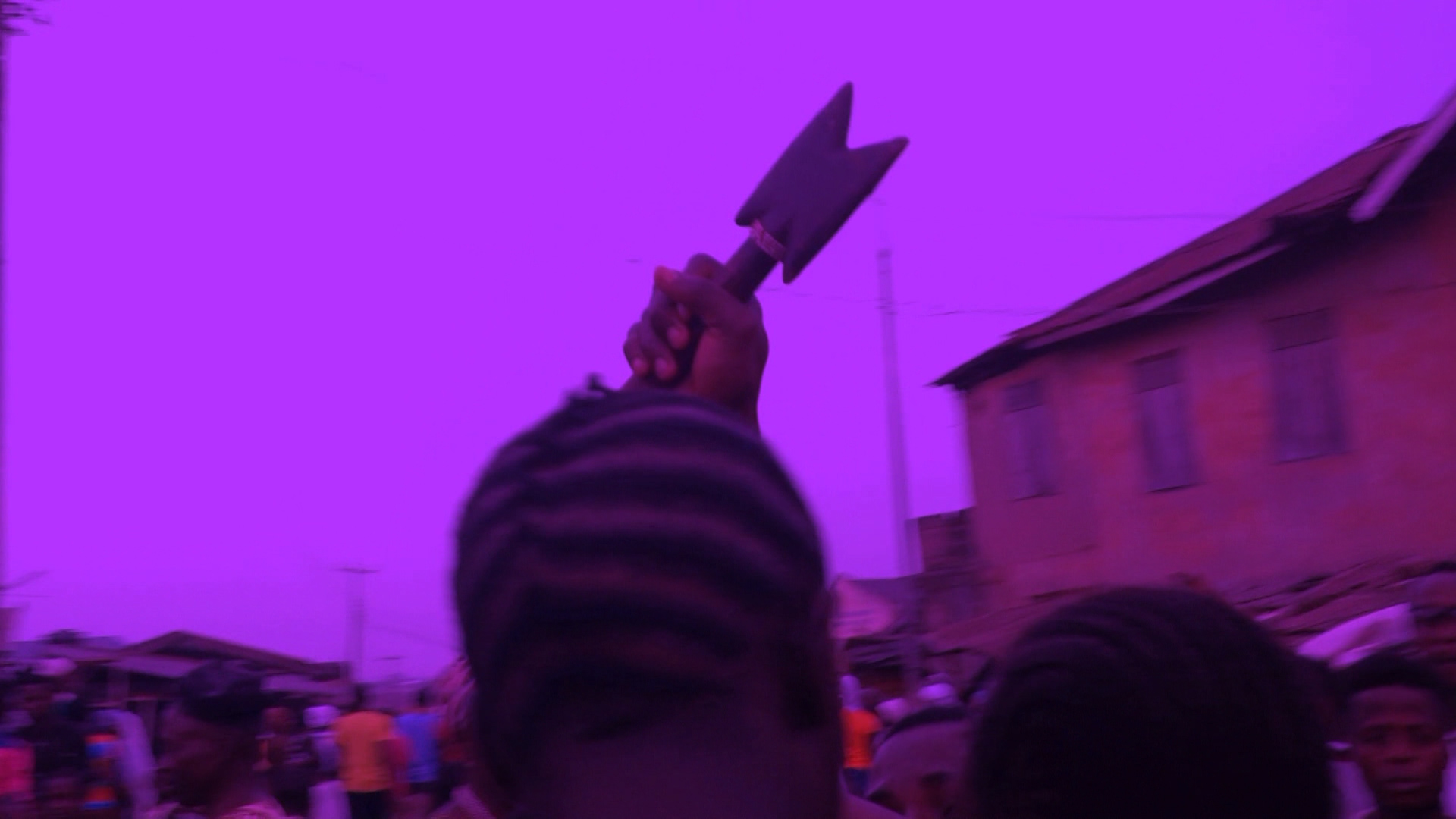
Nigerian-American artist and LGBT activist Ade has been residing in Lagos on a Fulbright scholarship when the law came into effect. Her project AfroOdyssey IV: 100 Years Latercaptures some of her impressions and feelings related to queer life in Nigeria, impacted severely by religious fanaticism, equally practiced by Christians and Muslims in Nigeria. “I just completed an experimental short-film entitled AfroOdyssey IV: 100 Years Later, which plays with images, figures and objects that help us critique religion’s subtle and/or overt machinations within Nigerian society,” Ade explains.

2014-01-20-Sangostaff.Still006.jpg

Picture: Ade from AfroOdyssey IV: 100 Years Later

What was your first reaction to the “Same Sex Marriage Prohibition Act” that was signed into law by Nigeria’s President Goodluck Jonathan this month?

My first reaction to the signing of the bill was pure rage. I felt as though someone had just doused my body with boiled water. I also felt wildly perplexed, like someone who had suddenly been transported back in time to the Middle Ages. In the year 2014, Nigeria’s 100th birth-year (it was amalgamated in 1914 by the British), this country decided to move backwards in its evolutionary process. What a shame! The same country that just allowed a senator to marry an innocent fourteen year-old girl, has now criminalized homosexuality under the false disguise of same-sex marriage. Whose rights are they planning to go after next?

History teaches us that the target criminals next in line are women, after innocent children and gay people. Especially if the Bible and the Koran guide the law. So if you are an unmarried woman, beware! If you are married but have no children, beware! If you have ever cheated on your husband, beware! If you dress a little too sexy, beware! If you have your own opinion about anything as a woman, beware!

What were the immediate consequences for the gay/lesbian community in Lagos?

The queer community is keeping a low profile. The streets have been rendered unsafe by this bill. Anyone who even looks like he or she may be queer could be subject to violent mob action, talk less of jail. The Initiative for Equal Rights (TIERS), a human rights organization based in Lagos, has created a 24-hour hotline for people to call into in case of an emergency.
There are scary stories coming from Northern and Eastern Nigeria of police targets and gay-lists being used to round up members of the community. We have also heard that people are being arrested in Oyo and Ibadan. Gay people are terrified and thus playing it safe should the same start happening in Lagos.

Have you been personally affected by it?

I started getting sick. Since the bill was signed into law I have had diarrhea, headaches, sleep deprivation and low-appetite. I did not anticipate the physical reactions to my emotional and mental states. I choose to treat myself at home, because a trip to the hospital would mean I would have to tell the doctor why I started getting sick in the first place.

As soon as he or she hears that I was stressed out by my opposition to the bill, they could refuse treatment or worse, report me to the police. On the other hand, my sickness doesn’t even come close to the problems of those who have been picked up by the police and whisked off to jail simply because they were born gay. I don’t envy those whose parents recently kicked them out of the house so that their gay child doesn’t bring shame to the family, rendering their child homeless. The list goes on.

You have been in Nigeria for several months now. How have you experienced gay/lesbian life so far?

I have attended community meetings, gay parties, LGBT film screenings, but most importantly made a few good friends. This has allowed me to watch how the queer community supports each other on a daily basis. I truly feel like they are now part of my family. During this stressful time, we have constantly been checking on each other’s well-being.

Apparently, I am not the only one who has gotten sick! An entire community exists underground that most Nigerians are not aware of, and it mirrors the same experiences in mainstream society to a large extent. Lately, the gay community is feeling traumatized. While some people are looking for a way out of Nigeria, others are contemplating suicide. The community is in a lot of pain.

How do homosexuals meet or organize under these circumstances?

When physical space is threatened, virtual spaces takes over. Virtual sites have become the stage for debate. It is the place where friendships become null and void and when new alliances can be formed. This is what is happening within the queer community here. Gay people have already been operating largely underground for years now. And I am talking about those who accept themselves as gay and live a gay lifestyle. There are others who hide their sexuality behind a spouse and five children. I suspect there are many of them in the federal government.

For openly gay people, meeting up will become even more secretive than it was before. Organizing is a totally different story. Organizing would require the emergence of a leader or several leaders, who can rally the community in a way that inspires them to stand up and challenge authority. While there are several individuals doing important human rights/gay rights work in their own way, I have not yet come across anyone who is actively bringing all the different sub-groups of the queer community together to come up with a clear strategic plan for action. That does not mean this person or organization could not emerge in the coming months.

In what way has your sexual orientation impacted your artwork so far and how does this oppressive situation in Nigeria impact it currently?

To some degree, I can relate to the loss of family ties based on sexual orientation. I came out of the closet as an adult after being married previously to a man. My experience with family was largely governed by “what the bible says.” It was and still is very hard for me to accept or swallow that religion is the basis of ignorance. I could not have a reasonable, logical conversation with certain family members because of how literally they interpreted the Bible and their inability to put it in historical context. I find the same problem among Nigerians and here in Lagos, it is even more magnified. Religious institutions play a major role in all aspects of people’s lives and are the site of moral teaching on everything from marriage to entrepreneurship.

So of course, it was rather easy to convince the masses to accept this oppressive bill. Because of my personal experiences prior to coming to Nigeria, my research focused mainly on how queer Nigerians navigated though the antagonistic worlds called spirituality and sexuality. I just completed an experimental short-film entitled AfroOdyssey IV: 100 Years Later, which plays with images, figures and objects that help us critique religion’s subtle and/or overt machinations within Nigerian society.

The mosquito is a metaphor for the corrupt nature of government, which continues to suck the blood of its citizenry. The interpretative dancers speak to emotions within day-to-day queer experience, against the backdrop of traditional drummers, traditional church bells, and organ music. Throughout the film the church is both the site of struggle as well as warmth and embrace. Outside of the church, an underground scene thrives in Lagos.

The gay scene is not in mainstream view just as traditional Yoruba spirituality has to hide from the damnation of mainstream religious institutions. There are churches in Lagos that actively burn “wooden idols “(that is, traditional Yoruba sculpture) in front of thousands of people. This film challenges such beliefs/practices and attempts to educate viewers on contemporary queer life in Nigeria. It will screen in several countries in 2014 including the United States, Spain, Germany and Nigeria.

You are of Nigerian decent, but were raised in the U.S. I am assuming that you strongly identify with both countries. How would you define your role or obligations as a Nigerian at the moment?

I am torn between wanting to fight for a new Nigeria, and disowning it all-together. My family left Nigeria during the military dictatorship in the mid-eighties, just like many middle-class families that created a brain-drain across the country. Having been born in New York, growing up in the United States, yet having ancestral roots here, I came to Nigeria because I wanted being Nigerian to mean more to me than simply loving the taste of jollof rice and fried plantain. I have been having much fun while researching and in fact, my pidgin is getting better. This bill has nearly erased all the joy I have experienced since coming here. Before the bill, I used to wake up early, call a bike-man to take me to Obalende or call a driver to take me to the movies at Ozone.

Now, I have to force myself to leave the house. The energy I once had to go out and explore is now being used to write this very response/article. The bill nearly zapped all my motivation, and I can clearly see how any brilliant, hardworking Nigerian can easily lose motivation in a country that calls him or her a criminal. However, I do feel a sense of duty to speak truth to justice at times like this. People need to be seriously educated on what it means to be homosexual, before accepting draconian laws into their country. My late uncle used to say, “when a man is tired of learning, he is tired of life.” Is the federal government of Nigeria filled with a bunch of walking zombies?

And on the other hand, how is your U.S.-American identity affecting your thoughts and actions?

In America we like to say — Freedom ain’t free! America has many good lessons Nigeria can learn from when it comes to the fight for civil rights. I keep this in mind while I am here. What Nigeria is attempting to do to its people is set the stage for mass incarceration of homosexuals.

Ask yourself — why wouldn’t the government do this, when they have never apologized for the genocide of Biafra? History should not repeat itself. But it seems Nigeria, whether it realizes it or not, has laid the grounds for another disastrous situation which will affect millions of people.

Lia Petridis Maiello, GAPW Media Consultant

Restraining Order: Dampening Enthusiasm for the Use of the Veto on Atrocity Crimes

30 Oct

One of the trendy ideas floating around the UN system as we continue to wrestle with the implications of Syria refers to veto restraint – that is, pushing hard for permanent Council members (P-5) to voluntarily refrain from the use of the veto in situations where there has been a clear finding of existing or immanent atrocity crimes.

The idea seems simple enough on its face and, in most instances, reflects a sincere desire to make the UN more responsive and accountable to the horrifying violence that state and non-state actors have inflicted and are inflicting on civilian populations.  Once P-5 members commit to even the possibility of veto restraint, it then becomes possible to put pressure on these states in situations like Syria where atrocities threaten and where there are equally obvious geo-political impediments to Council achievement of consensus on coercive remedies.

The ability to exert such pressure would be welcome news for civil society and many non-Council states. As we and others have noted to senior UN officials, whether we like it or not and whether it is entirely fair or not, many in the world judge the UN by how quickly and effectively it can respond to the violence in Syria and elsewhere that fills our computer screens and televisions with often horrific images. It is possible that restraint of veto could lead to timely, life-saving interventions in certain instances.

Indeed, the need for the UN to ‘do something’ in such instances comes from a place that is politically and psychologically complex but largely based on a canon of responsibility.  Diplomats and UN officials have some sense of how deep the public longing is for that time when the threat of mass atrocity crimes can finally be laid to rest. And we know that the closer such violence comes to families and communities with which we have a living connection, the more that frustration and impatience is likely to grow.   As well it should.

That said, we have questions about how well the idea of veto restraint would play in a highly politicized environment such as the UN, an environment filled with good and dedicated people running a gauntlet of states interests largely generated from outside New York and playing on a field which, if anything, is heavily tilted in favor of certain states and their own political interests.

There are two essential conditions for a successful policy to restrain the use of the veto – sufficient de-politicized, evidence-based concern (political will) to protect lives, and the right (and fairly engaged) blend of institutional capacities and contexts.   While veto restraint may indeed increase functionality of those politically inclined to ‘do something’ of either a coercive or protective nature, it does not help to address more fundamental issues that continue to bog down the UN system.   Indeed, it may well be, for instance, that the UN turns out not always the place to manage atrocity crime response.   If the UN is going to maintain a central role in such response, the next phase in atrocity crime prevention might well see the Council authorizing regional actors rather than managing responses itself.   It may also be, indeed it should be, that in this next phase the Council will forge closer relationships with UN agencies, including and especially the Joint Office on the Prevention of Genocide and the Responsibility to Protect.  Such relationships could help the Council to be seized of difficult circumstances at earlier (preventive) stages, but would also commit the Council to do more to encourage the development of less coercive options for response that can head off atrocities long before the missiles begin to fly.

The idea of veto restraint comes from a good place, but it is also largely a concession to a system that in fact has not yet found a reliable formula for effective prevention and which has exercised little ‘restraint’ when it comes to maintaining political and power divisions that are largely opaque to all but those who spend lots of time sitting and watching in UN conference rooms.

Many of those seeking ‘veto restraint’ are inclined to support the policies of the so-called P-3, all of which are NATO members and all of which sought coercive response in Syria if not for the concerns of China and especially Russia.  And indeed, If Russia and China had exercised veto restraint given what was, in the beginning at least, a clear example of a state inflicting grave violence on its own citizens, it might have eased the path towards more coercive engagements with such violence.  But would this lead to a less politicized Council regarding its attention to mass atrocity warnings, let alone the implementation of the full complement of its security responsibilities?  Would it lead to greater levels of commitment to develop and fund viable, robust preventive capacities that can simultaneously resolve tensions that trigger violence while preserving vestiges of sovereignty? Would it guarantee a less politicized engagement with findings by UN offices and UN member states of conditions ripe for the evolution of mass atrocities?   Would it help build durable, complementary relationships with regional authorities and capacities?  Would it help create viable, coercive implementation options to NATO, an organization which remains as a primary security competitor for two of the permanent Council members? Would it help states clinging to relevance in a Council overwhelmingly dominated by the “P3” find ways to ‘check’ that influence without offering up civilians to sacrifice in the process?   These are just some of the difficult institutional questions which veto restraint raises and which must be addressed soberly if the drive for such restraint is to avoid being the latest in a series of fads, albeit born of legitimate frustration, to make the UN a more relevant actor on the challenging path towards ‘never again.’

In our view, if proposals for veto restraint are to maintain both momentum and merit, they need to be grounded in a more sophisticated package of reforms such as those proposed by the Accountability, Coherence and Transparency (ACT) group chaired by Switzerland.   Veto restraint must not be seen as a stand-alone measure, but one that is tied directly to the functionality of the UN’s preventive mechanisms, levels of fairness and equity within the Council, and other considerations.    It is, like all other operations and activities, tied to a particular institution and its own contexts.  The more that the veto restraint advocates understand the system in which vetoes occur and the implications of such reform for member state conduct, including that of permanent Council members, the more likely they are to find success.

On Syria, it is perhaps too simple a matter to lay blame for the ongoing violence solely on Russian vetoes.   There were unheeded warnings, foot dragging over definitions, and geopolitical alliances that were resistant to amendment.  It will take scholars some time to sort out all of the angles and implications of this tragedy, including its relationship to earlier situations in Libya and elsewhere. Though we all wished for a decisive remedy for Syria with full justice for victims, the many complications of a conflict that evolved before our eyes — from an atrocity crime to an amoral and equally messy civil war– have long been evident.

We have all taken a ‘hit’ to our credibility and our humanity on this one.   It might be many years before we make even token gestures of justice to the millions who have been victimized by this conflict.   It seems clear to us that if the UN is to remain at the forefront of atrocity crime response, we need more than veto restraint just as we need more than impassioned speeches from Council members ready to roll out the fighter jets but not fight as hard themselves to resolve conflicts earlier and with less coercion.  Those who support restraint, and we are among them, are urged to invest energy as well in examination of other security policies and participation in ongoing reform efforts regarding the institutional structures responsible for enacting those policies.

Dr. Robert Zuber