Tag Archives: SDGs

A Moment of Truth: Reflections on the UN System from the Inside, by Himadri Ratnayake  

4 Aug

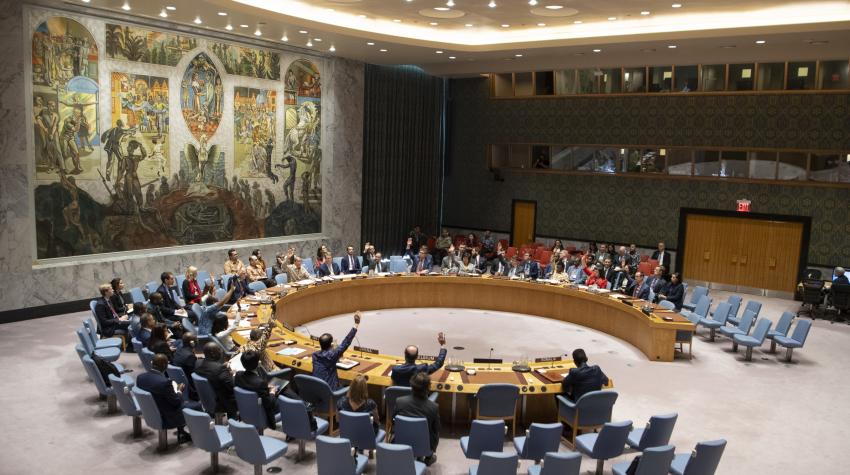
View of the Security Council chamber from the left side of the room, with a round table for delegations and a mural of a pheonix on the wall.

Editor’s Note: A student at Columbia University of Sri Lankan heritage, Himadri has concluded her summer internship with us, adding much value to our work and making the most of the opportunities which the UN presented. Her task here was to reflect on how being at the UN differed from (or confirmed) learning about the UN in a classroom setting, how her assessments of the UN were influenced by expectations of the UN generated in other contexts. We were really happy to have her with us especially during July’s High-Level Political Forum.

We have six years…six years left to go. In 2030, I will be 30. In 2040, I will be 40. In 2050, I will be 50 and so on. Only six years to make comprehensive progress on the 2030 Sustainable Development Goals, with only 17% of the goals and targets now on track. . While it may seem like there is a lot of time left, there is also still a lot of work to do to fully address all the goals and their targets, to honor the promises we have made to global constituents.    

As a 24-year-old graduate student studying international affairs with an emphasis on Economic and Political Development, International Organizations/UN Studies and International Conflict Resolution, I have been able to understand some of the behind-the-scenes of what takes place within UN spaces. When you are in school, there is only so much you can take away from articles, resolutions and the knowledge of a professor. Having now been at the UN, I have been able to apply what I have learned and understand more of the system and processes that occur within that sphere. Overall, it has been an absolute privilege to have been able to attend meetings covering a span of topics: the conflicts in Gaza, Yemen, Ukraine, etc., food insecurity, children impacted by climate change and war, oceans, decolonization, etc. I have acquired an abundance of knowledge just by attending such meetings and side events, learning about various climate and terrorist threats, UN agency mandates and rules of procedure, preferred UN terminology, and so on. There were some topics that I had never truly known about until I attended a meeting, and that only goes to show the range of conversations which are taking place at the UN, especially during July’s High-Level Political Forum.   

Throughout my time here, I have had multiple opportunities to engage in meetings held within the Security Council, ECOSOC and the General Assembly as well as “side events” in many other conference rooms. Upon my first time sitting in on a Security Council meeting, I felt excited to be able to witness discussions in a manner that is  often closed to the outside world. There is a level of seriousness and intensity in the room that one can’t necessarily experience on UNTV or in a classroom. The briefings initially held at the beginning of meetings by various officials from UN agencies ranging from the OHCHR to the IOM and so on, offer incredible insight regarding statistics and stories of urgent situations taking place on the ground.  

Initially, during the first few meetings, all the country’s statements appeared to be full of hope and promise, offering a great chance of making progress toward resolving situations on the UN agenda. However, upon attending several meetings and listening to multiple country statements back-to-back, I noticed the repetition of information and beliefs expressed by the country representatives. The statements would usually start the same, often including the same statistics that would already have been mentioned in an opening briefing. The words “let me make three points” were frequently mentioned as well. I bring up the structure of these speeches because it shows how much repetition we witness, not only in structure but in content as well.  

While I still retain so much hope in the UN, and still wish to join the Foreign Service soon along with involving myself in humanitarian field work, I cannot help but wonder how much progress and change we are truly creating in terms of resolving many existing global threats. This is also the case for emerging crises; everyone but the people at the very top of governance seem so highly limited in terms of decision-making access and impact. Even those residing at or near  the top experience their own limitations.  

 In addition to what I have previously noted, I have also observed other unfortunate occurrences in the meetings I attended. There are Member State representatives who walk out of the Council chamber when certain countries are preparing to speak, Member States who change the narrative (facts being turned into fiction and vice versa) and those who do not seem passionate or even interested in their own or other country’s speeches. I have also noticed the lack of attention given to those that are speaking or participating in the meetings. There have been countless times where it is evident that people were on their phones, ostensibly on social media, scrolling endlessly and even occasionally forgetting to turn their volume off. During my short tenure in the Council, I have heard bag pipes playing, some hip-hop music, etc. amidst deliberations on critical matters pertaining to peace and security. This may not seem like a big deal to some, but when discussing matters of war, the effects of it on civilians, etc. what does the lack of careful listening tell us?  

These past couple of months have brought great insight into processes which had mostly been closed off to me and others in my cohort. On the outside, the UN often represents a symbol of peace, hope, strength and unity. It also serves as a promise to current and future generations, that there will not be another world war and that peace can eventually prevail. However, it seems that presently there are more wars (regional conflicts) occurring now than perhaps ever before. My question is thus, what are we doing exactly to help resolve these situations?  

One of my favorite adornments in the Council chamber is the “Untitled (Mural for Peace)” by Norwegian artist Per Krohg. It sits as a perfect backdrop to the purpose of the Council, and further emphasizes the importance for peace and security in our world today. What a powerful message and image this is, where the phoenix is rising above the ashes of a conflict-ridden society. That is the future I wish to see, not a continuation of what is currently happening. If anything, we are now driving the phoenix back down into the ashes. The Damask wall tapestry further embodies faith with the growing wheat representing “hope and the heart of charity.” While such beliefs still persist, it is imperative that we fulfill these symbolic aspirations and apply them to the world.  

On the inside, the Council meetings usually start in the same manner. The three dings go off, and the agenda is usually announced and adopted for the session. In some meetings, the level of intensity is relatively tame while in others there is finger-pointing and hostility that permeates the air. As a student, I see the hypocrisy within certain country statements, and while I understand the justification behind them should we not be looking for more sustainable solutions than reflect minimum concessions to peace? There are certainly hopeful solutions that representatives present to their colleagues, but not everyone is committed to following what seems to be the obvious answer to the issues presented in such meetings.  

As I am entering my second year of my master’s program with this new outlook on the UN, I am hoping to discover what my place will be in that place post-graduation. I do not want to wait until 2050, when I am 50 years old, for change to take place in our world today. Not more discouraging  change, which we surely don’t need, but good change. We need more good change, we need more progress on sustainability, and we need it quickly.   

One final thought:  Throughout my time  at the UN, many discussions that took place in the context of smaller events, especially during the High-Level Political Forum (HLPF), mentioned the need to involve the youth by incorporating them in conversations and even decisions. These conversations include the evolving climate crisis, peacebuilding priorities, multiple human rights issues, etc. The problem is that prominent figures in the room may listen to youth  but there is little to no progress which can be measured as a result of these interactions. Involving younger generations in actual development processes, whether it be policymaking or other discussions at multiple levels of policy and practice, is necessary if we wish to fulfill our SDG commitments.   

As a member of the “younger generations,” there is so much I wish to do in terms of solving these global challenges that only seem to be growing. But it seems unlikely that I can make any impact or real change at my current stage. The more UN meetings I attended, the more I observed the age range of people leading discussions, and they were mostly (with all due respect) from the older generations. There were even some events where one could easily notice the lack of bodies of any age in the room, perhaps because not many people were aware of the event, perhaps they were too busy with other matters, or (I fear) perhaps some people in the system (or attending the HLPF) may be losing hope in an organization that has demonstrated limited capabilities to resolve many security and development concerns.  

With that being said, I hope my reflection offers some helpful insight into a youth’s developing perspective on the UN. My passion for international affairs and this journey into diplomacy stems from my time in Model United Nations (MUN). In learning about various world issues at an even younger age and then being privileged to travel the world, I acquired this hope that the UN could be the answer to solving these pressing challenges. Over time, as my knowledge and experiences have grown, I realized that it is not only the UN but also and primarily world governments who are the keys to forging positive change. They are the primary policymakers and the ones who hold the power in decision-making when it comes to war, the climate crisis, peacebuilding priorities, etc. Thank you to FIACAT and all who made my UN sojourn possible. By 2030, I hope more significant progress on all of the SDGs will be possible. .  

Servant Leadership, Systems Thinking and Sustainable Development: A Hopeful Trio, Dr. Robert Zuber

12 Mar

Editor’s Note: This past week, at the end of 2 months away from New York, I was honored once again to address students at the Scheller School of Business at Georgia Tech University. Courses offered by our close colleague, Dr. Robert Thomas, cover issues related to Servant Leadership and Social Entrepreneurship and have attracted a large following of students who seem to be seeking ways to utilize skills and privilege to expand their options in the service of a planet and its people under considerable strain. This is a lightly edited version of my Servant Leadership presentation. The Social Entrepreneurship piece will soon follow.

Today, this weary road-warrior will attempt to blend three objectives together.   First the beneficial implications of Servant Leadership which I value highly.

Second the objective of this week’s lessons which is the benefit of Systems Thinking which I also value highly, though not without caveats.

And the third to discern implications of all of this for fulfillment of the Sustainable Development Goals which, at least some of you may recognize, is a focal point for this week of activities here at Georgia Tech. It is certainly a focal point for much of our work in New York as well.

First up, why servant leadership?  I and a small group of colleagues are in the process of writing a book grounded in large measure on inights from the Inner Economy model lovingly developed by Dr. Lisa Berkley in California, a model which among other benefits assists us to explore the feelings, values, connections and inspirations that many of us in this world overlook but which make us who we are, help define who we might become and influence how we can better use our skills and talents to make a better future for the world.  At the UN, our phase for this is “better policy requires better people” people who see more deeply, hold the mirror up to themselves as well as others, and invest in the wellbeing of colleagues across the political spectrum as well as their own.  It’s about leadership which is committed to raising all the boats in the harbor not simply the largest and most expensive. It is also about the realization that none of the problems – some grave – that we now face are ultimately unsolvable without a commitment to deeper connection and a more comprehensive and supportive engagement with the skills and aspirations of others. As a general rule, we need to risk more closeness while committing to vigorous shaking of the asset tree in our diverse communities and then making better use of what falls from it.

What we seek here is not only about a more honest relationship with ourselves, but also about a more robust and open claim on connection with others, with those we know and those we don’t know yet.  One of the motivations for my own involvement in the aforementioned book project is the recognition by psychologists and neuro-biologists, and certainly but by folks in other walks of life, that we have collectively done grave damage to what is in fact our hard wiring for connection.  Despite a bevy of social media tools, we have become, on the whole, more cynical and suspicious than is either empirically-justified or generally good for us.  We have swapped out broad circles of connection and replaced it with performative and materially focused gestures.  People who wouldn’t dream of making eye ontact in a café willingly pose in front of camera possibly to be seen by thousands.  People increasingly would, to quote the great Wendell Berry, rather own a neighbor’s farm than have a neighbor.  The movements represented by Inner Economy and Servant Leadership remind us in part of the fundamental value of human connection, of not only having neighbors on farms and in offices but doing more to help their various contributions and labors have the impact that our stressed-out world needs them to have.

So now, what does “systems thinking” contribute to these ends?

Systems thinking is a way of making sense of the complexity of the world by looking at it in terms of wholes and relationships rather than by splitting it down into constituent and independent parts.  Systems thinking also involves a sensitivity to the circular nature of the world we live in; an awareness of the role of both local cultures and global structures in creating the conditions we experience; a recognition that there are powerful laws of nature and economy operating on us that we are largely unaware of; a realization that there are consequences to our actions that we are oblivious to. Systems thinking helps strike a better balance between how the various elements of life fit together and the small acts and insights that help define our contexts and ensure an improvement of the fit. 

Systems thinking is also an aid to increasing our sensitivity to how patterns shift over time, patterns that operate within us and outside us, most beyond the events of the moment.  I am trained a bit in counseling and there is a tendency here for the one being counseled to focus on the life events which both provoked their narrative and allegedly proved that narrative as well.  But any such narrative is inevitably more complex, more inter-connected than articulated.  And despite our desire at time to hold it in place, our narratives continue to evolve as we also continue to evolve.  As I reminded a successful friend of mine, “we were not always this way.”  You will not always be the way you are now.  Regardless of how hard you try not to change, how much you might want to maintain your habits, preferences and “explanations” for both, the constant drip of life ensures that our outer and inner economies will at least in some key ways be transformed, not only in wrinkles but in disappointments and loss, in satisfaction and success.  And all of that is integrated into a human system which in our cases has already experienced much and which is connected to far more than we generally recognize.  

Finally, systems thinking enhances our ability to examine skillfully what at the UN we call the “root causes” of events and issues, causes which are often considerably more complex than what we are able or willing to acknowledge.  Again with reference to counseling, we hear a lot of the “someone done me wrong narrative” that ostensibly forms the basis for the pain and drama that motivated the person to seek counseling in the first place.  But of course the story is always more complex.  Yes, we have been done wrong, sometimes gravely  But we have likely also done wrong.  We have enabled bad behavior.  We have held our tongue when speaking out was warranted.  We have stood by when intervention would have been the more virtuous path.  And we have accepted systems of education, business, politics and even religion that could be so much more than they are, so much more engaging and hopeful if only we would commit to make them so.

The problems we face in policy are most often chronic and systemic, rather than a one-off.  This is true as well in our personal lives.  But our problems also have a context that is evolving, one that is constantly incorporating new experiences and new reactions, one that includes habits forming but also habits dissolving, one which urges us to ask different questions, better questions, including of yourself, than you might have been willing to ask before.

Perhaps I am making too much of this, but this last point seems particularly important.  Most of us are terrible at asking questions.   When we ask, it is only rarely without agendas, rarely drawing people out, rarely open-ended.  Many of our questions take the form of accusations.  Someone is suspicious of something or other.  Someone is trying to “catch” us in something.  Back in the days of transactional analysis, there was this game which so many of us play and which was defined as “now I’ve got you, you son of a bitch.”  This is how we roll now.  Catching people in one half-truth or another is the goal rather than helping them to explore or grow.   

Given this, we collectively tend to recoil at being asked questions, seeing questions as a threat or an intrusion or a source of judgment – justified or not — rather than an opportunity to connect, to broaden our thoughts and other engagements with the world. Indeed, one could make the case (and I would make it here) is that the way we ask and respond to questions is a strong indicator of the state of our social world and, more specifically, the state of ourselves.

Finally we come to the Sustainable Development Goals which is more or less systems-thinking-on-steroids for sustainability.  This is SDG week here at Tech and the SDGs offer some important insights into how servant leadership and systems thinking interconnect.  On the plus side, we are reminded that Sustainable Development Goals and targets are interrelated, that progress on racial justice or women’s rights or green energy access has direct implications for food security, smarter cities, ocean health or the creation of more peaceful societies.  When we discriminate, when we fail to acknowledge the degree to which our prejudices keep too many on the sidelines as we attempt to solve the problems which will directly impact your future, problems which are related, which affect all and which must be solved by all. Our prejudices and other limitations jeopardize fulfillment of the SDG promises we have made and, more importantly, the promises that you who will soon come to full fruition in this crazy world will require.   We owe you this, we owe you all of it, including a strong and impactful role for each of you who desire it in helping the rest of us ensure that promises made are promises kept.

But as important as this is, it leaves out an important dimension, that of context and localization.  Yes, we want people in general to be guaranteed access to education, to fresh water, to cities that are healthy and functional, to governance and justice systems that at the very least attempts to be fair.  But like other people we also want to ensure water access for our own families and neighbors, we also want better transportation which serves our own neighborhoods, we also want education for our own children which prepares them to live in the world to come and not only the world that was.

All of these desires and aspirations have specific contexts and all of this requires energies and strategies which are tailored to meet the needs and aspirations of real people in real places. Rethinking transportation options takes a different form in Bangkok than in Atlanta.   Water access means something different in Miami than in the Sahel.   And contexts can shift, sometimes dramatically.   Los Angeles this winter had torrential rain and sleet storms with feet of snow on mountains visible from local beaches after years of drought.  Little stays the same except, unfortunately, the way in which we address changes, the levels of determination and fairness that we apply in the struggle to ensure more equitable access to sustainable resources. 

There is a lesson here for Servant Leadership as well.   Yes, we want leaders who are concerned about our well-being beyond our workplace functions.  And yes we appreciate policies that help make our labors more effective and humane.  But we need service provision that to some degree responds to context.  Persons with disabilities often need different forms and levels of service than so-called “normal” people.  Immigrants often need different forms of support than residents.  Children and the elderly often require sustained care beyond what those of us in this lecture room generally require.   It is the job of sustainable development policy to as we say “leave no-one behind.”  But the needs of aspirations of people are not a function of some computer-generated abstractions.   They all reside somewhere specific.  They all have a metaphorical address and we must do better at delivering to those addresses.

So this to me is the great challenge of servant leadership which embraces systems thinking and contributes to sustainable development.   We must better train ourselves to see the connections between projects and people, between issues and outcomes.  And we need to get better at being honest about the things that can go wrong when we attempt to lead or make policy based on sometimes-willfully incomplete assessments, such as when we release new technology to market before we have properly interrogated its potential for harm.   But we also need leadership which moves beyond algorithms and other abstractions to the system which exists around us and within us, a system which we both create and carry with us, a system which needs to remain humane and reassuring, a system which has inflicted pain and had pain inflicted on it, a system currently characterized by too many disconnects and half-fulfilled, decontextualized promises.

Because you are who are you and because you are in a place such as Georgia Tech, you will likely always have options in life.  But you will also face your cross-roads, some of your own making, where even the most provileged and self-directed of you will need a hand to help you out of some metaphorical ditch.  One key to the fulfillment of the SDGs is to integrate more of those hands into our institutions and policy chambers, to reflect over and over on the responsibilities of leadership to enable a world of sustainable connection and shared development. It is often said at the UN that we are running out of time to fix the world.  Servant leadership reminds us that we are also running out of time to fix ourselves.

Village Idiocy: An Educational Reflection, Dr. Robert Zuber

10 Jul

I don’t know why I cannot sleep – I slept just fine at school.  Kathy Kenney-Marshall

You are being taught by people who have been able to accommodate themselves to a regime of thought laid down by their predecessors. It is a self-perpetuating system. Doris Lessing

Instruction does much, but encouragement everything.  Johann Wolfgang von Goethe

Teaching is not a lost art, but the regard for it is a lost tradition.  Jacques Barzun

Once a student’s mind is set on fire, it will find a way to provide its own fuel.  Sydney J. Harris

You can’t eat straight A’s.  Maxine Hong Kingston

Under a cruel eye outworn, The little ones spend the day In sighing and dismay.  William Blake

The first week of the 2022 High Level Political Forum (HLPF) is now history. Some interesting and important discussions took place over these past few days on ocean health, gender equality and food security , important not only because they represent top-level priorities for the global community but because they serve as a reminder of our numerous dangling promises, dangling in that the urgency of our collective actions continues to fall short of the responses which the urgency of these times demands.

The HLPF also took up the issue of “education” this week, which as usual for such conversations at the UN was a bit of a hodge-podge of aspirations and cliches, largely dodging the core question of how we who have made a mess of the planet can possibly guide and inspire the youth who are soon to inherit it.

Yes, the “children are our future.” Yes, life-long learning is an aspiration worthy of pursuit. Yes, education in one form or another is essential to the fulfillment of the Sustainable Development Goals, if in fact they are to be fulfilled by our 2030 deadline. Yes, education needs to become more universally accessible, in part because so many children need to “catch up” from pandemic disruptions and in part because we continue to leave on the table so many skills and aptitudes, every one of which will be needed in some form if we are to set this carbon-saturated planet on a healthier course while we still have time to do so.

But in our rush to promote “education” as a sustainable development aspiration, in our campaigns to “innovate” the educational landscape (as with one HLPF side event), I worry that “well-educated” adults are dodging questions and concerns which may not complicate discussions in UN conference rooms but which plague educators (and those who aspire to educate) in a variety of settings.

I have been blessed in my life with some excellent teachers, both in and out of schools, especially in my early adult years, teachers who shared what they knew and gave what they could, teachers far less interested in replication than invention, who rooted for me to become more than I actually became. I have also been blessed to know a bevy of gifted teachers who are contemporaries — John Thompson, Bev Haulmark, Christopher Colvin, John Suggs, Barbara Zelter, Virginia Cawagas, Rien van Nek, Carolyn O’Brien — these and many others who have worked from time to time within school structures but also understand something of the limitations of classrooms, the degree to which the “self-perpetuating thought-regime” we represent can serve as a lifeline for some youth but can also constitute something of a “prison” for others.

In this age, we tend to be enamored of “school” as a physical entity, a place full of chairs and desks in a row, rooms that are age-segregated and hierarchical, driven largely by the expertise of the one in front of the room, concentrating on skills and tasks that we have concluded are essential to “educated” beings but which may not in fact be sufficient to the lives they are destined to lead, lives in significant portion defined by the storms which congregate on the horizon and which they had no real part in creating.

What, we might rightly ask, constitutes that base of skills and knowledge about which some broad consensus is feasible? As we know, at least in the US, schools have become something of a battleground for the ideas and values which parents seek to have reinforced through formal education. How do we talk with children about their own national history in all its messiness and complexity without resorting to slight-of-hand measures such as redefining slavery as “involuntary relocation?” How do we expect schools and our professional educators to prepare students to address existential threats such as climate change and hate speech the existence of which some parents and state officials are unwilling to acknowledge? How are teachers, including the very best of them, supposed to accompany and encourage young people in keeping with the aspirations which motivated their own professional choices when the trust and friendship necessary to accompaniment is institutionally discouraged?

So many of the teachers I know in so many global settings are stuck somewhere between lighting fires in the young and extinguishing them, between sharing lives from which young people could potentially learn much and hinding behind an ever-thickening professonal protocol, between reinforcing the metrics of school assessment and telling them the truth about the genuinely tenuous relationship between good grades and good lives. While they are in school, we want students to do well, to pay attention and resist the temptation to either snooze or act out. But school is not life, it may not in many instances even be sufficient training for life as it is now unfolding and, in any event, you “can’t eat straight A’s.”

The equation which many now draw, even inadvertently, between education and schooling is dangerous both to successful schooling itself and to a world which fails to examine the many factors which influence how students learn, what they learn and, most importantly, what they do with what they know, including how (or if) they continue on a path towards higher levels of wisdom and cognitive synethsis. The educational configuration enveloping our youth is surely in large part about school, increasingly about social media, but also about churches and corporations, families and libraries, neighbors and public servants. It is, in my view at least, important to keep all these formal and informal options alive and assessed, not only for the benefit of young people who may not thrive in more formal settings, but also to reinforce the idea that education is not only what teachers do, but what we all have some responsibility to do, each within our own domains and each with varying degrees of formality and bureaucracy. So long as “education” is left to increasingly harried, overly-scrutinized and under-appreciated teachers, the gaps separating those who make decisions in this fractured world and those who may well become victimzed by those decisions will only widen.

If indeed lifelong learning is a viable educational goal in this world of multiple threats, it will take more than classrooms to inspire it. More than grades and degrees. More than standards-driven learning which over-simplifies reality and prepares students ,for a world which will surely have shifted and shaken under their feet barely before they can even get those feet “wet.”

In the UN General Assembly this week, in a discussion surely relevant to the HLPF, delegates met in informal session to debate elements of a “Declaration on Future Generations” to be presented in September at the GA’s 77th session. While there were no teachers or students present for this conversation, there were a few helpful observations from delegations, including from South Africa and Japan, both of which noted the heavy threat levels under which schooling and related social functions are now forced to take place. Japan expressed the hope that such a Declaration, including its educational elements, could serve to “turbo-charge” our commitment to the SDGs, fulfill our promises to future generations and restore some of the confidence lost by many global youth in many of us global adults.

This is not about “business as usual” rhetorical flourishes on the value of sustainability and innovation. Indeed, as a UN Special Rapporteur reminded, “innovation does not come cheap.” It requires more of our resources, but also more of our humanity including our sharing of lessons learned along our own life paths, the lessons we were often too slow to learn ourselves. There is too much in our world as it is, including violence and strife in multiple forms which, as South Africa and the European Union implored, we should all be loathe to pass on to future generations. But as it now stands, pass on we shall, and the question is who and what can we entrust to the preparation of the young people who are set to assume some weighty responsibilities, whether they are ready to do so or not.

Lest we add villages of idiots to our long generational list of dubious “accomplishments” we must invest more of ourselves in the education of the young in the best and broadest sense of the term. Invest more of ourselves in all aspects of the “configuration” which shapes the values, hopes, anxieties and aspirations of our young people. More than curricular “innovations” and snappy, data-driven assessments. More than the perpetuation of systems which denigrate teachers and create apartheid-like systems of access. More than adults who claim to know more and possess greater wisdom than we do interfacing with young people who know we don’t.

These urgent times require more from each of us if our young people will be able to manage what we are now likely to bequeath to them. I hope at least a portion of them are still listening.

Brave Heart: A Mindset for Sustainable Development, Dr. Robert Zuber

11 Jul
See the source image

Solidarity isn’t merely a task, it is a pleasure and the best assurance of security.  Erich Fromm

Sometimes it is nothing more than gritting your teeth through pain, and the work of every day, the slow walk toward a better life.  Veronica Roth

For if they come for you in the morning, they will be coming for us that night.  James Baldwin

It is curious that physical courage should be so common in the world and moral courage so rare.  Mark Twain

Our minds must be as ready to move as capital is, to trace its paths and to imagine alternative destinations. Chandra Talpade Mohanty

The moment we begin to fear the opinions of others and hesitate to tell the truth that is in us, and from motives of policy are silent when we should speak, the divine floods of light and life no longer flow into our souls.  Elizabeth Cady Stanton

Solidarity is not discovered by reflection but created.  Richard Rorty

In a week that witnessed renewals of armed violence, assassination attempts and successes, and heat excesses oozing from virtually every pore of the earth’s membrane, the UN met in the context of the High Level Political Forum (HLPF) to consider a way forward on our lagging sustainable development (SDG) commitments.

In largely virtual formats, figures of global prominence from government, private investment houses, universities and a bevy of civil society organizations shared their sense of what was possible to achieve now given a world still struggling with COVID-19 variants and vaccine inequities. Despite the constraints imposed by time and (occasionally) technology, several plenary discussions and (especially) side events made substantial contributions to our search for a common, viable way forward on issues from poverty and governance to food security and climate change, reminding us of the struggles of the moment but also summoning us to take bolder steps, to embrace bolder measures, to build a healthier, more sustainable world while the opportunity to do so still presents itself.

As one might imagine, the pandemic occupied center-stage, with the Foreign Minister of Barbados reminding the opening session of the HLPF that vaccine access (the “what”) is key to allowing tourism-based economies in the Caribbean and elsewhere to at least begin to recover.  But in a theme recurring throughout the week, the “how” of equitable vaccine distribution and access remained elusive.  As that same session, the World Health Organization’s Dr. Tedros chimed in that in the absence of “local health security,” global health security and other SDG commitments will surely remain “off track.” But Tedros also highlighted “profound gaps of sharing” in our world and urged efforts towards a “pandemic treaty” to identify and address new pathogens before they are allowed to replicate the current levels of social and economic ruin to which many government officials this week consistently pointed.

As others also reminded the digital UN audience, the current pandemic might be the most recent, major impediment to SDG implementation, but it is hardly the only one. Indeed, as OXFAM’s director and others made clear, the tendency to “privilege private wealth over the public good” was in force well before the pandemic.  COVID-19 did not create the food insecurity that ravages millions under threat from climate change and armed violence.  It did not invent what was noted throughout the week as the “shrinking civic space” which endangers journalists and civil society leaders alike and allows disinformation to flourish.  It did not create pervasive discriminations of race and culture which Costa Rica’s Ambassador Chan noted perpetuates the existence of “second class citizens” and impedes progress towards equality, let alone genuine “equity.”  And it certainly did not invent the gross inequalities of power and income which have only grown more grotesque during the pandemic.  As noted by the World Food Program’s David Beasley, as many as 41 million people in our world are now facing grave food insecurity which could be alleviated if we could only find the $6 billion dollars to do so, a mere 0.2% of the $28.7 trillion dollars in global wealth generated last year despite pandemic limitations. 

The pandemic, as many have noted this week, has also become a “cover” of sorts for steps that we know we need to take but now have an “excuse” not to do so.   Many during the HLPF, including VP of the Economic and Social Council, Mexico’s Ambassador Sandoval, called again for urgent action on matters from “decent work” to “full digital connectivity” which have long been on the UN agenda. Beyond the HLPF, a discussion this week, in the General Assembly on the UN’s global counter-terror strategy yielded insights from many, including from the Malaysian representative who advocated for the creation of “mental firewalls” against the growing (and equally well-known) ability of extremists to radicalize its youth.  Terrorists have not taken time off during this pandemic, as many delegations noted, but our responses to these threats, as Afghanistan warned, have largely remained “static.”

So what do we do now?  How do we move from the “what” that we well know to the “how” which continues to elude us in more than a few key areas of sustainable development and which is more urgent with each passing day, let alone with each passing HLPF?  What is missing in our individual and collective approaches? To reiterate, we know that we have agendas of longstanding, some of which have become more severe during the pandemic, and which require urgent and practical attention.  We know that we must do more to eliminate corruption and illicit financial flows.  We also know that we must do more to open avenues of concessional finance and relieve the debt burdens of the small island and least developed states, to respond to the call of Seychelles president RamKalawan for assistance on problems that “everyone knows exist” and for which “we should not have to beg on our knees.”  We know that we need to push back harder on violence against children and schools, on our stubborn digital divides, on disinformation by climate and COVID deniers, on threats to progress on rights for women, persons with disabilities and cultural minorities, on the seductive messaging of terror groups, on trade-related and other regulations that continue to privilege the privileged.  And we know, as Italy’s Minister intoned, that we have an obligation to “rethink” governance and public institutions at all levels, ensuring that we can sustain peacebuilding in conflict and climate-affected states and create “people-centered justice systems” which have a real chance to ensure accountability for the grave crimes which we continue to perpetuate against one another.

It is a large agenda, as large as the SDGs themselves, a test for the global community unlike any we have taken on in our history.  And it will continue to require more from each of us, including the will to renounce what Pakistan’s Ambassador Akram (ECOSOC president) referred to as “wishful thinking,” the belief that these problems will somehow resolve themselves without deep and effective partnership-based policies.   A similar theme was invoked by South African during the HLPF side event on racial discrimination, reminding us that laws “can only go so far” towards the eradication of racism in the absence of complementary, supportive social structures.

And complementary, supportive peoples.  Those of you who still read these posts surely know where this is going – a plea for bravery and solidarity to embrace the challenges of the moment, challenges that will do us in unless we find in ourselves and each other the energies and capacities needed to reverse a bevy of current, worrying trends.

Fortunately, the HLPF seems to have embraced this need as well.  This week, Under-Secretary Liu advocated a “global response plan” for the pandemic.  UNICEF’s director Fore urged a “shared purpose” to enhance the welfare of children now suffering in multiple ways.  The IMF’s Managing Director Georgieva invoked the need for “bravery to move towards the light” and stay focused in our pursuit of sustainable development.  Dr. Tedros and many others called for a narrowing of our “sharing gaps.” Costa Rica’s Chan highlighted the benefits of pluralism, noting that “each new culture introduced, each new language spoken, makes us richer.” Tunisia expressed the hope that a recent Security Council agreement on Syria humanitarian assistance reflects a fresh and “common will” to resolve conflict and related political impasses. And Mexico’s Sandoval aptly summarized a trend across this HLPF, noting that there is “big hope for the world if human solidarity prevails!”

One could well ask, What is going on here?  It seems that the mindset much conducive to multilateralism is coming out of a bit of hibernation in helpful and productive ways.  Yes, there is hope for the world if solidarity prevails.  Yes, there is hope for the world if we all take responsibility for fixing what we can, healing who we can, and doing both by reaching out to others for whom the “essential blocks of social protection” are blocks we largely have in common.  Beyond resolutions and legal frameworks, beyond the stale rhetoric sometimes characteristic of UN spaces, virtual and otherwise, such hopeful solidarity requires a different type of bravery, a different breed of investment, a commitment to hearts and minds more open, honest and engaged than we have allowed them to be in quite some time; a commitment as well to pick up the pace of our often “slow walk” towards a better life, to address challenges at the speed and in the multiplicity of forms in which they now appear to us.

Let’s run with this one before we change our minds, before we return to that space where physical courage is abundant but moral courage is rare, before we frighten ourselves into inertia by the energy and “grit” needed to generate “alternative destinations,” create greater solidarity with the entire natural order, and dare speak the truths we know to speak.  As Fromm suggests, solidarity may well be a pleasure, but it is also key to our security in a world where security for many millions is clearly at a premium.  To grasp it, we must dare to grasp each other, to brave the holding of hands and affirm in practical terms the interconnectivity which lies at the heart of all life, including our own.

COP Out: Rebalancing a Fractured Harmony, Dr. Robert Zuber

23 May
See the source image

The goal of life is to make your heartbeat match the beat of the universe, to match your nature with Nature.  Joseph Campbell

Food and the human spirit have become estranged.  Masanobu Fukuoka

You must answer the call and pick your way. And there is no reverse.  J.R. Ward

We are the witnesses through which the universe becomes conscious of its glory, of its magnificence.  Alan Watts

In the end we shall have had enough of cynicism, skepticism and humbug, and we shall want to live more musically.  Vincent Van Gogh

If nature were not beautiful it would not be worth knowing, and life would not be worth living.  Henri Poincaré

It is one of the ironies of our time that, while concentrating on the defense of our country against enemies from without, we should be so heedless of those who would destroy it from within. Rachel Carson

As most of you know, a week of violence in the Middle East ended with yet another cease fire, an agreement that stopped (for now) the aerial assaults from Israeli bombers and Hamas missiles but which had little immediate impact on the bitter fruits of occupation, the settlements and demolitions, the ethnic cleansing which proceeded apace in areas of Jerusalem on which, apparently at least, the cease fire agreement was presumed to have no palliative impact.

And then there is the wreckage across Gaza, a postage-sized land already suffering from human deprivation and environmental degradation which now lies once again in ruins, a testament to the diverse and damaging consequences of armed conflict that a cease fire exposes but hardly cures. In Palestine as in so much of the rest of the world, there is a misleading quiet now, one bearing little prospect of harmony with our adversaries or with the planet we share.

I know that this lack of harmony, this willingness to cast aside cynicism and “humbug” and live more “musically,” is not unique to this moment. Certainly since the beginning of the industrial age, and likely much longer, we have demonstrated an almost genetic predisposition to unharmonious relations with our world and with each other, exploiting resources for personal gain, defending even when defense wasn’t necessary, justifying aggression in the name of religion or nation, taking more than we need and sharing less than we should.

But this time feels different. The warning sirens blare more loudly now, especially on climate change and species extinction. The bombs we use to punish adversaries are are both more explosive and more technologically clever now. The policy promises we make to each other are increasingly subject to caveats and political expediency. The institutions we have established to protect us from ourselves are proving incapable in many aspects of adjusting to evolving threats, including from extremist groups, climate risks and community-killing drought.

Our world seems often like a band that is not only out of tune but where the musicians seem committed more to compete for attention than to share in the “glory and magnificence” that our music can generate, that our world can generate as well if only we would commit to being its reliable and sensitive agents. Indeed, there is a concern in many quarters that the shrill notes emanating from our competitive and self-serving actions are drowning out the sirens that continue to blare their unsettling omens, blasting messages of urgent appeal to those who are still able to listen and heed the warnings, messages indicating that our time is limited to bring more harmony to our fractured world, to finally and sustainably make our own heartbeats “match the beat of the universe.”

Needless to say, this is no easy task. Many who used the opportunity of pandemic lockdown to establish a better work-life balance or shift their personal priorities know a bit of how difficult it can be to reset ourselves, to practice and then maintain vigilance regarding those things about each of us that threaten “destruction from within.” And once we move from our domiciles to the wider society, harmony becomes a far greater challenge. Indeed much of our personal “resetting” has as one of its objectives increasing our ability to manage the demands and stresses of a human world often spinning out of control, often failing to fulfill even the most fundamental of its values and commitments.

And yet the desire and demand for this greater, global harmony has not entirely disappeared, does not entirely verge on the edge of the extinction that now threatens so many of our fellow-species. Even in the hyper-political environment of the United Nations, a place where we routinely confuse resolution with commitment, consensus with harmony, there are growing community concern about the consequences of human “estrangement,” from our food to be sure, but also from the complexities of the natural world and even, perhaps especially, from each other.

The UN Secretary-General Antonio Guterres and the president of the Economic and Social Council, Pakistan’s Ambassador Akram, seem determined to convince the UN community of the “war on nature” that we insist on conducting, a “war” we are ultimately waging on ourselves, a “war” that too-easily spills over into active armed conflict and enables future pandemics, a “war” we are simply incapable of winning. And yet, amidst the week’s policy oxygen consumed by the violence in the Middle East, UN events also took place that reminded us of the ticking clock signifying our current, potentially-irreversible course as various human practices damage biodiversity across the spectrum, not only the large species we tend to identify with but a large food chain of both enormous complexity and increasing susceptibility to the onslaughts of our current, unsustainable levels of production and consumption.

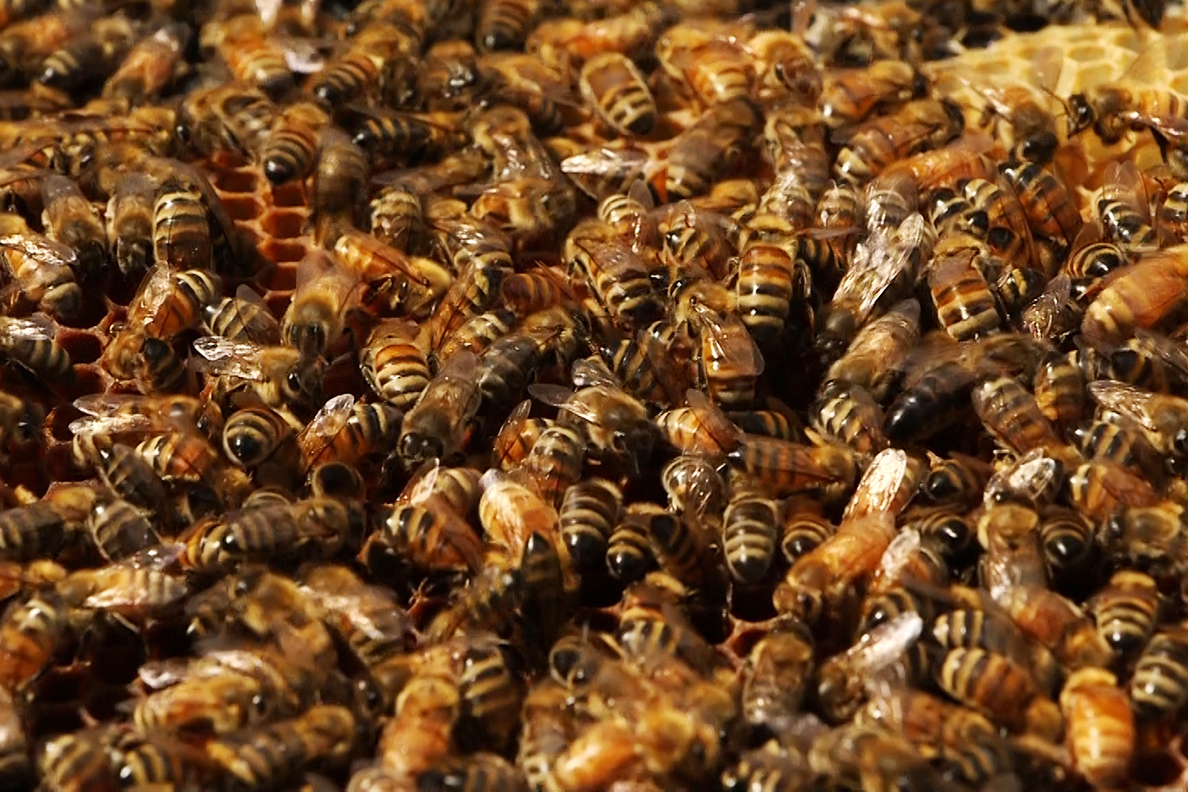
One of those was the annual event sponsored by the Mission of Slovenia to honor “World Bee Day,” a session that could easily seem trivial alongside a week of coups and famines, missile launches and crimes against humanity. But as my friends who keep bees and raise plants that attract their numbers recognize, bees and other pollinators are both endangered and crucial to life on earth. Indeed as this event noted, perhaps 80% of what nourishment humans consume requires essential input from bees. Moreover, the concept note crafted by Slovenia links endangered bees to a range of other biodiversity and ecosystem threats, noting that “current negative trends are projected to undermine progress towards a high number of the assessed targets of the Sustainable Development Goals related to poverty, hunger, health, sustainable consumption and production, water, cities, climate, oceans and land.” As we continue to pave over wetlands, degrade farmland, plant non-native species and denude forests, the damage we inflict on the smallest of our life forms exacerbates conditions which directly threaten the largest and most clever among us.

The other event of note on this theme was a preparatory meeting, hosted by the Mission of China, to encourage enthusiasm for the “COP15” meeting on biodiversity protection to be held next October in Kunming. China’s Minister of Foreign Affairs along with senior UN officials lent an air of gravitas to this session which was thankfully less about advertising and branding and more about our urgent biodiversity decline and the immediate need, as expressed at this session by the president of the General Assembly, to both enhance local ownership of biodiversity protection and factor in the importance and value (writ large) of nature into all our policymaking.  Too often, he noted, a tree is only ascribed value in this world once it has been felled.

And many trees continue to be felled in all global regions. In a discouraging report released this week by Forest Trends, it appears that trees have incredibly been brought down faster in the years since companies and governments promised to stop cutting them down. And another report recently released by a consortium of European researchers put the spotlight on one of the underlying drivers of biodiversity loss, namely our willfully and habitually “unsound” management of chemicals and waste, once again despite formal promises to the contrary.

It is reports such as these than temper the enthusiasm of myself and others for these large COP events, which tend to create environmental footprints far deeper than their policy impacts and promise far more than they ultimately deliver. Yes, we need immediate, tangible progress on biodiversity as we do on climate change and ocean health. But are the upcoming COP events any more likely than previous ones to shift policy dynamics in discernable ways? Are they at all likely, to paraphrase the GA president, to enable more robust action at local level, to help local activists, in the recent words of one, build bridges wide enough for everyone to cross over our current abyss and reach another side characterized more by harmony than chaos? Are they likely to sustain the buzzing of bees and other insects that still manage to overcome our collective assaults and fill our markets with produce? Are they sufficient to reset our notions of value such that we understand more than we apparently do now that a beautiful, harmonious and balanced world is ultimately essential to current and future lives worth living?

With full regard for activists struggling to maintain their voices and their sanity in this “kill the messenger” time, we in our sector must do more, will do more, to insist that these COP events serve interests beyond the branding of host states, that their ecological expense is calculated in more than mere dollars and cents, that their deliberations are as urgent as the problems which have merely multiplied on our watch, that their outcomes don’t simply add to the long list of promises misplaced or incompletely kept. We need more than political declarations from our leadership, more than grand sessions leading to perfunctory outcomes. If indeed, as Ambassador Akram noted on Friday, this war on nature is actually a war on ourselves, then we have no excuses for postponing a truce, ending our deep estrangement from nature, and reversing the biodiversity loss we are running out of time to address.

This band of ours needs to be brought back in tune without delay. Our farewell tour as a species may be closer than we think.

Blood Lines: Binding our Multilateral Wounds, Dr. Robert Zuber

12 Jul

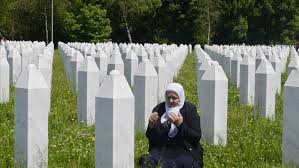
Srebrenica

Our wounds can so easily turn us into people we don’t want to be, and we hardly see it happening.   Sue Fitzmaurice

What we allow the mark of our suffering to become is in our own hands.  bell hooks

What’s left of kisses?  Wounds, however, leave scars.  Bertolt Brecht

“Let it go, David. It will only stir up old wounds.” Who cares about old ones? It’s the new ones that bleed.  Christopher Pike

There’s no antibiotic for the ridding of distress, and no alleviation of these intervals of pain we must encounter. Crystal Woods

Just because his own wings were burnt, it didn’t mean he had to burn others’.  Dean Wilson

Grant us wisdom, grant us courage for the living of these days. From the Christian Hymn, “God of Grace and God of Glory”

This was a week on UN video screens full of irony and rhetoric at times both emptier and less convincing than most of those who “took the floor” probably imagined.

It was a week when the UN’s Economic and Social Council took formal stock of our still-uneven “progress” in fulfilling our sustainable development responsibilities; when the Security Council labored well into the weekend to adopt a measure that will provide only partial relief for the millions of Syrians caught in a decade-long conflict that the Council has been unable to end; and when we commemorated the horrific crimes committed 25 years ago in Srebrenica, crimes which have not yet been fully prosecuted, crimes which still require families to search painfully for both the remains of loved ones and a full accounting of what took place, who was involved, who turned a blind eye to a looming massacre that ripped the worlds of so many apart.

The scar tissue from this UN week was both prevalent and hard to miss.

On Syria, it was not until the dinner hour yesterday when the Council came to an agreement that preserved some measure of the “cross-border mechanism” that has been enabling humanitarian assistance to millions of Syrians, many of whom have suffered multiple displacements and now live beyond the reach of government authority. Belgium and Germany, the co-penholders on the Council’s humanitarian file, sought to re-authorize multiple crossing points to address the dire needs in the northern regions of the country.  Russia and China, on the other hand, sought to ensure that humanitarian actors work more closely and cooperatively with the Syrian authorities, seeking to replace much cross-border access with options for Syria-controlled “cross-line” assistance.  The deadlock of vetoed resolutions was broken with considerable acrimony and with final agreement on only one border crossing point.

Belgium and the Dominican Republic were especially vocal in marking yet another “sad day” for the Council.  Such bitterness as was brought out in these negotiations leaves scars in the Council that will likely test even seasoned diplomats. But the deep sadness for Syrians has been a decade in the making, wounds deeper than most of the rest of us can imagine. If we mange to help keep these people alive until some sort of permanent cease fire and peace agreement are in place –especially those children who have known little but explosions and displacement in their lives — we will surely discover that, as in other parts of the world, many wounds remain, some emanating from years of deep fear and daily uncertainty, but also from the bitter disappointment that those tasked with silencing the guns and stopping the bleeding have largely failed in their duty to do so.

The wounds of Srebrenica are of a somewhat similar order, violence a generation old which completely upended families and communities, violence which has resisted a full measure of justice or closure, crimes which are still being honored in some quarters of the western Balkans and denied altogether in other quarters; reactions which merely grow the scar tissue, pry open the festering wounds and deepen the distrust of authorities at national and international levels.  As the Germany Foreign Minister noted during Friday’s event, people are still finding ways to “play with the narratives” of what happened in Srebrenica, who was responsible both for the killing itself and for creating the political and security contexts in which such butchery could occur.

For all the “never again” rhetoric dispensed on this day, it was the Croatian Ambassador (former UN official) who asserted that such crimes can, indeed, happen again; that the scars of mass violence and discrimination are widely evident (including in places like Cameroon and Myanmar), and that this is largely due to our collective resistance to creating a strong and reliable “preventive network” which can allow us to learn lessons from past wounds more quickly, apply diplomatic and other remedies more effectively, and thereby uphold what the Bosnian president claimed are UN Charter values that have been systematically undermined through a collective “conspiracy of silence.”

There is no such conspiracy in evidence at the High Level Political Forum (HLPF), a core, annual, ECOSOC commitment taking place this week to assess our collective progress towards fulfilling obligations to sustainable development.  Instead, spoken words from diplomats and “experts” have flowed in abundance, some in the form of (for me) unfathomable clichés like “building back better” and “leaving no one behind.”  While many NGOs have used this HLPF opportunity to sell their various “products,” others have rightly called attention to the preponderance of mere reporting taking place; verbiage signifying some multilateral version of “show and tell” during which states and civil society highlight “what we’re doing” while neglecting to reflect sufficiently on the fact that we simply are not yet doing enough to heal wounds of deprivation and injustice that continue to proliferate, to stop the bleeding better than we have done so far.

Closer to home, my younger office colleagues remain painfully aware that our planet’s vital functions are increasingly on “life support.” They recognize that the current pandemic, while a massive complicating factor for sustainable development acknowledged by virtually all at this HLPF, is no excuse for failing to act on SDGs with urgency and courage. They know that we are losing ground on food security and abuses committed against children. They know about the fires blazing in an overheated Arctic, the biodiversity under siege, the corrupt authoritarianism governing more and more UN member states, the deep roots of our propensity to “burn the wings of others.”  They see our collective failures to prevent armed violence and mass atrocities and the scars suggestive of deep wounds courtesy of poverty, disease and what outgoing UN Rapporteur Philip Alston recently referred to as our blatant “disregard for human life.”

And they know first hand that the discourse in the multilateral space we co-habit is generally more political than inspirational, is more about having the right credentials than the right mind-set, is focused more on controlling outcomes rather than ensuring those best possible, is as much about preserving our status, our protocols, our careers, our funders as it is about preserving a common, sustainable future.

There is no “antibiotic” for what distresses us as a species but we do have agency over what “the marks of our suffering will become.” We have it in our power, even now, to affect closure and healing for legacy wounds and stop the bleeding for fresh ones.  We have it in our power to end the violence, to help victims find closure, to reverse our perilous course on climate change and economic inequalities, to restore hope to young people robbed of an education, indeed too-often denied their youth in full measure.

But this will require better from the rest of us than we are now showing, greater displays of wisdom and courage, more than language reduced to clichés or weaponized for the sake of national interests and narrow political concerns, more than pious statements of remorse disconnected from visionary policy change, more than the innumerable good works that don’t yet add up to a sustainable future.

We are wounded people living in a wounded world of our own making. And as such, we have allowed ourselves too often to become the people we say we don’t want to be, the people we swore we would never become, people who hide behind personal grievances and bureaucratic protocols, people who too easily give in to the “given-ness” of our time and who allow “responsibilities” to cloud our deeper duty to fix what’s broken and ensure that “intervals of pain” are as short as we can possibly make them.

And as we struggle to manage our own “intervals,” we would do well to scan the scars on the faces of so many others, scars symbolic of their survival from the trauma that has been needlessly inflicted on them, the bleeding that, even now, holds scant promise of coming to an end. If multilateralism is to have the future we wish for it, a future of trust and effectiveness, a future of more than political rhetoric, limited crossing points and families searching for the remains of long-murdered relations, that bleeding must stop.

We simply must see to it.


Sorry Day:  The Security Council’s Misplaced Vision, Dr. Robert Zuber

9 Sep

This Way

No evil dooms us hopelessly except the evil we love, and desire to continue in, and make no effort to escape from.   George Eliot

You have the power today to reset your boundaries, restore your image, start fresh with renewed values and rebuild what has happened to you in the past.  Shannon Alder

And here, shipmates, is true and faithful repentance; not clamorous for pardon, but grateful for punishment.  Herman Melville

The question is not, are we sorry? The question is, what lesson have we learned? The question is what are we going to do now that we are sorry?  J.M. Coetzee

Like many others, this past week pulled the UN in diverse directions.  An important inter-governmental conference to protect Marine Biological Diversity and a mood-altering celebration of “staff day” was offset for us by some controversies over NGO access during a busy September and a couple of Security Council sessions which underscored divisions both political and normative.

The US has taken over the presidency of the Security Council for September and thus will be in the chair during the soon-to-open 73rd session of the UN General Assembly, a time when heads of state and their ministries fill the UN building beyond capacity.   US Ambassador Haley, who has made her reputation as someone willing to speak her mind — even when that mind at times deviates from her political superiors – as well as someone who is often dismissive (and least in formal settings) of contrary points of view, is handling the presidency deftly to date.

But deft leadership is surely not sufficient in these perilous times, not for the US delegation nor for the others who, given the Council’s “provisional” acceptance of seemingly endless, largely repetitive statements in “national capacity,” fail to address the need for a larger, more reassuring narrative on peace and security.  “Where is this going,” is a concern uttered by our interns at various points, young people who appreciate their access to the space where the Council muses over its puzzle pieces but who also wonder what the end game is, what the puzzle would look like if all the pieces were finally made to fit?

As many of you know, the current Monthly Programme for the Security Council was issued late due to a controversy over including Nicaragua on the agenda in accordance with US wishes.  The issue here was not whether images of unrest in Nicaragua warranted the attention of the international community, but whether or not such unrest has risen to the level of a threat to international peace and security, thus demanding Council attention?  On this there was serious disagreement among members, in part because there is no clear guiding definition for such a threat level, and certainly no definition that presumes to encapsulate transgressions committed by the permanent Council members themselves.   Why are Kosovo, Guinea-Bissau and Liberia still matters of recent Council attention when events in Nicaragua and Cameroon struggle for recognition and Yemen needed to be shoved on to the agenda after a long and bloody wait?   And why do Council members, especially the permanent ones, continue to soft-pedal their own violations of Charter provisions while (often selectively) holding other UN members to theirs?  Why do they (and other states of course) continue to bend the arc of justice to suit national interests and then claim that they are simply upholding some version of the “rules-based international order?”

And in areas this week where the Council rightly recognized clear implications for international peace and security – the use of banned chemical agents as weapons and the fate of the already-displaced residents of Idlib, Syria who now anxiously watch the skies to see if they are to become the next to be sacrificed in the “war on terror” – the Council has threatened much but delivered only modestly.   We still have no ironclad method for ensuring compliance regarding the use of banned weapons.   We still have no method for ensuring that counter-terror measures are conducted in accordance with human rights standards.  We still have no method for ensuring that the erstwhile “guarantors of the international order” also abide by its prescriptions and limitations.

Indeed, as many others have noted, we have no way to ensure that those tasked with maintaining Charter values on peace and security are actually demonstrating a commitment to their fulfillment. For all the talk by most Security Council members (and rightly so) about the importance of ending impunity for international law violations, impunity still persists among Council members themselves.  For all of the diplomatic skill and at times good will around the Council oval, that body remains the most political and least-accountable space in the UN system and probably well beyond.  There remains this palpable sense that the Council continues to prioritize rearranging the furniture – albeit tastefully at times — while the house continues to leak from above and rot from below.

If the Council were to hold occasional discussions focused on fulfilling the vision of the 2030 Development Agenda, surely the broadest and most hopeful vision this system now embraces, members might be compelled to examine the ways in which inaction and mis-action on peace and security jeopardize the fulfillment of that Agenda as little else.  Unless we can stem the current propensities to violence in all its forms – from economic inequalities and gross rights abuses committed against civilians to out-of-control arms production and modernization – the odds are that no amount of corporate funding, big data or ocean-cleaning technology is going to rescue us.  Council effectiveness is critical to what has become the UN’s most comprehensive and inspirational vision, whether it wishes to acknowledge that in formal session or not.

In a few hours New York time, Rosh Hashana will begin, a time of repentance for our Jewish sisters and brothers with much to teach the rest of us. A good bit of the commentary I have read early this morning points to the great difficulty we have enacting what should be a regular element of work and personal life.   It is, indeed, hard for us to admit our wrongs, to grant those we have aggrieved the acknowledgment they deserve.  But it is especially difficult to move beyond the rhetoric of repentance to the practical matters of amendment, to use our mistakes as the text for a shift in our attitudes and priorities that is more sustainable than ceremonial.

Repentance in its best and most sustainable sense is partially about shifting our vision, but even more about shifting our course, about resetting our boundaries and priorities.  The person who seeks forgiveness but fails to adjust direction toward a more accountable and hopeful horizon, who fails to plot a viable “escape” from the lazy and hostile habits of the past, is more likely to find rejection than relief.  This is true of our institutions as much as our families and communities of faith.

Repentance, in the end, requires a larger vision of who we are, what we are capable of, and what we can become.   The 2030 Development Agenda – an agenda not imposed on states but painstakingly negotiated by them — provides evidence that the UN system understands both the momentousness of the times and our still-potent capacity to adjust our ways.   The Council simply must find a way to bring its sometimes petrified mandates and politicized policymaking into conformity with that vision, at least to understand their own pivotal role in making that vision achievable.

We don’t need sack cloth and ashes.   We don’t need wailing and gnashing of teeth.  What we need (as noted by the SG and others) is a clear, consistent and actionable understanding of the ways in which the impediments and inconsistencies in our peace and security architecture compromise larger commitments to a healthy and prosperous planet.   What is arguably still the single most important room in the world would do well to incorporate (not seek to control) the larger vision of the 2030 Development Agenda and the conflict prevention and resolution strategies that will give humanity the best chance of saving us from ourselves.


Redesigning Peace: Creative Learning from Diverse Local Actors, Dr. Robert Zuber

29 Apr

In a room where people unanimously maintain a conspiracy of silence one word of truth sounds like a pistol shot.  Czesław Miłosz

We value virtue but do not discuss it. The honest bookkeeper, the faithful wife, the earnest scholar get little of our attention compared to the embezzler, the tramp, the cheat. John Steinbeck

It is vain to expect virtue from women till they are in some degree independent of men. Mary Wollstonecraft

It isn’t enough to stand up and fight darkness. You’ve got to stand apart from it, too. You’ve got to be different from it.   Jim Butcher

In some ways, this was a hopeful week for the international community.  The images of Korean leaders greeting each other across the DMZ to start mapping out an end to the Korean War and the possible de-nuclearization of the Korean peninsula were remarkable.   There is cause for skepticism here, including with regard to the intentions of the big powers to manipulate the current diplomatic opening, but it our hope that the international community can attentively accompany this still-fragile process rather than seek to exploit it for political “credit” or to enhance economic or military alliances.

At the UN, the president of the General Assembly Miroslav Lajčák set off a fresh series of High Level discussions on “sustaining peace,” yet another UN slogan at one level, but also an overdue opportunity to refresh and reset our security frameworks.  In diverse conference rooms (including the Security Council chamber), states and other stakeholders engaged in what Equatorial Guinea this week called the “redesign” of our collective peace and security architecture, getting out in front of armed conflict and its devastating impacts rather than waiting until defenses of state sovereignty give way to what are generally untimely and expensive pleas for peacekeeping operations and conflict-related humanitarian assistance.   As France put it on Wednesday, once the “gears of conflict” are set in motion, we must find the means to respond sooner and better.

In the end, the value of “sustaining peace” lies in its commitment to both use all the tools and actors at our disposal and to create the capacities and networks that we still need to fully honor our peace and security commitments; commitments considered by many – often tinged with anxiety – constituting what Poland called the “holy grail” of UN policy mandates. As such, one of the most hopeful events of this past week was a side session, hosted by Belgium’s Queen Mathilda, during which women from several African countries made the case for why mediation must command a higher profile in the UN’s conflict toolbox, but also why women are so often well positioned within their communities to adapt such tools to productive conflict prevention ends.

As the GA  High Level event made plain, we have tools still to build and, indeed, a culture of multilateralism still to firm up within which such tools can have power to shift our conflict dynamics.  As evidenced in a speech delivered on Tuesday by H.E. Michael Higgins, the President of Ireland, it is certainly justifiable  to express frustration with our collective incapacity to use the skills already at hand to eliminate violence and poverty, at the same time acknowledging the collective imperative to recover through new tools and urgent actions the “ring of authenticity” of the words we use in this policy space – and sometimes overuse –to lament armed violence and the inequalities and insecurities at community level which too often provide its “oxygen.”

When speaking of the need to overhaul our collective peace and security framework, a favorite term of SG Guterres (as is well known) is “prevention,” a term that is relatively easy to toss around but difficult to apply in practice within an institution where virtually every ray of sunshine is clouded in politics.  We have written much about this notion in earlier years, underscoring the degree to which “prevention” remains a pervasive driver of our family and community lives.  But we have also noted that it has not, except in fits and starts, translated into actionable policy at multilateral levels.  Diplomats who are properly scrupulous about the diet, health care, education and weather-appropriate clothing for their own children are infrequently able to bring those skills and insights into UN conference rooms.

We agree with what the ever-pragmatic Kazakhstan offered this week in the Security Council about prevention:  when we are able to truly implement it, prevention “works, saves lives, and is cost effective.”  And we do understand that drawing analogies from family life to multilateral policy spaces is fraught with difficulty.   Diplomats can be scrupulous with children on the (quite valid) assumption that they are not yet able to make good decisions for their own long term benefit.   With member states, the assumption is closer to the opposite, that states are able and primarily empowered to “handle their own business” until they demonstrate (and then admit) that they cannot manage those responsibilities themselves.  What states want (rightly so) is capacity support for conflict resolution and peacebuilding, but they mostly want it within a framework as noted by many states (and perhaps China most reliably) of full respect for national sovereign interests.

Such is the “dance” that the UN engages as it attempts to honor its diverse peace and security responsibilities.  Despite justifiable hope emanating from Liberia, Colombia and now the Korean peninsula, our peace and security architecture still prompts many to “throw up their hands” at the apparent inability of the system to end settlements in the West Bank, prohibit the bombing of civilians in Yemen and Syria, commit the governments of Mali and South Sudan to honest peace agreement implementation, find justice and relief for the people of Puerto Rico and Haiti, and much more.  The successes are real and most welcome, but the frustrations are numerous and patience with the existing system, at least in some quarters, grows thinner by the week.

But there were encouraging signs this week that we might be on the verge of the kind of renaissance that we have tried in our small way to point towards over several years – an integrated security framework that is as concerned with water as with weapons; as concerned with gender as with the prevention of genocide.  Such a framework is, in some significant ways, the “gift” of the Sustainable Development Goals (SDGs), an ambitious “blueprint” for a healthier and more peaceful future wherein by 2030, in our most optimistic expectations, the major triggers of conflict are tamed and the pervasive impacts of violence are healed.

The SDGs give special credence to two important, security-relevant insights to which we probably don’t give sufficient attention:  a practical (and enthusiastic) affirmation of the intrinsic value of multilateralism on the one hand, and the need to make good on our promises to the full integration of global actors on the other.   The first of these was well noted — often with caution—during the dizzying array of events held here in New York this week.  Indeed many states (and many other actors as well) worry  that a “new Cold War” brewing among the major powers, coupled with new concerns over fiscal austerity and the potential escalation of unresolved conflicts, threaten to unravel enthusiasm for behaviors conducive to effective multilateral policy, including as Ethiopia urged this week the reigning in of our “short sided pursuit of national interests.”

But it is the second of these that interests me most, the need to inspire hopeful actions in others, but also to acknowledge and extend the many good works that generally fly under the radar but contribute in their own way to more sustainable futures.  Of all the images of this past week, one of my favorites was the one of truck drivers assembled in formation under a Michigan overpass to deter someone apparently seeking to commit suicide.   Truck drivers, not known as a group for their policy savvy (certainly not when I was driving one), are seen implementing a solution to urgent human need as creative as most of what we routinely accomplish within our policy bureaucracies.   Indeed, these drivers reminded me a bit of the women mediators from Africa and those advocating for justice for Puerto Rico and from indigenous communities – people engaging in hopeful responses to despair or injustice, and likely capable of doing more if we would only set proper places for them at the table.

Despite some appearances to the contrary, there is practical virtue running all through our communities. If a “redesigned” peace architecture is to succeed we must find ways to highlight and enable more of that hopeful and creative energy.

Vaccination Nations:  Elevating Health Care Access for Peaceful, Inclusive Societies, Dr. Robert Zuber

11 Mar

Pills

Happiness is nothing more than good health and a bad memory. Albert Schweitzer

If Patents are for Patients then Patients will be for Patents. Kalyan Kankanala

Healing is a matter of time, but it is sometimes also a matter of opportunity. Hippocrates

It is the first morning of daylight savings time in New York which has caused some to miss Sunday appointments but many to hope that spring weather will soon make a lasting appearance.

The winter in the northern hemisphere, here and in many other parts of the planet, has been characterized by a range of health-related problems.  Severe flu outbreaks here have brought tragic death to some children and thrown many millions off their game.  I know personally of several people – most at least enjoying sufficient access to medical care – who have had to stay in bed for many days, with weeks of only semi-functional, partial recovery to follow.   You see such people in half-recovery every morning on the subways of New York, avoiding the many coughers, refusing to hold on to the poles in crowded cars with bare hands, trying to figure out in their heads how they are going to make up for lost work time when they are still only half-whole.

As has been stated so often by so many, health is something we take too much for granted until we lose it.  Then, and sometimes only then, do we recognize how much of our lives – including fulfilling our responsibilities to our jobs, families and communities – is predicated on “feeling up to it.”   And even when we don’t, there are times when we must “soldier on” perhaps because of the non-negotiable responsibilities to work and family that beckon, perhaps because of access-to-healthcare issues, including the seemingly ever-increasing costs.

These impediments of time, opportunity and expense are far more than annoyances, but undermine well-being in ways that impact our ability to participate fully in the affairs of the world and help others to participate also.

At the UN, health care quality and access are thankfully occupying a more prominent place on our collective agenda, in part because far too many people in this world lack sufficient opportunity and access to health resources that can improve the quality of their own lives and their productive service to others; also in part because of a growing understanding of how important personal and community health are to the often-challenging promotion and achievement of “peaceful and inclusive societies.”

In the Sustainable Development Goals (SDGs), target 3.8 directs us to “achieve universal health coverage, including financial risk protection, access to quality essential health-care services and access to safe, effective, quality and affordable essential medicines and vaccines for all.”  This represents a noble aspiration and, as with other SDG goals and targets, naming it is only the first step to full and fair implementation.

It is hoped that the Commission on the Status of Women, convening this Monday on the theme “Challenges and opportunities in achieving gender equality and the empowerment of rural women and girls,” can also make substantive contributions to greater health care access and awareness.  In areas of the world in which Global Action has cultivated program partnerships, including in Cameroon and El Salvador, access barriers to vaccinations and other health care often drag down women simultaneously discharging family and community responsibilities while seeking pathways  to greater levels of economic and political participation for themselves and others.  It is exhausting just to witness the multiple tasks that many rural women juggle, even more so considering how many of these women must juggle while battling illnesses and injuries that often go untreated and which, in some instances, are a consequence of diseases that have received too-little attention from the scientists and pharmaceutical companies that drive so many medical innovations (and the patents to protect them).   The CSW can hopefully focus some of its formidable policy attention and recommendations on improving health access for rural women (and their families) that can help them achieve both access to markets and increased levels of political and social participation.

Thankfully, health issues seem to be getting tracton across the UN agenda – specifically in terms of preventing and responding to pandemics, addressing antibiotic resistance (and the current lack of pharmaceutical interest in creating viable alternatives), and encouraging shifts in diet and lifestyles that can lower thresholds for non-communicable diseases (from cigarette smoking, opioid addictions, etc.) .  All of these (and related) interventions, as noted, have important implications for peaceful and inclusive societies, as well as for elevating levels of health-related access.

Last Tuesday, the World Health Organization and other UN partners convened a session devoted to “Promoting Innovation and Access to Health Technologies,” which was intended in part as a follow up to the 2016 report by the Secretary-General’s High Level Panel on Access to Medicines.  Despite acknowledged limitations in its mandate, the report deftly outlines impediments to access and suggests trade and finance reforms to ease obstacles.  The report acknowledges the need to fund more research on diseases and related health needs endemic to developing countries — including more resistance-free antibiotics – while ensuring fair protection and compensation for those whose investment risks made new medicines and medical technologies possible.  The report highlights most of the often-systemic, critical barriers to access that must be addressed by the international community, including “inequalities within and between countries,” poor health education, a lack of trained medical personnel, health-related stigmas, lack of access to health insurance, and what it calls “exclusive marketing rights.”  And of course it cites the matter of health-related costs which in some instances (including for insulin, as noted by the WHO on Tuesday) are still rising.

What the report did not take up are the health and human rights implications of “bio-piracy,” research that exploits potential remedies from fields and forests to produce medicines which are then patented and marketed in ways that render them often well beyond the reach of the very people who inhabit the environments of origin.

Nor did the report take up the health access barriers that are created and exacerbated by armed violence, the refugees struggling with severe physical constraints on their long and treacherous journeys, the families under siege who find their clinics and hospitals reduced to rubble.  The nefarious “stripping” of long-awaited relief convoys containing medical supplies headed for besieged areas of Syria (even after a Security Council-authorized cessation of hostilities) is a special case but sadly not a unique one. We can’t seem to stop the bombing — perhaps our primary UN responsibility– but beyond that we can’t even guarantee minimal access by victims to the medicines and equipment that could give them a “punchers chance” for survival and renewal.  Apparently even the most abusive state and non-state actors understand that healthier and more able people are better able to contribute to stabilizing damaged local communities; but on a larger level are also better able to resist the intimidation of bombs and sieges, to more effectively demand cleaner water, lower levels of state corruption, less discrimination and abuse, fairer access to education for their children and energy for their dwellings.  Even abusers recognize that health care access is not a side-show on the path to more peaceful and inclusive societies, but is elemental to their ultimate success.

As one recent TV advertisement in the US seeks to remind us, moms and dads “don’t take sick days.”  But as the Dutch Ambassador to the US intimated during her statement at Tuesday’s event, the world is full of too many people for whom a “sick day” is an indulgence that threatens the basic well-being of families and communities.  It is the obligation of all of us, as the Thailand Ambassador and others noted – health professionals, scientists, parents, the private sector and the global policy community — to ensure a “better balance” of interests between those who develop vaccines, other medicines and medical equipment and those for whom access to context-appropriate health care is literally a lifeline.  We cannot meaningfully propose strategies for the full inclusion and participation of persons who can barely lift their heads to attend to their daily responsibilities in domiciles, fields and markets.

Shake Shack:  Mothering in an Unpredictable Age, Dr. Robert Zuber

14 May

My mother had a great deal of trouble with me, but I think she enjoyed it. Mark Twain

My mother told me to be a lady. And for her, that meant be your own person, be independent. Ruth Bader Ginsburg

Motherhood was the great equalizer for me; I started to identify with everybody… as a mother, you have that impulse to wish that no child should ever be hurt, or abused, or go hungry, or not have opportunities in life.  Annie Lennox

Yesterday on my way to the office I stood on the subway near a seated mother –my guess is she was from somewhere in the Caribbean — and her young son. They were both visibly fatigued – it was early on a rainy and chilly Saturday and the boy was now becoming a bit agitated.  Without saying a word, without apparently being prompted by the son, the mother carefully fashioned a pillow on her lap and then gently coaxed the child to put his head down.  He was asleep within seconds.

Such acts as these, small but consequential, are much of what we honor on a Mother’s Day.  The comforting and feeding, the diapers and disinfectant, the telling of stories and issuing of warnings, the granting of untimely requests and the mediation of endless sibling squabbling, all of this and more in whatever form it takes is necessary for young vulnerable people of need to grow into older vulnerable people of promise.

Much mothering – whether conducted by biological mothers or “other mothers” – is intended in part to create secure and stable family environments, predictability that is still elusive for far too many children, and that now seems mostly to occur (when it does) within individual domiciles.  We know “where things are” in our homes, but in the world at large, peoples and cultures are now being tossed about as though we were living through a perpetual hurricane.

This represents part of the agony for many mothers I know. We can balance our children’s diet, tell them stories, buy them proper clothes and send them off to school, all the while holding our breath, praying hard and crossing our fingers; hoping that the center will hold long enough in these unstable times for our children to have a happy and productive adult life, that our multitude of small acts consistent with concerned parenting will somehow add up to prospects for prosperity and purpose.

But this hope, as it has for mothers across time and space, has one major caveat:  Most of what we teach our children, most of what we long for their future, depends for their fulfillment on a predictable social and security environment.  And whether or not we’ve actually ever had such a thing, we clearly don’t have that now. Despite what too many of our schools and advertisers and technological gurus need us to believe, the veil of predictability has been pulled back in so many ways, revealing a world that is shuddering if not shaking, increasingly fierce motions that are testing the nerves of both parents and the political leadership who now grace (or dis-grace) our halls of state.

Perhaps it is enough for mothers to teach what they know and hope for the best.   Perhaps that is the very best that can be done.  Or perhaps that is simply the recipe for yet another mother’s heartbreak, and another, and more after that.  Perhaps this recipe needs tweaking just a bit.

This week, in a UN building filled to the brim with talented women, three with lofty gravitas made high-profile appearances representing all three of what the UN calls its policy “pillars.” From the human rights and justice pillar was Ms. Fatou Bensouda, Prosecutor for the International Criminal Court, who briefed the Security Council on the difficulties in securing prosecutions for crimes in Libya and also met with her “friends” group to discuss ways to eliminate state “non-cooperation” and bring more diverse linguistic and cultural backgrounds into the work of the Court. UN Deputy-Secretary General Amina Mohammed, the custodian of the UN’s Sustainable Development Goals promises, provided an inspirational message to the “integration segment” of the Economic and Social Council devoted to meeting the “greatest global challenge” of poverty reduction. And on the peace and security front, High Representative of the European Union, Federica Mogherini, addressed the Security Council on the importance of expanding UN-EU security cooperation. Her remarkable presentation included a soft jab at the United States to both abandon its threatened withdrawal from multi-lateral engagements and to “find its own way” regarding commitments to heal our climate-threatened planet.

What all three of these remarkable women had in common this week is their vocal, passionate commitment to ensuring that our collective promises on justice, development and security will be met; that whatever can be done to calm our shaking planet will somehow become our collective priority.

They all have something else in common – they are all mothers.

I don’t know what kind of mothers they are, and I wouldn’t want to assume.  While you wouldn’t always know it from reading UN policy documents, there are thankfully many ways to be a woman, many ways to mother, many ways to nurture and inspire, many ways to mentor. Our pious certainties regarding “what mothers do,” or “what women want and need” can obscure any number of important struggles (and related conversations) on identity and responsibility.

For their part, I suspect that each of these three mothers of distinction has experienced in her own way more than a few moments of anxiety, perhaps even remorse, given that the demands of their high-order positions make absences from their children’s (or grandchildren’s) daily lives all too frequent.  Many professional women feel this, of course, immersed in meetings rather than in bedtime stories, eating on the run while children text that “daddy’s pancakes don’t taste right.”

But there is something about these particular mothers, something compelling about their vocal and pragmatic resolve to make a better world, one fit for all children not only their own.  Despite responsibilities in the world that place restrictions on family time, there remains the expectation — when their growing progeny have gotten some distance from social media addictions and raging hormones — that they will one day be able to look their children square in the eye and let them know that they did all that they knew to do to ensure a more stable, secure and sustainable world in which –collectively–their dreams and choices can continue to matter.

This is a powerful gift that, like inoculations and braces and homework, children might only be able to appreciate fully when they are old enough – and fortunate enough – to bear children of their own. There are no Hallmark cards devoted to mothers who help “stop the shaking.”  Perhaps there needs to be.

The many young people of diverse backgrounds who pass through our office each year have an eerily similar take on the world they are soon to inherit.  When I ask them if they feel prepared for all the chaotic motion characteristic of this current planetary phase, they almost always and without hesitation respond “no.”  It is difficult to know to what extent this is in response to the diverse threats they experience with us at the UN on a daily basis – wars and rumors of wars, climate change and our often tepid responses, traumatized children and families on makeshift rafts or reeling from the effects of famine. But it is unsettling that after so much parenting and so much schooling, even children of privilege feel inadequate to act on a stage that feels perpetually unsteady.

Also on this dreary New York weekend, I had a long Skype chat with a former colleague struggling in Mexico with the manifold contemporary responsibilities of being a mother – meeting her daughters’ needs, comforting their wounds and guiding their preparation for life outside the home while contributing in a larger sense to the stability of a world in which her parenting can hopefully have some impact.  Thankfully, she is finding that way, not on a global stage like Mohammed or Bensouda perhaps, but in community settings that matter and in ways that communicate – to both her children and the wider society – that there is still a sound basis for hope in our common future.

And like these three women of international prominence, the commitments of my former colleague will allow her one day to look her daughters in the eye and let them know that she also did her part – beyond the packed lunches and bandaging of scraped knees — to secure an unsteady planet.