Editor’s Note: This piece was written in response to an invite from a university in Kenya, a zoom presentation which never materialized due to communications issues related in part to the unrest which had exploded in Nairobi in late June. So….here it is for you to read if you so choose. I hope its worth your time.
I want to begin this presentation to all of you with a sober look at where we are vis a vis the climate crisis. Put simply, we have collectively failed to address climate risks and, in the case of the wealthier countries, have failed to meet our obligations to climate victims. The burdens of climate change are felt by all including displaced women and an increasing number of women farmers, but they are not responsible for the growing climate-related carnage. These people, like most of you, are suffering from a crisis they did not cause.
Here at the UN, we continue to pass resolutions with levels of enthusiasm for implementation which tend to drop as soon as those resolutions are adopted. On climate, the threat is felt acutely in small island states and in the Sahel, but not quite as much in most middle income and wealthy states, precisely the states responsible for the bulk of global emissions. Even when the rhetoric is sufficiently urgent, Council climate action continues to fall well short of what is needed. Young people have in some instances filled the leadership gap created by older persons on addressing climate risks; and yet for many young people the preparations they are taking in their lives, their studies, family matters and more are likely confronting a future of extreme heat, equally extreme weather events, growing threats of food insecurity and I would add life insecurity as well. You in this university audience didn’t do this to the planet, and you don’t deserve the consequences either.
It is commonplace to note this, but how we assess in life is largely a function of what we expect, and it is the expectation of many young people that we aging folks from the west in our relatively comfortable contexts should have done more, could have done more to stem the increasingly inevitable climate tide. What were we thinking? Were we thinking at all?
And if we were thinking at all, what were we thinking about? About gender-balancing our climate action? About helping to unleash the diversity of youthful talents across the world that can break through some of the policy bubbles and stale air which exist in the diplomatic world? Were we metaphorically thinking about “sharing the ball” with youth and others which is the only way human civilization can possible win this game of climate ruin?
There is at least a growing sense within the international policy community that climate change is, at least, a conflict multiplier that the climate is evolving much quicker than we have the ability to address, including its impacts on international peace and security. But there is also a growing sense, and I agree with it, that we have mis-positioned our climate action, focusing much too much on the activities of officials and diplomats making (and often failing to make) climate policy largely through resolutions without “teeth” or through large international events which burn more carbon than make change, rather than on communities seeking pathways to more resilience and abundance.
From our base in New York, we have identified and assisted programs around the world which are attempting to promote inclusive, gender sensitive local lenses on sustainability. My favorite of these is Green Map (greenmap.org), a set of tools including culture-specific iconography to help local communities identify environmental assets and liabilities, to use mapping to reintroduce people to the resources and habitats which are worth protecting and which make their communities special. Our slogan – think global, map local – is symbolic of a deep belief that we will never fulfill our climate or sustainability goals without pragmatic engagement by local leaders in all global regions, including many more women and youth participants.
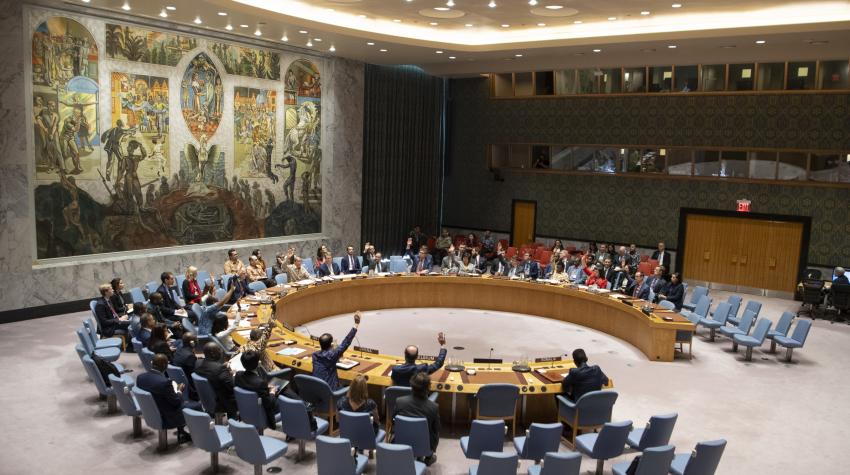
While affirming local action in all we do, I often sit in a very different place, in the UN Security Council, which has an uneven relationship with the climate issue. It could even be said that the Council also has an uneven relationship with its own Women, Peace and Security agenda, an agenda 24 years old with a host of gendered gaps and discriminations still largely unaddressed. On climate the pattern is similar: recognition by some Council members, especially elected members, that climate is a major contributor to conditions which make conflict more likely. On the other hand some members simply don’t see the linkage, or think that climate issues should be handled by the UN agencies tasked specifically with climate or other environmental matters. The concern here, made most forcefully at the moment by Russia, is that there is a division of labor in the UN and that these divisions should be respected.
But while mandates may have similar force, the mechanisms of enforcement do not. Russia and other Council members know full well that while Council resolutions are often ignored, the Council at least has Charter-mandated coercive tools at its disposal that other UN agencies do not. And if the Council cannot make states uphold their promises on issues such as gender and climate, then the hands of the full UN are surely tied in terms of enforcing any agreements whatsoever – including climate agreements.
Some Council members are fighting back, more and more, recognizing that we have set forces in motion that promise more violence, more misery, more displacement and that we must robustly address those forces. These states recognize that the Council can fulfill an important enabling role vis a vis the UNs climate priorities without usurping the authority of the agencies tasked with responding to this crisis.
One example of this “fight back” occurred during its Council presidency of the United Arab Emirates in June 2023, as that delegation tried to rally Council colleagues to take climate risks and their implications for peace and security with the urgency they deserve. It should also be noted that the UAE at that time was also prepping the Council as well for its COP 28 presidency which ultimately turned out pretty much like all the other COP events – burning more fossil fuel than changing the course of climate threats and making promises of change that are generally not kept. But this meeting was at least asking the right questions about the Council’s role in ensuring more diverse climate action and remaining seized of the many ways in which climate change makes conflict more likely.
This quote from the UAE’s Concept Note set a proper tone:
Climate change is the defining challenge of our time. Its interconnected consequences – intensified extreme weather, rising sea levels, food and water insecurity, biodiversity loss and heightened health risks – jeopardize human life, livelihoods and ecosystems and have an adverse impact on national, regional and global stability.
And, as also noted in the Concept Note, climate change has implications for the entire peace continuum including those who are unjustly excluded from participation in peace processes:
The gendered impact of climate change has significant implications for international peace and security. Women and girls are disproportionately affected by the adverse effects of climate change, including food insecurity, displacement and increased rates of conflict-related sexual violence. Moreover, women are often excluded from decision-making processes related to climate change mitigation and adaptation. Evidence shows that, by leveraging the role of women as agents of change, gender-sensitive work on climate change and peace and security can serve to advance both stability and gender equality.
This is good policy language from the UAE but of course it is only language. Little or nothing changed as the result of this meeting. Little or nothing changes as the result of most Council meetings as much as the global community, sometimes desperately, needs to see evidence of change. Is there a missing ingredient here beyond politics?
I think there is. As we discuss often here in NY, there is a human dimension to this crisis which we ignore at our own peril.
Whether the Council or other international institutions embrace their responsibility to address climate risks in a timely manner or not, the changes to our world are coming quickly, more quickly than we had originally anticipated, and we seem unable as a species to respond in kind. We are in many ways, and more than we generally acknowledge, creatures of habit, and those habits make it difficult indeed to shift our course, even when we want to do so, even when are survival depends on us doing so.
Those of us in the west and beyond know of threats to agriculture from multiple climate related impacts including increased drought and flooding, but we (especially in the west) continue to eat and otherwise consume largely as we always have. We know of threats to biodiversity but we continue to cut down forests, destroy habitats, and plant non-native and fertilizer-intensive plants in our gardens. We know about increasing prospects of climate-related disasters including massive storms and pandemics, but we continue along as though we possess some immunity from those impacts. We know of threats to our ocean environments, but our collective addiction to plastics waste remains largely unchallenged.
The climate-conflict nexus is in part about the effectiveness of our global policy and in part about we as members of local communities, the sustainable examples we set, the people and actions we inspire, the habits we are prepared to change. We know something is very wrong. We feel the heat. We experience the growing frustration, anger and suspicion at community and national levels. But can we adapt? Can we learn new skills, can be more mindful and compassionate towards the created order, can we break out of unsustainable habits? Can we take the data urgently provided by scientists and turn them into sustainable amendments of both policy and life? The jury is clearly out on this.
As we contemplate our resistance to change, I want to end with a couple of quotes from a recent report from UNICEF on climate impacts affecting future generations, which likely directly applies to you. The report notes that, “Environmental degradation, including the climate crisis, is a form of structural violence against young people and can cause social collapse in communities and families. Poverty, economic and social inequalities, food insecurity and forced displacement aggravate the risk that children will experience violence, abuse and exploitation.”
There is also a quotation in the report from a young interviewee: “The environment is our life.” Adults [should] stop making decisions for the future they won’t experience.”
Taken together, this is quite an indictment of our collective failure to meet this urgent moment. Yes, we should stop making decisions for people and start making decisions with them, with the people who will have to live with the threats we have left for them, threats of gendered and racial discrimination, threats from abusive governments, threats from an overheated world which can no longer preserve biodiversity or support healthy agriculture. And yes we old folks and our institutions of choice (including the Security Council) have reinforced, inadvertently or willfully, strubborn conditions of structural violence which make it harder than it ever should be for young people across the world to chart a more sustainable course for their lives.
A world of increasing climate threats, including threats of armed conflict, is a world we are running out of time to prevent, and it is the country I call home along with other large consuming states which need to make changes on emissions and consumption quickly and permanently. We the people of largely undeserved privilege owe it to the rest of the global community to somehow reverse our current, unsustainable course, reminding ourselves frequently that the clock on such reversal is loudly ticking.
Tags: climate, Security Council, youth





 gapwblog