Atonement Time: The UN’s Search for Honest Disclosures, Dr. Robert Zuber

27 Sep
What is True Repentance? – Inspired Walk

A person is, among all else, a material thing, easily torn and not easily mended.  Ian McEwan

If I ever say, “I have undone that deed,” I shall be both a fool and a liar.  Josiah Royce

I am not a saint, unless you think of a saint as a sinner who keeps on trying.  Nelson Mandela

I’m too old to recover, too narrow to forgive myself.  Lillian Hellman

And here, shipmates, is true and faithful repentance; not clamorous for pardon, but grateful for punishment. Herman Melville

It’s when I have to acknowledge the past and all of those nameless, faceless people I’d assassinated, that I unravel inside.  Cheyenne McCray

Out of small changes come great things.  Alan Kinross

This has been a busy virtual week at the UN given the confluence of the opening of the 75th General Assembly, the UN’s 75th anniversary commemorations and a bevy of important high-level events on a range of issues germane to all three “pillars” of the UN. From ensuring inclusive participation in political processes and ending women’s rights violations associated with capital punishment to addressing our widening biodiversity crisis and affirming international legal prohibitions against the possession or use of nuclear weapons, the UN once again demonstrated its unparalleled ability to multi-task in response to the cocktail of global emergencies that now demand our full attention and that the current COVID pandemic has significantly, if not gravely, complicated.

Much of the discourse this week, especially during the 75th anniversary commemoration, was focused on the UN as an institution, what it does well and what it could surely do better.   Reaffirmations of the value and importance of multi-lateral problem solving could be heard through almost every virtual presentation.   Calls for UN reform were almost as numerous, especially for reform of a Security Council whose levels of transparency and relevance to the rest of the UN system have actually improved a bit, but rarely to a degree that satisfies the general membership.   Especially at this moment of significant acrimony and disharmony among the permanent members, and despite the fact that states complaining loudly about the Council often go to great lengths to win a term as an elected member, the Security Council has become as much of a worry for states as a reassurance.  

Of course, this is not the only area of the UN where reforms were urged.   States this week highlighted their concerns about the effectiveness of and financial resources for peacekeeping operations, the insufficient global coherence in the struggle to manage the COVID pandemic, the relative inability of the UN to enforce its treaty obligations or even sustain the political obligations of states to honor pledges to reduce emissions and fund humanitarian operations, let alone to honor in other tangible ways the institution they all claim to be “indispensable” by treating it as though it is precisely that.  

During the general debate this week, the speeches of global leaders were characterized by the usual combination of gratitude and pleading, probably appropriate given this time of “triple threat” from climate change, COVID infections, and economic decline.  Pacific island states sought relief from a climate emergency they did not cause;  land-locked developing states sought debt relief and concessional finance to help them meet their sustainable development obligations; states (such as Armenia and Azerbaijan, and India and Pakistan) caught in a seemingly endless cycle of aggression, distrust and political turmoil sought both justification for their positions and a path forward on political resolution for which the UN’s mediating role was deemed essential; states which have taken on responsibilities to ensure the UN’s survival and relevance sought assurances from their fellow members that dues will be paid, that civilians will be protected and that international law will be upheld.

Having watched 20 years or so of these opening extravaganzas, and with all due regard for the ways in which digital speechmaking alters both content and mood, it has been made clear, yet again, the degree to which most of the speeches during this General Assembly general debate are more for domestic than multi-lateral consumption.   Governments from the most democratic to the growing number of authoritarian entities spell out their domestic accomplishments while vetting their bilateral security concerns; India and Pakistan, the US and China, Ukraine and Russia, Turkey and Greece, Ethiopia and Egypt (over access to Nile River water) and many more.   And while there are occasional “soft edges” to the speeches – Bhutan, Mexico, Ireland, Djibouti, Korea (ROK) and Fiji were noteworthy in this regard – too many of the presentations did what political speeches are generally known for – telling only the truth that is politically expedient and placing blame for shortcomings on the malfeasance of other states or the inattentions of global policy and financial institutions.  

What rarely if ever happens is the public confession of responsibility by leaders for our broad-based dereliction of duty to our present and future; for our failure to practice the solidarity that leader after leader called for; for our tepid responses to climate and other threats that we know to be existential in nature; for our stubborn disregard of pledges made to fund humanitarian relief, keep the UN running effectively, and protect civilians from what, in some instances at least, is their gravest external threat – that from their own political leadership.  The intransigence of leaders in the face of global crises remains perhaps the most serious threat to multi-lateral effectiveness.  How, after all, can the UN bear the burden of its own reform when the states which constitute its membership and both fund and direct its activities are often so reform-phobic within their domestic domains?

It was not lost of me that this year’s General Assembly general debate overlapped with the Jewish remembrance of Yom Kippur, a time for us to reflect on those whom we have wronged, those from whom we must seek forgiveness, those with whom we very much need to be reconciled.  It is a time, not for self-justification and facile claims to have undone wrongs we have done to the “not easily mended,” but rather for genuine examination of our actions and motives, for truth-telling that alone can bridge our many divides of political resentment, lowering what SG Guterres referred to this week as our global “fever,” and restoring the trust that remains the engine for any of the UN’s cooperative endeavors.  It is a time in part about seeking forgiveness from others but also about offering forgiveness ourselves, recognizing that all of us have plenty to accomplish on both ends.

But as you might imagine, little of the spirit of Yom Kippur could be found infusing the culture surrounding this UN general debate.  In the bureaucratic and political cultures that dominate our fractured world and its multilateral incarnations, such honesty about ourselves and all that we have metaphorically “assassinated” would as likely discomfort as inspire the global policy community.  There is, it seems, only so much honesty about ourselves and our national cultures that we can tolerate, and we could certainly rely on this week’s general debate not to push those tolerance levels anywhere near their limits. 

And yet, as delegations noted often this past week, especially during the 75th anniversary event on Monday, that trust is often the missing ingredient to progress  – too often assumed and too little cultivated — in crafting effective multilateral antidotes to our current, toxic cocktail of global threats.  And successful trust cultivation involves precisely what Yom Kippur demands of us – honesty about ourselves and our motives, openness to the gift of forgiveness sought and received, and a deeper commitment to the reconciliation which alone can guarantee fidelity to peace agreements, human rights treaties and sustainable development obligations. 

The UN will never and probably should never become a hotbed of group therapy and spiritual renewal.  And yet, the “solidarity” that presidents and prime ministers clamored for this week will surely remain elusive unless some of the habits and practices associated with Yom Kippur can better infuse our work in this UN space.  The more we deny our own history, the more we seek to bury our complicity in wrongdoing, the more we insist on seeking pardon rather than accountability; in such instances reconciliation and solidarity will likely remain out of reach and the trust levels that we require from global constituents will continue to unravel.

Despite our various personal and institutional failings, we are not yet “too old to recover” nor to set in motion the relatively “small changes that can lead to great things.”  But such changes presume that we recognize just how much we have yet to atone for; how much we have yet to confess regarding our multiple failings and promises un-kept; how much forgiveness is yet required if trust deficits are to turn around.  Earlier this week, the newly-minted president of the General Assembly urged delegations to “leave your differences behind.”   But this moment of Yom Kippur suggests that we can only accomplish this when the origins of differences are confessed, when forgiveness is offered and received, and when commitments to reform our personal and institutional engagements are both sincere and sustainable.

There is simply no other viable pathway to reconciliation across our many current divides. Hopefully we won’t have to wait another long and uncertain year to see if any of the suggestions inspired by Yom Kippur have stuck.

Waiting Room: Attending to Degraded Fields and Empty Bellies, Dr. Robert Zuber

20 Sep

Time was a funny and fickle thing. Sometimes there was never enough of it, and other times it stretched out endlessly.  J. Lynn

All night you waited for morning, all morning for afternoon, all afternoon for night; and still the longing sings. Ruth Stone

You know, life fractures us all into little pieces. It harms us, but it’s how we glue those fractures back together that make us stronger.  Carrie Jones

There are people in the world so hungry, that God cannot appear to them except in the form of bread.  Mahatma Gandhi

The stomach alone was aware of the passage of time. Elie Wiesel

This is the era of hunger unprecedented. Marshall Sahlins

I was standing there, waiting for someone to do something; until I realized the person I was waiting for was myself. Markus Zusak

As the UN prepares for a commemoration of its 75th anniversary this Monday, the mood around the UN community is uneven; honoring its staying power and ample (if often unrecognized) global contributions combined with a sense of urgency, even dread, as threats to institutional legitimacy and sustainability mount. Moreover, the global commons represented in good measure by the UN seems to be unraveling in the face of large-power hostilities, expanding domains of authoritarian governance, a global pandemic with multiple iterations, broad-based economic contraction, and a bevy of sustainable development goals and targets that relevant data suggests are clearly headed in the wrong direction.

The Security Council plays a role in confirming this sobering assessment of the UN’s uneven potential given its unenforced resolutions; its back-room arm twisting especially of elected Council members; its largely tepid acknowledgement, let alone active enabling, of the essential contributions of other UN agencies, justice mechanisms and treaty bodies; even the habits of the permanent members to play by a different set of rules than they expect others to abide by. 

And yet, thanks in large measure to the growing determination of its elected membership, the Council has been encouraged to examine the scope and implications of a new generation of challenges affecting its primary mandate to maintain international peace and security.   Through a growing roster of “thematic” engagements, it is becoming apparent in ways that even permanent Council members cannot deny that such “maintenance” is more complex and comprehensive than perhaps ever before in UN history.

On Thursday, under Niger’s presidency, the Council spent an entire day examining the consequences of environmental degradation and hunger for conflict and, conversely, the impact of conflict on nutrition and livelihoods, on access to clean water and health facilities, on educational opportunity and mental health for children.  As noted by the executive secretary of the UN Convention to Combat Desertification, Ibrahim Thiaw, links between “humanity and the land” are profound and apply in both directions. We have too-often been derelict, he reminded, in respecting and protecting the land; thus human livelihoods and the communities whose vitality depends on them have been allowed to succumb to fire and drought, to flooding and erosion, and to violence from armed groups which remains as the source of so much global degradation.

During these important Council discussions held in the shadow of upcoming UN 75th year commemorations, one briefer after another laid bare the dire circumstances facing far too many children and other vulnerable persons in this world.  Briefers also highlighted the degree to which efforts to address acute needs by UN agencies and other actors are routinely impeded not only by access restrictions by states and attacks by spoilers, but also by a lack of funds, in many instances due to states making pledges of support they have yet to honor. 

And so the most desperate people wait, waiting under conditions that most of us in the well-resourced, oft-impatient West cannot fathom, waiting for provisions that will hopefully preserve their lives for another day, waiting for a shifting of environmental conditions that might allow them to stay in their homes and care for themselves and their neighbors, waiting for an end to the violence that engenders fear and impedes local initiatives at many levels.  In this context one truly moving statement of this day came from Under Secretary-General Lowcock who quoted a child in hunger, cholera and conflict-ravaged Yemen desperately imploring his father, “Daddy, when will the food come?” 

When indeed?  As ICRC director Maurer noted on Thursday, people living under severe environmental strain and resource deprivation “do not want a handout,” preferring (as we mostly all do) a future in which they can live in “independence” and dignity. But in some parts of the world basic needs are becoming more acute, not less, and the wait times for relief seem interminable and increasingly consequential. Moreover, the “social contract” that binds us in common interest is clearly “fracturing” all around, as Saint Vincent and the Grenadines lamented.  It is almost as though we are “losing interest” in each other as challenges multiply in all our lives and viable pathways towards the restoration of dignity and hope seem multiply blocked.

Clearly, we need to urgently raise the bar on the alleviation of human misery and the restoration of human potential, and there were a few clues offered on Thursday as to how this might become more feasible.  Belgium ably remarked that too much of our humanitarian response is now akin to a “fire extinguisher” rather than the “fire preventer” we need it to be.  And Ibrahim Thiaw wisely noted that, for all the remarkable work done by the humanitarian community, in the end “lives are saved but not changed.”

Such lack of change for people and communities, we might all agree, is simply not good enough, not for ourselves and certainly not for those now sitting more precariously than we will ever find ourselves on the precipice of ruin.   It may be the case, as Estonia stated on Thursday, that there is no “quick fix” for the messes we have gotten ourselves into, messes so dire that those most impacted cannot do much more than wait for someone to help attend to them.  Estonia also suggested a path forward that includes both increased diligence from policymakers and better access to relevant data to guide the practical renewal of energies and commitments to restore the land, restore livelihoods and restore hope. We need to keep those trucks and convoys moving as World Food Programme executive director Beasley noted.  But we must also more thoughtfully and and actively resist what he called a “toxic combination” of factors that threatens to undo all the gains on food security made over the past decade, dramatically decreasing the wait experienced by millions for some respite from what are often externally-imposed deprivations, with little more than empty stomachs and parched fields to mark the slow passage of time.

The untimely death on Friday of Ruth Bader Ginsburg was yet another painful reminder of how much we have all lost this year, but also how much time we have invested waiting for the fog of injustice to lift, the fires to die down, the jobs to come back, the pandemic death toll to abate. We are indeed facing an era of “hunger unprecedented,” for bread and health provisions, but also for the healing of personal and social fractures, for the return of some semblance of our collective sanity, for the restoration of our sense of solidarity, for the silencing of the guns on the streets of our communities.

For some of us, this is a time of considerable angst, even mourning. But for others, including for so many children in conflict settings, this is a time of agonized waiting for some urgent, sensitive and sustainable response from the rest of us. I know that I have not always made the best use of my pandemic-enforced opportunities to rethink our role in security and sustainable development and then play that out more effectively. Thus it is now well past time for me, and surely for others, to get off couches and computers, dust off the social contract, and help glue back together some of the many fractures stemming from this long and painful period.

Altar Call: Holding Ourselves Answerable for Her Future, Dr. Robert Zuber

13 Sep

Real generosity towards the future lies in giving all to the present.  Albert Camus

It is possible to believe that all the human mind has ever accomplished is but the dream before the awakening.  H.G. Wells

Deep under our feet the Earth holds its molten breath, while the bones of countless generations watch us and wait.  Isaac Marion

There had to be another way and I owed it to my daughter to find it.  Adrienne Brodeur

The trees waited for each generation to be born, to keep them company as they watched over us from high above.  Anthony Harkins

Love is the only future God offers.  Victor Hugo

When I see a photo like the one above, I wonder what is going through that girl’s mind.   A solitary youth with her sign, making a statement to political leadership and their followers, some of whom find such pleadings annoying at best and, if rumblings from the UK and other countries this week are any indication, a potentially criminal offense at worst.

That she could sit by herself on a bench calling attention to a threatened future to which those who pull the levers of economic and political power seem often indifferent speaks both to her power and likely also to her frustration.  Girls increasingly have a voice now and we can only celebrate that epiphany and wish for more of the same.  And yet we know that having a voice is not quite the same as moving the pile, and while we recognize that there are monstrous piles yet waiting to be moved, we seem to have depleted much of our reserve of energy, commitment, compassion and wisdom needed to find that “other way,” a way that can inspire sufficient confidence in the girl on the bench such that she can prepare more for her future and despair less of it.

Her generation is certainly not the first to grow up in unsettled times, but is perhaps the first to grow up amidst an avalanche of jarring, even dystopian images: of a pandemic which has robbed children of grandparents and classrooms, stoking both physical distance and social suspicion; of fires that have consumed vast groves of trees that can no longer “watch over them” and “keep them company” as they sojourn through this life; of adults who should know better choosing to shed dialogue for conflict, reconciliation for enmity, truth-telling for lies and conspiracies. 

It is a long and discouraging list of threats in part from climate and weapons but also emanating from our diminished selves; of our cautious engagement with issues to which we have largely acclimated ourselves but which must seem overwhelming to many young people; of the ways we continue to deceive ourselves regarding the depth of our “sacrifices” to make the world a safer, healthier place for those already poised to follow.

Indeed, hardly a day goes by when we have not been diminished yet again by some discouraging falsehood or other: manipulating COVID data, the stock market and election preparations to mask our health, economic and democratic failings; hyping the “virtues” of plastic by tying it to false promises about its recycling potential; demonizing people and ideas we don’t understand and won’t take the time to understand; indulging a relentless collapsing of general interest around our own private concerns. 

Given all this, it must be a bit lonely for that girl on that park bench, now distanced both from classmates and perhaps also from trust in those of us older folks locked in ideological and theological struggles that offer little to her future but compromise much.  That “come to Jesus” moment where we older folks must account for the decisions we have made and the consequences those decisions have produced; but also to answer for the anxieties of all those children on all those park benches trying in their own way to alter what appears to be the dire course of their future — that moment of gravity and accountability largely continues to elude us.  

While not quite the “moment” we seek, the UN for its part had a pretty good week where children and youth were concerned, highlighted by discussions on the role of youth in peacebuilding and on the nefarious practice of targeting school buildings and educators by (mostly) armed insurgents. An Arria Formula meeting convened by the Dominican Republic highlighted the importance of involving young people directly in policy decisions that could determine in large measure prospects for their own future.  One key to this, as suggested by a former UN Youth Advisor in Somalia, is through promotion of inter-generational dialogue, communication that is on a level playing field that can and must involve youth from diverse economic, ethnic, educational and religious backgrounds.

But the most compelling discussions of the week focused on the increasing phenomenon of armed attacks on schools and school facilities perpetrated by those seeking to intimidate students and teachers from pursuing a different path.  What Germany rightly deemed “crimes against our future” are being perpetrated, often with impunity, by persons whom Niger accused of preferring “ignorance and obscurantism” to learning and truth-telling.  UNICEF director Fore reminded the audience that the future will surely require diversely skillful youth and that such skills are in danger of being lost in large measure if we cannot stem the multiple impediments of COVID infections, poverty, the digital divide and school attacks.

While the UN week featured a (Security Council) presidential statement and a welcome affirmation of the value of the Safe Schools Declaration (click here), it also featured a bit of partisan bickering and limited practical measures (what Niger as Council president referred to as “rehabilitation and reconstruction” projects) that fell a bit short of what the President of the General Assembly highlighted in one of his final statements in that office – that at the end of the day “peaceful coexistence remains as the foundation for sustainable development and climate action.”

Such essential co-existence remains elusive at best. We adults continue to stoke the flames of misunderstanding and mistrust, flames burning as intensely as those now raging in the woods of the western US.  We continue to spin the truth, telling only the parts that serve our interests and not the parts that also call us to account.  We continue to act like we know what we’re doing, and then refuse to apologize (or amend our ways) when the limits of our collective wisdom have clearly been exposed.

The girl on the bench sees all of this.  They all do. 

As many of you recognize, this past Friday was the 19th anniversary of the infamous 9/11 attacks that brought down the World Trade Center towers in New York.   This is surely a day to remember, especially the sacrifices of First Responders whose valiant attempts to free persons trapped in the collapsing towers cost many of them their own lives.

But 9/11 is also a day to assess. What has changed/not changed over 19 long years? Are we any closer to reconciliation among nations and peoples? Have our preparations for armed conflict been any less active (or expensive)?  Are today’s children any more likely to inherit a sustainable, peaceful planet in which it is safe to go to school and then share with the world what they have learned there? Have we done anything close what we could be doing in this pivotal moment to stop the fires decimating our forests, the melting of our ice caps, the biological carnage associated with yet another cycle of preventable extinction, the bombs that intimidate normal life and learning? Have we done enough to swap out deception and hatred for honesty and love? Have we given enough of ourselves to the present to locate the “other way” that can ensure a safer, healthier future?

It turns out that, even in our centers of global policy, we have much to account for regarding our values, our choices and our actions.  The future for the girl on the bench depends on such an awakening.

Labor Union: Reconnecting with the Essential, Dr. Robert Zuber

6 Sep

To live in indolence on the goods of others, to be useless, that is to say, injurious! This leads straight to the depths of misery.  Victor Hugo

One should treasure those hum-drum tasks that keep the body occupied but leave the mind and heart unfettered.  Tad Williams

The economics of industrialized countries would collapse if women didn’t do the work they do for free.  Naomi Wolf

Every commodity, beneath the mantle of its pricetag, is a hieroglyph ripe for deciphering, a riddle whose solution lies in the story of the worker who made it and the conditions under which it was made.  Leah Hager Cohen

To create a little flower is the labor of ages.  William Blake

He understood that this was the overseer’s main skill, to recognize what was within human limits, but just barely.   Rachel Kushner

Our labour preserves us from three great evils — weariness, vice, and want.  Voltaire

On this Labor Day weekend in the US, most of us feel the compulsion not to labor so much as to escape its obligations for a short time; indeed for those of us who live for summer and its freedoms, this may well be a last gasp of escape before the burdens of work rear their heads again as our bit of earth begins to cool and darken.

COVID has changed so much in our lives this year, including how we work and recreate.  Our paid labor is, for many, now undertaken in union with child care, tutoring and diverse “hum drum tasks” and other homebound duties.  Our recreation is tinged with caution, knowing that many spaces are closed to us now and that even chance indoor encounters with those who refuse to be cautious can have major health consequences.

When familiar habits and options dissolve we are left with some hard choices, including to adapt or to struggle. And we have seen plenty of both over the past six months.   Some of our struggle is a function of defiance, of the refusal to adjust behavior to new circumstances, to resist the often-uneven efforts of state and health officials to reign in the reckless actions that lead to infections and that, in turn, place massive burdens on front-line health workers and others desperately trying to end the cycle of super-spreaders and deaths isolated from the touch of loved ones.

We clearly need to do more, even in areas currently facing low infection rates, to protect those who offer healing and other essential services, those who allow some of the rest of us to survive a pandemic with incomes and last vestiges of mental health intact, who place themselves – by personal choice or economic coercion — in circumstances vulnerable to themselves and their households, even on this Labor Day weekend, so that the more privileged among us can, if we are careful enough, escape pandemic wrath.

There have been some silver linings in the midst of these infections, though at least one of these appears to have been more fleeting than I would have wished.   For it was only a few months ago that we appeared to be experiencing a collective “epiphany” with respect to how we assess and value labor.   It was not so long ago that we were acting in more genuine union, banging pots and pans and yelling out our approval to honor health care workers.  It was also not so long ago that we put up signs on windows and in yards thanking those who delivered our mail and packages, who kept our public transit clean and our socially-distanced market check-out lines moving, who picked up our trash and maintained our parks, who attended to our internet, water and pest control needs as though nothing in the world had changed.

We weren’t banging pots in the evening hours for stock brokers.   We weren’t posting signs for real estate or Silicon Valley magnates.  We were showing appreciation — albeit rare and apparently all-too-fleeting — to those whom we came to be reminded are the real heroes of our now stressed-out communities.  These are the heroes who deliver our mail and supplies, the ones who attempt to heal our infections and keep us from killing each other, the ones who deliver our take-out meals and stock our store shelves, the ones who care for and instruct our now confused and isolated children.

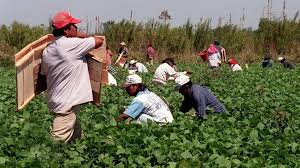
And these workers are just the ones with whom we directly interact.   What of the many people who are largely off our radar, including persons packed like sardines into stifling factories or the migrant workers who spend their long days in the field picking the crops that look so fresh and appealing on our store shelves and which they mostly cannot afford to purchase themselves?  What of the workers who are particularly vulnerable to infection, who have little access to testing or adequate health care, who endure work and living conditions that are virtual petri dishes for COVID spread, and who are not eligible for any of the government “stimulus” that, when it shows up at all, often ends up in the pockets of those more inclined to feed their own “indolence” than their needy neighbors?   And what of the families who depend on what little income these vulnerable workers secure, the remittances which COVID has suppressed but which remain virtual lifelines for those still residing in countries of origin?

It is deeply disturbing that so many of the people on whom our pandemic –affected lives depend remain so vulnerable.  It is equally disturbing that we have forgotten so quickly what we thought we had learned not so long ago about those who matter– and those who matter more.  

Thankfully not all have forgotten who keeps our fragile societies from imploding, our people from despair and hopelessness, persons who challenge economies to cease their relentless magnifying of the income and access inequalities that seduce our attentions towards the “rich and famous” rather than towards the courageous and reliable.  Some of this remembering emanates from policy centers such as the United Nations where we can and do help foster the resolve of governments to promote in unison more equal access to secure food supplies, to health care, to education, to clean water, to healthy oceans and forests, and to other baseline elements of a sustainable and meaningful life.

But it is also the case, as our dear friends with LINGAP Canada (https:/lingapcanada.com/) reminded us yesterday during their online event, that it is at local level where crises are most likely to be thoroughly identified and addressed, where needs are examined in whole and not in isolation, where caring is reinforced and its skills are developed, and where appreciation for the efforts and courage of others is more likely to be tangible than abstract.   With its focus on the Philippines and its people, LINGAP has been able to articulate some of the most disheartening consequence of this pandemic for Filipinos – from food insecurity and suppressed remittances to overly militarized movement restrictions and the almost complete elimination of public transit options.  These are consequences that, for many, make life within country less viable and threaten ties with family members abroad on whom their own sustainability often depends.

And through all of this, in the Philippines and elsewhere, are the vulnerable health and family care workers, those who are often underpaid (or unpaid altogether) and under-protected, those who seek to address the most dire cases of infection and isolation from a virus that we still don’t completely understand and from which too many on the outside refuse to protect themselves and others.  Meanwhile, rates of mental illness, domestic violence and even suicide continue to rise across societies while economies face grave damage and even immanent collapse,  virtually ensuring that those families most dependent on a reliable income stream will struggle mightily to find one.

But the point of the LINGAP event, indeed of this post, is not to rehash common and pervasive threats so much as to remind ourselves that the pathway to restoration leads through local communities and those within them who give of themselves under the most challenging circumstances and who are thus particularly essential to security and healing in all their aspects.  Theirs is the labor that we would do well to honor this weekend, the labor that can preserve us from the “weariness, vice and want” which are now so dominant across our political, economic and psychic landscapes.

Whether it’s bringing flower beds back to life or the comfort given to the dying, whether it’s the line workers stretched by “overseers” to their productive limit or the mail carriers praying to stay COVID-free, there are so many “riddles” beneath the price tags that we would do well to consider on this long weekend, riddles which expose unaddressed inequities and which invariably lead back to the labor that, as much as we are inclined to forget, we simply cannot live without.

Hack Attack:  Meeting this Cyber-Insecure Moment, Dr. Robert Zuber

30 Aug

See the source image

The good we secure for ourselves is precarious and uncertain until it is secured for all of us and incorporated into our common life.  Jane Addams

In the underworld, reality itself has elastic properties and is capable of being stretched into different definitions of the truth.  Roderick Vincent

It must be, I thought, one of the race’s most persistent and comforting hallucinations to trust that “it can’t happen here” — that one’s own time and place is beyond cataclysm. John Wyndham

And you all know, security is mortals’ chiefest enemy.  William Shakespeare

It takes 20 years to build a reputation and few minutes of cyber-incident to ruin it.  Stephane Nappo

Hackers find more success with organizations where employees are under appreciated, over worked and under paid.  James Scott

Sometimes children do not realize by how fragile a thread their security hangs.   Mary Balogh

We are now well into six months of a pandemic that continues to evolve in both its biological and social impacts.   Scientists continue to learn more about transmission modalities, treatment options and the short and long-term health consequences of infection. Moreover, their investigations have revealed the mental health effects associated with our COVID-necessitated social isolation, from physically-distanced partners to children who stare at computer screens much of the day, pausing only to eat their lunch at an all-too-familiar kitchen table devoid of the happy noises of their friends and other classmates.

For many people I know the novelty of endless zoom meetings and other internet-tethered communications necessitated by this pandemic has long worn off.  We recognize the huge advantage that some of us in this world enjoy in the form of an ability to hold most of our own world together thanks to an abundance of digital access.  But there is fatigue and frustration as well, fatigue that some of the temporary accommodations we have made seem destined to become permanent; frustration that the inequalities and injustices now plaguing our societies seem destined to grow wider as our digital divides persist and our digital vulnerabilities grow.

Such vulnerabilities are related in part to the nature of our security-challenged digital playing field but more to our own “nature” as human beings, specifically our uncanny ability to “repurpose” resources that can enhance human possibility to ends which are self-interested at best and nefarious at worst.

Indeed, internet-based social media in our time has become something of a gold standard for such perversely repurposed resources.   The same platforms that allow us to stay connected to loved ones in the far-flung corners of the world; the same platforms that allow us to conduct “business” that we can’t now conduct over coffee or lunch; the same platforms that allow us to weigh in on political and social issues in ways we could not otherwise; such platforms have also become portals for the economic exploitation of disenfranchised persons and the virtual obliteration of personal privacy, as well as for the often-anonymous expression of every conceivable social grievance, conspiracy theory, bullying and character assassination, and incitement to hatred and violence.

I can’t speak for others, but there is no other place in my twittered life where I am exposed to nearly as much vile rhetoric, unchained egos and ideas which have more in common with propaganda than an honest (and dare we say humble) search for truth.  The fact that we have “made up our minds” about so many things frequently translates online into seductive sales pitches and threats against those whose minds are made up in a different direction.  We are all so smart, it seems, so full of righteous indignation, so willing to jump on any opinion that confirms our ill-conceived prejudices rather than explore ideas which might help us find a richer path.  And in a time which longs for those who can sift through the debris enabled by ideological bubbles filled with people willing to ask the first question but never the next one, what we have encouraged instead are people too comfortable with partisan security, anxious to use the internet to hurl critiques and condemnation but not to reflect and discern, not to strategize about ways to narrow the many chasms that we too have had a role in creating.

As most competent cyber security experts would surely confirm, there is digital danger in this moment for all of us, a moment when hacking and other online manipulations are directed at a wider range of personal and physical targets, and where we as a people seem often to be burying our collective heads in the sand while suppressing our will to “seek the good for all,” to address with conviction common and interconnected threats and not only the ones that challenge our tribe.

One of the positive developments at the UN in recent years has been its attention to such common security threats and related abuses associated with online portals.  In many parts of the UN system – from the General Assembly’s First Committee and Group of Governmental Experts to the Office of Counter-Terrorism (OCT) and the Counter-Terrorism Executive Directorate (CTED), the UN has for some time been seized of the many security challenges associated with these portals, from disruptions to medical facilities and other civilian infrastructure to the luring of vulnerable young people into extremist movements and soliciting the resources needed to perpetuate their activities.

These concerns have recently found their way into Security Council deliberations with leadership from cyber-sophisticated Estonia and current Council president Indonesia. States are coming to realize that weapons and other physical manifestations of our violent inclinations are only one piece of the international security puzzle we are still not doing enough to solve.  After all, medical facilities can be disabled by hackers as well as by air strikes.  Power and water infrastructure can be rendered inoperative by cyber criminals as well as by missile launches.  Weapons can be neutralized (or even launched) through cyber manipulations as through direct military commands.

This week, officials from the International Committee of the Red Cross, the UN Office for the Coordination of Humanitarian Affairs and the UN’s Institute for Disarmament Research briefed the Security Council on the “diverse and devastating destructive effects from cyber operations” on infrastructure and other public goods ranging from health care and other “vital services” to finance and (of particular concern in the US at the moment) elections.   And as the European Union warned, the “malicious intent” behind cyber-attacks does more than damage targets – it raises general levels of hostility and mistrust in what St. Vincent and the Grenadines reminded is our increasingly globalized world.  And given the times we are in and what the Netherlands rightly maintained is our “unprecedented dependence” on the internet, there is no reason for any of us to assume that a digital “cataclysm” will somehow, if by magic, bypass us.

We need to make sure that we are addressing the threat in full not in part.   To do so, we would do well to hold together what appear to be three pillars of cyber-concern.  The UN and its many partners know that we can bring more resources and expertise to bear in fighting malicious infrastructure hacking; but also to the task of mediating a social media environment which has fast become a swamp of narcissism, bigotry, conspiracy theory, extremist ideology, and “trollers” ruining reputations just for the fun of it.

But there is another piece to this puzzle, another responsibility raised by Russia and other states in the Council this week but communicated quite succinctly by Costa Rica – that while we are increasing cyber-space security we must also close a digital divide that robs so many of their potential:  robbing community farmers and medical practitioners of the information they need to grow more and heal better;  robbing children of the ability to maintain some vestige of educational progress and social connection without exposing themselves, their teachers and their families to a potentially deadly virus.

I was particularly moved this week by the image of two young children, sitting on the curb of a fast-food restaurant, trying desperately to secure enough band-width to log in to instruction that other classmates could easily access from home.  This is but one small instance of a digital divide that is expanding not shrinking and that (even as I write) is relegating perhaps millions of children to abandon the schooling their communities fought so hard to provide, the schooling these children will need in order to hold their own in this uncertain, unequal and threat-saturated world.

The social and security consequences of this persistent divide constitute a digital threat as grave as any other.  We have more than enough expertise at hand to both responsibly secure and fully enable access to digital spaces.  There is no time like the present to put that expertise to work.

Playing Taps: Honoring Beleaguered Humanitarian Responders, Dr. Robert Zuber

23 Aug

See the source image

A ship is safe in harbor, but that’s not what ships are for.  John A. Shedd

I have gone ahead despite the pounding in the heart that says: turn back. Erica Jong

Ultimately, thickened skin leaves you numb, incapable of feeling the highs and lows of life. It leaves you rough like a rock and just as inanimate. Michael Soll

If you want relief from pain just strive to touch more of every part of life.  Bryant McGill

The Doctor knew exactly what to do when he heard horrible screaming – run towards it and help.  A.L. Kennedy

May we always be burdened with thinking of the suffering of others, for that is what it means to be human.  Kamand Kojouri

He presented justice as a psychological relief.  Jill Leovy

This past Wednesday was World Humanitarian Day as declared by the UN, a time to reflect on those who, unlike most of the rest of us, run towards the screams of the distressed and unfolding emergencies rather than away from them; who bring skills and determination to often-complex crises that make the survival of persons in grave need more likely even as they make their own survival less so.

For persons, like myself, who now spend too much of our lives “tapping” on a keyboard and too little time immersed in the multi-dimensional struggles of real persons in real time,  we can experience bits of lingering sadness that are hard to shake.   My social media accounts are filled with stories of misery that humans insist on inflicting on each other, lives sacrificed to the pursuit and maintenance of power, victims of a wide range of causes including and especially armed conflict but also what the Dominican Republic (and other Security Council members) referred to this week as a “triple threat,” (to Somalia in this instance, but applicable to other peoples and places as well) — COVID infections, climate-induced flooding/drought and locust plagues.

From Cameroon to Yemen and from Afghanistan to Syria, the carnage that fills my various feeds and those of other “keyboard tappers” can be hard to process.  Moreover, the institutions we have collectively entrusted to manage conflict threats have succeeded in little more than “baby steps” towards measures that can ease humanitarian burdens for both those who provide relief and especially for those who require it.  We often fail to prevent conflict or stem it in its earliest stages.  We often fail to heed the climate-related warnings that make it harder and harder for subsistence farmers to subsist and coastal islands to survive.  We often fail to protect children from violent extremism and abuse with no effective plan for how to manage the trauma that will impact their decisionmaking long after their surface wounds have healed.  We often fail to swap out militarized responses to community unrest with more nuanced approaches to policing that better balance community mediation, conflict prevention, last-resort coercion and a commitment to the justice which is its own “psychological relief.”

These diverse and persistent ills represent cries of pain, injustice and deprivation that cause some to close their hearts and others to leap forward in support. In this latter category are those providing provisions for those displaced by storms or violence and now confined to makeshift shelter; the bomb squads carefully defusing explosives placed in public squares; the medical care provided in facilities shaking from bomb blasts; the drivers of convoys running a gauntlet of roadside threats including well-disguised explosive devices; the peacekeepers attempting to keep the peace even when there is clearly no peace to keep; the police effecting emergency rescue of persons trapped in cars involved in horrific crashes or sinking quickly to the bottom of lakes; the military units sent in to free victims from the control of terrorists; the NGOs risking their own lives to ensure that persons traumatized under rubble are freed or that persons with disabilities can escape harm once the warning sirens sound.

We do not do enough to honor this work even if we don’t always approve of every tactic deployed, even as we feel compelled to echo sentiments of the UN’s Counter-Terrorism Executive Directorate this past week that all efforts to address terror threats and even provide support for victims must be more cognizant of obligations to respect and uphold human rights.   Those who run towards people in crisis have a special place in our hearts, especially as some of us “tappers” are no longer equipped to respond to crisis-related need in the way that we once might have done.

And yet in this time of unresolved violence, insufficiently addressed climate threats and a pandemic that shows little sign of vanishing, we fear that too many have allowed ourselves to become “rough like a rock,” blaming our legitimately-frustrating personal circumstances for the decision to touch less of life, not more, to listen a bit too much to the “pounding” in our hearts rather than to the cries of those whose rights and aspirations have been steamrolled by power-obsessed governments, their overly-muscular security forces, and the economic, social and health-related unrest that are keeping all of us on razor’s edge.

It would take more than an annual day to sufficiently appreciate the motives of those who respond first and best to the crises that beset so many in our human family.  At the same time, we must acknowledge that such crises seem to be expanding, not shrinking; that the numbers and needs of people in distress are growing, not diminishing.  For all the remarkably courageous work being done by those who care more when too many of the rest of us could care less, there seems to be no end in sight to the burdens that global circumstances place on these responders. We create food insecurity faster than we can deliver provisions.  We create war victims faster than we can provide physical and psychological healing.  We traumatize children faster than we can guarantee their safety (or their education for that matter).  For all the metaphorical babies we pull from the river, more and more are being thrown in at its source.

One gets the clear sense in these times that our hero/heroine responders are waging a struggle destined to be forever exasperating, doing what they can to rescue populations from oblivion while policymakers and those of us who “play taps” around them largely fail to stem the deadly tide, to remediate the injustice, to care sufficiently for those enduring what UN Special Envoy Pedersen this week referred to as “mass indignities” inflicted too often in large measure through our own collective negligence.

At its most appropriate, the courage of humanitarian responders should facilitate the plugging of temporary gaps until those with power and influence establish and implement the norms and laws that can ensure longer-term relief.  However, such responders and their clients have largely been consigned to a Godot-like wait for policies to take effect which can ensure that our current emergencies have an actual end point.

As such there is still work for those of us who perhaps “tap” too much and respond too timidly. For it is clear, to me at least, that honoring humanitarian and other first responders is in large measure about reducing the burdens which often overwhelm their craft.  From mask wearing and other counter-COVID measures to mitigate the strain on overwhelmed hospital workers to more women-led mediation efforts to transform community conflict before it graduates into armed violence, there are many burden-reduction strategies we can help to identify that offer hope to besieged persons and their care-givers.  But we must also insist on more from political leadership, including more urgency on conflict and climate, on poverty and biodiversity, threats that already strain humanitarian and peacebuilding responses to their breaking point.

We “tappers” in our mostly safe harbors indeed have an important role here, albeit a subordinate one: to insist that governments and policymakers cease misappropriating humanitarian assistance as an excuse to ignore their urgent peace and climate responsibilities, urging leaders to do much more to keep all those metaphorical babies from being thrown the river in the first place. After all, doctors working in makeshift clinics cannot make the bombing cease.  Convoy drivers cannot heal the climate that now steals crops and livelihoods.  Peacekeepers and aid workers cannot force governments and non-state actors to fairly and expeditiously honor peace agreements.

We are probably getting all we can expect from our first responders and humanitarian workers.  However, we still have a right to expect more from our political leadership at national and multilateral levels. Security Council members this past week discussed in the context of Syria whether cross-border closures or sanctions were the primary cause of the misery of Syrians.  The true answer of course is a decade of horrific armed violence which neither sanctions nor cross-border relief has the capacity to resolve.

Thus we “tappers” must play our role in ensuring that expectations for sustainable peace take the form of tangible policies to bring relief for besieged peoples, offering communities both a safer and more prosperous path forward and granting some well-deserved respite for the humanitarians who have put so much on the line to give communities that chance.

Mail Merge: Electoral Integrity as Peacebuilding Responsibility, Dr. Robert Zuber

16 Aug

See the source image

Strange as it may seem, I still hope for the best, even though the best, like an interesting piece of mail, so rarely arrives, and even when it does it can be lost so easily.  Lemony Snicket

If it takes the entire army and navy to deliver a postal card in Chicago, that card will be delivered.  Grover Cleveland

But as soon as it is in back of this partition, or in a mail box, a magical transformation occurs; and anybody who now should willfully purloin it, or obstruct its trip in any way, will find prison doors awaiting him.  Ernest Vincent Wright

I do not follow politicians on Twitter; if they want to lie to me, it will cost them a stamp.  Carmine Savastano

I’ve always felt there is something sacred in a piece of paper that travels the earth from hand to hand, head to head, heart to heart.  Robert Michael Pyle

You got to stick to the bridge that carries you across. Marjorie Kinnan Rawlings

It was a relatively quiet week at the UN though not within some UN member states where an increasingly anxious global public could be seen on the streets in large numbers demanding leadership change in Belarus, political reform in Thailand, and upcoming elections in the US and other countries that can pass basic tenets of fairness and integrity.

Life inside the UN bubble this week was punctuated by a preventable controversy over a potential extension by the UN Security Council of the arms embargo against Iran.  A resolution circulated by the US, which received little support from other Council members during a Friday afternoon vote, was essentially an energy-wasting effort to manipulate the terms of an agreement (JCPOA) with Iran which most Council members sought to preserve and which the US had already renounced.

There was also an important Security Council discussion, hosted by Indonesia’s Minister of Foreign Affairs, on the various ways in which the COVID-19 pandemic has impacted peacebuilding efforts by the UN and a range of other actors, people who are active at all stages of the conflict cycle, who are concerned both to prevent conflict and minimize its often-devastating consequences, and whose multiple activities — including efforts to preserve electoral integrity — have been complicated by a pandemic which has added layers of response complexity, extended the miseries of the most vulnerable, and provided cover for governments which would roll-back social progress and civil rights or (in the case of certain non-state actors) step up assaults on communities and authorities.

For those unfamiliar with (or put-off by) UN nomenclature, it is important to state why we have long encouraged holistic conflict responses under a peacebuilding banner.  Part of this commitment has been purely practical.  As the Security Council has been unable to adequately address conflict threats or sufficiently broaden the range of its attentions to the many causes and consequences of global violence, it has been the UN’s peacebuilding apparatus – primarily the Peacebuilding Commission – which has steadily left the post-conflict “ghetto” to which it had once been confined to now provide important and meaningful counsel to the Security Council itself but also to UN member states facing security threats of a complexity they simply cannot resolve alone.

But beyond the ability to improve the UN’s lagging capacity for meaningful conflict response, the UN’s peacebuilding architecture has broadened our understanding of the many causes and manifestations of conflict threat; but also of the diverse actors — including so many persons in our communities and civil society organizations — who have a clear and direct stake in policies and practices that can both silence the guns and ensure conditions conducive to sustainable peace such that communities will have no compelling rationale for resorting to weapons in the future.

Implementing commitments to examine the diverse causes and consequences of conflict as well as to promote inclusive participation by all with the skills to contribute to sustainable peace represents a tall task under the best of circumstances.   The “accompaniment” of states under a conflict cloud urged on Wednesday by SG Guterres is not a simple matter nor is it one (as Germany noted) that is currently being guided by thorough and honest assessments of our responses to the current pandemic and related challenges.  The Council has not yet, as underscored by the Dominican Republic, enabled a peacebuilding architecture fully inclusive of the skills and aspirations of women, youth and cultural minorities.  The Council has not yet, as noted by Vietnam, extended accompaniment sufficiently to persons with disabilities or to refugees displaced by famine, climate change, political disenfranchisement or armed conflict.  The Council has not yet, as was noted at this session by former SG Ban ki-Moon, done enough to resolve our massive digital divide or promote a global cease fire that could make our pandemic and peacebuilding responses more effective.

We are not, as warned by Saint Vincent and the Grenadines, keeping a sufficiently “watchful eye” on how global challenges in this time are both interconnected and often accelerating.  And while numerous Council members rightfully expressed concerns that terrorist and criminal elements are taking advantage of our current pandemic-stoked confusion to incite violence and sow hatred, there was little discussion of how otherwise “legitimate” governments are using what Belgium referred to as the “soaring” personal and institutional consequences of COVID as cover for security measures and policy changes that are anti-democratic at best and outright authoritarian at worst.

We certainly are feeling that negative energy here in the “host state.” Threats to our enfranchisement as citizens – including the basic integrity of our elections – are well underway as the domestic iteration of our global pandemic shows no signs of slowing or even embracing the best, if evolving, scientific and medical expertise. In a few short days this week, we have been more efficient in hauling away postal boxes and disabling mail sorting machines than in ensuring timely COVID test results or civil rights for protesters, “efficient” moves intended to manipulate election results in broad daylight.

Much has been written recently about the dismantling of a once-proud service that is particularly essential for rural residents and those dependent on the mail for medicines and other essential supplies; a service which also has long been symbolic of a government that knew it had to earn public trust. Part of that “earning” took the form of what has become “old school” reliability, the insistence that what was entrusted to agencies such as the postal service represented an almost sacred commitment duly upheld by those tasked with delivery (including by me in two earlier years) and which was not ever to be misrepresented as the province of any singular political interest.

These days, it seems, everything in our lives has been claimed –and often defaced — by one political interest or another.  Thus it seemed a bit ironic that as the post office is being cut off at the knees, it has issued a stamp (see above) to commemorate 100 years of US women’s suffrage, a reminder of what has been a long and often painful journey to enfranchise women not only as voters but as leaders and policymakers, and not only in the US but in too many other UN member states.  As the postal infrastructure of this country continues to unravel and even as more women (and women of color) struggle to grasp their rightful places in public policy, it remains crystal clear that the struggle for enfranchisement has not ended, that we remain buffeted by threats to civic dignity and civil peace perhaps even more grotesque than the pandemic itself.

It is a small symbol in the grand scheme of things, to be sure, but after a good conversation yesterday with our colleague, Lisa Berkeley, I think we can use the suffrage stamp to help reinforce a peacebuilding-relevant linkage between electoral protection and women’s enfranchisement.  As such I would urge anyone who can do so to visit your Post Office, buy as many of these particular stamps as you are able, and then use them liberally on post office services, including letters and bills, that you still feel comfortable entrusting to our nefariously-disabled and reliability-impeded postal infrastructure.

In addition, having once engaged that culture first hand, I can thankfully attest that the US postal service remains a responsibility of government filled with people committed to crossing bridges of reliability, people who still believe in the sacredness of the documents that travel the world and bind its inhabitants; people who understand (even viscerally) that a pandemic (or other crisis) must never become an excuse for disenfranchised citizens, politicized public services and abuses of fundamental rights. Until our leaders get this message, clearly and unequivocally, we would do well to exercise all remedial measures — symbolic, legal and legislative –still remaining at our common disposal.


Generation C: Minding the Catastrophes Encircling our Children’s Lives, Dr. Robert Zuber

9 Aug

the-sky-is-falling.jpg (463×308)

It was like we had known all along that the sky was going to fall and then it fell and we pretended to be surprised. Elin Hilderbrand

Sometimes catastrophes split you in half and even if all the pieces are there, they might not ever fit back together.  Julie Murphy

Sooner or later the world comes to its senses, but oh the damage that has been done.  John Kramer

Some days punch us in the gut so hard it seems we can feel the whole universe gasp with despair.  Curtis Tyrone Jones

It’s a catastrophe to be without a voice.  E.B. White

The mind couldn’t think about the End of the World all the time. It needed the occasional break, a romp through the trivial.  Neal Stephenson

One of the pitfalls of this policy business is that we are now drowning in the “crises” that we are tasked to identify.  Everywhere you turn, there is one more manifestation of our lack of solidarity with each other, another blow to the views maintained by some (us included) that human beings are still capable of choosing life over death, growth over destruction, cooperation over nationalism and unchecked narcissism.  And yet there are those times when we simply do not treat our crises with sufficient urgency, seemingly more worried about our talking points or funding streams than actually solving the problems most directly relevant to our roles and mandates.

Regardless, it was difficult for any of us to miss the urgency embedded in this week of many catastrophes just ended.  For the past few days, we have been beset by some stark and painful images, some a clear consequence of human neglect but also a harbinger of a future that we are collectively not approaching well at present, one that cannot offer much comfort either to children or to those tasked with guiding and educating them.

In case you were taking a vacation this week from the news to concentrate on family or “romp through the trivial,” allow me to remind you of some of what we have done to ourselves in this most recent time.   We have now reached an ominous threshold of 20 million known COVID infections worldwide – 5 million in the US alone – with most medical experts fearing that the number of actual cases (and spreaders) is considerably larger than reported.  At the same time, a large oil tanker leak off the coast of Mauritius continues to directly threaten both the complex biodiversity of the country and the livelihoods of its people.  In addition, many of you have surely seen images of the Beirut port blast that brought devastation to an entire city, worsening an already tenuous economic situation and calling thousands into the streets to both mourn their losses and seek explanation and accountability from and for those whose negligence allowed this to happen. There was also some sad reporting about the collapse of the ice shelf on Canada’s Ellesmere Island, a collapse larger in area than the island of Manhattan and yet another blow to, among other things, the stability of the Arctic and its multiple inhabitants. And then there were the ubiquitous images of nuclear fireballs both from the testing we now seem determined to resume and from the highly-dubious uses of these weapons75 years ago on residents of Hiroshima and Nagasaki, weapons which our currently (and foolishly) modernizing arsenals dwarf by comparison.

The lessons that we can take from this week’s gallery of disturbing images are ones we have mostly learned already and then blithely discarded.   That our sky in some sense is falling is not news to most.  That we continue to accept these “punches in the gut,” that we continue to allow crises to break us apart with little or no strategy for putting the pieces back together again, this is symptomatic of something insidious inside ourselves. This goes beyond a failure of technique to a failure of stewardship; the courage to ensure that, at a most fundamental level, we are determined to bequeath to our children a planet that can sustain life, ensure equitable access to water and other essential resources, and provide opportunity for creative livelihoods that are less about destroying competitors and more about contributing as we are able to the well-being of the global commons.

Even before COVID, we have collectively been losing ground on sustainable development goals from food security to climate health.  But COVID has pushed even our development successes to the margins, including our goals for education.  Indeed, one of the more disquieting statements of the week was issued by UN Secretary-General Guterres, who noted that 90% of the world’s school-aged children have had their education disrupted by COVID, a catastrophe for a generation that will need all their wits about them if they are to manage, let alone thrive, in the (needlessly) melting, food insecure, hostile environment we are in danger of leaving to them.

In his statement (click here) the SG makes an urgent plea for governments to do what they can and all that they can to get children back in school and to properly fund their educational infrastructure.   But he also recognizes, as do many in the US (such as my longtime friend and colleague Dr. John Thompson) now weighing in on how to reopen schools in the midst of a pandemic, that to some considerable degree the still-potent virus — and what Thompson describes as our struggle to put “public health over ideology” — are now dictating educational outcomes for many millions of children. A frightening percentage of such children now run the risk of permanent exclusion from formal schooling and other educational opportunity.  Such exclusion will only increase inequalities and ensure that the skills and voices of millions needed to bring this stubbornly self-destructive world to heel will remain missing in action.

If this is not a catastrophe in early formation, I don’t know what is.

There are so many dimensions to this educational threat that require attention now:  parents desperate to find work and who cannot adequately attend to their jobs and the safety of children marooned from classrooms; curricula which increasingly exposes both infrastructure disparities and the still-large swaths of our digital divide;  children who we are learning now can both spread COVID and become victim to some of its most serious health consequences; teachers who (much like our front-line health care workers) are somehow expected to “take one for the team” as ideological divides harden and classrooms (like most every other public space) become petri dishes for evolving manifestations of pandemic threat; students who desperately need in-person peer interaction as they begin the long, complex psychological separation from their parents; children whose shelter-in-place attentions are now directed largely towards the screens that already play an outsized role in value and worldview formation.

Guterres sees within the confines of this pandemic an opportunity to “reimagine education” and we welcome that call so long as the fruits of reimagining don’t themselves widen gaps between children with access options and children without.  If indeed education is to remain viable as a “great equalizer,” we do need to reach more children with formal and informal opportunity, including access to digital resources.  We do need to prioritize educational funding as we consider how best to mitigate an otherwise crisis-riddled future.  And we do need to take better care of our educators, primarily but not exclusively in the formal sector, remembering that it is not the task of teachers to solve in any isolation the vast social problems which they confront daily but did not themselves create.   It is their task, at least in our view, to do what they can to instill hope in the future and to impart and nurture the skills that have the best chance of making that hope sustainable.

And while we are at this reimagining business, we should take a hard look at what we teach not only how we teach.  In this aggrieved and distracted time, when kids are increasingly more comfortable in cyber realities than out in the crisis-driven mess we have made for ourselves, it is important that teachers take a stand against both stifling cynicism and blinding ideology.  The world is still worth knowing; is still receptive to possibility and positive change; still harbors hope of greater fairness and solidarity between cultures and among diverse life forms, still has beauty to convey around nearly every bend. We need the eyes of children to remain open to wonder and possibility especially at times like these when both seem to be at a premium.

And we need to help students cultivate what the psychologist Erich Fromm called a “scientific attitude,” not so much a reverence for the “techniques” of science but a mindset that refuses to accept on faith conclusions for which there is clear conflicting evidence; a mindset that prioritizes a larger role for objectivity and realism; one that requires us to see the world as it is as the precondition for any life-enhancing modifications; one that cultivates what Fromm saw as the healthiest formula going forward – humility towards the facts of the world and a renunciation of “all hopes of omnipotence and omniscience.”

As hard as it sometimes is to imagine, our damage-ravaged societies will eventually come to their senses. The question is how much catastrophic damage we are willing to inflict on the aspirations of and prospects for “Generation C” until that blessed day finally arrives?

Traffic Alert: Countering our Dystopian Gridlock, Dr. Robert Zuber

2 Aug

Gradually our ideals have sunk to square with our practice.   Alfred North Whitehead

We dismantle the predator by countering its diatribes with our own nurturant truths. Clarissa Estés

The life where nothing was ever unexpected. Or inconvenient. Or unusual. The life without color, pain or past.  Lois Lowry

There is no feasible excuse for what we are, for what we have made of ourselves.  Iain Banks

In the year 2025, the best don’t run for president, they run for their lives. Stephen King

Only the sweetest of the sweet would bring brownies to the apocalypse.  Shelly Crane

Quietly and complacently, humanity was sinking into decadence, and progress had come to mean the progress of the Machine.  E. M. Forster

Yesterday on the radio, a New York Yankees baseball commentator was sharing a warning issued by the weather service for the arrival of a tropical storm – perhaps something even stronger – set to make its way up the East Coast of the US this week and thus create havoc for more than just baseball.  After the warning, another commentator reflected, “Of course a huge storm is coming.  It’s 2020.”

Yes its 2020, a year that once upon a time held a great symbolic hope of clean cities and transparent politics, a time when we might have overcome at least some of the burdens of poverty and predation that we as human beings have inflicted on ourselves and the rest of the natural order, a time when our education and our technology would allow more of us the opportunity to pursue lives of meaning that hold the public interest in as high a regard as the personal.

Whatever that vision might have looked like, what we have “made of ourselves” in the run-up to this stormy year lies in stark contrast.  Despite some remarkable, heroic stories coming from our hospital wards and the determination for justice seen on the streets of our protests, we have collectively (to use a baseball analogy) lost a few miles-per-hour off our fastball.   We have allowed ourselves to be defined more by our grievances than our generosity.  We have indulged what one political commentator this week referred to as a “cult of selfishness” that permits too many of us to obsess on what we have lost during this pandemic with little regard for those who never had it in the first place; indeed those for whom every day is a struggle to hold on to something –- or someone – to help navigate life circumstances more akin to apocalypse than quarantine.

We have in many instances misplaced faith in institutions, in governments, in science.  We have also lost a good deal of faith in each other, defending more and more a dystopian worldview dominated by predators, rapists and thieves, people seemingly bent on taking from us what we love and inflicting violence that our security sector seems powerless to stop.   And this worldview is being reinforced through a good chunk of media brimming with images of cruelty and violence, scenes where the next betrayal is right around the corner, media products where everyone seems to have a gun, where no one can be trusted, and where the screen carnage often exceeds the grisly toll from COVID emanating from our overstretched and under-resourced hospitals.

This current incarnation of our dystopia is hardly the first and it draws on and perpetuates a deep legacy of (often unaddressed) anger, fear and frustration.   Like many others I speak with, especially those in the business of attending to global crises, I know how much “darker” my own dream life has become in recent times, full of danger and rejection, images of free-fall and betrayal.  There is this sense – in many of us – that circumstances have simply gotten out of control, that our “nurturant truths” have been buried under the current avalanche of pandemic-generated, personal and economic anxiety, that the best we can do is to protect what is ours, if we can, from threats that seem to be lurking around every corner and for which much of our leadership seems to have no solution that doesn’t revolve around incitement, arrests and tear gas.

Indeed, “our ideals have sunk to square with our practice,” and our practice at this moment is not one in which we should be taking particular pride.  Our multi-lateral institutions are delivering less than promised on sustainable development (see climate change and food security), on peace and security (see Syria and Yemen), and on the protection of children from violence and abuse.  Our religious institutions have largely misplaced their responsibility to reconciliation and thus have too often become one more partisan influence in a bitterly divided social landscape. Our schools continue to be put in the untenable position of solving social problems which should be resolved elsewhere while attempting to counter the current mood which elevates opinion over science and conspiracy over evidence.   And our security institutions have to face the brunt of our collective anger while generally refusing accountability for acts which inflame that anger still.

In such a climate, truth-telling is punished and competency is suspect.   While we may not have lowered our guard, we have certainly lowered our standards such that the “best” are more likely to be found “running for their lives” than seeking roles in social and institutional leadership.

In my experience, it is the issue of trafficking in persons where our current emotional and policy fault lines are often most clearly exposed.  This past Thursday was World Day Against Trafficking in Persons and, at the UN, a bevy of speakers – first responders, victims, diplomats and others – shared testimony on why this particular type of trafficking, this particular manifestation of human predation, simply must receive greater policy attention.  Perhaps the most animated of the speakers was the actress (and UN Goodwill Ambassador) Mira Sorvino who noted that the 2020 pandemic has merely slowed down the already much-too-modest efforts to break up trafficking networks and prosecute offenders.   She urged, among other things, better training for judges and law enforcement such that they can become “more than paper tigers” in efforts to counter human trafficking and related predatory acts in all their manifestations, traffickers who have routinely demonstrated more flexibility during this pandemic than those seeking to put them out of business.

That same day, one of our partners, WIIS-New York, moderated in an online event focused on the growing threat of (domestic) trafficking as well as kidnapping and other threats lodged against our youth, especially girls.   The focus here was less on policy responses and more on “awareness raising” about the prevalence of predators in and around their homes, schools and shops, as well as the grave difficulties parents face in trying to keep their children, especially their girl children, safe.

One can only sympathize with parents who must assume this protective burden within a social fabric that seems to be fraying more and more, a fabric of public institutions less trustworthy and responsive than they might be, with images streaming through their devices in their current “shelter at home” reality of a world that is badly divided and amply frustrated, where leadership often seems more interested in stoking fires than extinguishing them, and where capacities to apprehend predators and rehabilitate their victims are generally inadequate, sometimes shockingly so.

And yet, part of our current dystopian mind-set involves perceiving threats in all sorts of dark corners where they might not actually exist and simultaneously under-stating our ability to contribute to remediation beyond the boundaries of our personal space. Parents must protect, full stop. And yet so much seems out of their control, not only with respect to trafficking, but regarding the larger economic, health and ecological threats that might well impact children far beyond this stressful year.  How do parents protect without paranoia or without imposing a life for children devoid of “color or pain?”  How do parents nurture children to be savvy about threats and not overwhelmed by them, to rely on their wits but also to seek help when those wits are unsure?  How do they protect children from danger without protecting them from life?

There are no firm answers but many helpful stories.  Indeed, one of the most hopeful presentations of the UN’s week was made by a former trafficking victim from Colombia, a woman who suffered, as a girl, grave abuses from which her family was unable to offer adequate protection. But she and her family persevered and, quite remarkably, she is now director of a trafficking-focused NGO in her country, making protective and healing services available to victims that were not available in her own time of need. “We have come a long way,” she proclaimed.  Indeed, the same could surely be said about her, a stunning modeling of human resilience and healing that we need more of in these times.

But sadly, we have collectively not come such a long way as we might otherwise have hoped. Especially in this pandemic year we have seemingly given up too much ground to negativity and cynicism; we have allowed a dystopian worldview to take up residence in our souls, thus undermining so many of our common causes. If this year is to be known for anything other than acrimony and suspicion, of lives needlessly facing material ruin, languishing in makeshift morgues, or frozen in fear of any and all unknowns, we would do well to assess the impact of this violent, chaotic darkness on our most personal choices and then vow to contribute more to healing and reconciliation, more than merely “bringing brownies to the apocalypse.”

Even now, even in 2020 we have our “nurturant truths” to share, truths that can help restore institutions, dismantle predators, inspire children and fortify communities. There will never be a better time to share them.

Dragnet: Climate’s Grip on the Security Sector, Dr. Robert Zuber

26 Jul

Poll: Riot gear for police at protests?

Life can only be understood backwards; but it must be lived forwards. Soren Kierkegaard

Ecological healing is all about the healing of relationships.  Charles Eisenstein

History is humankind trying to get a grip.  Kim Stanley Robinson

We must remember that this is not a fight we can win just by fighting.  Charles Eisenstein

We cannot choose the times we live in, but we can choose the stories we tell and live by. Sally Gillespie

When we begin a deeper journey into earth care, sometimes we are struck by the breadth of ruin, even ugliness, that it is our challenge to recover and redeem.  LL. Barkat

Birds start falling. Bees lie dying.  Mary Flanagan

On Friday, as the excellent presidency of Germany nears its end, the Security Council took up the issue of “climate and security,” a thematic relationship which the Council is under more and more pressure to address, especially from its elected members.  The manner in which it was addressed in this session, however, speaks volumes regarding both the policy strength of some delegations and the limitations of the Council in articulating a clear role for itself within our global system of response, one that encourages that all aspects of that system to function at maximum effectiveness.

The UN is, of course, primarily a negotiating platform, but as stated by Germany’s Foreign Minister Maas, some things are not negotiable and “we cannot negotiate with nature.”   But while we cannot negotiate with our climate, we can clearly cause it damage and, by extension, cause grave damage to ourselves and other life forms.  As Belgium made clear, this is no abstract matter but a crisis that both impacts and creates vulnerable people worldwide with “aggravated costs,” as Tunisia and Indonesia both noted, which will likely only increase at least in the near term.

There was broad recognition in this Council debate regarding what Belize referred to as the “indiscriminate consequences” of climate change, impacts (as underscored by Niger and others) that fall largely on regions, states and peoples already vulnerable to conflict and COVID-related threats. Such areas have generally contributed little to the climate crisis yet must live with the heat and the drought, the unpredictable rains and insect plagues that make an often- tenuous relationship to viability ever more so.

There were clear calls to action on Friday, especially from small island states who continue to watch nervously as their sea levels rise while large states continue their out-sized consumption and relentless production of greenhouse gases and other environmental pollutants.  There were also calls for the Council to remain fully seized of the data on climate linkages and impacts, with many supporting the appointment of a special UN envoy on climate and conflict.  But there is still concern in some quarters (including here) that the Council does not fully grasp the role it can play as an enabler of climate action underway in other parts of the UN system, not to mention in communities worldwide, keeping in mind the distinction between what the Council does itself and what actions it encourages in others. In our view, Council enabling – not controlling – effective climate action in diverse settings remains one key to our common survival.

But what of the specific climate-conflict nexus?  There was consensus on this Friday that climate change does not “cause” violence per se, but rather “exposes existing vulnerabilities” to which we have not paid sufficient attention and, as noted by a Niger military official, places the often “tenuous balance” between regional groups under considerable strain.  UN Assistant Secretary General Jenca, representing the Secretariat, underscored the degree to which climate threats expose “deep grievances” which often fester in societies and which can erupt in violence unless they are properly addressed.

While this debate added value in terms of basic nexus contours, it did not directly address (aside from comments on the role of peacekeepers) the impact of climate-related “grievances” on the security sector itself, those tasked with ground-level security functions in communities which, in a growing number of instances, are watching their livelihoods blown away by sandstorms or migrating to waters cool enough to sustain minimal oxygen levels. And where governments are either indifferent or lack a trusted presence, communities may well prefer to defend their interests and manage their difficult affairs on their own, interpreting government security as simply one more coercive element seeking to maintain “order” but not honor promises, adding another level of restriction to an already constrained existence, and this at the point of a gun.

In society after society, we have seen the impact of overly-stretched law enforcement, police which have been weaponized and politicized; police asked to perform security functions in tenuous situations far above their pay grade; police which have been encouraged by political leadership to focus on the coercive end of their mandate and not the conflict prevention and community-responsive elements; police who in many instances are barely required to grasp the letter of the law and even encouraged to ignore both the spirit of the law and abuses of that law committed by other officers.

And across the world those same police are now being sidelined and their reputations scarred by more coercive and unaccountable forces that have no interest in local communities aside from suppressing its dissent and misrepresenting the identity and intent of its protesters. From Cameroon to Portland, we have seen instances of unidentified agents who have increasingly become a tool of regimes seeking to maintain a repressive grip or impose one anew, forces asked to parachute into situations which may be antagonistic already but which their own coercive responses merely inflame.

Grievances at community level are deep now, as deep as I have ever seen them.  Many people are angry, afraid, abused, finding themselves isolated in circumstances worse than anything previously conjured up in their nightmares.  Those grievances in some instances apply as well to the security sector, to law enforcement tasked with maintaining “order” in situations where government officials have clearly not done their jobs, officials who are neither “getting a grip” on current threats nor interested in helping the rest of us to do so. In such a scenario, only authoritarians can possibly claim victory.  The rest of us are left with a series of bad choices, including to arm ourselves to the teeth or hurl projectiles at “enemies” about whom we know little and care even less.

As St. Vincent and the Grenadines said Friday in the Security Council, “action is all that counts now.”  But what is the action envisioned for often anti-democratic governments, edgy citizens and an over-stretched security sector?  What “counts” now?   One pathway is suggested by UN Police which is committed in principle to “the reform, restructuring and rebuilding of host-state police” and which measures this in more “representative, responsive and accountable policing that protect and serve the people.”

In this angry, authoritarian age these principles almost seem old school.  But as we seek to “live forward” in treacherous times, it is important to reaffirm understandings shared from at least a segment of our past – that the “fight” we now seem so intent on waging cannot be resolved through fighting alone. It will be hard enough to restore some measure of trust in a security sector and its leaders that too often manufacture enemies in the public domain, that bury basic tenets of racial representation and accountability, and that allow under-trained, over-militarized forces to clutch state-of-the-art weapons they are much too willing to use.  But we are compelled to try.

The climate healing that is so urgent now is directly related to equally-urgent healing in our communities, a healing premised on restoring the quality of our relationships to each other, but also to protecting the biodiversity struggling to survive, and to mitigating all of the social and personal “ugliness” which we have yet to “recover and redeem.”  But we cannot do so, we may never do so, so long as these fissures exist between a public at its wits end and a security sector that cannot be certain, especially now, who or what it is protecting, whose interests it is actually serving.

We need to restore faith in each other and we need to do so without delay.  For while we hurl tear gas and insults across artificial barriers, while we brandish heavy weapons that merely reinforce the resolve of other weapons-bearers, the social stresses inflamed by our sick climate continue to mount. Birds are falling; bees are dying; fish are abandoning their traditional habitats; islands are drowning; crops are failing.

At this painful time, when the stories we write and tell are much too dystopian and too little hopeful, we would do well to restore an UNPOL version of policing which many in the security sector thankfully still affirm: inclusive, accountable, responsive. But the bar of our collective inaction is too high, at least short term; and as Council members noted in passing and as confirmed at last week’s High Level Political Forum, frustrations and vulnerabilities stemming from our habitual climate negligence are likely to get worse.

This is the conflict-climate nexus that the Council needs to address:  a degraded climate leading to food insecurity, displacement and inequality, but also to a legitimate and largely unaddressed impatience for dignity and change that now seems destined to pit diversely distraught communities against a security sector increasingly equipped for militarized responses and egged on by an aggressive breed of authoritarian leadership.

If we are ever to recover what we have ruined in our world and in ourselves, this is the time. If ever there was a “fight” that cannot be resolved through fighting,  this is the one.