Monster Mash: A Call for Reconnection in Policy and Community, Dr. Robert Zuber

10 Feb
Scooby Doo 2: Monsters Unleashed - Scooby-Doo Image (21166023) - Fanpop

Monsters Unleashed – Fanpopfanpop.com

Your worst enemy, he reflected, was your own nervous system. At any moment the tension inside you was liable to translate itself into some visible symptom. George Orwell

My biggest fear is of some kind of dystopian future where we’re advanced in every way except in our humanity.  Bryce Dallas Howard

The tortures mankind devises for its amusement will surely render the devil redundant. Reed King

You always get your kicks pointing out defects?” retorted The Drippy Man. Jeff Phillips

We may be monsters, but we are each other’s monsters. L. Grey

Their lies are shrouded in beauty, attractive and believable to the average person. Jessica Scurlock

She was lucky enough to know little enough to fear nothing more than wasps, the dark, and the darker figments of her imagination. Angela Panayotopulos

No one wants to die, said Becka. But some people don’t want to live in any of the ways that are allowedMargaret Atwood

For some time now, I’ve been intrigued, at times perplexed, at other times even disgusted at the degree to which dystopian thinking and imagery has influenced – surely infected as well – our social and political life.

What moved me to start writing on this topic and stop procrastinating over it was an image on my twitter feed this past Sunday morning, one of many posts in the post-Musk era full of monstrous venom directed at others, of violence in all its diverse manifestations, of lies and manipulations which represent, among other things, a down-payment on a world of fear and unaddressed longing, of political impotence and resource scarcity, that seem set to bring us down to levels that those who study the human condition have long recognized (and feared) our capacity to descend.

The image I refer to was of a classroom-style space in which sat a group of Russian children wearing masks and listening to a middle-aged woman speak on the topic of war.  These children were perhaps of middle school age, still not so far from those days of being fearful of the dark, of imagining all sorts of monsters under their sleeping places.  Not so far from needing the reassurance and stability of older persons that there really aren’t monsters under the bed, that it is OK to sleep secure in the knowledge that we erstwhile adults are doing all that we can to ensure a brighter, less fearful future for their still young lives.

Such reassurance was not exactly what was communicated through this particular post.  What was “shared” was the view that “War is victory. War is love. War is friend. War is the future of the world”.

Well, if war is the future of the world, then these young lives are doomed to intersect with violence and deprivation which make the monsters under their beds seem like Sesame Street characters in comparison.  If war is not the future of the world, and there are still plenty of us determined to make this so, then this “sharing” takes its place among the most monstrous lies that could be perpetuated on young minds, minds which are able to imagine the carnage to come but can do little or nothing at this point in their lives to divert its impacts.

Lest we insert my post into some dynamic of now-rampant superpower confrontation wherein the evildoers are conspiring to “educate” their own next generation, we don’t have to look far within our own contexts for those monsters we choose over and over to feed instead of tame.  In my own country, the media is saturated with trailers for films and other accessible video that feature more shootings and explosions in a sixty-second commercial than any child needs to see in a lifetime.  We have proven ourselves ready to believe anything about the world (or each other) that we feel could strengthen our hand while we enthusiastically project into the universe the evil that we refuse to acknowledge within ourselves.  We set up schools to reinforce white privilege and glorify figures such as Adolf Hitler, run by people who are otherwise categorically opposed to the “indoctrination” of schools.  We use the machinery of politics to divide and deny, and we use the language of religion to win assent from people who don’t seem to recognize (or perhaps care) that their economic and spiritual pockets have yet again been picked.

The characteristics of societies given over to dystopian worldviews are more common than we might otherwise think, people who have come to expect so little of others or themselves, people who have accommodated themselves  to levels of violence and inequity which undermine prospects for caring and reconciled communities, people who believe fervently in the presence of monsters lurking in their sleeping spaces but who have also largely scorned  the rhetorical reassurances of those in authority who themselves have too-often failed the more important test of reassuring actions.

It is commonplace in social commentary to reflect on our “advances” as a civilization, clever as we surely are, but less to acknowledge the degree to which many of these advances create new obstacles to access by most of the world’s peoples, obstacles which take many forms and which are more often protected than challenged, sometimes at the tip of a firearm.   In my own country, but not my country alone, we continue to innovate in ways that both solve problems and create new ones without careful scrutiny of the gaps which our innovations are more likely to widen, the gaps which serve the interests of some but stoke the grievances of many, the genies which we so willingly let out of their bottles with not a clue in the world as to how to get them back in should that be required.

It is difficult for me at times to grasp what precisely we are up to as a species, why we find so much comfort in what are demonstrably our more troubling human impulses, why we insist on turning difference into occasions for hatred, why we take umbrage at the things others do and the ideas they hold without investing a single moment trying to understand the common complexities of people, their fears and loathings, their opinions and failings, their aspirations and dreams.   I don’t know that I have ever lived through a time when people presumed to know more about their political, cultural or religious adversaries based on assumptions, caricatures, stereotypes – none of which could stand at face value the test of evidence generated from direct, human interaction. We have literally become adept at creating monsters with little or no corroboration regarding what exactly people have done (or thought, or believed) to warrant this unseemly designation.

Last week, I indulged a “538” podcast with Robert Waldinger, a Harvard professor who has been chronicling – and lamenting – the gradual but consistent demise of human connection which has had – and is having —  grave impacts on our politics, our religious faith, even our personal health.  Waldinger describes a society of increasingly isolated and lonely individuals, people who report having few friends of any quality, fewer and fewer trusting bonds, fewer too of the complex human connections that can contextualize our overly muscular, abstracted and increasingly digitally-enabled  condemnations of others we do not know, have little interest in knowing, and to whom we seem content to posit  as existential threats rather than as life and health-saving ties that bind. 

Clearly we have decided in too many instances, as the great Wendell Berry once noted, that we would prefer to own a neighbor’s farm than have a neighbor.  Consumption, acquisition, doubling down on the “beautiful” words that obfuscate more than illuminate and that we simply “need to believe,” getting our “kicks” by condemning all that we fail to understand, projecting evil into the world that we haven’t yet had the courage to confront within ourselves.   These lines are hardly inevitable, but they are trending in directions that may well at some point make monsters of us all.

As one strategy for getting beyond my deep procrastination regarding this piece, I listened to a rendering of “Monster Mash,” a fun tune from long ago that got many in its day off the couch, away from the television, and on to the dance floor.   It was a “graveyard smash,” we were told, so much so that even corpses were ostensibly inspired to leave the cemetery for an evening and join the fun.  I fear that the next version of Monster Mash will be less about playful music and more about words which foment hatred and mistrust, words which signify our generalized intent, if that Russian woman prophesies correctly, to put “others” in their graves rather than invite them out for some genuine human interaction on a dance floor, real or metaphorical.  

More and more, some quite powerful thinkers are coming around to the view that our nations are only as healthy as the bonds which connect us to one another.  This is important work that has the potential to contextualize our policy, improve our personal and social health, and overcome the abstractions that serve only to increase populations of monsters, real and imagined.

For the sake of ourselves and the sake of our world, let’s reconnect.

Global Action’s 2022 in Review: Hard Times for UN Engagement, Harder Times for the Planet

22 Jan

The page has turned on yet another year, one which saw challenges to democracy and international law, but which also saw more urgent (if not always wise) engagements in multilateral forums as a multitude of threats bore down on policymakers with a force which was both painful to behold and hard to ignore – threats of biodiversity loss and mass deforestation; threats of famine in several global regions and of arms trafficking in many of those; threats of violent storms and oceans struggling more each year to sustain the life of coastal populations; threats from depleted soils which can no longer accommodate an insatiable desire for the corn and grains which feed the animals whose consumption fuels a good chunk of our current climate emergency.

But in some ways the greatest threat of all is related to signs now abounding of the diminution of our basic human capacity, the hardening of our hearts and shrinking of our commitment to accompaniment, our quick-trigger judgments and even conspiracies that we more willingly double down on than change, triggers which have led over and over again to overt violence, which have certainly shrunk the space for negotiation, let alone understanding, and which make it harder and harder to, as the Adele tune would have it, “go easy” on us when easy is called for.

We know from our own lives how threats to safety or financial security – real and imagined — can unlock some of the worst in our species.  As the bills pile up, relationships fail to even approximate expectations, children succumb to fresh waves of disease and indifference, and employment options dwindle, an overall decline in civility and the will to accompany those facing greater hardship is perhaps understandable.   But our reactions to circumstance often serve only to diminish prospects for altering circumstance. To pull in and self-protect, to forget that what we imagine is “best for me,” is arguably not “best” at all, neither for “me” nor for the web of life without which we are left paddling upstream as the currents only grow in force, these unwelcome reactions are one of the benchmarks of our times.   

And we have surely done our share of such paddling over 23 years of existence, advocating without fully committing ourselves to process, dismissing without proposing more viable alternatives, cheering for what turned out in the end to be the “wrong” side of issues and conflicts, investing in the potentially transformational ideas of others only to find on more than one occasion that the entrepreneurial spirit we admired had transformed before our very eyes into yet one more self-interested, overly-branded, funder-obsessed initiative.

Yes, we have at times taken our eyes off the prize, invested in the work of others unwisely, offered assistance to those with no intention to “pay forward” let alone pay back, gone softer on ourselves and the UN than we might have and, at times, been harsher than warranted as well.  And as the threats we face multiply and intersect, we know that we need to do more but also better, to highlight and help connect the intersecting threads of policy which are hardly news to our thousands of followers but which turn out to be our signature (perhaps only) relevant skill.  We know after many long years that the dangling laces of both shoes need to be firmly tied if we are to strive towards global solutions with confidence and credibility.

Given the stubborn persistence of Covid in recent years, we had every reason to believe that our shoe-tying days might well be over.  Even minimal funds were hard to come by, compliance with state and federal directives was becoming more challenging, and interns were lacking in safe spaces (including and beyond my own guest room) where they could experience at least some aspects of the UN community as we and other NGOs limped through a two-year pandemic banishment from UN Headquarters. It would have been easy enough to throw in all the towels on the rack and find some other way to contribute to challenges now too deeply ingrained in us to ignore. 

As the worst of the pandemic abated and more or less full (though not always welcome) readmission to UN processes seemed immanent, we made several adjustments we needed to make in light of these priorities:  Retain a laser focus on the Security Council and related peace and security mechanisms, tied as always to the evolving development, gender, environmental and human rights triggers of armed conflict.  Continue to help local groups find their footing at the UN and, through expanded hospitality, make it possible for more people from a wider span of community interests to share their own concerns directly in UN spaces.  Use social media to keep thousands of people with a direct interest in what the UN does without direct access to UN processes a sense of what is happening beyond barely implemented resolutions and other policy promises, and suggest what more can be done to make and sustain relevant community-policy connections.  And think — think harder and more creatively with others about what the times we are living through require of each of us.

That’s all we can do for now. It’s perhaps no more than a drop in the bucket in this era of lurching crises, but it’s also felt good over this past year to be able, once again, to contribute in a manner which some appreciate despite our limitations of size and capacity.  Give people more than they expect and don’t delude them into thinking that challenges will be solved completely by virtue of whatever pretense we in the middle of global policy spaces are foolish enough to generate.

No one can predict the future, but we can predict that we will make use of whatever tools we can create and sustain to make the connections – among issues and among constituents – that offer the most viable path to the peaceful, sustainable planet we are running out of time to create. Having returned to business after a long and reflective sojourn, it is the least we can do.

Storm Tracker: A Christmas Reflection, Dr. Robert Zuber

24 Dec
Winter storm puts millions under alerts coast-to-coast as record-low ...

Mercury

You should seek answers, although it is better to anticipate some, to be the light and dream.  Dejan Stojanovic

Once they’ve rejected resignation, humans gain the privilege of making humanity their footpath.  Kouta Hirano

So long awaited that its coming was a shock.  Mohsin Hamid

One who is fed on promises feeds from an empty bowl.  Marsha Hinds

For unhappiness has nothing to teach, and resignation is ugly.  Françoise Sagan

You should seek answers, although it is better to anticipate some, to be the light and dream.  Dejan Stojanovic

It is our daily lament that we cannot love enough.  Charles H. Spurgeon

It is Christmas Eve morning in a deceptively-sunny New York.   Deceptive in that the temperature is 7 degrees F, the winds are howling through windows that leak more than a typical Congressional aide and that have so far resisted all my efforts to tape their edges. The heat now comes on and off and the ‘hot” water is tepid at best.

I am blessed.

Blessed because there is oatmeal and apple in the house. Blessed because we were able to track the impending blast from an unstable Arctic and had some time to prepare.  Blessed because I am not sitting in an airport after a long night of searching for food and explaining to increasingly unsettled children why they might not make it to grandma’s house after all.  Blessed because the leaks in my home, much like the leaks in my life, are much more likely to be plugged than those who will face another holiday in prison or trying to steal some rest in the far corner of an empty subway platform.

Blessed because I did not have to spend an icy night tending to a newborn child in a barn.

But as in years past, despite our endless predispositions to violence, our ever-hardening hearts and our well-practiced capacity to look away from the storms we well have the capacity to track, the newborn child comes as “light and dream;” as a reminder that the life we have built is not necessarily the life to which we are now called; that the storms which we face – and the storms we make – are still within our remedial range; that the promise of that birth is not just another “empty bowl” but rather as grace to as Stevie Nicks once wrote, to allow the “child in our hearts to rise above,” such that we might “handle the seasons” of our lives” with greater generosity and dignity, with a firm gratitude for blessings that can survive the cold and all the other storms with which we are currently afflicted, blessings as represented in that manger which we pretend to anticipate each and every Christmas year but which somehow still come to us as a shock.

As most of you know, we are still engaged on a regular basis at the United Nations, though this past year of access has made us wonder a bit about our value, real and perceived.  While change at the UN can be even more glacial than waiting for teenagers to vacate a single family bathroom, we have witnessed some shifts in attitude – a growing sense that a UN which has been too much about promises as “empty bowls,” anticipating storms with considerable skill but then playing politics with responses which do not take seriously the expectations of constituents, that UN is increasingly incarnating a practical recognition that forecasts must be accompanied by active preparations and, when needed, emergency accompaniment.  More and more, whether on biodiversity protection, poverty reduction in the Sahel, online hate speech or gang violence in Haiti, UN agencies and their leadership are genuinely starting to “fill the bowls” with tangibility, with something more than endless rhetorical aspiration, condemnations which have long-lost their impact, or emergency provisions from often-remarkably dedicated humanitarians mostly accessible only after some of the proverbial horses have already left the stable. 

Especially during this holy season, I often wonder what exactly is wrong with us, is wrong with me? Do we truly lament that “we cannot love enough?” And if so, what do we do about that?  What’s our plan to energize that skill? And what are the signposts indicating that we are making progress on perhaps this most essential of human attributes, signs that we are truly commited to caring beyond our current capacities, loving better despite ourselves, pushing harder to balance the world in lieu of some of our modest, even petty personal aspirations?

Those of you who regularly consume these posts (I feel for you) recognize the predisposition to equate loving with attentiveness and discernment.  Despite my own limitations, I remain firmly committed to the task both philosophical and practical set out by my graduate school mentor Maxine Greene who hopefully suggested that “we want ourselves to break through some of the crusts of convention, the distortions of fetishism, the sour tastes of narrow faith.” Such “crusts” and “distortions” simply have no place in institutions devoted to the care of human souls nor other aspects of the global public good in a time of intersecting crises.  Such “narrow faith” has no place in a season calling us to “fill the bowls” with goodness and mercy; calling us to resolutely discern the times and supercharge our attentiveness; calling us to eschew any and all forms of resignation and be the light that a shivering child in a manger gave us sanction to be.

The temperature outside has risen to 9 degrees.  The water in the sink is getting warmer.  The winds are still compromising what passes for apartment windows, but now more like a knife through hard cheese than soft butter.  And the baby in the barn is calling out to us once again to be that light unto the world, to be the dreamers who can flip our global storms into fresh and sustainable possibilities for future generations of humans and the species on which our very lives depend. 

We can do this.   Happy Christmas.

Wait List: An Advent Reflection, Dr. Robert Zuber

27 Nov

Wallup.net

Every waiting day makes your life a little less. Every lonely day makes you a little smaller. Every day you put off your life makes you less capable of living it. Ann Brashares

What does the anticipation feel like? The sensation of staring into the void, the awareness of an end’s impending arrival? Burning and being extinguished simultaneously?  Teo Yi Han

One of the greatest strains in life is the strain of waiting for God. Oswald Chambers

Life can seem like a gloomy wait in the thick of black shadows. And still there are those who smile at the darkness, anticipating the beauty of an eventual sunrise.  Richelle E. Goodrich

“For a while” is a phrase whose length can’t be measured. At least by the person who’s waiting. Haruki Murakami

We never live; we are always in the expectation of living. Voltaire

So much of all this, so much of all living was patience and thinking.  Gary Paulsen

Whatever happens, do not let waiting become procrastination.  Neeraj Agnihotri

Tides do what tides do–they turn.  Derek Landy

Here we are at the beginning of another Advent season, another opportunity to remind ourselves, as several thoughtful figures have recently sought to do, that we should not let the struggles of the present annul feelings of anticipation that the promise of a brighter, more equitable and peaceful future can somehow be realized.

Somehow.

As with other years, this season leading up to Christmas seems to be more about preparation than anticipation, making our lists and checking them twice rather than discerning the times and its sometimes-frightening messaging. Such times require more from those of us who would once again dare to welcome into our lives in a few short weeks a baby lying in a barn whose presence in our world still yearns to teach and guide more than we are collectively willing to be taught and led.

But this season is less about the manger per se than about that which we long for, that for which we wait.  As we peer into the vastness of both a large and awesome universe and of our own inner realities, as we search for fresh signs that life on this planet, however damaged and threatened at present, is truly worth preserving by each of us, we must also acknowledge that the promise of such a world has not sufficiently informed our judgments or guided our actions.  We live for the most part as though the reality we recognize today is the one we will encounter tomorrow, and the day after, and the day after that.  A virtual carbon copy, if you will, of the tasks and their schedules which largely make up our weeks and months, tasks which reflect habits of the heart of which we are scarcely aware and mostly loath to shift in any event.  

But the tides are, indeed, continuing to turn.  Whether we choose to be moved to response by that reality or not, the planet we inhabit continues to become busier, warmer, less biologically diverse.   Rights are being rolled back.  Institutions of governance and finance are proving themselves to be less effective, indeed less trustworthy, than we had hoped they might be, often claiming more in the way of “leadership” than they are actually providing. Collectively, we still seem keen on soiling our own beds, on snuffing out much of the life on earth that has made our own life possible and thus jeopardizing prospects for those we have brought into this world (and those they will choose to bring as well).

And what of our religious life at a moment when so much of the humility and awe of our erstwhile divinely inspired universe has degenerated into mean-spirited and petty reflections of communications from a “God” many of us simply don’t recognize; a deity which seems to be stuck in age-old patterns of advocating violence and revenge rather than kindness and service; a God who has apparently authorized people of deep (if not altogether unjustified) grievance to take to the streets with their deadly weapons and smote those who offend their own sense of righteousness, who are at least as quick as the rest of us to pass judgment on others but not on themselves, and who somehow have allowed themselves to believe that the baby in the manger whom we anticipate yet again this Advent  represents a call to vengeance rather than compassion, of rampant materialism rather than reconciliation, of goodness somehow better reflected in our pigmentation than in the works of our hands, hearts and souls.

Thankfully, for many of us still, this is not what we long for in this season. This is not what we wait for nor what we hope for. Some still long instead for that time when the manger chill becomes a season of warmth, when the healing of body and mind can help us cast out our demons of hatred and violence, when the multitudes can be fed in a world of plenty as intent on sharing as on consuming, when the rumbling sounds we have come to hear so often are from many feet walking along paths of justice and mercy rather than from climate-induced devastation or from rockets slamming into apartment complexes.

We have written of this before and wish it did not bear repeating, but we must remind our readers and ourselves that our assessments in life our largely a function of our expectations.  And we do acknowledge that our expectations of humans remain considerable, even as we probe the depth of our own unhelpful habits, even as we continue to search the night skies and our own souls hoping to find more inspiration for ourselves and others, the “more” which can better enable, yet alone ensure, a planet fit for our children, all our children. 

We do indeed expect more of ourselves and of others, and this in spite the debris which I and so many have scattered over a too-broad section of our lives  We also expect more of institutional and political officials who continue to insist on the spoils of “leadership” while habitually overpromising and under-delivering.  We also expect more of self-justifying religious leadership which seems to be making this spiritual thing up as they go along, dragging us into places more arrogant than humble, more judgmental than kind, faith which presumes much but which dodges much of the emotional content of this Advent season and those moments which convey dimensions of a deeper and more common human aspiration. 

And we understand that anticipation worthy of the name is not to be equated with passive waiting, certainly not the waiting to be confused with lethargy or procrastination, clearly not the waiting which brings us pain or simply condenses our lives into smaller and smaller spaces. Rather it is about living such that what we anticipate is already alive within us, already burning and consuming what stands in the way of the changes we have mostly waited too long to make, already encouraging us to align ourselves, our actions and faith, with those times which could well be just around the bend, those times which can finally bring to pass the full promise of the manger. 

There is much to learn in this Advent season, much to fix as well, in the world and in ourselves.  What I wish most for each of you, for myself also, is the waiting which transitions into anticipation and which further transitions into a deeper commitment to discernment and service.   The sun will surely shine over us after this long season of darkness.  We can live in these moments as though its rays have already begun to melt away the Advent chill.

On Caring and Enabling: Navigating Crisis Response on a Post-Twitter Planet, Dr. Robert Zuber

19 Nov

The goal is not to get something said but to get something heard.  Fred Craddock

We cannot feel good about an imaginary future when we are busy feeling bad about an actual present.  Daniel Gilbert

It is our daily lament that we cannot love enough.  Charles H. Spurgeon

We want our leaders to inspire us because we’ve been inspiring them for so long.

This last quotation from Vanessa Nakate, one of the leading youth representatives at COP 27 in Egypt, hit me in ways that most of the oft-compromised, policy speechmaking emanating from this climate COP (and previous COPs for that matter) has not. 

While preparing yet another Advent Letter and while assessing the value of our work and how it needs to change going forward given the possible end of twitter and some predictable disappointments from the latest (and now extended) UN climate change event in Egypt, the words of a compelling young advocate seeking from “leaders” what they should be providing to our youth as a matter of course is, to my mind at least, both jarring and dispiriting.   

For over 20 years, we at Global Action have chosen to tether ourselves to institutions which tend towards being long on activity and short on progress and the inspiration which progress engenders, institutions (and their talented people) which largely mean well but which fail to communicate the limits of their own efficacy; institutions which urge people to have confidence in state capacities which have proven largely insufficient given the magnitude of threats and challenges which now dominate our social and political landscape. In process and rhetoric, the emphasis seems to be on maintaining control of issues and their response narratives much more than most officials of these institutions would ever acknowledge.

Many of us know what it feels like to “mean well,” to grant ourselves some form of emotional participation trophy for efforts – good faith and not – to honor our promises and commitments to others.  In our own modest line of activity at the UN and beyond, such honoring has taken the form of both careful scrutiny and feedback which has attempted to be harsh when needed, complimentary when deserved, and mindful that the insight and skills of our policy competitors and even our adversaries are likely to be as indispensable to a healthy, secure, peaceful future as our own.

After years of engagement, we continue to believe that our own small-scale energies are mostly on the hopeful side of issues from climate change and capital punishment to weapons spending and the well-being of persons with disabilities.  And while we may have over-rated a bit the capacities of we humans to rise to difficult occasions, especially in cases where our status and income might be called into question, we have seen enough change over the years – much of it welcome — to know that the fact of change – if not its general direction – is inevitable.  Painful to navigate at times, raw material for a barrage of grievances often, but also potential never to be dismissed. 

Still, we who spend time in the endless gabfests of international policy have forgotten things which are perhaps not in our remit but are indispensable to the success of our efforts to address problems beyond operative paragraphs in resolutions that all governments (and even some civil society organizations) can accept in theory if subsequently ignore in practice. We especially forget that beyond the range of our policy bubbles, resolutions represent promises.  People anticipate, and have the right to anticipate, that our erstwhile “leaders” are fully committed to global well-being, and that the skilled diplomats who carry their messages and incarnate them in agreements are as committed to honoring public expectations in a timely manner as they are to honoring “political realities” or diplomatic consensus.  

We also seem to forget that the messes we have made in the world are unlikely to resolve themselves, that the sickening mold on our walls will only expand unless we take firm measures to remove it and then impede it from returning.  Such firmness in the policy realm requires commitments to both boldness and fairness, ensuring that crises are met with actions that can bring us back from the brink and can do so to the best of their ability without inflaming further the tensions currently tearing our grossly unequal world apart. 

Such a scenario is not outside the realm of possibility, even in this time of shrinking response options. But we need more – much more – from the people who hog the podium, negotiate tepid agreements beyond public view, accept outcomes which they know will not solve the problems to which they point, and dare to get inspiration from talented, energized youth advocates rather than providing more of it themselves. 

No, the ones who gobble up the speaking slots and then stand and accept the applause for their “leadership” should also be providing a larger share of the inspiration, encouraging the rest of us to do more, care more, and take more risks while promising to watch our collective back.  It should not be left to a group of diverse and determined teens to inspire leaders to do more to mitigate climate and other global threats, to take more tangible responsibility for the health and well-being of this next generation as they would take for those of that generation in their own households.

Nor is it unreasonable for me to wonder if after all these years of monitoring and organizing, of creating spaces of hospitality and access for people who could otherwise not afford to have their voices heard in UN policy spaces, if we haven’t also, at times inadvertently, enabled the perpetuation of some of what we say needs to be fixed. Enabled by showing up every day and tacitly (and at times explicitly) equating what the UN does with what the world now needs; emabled by sharing critiques that are little more than feathery blows against a system which has amply fortified itself against much stronger winds; enabled by failing at times to communicate the best of what we see at the UN in anticipation of its potential recurrence, or to hold up the worst of what we see in the hope that repairs can commence at the earliest possible moment.

I don’t want to be that sort of enabler any longer.  To the extent that I and my colleagues have been so, we should have had the sense to divert from that path long ago.  Of course, enabling itself can be (and often is) an act of love, one which commits to attentiveness beyond our comforts, which seeks to magnify the voices, capacities and skills of others, to help more and more people find places in the world where they can not only speak but be heard, and where possible, even be heeded.  This is the sort of enabling we wish to do, what we have long sought (and sometimes failed) to do, the sort of enabling which helps create and inspire more in the world of what we seek beyond the limits of our own mandates, energies and capacities for care.

The possible demise of twitter has sent many users, including within our own community of some 6800 followers, into a state of alarm. Some have already found an alternative platform in an effort to preserve a modicum of community engagement which an otherwise-flawed resource has for some time allowed them.  If twitter dissolves, a large portion of our own monitoring work will likely dissolve with it.  But we will continue to write, continue to engage our lists, continue to create spaces for hospitality and presence in and around multilateral settings, continue to enable others to take up their hopeful tasks in the world as our frustratingly constrained capacity for loving this planet and its diverse inhabitants permits. 

Reports this morning suggest that COP 27 might actually have endorsed creation of a fund for “loss and damage” directed towards the states and peoples suffering disproportionate impacts from climate threats. We greatly honor those who have advocated for this breakthrough while we wait to see if this fund can be sufficiently capitalized to address the fossil fuel-influenced loss and damage which continues to slowly, inexorably engulf our world and which too many of our policy compromises — including at COP 27 –seem as likely to inflame as to abate. Given this and going forward, twitter or no twitter, we all must do more and better to enable life-preserving outcomes.

Preface to a Volume of African Reflections on the Future of Climate and Security Threats, Dr. Robert Zuber

30 Oct

Editor’s Note: While contemplating my next post, I was asked to write a preface for a volume on climate and security in African contexts written by diversely-situated African scholars. Without revealing the name of the book, which is yet to be published, I thought that some of you might be interested in our collective “take” on these pressing security concerns. We’ll advertise the book in this space once it is available to the public.

In the policy spaces which we cover, many of which are at UN Headquarters in New York, we see fresh evidence, if not sufficient implementation, of what we here refer to as the “climate-conflict nexus,” or what the authors of this volume refer to more explicitly and broadly as intersected “insecurity in the age of the Anthropocene.” 

Without minimizing any of the challenges facing African countries, the African authors of this compendium stress both internal issues of governance, terrorism and control of natural resources and of colonial legacies which have transformed but not abated, legacies which are perhaps more subtle but which nevertheless continue to keep an oversized foot securely planted on the neck of so many African aspirations.

Movement within global policy often crawls when running is called for, including on addressing climate threats, and yet there are signs that major institutions and their powerful patrons are beginning to take at least some responsibility for crises which they have enabled more than abated, crises related to (in my own country at least) growing economic inequities, concentrations of consumption and attendant waste for which the term “conspicuous” barely suffices, and levels of military spending which drain global coffers of funds which could be used to build more caring and collaborative societies and fund all of our sustainable development commitments.

The moniker inside the UN Security Council and beyond routinely stresses “African solutions to African problems.”  But this can only happen as the voices of African scholars and policy advocates, of civil society leaders and others living and working on the front lines of conflict and our ever-widening climate emergency, are respected and, above all, heeded. Some of this is happening at the level of international policy. Some demands have taken shape, albeit unevenly, and are now eliciting some positive global responses. There is more talk of a permanent African seat on the UN Security Council.  There are discussions about the importance of predictable funding for African peace operations.  There are reflections, including by UN Human Rights mandate holders, of the human rights dimensions of climate challenges, including the racially-charged implications of climate response which marginalizes those voices – including African voices — which suffer most from and contributed least to our climate emergency. There is even some remorse shed for failures both to ensure fair and adequate distribution of Covid vaccines and to support Africa’s own vaccine production capacities more actively.

But much more is needed to which this volume clearly and resolutely attests.  More self-reflection, sovereign respect and urgent climate action (including climate finance) on the part of major economic and political powers.  More efforts to eliminate corrupt practices and ensure that the abundance of natural resources across Africa yields greater blessings and fewer curses to African peoples.  More on the part of the major arms merchants to end the scourge of widely available, trafficked weapons to groups which terrorize and humiliate, and which impede even African states’ best efforts to roll back climate risks, ensure higher levels of food security, preserve and expand livelihoods, and restore the trust of diverse communities.  More efforts by African governments to ensure that a continent of active and often anxious young people can have confidence in state motives and plot a sustainable future which can be realized on African soil. 

As the authors note from their various contexts, if we are to effectively reverse what Gabon’s Minister of Foreign Affairs referred to recently in the Security Council as our current, “slow death,” this will require more from each of us: including higher levels of people-centered solidarity, more effective, collaborative policy energies, and sustained attention to the essential needs and aspirations of our brothers and sisters across a vast, diverse, multiply challenged and equally abundant continent. The authors of this volume are showing us the dimensions of a a more peaceful, sustainable path.  We need to walk alongside them.

Morbid Symptoms: Shedding Tears of Change, Dr. Robert Zuber

16 Oct

This is the time we have to walk stepping on the storm. Suman Pokhrel

We must rewild the world! David Attenborough

We are greater than, and greater for, the sum of us. Heather McGhee

The real problem of humanity is the following: We have Paleolithic emotions, medieval institutions and godlike technology. Edward O. Wilson

The crisis consists precisely in the fact that the old is dying and the new cannot be born; in this interregnum a great variety of morbid symptoms appear.  Antonio Gramsci

What remains in diseases after the crisis is apt to produce relapses.  Hippocrates

It’s just a hard moment for him, a low point, not some soul-shaking crisis; you know those aren’t sudden or public, they take years, worming inside you like a disease.  Stewart O’Nan

You have shed tears endlessly, and nothing seems to change you because you are relying on somebody else to do the job. Jiddu Krishnamurti

October is a particularly busy month at and around the UN as the six General Assembly committees scramble to put into consensus language operative paragraphs that are, sadly enough, often inoperable.  Year after year, these committees struggle with non-self-governing territories which remain less than fully free, and testimony from human rights rapporteurs which generate support mostly from the states who are already in compliance with those norms. In addition, we are witness to pious declarations of disarmament intent while nuclear weapons are both threatened and modernized and while massive defense expenditures both threaten the fulfillment of the Sustainable Development Goals and find justification in the Russian aggression against Ukraine and other global conflicts where the major arms producers have a compelling interest.

There are many instances in UN conference rooms where the storm seems to be stepping all over us rather than its opposite, where our resolutions (crafted by diplomats with often too-little discretion beyond “instructions from capitol”) with some exceptions seem designed less to offend than to inspire, designed to do what diplomats do best, which is to keep the windows open perhaps in the hopes of better, stronger statements of intent, somewhere down the line.

Sometimes, the problems are running ahead of the resolutions, at times well ahead.  As we dither over language, the “symptoms” which that language highlights continue to “kill us softly.”  The “solutions” which we propose but don’t often enforce are as likely to breed relapse as not, as we manage just enough of the dimensions of our maladies to mostly ensure that our habits (of the heart and of practice) will generate variants on longstanding human disorders, like patients who take enough of the antibiotics to feel better but not to rid their system of what caused their infection in the first instance.

Some of the crises we face at the moment are loud and visible even to the crisis-resistant and at least some of the now-numerous and noisy crisis-deniers which have sprung up in our societies like vegetation enjoying an infrequent rainfall.  Ukraine has taken up much of the crisis-energy of the UN in this recent period, including in the Security Council where serial mind-boggling justifications and righteous indignation have largely obscured the direct threat which the Council continues to pose to the credibility of the UN system as a whole.  Indeed, as the Ukraine conflict lurches towards further escalation rather than resolution; as a cease fire agreement in Yemen has, at least for now, gone by the boards; as armed groups continue to threaten governance and livelihoods across the Sahel; as Haiti continues to struggle mightily with both anarchy and unwanted outside interference; and as violence against Palestinians in the Occupied Territories reaches a new and grisly threshold, the Council’s inability to agree on courses of action and then enforce those agreements is, for many, particularly gauling.

So too on climate change. While the activism of environmentally conscious youth becomes more and more definant, and as the UN prepares for a 27th “COP” event which is likely to again disappoint those looking for more from officials than the massive carbon footprint and tepid results we have grown to expect from these elite gab fests, more than the “Loss and Damage” reparations to which small island states are clearly entitled, the Security Council met this week at the behest of Gabon’s Foreign Minister to consider linkages between climate change impacts and the spread of armed violence by state and non-state actors across his African continent.

One after another, as is so often the case in the Council, members followed the briefers and opening statement by the Gabon Foreign Minister to either reinforce the conflict-related impacts of climate change in Africa and elsewhere, or else to deny that Council has any vested interest in a matter which ostenstibly lies within the jurisdiction of other UN bodies and which they would prefer to remain lodged in those policy agencies.

What we did not hear often in these carefully scripted statemens sent over from various capitols were confessions of how little has changed on climate change on their watch aside from emissions at still-record levels and an Arctic ice cap experiencing fall temperatures more appropriate to Portugal. There were no mea-culpas from the major emitting states. There was no mention by Brazil of the deforestation prioirties that are quickly turning the Amazon into a net carbon emitter rather than the carbon sink we have relied too much on it to perform. The emissions implications of the energy policies of the UK or other major powers were not up for review, nor was the degredation complements of arms production and trade fueling environment-wrecking armed conflicts of varying degrees of “legitimacy.” Indeed, it was Ambassador Kimani of Kenya, who is thankfully using his last months on the Council to set records straight, who reminded all of us of the colonialist double-standards which still threaten African progress on climate and development as a “natural capital superpower.”

Certainly we all need to set records straight as we are able. I came across a reflection recently that the most effective messages and strategies for social change are directed not at middle-aged contemporaries but at the next generations. But these generations don’t need our messaging. They know the “morbid symptoms” which characterize these times and they also know that we erstwhile adults have done little enough to mitigate their impacts. They also know, for all the floods and droughts, for all the fires out of control and species we never new existed on the brink of extinction, that the climate crisis remains akin to a tumor, a tumor the existance of which we can delude oursevels about only so long as the grave threats it poses remain hidden, subtle, not yet sufficiently affecting our own daily movements and priorities.

And let’s be real. There are too many “tumors” in our world now which are poised to become fully symptomatic at precisely the point at which our palliative options face severe limitations. More and more, our youth can barely grasp how it is that such threats are not sufficient to put habits and policies on a fresh course, do not represent morbid crises sufficient to replace the suits and private planes of our bubble-wrapped international events with the metaphorical equivalent of sackcloth and ashes. When will we be prepared to bring our “paleolithic emotions” and “medieval institutions” fully in line with the energy and commitment — our energy and commitment — which these times demand? When will we be ready to truly “re-wild” a life-endangered planet which is slowly slipping from our predatory grasp? When will we shed the tears commensurate with our prior indifference and future devotion?

I’ve been wondering the same.

Bait Shop: Messaging Which Narrowly Compels, Dr. Robert Zuber

2 Oct
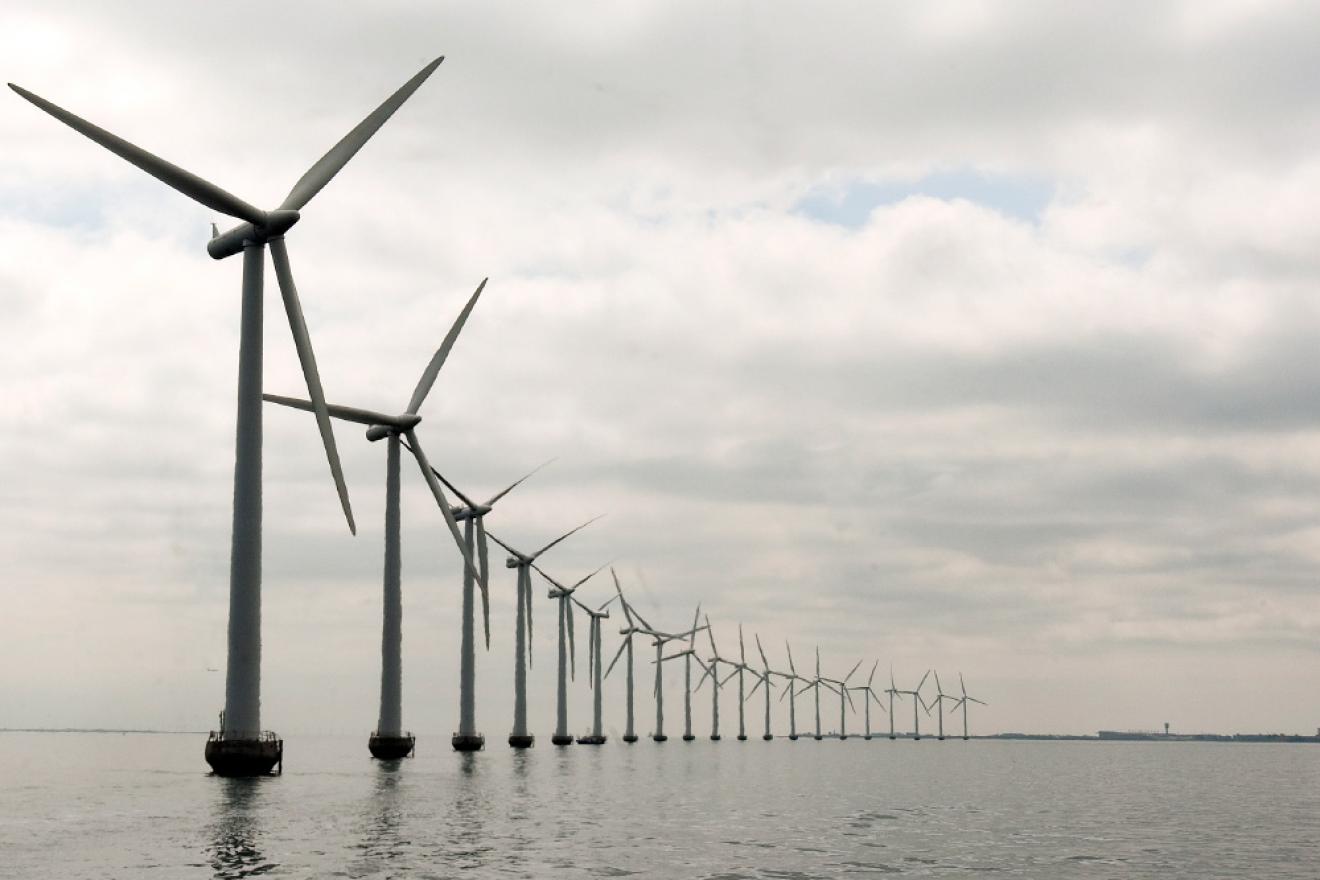
The Middelgrunden Off Shore Windturbines located in the Øresund Straight separating Denmark and Sweden. UN Photo
From UN.org

There are no rules of architecture for a castle in the clouds.  G.K. Chesterton

It might be a good idea if, like the White Queen, we practiced believing six impossible things every morning before breakfast.  Madeleine L’Engle

We are what we pretend to be, so we must be careful about what we pretend to be. Kurt Vonnegut

Children see magic because they look for it.  Christopher Moore

The tree which moves some to tears of joy is in the eyes of others only a green thing that stands in the way. William Blake

Lovers and madmen have such seething brains; Such shaping fantasies, that apprehend; More than cool reason ever comprehends. William Shakespeare

We don’t create a fantasy world to escape reality, we create it to be able to stay. Lynda Barry

It’s been a quiet few weeks from a writing standpoint, though a busy one in terms of fathoming what the next phase of our service is to be, service to causes larger than ourselves, service to those seeking more kind, inspirational and imaginative responses to our bevy of global threats than folks in my generation are currently able to generate.  

I am also reminded on this International Day of Older Persons that I am one of those, and that the task for us generically (If not gerontologically) is to share rather than control, to coach rather than compete, and to remind younger folks that –wrinkles and brain fog notwithstanding – longer years do not have to mean shrinking options.  Indeed, this has so far been a more productive and satisfying period of life than I had imagined it would be, than was the case for me in previous times, a season to invest in multiple issues and multiple actors at this moment of excess conspiracies and wanton policy foolishness. 

We have continued to engage UN spaces during its High-Level segment, despite the fact that, for us at least, the UN is in danger of becoming, as metaphor, smaller-sized bait on an increasingly exposed hook.  Despite all the pomp and circumstance, interventions by officials have largely lacked imagination, have largely deflected attention from the responsibility which in a state-driven system becoming more so, not less, is clearly theirs to assume.  Despite some valuable events on capital punishment (we will contribute to an event organized for mid-October on this very topic by our longtime colleagues at FIACAT), on nuclear disarmament in the midst of fresh threats of use by Russia, and on “transforming education” which was an important discussion if too schools-focused for our taste, the High-Level segment largely tread familiar ground.  It was left to officials such as Prime Minister Mia Mottley of Barbados and the new President of Colombia, Gustavo Petro, to remind the global community of our receding sustainable development promises and counter-productive policies such as those which seek to expand the “war on drugs” while neglecting the “first-world” loneliness, isolation and other mental health problems which generate the relentless demand for the narcotics which our “war” has utterly failed to extinguish.

We also did our own small event during the High-Level segment, a roundtable with Soka Gakkai International and the Lawyers Committee on Nuclear Policy to launch the latest report by the Digital Economist, “Meeting the Climate Challenge” (https://docsend.com/view/d2d8aptxejxdiedy).  The somewhat overused title did not obscure some important insights including what Senior Fellow Satya Das referred to as our “Duty of Care.”  For us, this was a reassuring insight – that despite all of the attention on major international events which make more carbon than change, despite the “bait” of getting to hang out at Davos or UN “COP” events and discuss ideas (such as the DEs “global carbon levy”) with people who have the resources and access to implement them if not nearly sufficient will to do so, the planet is unlikely to pull back from the furnace to come without broader-based and more local commitments to care.  Care for our soils, for our trees, for our water, certainly for our children’s future.  We know, first-hand over many years, the limitations of policy to shift mindsets, to light a fire of change that can overcome the ashes of indifference.  Indeed, it is our view that our policy bubbles have largely done more or less all that policy bubbles can do.  It is past time to put our “duty to care” front and center in our climate response, and to do so in all the places where we matter. 

Despite all the splashy events with effective branding to boot, there have been some cold winds blowing through the UN since the easing of the Covid-19 pandemic.  As we have written before, some UN states have taken the opportunity to double down on their resistance to NGO participation beyond who the states might choose to invite themselves.  Access to events has hardly been impossible but has been granted with increasing caprice and some attitudinal version of “if you don’t like it, don’t come.” One doesn’t know from one day to the next whether a sojourn to the UN will result in a seat at a meeting or a rebuff due to some unannounced access change, including shifting meetings from “open” to “not-so-open” without a whiff of explanation.

Given the current state of affairs in our world, I can well understand why some states would not want scrutiny-obsessed groups like ours in the room, reminding delegations of the promises yet to be fulfilled, of the conflicts yet to be resolved, of the financial pledges yet to be delivered.  It can’t be comfortable for diplomats who work hard albeit “under orders” to have others constantly reminding them of hills yet to climb.  And yet, a colleague from Cameroon stayed with me for two weeks during the High-Level segment, a man attempting to protect and feed his people amidst a conflict which has received little policy attention and which continues to result in death, displacement and the wholesale degradation of the environment. While with me, the news came that his family home was burned to the ground. In essence, this is why we show up in line at the UN, day after day, year after year, hoping for a chance to plead the causes of people in desperate need who deserve as much from us as they were led to expect might be the case, certainly more than they have often received.

The discouragement of all this UN business, the small pieces of bait extending from the end of long hooks, has led us more than a few times to seek inspiration and imagination elsewhere.  This past month, the search took us to an all-September event led in part by our board chair, Christina Madden through her work with Criterion Institute, a “Convergence” of participants – most all women – in pursuit of a “feminist financial imagination.”  Despite online limitations, the discussions were beautifully moderated, allowing the conversations to drift between investment essentials and the values which, if well-embodied, can help ensure a feminist strategy free from reinforcing the patriarchal excesses of the current investment system in the main, a system which channels billions into private accounts devoid of any and all social accountabilities. 

It is hard in these “convergence” settings to find language forms which avoid the pitfalls of essentialist stereotyping, and which can effectively steer us away from the temptation to use money as dangling bait to attract status and power and not also to make change in societies now teetering on “brinks” of their own authoring. As such, we need reminders that our relationship to money remains largely uninterrogated, that we don’t actually represent many who we pretend to “speak for,” that the “faith” which drives many of us to search for inspiration and imagination beyond the usual suspects remains both largely “unhoused” and battered by circumstance; and is thus in need of reliable partnership including the provision of some of the reassurance we seek to “gift” to others.  We often embrace the imagination we are comfortable with, not the imagination which the world now requires, those “six impossible things” before breakfast which will never become incarnate until we have the courage to imagine them into existence.

The many and diverse events around the UN largely remind me on a daily basis that the world we love, the world that sustains the best and worst of us, the world that will continue on long after we have irretrievably soiled its blessings, that human world  is running out of time. The international day of older persons reminds me that I, too, am running out of time, time to discern and share with that shrinking number of folks who still care, at least a little bit, what I think, time to pursue the “magic” of inspiration and imagination wherever it can now be found, and then communicate it clearly and humbly to those many among us who, for one reason or another, are no longer inclined to take the bait.

Humane Harvest: A Labor Day Reflection, Dr. Robert Zuber

5 Sep
Primary view of object titled 'Wall Street Banquet, Court of Fiestas, Corridor of the Agrarian Revolution'.
Diego Rivera “Wall Street Banquet,” via UNT Digital Library

The air was hot, vivid and breathless–a final fierce concentration of the doomed and dying summer. William Faulkner

People who traveled for so many miles through such horrific conditions in order to find work cannot accurately be portrayed as lazy benefit-scroungers. Patrick Kingsley

The first thing that a new migrant sends to his family back home isn’t money; it’s a story.   Suketu Mehta

Every commodity, beneath the mantle of its pricetag, is a hieroglyph ripe for deciphering, a riddle whose solution lies in the story of the worker who made it and the conditions under which it was made. Leah Hager Cohen

Harvests are a time to remember your sacrifice. William Kamkwamba

The sun was made to light worthier toil than this. Henry David Thoreau

I’ve always been amused by the contention that brain work is harder than manual labor. I’ve never known a man to leave a desk for a muck-stick if he could avoid it. John Steinbeck

In the US we are in the midst of another Labor Day weekend, a time less to honor labor than to forget about it if just for a time.  One more drive with the family, one more picnic with the neighbors before everyone settles in to the routines and responsibilities of fall. For many in this part of the world, this is the end of a summer with many desperate to carve out spaces to reunite with long-isolated friends and relatives or to visit some of the places which inspire mind and soul, places which remind us all that we labor on a planet full of wonder, a planet very much worth more of our care than we currently offer.

While my own brain is still in fog recovery mode from a bout of Covid, it has not stopped appreciating all of the tasks that need to be accomplished in this world for my own life to have the unearned quality it enjoys.  For all of the inefficiencies brought about by (in this country for sure) crumbling infrastructure, bad health choices and off-the-charts levels of personal and communal grievance, there are many millions of people who dutifully teach our children to read, harvest and transport the crops that will sustain us through a long winter, who keep our trains on the tracks and our planes in the air, who ensure that (Flint and Jackson notwithstanding) water is safe from the tap, and who perform a myriad of other tasks whose reliability is perhaps even more essential as levels of social complexity increase and levels of trust in leadership and each other head decidedly in another direction.

I am grateful for all of this and more, even if appreciation sometimes wanes when the trains are running late yet again, my morning berries have been thoroughly colonized by fruit flies or when some other “first world problem” has consumed way more of my conscious life than should ever be the case.  Moreover, as retirement comes more sharply into focus, assessment takes its place alongside gratitude as a major consequence of a life lived long, if not always well.   For after all the writing and monitoring, the mentoring and challenging, the endless stream of houseguests and church guests, and the equally endless errands and other planning that such requires, what has come of all this?  What exactly was accomplished?  What piles were moved?  What policies were delivered to constituencies in a form they could recognize, beyond consensus resolution texts and mere promises of relief?

At this point, I honestly can’t say as I know.  We Global Action folks acknowledge the generosity of our friends and donors and cherish their belief that, at least episodically, we were able to help them preserve their own hopefulness, their own sense that despite all that we know, things are not as bleak for their progeny as they sometimes appear.  We know that many dozens of our interns are out in the world doing good work, often tilting at their own windmills, but also helping people to move towards possibility they might otherwise have forgotten they had.  We also know of the many groups at local level who we were able to help find a place at the table of global policy even if more than a few wondered at some point if the investment was worth the energy. We have worked really hard for many years, and it’s not over for us, but it’s also not been enough.  It was never going to be enough.

And yet despite the ephemeral nature of much of what we have done together, the “outcomes” of such mostly akin to fine sand slipping through slender fingers, there is a certain status (for want of a better word) which has long accompanied this journey.  We get less respect than we used to get, including in UN spaces, but we still get more than our portion.   We get more than the health care workers who endure horrific stresses to extend the lives of people who haven’t done enough to extend their own.  We get more than farm workers who labor in hot fields day after day so that our supermarket shelves can boast some faux abundance, workers with minimal access to health care let alone shade amongst the crops, workers who in many cases do not enjoy sufficient legal protections to allow them to visit family members whom they might not have seen in a generation, allowing them to share stories in person after long and sorrowful absences.  

And we get more than the teachers poised to receive a new crop of students, teachers who seem now to be suffering through one indignity after another, yet more assaults on an already-daunting profession by overly-anxious and/or entitled parents and by ideologues in legislative settings who have taken an often-warped view of “God’s will” as the pretext for curriculum which denies large portions of our history, establishes one version of faith as the “fertility cult” of choice, and ignores the pluralism in which a goodly portion of my own  society’s value to the world is grounded.

On this Labor Day weekend, we must admit that we live amidst a landscape of devalued labor, a landscape from which thousands of caring and devoted teachers and health workers flee their now-utterly politicized professions of choice, more and more people are plotting a permanent if perhaps unsustainable escape from their minimum-wage tedium, and those participating in the “great resignation” are only slowly finding ways to use their time on earth which do not involve months and years of soul-crushing, market driven, repetitive labor.  Moreover, we have not reformed our social status system beyond athletes, celebrities and political leadership, nor have we found the means to create genuinely multi-generational collaborations which allow younger people to gain their footing in a world they are destined to manage, while also allowing we older people facing our own inevitable decline to contribute (even sacrifice) meaningfully beyond the end of our formal employment.

As we in the northern hemisphere face the end of our “doomed and dying summer,” we also continue to face a crisis of labor – of people underutilized, too-often purchased and too-little respected, of status deserved but rarely conferred, people who now broadly threaten to withhold in one form or another the skills and engagement we simply cannot manage without.  As we conclude our seasonal and well-earned trips to the beach or mountains, and as folks like me look back over decades of work which accomplished barely a portion of what had been hoped for, it is clear that the multiple pains of our labor have yet to be adequately addressed.  We will need to more effectively respect and then harvest many skills of labor from all ages and backgrounds if we are to successfully climb out of the holes of acrimony and mistrust, of ethnocentrism and climate impacts, that we have dug for ourselves.  I am at a loss to see another viable path forward.

Bomb Shelter: Deferring the Risks We are Expected to Face, Dr. Robert Zuber

24 Aug

All choices are fraught with peril, but inaction is the most perilous of all.  Frewin Jones

To become spring, means accepting the risk of winter. To become presence, means accepting the risk of absence. Antoine de Saint-Exupéry

A bend in the road is not the end of the road…Unless you fail to make the turn. Helen Keller

To really ask is to open the door to the whirlwind. The answer may annihilate the question and the questioner.  Anne Rice

To save all we must risk all.  Friedrich von Schiller

The desire for safety stands against every great and noble enterprise.  Tacitus

Burning bridges behind you is understandable. It’s the bridges before us that we burn, not realizing we may need to cross, that brings regret.  Anthony Liccione

I have been asked often over these past two weeks by widely dispersed colleagues about the 10th Nuclear Non-Proliferation Treaty (NPT) Review Conference taking place this month in New York.

While I no longer expend enough energy on the issue of nuclear weapons to be branded anything but an active onlooker, I have spent more time in these NPT sessions than I might have done otherwise.  This is due to the (relative) lack of policy activity inside the building, the exceptions this past week including some appropriately moving tributes to humanitarians killed or injured in the service of others and another policy event designed to extend treaty protections for the oceans and its biodiversity to areas beyond national jurisdiction (BBNJ). 

While many stakeholders came to New York in the hopes of informing the NPT and BBNJ negotiations, to ensure that urgency rather than propriety dominated the affective policy landscape, processes continued the post-pandemic trend in UN spaces of calling for NGO involvement on the one hand while marginalizing it on the other.  Despite a few glimpses courtesy of short, infrequent plenary sessions, the BBNJ has been conducted almost entirely in informal sessions to which our collective participation is largely unwelcome.   The NPT has offered more opportunities to watch the proceedings but rarely to challenge their content or direction.  Moreover, the most important of the discussions, those taking place in the “subsidiary bodies” have been almost completely off-limits to those, many with considerable expertise themselves, who dared (foolishly or otherwise) to risk time and treasure (and burn considerable carbon)  in yet another attempt to ensure that delegations embrace a larger portion of their generally under-implemented treaty obligations and otherwise “meet the moment.”

Aside from stakeholder marginalization, what the NPT and BBNJ process have in common is that both are treaty processes dealing with what are widely regarded as existential threats to our very survival as a species.  The humanitarian consequences of nuclear weapons use have been in full view since the “duck and cover” days of my youth, and more contemporary efforts to modernize arsenals (as opposed to de-commissioning them) have produced weapons which are quicker to deploy, more powerful, better able to avoid detection and other features which provide little comfort to those tracking the impacts of nuclear explosions on our already violence-prone and over-heated planet. 

In much the same manner, our oceans are rapidly approaching their own tipping points as water temperatures and sea levels rise, as the PH of the oceans continues to slide towards unhealthy metrics and as the open ocean remains in some of its areas a massive water-borne dump for ocean-going vessels and other polluters with degraded plastic becoming an increasingly prominent feature of the diets of marine wildlife.  As we need an NPT which is functional and accountable, especially to its disarmament obligations, so too do we need a BBNJ process to result in treaty obligations that extend and amplify our concerns for the oceans beyond national jurisdiction to the ubiquitous areas of our inter-connected seas negatively impacted by human activity.

In both instances, there are grave reasons for concern.  The clock is ticking on both existential threats, and it is clear from the vantage points that we are still able to occupy that there is insufficient urgency on the part of delegations and negotiators to create and/or move existing agreements forward in ways that both speak to this uneasy moment and serve to bring us back from the brink of a ruin which we (including our policy leadership) have literally brought upon ourselves. We have created space to deliberate on this ruinous state of affairs but have largely failed to ask the questions that might set off a “whirlwind” of change beyond the narrow confines of diplomatic control. We have spent much energy (and wasted the energy of others) in an attempt to justify the unjustifiable, such as recent Russian nuclear weapons threats against Ukraine and the US position that, despite all evidence to the contrary, my government is upholding its commitments under Article 6 of the NPT.  For those of you fortunate to have escaped previous iterations of this double-speak, Article 6 is the disarmament pillar of this treaty, a condition which has been piously flaunted for the most part by the nuclear weapons states since the NPT first entered into force.

When colleagues ask us about the status of treaty negotiations and/or review, they are largely asking about functional levels of urgency in evidence amongst the delegations.  Do the people responsible for creating normative and/or legal frameworks to help ensure a future for human and other life genuinely understand the dynamics of this precarious moment?  Do they understand that the “inter-governmental processes” which they increasingly seek to protect from the undiplomatic utterances of those of us focused on doomsday clocks rather than UN clocks, that these processes and the “consensus” outcomes which more often ensure non-compliance than inspire its opposite have simply not yet delivered the goods, have not allowed constituents to rest easier or, in many cases, to rest at all?

After countless hours in UN conference rooms, I still wonder myself.  More to the point, the colleagues reaching out to us about these treaty processes are generally expressing more anxiety than confidence, more skepticism than gratitude. They are asking, as we might also, questions more human than diplomatic, questions that go beyond the diplomatic calculus of sufficiency to the wider concern of a world in flames that those tasked with response have done too little to remediate.

Is the diplomatic community both authorized and willing to turn a corner when a corner urgently needs to be turned?  Are they prepared to engage the hard (and possibly unauthorized) questions and not only the ones which will “cause no trouble” to their permanent missions or careers?  Can they properly assess the bridges we have carelessly burned such that we also avoid burning the ones we will need to cross over to escape the damage wrought by our endlessly tepid policy outcomes and the sometimes-misleading promises they communicate to constituents?

The polarities of the UN community’s relationship to risk have been clearly evident over the last week.  On the one hand are the humanitarians, those who feed and protect under dangerous conditions, those who lay their lives on the line to compensate for the policy failures of the states who pay the UN’s bills and largely – increasingly unilaterally – govern its policy processes.  And while peacekeepers are being attacked and humanitarian workers are being abducted, we fail to resolve the conflicts which threaten them (let alone prevent their occurrence). We continue to speak in repetitive tones in this UN space about “leaving no one behind” without communicating clearly that we understand the dramatic political and economic risks which need to be taken  in order to address what in our complex human history would be the fulfillment of a genuinely unprecedented SDG mandate.

And so we go forth in a system made up of often-bewildered civil society organizations, NGOs who too often reinforce a game we are running out of time to change, and diplomats who represent positions, often ably, which they largely do not create themselves.  Ours (if I might be so presumptuous) is a system which privileges consensus, not as an aspiration but as a de-facto veto, resulting in resolutions and other obligations likely to be implemented only in part if at all, documents couched in language likely to inspire only states already walking the pathways which our oft-compromised resolutions and treaties seek to define.

 As diplomats continue their work to create documents on which all can agree if not commit to actually implement, we continue to send willing soldiers, security officers and aid workers into the field, people who have worked through their need for safety in order to feed and clothe, house and protect those facing the ravages of war and terror, of drought and flooding, of environmental degradation, of exile from familiar people and places.  We continue to send them into the conflict zones we have not been able to resolve through political means, into zones of deprivation courtesy of endemic economic inequalities and a climate crisis which we are seemingly willing to allow to devour what is left of our forests, biodiversity and ice caps.

We know that diplomats around the UN generally work hard.  They are skilled at compromise, at pouring over text that would make the eyes of the rest of us glaze over.  They are also able to keep the windows of diplomacy open, to refuse to allow personal or national grievances to impede the potential for negotiating progress.  But their energy is not the energy that global constituencies can easily relate to, the energy that communicates that we are genuinely in trouble, and that we are willing to do what is needed and all that is needed to remove threats to our existence while we are still able to do so. 

Moreover, that we are willing to put more of ourselves on the line; we who function mostly within our bureaucratic and career bubbles, we who cannot pretend not to know, not to know what is coming, not to know what will happen once it comes, once the tipping points of violence and environmental degradation have been crossed for good.

If the processes at the UN these past two weeks are any indication, especially with regard to the NPT, it is still unclear if delegations can move beyond their training and instructions and convince the global public that they truly understand the moment.   We will find out tomorrow if global constituents have been misled once more by rhetoric insufficiently backed by devotion, the sort of energy that keeps humanitarian actors seeking out lives to save in our numerous killing fields.  Given the likelihood of insufficient movement, it behooves us to remind delegates that constituents deserve more than summary overviews of a month-long engagement, more than pledges “to do better next time.”

They deserve an apology.