Tag Archives: United Nations

Voice Lessons: Ceding Space for Those Waiting Their Turn, Dr. Robert Zuber

11 Apr
See the source image

I know you can’t live on hope alone; but without hope, life is not worth living. Harvey Milk

No voice is too soft when that voice speaks for others.  Janna Cachola

Obviously these are some exceptional young people, but what they have in common is that they were ordinary people who cared. Morgan Carroll

You cannot protect the environment unless you empower people, you inform them, and you help them understand that these resources are their own, that they MUST protect them. Wangari Maathai

The people who are trying to be on our side have reduced us to a mere calculation. Sarah Kurchak

I was always taught that when you’re lucky enough to learn something or have some advantage you should share it.  Areva Martin

It is not loving to impose our own grid onto others.  Matt Perman

There have been a series of articles lately by journalists and academics expressing concern about the long-term affects of a pandemic that seems “determined” not to release us fully from its grip.  

We know about the COVID “long haulers,” those unlucky individuals who have been unable to shake the effects of the virus months after their initial infections.   But there are other “long haul” effects that we have only begun to assess, the economic, educational and psychological consequences that we have done our best to hold in abeyance, hoping for conditions that will allow our children back in school before they’ve forgotten what they’ve learned or lost touch with their dreams; conditions that will allow our small businesses to survive a year of numerous adaptations and little income; conditions that will allow some healing for those whose psyches have been battered over this past year by social isolation, fear of the loss of loved ones and incomes, and now concern about whether or not we have what it takes to successfully engage with people who seek to become for us, once again, more than a screen presence.  

Clearly, we are not “out of the woods” and are unlikely to be so even after available vaccines have finally been evenly distributed and this particular pandemic has been finally brought under control.  The sun will indeed rise post-COVID, but it will shine on a world that in many key aspects has lost its way, if not altogether lost its mind.   Despite our own privilege and general good fortune, we wonder if some of those aspects don’t equally apply to ourselves. 

It has been over 13 months now since we have set foot inside UN headquarters which, as most of you realize, is the setting for most of our work, the primary space where we have been “lucky enough” to learn some important things and then “using our advantage” to share what we think we’ve learned with others.  Over these long months, we have missed the personal diplomatic interactions, the rapid movements between conference rooms and issues more connected than acknowledged, the endless coffee breaks to discuss what we’ve heard, what we’ve failed to hear, who impressed and failed to impress, what comes next (or should come next) for our advocacy and outreach, and even the surprise visitors to UN spaces who allow us to better direct our energies and modest assets in the service of interests those visitors help to refresh.

Throughout this long physical hiatus, one which shows no signs of abating, we have managed to keep track of UN processes almost exclusively through digital means.  This past week, for instance, the United Nations and its excellent technical team managed a remarkable set of digital engagements, including a sober ceremony to mark the anniversary of the Rwanda genocide, important discussions in the Security Council on threats from landmines and the current crisis unfolding in Myanmar, and events celebrating the restoration of diplomatic engagements by the US, specifically on Climate and Security and on addressing the care of Palestinians through the United Nations Relief and Works Agency. 

All of these activities – and many others where these came from — are important markers of a global system alternately hopeful and discouraging, a system which, in the case of the UN, is often more political than thoughtful, whose “genius” lies in crafting consensus among states more than in creating urgent remedies for those decimated by armed violence or facing long-term food insecurity from what might be irreversible climate change impacts.  We who operate in UN contexts are sometimes surprised by something we should already know well:  that while the UN has a firm stake in many issues it has limited power to resolve them; indeed that the resolution engine of the UN is largely about persuasion rather than coercion; and that the many skilled and caring diplomats assigned to UN headquarters are as beholden to the aspirations of their foreign ministries, for good or ill, as they are to UN Charter obligations.

Through the use of twitter and other dubious means, we have been able to follow the ups and downs of multilateralism, at least in part, and we have continue to share views within and well beyond the UN community on what should happen, what is not happening, and how we might better integrate our ethical and caring impulses into our policymaking going forward.  I am quite sure that the UN doesn’t miss our physical presence, doesn’t miss our constant scrutiny of its promises and working methods, doesn’t miss our relentless concern that, especially in this time of COVID, branding has too often been allowed to crowd out substance and urgency in our policy deliberations.

The “zoomification” of policy has clearly been a boon to this sort of branding.  While we continue to encourage digital events by our younger colleagues to help them define generational issues and concerns within pandemic-imposed limitations, we are also mindful of how much easier it is to organize events in digital spaces than to ensure their follow-through.  While there is no shortage now of online images of diplomats and (mostly) large NGO leadership saying things which are perhaps meant to be profound but are often self-evident and self-referential, there is too little reason to believe that any of it matters as it should, to believe that the endless statements uttered by these leaders are actually tethered to real concerns in a broken world and reflect policy priorities they are fully determined to address.

This is the dilemma faced by our sector in this pandemic age.  How do we navigate the spaces between image and substance, between the rhetorical branding of global problems that concretely and painfully impact the lives of constituents and the brand-building that allows us to fund salaries and our endless publications, creating strands of expertise that rarely reach and connect beyond the borders of our mission statements?  And how do we ensure, in the name of constituency building, that we are not also constituency-gate keeping, that we are not also oblivious to the reality that people are much more than a “calculation” to substantiate our annual reports, that we recognize people who can only speak their truths to the extent that those of us with privilege and access speak in “soft voices,” and commit to sharing the microphone rather than endlessly grasping for it?

Our sector is fond of calling for change in the UN’s priorities and working methods, as well it should, but it often fails to address the need for reform within our own ranks.  Moreover, for reasons that are only tangentially related to our organizational missions, our collective tendency has become to suggest only the changes that won’t ruffle feathers or threaten funding sources, only the changes that can be incorporated into bureaucracies that it is surely not our principle job to placate.

The damage exacerbated by this pandemic and related crises is experienced broadly by the global community, including within our own offices.  More than a few of our colleagues are also depressed and hurting, are also burned out, are also angry and frustrated that the agencies and processes into which they have poured their live energy have been able to deliver only half a loaf when a full loaf was called for. And what of our colleagues with more direct engagement with the wounds and deprivations which characterize so many communities in this world? What do we in our relatively safe policy bubbles owe those journalists, mediators and humanitarian workers who have taken on the arduous and often dangerous task of reporting on our messes, cleaning up after our messes, or negotiating an end to messes that need not have occurred in the first place? What more do we need to do in our own spaces to bring hope to communities and those who serve them without “imposing our grid” on to lives where such impositions have historically been too frequent and where they simply don’t belong?

There is now a movement among some NGOs around UN headquarters, one which to our mind is not mindful enough of our complex debt to front-line advocates and constituents, a movement which has deployed the twitter hashtag #unmute through which it seeks to organize legitimate concerns regarding access and impact. To be sure, there are people around the world doing the work for real that we purport to be doing in principle, people under siege and threat, people doing their jobs while trying to protect their children and keep from languishing in prisons where guilt is largely fabricated and release is often serendipitous. To be sure as well, there are people around the world, some of whom we have been honored to meet over many years, who are literally models of resiliency and resourcefulness, extending hands of care and promises of empowerment well beyond the attention of UN conference rooms, beyond the reach of funding agencies and international NGOs, small and large.

Let’s be clear: We who function in and around UN spaces remain more privileged than muted. Our voices connect with policymakers beyond our size and volume, likely also beyond demonstrated impact. The doors to UN headquarters remain locked to us. The interactive life inside UN buildings is becoming something of a dim memory. But we are not muted. We have a say, we always have a say, even the smallest among us, even when we have nothing fresh to contribute, even through a flat screen in the middle of a stubborn pandemic which has otherwise exposed and compromised so much in us.

The key for us going forward in these treacherous times is not so much about branding but about sharing. How can we better help people affirm a hope that is based neither on wishful fantasy nor on some externally “imposed grid”, a hope which is grounded instead in a more generous reception for the truths they can convey, truths that can make our own work richer and more relevant to shifting circumstances? And how can we do our part to help “unmute” those whose voices truly demand more attention, those who have been hoping and waiting more patiently then perhaps they should for us to voluntarily mute ourselves, to make way for contributions we need and cannot replicate?

We have had the privilege to learn many things in this UN policy space. And we have enjoyed advantages of institutional access and respect, much of it unearned. As the pandemic continues its relentless eroding of our psychological health while enabling inequalities in so many forms, we will do what we can with what remains of our organizational capacity to help spread what others have come to know, the hopes they sustain and the skills they have accumulated, over our own policy deliberations. And to do so in their own voice.

Spring Forward: Realizing Renewal Amidst the Gloom, Dr. Robert Zuber

4 Apr
See the source image

Things are always better in the morning.  Harper Lee

It is in this difference between returned and replaced that the price of renewal is paid.  And as it is for spring flowers, so it is for us.  Daniel Abraham

There is something infinitely healing in the repeated refrains of nature – the assurance that dawn comes after night, and spring after the winter.  Rachel Carson

When this ultimate crisis comes… when there is no way out – that is the very moment when we explode from within and the totally other emerges: the sudden surfacing of a strength, a security of unknown origin, welling up from beyond reason, rational expectation, and hope.  Émile Durkheim

It is by means of our own victories, if we are not regenerated, that the work of Nemesis is wrought: doom breaks from the shell of our very virtue.  Joseph Campbell

We become influencers, leaders and teachers in this world, by performing within ourselves the purging that we wish to see take place in others.  C. JoyBell C.

Let the whole world see and know that things which were cast down are being raised up, and things which had grown old are being made new. Anglican Book of Common Prayer

In the northern hemisphere, there are indications that, as obstinate and habituated as we have often demonstrated ourselves to be in both personal and institutional contexts, renewal is in the air.  Flowers adorn parks and gardens.  The songs of migrating birds enrich the spring cacophony.  And our religious communities once again determine to maintain their relevance as the world groans under burdens of hunger, violence and virus while public institutions in too many instances encourage the mistrust and misinformation we need them so desperately to counter.

On this Easter Sunday, we in the Christian community have a special obligation to look ourselves in the mirror, to ask (as we would of all our institutions) if we are actually being faithful to both our founding spirit and the specific, concrete needs of our constituents; indeed if our institutions are able to “get over themselves,” rendering the services and promoting the hope and conduct which are in large part the point of having such institutions in the first place. 

And when reforms are warranted (which they almost always are) such that our personal and institutional life can prevent more effectively and respond more efficiently, we must ask if we up to that task?  Or do we take the path that we see so very often during personal counseling, individual leaders and their institutions willing to consider only the changes they are prepared to make, not the changes they need to make?  

In addition, again with analogies to counseling settings, how many of us are actually willing to engage in the “purges” which we are quite certain are required for others?  How many are committed, paraphrasing Christian scripture, to removing the log in our own eyes such that we can better see the specks in the eyes of others?  How many of us are sufficiently committed to vigilance and renewal as doom threatens to break, yet again, “from the shell of our virtue?”

These are two of the impediments to a renewal that is more than rhetorical, that is more than a tepid commitment to close the gaps between expectation and performance, between the people we are capable of being and the people we have become too comfortable being. We are collectively too comfortable with acts of discrimination against the categorical other, too comfortable with lifestyles that imperil survival both current and prospective, too comfortable with institutions, even churches, that are wrapped so tightly within their bubbles, that continue to justify protocols and practices that have long lost their relevance, that have become as some of us used to sing during childhood, the “chewing gum which has lost its flavor on the bed post overnight.”

Part of renewal for our time must be about recovering those bursts of “flavor” when we metaphorically bite into a sacred or cherished pursuit; appreciating and sharing those bursts of color and fragrance as the blossoms of spring almost magically return to life and our sunrises signal yet another chance for us to grow and change; magnifying those acts of human courage and capacity which now sadly tend to manifest themselves mostly during times of crisis, when our backs are truly against the wall, when there is no more wiggle room for us, no more opportunity for a sane and rational dismissal of what our collective narcissism and indifference have literally brought to a boil.

We are in such a moment of boil now.  Our human community has backed ourselves into places where we no longer have the room to maneuver we once imagined ourselves to have; where our self-deceptions about who are the good ones and who are the evil doers serves only to magnify evil and suffering; where our institutions mostly play at renewal, moving some of the pieces around but not changing the game in any significant way, not sufficiently reassuring those crying out for assistance that help is on the way, a “help” that is more predictable and which leads to peace, health and self-sufficiency, well beyond the stasis of mere survival.

We know we can do better.  Even in protocol-saturated institutions such as the UN, we know that we can renew what is now holding us back.  We can demonstrate with our time and treasure that we are determined to honor the trust that other still place in us, fulfill the expectations that we have led constituents to anticipate from us.  We can pull some of the “weeds” that choke off some of what promised to be a verdant garden; eliminating more of the numerous unfulfilled financial pledges, both institutional and humanitarian; the misguided applications of consensus that constitute de-facto vetoes, the habit by some states of sponsoring resolutions that they have no intention of honoring; the actual vetoes and threats of veto by permanent Security Council members which have become tools of politics not of statecraft, tools which do not prevent mistakes in conflict response so much as inhibit conflict response itself. 

There are times when it seems as though numerous states don’t actually want the UN to honor its many promises, don’t actually want it to take the leadership we rhetorically bestow upon it to anticipate and then prevent the tragedies that take such a huge toll in blood and treasure in our world. SG Guterres noted this week in an interview that “multilateralism has no teeth.”  I won’t belabor the extent to which the SG has insufficiently pushed back against this longstanding reality, but I do know that metaphorical dental implants are at the ready if and when states and stakeholders decide to commence the procedure.

For those of us who delight in this Easter Sunday we should also acknowledge a responsibility beyond predictable family dinners, religious rituals, egg hunts and bonnets; a responsibility to incarnate the renewal which anchors the promise of this season, to manifest the hope in all our worldly undertakings, including in our institutions, that “things which were cast down are being raised up, and things which had grown old are being made new.” 

If Jesus were once again to emerge from the tomb to which his body was once confined, scanning the current terrain of our flailing human commitments, he might face temptation yet again, this time to head back inside the cave, fire up the Neflix, and just forget about this whole renewal thing.  Except that he knows us, knows the complexity of our hearts, knows what he had willingly gotten himself into from the dawn of time, knows as well what needs to happen in this current moment  — what can with grace happen — such that the promise of renewal, indeed the fate of our species to which renewal is now tethered, can stand a reasonable chance.

We are quickly running out of time and space to turn the promise of renewal into a discernable reality, to raise up those many people and species which have been cast down, to infuse those institutions which have lost their way with fresh energy and care, to revitalize a global public which has grown so weary of coups, displacements, discrimination and deprivation, a public increasingly gloomy regarding the prospect of institutions that can truly help restore communities beyond the edges of their own bubbles. We can’t wait for recognition of some “ultimate crisis” in order to release our better selves into a world starved for relief and reassurance. Indeed, that “crisis” is likely already at hand.

The bursting buds in our northern parks and gardens remind us that renewal is possible, that color and life can return to even the most barren of personal and institutional landscapes.  May this Easter serve up portions of energy and grace sufficient to keep on track the renewal our times so desperately require.

Water Slide: Tackling our Freshwater Deficits, Dr. Robert Zuber

28 Mar
See the source image

I am haunted by waters.  Norman Maclean

If you can’t go through an obstacle, go around it. Water does.  Margaret Atwood

Human nature is like water. It takes the shape of its container.  Wallace Stevens

Dip him in the river who loves water.  William Blake

He liked the darkness, but this was oppressing. It almost flooded his being. Dean F. Wilson

Water, like love, is good at finding where it’s meant to be. Corinne Beenfield

By early light I am asleep in a nightmare about drowning in the Flood. Billy Collins

The UN had a good week in some key aspects, including an excellent Arria Formula event on threats to UN peacekeepers from improvised explosive devices (IEDs) and a political declaration adopted by the General Assembly affirming  the need for “Equitable Global Access to COVID-19 Vaccines” (click here) at a time when “vaccine nationalism” is only slowly giving way to a more generous – if also economically self-interested — disposition on vaccine distribution, including to those nations which have still to administer a single shot.

It was also a week when the UN assessed its commitment to ensuring freshwater access to the millions of people for whom such access is tenuous at best.  On World Water Day, many sectors within the UN system paused to weigh responsibilities to the water and sanitation goals which are key both to sustainable development and to addressing the “conflict multiplier” which water increasingly represents as, in too many communities across the globe, access to safe water has become a luxury increasingly elusive to secure though ultimately more precious than silver or gold.

As the president of the UN Economic and Social Council, Ambassador Akram of Pakistan warned this week, at our current rate half the world’s population will likely suffer from severe water stress by the year 2050.  This was perhaps our most cited comment (on Twitter) in the past week, a testament to the misery, displacement and potential conflict which diplomats and the larger policy community recognize is looming on our collective horizon if we cannot find the urgent means to ensure safe and equitable water access.  We are reminded every day of the many people worldwide for whom mere hand-washing in the midst of a pandemic creates harsh water use choices, others for whom the dignity of adequate sanitation remains a distant dream. And as noted with regularity by our colleague in El Salvador, Marta Benavides, our response at policy level is often to talk too much and change too little. Water, despite what we wish to believe, is no longer “finding where it needs to be,” and we are yet doing too little to help restore lifegiving pathways.

Most of those who would read weekly missives such as this one don’t need to be reminded of the central role water plays in our contemporary world as the largest repositories of fresh water on our planet – the polar ice caps – continue to melt into the sea at unheard of rates, and as climate change imposes alternating jolts of flooding and drought on many millions of people living in poverty, undermining their food security and setting many on uncertain journeys to find places where this most basic of needs can be procured, albeit in unfamiliar and even hostile contexts. 

In many of our so-called developed countries, water-related imagery often infuses our artistic and unconscious lives though, as a pragmatic resource, we have largely taken it for granted.  While we occasionally recognize that vast differences in water quality exist in communities across a country like the US, we nevertheless anticipate that what flows from our taps remains both reliable and relatively safe, an entitlement of sorts for which there is simply no equivalent in war-torn or economically stressed communities.  Indeed, we know here that the water we have available for our own sanitation purposes is generally (and often needlessly) higher in quality than any water available at all to families in communities habitually threatened by the twin killers of flooding and drought.

There are “solutions” of sort for countries and communities facing water scarcity but they are often complex.  Moving water from where it is abundant to where it is lacking is a herculean task as is funding and installing technologies to desalinate sea water for coastal communities.  But NGOs and state partners are making welcome progress in creating community-based solutions to elevate water abundance – including catchment capacity to ensure that water availability remains accessible.  Lamentably, such solutions face obstacles from the shifting modalities of climate change to unregulated industries in our broken economies that raise the stakes such that water “caught” is often dangerous for personal use. In too many places, the “slide” of water, both of access and quality, continues unabated. A “dip in the river” in too many places is less a refreshing interlude and more an invitation to deadly disease.

Still, there is much that we in the “water entitled” world can do to sharpen our attentiveness to water-related concerns while contributing to a safe water environment for others.  Part of this relates to, as already noted, our personal water uses: watering less, flushing less, fixing leaks, restricting uses of toxic fertilizer and other products that are likely to enter – and degrade – our water supply.  One could add to this measures to mitigate the diverse impacts of climate change on our farms and ice caps – walking rather than driving to errands, shifting to green energy sources, doing more to restore watersheds or eliminate the river toxins that lead to ocean pollution (and fund those who lead on this work).  Our water savings may not make a dent in other, drought-stricken areas of the world, but greater water-use consciousness can lead to support for policies and practices that offer some tangible hope for the drought-affected.

But another aspect of our responsibility is related to an issue that we are often loath to discuss in these parts – our patterns of consumption – specifically consumption related to water demand, the uses beyond our sight, beyond our attention, even beyond our comprehension.  For those of you who have the time and interest, I urges you to click here for the website of Water Calculator which, along with sites such Foodnorthwest.org provides hard data on water usage and wastewater which accompanies the production of some of our most common consumer items.  From automobiles and leather goods to beef production and avocados, the vast quantities of water needed to produce our personal transportation and the items we voraciously pull from the shelves of our local big-box stores, can be shocking. 

One wonders: Would we willingly adjust our consumption patters if we knew that the leather shoes we have been coveting required an average of 3,626 gallons of water to produce?  Would we be so quick to replace our bed sheets if we recognized that an average of 2,839 gallons of water were required to make them soft and attractive? Would we adjust our eating habits if we knew that it takes as much as 450 gallons of water to prepare one cow for the grilling of steaks or the sandwiches of “we have the meats” Arby’s? And would it matter if we were to grasp that so much of what we in the “developed” world now consume is produced in communities which themselves are often water insecure, products made by the hands of women and men who use more water at work than they and their communities might ever be able to access in their non-working hours? And, if they were able to access it, knowing that it might well have been made more toxic through runoff/effluence from the very facilities which pay their often-meager wages?

These loops represent ethical and even spiritual dilemmas both “haunting” and unsustainable. As many of you recognize, this is the season of Passover for Jews and Holy Week for Christians, a time to celebrate divine gifts but also to reclaim the responsibilities commensurate with those gifts.  As one of my good colleagues put it, “No Sunday is sacred until we all have access to safe water and sanitation.” This is not an uncomplicated aspiration, to be sure, but it is an important one, and could well be a sacred one. Those of us who can choose to over-water our plants, luxuriate in our showers, and indulge in water-saturated consumption with impunity could stand to learn some new habits, habits which acknowledge our collective, growing water scarcity with grave implications for human health and global tension.

In a time when what relatively little fresh water remains threatens to be commodified, when this “global public good” is in danger of becoming one more resource to be controlled by wealthy individuals and states, we need to reset our water priorities at policy and personal levels without delay.  If we fail to do so, our ability to prevent our conflicts, feed our populations and protect our people from pandemics and other diseases will become increasingly impaired.  We are at a critical moment now regarding this most fundamental of resources.  Any further slide in access and quality jeopardizes many and ultimately serves the interests of none.

Open House: Strategies for Blunting Xenophobia, Dr. Robert Zuber

21 Mar
See the source image

Justice is what love sounds like when it speaks in public.  Michael Eric Dyson

All this because one race did not have the decency to be ashamed of dealing in human flesh.  Whitney Otto

Instead of being blind to race, color blindness makes people blind to racism.  Heather McGhee

Genie had sidestepped the daily trauma of the historical record, the sometimes brutality and sometimes banality of anti-Blackness, the loop of history that was always a noose if you looked at it long enough.  Danielle Evans

We must dissent from the indifference. We must dissent from the apathy. Thurgood Marshall

Yeah, I love being famous. It’s almost like being white, y’know?  Chris Rock

Later today, I will be speaking on a panel, organized by my friends at LINGAP – Canada intended to give a platform to the voices of people from diverse cultures – in Edmonton and beyond – who suffer violence, injustice and discrimination on a regular basis, much of which is directed at Asian and indigenous communities and which is only now finding a place on the mainstream radar.

I generally decline invitations like this.  I have had my “say” on matters of exclusion and discrimination many times over the years and I retain platforms such as this for those of you who still honor me with your reading.  But it’s not my turn now, if it ever was.  From our policy centers to our urban streets and rural pathways, the line of people waiting for a few moments at the global podium now stretches to the ends of the earth.  As people like me are fond of saying, the problem we face is not levels of talent, but of opportunity.  It is this latter privilege we still resist sharing, resist declaring, despite what we can amply chronicle about the former.

In the twilight years of my erstwhile “career,” I want to do my full part to link talent to opportunity in all global regions, to ensure that our emerging “global commons” is more than rhetorical, is more than a branding opportunity for groups like Global Action or a business opportunity for large corporate interests.  People have a right to voices that matter, voices which influence, voices with impact. They don’t need me speaking for them and they don’t need oversized influencers packaging sound bites from the policy margins to service unrelated interests.

Indeed, the more we try to engage and promote it, the clearer it becomes that the agenda of ensuring inclusiveness remains among the most challenging on our collective plate.  Our news feeds are filled to the brim with images of violence against people of Asian and African descent, violence which in many instances is the jarring manifestation of many years of covert discrimination, the ways in which what for a time was left to simmer in privatized settings has been released forcefully into the public domain. We now routinely see evidence of people wearing their xenophobia like a badge of honor, a badge woven deeply into souls rather than merely being pinned to outer garments.

Our personal and cultural bubbles have lost whatever measure of clarity and transparency they once might have had, substituting instead an opaqueness that allows our grievances to multiply like in some oversized petri dish until we are ready to burst out and confront the human objects of our scorn, indeed, the humans whom we have largely objectified and now turned into threatening caricatures of themselves, caricatures about which we feel the need to actually understand little. Indeed that is part of the discriminatory deal, isn’t it, turning complex human beings and their cultures into categories worthy not of respect but of suspicion, knowing just enough about people to “know” that they are essentially unworthy of dignity or respect.

This tendency to objectify and dishonor, certainly prevalent in the US, is not confined to any one political or ideological persuasion.   A series of maps published recently chronicles the degree to which people have increasingly segregated their domiciles by political affiliation, choosing to live (and isolate themselves) in areas where most folks are tolerant (if not always accepting) of their political, cultural and religious viewpoints.  At one level this approach is understandable, especially for families caught in the current cultural crossfire.  Clearly it is not the “job” of children of “First Nations” Asian or African descent to solve the embedded racism and xenophobia that rear their ugly heads in manifold ways and which have resisted the best efforts of some remarkable figures over time to finally end their reign of terror.  Nor is it their job to “take one for the team,” to absorb the epithets and bullying, the rejections and outright violence that we adults have not done nearly enough to prevent.  From the standpoint of protecting children from the worst of our collective behavior, our thickening demographic bubbles make some sense.

But of course, the bubbles themselves don’t resolve the violence and discrimination, the objectifying and the demeaning.   If inclusion is to mean anything more than rhetoric, it cannot be attained if people are not also willing to leave their corners of the ring and engage with others in the center.  How do we create safer spaces for people to engage, to invest more in each other, to understand more about the “other” besides the ways in which they allegedly “threaten” our own, entitled ways of being?

Part of the answer clearly embodies a policy dynamic.  I was pleased this week that at the UN, alongside excellent events on preserving water resources and the impact of climate disasters on agriculture, alongside as well the gender-focused inclusivity promoted at the Commission on the Status of Women, there were several events that highlighted the growing divides of race, religion and culture that continue to impact international peace and security.  During thoughtful discussions that highlighted the toxic effects of racism, xenophobia and discrimination against Jews, Muslims and persons of African and Asian descent, it is becoming more and more apparent that diplomats worldwide are worried – as well they might be – about the many ways we seem to be tearing each other apart, rupturing what remains of human unity in ways that policy can only partially heal.

Among the highlights for me of the week’s discussions were concerns expressed by New Zealand’s Ambassador and others of the extent to which COVID-19 has helped “open fractures” wider and deeper than we have seen in some time.  Indonesia warned against our sometimes “empty words” with regard to justice and tolerance. Pakistan noted during the Islamophobia event the importance of rejecting “distortions of our common humanity and their selfish motives.”  At that same event, UN Secretary-General Guterres warned about our spreading “epidemic of mistrust and discrimination” mirroring the admonition of Niger’s Ambassador to “build bridges not burn them.” A Rabbi at this week’s event on anti-Semitism was particularly graphic in his warning to the online audience that “those who burn books would also burn human beings.”

But perhaps the finest presentation of the week on this topic was offered by the new US Ambassador to the UN Linda Thomas-Greenfield.  Her remarks were personal, poignant, and challenging.  She described the racism she has lived through as an “ignored cancer,” encouraging those impacted by it to “stare it down,” to do everything in your power not to “internalize” its messaging.  She also pointed to a role for policy in efforts to minimize such messaging, noting that “we can’t always change peoples’ hearts, but “we can change the rules.”

Indeed, we must change the rules and then insist that those rules be followed.  But as this UN week made clear, as my own experience confirms, we must never abandon the task of changing hearts, the hearts of the racists and anti-Semites, the hearts of those pumping out grievance and affixing them to alleged, objectified threats, and yes, our own hearts as well.  Indeed, if we want better policies, policies that incorporate diverse voices and retain the trust of global constituencies, we who have regular access to policy processes must become better people ourselves.  The wider public will never fully trust our treaties and resolutions unless they can also trust those who craft them.  Opening safe space for other perspectives, other views, is one sure avenue to that trust.

And there is another dimension to this, one which some in the Edmonton community I will later address have taught me well – that the path to a genuine understanding of others across divides of culture, race and faith while long, is also rich.  To reach the finish line, we must be willing to get close enough to touch complexity, to replace assumptions with realities, to dwell in the nuances of other lives long enough to understand that our own personal challenges are not so different than theirs, and that we too have ideas, prejudices, assumptions and behaviors that would be better off relinquished than reinforced.

At the same time, we would do well to remember that there are things that you can never know about people unless you have spent time in their homes, to see first hand how people organize their lives and care for their families, to get a sense of their priorities and how they invest their precious hours, to better understand the multiple influences that inspire and guide what they care about more and less.

In my life, I have been multiply blessed by often-remarkable and honorable people from many global regions, people of diverse backgrounds and interests who have opened their homes to me, who have honored me with their hospitality and complexity, who have helped ensure that their joys and burdens become part of the backdrop of my own work in the world.  It is a gift I can never repay; indeed it is a gift that enlarges souls, expands minds, and makes hearts beat a little differently, and can do so for many others as it has done for me. As the UN diplomats themselves have attested, we can and must change the rules.  But we should also encourage others (and maybe even ourselves) to take a few more risks and engage more deeply those experiences, those stories, those voices that can inspire the changes we are obligated to make in the world and in ourselves.

Death Dancing: Choreographing a Mutually-Assured Future, Dr. Robert Zuber

14 Mar
See the source image
Fritz Eichenberg

If we didn’t move on, who could move in? William Sloane Coffin

Monsters don’t exist. It’s men you should be afraid of.  Niccolò Ammaniti

This is the stuff we’re made of, half indifference and half malice. José Saramago

And if we are sometimes accused of sins of which we are innocent, are there not also other sins of which we are guilty and of which the world knows nothing?  Iris Murdoch

 All that could be seen in him was the urge to hurt, and it was, as it always will be, the most dreadful sight in the world.  Susan Cooper

One doesn’t have to operate with great malice to do great harm. The absence of empathy and understanding are sufficient. Charles M. Blow

There is a reprint of the Eichenberg engraving posted above which has been pinned on a bulletin board in my messy home office for over a quarter of a century.

I have it there not because I entirely resonate with Eichenberg’s sometimes jarringly dark worldview but because I do embrace what I understand to be his core message. For much of our history, indeed for too much of our present, a perverse message of “child care” which the engraving seeks to parody has held sway. In this piece, we see a group of older men of grisly countenance joined by children whom they are purported to protect surrounded by the weapons we who work in the security space know all too well — the missiles and tanks, the war planes, the automatic rifles — that have long been used to threaten and intimidate, an expensive blanket of weaponized “protection” more likely to raise anxiety through the metaphorical roof than offer reassurance.

The children in the engraving are not being comforted so much as being egged on by grotesque caricatures of “caring” adults. One child is getting a ride in a tank; another is fondling a missile; a third is taking target practice on a hanging human figure cheered on by one of the adults. Others are merely seen pointing guns at others in the room, each with an older “mentor” ensuring proper technique, reinforcing the notion that the activities in this room are “normal,” that the children should become as comfortable, even reassured, around this arsenal of death as the determined and mostly uniformed adults have come to be.

Of course, this “comfort,” passed on from generation to generation has a price. Indeed, at times a very high price. I was intrigued and saddened this week by a story I was tipped off to about the F-35 fighter jet program in the US, a program that, according to The Hill, is likely to fully cost out at $1.7 Trillion. Yes, with a T. It is a dangerous world indeed and military planners are surely losing sleep trying to manage conflict threats that our skilled negotiators and mediators have not yet figured out how to mitigate, let alone resolve. But this weapon with its record-setting price tag and uncertain strategic value represents flawed decision-making that might even give the Eichenberg figures pause.

At a time when a pandemic has stripped local economies of trillions of dollars; at at time when a warming climate threatens both our biodiversity and our agriculture; at a time when trust among peoples in each other and in their institutions of governance is waning; at a time when a bevy of new security threats and conflict triggers cannot be solved through conventional military applications no matter the cost or technological sophistication; there is an urgency — especially in these moments — to rethink our security investments, to do more than merely pass on our weapons-related addictions to another generation as we might pass on an old vehicle or pocket watch.

The UN is figuring out the multiple ways in which armed conflict and its weapons are both a cause and consequence of so much misery in our world. Thanks in part to the persistence of a string of smart, vocal, elected Security Council members, the implications for security from still-insufficiently addressed climate change have become more and more apparent. And in the week just passed, a US-organized debate on famine and food security in the Security Council as will as a Swiss-chaired report launch from the Open Ended Working Group on “developments in the field of information and telecommunications in the context of international security” reminded us once again of the multiplying dangers we now face — dangers for which our omnipresent weapons are still in some quarters, by some flawed logic, seen as a solution.

There was much good discussion in the food security debate, including from both India’s Ambassador and the World Food Programme’s ED David Beasley, who reminded delegations that humanitarian assistance, while essential, is not a solution to grave food insecurity; rather it is the resolution of armed conflict. This point was taken up as well by Council members such as Niger and Mexico which are particularly vulnerable to the effects of the trafficking in and the still-under-regulated trading in weapons. Moreover, all members seemed in sync with the simple point made by SG Guterres that “if you don’t feed people, you feed conflict.”  

In another UN chamber, the cyber-report (and accompanying discussion) made several important points, including that “increasing connectivity and reliance on ICTs without accompanying measures to ensure ICT security can bring unintended risks, making societies more vulnerable to malicious ICT activities. While not named as such in the report, activities that should be mentioned under this rubric include the increasing ability of hackers to disrupt the functioning of all manner of civilian and military infrastructure including, as we saw earlier this year in the US, the safety and security of our most dangerous weapons.

Lamentably, some of the member states that ostensibly carry the flag for a more human security-centered approach, that are the most rhetorically engaged regarding our ever-evolving security responsibilities, continue to fuel conflict back-door through their abundant arms sales, their disproportionate emissions, their self-serving trade agreements, their reluctance to commit fully to multilateral agreements until it has been clearly determined that national interests are also served. Or at least those “national interests” as determined exclusively by national leadership. In this regard, we were sad to note, with OXFAM executive director Bucher, the number of states which mourn food insecurity but also make it more likely through their incessant acquisition of weapons. In this same vein, it was a bit jarring to hear the UK minister reject those states that, in his view, tend to see other human beings as “insignificant” while his government continues to sell weapons to most all who seek them, including to conflict-compromised Saudi Arabia.

While monitoring these discussion on the impacts of famine and malicious cyber actors on peace and security, we were reminded that one of the challenges that has eluded successful resolution for many years and which continues into the present is related to establishing the full costs of armed conflict. How do we “price out” misery in places like Yemen and South Sudan? How do we factor in costs related to trafficked and traded weapons let alone the damage they inflict on local education and agriculture? How do we calculate the costs of the fear that keeps people prisoners in their own homes or on the move in search of safer domiciles? How do we assess the costs from generations whose learning has been jeopardized or whose food and health deprivations are almost certain to require long-term care assuming their survival in the first place? And how do we factor the costs associated with depleted fish stocks and bee populations, of conflict-inducing discriminations of the basis of race, gender or culture, or of the increasingly sophisticated cybersecurity malfeasance that puts all of our civilian and military infrastructure at direct risk?

These are not hypothetical accounting issues. We are now modernizing nuclear weapons and planning to put some of our most deadly armaments in space under “dual use” cover, all at great expense in resources no longer available to to support vaccinations or habitat restoration, small farmers or safer, healthier schools. We are willing to spend trillions on a fighter plane with no obvious strategic advantage but balk at providing livable wages for workers or taking better care of the immigrant communities without which most “developed” economies would collapse. We want children in school but then tolerate the disincentives that lead many to leave school behind for dangerous jobs, for forced marriage, even for recruitment into armed groups.

And still our oceans fill with plastic, our children face depression from a loss of childhood, our communities live in fear of those who brandish trafficked weapons, our civilian and military infrastructure remains vulnerable to malicious attack, our children living in conflict zones face starvation, the consequences of which will linger even if food provisions ultimately arrive in time to keep their frail bodies alive.

This and more constitutes our own “dance of death,” movements (and choices) more complex than those engaged around Eichenberg’s militarized table, but which are more clearly recognizable in our own time. We know that weapons are not the solution to our endless political disagreements, our climate crisis, our biodiversity loss, our mass displacements, our pandemics now and to come, our increasingly vulnerable infrastructure. And yet we continue to make weapons of increasing sophistication, make them for recipients that don’t need them and probably shouldn’t have them, weapons that promise much more ruin than security, weapons which drain our national accounts for no clear human purpose. Our dance card continues to call for weapons. And so we build, and then build some more.

In this season of Lent for those of Christian persuasion, the stark rhythms of betrayal and loyalty, death and rebirth, are just some of the themes in play. Especially for those of us for whom the end is much closer than the beginning, death in this life is simply part of the deal, a deal which requires all of us to eventually “move on” such that others can “move in,,” such that others can take the lead and share their most creative impulses, can try their hand at solving the problems which generations before them left sitting on the table, can change the program such that we spend more time dancing for health and life and less time dancing for malice and indifference.

But their own dance card might well be too difficult to pull off unless we who are still here can choreograph the world as it is now to become less weaponized and intimidating, to abate our “urge to hurt” and demonstrate more empathy and understanding beyond our now pandemic-challenged rhetoric. The question for the international community is not whether we die, but whether or not we kill ourselves off through malfeasance or indifference, through grossly misplaced spending priorities and the failure to relinquish significant portions of national interest to solve life-or-death problems which, as the UN rightly notes on a regular basis, cannot be solved by any state alone.

Death may be inevitable. This current, complex iteration of our “deadly dance” need not be.

Ambulance Chasers: Clearing a Path for Policy Change, Dr. Robert Zuber

7 Mar
See the source image

They were partners. They were two halves of the same brain.  Margaret Peterson Haddix

It was an honor, to be listened to closely, to be heard. Meg Waite Clayton

She was hearing the words. They just weren’t registering on her Richter scale of sanity.  Dakota Cassidy

Life is a long preparation for something that never happens. W.B. Yeats

In a sense we are all prisoners of some memory, or fear, or disappointment – we are all defined by something we can’t change.  Simon Van Booy

Life is so constructed, that the event does not, cannot, will not, match the expectation. Charlotte Brontë

It wasn’t a particularly momentous week at the UN, though there was plenty of momentousness in the world to discuss, including the growing threat from hate speech and atrocity-crime level violence committed in the Tigray region of Ethiopia and against protesters on the streets of Myanmar.  In addition, while a session on the use of chemical weapons in Syria fell flat – largely due to the lack of new information from the existing investigative mechanisms – there was nonetheless a palpable sense of frustration in diverse sessions that 10 years into the Syrian conflict, the violence still continues, the disappearances and arbitrary detentions still continue, the foreign occupation still continues, the displacement and material deprivation still continue.

Those of you who still find some value in these weekly missives know of our preoccupation with a relationship between structure and outcomes, especially in multilateral forums.  We affirm that solutions to global problems, much like personal ones, are undermined by gaps between rhetoric and response; between promises made and promises kept; between the growing expectations of the parties and honest appraisals of what it is possible to achieve (or not achieve), including by the UN or any other institutional frameworks. Such appraisals would do well to point out other sources of potential relief beyond the most obvious, underscoring that the attainment of relief supersedes any other concerns, including the authority of the relief-giver.

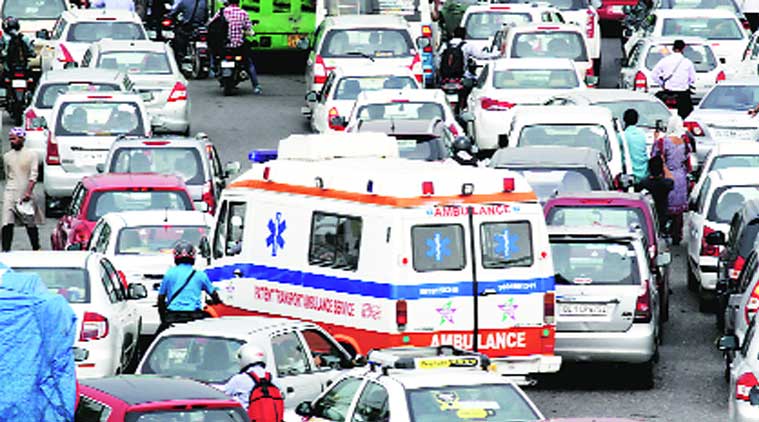
If a child requires urgent medical assistance, the over-riding goal is to get the child to hospital.  It matters less who transports the child than that the child arrives in time to stave off disaster. 

In many ways, it seems, the international community has lost touch with that fundamental principle.  While public approval for the UN remains high within most of its member states, and while the UN maintains its singular function as a convener of dialogue regarding the world’s greatest challenges, there are also flaws in a system that is so heavily dependent on the permissions and funding of large states; that invests massive amounts of skill and resources providing assistance to people damaged by the conflicts we are too institutionally “conflicted” to stop; a system that is constantly “selling” its work to its state benefactors without clear assessments of where that work has gone off the rails, where we might actually be “unfit for purpose,” and where self-inflicted institutional and political impediments have become the erstwhile traffic jams that threaten to prevent constituents from receiving what we have given them every reason to expect from us.

We still insist on driving the sick child to the hospital ourselves even when there are other vehicles in better operating order and more at the ready.  We often insist on being at the center of things, at the core of solutions and resolutions.  Our institutional branding has become at times almost insufferable, people of considerable skill and integrity forced as a matter of professional protocol to tell us much about “what they’re doing” and little about how its working and, heaven forbid, what else needs to happen in the world beyond our bubbles and their aspirations to ensure that the metaphorical child reaches the hospital in time.

Thankfully, from various parts of the world in our zoom-saturated existence, officials and civil society still come into UN spaces to share and report, to attempt to put a human face on “global problems,” to remind diplomats and NGOs alike that what we’re doing isn’t quite working as we intended, that the vehicle holding the “sick child” is too often stuck in horrible traffic as the child’s vital signs plummet and with few willing to sacrifice their place in line to free up the ambulance ‘s path.

But if this week was any indication, those summoned to “brief” this UN community on global crises might be losing confidence in our ability to do more than “tick” our own boxes of concern, to hear and then file-away testimony as though we are somehow doing these leaders a favor by allowing them to present.  Twice in the span of a couple of days, two female NGO leaders – one from Syria and the other from South Sudan, shared frustration at the ways in which their testimony seemed as likely to enable inertia as galvanize a tangible, sustainable response.  Each in their own way they made clear the pressures they feel from colleagues who wonder what the point is of engaging the UN on issues it has failed to resolve over many long years.  What can the General Assembly and Security Council possibly need briefers to tell them about these longstanding crises that they don’t already know? After all, as Wafa Moustafa noted about Syria after questioning the value of speaking to a General Assembly session, “you’ve all seen the photos.”

Indeed they have. We all have. From Syria, from Yemen, from DR Congo, from Myanmar, discouraging images seen over and over to the extent that they are now insufficiently evocative except perhaps insofar that they remind us of the consequences of our collective inability to translate diplomatic dialogue into sustainable peace. As Jackline Nasiwa of South Sudan noted in the Security Council, “we are tired of sharing the same stories,” lamenting that what she highlighted as the considerable resilience of the South Sudanese people “is clearly fading” in the face of ongoing, persistent, unresolved trauma.

And once finished with their own statements, both of these women were expected to listen to a series of largely predictable responses from delegations, expressions of concern largely genuine but also untethered to much in the way of fresh thinking or fresher commitments, anything that might possibly register on the “Richter scale of sanity” of these women.  In many ways the responses from delegations merely confirmed the lament – that we are not only unable to fix what is so clearly wrong, but that we have few good suggestions for where relief might be found beyond our own walls and values.  We can’t fix the problem, or so it seems, and we really don’t know who can.

The concerns of these women and of the people they serve and represent deserve a better outcome than words falling to earth like seeds on concrete.

With all due regard for the mindset of civil society – hoping for more, insisting on more than we are ever likely to see ourselves – we are right to insist that there is something collectively the matter with us here, something which lies at the heart of  the frustration punctuated by the women briefers this week. We talk about the world as though we are in a race to survive a series of deadly pandemics but we act too often as though the world suffers merely from a simple head cold.  We take our sweet time, preferring to delay appropriate action until we reach consensus, forgetting that consensus is an aspiration not a demand, forgetting also that while national priorities differ, the fundamental obligation of this system to prevent violence in the first instance and alleviate the suffering such violence causes should never be up for grabs. Not here. Not in this place.

One suggestion for the UN going forward is that it thoroughly examines its use of the term “partnership,” a phrase so utterly overused and misunderstood that it has lost much of its “flavor,” has in fact degenerated into something akin to proximity and assistance. Our “partners” are the ones who are “around” and help us do our job. They are not, apparently, the ones who help shape what that job is, how it is conducted, how its successes are measured, what course corrections might be required. They are not, apparently, the ones whose briefings demand responses akin to “what we are going to do differently now,” what are we as a community prepared to rethink and renegotiate in order for women such as these briefers to take something of value away from the session, perhaps a sense that they were really listened to and, in these instances at the very least, an assurance that human misery trumps institutional protocol as the motivation and inspiration for our common work. Like most of the rest of us, these women are not “partners” in any real sense, not yet “halves of the same brain,” but voices that we solicit when we need them, voices that we tap when we need to show concern genuine at one level, intangible at another. This is not real partnership. This is not enough.

Public opinion polls regarding the value of the UN notwithstanding, there is a fair amount of cynicism afoot regarding the ability of the international community to ensure that our metaphorical ambulances are able to get to hospital in time to save their patients. When women such as Ms. Nasiwa and Moustafa question the value of their UN testimony — not its content but its audience — we need to take serious note. It may be that we all are defined by things we cannot change. But the violence, heartache and trauma embedded in their testimony, this must change. Most all of us have endured the experience of not being heard, of urgency more often patronized than acted upon. I worry that women such as these will stop speaking to us at all, will rather take up the search for settings where there is closer synergy between rhetoric and response, where there is a higher probability that the ambulance will reach its intended destination. This is an outcome the UN can and must do more to avoid.

Unity State: Replenishing our Thirst for Reconciliation, Dr. Robert Zuber

31 Jan
Unity Cartoon

While you see it your way there’s a chance that we may fall apart before too long.  The Beatles

Propensities and principles must be reconciled by some means.  Charlotte Brontë

I’ve learned that reconciliation has to occur between the parts of ourselves that are fragmented and wounded. Parker Hurley

The nation as it is currently constituted has never dealt with a yesterday or tomorrow where we were radically honest, generous, and tender with each other. Kiese Laymon

The simple, mutual recognition that mistakes were made is in itself a closing of the divide.  Steven Erikson

Statements often bring controversy. Questions often bring unity.  Emilyann Allen

No us. No them. Just we.  Steve Goodier

Earlier this week, a good colleague of ours called to discuss a new project designed to help promote reconciliation in our highly polarized country, reconciliation which might help unify factions across the US which have stopped listening to each other, stopped trusting each other’s motives, stopped looking for entry points thorough which we might promote each other’s goodness rather than assuming that every pronouncement, every statement, every mis-step, is some manifestation of evil intent.

I share her concern for reconciliation but wondered then as now to what extend there is truly a thirst for it or at least enough of a thirst to make reconciliation efforts viable.  For like the many other mountains of psychology and policy which we are now seeking to climb, reconciliation is also a hard slog, requiring substantial levels of honesty, attentiveness and staying-power, not only to address the excesses and insanity of our adversaries, but our own as well; not only to demand apologies but to offer them as well; not only to answer the questions posed by others but to pose questions that allow for our own spaces of ignorance to be filled with something other than malice and prejudice.

This “will-to-reconcile” is impeded by so many factors, and at so many levels.  The “bubbles” in which so many of us are content (or resigned) to reside – our own bubbles and not simply the ones we identify in our adversaries – can lead us to the mistaken notion that reconciliation is easier to achieve than could possibly be the case in our current circumstances.  If only others could accept the erstwhile “truths” that “we” represent, the “wisdom” of policies and structures that are assumed to be in the best interests of others, the “good intentions” of narratives about the world that seek to silence the guns of others while burying our own hostilities deep within the forms and structures of polite, “liberal” culture.  If only people could cross back over the line into “my” zones of affective and epistemic comfort, if only they could see the fundamental worthiness of my “propensities and principles,” maybe then we could find a common way forward.

It seems more complex than that doesn’t it? Current divisions seem larger and more intractable to me.  My priorities of policy and practice seem generally “right” to my mind, seem to be on a track that promises some pathway beyond climate ruin and the divides of technology, economics, social development, and even COVID vaccine distribution that threaten to expose existing wounds even further.  But I also recognize that others see it differently; others see the edifices and rules of mortar and ideas that people like me have constructed as the means for some to further their own interests at the expense of others.   Indeed, as we have noted often this space, we who are properly horrified at the growing threat from conspirators and their weapons have also to acknowledge that “they” didn’t by their own force of policy and practice create our plastic-filled oceans and staggering economic divides; they are not primarily responsible for our current climate emergency nor the “vaccine nationalism” that might well become the latest stake through the heart of our globalist pretentions.  “They” did not invent our longstanding embrace of racism nor the corruption at the highest levels of governance which takes multiple forms and damages us all.  Mistakes were made, even grave ones, but they have been made by many of us, mistakes compounded by the failure to “see” them clearly let alone to acknowledge or (God forbid) apologize for consequences unintended and otherwise.

While global leaders, including the current US president, are right to call for “unity,” the many steps needed to accomplish this seem only partially grasped. Some of these steps were on display during an extraordinarily busy January week in and around the United Nations, a week punctuated by an alternately sobering and hopeful “state of the union” address by the UN Secretary-General, a strong endorsement of science-based policymaking by the Deputy Secretary-General, and a useful joint session convened by the presidents of the General Assembly and the Economic and Social Council to sort out impediments both to development finance and sustainable development support for the Least Developed States; all of this in the shadow of the World Economic Forum annual event at Davos, a star-studded gathering to assess global trends that seems once again this year to be as much of a confirmation of existing inequities than a sincere effort to eliminate them.

That said there were two UN events which offered some good guidance how we might attend to our current, multi-layered fragmentation.  On Monday, the Security Council held a discussion that highlighted the ways in which conflict prevention and COVID response are mutually reinforcing, with most speakers affirming what Ireland referred to as our current “dark times” brought about by a combination of inadequate COVID preparations and cease fire arrangements which, if they exist at all, are held together by fragile threads.  It was up to UN USG Lowcock to highlight, in keeping with statements made by SG Guterres, that the pandemic is the crisis that we must find a way to solve together, noting that compromised health capacity, inadequate testing and other preparations and (now) predatory vaccine access have merely allowed fragilities of communities and states to grow, inflaming prospects for armed violence between and (especially) within states, and damaging economies and livelihoods in ways that could easily cost trillions of US dollars to repair. The “common goals” which are so often a prerequisite for achieving greater unity, the goals of ending the pandemic and silencing the guns, are still there, still beckoning, still awaiting a determined and humble response from states and stakeholders now one year on since the World Health Organization issued its initial warnings about the pandemic gloom we have still not unified sufficiently to dispel.

In addition to this, on Wednesday the UN convened a panel on “Holocaust Denial and Distortion,” which highlighted efforts to posit alternate realities which both deny the genocide and pry open rationales for the repetition of mass atrocity violence.  Much attention was rightly paid to Holocaust victims, including some extraordinary prayers and musical tributes and a mournful German Chancellor Merkel who expressed “shame” for the horrors unleashed by Germany but also shared a warning about how quickly our “cherished values can be cast aside.”  But for me at least, one core virtue of this event was not only its “calling to mind” the grave horrors of our not-so-distant past, but the extent to which “denial and distortion” characterize our present circumstances as well, the dual arrogances of unhinged conspiracy and unexamined convention that turn up the heat for all of us and make unity a more elusive goal than might otherwise be the case.

While rightly underscoring some of the specific and horrific consequences of Holocaust denial — including the attempted “rehabilitation” of those in more recent times who have yet to be held to account for the hatred they have espoused and the violence which such espousals have engendered –much of this event focused on the need for a common base of knowledge and understanding from which we can iron out our disagreements and move forward to heal the fragmentation within and outside ourselves, creating what one panelist called a “healthy relationship” with our often “inconvenient” past that allows us to “own our behavior, past and present, and not simply cast it aside or as another panelist put it, bury it under “lies and silence.”

Such ownership in our time would be warmly welcomed. Indeed, as our ideological and lifestyle bubbles continue to thicken, as the “ways and means to share forbidden fruit” only grow in volume and access, and as frustrations over pandemic and equity mis-steps rationalize new expressions of conspiratorial violence, our reconciliation challenges only continue to grow.  We seem to lack viable strategies to restore a reality-based platform on which we can all debate, declare and then build, a reality that now seems to require higher levels of competence and rigor, justice and accountability, but also levels of “honesty and generosity” that are virtually endangered species in our policy and public spaces. 

Though many are now in despair about our growing, seemingly intractable divides, there simply must be a viable third rail beyond “my way” and “your way,” beyond my version of reality and yours. Before we come fully unglued as a species, before our guns settle what our humanity has failed to reconcile, we need to do more than talk about unity, more than encourage unity. We must find the means to replenish our thirst for unity based on genuinely common purposes, common visions, common goals and common benefits; we must also locate and apply that third rail which can power and sustain reconciliation efforts; and we must do so without delay for our very future depends on it. 

Planting Season: Young Advocates as Seeds of Peace, Dr. Robert Zuber

24 Jan
See the source image

They tried to bury us. They didn’t know we were seeds.  Dinos Christianopoulos

It’s senseless to disarm the hands, if the heart remains armed. Bangambiki Habyarimana

I arise in the morning torn between a desire to improve the world and a desire to enjoy the world. E.B. White

To change something, build a new model that makes the existing model obsolete.  Buckminster Fuller

If things don’t work out the way you want, hold your head up high and be proud. And try again. And again. And again!  Sarah Dessen

Art cannot change events. But it can change people.  Leonard Bernstein

In some ways, the United Nations represents the epitome of an “if at first you don’t succeed” institution.  Important discussions on emerging global issues occur long before resolutions are tabled and adopted.  And many adopted UN resolutions appear in similar form, year after year, in the hope that additional states will “get the message,” on matters from capital punishment abolition to ensuring greater protection for journalists, “getting” indicated not only by support for the resolutions themselves but for the policy change at national level that the resolution seeks to promote.

And its not only with respect to UN resolutions, these carefully negotiated documents by diplomats trying to navigate between instructions from capital and the compromises needed to move policy priorities from possible to actual.  In the realm of peace and security where we invest much of our attentions, change can be painfully – even deliberately slow, in part because of a lack of consensus regarding the direction that change should take, whose interests are served, how the consequences of change should be managed.  This leads to some severe policy bottlenecks, such as with respect to Syria and Yemen as well as some stunning ironies such as this week when officials in the city of Bangui, Central African Republic were forced to declare a state of emergency just one day after the Security Council met to consider how best to confront armed groups determined to undermine and even reverse recent presidential election results.

Within the domain of weapons and weapons systems, there is also ample room for frustration with occasional if welcome, bursts of sanity in the form of resolutions and treaties which promise, albeit with significant caveats, to regulate or even prohibit altogether the weapons that continue to threaten human communities, even human civilization. These include weapons locked in silos or placed on submarines, weapons trafficked across borders or carelessly allowed to leak from government control into a vast illicit market, weapons placed in outer space under “dual use” cover, weapons designed to explode primarily in heavily populated areas; weapons with new “bells and whistles” manufactured at still-staggering rates and shipped off to states with dubious human rights records or without much of a clue regarding what to do with the weapons – still deadly – that are set to be replaced by newer models.

These are not, for the most part, new issues for the UN nor for the many NGOs gathered around headquarters with a keen interest in promoting a disarmed world. Their determination to find ways to end the threat from nuclear weapons has persevered, a threat which has only grown as the weapons themselves display greater precision and payload and as unresolved global tensions have provided ready (if not convincing) excuses for states seeking to hold on to their weapons stockpiles or even develop their own nuclear capabilities.  Some of my closest UN colleagues, have invested a professional lifetime of thought and organizing energy in a valiant effort to solidify the relationship between disarmament and non-proliferation obligations, including obligations under international law, as well as to examine political obstacles to “general and complete disarmament,” and to remind governments and citizens of the overwhelming humanitarian imperative to keep these weapons out of harm’s way until they can be eliminated altogether.

I also have a long history with disarmament obligations and issues, which I won’t unpack here, except to say that nuclear weapons issues proved to be a “gateway” concern for me, one which I have never renounced or discarded but one which has made space for other “human security” concerns to which we are now linked by a bevy of excellent institutional partners who focus on torture and climate change, racial discrimination and biodiversity loss, atrocity crimes and incarcerated children, terrorism and corrupt governance, unsustainable cities and food insecurity.  While making it clear that we endorse the specific concern of our nuclear weapons partners – that human security priorities must not be reconstituted as security “conditionalities” which excuse neglect for nuclear disarmament obligations – it remains our view that security linkages can lead in the best of circumstances to mutual security investments that can, among its other benefits, strengthen support for the disarmament we all want and need.

While more and more of my older disarmament friends and colleagues have moved towards a more nuanced security framework, especially with regard to gender, race and climate, our younger colleagues have embraced such linkages as a matter of course.  This week’s entry into force of the Treaty on the Prohibition of Nuclear Weapons (TPNW) (for the treaty in multiple languages, click here: Ch_XXVI_9.pdf (un.org)) bears the broad policy and preambular concerns of several progressive states (such as Mexico, Austria and Costa Rica) along with youthful leadership from around the world who together brought the treaty into existence While holding on to the hope that the core promise of the TPNW – that nuclear weapons rendered “illegal” by this treaty will lead to concrete disarmament measures – we nevertheless applaud the degree to which the treaty’s prohibitions and positive obligations for ratifying states are certain to “shrink the space” for the influence of nuclear weapons, impeding security cooperation with nuclear-armed states in part through the rejection of longstanding “nuclear umbrellas” and related security arrangements.

The TPNW should perhaps be understood more as a stage than a solution, but it is a hopeful and welcome stage, one which seems to have unleashed some positive and inter-linked initiatives by young advocates who are well-suited to organize online and across barriers of identify and culture in this age of COVID.  One initiative close to home is “Reversing the Trend,” which was also launched this week by a diverse group of young advocates with support from the diplomatic missions of Costa Rica, Kazakhstan and Kiribati.  In a virtually seamless manner, the leaders of this initiative, including our office-mates Christian Ciobanu and Danielle Samler, have fashioned a format for discussion and advocacy that brings together youth from diverse cultural backgrounds but also links the nuclear weapons issue to other powerful impediments to their future (climate change and racial discrimination among them). They have also opened a space for creative contributions (fashion design and visual art so far)  that not only help to contextualize nuclear weapons threats but allow young people to blend policy leadership and artistic expression as they navigate the personal, structural and ideological minefields that older folks like me have not done enough to clear.

These youthful advocates are skillful, articulate and determined.  They know that their very future is on the line as pandemic variants continue to spread, as ice caps continue to melt, and as weapons continue to modernize and find new hiding places.  They also know that tinkering with the existing frameworks is not likely to be good enough; they recognize that they must locate a healthier balance between “changing the world and enjoying the world;” and they are determined that efforts to “bury” their ideas and influences are destined to fail as these young people represent, indeed, the seeds of future well-being for themselves and so many others.

And the diplomats are paying attention.  For instance, Ambassador Maritza Chan of Costa Rica, a longtime champion of the TPNW and advocate for “human security” lenses on contemporary threats, was one of those welcoming the Reverse the Trend launch.  She reminded the largely youthful audience that security is ultimately “not based on military competition but on human cooperation,” that multilateralism is key to progress on peace, and that diverse voices worldwide, including a new generation of experts on human security and the rule of law, remain dedicated to ending what she described as a “perverse” arms race.  For his part, the Kiribati Ambassador was more cautious, noting the longstanding and stubborn resistance to disarmament by the nuclear possessing states but also reassuring the audience that, in part due to the TPNW, nuclear weapons threats can still be overcome under UN auspices.

My own hope for initiatives like Reverse the Trend is that they can help examine and assess, together with the rest of us, which models of governance can be fixed and which need to be replaced; which skills and voices must get closer to the center of discussions about the “world we want” and not just the world that seems most likely ; which threats most impact their future and how can such threats be robustly identified and then addressed in tandem; which “seeds” these young people are keen to plant, may already have planted, and how we can all do more to help nurture a successful crop; which global problems are most likely to resist resolution and how can we best inspire perseverance across generations until they are finally sorted.

And perhaps we could add to that a bit of youthful guidance regarding a task that, certainly for my generation, has proven even more daunting, even more elusive than forging resolutions or negotiating limits on weapons and weapons systems: the task of disarming our own hearts as we seek to disarm the world.

Rays of Promise: Post-Pandemic Goals Worth Winning, Dr. Robert Zuber

20 Dec
See the source image

People will do anything, no matter how absurd, in order to avoid facing their own souls. One does not become enlightened by imagining figures of light, but by making the darkness conscious. Carl Jung

One need not be a chamber to be haunted.  Emily Dickinson

I wonder if that’s how darkness wins, by convincing us to trap it inside ourselves, instead of emptying it out.  Jasmine Warga

Long is the way and hard, that out of Hell leads up to light. John Milton

They gave it up before they ever really even got started. J.D. Salinger

I am terrified by this dark thing that sleeps in me; all day I feel its soft, feathery turnings, its malignity.  Sylvia Plath

I need more of the night before I open eyes and heart to illumination. Denise Levertov

I’m writing this morning on the darkest day of the year in the northern hemisphere and from a city currently with the highest number of COVID infections in a state with the highest number of COVID infections in a country with the highest number of COVID infections.  Chants in the US of “we’re number 1” have never seemed as shallow to me as they do at this particular moment, a time which continues to put extraordinary strains on those few for whom caregiving is a vocation not circumscribed by what seem to be the ever-shrinking circles of concern of so many of the rest of us.

The media is chock-full of disturbing health-related and political messaging of late, pitched alongside the hope that the miraculously rapid development of COVID vaccines will stem the current tide of death and misery early in the New Year.  Will we in the north survive this infection-saturated winter? If so, will we be able to recover our human touch or will we remain secluded our smallish worlds, defined more and more by computer screens and video distractions? Moreover, will we make good on pledges for equitable access to vaccines for the entire global community?  It would seem to be almost a miracle of another sort if we could collectively walk back the fear and self-preoccupations which have defined us through much of 2020 and affirm – through policy and practice – this global responsibility (thankfully reinforced in large measure by UN agencies) to ensure global access to vaccines which offer hope, in the short-term at least, that we can dodge full-scale damage from this plague and, once again, manage to save ourselves from ourselves.

However, many social and media commentators now recognize publicly what many of us have feared privately – that the dysfunctional personal and political traits which have accelerated in this plague year – not birthed this year – will be hard for us to shake.  We have had another long year to justify turning our backs on each other, creating enemies from conspiracies, transforming climate denialism into an art form, holding fast to beliefs about the “myth” of COVID in some instances to our last dying breaths.  The vaccines will, if all goes well, keep the pandemic in check, but they will have no direct impact on the creeping “malignity” of our spirits, darkness which we have chosen to bury inside of ourselves and which is unlikely to be dispelled either by medical breakthroughs or by the sunlight now poised to oh-so-slowly return to our northern skies.

And, sad to say, we are getting scant assistance in confessing and overcoming our darkness from our institutions of governance, which often seem trapped in their own bubbles of self-importance and self-interest.  The US is only one of what seem to be a growing number of states seduced by authoritarians and their sycophants who seem to believe that holding power is about taking advantage of opportunity rather than serving the public interest.  And in so doing, such “leaders” are reinforcing for their publics values based on a nefarious “creed” described recently by Anne Applebaum: “Everyone is corrupt, everyone is on the take.” We’re living in a world without morals or principles and “all that matters is whether or not you win.”  Such a cynical, transactional view of the world has certainly taken root in the US, and those roots are now deeper and broader than some of us are willing to admit.

Thankfully, we know that corrupt practices and winning at all costs does not define us entirely, even in this plague year. Our own social media is inundated each week with incredible acts of courage and kindness that offer hope to our present and help ensure a post-pandemic quality of life for future generations.  From tree planting in the Sahel to emptying prisons of the politically incarcerated and tortured, initiatives are underway in so many global settings to stem the current tide of normative decay and blatant cruelty. In this the UN is doing its part beyond rigorously promoting the “global public good” of vaccines.  This week alone we witnessed some good movement towards a global moratorium on the use of the death penalty, some enthusiastic support for political and peace progress in countries such as Afghanistan and Sudan, and a couple of compelling events focused on the need for human rights-based approaches to counter-terror operations and more robust institutions of accountability for those who commit mass atrocity crimes.

But like the many countries at present whose social fabrics are fraying at the edges, the UN has also been subject to increasingly stubborn postures and nasty exchanges that seem a bit startling in an institution that generally reinforces diplomatic politeness (with occasional touches of passive-aggression.)  In the Economic and Social Council, diplomats hurled vague accusations, including at ECOSOC’s current president (Pakistan), over the fate of a still-unendorsed Political Declaration that is badly needed to help galvanize state support for the UN’s Decade of Acton on sustainable development. And in the Security Council, its often-ugly and rarely-impactful discussions on Syria’s long decade of violent abuses flared up even further this week, punctuated by China’s assertion that Germany’s soon-to-be-concluded humanitarian leadership on Syria and its overall Council tenure have been a “failure.”  

We don’t share China’s judgment in this, but we are mindful of what these exchanges represent – signs of further fraying of our standards of propriety and mutual responsibility.  States are now dabbling in what too many of us in our personal realms are doing as well – shutting the metaphorical doors and windows to divergent viewpoints and basking instead in the echo chambers of our self-selected, self-interested versions of “reality.” Whether in Washington, Brasilia, Moscow, Damascus or any number of other capital settings, our leadership is increasingly acting out a cynical script, less about inspiring people to be their better selves and more about keeping our darkness locked within where it can best “haunt” personal and collective potential.

Given this pervasive dearth of inspiration by much of our political leadership, the way out of our darkness, out of the hell that we have relentlessly manufactured for ourselves, will likely be long and hard.  And the near-miraculous vaccines now becoming available to those most vulnerable to infection will not by themselves bring the illumination that we so long for in this season.  But they might eventually help give our species one more chance – a chance to end corrupt practices in governance, increase responsiveness by our international institutions, guarantee better health and educational access, and make our political systems of checks and balances more reliable, our judicial systems better able to ensure accountability for the worst of human crimes, and our economics more equitable and eco-responsive.

Given where we now find ourselves and despite a bevy of pandemic-related disruptions and uncertainties, if winning is indeed, “everything” then surely this is the “winning” to which we should aspire. This is the “illumination” which we should now be preparing to welcome, illumination which can effectively dispel darkness to which we have become both conscious and committed to push out from our most remote inner spaces.  Indeed, if we are to reset our pandemic-infected, darkness-infused present, it will take more than governments, more than global institutions, certainly more than vaccines.  It will, as Jung noted, take more of us with the courage to “face our own souls,” to confess our dark spaces and then persevere to the brink of our capacities in illuminating and incarnating opportunities to make our world greener and less violent, opportunities that might just represent our last, best chance for life.

This evening in the northern sky, a rare convergence of planets will lead to the sighting of the “star of Bethlehem,” a “star” that was believed to settle over the manger where the baby Jesus lay many centuries ago, a mysterious star illuminating a sacred promise. This year’s version of manger season offers its own inspiration and guidance on how the promises that define our own time might best be implemented and sustained, how our current darkness might have its power over our values, priorities and actions finally and fully dispelled.  We would do well to urgently discern its message.

A Call for Devotion in Treacherous Times, Dr. Robert Zuber

13 Dec
See the source image

The desire to reach for the stars is ambitious. The desire to reach hearts is wise.  Maya Angelou

Live for each second without hesitation.  Elton John

True progress is to know more, and be more, and to do more.  Oscar Wilde

It doesn’t matter how great your shoes are if you don’t accomplish anything in them.  Martina Boone

We must do extraordinary things. We have to. Dave Eggers

They can’t see the distant shore anymore, and they wonder if their paddling is moving them forward. None of the trees behind them are getting smaller and none of the trees ahead are getting bigger. Donald Miller

Something – the eternal ‘what’s the use?’ – sets its bronze barrier across every avenue that I open up in the realm of hypothesis.  Gustave Flaubert

In this time of multiple crises affecting all corners of our planet, the UN finds itself in a place both pivotal and peculiar.  Despite restrictions due to a stubborn pandemic and resulting financial constraints, the UN has maintained its pivotal convening function, holding the attentions of states on issues (and the mix of stakeholders) that might otherwise slide further down the list of national priorities.  

Over the past several days, including a rare Saturday convening, UN officials and agencies converged around issues ranging from famine in Yemen and ensuring accountability for ISIL abuses committed in Iraq to the link between stemming illicit financial flows and silencing the guns across Africa, and a formal honoring of those often-beleaguered frontline health workers who help ensure our right to health care during a pandemic while putting their own right to life in daily jeopardy. 

Added to this was the main Saturday event, an assessment of our ambitions for achieving the Paris Climate goals five years after passage.  In several ways, the event was a let down, filled with statements and accompanying images of the climate emergency about which we really do not need a reminder, images offered with scant explanation of how some legitimately hopeful initiatives on renewable energy, reforestation, biodiversity protection and more will quickly add up to a successfully decarbonized planet. 

Indeed, in assessing the impact of this “Climate Ambition Summit,” the president of next November’s 26th UN Climate Change Conference of the Parties (COP26) in Glasgow, Scotland publicly lamented that while Saturday’s event resulted in some innovative climate commitments, we are also forced to face up to the fact that “this is not enough.”  We need higher levels of ambition, much higher in fact, to resist the coming wave of “climate catastrophe.”

Indeed we do.  But where is the “higher” going to come from?   How can we encourage more “urgency in action” with regard to climate and famine, conflict prevention and inclusive political participation? How do we compel more of this urgency and then link it, arm in arm, in a timely and effective manner?   What are the missing ingredients in our approaches?  What obstacles do we continue to place in our own way?

Part of the problem for us at the UN is related to the way in which we do our business and how the pandemic has, in some ways, reinforced some already dubious habits.   Having worked out some of the kinks in earlier iterations of our digital policymaking, we are now literally inundated with virtual policy events.  These are relatively easy to organize, carbon-friendly and allow diplomats to come away believing that something tangible has happened for the world while we non-diplomats imagine that we actually have some role in global governance and its functional priorities complements of zoom and other platforms. 

These digital events are certainly helpful to the organizers insofar as it allows them to “brand” their work and solicit funding based on the assumption that these events actually “make a difference.”  But do they really?  Do they actually get us closer to a world that is defined less by catastrophe and violence and more by inclusion, abundance and stability?  And if so, how does that happen?   And for whom does that happen?  

Recent events don’t allow for excessive optimism regarding impact.   In the case of the Climate Ambition Summit, we got what we are now accustomed to getting in our currently digitalize policy spaces – prerecorded (or pre-fabricated) messages by “global leaders” attempting to put their best feet forward, telling us what they want us to hear through presentation content that, for the most part, falls far short of what is needed if we are truly to avert climate catastrophe.  Such statements are generally measured, even formalistic, short on assessment of national policy measures and even shorter on inspiration.  The leaders represented at the Summit were speaking, not listening,  sharing what they are doing and what they plan to do — some of which is quite good –but mostly failing to reference the multiple levels at which change must occur and be enabled, especially those manifold initiatives at local level which remain key to habitat restoration, sustainable agriculture and a host of other planet-restoring measures.

There was also at this Summit a bit what has become ubiquitous gushing over “civil society participation” with some innovative and hopeful interventions from that sector, including several compelling short videos courtesy of the World Wildlife Fund.  In another part of the program, the voices of young people could be heard, voices of frustration due to their largely unheeded calls for robust and urgent climate action, for meaningful paths to policy participation, for taking with proper seriousness the warnings of science and then adopting measures that are not confined by the conveniences of bureaucracies or government agencies.

The pre-recorded statements by global leaders made no mention of this frustration.  They didn’t hear it.  And even if they had, there would likely be little penance forthcoming for the wasted opportunity of Paris, that moment five years ago when what we did in the Paris aftermath might have mattered more than it has, that time when we could have prevented more of the fires from raging, the ice from melting, the species from going extinct, the droughts and floods from spreading out their carnage, the ocean storms from achieving ever-higher categories of energy and destruction.  We could have done this, we should have done this, but we didn’t listen to the children.  Our commitment to their collective future has, to date at least, proven shamefully deficient.

Perhaps ironically, far from our centers of policy influence, there was another call to movement on Saturday, a movement typically involving many thousands of persons by vehicle or on foot (even on their knees) whose lives are often directly impacted by climate change and armed violence, by corrupt practices in institutions large and small, sacred and secular.

On this Saturday was the Feast of Guadalupe, a time in past years for people across Mexico and beyond to practice their devotion to their blessed Mary, but also to share in that devotion energy with the many who gather at the Basilica in Mexico City and the many more who have drunk from this energizing reservoir of faith and commitment in years past.

I have seen this devotion first hand, enough to probe a few of its virtues and shortcomings, enough to see the looks on the faces of pilgrims who could not survive, would not wish to survive, without the sustaining energy that comes from a commitment deeper and more consuming than most of us could hardly imagine beyond the domain of our children and other close family members.

It is sad that this devotional energy, like so much else this year, has moved online due to the pandemic, a digital setting which cannot possibly convey the depth of devotion displayed by people from all walks of life, many of whom likely do not have digital access and wouldn’t accept the substitute if they had.  But there is a lesson still looming here for the rest of us, a lesson about the limitations of our bureaucratized discourse, about our inadvertently patronizing attitudes towards local initiatives and actors, about our tone-deafness towards the very stakeholders we routinely seek to bring into our midst.

When it comes to climate change or other global challenges, the need for urgent action is fully apparent as are some hopeful technologies and other initiatives developed to give us a puncher’s chance to shift course in a sustainable direction, to overcome the “bronze barrier” of our “what’s the use” cynicism that pervades too many persons and sectors, even in our churches and government agencies.  Still our current trajectory remains simply insufficient to the health and healing of the planet or of ourselves, and we should promptly cease defending levels of policy progress or personal dedication that appear unlikely to bend that curve.  

In this time of events running apace of outcomes, it would actually be helpful to hear a few honest expressions of remorse from our leadership, penance for opportunities missed that may not come our way again, expressions of devotion – real devotion – for our planet and its diverse inhabitants. It’s not good politics, I suppose, but If we are to convince the audiences that must be convinced – including the youth in climate vulnerable states, and the small-holder farmers, drivers and shop-keepers walking that long road to Guadalupe — we need to demonstrate our capacity to reach their hearts and not only their “interests,” to “wear” at least some of the devotion which they know full well is essential to getting us over the hump regarding responses to threats that we have merely dabbled in for far too long.

Metaphorically speaking, we’re actually now wearing the right shoes, but its long past time to do important things in them and to do those things without hesitation, without excessive weight from protocols and bureaucracies, without the excuses that stand in the way of learning, doing and being more than we now are. If our incessant policy “paddling” is ever to get us close to safer and saner shores, the craft we paddle must be fueled in greater portion by devotion, that energy which communicates to people everywhere and in all circumstances that their current and future lives, their current and future well-being, are genuinely worth paddling for.