Tag Archives: United Nations

Ambulance Chasers: Clearing a Path for Policy Change, Dr. Robert Zuber

7 Mar
See the source image

They were partners. They were two halves of the same brain.  Margaret Peterson Haddix

It was an honor, to be listened to closely, to be heard. Meg Waite Clayton

She was hearing the words. They just weren’t registering on her Richter scale of sanity.  Dakota Cassidy

Life is a long preparation for something that never happens. W.B. Yeats

In a sense we are all prisoners of some memory, or fear, or disappointment – we are all defined by something we can’t change.  Simon Van Booy

Life is so constructed, that the event does not, cannot, will not, match the expectation. Charlotte Brontë

It wasn’t a particularly momentous week at the UN, though there was plenty of momentousness in the world to discuss, including the growing threat from hate speech and atrocity-crime level violence committed in the Tigray region of Ethiopia and against protesters on the streets of Myanmar.  In addition, while a session on the use of chemical weapons in Syria fell flat – largely due to the lack of new information from the existing investigative mechanisms – there was nonetheless a palpable sense of frustration in diverse sessions that 10 years into the Syrian conflict, the violence still continues, the disappearances and arbitrary detentions still continue, the foreign occupation still continues, the displacement and material deprivation still continue.

Those of you who still find some value in these weekly missives know of our preoccupation with a relationship between structure and outcomes, especially in multilateral forums.  We affirm that solutions to global problems, much like personal ones, are undermined by gaps between rhetoric and response; between promises made and promises kept; between the growing expectations of the parties and honest appraisals of what it is possible to achieve (or not achieve), including by the UN or any other institutional frameworks. Such appraisals would do well to point out other sources of potential relief beyond the most obvious, underscoring that the attainment of relief supersedes any other concerns, including the authority of the relief-giver.

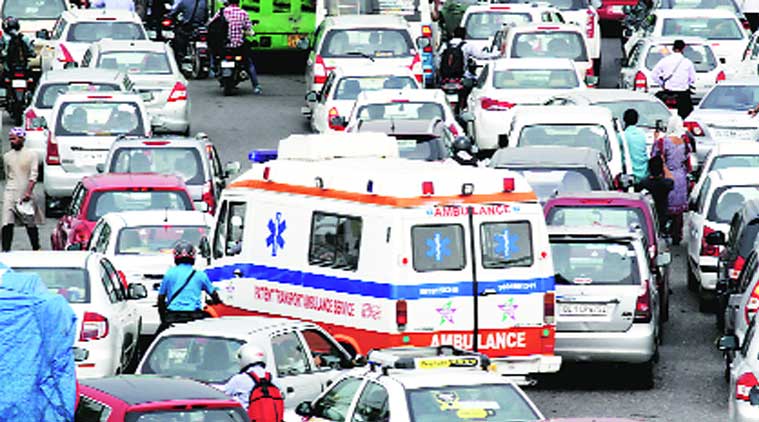
If a child requires urgent medical assistance, the over-riding goal is to get the child to hospital.  It matters less who transports the child than that the child arrives in time to stave off disaster. 

In many ways, it seems, the international community has lost touch with that fundamental principle.  While public approval for the UN remains high within most of its member states, and while the UN maintains its singular function as a convener of dialogue regarding the world’s greatest challenges, there are also flaws in a system that is so heavily dependent on the permissions and funding of large states; that invests massive amounts of skill and resources providing assistance to people damaged by the conflicts we are too institutionally “conflicted” to stop; a system that is constantly “selling” its work to its state benefactors without clear assessments of where that work has gone off the rails, where we might actually be “unfit for purpose,” and where self-inflicted institutional and political impediments have become the erstwhile traffic jams that threaten to prevent constituents from receiving what we have given them every reason to expect from us.

We still insist on driving the sick child to the hospital ourselves even when there are other vehicles in better operating order and more at the ready.  We often insist on being at the center of things, at the core of solutions and resolutions.  Our institutional branding has become at times almost insufferable, people of considerable skill and integrity forced as a matter of professional protocol to tell us much about “what they’re doing” and little about how its working and, heaven forbid, what else needs to happen in the world beyond our bubbles and their aspirations to ensure that the metaphorical child reaches the hospital in time.

Thankfully, from various parts of the world in our zoom-saturated existence, officials and civil society still come into UN spaces to share and report, to attempt to put a human face on “global problems,” to remind diplomats and NGOs alike that what we’re doing isn’t quite working as we intended, that the vehicle holding the “sick child” is too often stuck in horrible traffic as the child’s vital signs plummet and with few willing to sacrifice their place in line to free up the ambulance ‘s path.

But if this week was any indication, those summoned to “brief” this UN community on global crises might be losing confidence in our ability to do more than “tick” our own boxes of concern, to hear and then file-away testimony as though we are somehow doing these leaders a favor by allowing them to present.  Twice in the span of a couple of days, two female NGO leaders – one from Syria and the other from South Sudan, shared frustration at the ways in which their testimony seemed as likely to enable inertia as galvanize a tangible, sustainable response.  Each in their own way they made clear the pressures they feel from colleagues who wonder what the point is of engaging the UN on issues it has failed to resolve over many long years.  What can the General Assembly and Security Council possibly need briefers to tell them about these longstanding crises that they don’t already know? After all, as Wafa Moustafa noted about Syria after questioning the value of speaking to a General Assembly session, “you’ve all seen the photos.”

Indeed they have. We all have. From Syria, from Yemen, from DR Congo, from Myanmar, discouraging images seen over and over to the extent that they are now insufficiently evocative except perhaps insofar that they remind us of the consequences of our collective inability to translate diplomatic dialogue into sustainable peace. As Jackline Nasiwa of South Sudan noted in the Security Council, “we are tired of sharing the same stories,” lamenting that what she highlighted as the considerable resilience of the South Sudanese people “is clearly fading” in the face of ongoing, persistent, unresolved trauma.

And once finished with their own statements, both of these women were expected to listen to a series of largely predictable responses from delegations, expressions of concern largely genuine but also untethered to much in the way of fresh thinking or fresher commitments, anything that might possibly register on the “Richter scale of sanity” of these women.  In many ways the responses from delegations merely confirmed the lament – that we are not only unable to fix what is so clearly wrong, but that we have few good suggestions for where relief might be found beyond our own walls and values.  We can’t fix the problem, or so it seems, and we really don’t know who can.

The concerns of these women and of the people they serve and represent deserve a better outcome than words falling to earth like seeds on concrete.

With all due regard for the mindset of civil society – hoping for more, insisting on more than we are ever likely to see ourselves – we are right to insist that there is something collectively the matter with us here, something which lies at the heart of  the frustration punctuated by the women briefers this week. We talk about the world as though we are in a race to survive a series of deadly pandemics but we act too often as though the world suffers merely from a simple head cold.  We take our sweet time, preferring to delay appropriate action until we reach consensus, forgetting that consensus is an aspiration not a demand, forgetting also that while national priorities differ, the fundamental obligation of this system to prevent violence in the first instance and alleviate the suffering such violence causes should never be up for grabs. Not here. Not in this place.

One suggestion for the UN going forward is that it thoroughly examines its use of the term “partnership,” a phrase so utterly overused and misunderstood that it has lost much of its “flavor,” has in fact degenerated into something akin to proximity and assistance. Our “partners” are the ones who are “around” and help us do our job. They are not, apparently, the ones who help shape what that job is, how it is conducted, how its successes are measured, what course corrections might be required. They are not, apparently, the ones whose briefings demand responses akin to “what we are going to do differently now,” what are we as a community prepared to rethink and renegotiate in order for women such as these briefers to take something of value away from the session, perhaps a sense that they were really listened to and, in these instances at the very least, an assurance that human misery trumps institutional protocol as the motivation and inspiration for our common work. Like most of the rest of us, these women are not “partners” in any real sense, not yet “halves of the same brain,” but voices that we solicit when we need them, voices that we tap when we need to show concern genuine at one level, intangible at another. This is not real partnership. This is not enough.

Public opinion polls regarding the value of the UN notwithstanding, there is a fair amount of cynicism afoot regarding the ability of the international community to ensure that our metaphorical ambulances are able to get to hospital in time to save their patients. When women such as Ms. Nasiwa and Moustafa question the value of their UN testimony — not its content but its audience — we need to take serious note. It may be that we all are defined by things we cannot change. But the violence, heartache and trauma embedded in their testimony, this must change. Most all of us have endured the experience of not being heard, of urgency more often patronized than acted upon. I worry that women such as these will stop speaking to us at all, will rather take up the search for settings where there is closer synergy between rhetoric and response, where there is a higher probability that the ambulance will reach its intended destination. This is an outcome the UN can and must do more to avoid.

Unity State: Replenishing our Thirst for Reconciliation, Dr. Robert Zuber

31 Jan
Unity Cartoon

While you see it your way there’s a chance that we may fall apart before too long.  The Beatles

Propensities and principles must be reconciled by some means.  Charlotte Brontë

I’ve learned that reconciliation has to occur between the parts of ourselves that are fragmented and wounded. Parker Hurley

The nation as it is currently constituted has never dealt with a yesterday or tomorrow where we were radically honest, generous, and tender with each other. Kiese Laymon

The simple, mutual recognition that mistakes were made is in itself a closing of the divide.  Steven Erikson

Statements often bring controversy. Questions often bring unity.  Emilyann Allen

No us. No them. Just we.  Steve Goodier

Earlier this week, a good colleague of ours called to discuss a new project designed to help promote reconciliation in our highly polarized country, reconciliation which might help unify factions across the US which have stopped listening to each other, stopped trusting each other’s motives, stopped looking for entry points thorough which we might promote each other’s goodness rather than assuming that every pronouncement, every statement, every mis-step, is some manifestation of evil intent.

I share her concern for reconciliation but wondered then as now to what extend there is truly a thirst for it or at least enough of a thirst to make reconciliation efforts viable.  For like the many other mountains of psychology and policy which we are now seeking to climb, reconciliation is also a hard slog, requiring substantial levels of honesty, attentiveness and staying-power, not only to address the excesses and insanity of our adversaries, but our own as well; not only to demand apologies but to offer them as well; not only to answer the questions posed by others but to pose questions that allow for our own spaces of ignorance to be filled with something other than malice and prejudice.

This “will-to-reconcile” is impeded by so many factors, and at so many levels.  The “bubbles” in which so many of us are content (or resigned) to reside – our own bubbles and not simply the ones we identify in our adversaries – can lead us to the mistaken notion that reconciliation is easier to achieve than could possibly be the case in our current circumstances.  If only others could accept the erstwhile “truths” that “we” represent, the “wisdom” of policies and structures that are assumed to be in the best interests of others, the “good intentions” of narratives about the world that seek to silence the guns of others while burying our own hostilities deep within the forms and structures of polite, “liberal” culture.  If only people could cross back over the line into “my” zones of affective and epistemic comfort, if only they could see the fundamental worthiness of my “propensities and principles,” maybe then we could find a common way forward.

It seems more complex than that doesn’t it? Current divisions seem larger and more intractable to me.  My priorities of policy and practice seem generally “right” to my mind, seem to be on a track that promises some pathway beyond climate ruin and the divides of technology, economics, social development, and even COVID vaccine distribution that threaten to expose existing wounds even further.  But I also recognize that others see it differently; others see the edifices and rules of mortar and ideas that people like me have constructed as the means for some to further their own interests at the expense of others.   Indeed, as we have noted often this space, we who are properly horrified at the growing threat from conspirators and their weapons have also to acknowledge that “they” didn’t by their own force of policy and practice create our plastic-filled oceans and staggering economic divides; they are not primarily responsible for our current climate emergency nor the “vaccine nationalism” that might well become the latest stake through the heart of our globalist pretentions.  “They” did not invent our longstanding embrace of racism nor the corruption at the highest levels of governance which takes multiple forms and damages us all.  Mistakes were made, even grave ones, but they have been made by many of us, mistakes compounded by the failure to “see” them clearly let alone to acknowledge or (God forbid) apologize for consequences unintended and otherwise.

While global leaders, including the current US president, are right to call for “unity,” the many steps needed to accomplish this seem only partially grasped. Some of these steps were on display during an extraordinarily busy January week in and around the United Nations, a week punctuated by an alternately sobering and hopeful “state of the union” address by the UN Secretary-General, a strong endorsement of science-based policymaking by the Deputy Secretary-General, and a useful joint session convened by the presidents of the General Assembly and the Economic and Social Council to sort out impediments both to development finance and sustainable development support for the Least Developed States; all of this in the shadow of the World Economic Forum annual event at Davos, a star-studded gathering to assess global trends that seems once again this year to be as much of a confirmation of existing inequities than a sincere effort to eliminate them.

That said there were two UN events which offered some good guidance how we might attend to our current, multi-layered fragmentation.  On Monday, the Security Council held a discussion that highlighted the ways in which conflict prevention and COVID response are mutually reinforcing, with most speakers affirming what Ireland referred to as our current “dark times” brought about by a combination of inadequate COVID preparations and cease fire arrangements which, if they exist at all, are held together by fragile threads.  It was up to UN USG Lowcock to highlight, in keeping with statements made by SG Guterres, that the pandemic is the crisis that we must find a way to solve together, noting that compromised health capacity, inadequate testing and other preparations and (now) predatory vaccine access have merely allowed fragilities of communities and states to grow, inflaming prospects for armed violence between and (especially) within states, and damaging economies and livelihoods in ways that could easily cost trillions of US dollars to repair. The “common goals” which are so often a prerequisite for achieving greater unity, the goals of ending the pandemic and silencing the guns, are still there, still beckoning, still awaiting a determined and humble response from states and stakeholders now one year on since the World Health Organization issued its initial warnings about the pandemic gloom we have still not unified sufficiently to dispel.

In addition to this, on Wednesday the UN convened a panel on “Holocaust Denial and Distortion,” which highlighted efforts to posit alternate realities which both deny the genocide and pry open rationales for the repetition of mass atrocity violence.  Much attention was rightly paid to Holocaust victims, including some extraordinary prayers and musical tributes and a mournful German Chancellor Merkel who expressed “shame” for the horrors unleashed by Germany but also shared a warning about how quickly our “cherished values can be cast aside.”  But for me at least, one core virtue of this event was not only its “calling to mind” the grave horrors of our not-so-distant past, but the extent to which “denial and distortion” characterize our present circumstances as well, the dual arrogances of unhinged conspiracy and unexamined convention that turn up the heat for all of us and make unity a more elusive goal than might otherwise be the case.

While rightly underscoring some of the specific and horrific consequences of Holocaust denial — including the attempted “rehabilitation” of those in more recent times who have yet to be held to account for the hatred they have espoused and the violence which such espousals have engendered –much of this event focused on the need for a common base of knowledge and understanding from which we can iron out our disagreements and move forward to heal the fragmentation within and outside ourselves, creating what one panelist called a “healthy relationship” with our often “inconvenient” past that allows us to “own our behavior, past and present, and not simply cast it aside or as another panelist put it, bury it under “lies and silence.”

Such ownership in our time would be warmly welcomed. Indeed, as our ideological and lifestyle bubbles continue to thicken, as the “ways and means to share forbidden fruit” only grow in volume and access, and as frustrations over pandemic and equity mis-steps rationalize new expressions of conspiratorial violence, our reconciliation challenges only continue to grow.  We seem to lack viable strategies to restore a reality-based platform on which we can all debate, declare and then build, a reality that now seems to require higher levels of competence and rigor, justice and accountability, but also levels of “honesty and generosity” that are virtually endangered species in our policy and public spaces. 

Though many are now in despair about our growing, seemingly intractable divides, there simply must be a viable third rail beyond “my way” and “your way,” beyond my version of reality and yours. Before we come fully unglued as a species, before our guns settle what our humanity has failed to reconcile, we need to do more than talk about unity, more than encourage unity. We must find the means to replenish our thirst for unity based on genuinely common purposes, common visions, common goals and common benefits; we must also locate and apply that third rail which can power and sustain reconciliation efforts; and we must do so without delay for our very future depends on it. 

Planting Season: Young Advocates as Seeds of Peace, Dr. Robert Zuber

24 Jan
See the source image

They tried to bury us. They didn’t know we were seeds.  Dinos Christianopoulos

It’s senseless to disarm the hands, if the heart remains armed. Bangambiki Habyarimana

I arise in the morning torn between a desire to improve the world and a desire to enjoy the world. E.B. White

To change something, build a new model that makes the existing model obsolete.  Buckminster Fuller

If things don’t work out the way you want, hold your head up high and be proud. And try again. And again. And again!  Sarah Dessen

Art cannot change events. But it can change people.  Leonard Bernstein

In some ways, the United Nations represents the epitome of an “if at first you don’t succeed” institution.  Important discussions on emerging global issues occur long before resolutions are tabled and adopted.  And many adopted UN resolutions appear in similar form, year after year, in the hope that additional states will “get the message,” on matters from capital punishment abolition to ensuring greater protection for journalists, “getting” indicated not only by support for the resolutions themselves but for the policy change at national level that the resolution seeks to promote.

And its not only with respect to UN resolutions, these carefully negotiated documents by diplomats trying to navigate between instructions from capital and the compromises needed to move policy priorities from possible to actual.  In the realm of peace and security where we invest much of our attentions, change can be painfully – even deliberately slow, in part because of a lack of consensus regarding the direction that change should take, whose interests are served, how the consequences of change should be managed.  This leads to some severe policy bottlenecks, such as with respect to Syria and Yemen as well as some stunning ironies such as this week when officials in the city of Bangui, Central African Republic were forced to declare a state of emergency just one day after the Security Council met to consider how best to confront armed groups determined to undermine and even reverse recent presidential election results.

Within the domain of weapons and weapons systems, there is also ample room for frustration with occasional if welcome, bursts of sanity in the form of resolutions and treaties which promise, albeit with significant caveats, to regulate or even prohibit altogether the weapons that continue to threaten human communities, even human civilization. These include weapons locked in silos or placed on submarines, weapons trafficked across borders or carelessly allowed to leak from government control into a vast illicit market, weapons placed in outer space under “dual use” cover, weapons designed to explode primarily in heavily populated areas; weapons with new “bells and whistles” manufactured at still-staggering rates and shipped off to states with dubious human rights records or without much of a clue regarding what to do with the weapons – still deadly – that are set to be replaced by newer models.

These are not, for the most part, new issues for the UN nor for the many NGOs gathered around headquarters with a keen interest in promoting a disarmed world. Their determination to find ways to end the threat from nuclear weapons has persevered, a threat which has only grown as the weapons themselves display greater precision and payload and as unresolved global tensions have provided ready (if not convincing) excuses for states seeking to hold on to their weapons stockpiles or even develop their own nuclear capabilities.  Some of my closest UN colleagues, have invested a professional lifetime of thought and organizing energy in a valiant effort to solidify the relationship between disarmament and non-proliferation obligations, including obligations under international law, as well as to examine political obstacles to “general and complete disarmament,” and to remind governments and citizens of the overwhelming humanitarian imperative to keep these weapons out of harm’s way until they can be eliminated altogether.

I also have a long history with disarmament obligations and issues, which I won’t unpack here, except to say that nuclear weapons issues proved to be a “gateway” concern for me, one which I have never renounced or discarded but one which has made space for other “human security” concerns to which we are now linked by a bevy of excellent institutional partners who focus on torture and climate change, racial discrimination and biodiversity loss, atrocity crimes and incarcerated children, terrorism and corrupt governance, unsustainable cities and food insecurity.  While making it clear that we endorse the specific concern of our nuclear weapons partners – that human security priorities must not be reconstituted as security “conditionalities” which excuse neglect for nuclear disarmament obligations – it remains our view that security linkages can lead in the best of circumstances to mutual security investments that can, among its other benefits, strengthen support for the disarmament we all want and need.

While more and more of my older disarmament friends and colleagues have moved towards a more nuanced security framework, especially with regard to gender, race and climate, our younger colleagues have embraced such linkages as a matter of course.  This week’s entry into force of the Treaty on the Prohibition of Nuclear Weapons (TPNW) (for the treaty in multiple languages, click here: Ch_XXVI_9.pdf (un.org)) bears the broad policy and preambular concerns of several progressive states (such as Mexico, Austria and Costa Rica) along with youthful leadership from around the world who together brought the treaty into existence While holding on to the hope that the core promise of the TPNW – that nuclear weapons rendered “illegal” by this treaty will lead to concrete disarmament measures – we nevertheless applaud the degree to which the treaty’s prohibitions and positive obligations for ratifying states are certain to “shrink the space” for the influence of nuclear weapons, impeding security cooperation with nuclear-armed states in part through the rejection of longstanding “nuclear umbrellas” and related security arrangements.

The TPNW should perhaps be understood more as a stage than a solution, but it is a hopeful and welcome stage, one which seems to have unleashed some positive and inter-linked initiatives by young advocates who are well-suited to organize online and across barriers of identify and culture in this age of COVID.  One initiative close to home is “Reversing the Trend,” which was also launched this week by a diverse group of young advocates with support from the diplomatic missions of Costa Rica, Kazakhstan and Kiribati.  In a virtually seamless manner, the leaders of this initiative, including our office-mates Christian Ciobanu and Danielle Samler, have fashioned a format for discussion and advocacy that brings together youth from diverse cultural backgrounds but also links the nuclear weapons issue to other powerful impediments to their future (climate change and racial discrimination among them). They have also opened a space for creative contributions (fashion design and visual art so far)  that not only help to contextualize nuclear weapons threats but allow young people to blend policy leadership and artistic expression as they navigate the personal, structural and ideological minefields that older folks like me have not done enough to clear.

These youthful advocates are skillful, articulate and determined.  They know that their very future is on the line as pandemic variants continue to spread, as ice caps continue to melt, and as weapons continue to modernize and find new hiding places.  They also know that tinkering with the existing frameworks is not likely to be good enough; they recognize that they must locate a healthier balance between “changing the world and enjoying the world;” and they are determined that efforts to “bury” their ideas and influences are destined to fail as these young people represent, indeed, the seeds of future well-being for themselves and so many others.

And the diplomats are paying attention.  For instance, Ambassador Maritza Chan of Costa Rica, a longtime champion of the TPNW and advocate for “human security” lenses on contemporary threats, was one of those welcoming the Reverse the Trend launch.  She reminded the largely youthful audience that security is ultimately “not based on military competition but on human cooperation,” that multilateralism is key to progress on peace, and that diverse voices worldwide, including a new generation of experts on human security and the rule of law, remain dedicated to ending what she described as a “perverse” arms race.  For his part, the Kiribati Ambassador was more cautious, noting the longstanding and stubborn resistance to disarmament by the nuclear possessing states but also reassuring the audience that, in part due to the TPNW, nuclear weapons threats can still be overcome under UN auspices.

My own hope for initiatives like Reverse the Trend is that they can help examine and assess, together with the rest of us, which models of governance can be fixed and which need to be replaced; which skills and voices must get closer to the center of discussions about the “world we want” and not just the world that seems most likely ; which threats most impact their future and how can such threats be robustly identified and then addressed in tandem; which “seeds” these young people are keen to plant, may already have planted, and how we can all do more to help nurture a successful crop; which global problems are most likely to resist resolution and how can we best inspire perseverance across generations until they are finally sorted.

And perhaps we could add to that a bit of youthful guidance regarding a task that, certainly for my generation, has proven even more daunting, even more elusive than forging resolutions or negotiating limits on weapons and weapons systems: the task of disarming our own hearts as we seek to disarm the world.

Rays of Promise: Post-Pandemic Goals Worth Winning, Dr. Robert Zuber

20 Dec
See the source image

People will do anything, no matter how absurd, in order to avoid facing their own souls. One does not become enlightened by imagining figures of light, but by making the darkness conscious. Carl Jung

One need not be a chamber to be haunted.  Emily Dickinson

I wonder if that’s how darkness wins, by convincing us to trap it inside ourselves, instead of emptying it out.  Jasmine Warga

Long is the way and hard, that out of Hell leads up to light. John Milton

They gave it up before they ever really even got started. J.D. Salinger

I am terrified by this dark thing that sleeps in me; all day I feel its soft, feathery turnings, its malignity.  Sylvia Plath

I need more of the night before I open eyes and heart to illumination. Denise Levertov

I’m writing this morning on the darkest day of the year in the northern hemisphere and from a city currently with the highest number of COVID infections in a state with the highest number of COVID infections in a country with the highest number of COVID infections.  Chants in the US of “we’re number 1” have never seemed as shallow to me as they do at this particular moment, a time which continues to put extraordinary strains on those few for whom caregiving is a vocation not circumscribed by what seem to be the ever-shrinking circles of concern of so many of the rest of us.

The media is chock-full of disturbing health-related and political messaging of late, pitched alongside the hope that the miraculously rapid development of COVID vaccines will stem the current tide of death and misery early in the New Year.  Will we in the north survive this infection-saturated winter? If so, will we be able to recover our human touch or will we remain secluded our smallish worlds, defined more and more by computer screens and video distractions? Moreover, will we make good on pledges for equitable access to vaccines for the entire global community?  It would seem to be almost a miracle of another sort if we could collectively walk back the fear and self-preoccupations which have defined us through much of 2020 and affirm – through policy and practice – this global responsibility (thankfully reinforced in large measure by UN agencies) to ensure global access to vaccines which offer hope, in the short-term at least, that we can dodge full-scale damage from this plague and, once again, manage to save ourselves from ourselves.

However, many social and media commentators now recognize publicly what many of us have feared privately – that the dysfunctional personal and political traits which have accelerated in this plague year – not birthed this year – will be hard for us to shake.  We have had another long year to justify turning our backs on each other, creating enemies from conspiracies, transforming climate denialism into an art form, holding fast to beliefs about the “myth” of COVID in some instances to our last dying breaths.  The vaccines will, if all goes well, keep the pandemic in check, but they will have no direct impact on the creeping “malignity” of our spirits, darkness which we have chosen to bury inside of ourselves and which is unlikely to be dispelled either by medical breakthroughs or by the sunlight now poised to oh-so-slowly return to our northern skies.

And, sad to say, we are getting scant assistance in confessing and overcoming our darkness from our institutions of governance, which often seem trapped in their own bubbles of self-importance and self-interest.  The US is only one of what seem to be a growing number of states seduced by authoritarians and their sycophants who seem to believe that holding power is about taking advantage of opportunity rather than serving the public interest.  And in so doing, such “leaders” are reinforcing for their publics values based on a nefarious “creed” described recently by Anne Applebaum: “Everyone is corrupt, everyone is on the take.” We’re living in a world without morals or principles and “all that matters is whether or not you win.”  Such a cynical, transactional view of the world has certainly taken root in the US, and those roots are now deeper and broader than some of us are willing to admit.

Thankfully, we know that corrupt practices and winning at all costs does not define us entirely, even in this plague year. Our own social media is inundated each week with incredible acts of courage and kindness that offer hope to our present and help ensure a post-pandemic quality of life for future generations.  From tree planting in the Sahel to emptying prisons of the politically incarcerated and tortured, initiatives are underway in so many global settings to stem the current tide of normative decay and blatant cruelty. In this the UN is doing its part beyond rigorously promoting the “global public good” of vaccines.  This week alone we witnessed some good movement towards a global moratorium on the use of the death penalty, some enthusiastic support for political and peace progress in countries such as Afghanistan and Sudan, and a couple of compelling events focused on the need for human rights-based approaches to counter-terror operations and more robust institutions of accountability for those who commit mass atrocity crimes.

But like the many countries at present whose social fabrics are fraying at the edges, the UN has also been subject to increasingly stubborn postures and nasty exchanges that seem a bit startling in an institution that generally reinforces diplomatic politeness (with occasional touches of passive-aggression.)  In the Economic and Social Council, diplomats hurled vague accusations, including at ECOSOC’s current president (Pakistan), over the fate of a still-unendorsed Political Declaration that is badly needed to help galvanize state support for the UN’s Decade of Acton on sustainable development. And in the Security Council, its often-ugly and rarely-impactful discussions on Syria’s long decade of violent abuses flared up even further this week, punctuated by China’s assertion that Germany’s soon-to-be-concluded humanitarian leadership on Syria and its overall Council tenure have been a “failure.”  

We don’t share China’s judgment in this, but we are mindful of what these exchanges represent – signs of further fraying of our standards of propriety and mutual responsibility.  States are now dabbling in what too many of us in our personal realms are doing as well – shutting the metaphorical doors and windows to divergent viewpoints and basking instead in the echo chambers of our self-selected, self-interested versions of “reality.” Whether in Washington, Brasilia, Moscow, Damascus or any number of other capital settings, our leadership is increasingly acting out a cynical script, less about inspiring people to be their better selves and more about keeping our darkness locked within where it can best “haunt” personal and collective potential.

Given this pervasive dearth of inspiration by much of our political leadership, the way out of our darkness, out of the hell that we have relentlessly manufactured for ourselves, will likely be long and hard.  And the near-miraculous vaccines now becoming available to those most vulnerable to infection will not by themselves bring the illumination that we so long for in this season.  But they might eventually help give our species one more chance – a chance to end corrupt practices in governance, increase responsiveness by our international institutions, guarantee better health and educational access, and make our political systems of checks and balances more reliable, our judicial systems better able to ensure accountability for the worst of human crimes, and our economics more equitable and eco-responsive.

Given where we now find ourselves and despite a bevy of pandemic-related disruptions and uncertainties, if winning is indeed, “everything” then surely this is the “winning” to which we should aspire. This is the “illumination” which we should now be preparing to welcome, illumination which can effectively dispel darkness to which we have become both conscious and committed to push out from our most remote inner spaces.  Indeed, if we are to reset our pandemic-infected, darkness-infused present, it will take more than governments, more than global institutions, certainly more than vaccines.  It will, as Jung noted, take more of us with the courage to “face our own souls,” to confess our dark spaces and then persevere to the brink of our capacities in illuminating and incarnating opportunities to make our world greener and less violent, opportunities that might just represent our last, best chance for life.

This evening in the northern sky, a rare convergence of planets will lead to the sighting of the “star of Bethlehem,” a “star” that was believed to settle over the manger where the baby Jesus lay many centuries ago, a mysterious star illuminating a sacred promise. This year’s version of manger season offers its own inspiration and guidance on how the promises that define our own time might best be implemented and sustained, how our current darkness might have its power over our values, priorities and actions finally and fully dispelled.  We would do well to urgently discern its message.

A Call for Devotion in Treacherous Times, Dr. Robert Zuber

13 Dec
See the source image

The desire to reach for the stars is ambitious. The desire to reach hearts is wise.  Maya Angelou

Live for each second without hesitation.  Elton John

True progress is to know more, and be more, and to do more.  Oscar Wilde

It doesn’t matter how great your shoes are if you don’t accomplish anything in them.  Martina Boone

We must do extraordinary things. We have to. Dave Eggers

They can’t see the distant shore anymore, and they wonder if their paddling is moving them forward. None of the trees behind them are getting smaller and none of the trees ahead are getting bigger. Donald Miller

Something – the eternal ‘what’s the use?’ – sets its bronze barrier across every avenue that I open up in the realm of hypothesis.  Gustave Flaubert

In this time of multiple crises affecting all corners of our planet, the UN finds itself in a place both pivotal and peculiar.  Despite restrictions due to a stubborn pandemic and resulting financial constraints, the UN has maintained its pivotal convening function, holding the attentions of states on issues (and the mix of stakeholders) that might otherwise slide further down the list of national priorities.  

Over the past several days, including a rare Saturday convening, UN officials and agencies converged around issues ranging from famine in Yemen and ensuring accountability for ISIL abuses committed in Iraq to the link between stemming illicit financial flows and silencing the guns across Africa, and a formal honoring of those often-beleaguered frontline health workers who help ensure our right to health care during a pandemic while putting their own right to life in daily jeopardy. 

Added to this was the main Saturday event, an assessment of our ambitions for achieving the Paris Climate goals five years after passage.  In several ways, the event was a let down, filled with statements and accompanying images of the climate emergency about which we really do not need a reminder, images offered with scant explanation of how some legitimately hopeful initiatives on renewable energy, reforestation, biodiversity protection and more will quickly add up to a successfully decarbonized planet. 

Indeed, in assessing the impact of this “Climate Ambition Summit,” the president of next November’s 26th UN Climate Change Conference of the Parties (COP26) in Glasgow, Scotland publicly lamented that while Saturday’s event resulted in some innovative climate commitments, we are also forced to face up to the fact that “this is not enough.”  We need higher levels of ambition, much higher in fact, to resist the coming wave of “climate catastrophe.”

Indeed we do.  But where is the “higher” going to come from?   How can we encourage more “urgency in action” with regard to climate and famine, conflict prevention and inclusive political participation? How do we compel more of this urgency and then link it, arm in arm, in a timely and effective manner?   What are the missing ingredients in our approaches?  What obstacles do we continue to place in our own way?

Part of the problem for us at the UN is related to the way in which we do our business and how the pandemic has, in some ways, reinforced some already dubious habits.   Having worked out some of the kinks in earlier iterations of our digital policymaking, we are now literally inundated with virtual policy events.  These are relatively easy to organize, carbon-friendly and allow diplomats to come away believing that something tangible has happened for the world while we non-diplomats imagine that we actually have some role in global governance and its functional priorities complements of zoom and other platforms. 

These digital events are certainly helpful to the organizers insofar as it allows them to “brand” their work and solicit funding based on the assumption that these events actually “make a difference.”  But do they really?  Do they actually get us closer to a world that is defined less by catastrophe and violence and more by inclusion, abundance and stability?  And if so, how does that happen?   And for whom does that happen?  

Recent events don’t allow for excessive optimism regarding impact.   In the case of the Climate Ambition Summit, we got what we are now accustomed to getting in our currently digitalize policy spaces – prerecorded (or pre-fabricated) messages by “global leaders” attempting to put their best feet forward, telling us what they want us to hear through presentation content that, for the most part, falls far short of what is needed if we are truly to avert climate catastrophe.  Such statements are generally measured, even formalistic, short on assessment of national policy measures and even shorter on inspiration.  The leaders represented at the Summit were speaking, not listening,  sharing what they are doing and what they plan to do — some of which is quite good –but mostly failing to reference the multiple levels at which change must occur and be enabled, especially those manifold initiatives at local level which remain key to habitat restoration, sustainable agriculture and a host of other planet-restoring measures.

There was also at this Summit a bit what has become ubiquitous gushing over “civil society participation” with some innovative and hopeful interventions from that sector, including several compelling short videos courtesy of the World Wildlife Fund.  In another part of the program, the voices of young people could be heard, voices of frustration due to their largely unheeded calls for robust and urgent climate action, for meaningful paths to policy participation, for taking with proper seriousness the warnings of science and then adopting measures that are not confined by the conveniences of bureaucracies or government agencies.

The pre-recorded statements by global leaders made no mention of this frustration.  They didn’t hear it.  And even if they had, there would likely be little penance forthcoming for the wasted opportunity of Paris, that moment five years ago when what we did in the Paris aftermath might have mattered more than it has, that time when we could have prevented more of the fires from raging, the ice from melting, the species from going extinct, the droughts and floods from spreading out their carnage, the ocean storms from achieving ever-higher categories of energy and destruction.  We could have done this, we should have done this, but we didn’t listen to the children.  Our commitment to their collective future has, to date at least, proven shamefully deficient.

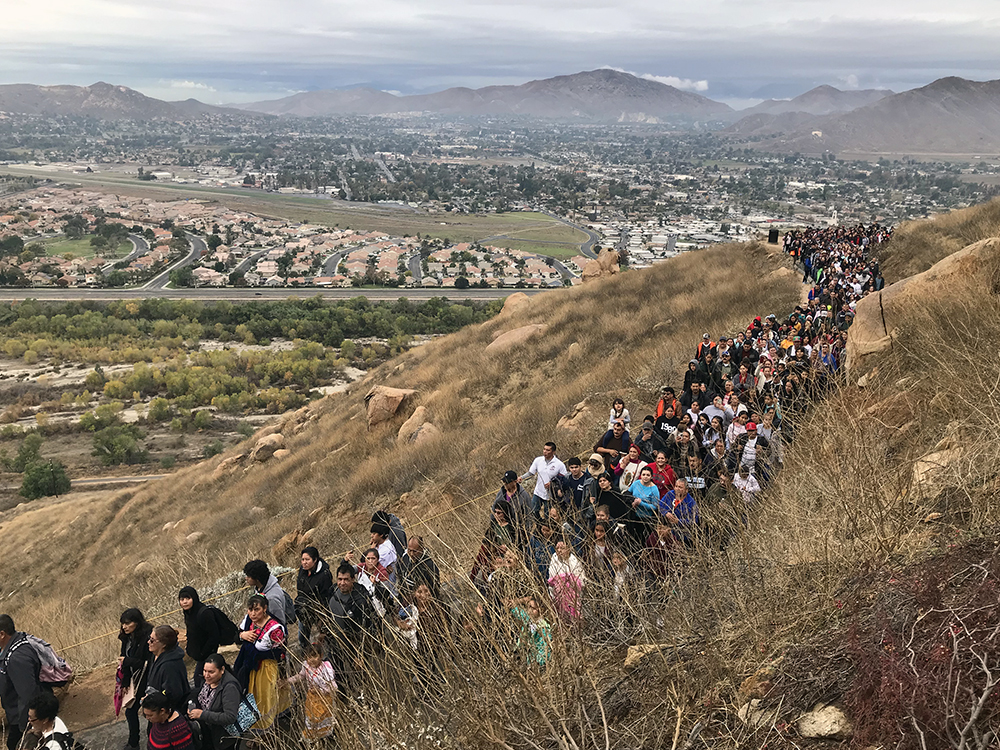
Perhaps ironically, far from our centers of policy influence, there was another call to movement on Saturday, a movement typically involving many thousands of persons by vehicle or on foot (even on their knees) whose lives are often directly impacted by climate change and armed violence, by corrupt practices in institutions large and small, sacred and secular.

On this Saturday was the Feast of Guadalupe, a time in past years for people across Mexico and beyond to practice their devotion to their blessed Mary, but also to share in that devotion energy with the many who gather at the Basilica in Mexico City and the many more who have drunk from this energizing reservoir of faith and commitment in years past.

I have seen this devotion first hand, enough to probe a few of its virtues and shortcomings, enough to see the looks on the faces of pilgrims who could not survive, would not wish to survive, without the sustaining energy that comes from a commitment deeper and more consuming than most of us could hardly imagine beyond the domain of our children and other close family members.

It is sad that this devotional energy, like so much else this year, has moved online due to the pandemic, a digital setting which cannot possibly convey the depth of devotion displayed by people from all walks of life, many of whom likely do not have digital access and wouldn’t accept the substitute if they had.  But there is a lesson still looming here for the rest of us, a lesson about the limitations of our bureaucratized discourse, about our inadvertently patronizing attitudes towards local initiatives and actors, about our tone-deafness towards the very stakeholders we routinely seek to bring into our midst.

When it comes to climate change or other global challenges, the need for urgent action is fully apparent as are some hopeful technologies and other initiatives developed to give us a puncher’s chance to shift course in a sustainable direction, to overcome the “bronze barrier” of our “what’s the use” cynicism that pervades too many persons and sectors, even in our churches and government agencies.  Still our current trajectory remains simply insufficient to the health and healing of the planet or of ourselves, and we should promptly cease defending levels of policy progress or personal dedication that appear unlikely to bend that curve.  

In this time of events running apace of outcomes, it would actually be helpful to hear a few honest expressions of remorse from our leadership, penance for opportunities missed that may not come our way again, expressions of devotion – real devotion – for our planet and its diverse inhabitants. It’s not good politics, I suppose, but If we are to convince the audiences that must be convinced – including the youth in climate vulnerable states, and the small-holder farmers, drivers and shop-keepers walking that long road to Guadalupe — we need to demonstrate our capacity to reach their hearts and not only their “interests,” to “wear” at least some of the devotion which they know full well is essential to getting us over the hump regarding responses to threats that we have merely dabbled in for far too long.

Metaphorically speaking, we’re actually now wearing the right shoes, but its long past time to do important things in them and to do those things without hesitation, without excessive weight from protocols and bureaucracies, without the excuses that stand in the way of learning, doing and being more than we now are. If our incessant policy “paddling” is ever to get us close to safer and saner shores, the craft we paddle must be fueled in greater portion by devotion, that energy which communicates to people everywhere and in all circumstances that their current and future lives, their current and future well-being, are genuinely worth paddling for.

Mess Halls: Curbing the Spread of our Current Chaos, Dr. Robert Zuber

15 Nov
Your Messy Room is Keeping You Unhealthy - Dr. Peggy Malone

Messes are made by people who want but don’t know what they want, let alone how to get it.  Joyce Carol Oates

There are more dishes to come, more flavors to try, and this time I will not spill or spit or drop or splash. Jay Rayner

We don’t have to wait for someone to make messes of our lives. We do a good enough job, ourselves.  Jodi Picoult

I’m shaken and I’m stirred.  Anthony Hamilton

You don’t know how much it is tiring to stay here, since Chaos is all I know. Mess is all I see; And noise is all I hear. Samiha Totanji

Like a button on a shirt buttoned wrong, every attempt to correct things led to yet another fine –not to say elegant– mess.  Haruki Murakami

Clean up your room!  Many Mothers

I spent some of my childhood sharing a bedroom with three younger brothers, a situation that was challenging both in terms of privacy and especially in terms of maintaining some semblance of fairness and order.

My mother, who had more children to care for than she needed and likely wanted, was constantly demanding that those of us responsible for turning that small room into a preview of Armageddon (mostly me) invested some of our life force in cleaning up the mess that was, as are so many messes in this world, so much easier to make than to repair.

The only blessing in this scenario was that there was a door to close, a way to keep the chaos of that room from spreading like a virus into unsuspecting corners of that small house.  But even inside the room itself, there were good reasons to restore some baseline of order, a baseline more likely to foster respect for the rights and feelings of other inhabitants, a baseline that allowed us to keep our toys and other belongings as “shared property” only when we chose to share them; not giving in to the chaos which enabled bullies like me to grab whatever they wanted over the squeals of disapproval from the other children. 

Needless to say, my mother had a different standard of cleanliness and “order” than her children did, and she struggled to get us to buy in to her standard without having to impose it through her own labor.   And people do, indeed, have sometimes wildly divergent levels of comfort around issues of order and cleanliness, as many in long-term relationships discover.  That said, there are lessons around “mess” that we would do well to consider, specifically the lesson that messes are more easily made than undone, and that the easiest way to clean up after ourselves is to resist the temptation to make a mess in the first instance.

I know that it is frustrating for some readers to endure these weekly attempts to analogize lessons from family life to civic life, from modest bedrooms to large conference rooms filled with important people ostensibly doing important things.   But let’s go there anyway.    For the world we now inhabit is surely characterized by one “mess” after another, many of which we could have seen coming if we were not so intent on averting our gaze; many of which have also given those of us in places of privilege an excuse to disregard the rights and needs of others, to grab more than our share of the metaphorical toys and stuffed animals, to get around to cleaning up after ourselves when it is convenient for us to do so and not when it is most urgent.

Unlike the chaos of my childhood resting space, for us in this larger world there is no door to close, no way to confine the consequences of the mess to the authors of the mess.  The chaos that we willingly tolerate for ourselves is also most often chaos exported, becoming yet another imposition on people who, in some instances at least, have their own issues with disorder and turmoil to resolve; people and communities whose messes are already challenging enough without additional external consequences from the discord which they neither caused nor can reasonably assimilate.

Those of you who read this weekly post and/or other (likely better) alternatives don’t need me to remind you about our currently over-heated mess threshold.   From a hyperactive pandemic to a conflict in Yemen that promises environmental ruin in the long term and starving children in the short term; from climate risks that have likely passed their tipping point to the growing numbers of displaced persons exchanging hopelessness at home for road-weary misery; from ocean creatures ingesting more plastic than prey to landscapes more prone to wildfires than wild flowers; the chaos that we have sown has deep roots and broad consequences, most of which inspire responses that are not as carefully crafted and boldly implemented as they should be, responses that seem to enable messes of longer-duration as often as they offer tangible improvement.

Even our democracies now seem in peril as more and more people worldwide seem to have abandoned the responsibility to push through the “messiness” of democratic consultation and consensus-building in favor of iron-like authoritarian voices telling them what they should want, what they should value and how they should go about getting what they have convinced themselves they are entitled to have.   Sadly, these are often the voices that justify their own mess-making at the expense of others, an entitlement to sow substantial short-term chaos secure in the belief that its consequences can be successfully exported as needed — that we can keep our own rooms reasonably in order in part by shipping messes off to the dwellings and communities of of others, largely against their will.

The UN which we engage relentlessly is a place at its best where nations and peoples can come together to assess and resolve common threats, to own the messes we have made and reverse the consequences we have largely ignored; and then together authorize and enact multilateral strategies to better ensure that there is less clutter and chaos on our planet, dampening down verbal excuses and political impediments preventing us from doing more to resolve the messes that perpetually beckon.

But at its worst, the UN is a place of inertia and obstruction, halls of policy where mostly privileged national lenses fuss over resolution and/or treaty language that guarantees (at best) tepid responses to our major messes, responses that are often not nearly as timely and robust as they need to be from an institution and its Assembly that are not yet as prescient, reliable and determined as we need them to be.

I am not naïve regarding the considerable value of a UN institution in which I (and my colleagues) have spent many long years. But the lessons that seemed clear to me when I first entered still apply. The longer we fail to acknowledge and respond to the messes that impact so much of our planet, the harder they are to resolve. And the less we are willing to control the consequential spread of our own chaos and disorder, the more mistrust and enmity we are likely to provoke in others.

My sense is that no amount of institutional self-referencing, no amount of speeches lofty or obstructionist in the General Assembly Hall or other multilateral settings should ever blind us to the degree to which the chaos, the mess, the “noise” of our world (including the cries of those whose lives are characterized by flying bombs, grave food insecurity and polluted waterways) have raised expectations for our policy. The world is crying out for new “dishes and flavors” to try, innovative solutions to threats and messes that have festered for much too long, fresh commitments from the most privileged that they will clean up their own spaces without off-loading the worst of their clutter on to spaces where it simply doesn’t belong.

Do we as a policy community have what it takes to make such a commitment? Are we willing to swallow some of the mistrust and downright orneriness that lead to sometimes bitter deliberations, such as was the case this week regarding a proposed e-voting procedure to allow the core work of the General Assembly to continue during a pandemic or other crisis? Are we willing to follow the trail of our own messes to ensure that our “solutions” don’t inadvertently create more discord, thereby impeding even more than is already the case the rights, development and stability of those we purport to help?

In my view (and hardly mine alone) a fair bit of what we in places of privilege and influence have wrought upon the world should shake us to our very core. But it should also stir a fresh passion in us, a passion to reverse our messy trajectories while we still can, to create more fairness and accountability within our institutional halls, to shut the door on the spread of our chaos of excess and indifference better than we are doing so far, chaos now firmly embedded in pandemics and armed conflicts, in climate shocks and social inequalities.

My mother knew little of such things. But she recognized a mess when she saw one, and she would likely recognize that we, too, have many messes still to acknowledge and confine within the spaces where we work and live.

Race Track: Driving Discrimination from our Ranks, Dr. Robert Zuber

8 Nov
Social diversity is initially threatening but people do adapt over time –  new research

The animals of the world exist for their own reasons. They were not made for humans any more than black people were made for white, or women created for men. Alice Walker

We must dissent from the indifference. We must dissent from the apathy. We must dissent from the fear, the hatred and the mistrust.  Thurgood Marshall

My color is my joy and not my burden. Bebe Moore Campbell

Wherein is the cause for anger, envy or discrimination?  Mahatma Gandhi

But she knows where her ticket takes her. She will find her place in the sun. Tracy Chapman

The Black woman in the South who raises sons, grandsons and nephews had her heartstrings tied to a hanging noose.   Maya Angelou

Excessive praise arises from the same bigotry matrix as excessive criticism. Stefan Molyneux

It is a glorious November Sunday in New York, a day more like late September than the Sunday after a US presidential election.  I had vowed not to say much about the election results, though there is plenty to reflect on, plenty that elicits fair portions of both celebration and caution; with especially deep gratitude to the remarkable poll workers and vote tabulators who ignored and even at times defied a bevy of threats, including from the leadership of the US Postal Service, armed protestors and a spreading pandemic, to deliver what appears by all independent accounts to be free and fair voting for some 150 million US citizens.  

Despite this gift, we know that threats to this democracy, as to others worldwide, have not been laid to rest.  We know that there are tricks left to be played by those still in power (and those heaping “excessive praise” on them), people who understand full well the metaphorical knives that have been drawn by prosecutors and regulators once they leave the sanctuary of the White House.  Those of us who have been holding our breath (at times even our tongue) that this period of political – even criminal – hardball will soon pass recognize that democratic oxygen is still in short supply and that the grievances – legitimate and otherwise – that have driven us to an authoritarian brink are likely only to intensify over the next 10 weeks.

Assuming that a genuine political transition occurs in my country, and that is no foregone conclusion, we anticipate that (what we interpret as) benefits from a new US administration will accrue in the form of climate action and other multilateral efforts to curb the pandemic, reduce social and economic inequalities, disarm weapons and promote sustainable development.  The UN, which has largely refrained from criticism of the US (as it does routinely with all major state powers and funders), can expect a bit of a post-inaugural holiday as dues are paid in full and abandoned political commitments that can readily be reinstated will be.

This US election season also cast light on a UN agenda that is often-discussed but less-often implemented, and that is the concern for inclusion, the basic belief that all should have a say on matters which affect them; the belief that our increasingly inter-dependent world requires diverse voices on a wide range of matters both complex and mundane, including on matters of governance.  In  the US, our own myth of inclusivity has taken a pounding in recent years by those in positions of authority espousing equivalences between “whiteness” and “greatness.” This has resulted in some hard-to-remove stains on our national character including children separated from families and parents afraid to send their children to the grocery store for fear of confrontation with store managers or police; but also ordinary citizens having to fight through what appears to be willful disenfranchisement as polling places were closed, ballots arbitrarily rejected,  and voting lines in some “minority” neighborhoods permitted to stretch for miles.   

While grievances in my country now spring forth like weeds in an abandoned garden, there are some that have deeper roots, louder echoes of oppression, producing more pervasive anxieties.  There is much listening we need to do far beyond our comfort zones, ideological bubbles, evidence-less presumptions and political preferences.  And a special listening post must be dedicated to those whose “ticket” has yet to guarantee them a seat on most every ride, the mothers and grandmothers whose heartstrings are “tied to a hanging noose,” those who live under threat every day that their next venture outdoors will trigger some hate-filled response or even a one-way trip across the nearest border.  

The UN in its own way has tried to keep alive the flickering flame of inclusiveness, insisting with varying levels of success that we find the courage and the means to ensure that those habitually left behind are invited to the head table; that their “ticket” to viability and safety is deemed as valid as any other’s; that their full franchise is both encouraged and protected; that the fruits of development (or a COVID vaccine) are distributed without politics or prejudice; and that the justifications we employ regarding the “causes” of our discriminatory ways are recognized to be largely without merit.

This past week there were several key events (mostly virtual) at the UN that underscored the ever-deepening relationship between inclusiveness and the promotion of peaceful societies. In the Security Council, in the General Assembly, and during events celebrating the increasingly gendered commitments of UN policing and highlighting efforts to abolish capital punishment, the mantra of inclusiveness and an end to discriminatory practices — as well as the incitement which stokes racism, xenophobia and other human behavior we could better live without — were duly reinforced.

Among the primary takeaways from this long and exhausting week included Malaysia’s lament in the General Assembly’s 3rd Committee that the COVID pandemic “has brought out the worst in us,” specifically with regard to racial and religious discrimination. And in a Security Council discussion on “drivers of conflict, Sir Hilary Beckles underscored the tangible steps needed to reinforce this current “age of apology,” while the Prime Minister of Saint Vincent and the Grenadines reminded delegations that we cannot hope to overcome chasms of distrust and apathy unless we can speed up our current “baby steps”

There was even more of value to digest including UN Special Rapporteur Day’s plea to address and eliminate the “habituation” in many societies that allows people to tolerate discrimination, Mexico’s call for higher levels of government consultation and trust-building with the most vulnerable and marginalized within national borders, and the Netherlands urging of UN member states to be better “truth-tellers” on racial justice.

While one could surely chide the UN for its own “baby steps” regarding its long-delayed success in gender-balancing peace operations and other core security-sector functions, the UN also enables valuable guidance on how hold together a global community which has too often threatened to disengage from one another. Keys to the reconciliation we need include broader-based consultations, higher levels of truth telling and truth-hearing, firmer commitments to address the scourge of incitement in public and online settings, and better protection of spaces where “public goods” (such as a potential COVID vaccine) take precedence over private interests.

But will we listen? The US president-elect’s oft-repeated claim to represent all US citizens — “those who voted for me and those who didn’t” — is a welcome if somewhat conventional claim, albeit with challenges destined to frustrate all but the most sincere and robust of -commitments. We have, regrettably, conspired over many years to create a culture that is long on acrimony and short on listening; long on grievances and conspiracies and short on evidence and compassion; long on self-delusion and short on self-reflection. We are less mindful than it is in our best interest to be, both about the demonizing we do routinely within our own borders, and the violence we inflict — directly or by proxy — beyond them. We simply cannot survive much more of this no matter who occupies the White House.

I want to end on a more hopeful note by referencing last night’s speech by vice-president-elect Kamala Harris. She delivered a strong and humane point of contact with women and men across my country (and likely beyond) for whom “color” has been a burden; a burden for those who have suffered much, often over many generations, but also a burden for those who can see no way out of their own predicaments other than through more threats, more intolerance, more dubious claims of “superiority.”

For Ms. Harris, her own burden seemed, for a glorious moment at least, to have become something more akin to a joy. As she proclaimed with great enthusiasm, “I am the first, but I will not be the last.” She has found her well-deserved place in the sun, but she also recognizes that if that same sun is somehow prevented from shining on all, the ones we like and the ones we don’t, the ones we trust and the ones we don’t, then the democratic values and processes we presume to cherish will eventually and finally slip through our grasp.

Clearly we need more “firsts” in our country and our world, “firsts” emanating from every corner of human community, especially where people are feeling neglected or abandoned, disrespected or humiliated. And as Ms. Harris rightly suggested, we need more “seconds” and “thirds” as well.

Bee Keepers: Bending the Curve of Life under Stress, Dr. Robert Zuber

4 Oct

By the Late Tara Tidwell Bryan

If your daily life seems poor, do not blame it; blame yourself, tell yourself that you are not poet enough to call forth its riches.  Rainer Maria Rilke

That bird sat on a burning tree and sang the songs that this creation had never heard before. Akshay Vasu

The monster I kill every day is the monster of realism. Anaïs Nin

 If we take care of the world of the present, the future will have received full justice from us.  Wendell Berry

I don’t know how one can walk by a tree and not be happy at the sight of it?  Fyodor Dostoyevsky

We were all forged in the crucible.  Gayle Forman

Because God took one look at Adam and said, ‘Wow. This guy’s going to need all the help he can get.’ And here we are.  Nancy Mehl

I had a lovely and important message this week from a former intern now working in Vienna.  A Polish citizen great of skill and big of heart, she lamented her current assignment with a multilateral agency, not out of ingratitude so much as impatience to move beyond bureaucratic maintenance towards those issues in the world that now beckon so many in her generation.  As she put it to me, “I wish one day I could do something that actually matters.” 

The stakes are high for this generation and the need to matter is often acute.  Indeed, I think we under-estimate the longing of many people of all generations and life-circumstances to have or recover lives that matter more, incorporating higher levels of significance and even adventure than their daily routines and “realisms” generally encourage.

Many of us scoff at people of middle age who harken back to secondary school as the highlight-reel of their lives.  But there is a clue in this that we are in danger of missing and are, in turn, endangered by missing.  I remember listening to family members talking about their military service with a fondness that exceeded most all of their story-telling.  That fondness, I was quite convinced, was related not to the violence of war but to the significance of service.  This was a time in their lives when what they were doing really mattered, when the merits of their sacrifice were both encouraged and honored in a way that, in many instances at least, had not happened to them since.  Few listened to them anymore.  Few sought out their advice or paused to hear their stories.  Their service was “past tense” but so was its mattering.  What was “forged in the crucible” of war had become voices largely of nostalgia, almost empty of any larger impact.

Staying on this theme, I have seen so many photos since the recent, dismal US presidential debate of “patriots” who have been dubbed (and denigrated) as right-wing warriors, folks apparently preparing for some sort of “war” with their fellow-citizens, testing the limits of official response (and implicit permission) by grabbing their guns, donning military-style gear and taking to the streets to “defend” some makeshift iteration of morality, order and legacy.  Without endorsing one iota of the tendency to conspiracy and lawlessness, I also wonder how long what I see in their faces and hear in their words has been simmering?  But it is apparent that, in part due to a self-serving shout-out by the US president, these folks matter now, more than they have perhaps mattered in many years.  Their ideas and actions have consequence again, both for their own self-worth and – as they see it at least – for the future of their country.

There is no part of that truth-defying intimidation and incitement that I can support; but as someone whose ideas and opinions on global issues and the “psychology” of our collective responses carry more weight than they surely deserve, I don’t overlook the fact that the people who do matter in this world continue to represent an all-too-small subset of the people who should matter. And some of these folks, in ways that are sometimes both violent and reality-challenged, are now declaring their insistence to matter.

The irony for me in all of this is that there are now so many crises vying for higher levels of attention and response, many of which have been either enhanced or exposed by virtue of the current pandemic.  At the UN this past week alone, three events of existential importance, mostly virtual, called attention to threats that we have not done nearly enough to mitigate and for which we lack both full disclosure from leadership and sufficient hands-on-deck to truly care for our present and do “full justice” to our future.

All three of these High Level events were dripping with opportunities to matter, and all attracted a bevy of senior leadership from the world’s governments.   Friday’s discussion on nuclear disarmament highlighted the dangerous expansion and/or reintegration of “modernized” nuclear weapons capability into national strategic defense doctrines, complete with threats to resume nuclear testing and move offensive capacity into outer space.  There was also some reflection (mostly by Palau and other small states) on the impact of excess military spending on funding access for development needs and related global concerns including those highlighted in the UN General Assembly earlier in the week.

One of those concerns took center-stage on Thursday as states convened to assess the impact, 25 years on, of the Beijing Platform for Action on women’s equality.  With statements (mostly by men) lasting well into the evening, one leader after another delivered prepared and often unremarkable statements seeking to convince us that gender equality is both indispensable to peaceful societies  (surely right) and  lies at the very heart of their domestic policy — though equality progress in many of these societies remains limited at best.  Perhaps the presidents of Luxembourg and Costa Rica put it most helpfully as they focused their remarks  on enhancing the “practical dimensions of equality” at a time when “not one nation” can claim to have achieved the goals of Beijing.  “Not one.”

Lastly, Wednesday’s High-Level event was, to my mind at least, the most urgent of the three.  On this day, world leaders and others convened virtually to assess the rapidly declining health of global biodiversity  on land and in the sea, a decline so precipitous that it directly threatens the health of our agriculture, indeed calls into question the viability of the entire food cycle, not only for ourselves but for the still-abundant life forms with which we are still privileged to share this planet.  And while most of us are rightly appalled by the sight of slaughtered elephants and emaciated polar bears, biodiversity loss is felt most acutely at the lower levels of the biological chain:  the bees which are disappearing from our farms and gardens, the insects whose presence is no longer in sync with the birds who need them to sustain their migrations, the coral reefs which have been bleached into oblivion by warming seas. The image offered up by the director of the UN Development Program, of trucks full of bees traveling  to save California farms from unpollinated crops, was a stark reminder of how disruptive we collectively continue to be to the natural rhythms and needs of our now abundance-challenged planet.

The science on this potential mass extinction event we seem determined to create is clear.  As UNSG Guterres noted on Wednesday, we must now find a way to “bend the curve” on biodiversity loss and we are running out of time to do so. Such bending requires more thoughtful attention to economies pitched more to destruction than protection. But it also requires more initiative and activity at local level, urgently appealing to those many people (including and especially indigenous people) with the energy and skill to matter: to help lay the groundwork for a future in which loaded guns, clenched fists, predatory economics, bloated military budgets and unresolved inequalities and exclusions no longer have pride of place.

Such a future must also be more attuned to the very human though often unrequited desire to matter.  A young woman from India speaking at the biodiversity summit responded to what she interpreted (and not without reason) as a string of often “empty statements” by global leadership:  “We are ready to do our part,” she intoned, “Are you?” 

Like my former intern, this young woman is clearly determined to matter, and there are many millions more like the two of them. Our task now is to get back to work on what ails us as a species and as a planet, in part by getting to the heart of what it means to matter, what people of diverse backgrounds require such that they can call forth more of the “riches of life” for themselves and for all with whom they come in contact. It also means learning how to better accompany each other as we “sing the songs that creation has never heard before,” including songs revering the presence of the bees, the trees and other life forms on which our own survival depends and that we simply must do more to keep.  

Playing Taps: Honoring Beleaguered Humanitarian Responders, Dr. Robert Zuber

23 Aug

See the source image

A ship is safe in harbor, but that’s not what ships are for.  John A. Shedd

I have gone ahead despite the pounding in the heart that says: turn back. Erica Jong

Ultimately, thickened skin leaves you numb, incapable of feeling the highs and lows of life. It leaves you rough like a rock and just as inanimate. Michael Soll

If you want relief from pain just strive to touch more of every part of life.  Bryant McGill

The Doctor knew exactly what to do when he heard horrible screaming – run towards it and help.  A.L. Kennedy

May we always be burdened with thinking of the suffering of others, for that is what it means to be human.  Kamand Kojouri

He presented justice as a psychological relief.  Jill Leovy

This past Wednesday was World Humanitarian Day as declared by the UN, a time to reflect on those who, unlike most of the rest of us, run towards the screams of the distressed and unfolding emergencies rather than away from them; who bring skills and determination to often-complex crises that make the survival of persons in grave need more likely even as they make their own survival less so.

For persons, like myself, who now spend too much of our lives “tapping” on a keyboard and too little time immersed in the multi-dimensional struggles of real persons in real time,  we can experience bits of lingering sadness that are hard to shake.   My social media accounts are filled with stories of misery that humans insist on inflicting on each other, lives sacrificed to the pursuit and maintenance of power, victims of a wide range of causes including and especially armed conflict but also what the Dominican Republic (and other Security Council members) referred to this week as a “triple threat,” (to Somalia in this instance, but applicable to other peoples and places as well) — COVID infections, climate-induced flooding/drought and locust plagues.

From Cameroon to Yemen and from Afghanistan to Syria, the carnage that fills my various feeds and those of other “keyboard tappers” can be hard to process.  Moreover, the institutions we have collectively entrusted to manage conflict threats have succeeded in little more than “baby steps” towards measures that can ease humanitarian burdens for both those who provide relief and especially for those who require it.  We often fail to prevent conflict or stem it in its earliest stages.  We often fail to heed the climate-related warnings that make it harder and harder for subsistence farmers to subsist and coastal islands to survive.  We often fail to protect children from violent extremism and abuse with no effective plan for how to manage the trauma that will impact their decisionmaking long after their surface wounds have healed.  We often fail to swap out militarized responses to community unrest with more nuanced approaches to policing that better balance community mediation, conflict prevention, last-resort coercion and a commitment to the justice which is its own “psychological relief.”

These diverse and persistent ills represent cries of pain, injustice and deprivation that cause some to close their hearts and others to leap forward in support. In this latter category are those providing provisions for those displaced by storms or violence and now confined to makeshift shelter; the bomb squads carefully defusing explosives placed in public squares; the medical care provided in facilities shaking from bomb blasts; the drivers of convoys running a gauntlet of roadside threats including well-disguised explosive devices; the peacekeepers attempting to keep the peace even when there is clearly no peace to keep; the police effecting emergency rescue of persons trapped in cars involved in horrific crashes or sinking quickly to the bottom of lakes; the military units sent in to free victims from the control of terrorists; the NGOs risking their own lives to ensure that persons traumatized under rubble are freed or that persons with disabilities can escape harm once the warning sirens sound.

We do not do enough to honor this work even if we don’t always approve of every tactic deployed, even as we feel compelled to echo sentiments of the UN’s Counter-Terrorism Executive Directorate this past week that all efforts to address terror threats and even provide support for victims must be more cognizant of obligations to respect and uphold human rights.   Those who run towards people in crisis have a special place in our hearts, especially as some of us “tappers” are no longer equipped to respond to crisis-related need in the way that we once might have done.

And yet in this time of unresolved violence, insufficiently addressed climate threats and a pandemic that shows little sign of vanishing, we fear that too many have allowed ourselves to become “rough like a rock,” blaming our legitimately-frustrating personal circumstances for the decision to touch less of life, not more, to listen a bit too much to the “pounding” in our hearts rather than to the cries of those whose rights and aspirations have been steamrolled by power-obsessed governments, their overly-muscular security forces, and the economic, social and health-related unrest that are keeping all of us on razor’s edge.

It would take more than an annual day to sufficiently appreciate the motives of those who respond first and best to the crises that beset so many in our human family.  At the same time, we must acknowledge that such crises seem to be expanding, not shrinking; that the numbers and needs of people in distress are growing, not diminishing.  For all the remarkably courageous work being done by those who care more when too many of the rest of us could care less, there seems to be no end in sight to the burdens that global circumstances place on these responders. We create food insecurity faster than we can deliver provisions.  We create war victims faster than we can provide physical and psychological healing.  We traumatize children faster than we can guarantee their safety (or their education for that matter).  For all the metaphorical babies we pull from the river, more and more are being thrown in at its source.

One gets the clear sense in these times that our hero/heroine responders are waging a struggle destined to be forever exasperating, doing what they can to rescue populations from oblivion while policymakers and those of us who “play taps” around them largely fail to stem the deadly tide, to remediate the injustice, to care sufficiently for those enduring what UN Special Envoy Pedersen this week referred to as “mass indignities” inflicted too often in large measure through our own collective negligence.

At its most appropriate, the courage of humanitarian responders should facilitate the plugging of temporary gaps until those with power and influence establish and implement the norms and laws that can ensure longer-term relief.  However, such responders and their clients have largely been consigned to a Godot-like wait for policies to take effect which can ensure that our current emergencies have an actual end point.

As such there is still work for those of us who perhaps “tap” too much and respond too timidly. For it is clear, to me at least, that honoring humanitarian and other first responders is in large measure about reducing the burdens which often overwhelm their craft.  From mask wearing and other counter-COVID measures to mitigate the strain on overwhelmed hospital workers to more women-led mediation efforts to transform community conflict before it graduates into armed violence, there are many burden-reduction strategies we can help to identify that offer hope to besieged persons and their care-givers.  But we must also insist on more from political leadership, including more urgency on conflict and climate, on poverty and biodiversity, threats that already strain humanitarian and peacebuilding responses to their breaking point.

We “tappers” in our mostly safe harbors indeed have an important role here, albeit a subordinate one: to insist that governments and policymakers cease misappropriating humanitarian assistance as an excuse to ignore their urgent peace and climate responsibilities, urging leaders to do much more to keep all those metaphorical babies from being thrown the river in the first place. After all, doctors working in makeshift clinics cannot make the bombing cease.  Convoy drivers cannot heal the climate that now steals crops and livelihoods.  Peacekeepers and aid workers cannot force governments and non-state actors to fairly and expeditiously honor peace agreements.

We are probably getting all we can expect from our first responders and humanitarian workers.  However, we still have a right to expect more from our political leadership at national and multilateral levels. Security Council members this past week discussed in the context of Syria whether cross-border closures or sanctions were the primary cause of the misery of Syrians.  The true answer of course is a decade of horrific armed violence which neither sanctions nor cross-border relief has the capacity to resolve.

Thus we “tappers” must play our role in ensuring that expectations for sustainable peace take the form of tangible policies to bring relief for besieged peoples, offering communities both a safer and more prosperous path forward and granting some well-deserved respite for the humanitarians who have put so much on the line to give communities that chance.

Midsummer Dream: Inspiring Honest Progress on Development and Peace, Dr. Robert Zuber

19 Jul

Imagine if we had no secrets, no respite from the truth. What if everything was laid bare the moment we introduced ourselves?  Catherine Doyle

So it became the law of universe, to have the profoundest of the words cloaked in the darkest of the masks.  Jasleen Kaur Gumber

We all become what we pretend to be.  Patrick Rothfuss

Masked, I advance.  Rene Descartes

How many of us want any of us to see us as we really are? Isn’t the mirror hostile enough?  Jeanette Winterson

Done with hiding and weary of lying, we’ll reconcile without and within.  John Mark Green

It is a sultry mid-summer morning in New York City, a Sunday following an intense and difficult week both for my country and for the United Nations system as a whole.

At the UN, the High Level Political Forum (HLPF) and its focus on implementing the Sustainable Development Goals (SDGs) came to a close; the Security Council held a discussion on the pervasive problem of “sexual violence in conflict” with briefers including UN Envoy Angelina Jolie; and the annual Nelson Mandela lecture was turned over by the Foundation bearing his name to UN Secretary-General Antonio Guterres who proceeded to outline what seemed to be an endless series of urgent global challenges from a podium in New York rather than in South Africa.

In the aggregate, these UN events highlighted the urgency of effective multilateral engagement while calling attention to the policy areas where such engagement has not yet produced sufficient results; has not brought justice for victims, has not overcome health disparities or digital divides, has not resolved conflict consistently or reversed most human-inflicted damage to our climate, has not ensured welcoming borders for displaced persons seeking refuge from armed conflict or grave rights abuses.

Indeed, one of the subtexts of the HLPF as it drew to a close is the number of sustainable development commitments which seem to be headed in the wrong direction – certainly on climate but also on food security, on the protection of civic space, on societies which are genuinely inclusive of cultural minorities, persons with disabilities, and other groups too often destined to remain on national margins.  Thankfully, there was no attempt at the close – including by Deputy Secretary-General Amina Mohammed — to deflect attention from the reality of our current deficiencies, especially on development finance, but nor was there any lack of rhetorical support for the UN’s role at the center of fulfilling the promises on sustainable development made to global constituents.

As most UN watchers will recognize, at least in part, talk can be a bit cheap around the UN, perhaps even more so in the digital realms to which UN events have been confined over these past few months. An insight from Egypt this week, that this not the time to “make a point” but to “make a difference,” actually served to underscore a problem which has long plagued the UN – that “difference” is made at national level, that the power of implementation resides in national capitals, and that progressive-sounding words by UN diplomats are as likely to mask government intentions as to clarify them.

This rhetorical mask-making is often well-represented in UN policy engagements.  Diplomats come to New York to represent national interests and to hopefully do so in a way that does not needlessly jeopardize the possibility of multilateral breakthroughs.  But the job also involves creating impressions of countries more progressive in their outlook than is often the case, creating in effect the mask that hides realities at national level including, at times, realities which even directly contradict the policies advanced by national diplomats in multilateral settings.

Such policy mask-making affects many states far removed from Egypt.   My own country, for instance, continues to posit itself as a beacon of justice and freedom in multilateral settings despite the many instances in which we have twisted our own values, let alone those of the UN Charter, to serve mostly partisan interests.  This is not a phenomenon unique to this current administration, and yet we must be clear that authoritarian tendencies sweeping parts of the planet expose masks of progressive multilateralism that diplomats continue to wear and whose contours the UN is desperate to maintain.

In my own country, there are images in abundance of men in military garb (and with no identification) beating and tear-gassing lawful protesters.  There are images of leadership deliberately suppressing COVID-19 information under the absurd guise that if you don’t count an infection, it never happened.   In a country where so many have given so much of themselves to advance the values that we say we cherish, the refusal to wear masks to prevent viral spread has somehow been turned into a symbolic exercise of American “freedom,” a misleading and ultimately risky dimension of this expertise-denying, scapegoating and conspiracy-obsessed cultural moment where we all believe what we choose, and where much of what we “believe” is indulgent of the grievances of our tribe. We forget that cloth coverings are not the principle masks we routinely employ to confound others regarding who we really are and what we really care about.

All while distancing itself from the work of UN agencies and failing to fulfill core responsibilities as the “host state,” my country continues to do what many other countries at the UN do, exhibiting masks of progressive multilateralism with scant expectations that policies espoused in Turtle Bay will be reflected in policy commitments in capital.  And since the UN is dependent on its funding from these very same states, its arsenal of coercion beyond expressions of normative intent is highly circumscribed.

But as conflicts resist resolution and some development goals threaten to recede into functional indifference, UN leadership seems to be reaching a point of considerable frustration, if not outright panic.  SG Guterres has been a bit over-exposed of late, but he has also been increasingly strident in promoting the SDG “blueprint” for the world, rightly highlighting some of the many changes that we need to make now to ensure a greener, healthier planet with forms of governance that “deliver better,” and with divides digital, gendered and economic which are finally being narrowed.

Responses to Guterres’ agenda have often been borderline effusive.  Diplomats seem to affirm the value of his pronouncements, agreeing (as with Morocco) that the world we are obligated to build is one which must be built together.   But laying out our urgent circumstances is only part of the responsibility of leadership, leadership which the CEO of the Mandela Foundation noted yesterday is now more prone to consolidating power than inspiring people to contribute their best. We are now only rarely inspired to lower our masks and take up our practical duties to justice and sustainability, to move beyond rhetoric and help build that “new social contract” called for by the SG which can help guarantee that promises made by leadership are also promises kept.

One of the week’s most striking moments for me was in the Security Council where a civil society activist, Khin Ohmar, was describing the sexual violence that routinely occurs in Myanmar and which is grounded in “structural gender discrimination” which the Council has done relatively little to address. “I am not the first person to bring this issue to your attention,” Ms. Ohmar observed.  “You’ve heard this all before.”

We have indeed heard it all before: on sexual violence, yes, but also on climate and hunger, on refugees and torture, on oceans and weapons.  We’ve heard it over and over, more times than we can count and certainly more than we can psychologically process, descriptions of a world that is careening into an uncertain future where both human rights and development progress are under considerable strain and where all of the hand-wringing we do has not affected “root causes” nearly as much as it needs to.

Frankly, this narrative of dysfunction has begun to wear us down. We don’t need more recitations of our half-failures so much as we need inspiration to re-energize our most important commitments, including the task of ensuring that investments of our time and treasure are fully relevant to the problems we wish to address.  And we must also find the means to inspire UN diplomats to direct more multilateral energies back home, to remind their own leaders that the real key to preserving multilateralism is not about the quality of our UN statements but about the willingness of states to put into more urgent practice the values that attracted them to multilateral frameworks in the first place.

Inspiration at this moment is one of the rarest of commodities, that Mandela-like combination of passion and honesty which believes in human potential even as it cuts through our masks of misleading rhetoric, our tendency to “hide” behind protocol and position, our feeble attempts to reconcile from a distance, our ability to hear only what we want to hear and then act on only a small portion of that.  As the SG likes to say, “time is not on our side.”  What we have to say in response is that higher levels of inspiration will be required if we are to make the best possible uses of the time we have left.