Tag Archives: United Nations

Mess Halls: Curbing the Spread of our Current Chaos, Dr. Robert Zuber

15 Nov
Your Messy Room is Keeping You Unhealthy - Dr. Peggy Malone

Messes are made by people who want but don’t know what they want, let alone how to get it.  Joyce Carol Oates

There are more dishes to come, more flavors to try, and this time I will not spill or spit or drop or splash. Jay Rayner

We don’t have to wait for someone to make messes of our lives. We do a good enough job, ourselves.  Jodi Picoult

I’m shaken and I’m stirred.  Anthony Hamilton

You don’t know how much it is tiring to stay here, since Chaos is all I know. Mess is all I see; And noise is all I hear. Samiha Totanji

Like a button on a shirt buttoned wrong, every attempt to correct things led to yet another fine –not to say elegant– mess.  Haruki Murakami

Clean up your room!  Many Mothers

I spent some of my childhood sharing a bedroom with three younger brothers, a situation that was challenging both in terms of privacy and especially in terms of maintaining some semblance of fairness and order.

My mother, who had more children to care for than she needed and likely wanted, was constantly demanding that those of us responsible for turning that small room into a preview of Armageddon (mostly me) invested some of our life force in cleaning up the mess that was, as are so many messes in this world, so much easier to make than to repair.

The only blessing in this scenario was that there was a door to close, a way to keep the chaos of that room from spreading like a virus into unsuspecting corners of that small house.  But even inside the room itself, there were good reasons to restore some baseline of order, a baseline more likely to foster respect for the rights and feelings of other inhabitants, a baseline that allowed us to keep our toys and other belongings as “shared property” only when we chose to share them; not giving in to the chaos which enabled bullies like me to grab whatever they wanted over the squeals of disapproval from the other children. 

Needless to say, my mother had a different standard of cleanliness and “order” than her children did, and she struggled to get us to buy in to her standard without having to impose it through her own labor.   And people do, indeed, have sometimes wildly divergent levels of comfort around issues of order and cleanliness, as many in long-term relationships discover.  That said, there are lessons around “mess” that we would do well to consider, specifically the lesson that messes are more easily made than undone, and that the easiest way to clean up after ourselves is to resist the temptation to make a mess in the first instance.

I know that it is frustrating for some readers to endure these weekly attempts to analogize lessons from family life to civic life, from modest bedrooms to large conference rooms filled with important people ostensibly doing important things.   But let’s go there anyway.    For the world we now inhabit is surely characterized by one “mess” after another, many of which we could have seen coming if we were not so intent on averting our gaze; many of which have also given those of us in places of privilege an excuse to disregard the rights and needs of others, to grab more than our share of the metaphorical toys and stuffed animals, to get around to cleaning up after ourselves when it is convenient for us to do so and not when it is most urgent.

Unlike the chaos of my childhood resting space, for us in this larger world there is no door to close, no way to confine the consequences of the mess to the authors of the mess.  The chaos that we willingly tolerate for ourselves is also most often chaos exported, becoming yet another imposition on people who, in some instances at least, have their own issues with disorder and turmoil to resolve; people and communities whose messes are already challenging enough without additional external consequences from the discord which they neither caused nor can reasonably assimilate.

Those of you who read this weekly post and/or other (likely better) alternatives don’t need me to remind you about our currently over-heated mess threshold.   From a hyperactive pandemic to a conflict in Yemen that promises environmental ruin in the long term and starving children in the short term; from climate risks that have likely passed their tipping point to the growing numbers of displaced persons exchanging hopelessness at home for road-weary misery; from ocean creatures ingesting more plastic than prey to landscapes more prone to wildfires than wild flowers; the chaos that we have sown has deep roots and broad consequences, most of which inspire responses that are not as carefully crafted and boldly implemented as they should be, responses that seem to enable messes of longer-duration as often as they offer tangible improvement.

Even our democracies now seem in peril as more and more people worldwide seem to have abandoned the responsibility to push through the “messiness” of democratic consultation and consensus-building in favor of iron-like authoritarian voices telling them what they should want, what they should value and how they should go about getting what they have convinced themselves they are entitled to have.   Sadly, these are often the voices that justify their own mess-making at the expense of others, an entitlement to sow substantial short-term chaos secure in the belief that its consequences can be successfully exported as needed — that we can keep our own rooms reasonably in order in part by shipping messes off to the dwellings and communities of of others, largely against their will.

The UN which we engage relentlessly is a place at its best where nations and peoples can come together to assess and resolve common threats, to own the messes we have made and reverse the consequences we have largely ignored; and then together authorize and enact multilateral strategies to better ensure that there is less clutter and chaos on our planet, dampening down verbal excuses and political impediments preventing us from doing more to resolve the messes that perpetually beckon.

But at its worst, the UN is a place of inertia and obstruction, halls of policy where mostly privileged national lenses fuss over resolution and/or treaty language that guarantees (at best) tepid responses to our major messes, responses that are often not nearly as timely and robust as they need to be from an institution and its Assembly that are not yet as prescient, reliable and determined as we need them to be.

I am not naïve regarding the considerable value of a UN institution in which I (and my colleagues) have spent many long years. But the lessons that seemed clear to me when I first entered still apply. The longer we fail to acknowledge and respond to the messes that impact so much of our planet, the harder they are to resolve. And the less we are willing to control the consequential spread of our own chaos and disorder, the more mistrust and enmity we are likely to provoke in others.

My sense is that no amount of institutional self-referencing, no amount of speeches lofty or obstructionist in the General Assembly Hall or other multilateral settings should ever blind us to the degree to which the chaos, the mess, the “noise” of our world (including the cries of those whose lives are characterized by flying bombs, grave food insecurity and polluted waterways) have raised expectations for our policy. The world is crying out for new “dishes and flavors” to try, innovative solutions to threats and messes that have festered for much too long, fresh commitments from the most privileged that they will clean up their own spaces without off-loading the worst of their clutter on to spaces where it simply doesn’t belong.

Do we as a policy community have what it takes to make such a commitment? Are we willing to swallow some of the mistrust and downright orneriness that lead to sometimes bitter deliberations, such as was the case this week regarding a proposed e-voting procedure to allow the core work of the General Assembly to continue during a pandemic or other crisis? Are we willing to follow the trail of our own messes to ensure that our “solutions” don’t inadvertently create more discord, thereby impeding even more than is already the case the rights, development and stability of those we purport to help?

In my view (and hardly mine alone) a fair bit of what we in places of privilege and influence have wrought upon the world should shake us to our very core. But it should also stir a fresh passion in us, a passion to reverse our messy trajectories while we still can, to create more fairness and accountability within our institutional halls, to shut the door on the spread of our chaos of excess and indifference better than we are doing so far, chaos now firmly embedded in pandemics and armed conflicts, in climate shocks and social inequalities.

My mother knew little of such things. But she recognized a mess when she saw one, and she would likely recognize that we, too, have many messes still to acknowledge and confine within the spaces where we work and live.
Race Track: Driving Discrimination from our Ranks, Dr. Robert Zuber

8 Nov
Social diversity is initially threatening but people do adapt over time –  new research

The animals of the world exist for their own reasons. They were not made for humans any more than black people were made for white, or women created for men. Alice Walker

We must dissent from the indifference. We must dissent from the apathy. We must dissent from the fear, the hatred and the mistrust.  Thurgood Marshall

My color is my joy and not my burden. Bebe Moore Campbell

Wherein is the cause for anger, envy or discrimination?  Mahatma Gandhi

But she knows where her ticket takes her. She will find her place in the sun. Tracy Chapman

The Black woman in the South who raises sons, grandsons and nephews had her heartstrings tied to a hanging noose.   Maya Angelou

Excessive praise arises from the same bigotry matrix as excessive criticism. Stefan Molyneux

It is a glorious November Sunday in New York, a day more like late September than the Sunday after a US presidential election.  I had vowed not to say much about the election results, though there is plenty to reflect on, plenty that elicits fair portions of both celebration and caution; with especially deep gratitude to the remarkable poll workers and vote tabulators who ignored and even at times defied a bevy of threats, including from the leadership of the US Postal Service, armed protestors and a spreading pandemic, to deliver what appears by all independent accounts to be free and fair voting for some 150 million US citizens.  

Despite this gift, we know that threats to this democracy, as to others worldwide, have not been laid to rest.  We know that there are tricks left to be played by those still in power (and those heaping “excessive praise” on them), people who understand full well the metaphorical knives that have been drawn by prosecutors and regulators once they leave the sanctuary of the White House.  Those of us who have been holding our breath (at times even our tongue) that this period of political – even criminal – hardball will soon pass recognize that democratic oxygen is still in short supply and that the grievances – legitimate and otherwise – that have driven us to an authoritarian brink are likely only to intensify over the next 10 weeks.

Assuming that a genuine political transition occurs in my country, and that is no foregone conclusion, we anticipate that (what we interpret as) benefits from a new US administration will accrue in the form of climate action and other multilateral efforts to curb the pandemic, reduce social and economic inequalities, disarm weapons and promote sustainable development.  The UN, which has largely refrained from criticism of the US (as it does routinely with all major state powers and funders), can expect a bit of a post-inaugural holiday as dues are paid in full and abandoned political commitments that can readily be reinstated will be.

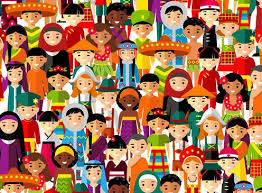
This US election season also cast light on a UN agenda that is often-discussed but less-often implemented, and that is the concern for inclusion, the basic belief that all should have a say on matters which affect them; the belief that our increasingly inter-dependent world requires diverse voices on a wide range of matters both complex and mundane, including on matters of governance.  In  the US, our own myth of inclusivity has taken a pounding in recent years by those in positions of authority espousing equivalences between “whiteness” and “greatness.” This has resulted in some hard-to-remove stains on our national character including children separated from families and parents afraid to send their children to the grocery store for fear of confrontation with store managers or police; but also ordinary citizens having to fight through what appears to be willful disenfranchisement as polling places were closed, ballots arbitrarily rejected,  and voting lines in some “minority” neighborhoods permitted to stretch for miles.   

While grievances in my country now spring forth like weeds in an abandoned garden, there are some that have deeper roots, louder echoes of oppression, producing more pervasive anxieties.  There is much listening we need to do far beyond our comfort zones, ideological bubbles, evidence-less presumptions and political preferences.  And a special listening post must be dedicated to those whose “ticket” has yet to guarantee them a seat on most every ride, the mothers and grandmothers whose heartstrings are “tied to a hanging noose,” those who live under threat every day that their next venture outdoors will trigger some hate-filled response or even a one-way trip across the nearest border.  

The UN in its own way has tried to keep alive the flickering flame of inclusiveness, insisting with varying levels of success that we find the courage and the means to ensure that those habitually left behind are invited to the head table; that their “ticket” to viability and safety is deemed as valid as any other’s; that their full franchise is both encouraged and protected; that the fruits of development (or a COVID vaccine) are distributed without politics or prejudice; and that the justifications we employ regarding the “causes” of our discriminatory ways are recognized to be largely without merit.

This past week there were several key events (mostly virtual) at the UN that underscored the ever-deepening relationship between inclusiveness and the promotion of peaceful societies. In the Security Council, in the General Assembly, and during events celebrating the increasingly gendered commitments of UN policing and highlighting efforts to abolish capital punishment, the mantra of inclusiveness and an end to discriminatory practices — as well as the incitement which stokes racism, xenophobia and other human behavior we could better live without — were duly reinforced.

Among the primary takeaways from this long and exhausting week included Malaysia’s lament in the General Assembly’s 3rd Committee that the COVID pandemic “has brought out the worst in us,” specifically with regard to racial and religious discrimination. And in a Security Council discussion on “drivers of conflict, Sir Hilary Beckles underscored the tangible steps needed to reinforce this current “age of apology,” while the Prime Minister of Saint Vincent and the Grenadines reminded delegations that we cannot hope to overcome chasms of distrust and apathy unless we can speed up our current “baby steps”

There was even more of value to digest including UN Special Rapporteur Day’s plea to address and eliminate the “habituation” in many societies that allows people to tolerate discrimination, Mexico’s call for higher levels of government consultation and trust-building with the most vulnerable and marginalized within national borders, and the Netherlands urging of UN member states to be better “truth-tellers” on racial justice.

While one could surely chide the UN for its own “baby steps” regarding its long-delayed success in gender-balancing peace operations and other core security-sector functions, the UN also enables valuable guidance on how hold together a global community which has too often threatened to disengage from one another. Keys to the reconciliation we need include broader-based consultations, higher levels of truth telling and truth-hearing, firmer commitments to address the scourge of incitement in public and online settings, and better protection of spaces where “public goods” (such as a potential COVID vaccine) take precedence over private interests.

But will we listen? The US president-elect’s oft-repeated claim to represent all US citizens — “those who voted for me and those who didn’t” — is a welcome if somewhat conventional claim, albeit with challenges destined to frustrate all but the most sincere and robust of -commitments. We have, regrettably, conspired over many years to create a culture that is long on acrimony and short on listening; long on grievances and conspiracies and short on evidence and compassion; long on self-delusion and short on self-reflection. We are less mindful than it is in our best interest to be, both about the demonizing we do routinely within our own borders, and the violence we inflict — directly or by proxy — beyond them. We simply cannot survive much more of this no matter who occupies the White House.

I want to end on a more hopeful note by referencing last night’s speech by vice-president-elect Kamala Harris. She delivered a strong and humane point of contact with women and men across my country (and likely beyond) for whom “color” has been a burden; a burden for those who have suffered much, often over many generations, but also a burden for those who can see no way out of their own predicaments other than through more threats, more intolerance, more dubious claims of “superiority.”

For Ms. Harris, her own burden seemed, for a glorious moment at least, to have become something more akin to a joy. As she proclaimed with great enthusiasm, “I am the first, but I will not be the last.” She has found her well-deserved place in the sun, but she also recognizes that if that same sun is somehow prevented from shining on all, the ones we like and the ones we don’t, the ones we trust and the ones we don’t, then the democratic values and processes we presume to cherish will eventually and finally slip through our grasp.

Clearly we need more “firsts” in our country and our world, “firsts” emanating from every corner of human community, especially where people are feeling neglected or abandoned, disrespected or humiliated. And as Ms. Harris rightly suggested, we need more “seconds” and “thirds” as well.

Bee Keepers: Bending the Curve of Life under Stress, Dr. Robert Zuber

4 Oct

By the Late Tara Tidwell Bryan

If your daily life seems poor, do not blame it; blame yourself, tell yourself that you are not poet enough to call forth its riches.  Rainer Maria Rilke

That bird sat on a burning tree and sang the songs that this creation had never heard before. Akshay Vasu

The monster I kill every day is the monster of realism. Anaïs Nin

 If we take care of the world of the present, the future will have received full justice from us.  Wendell Berry

I don’t know how one can walk by a tree and not be happy at the sight of it?  Fyodor Dostoyevsky

We were all forged in the crucible.  Gayle Forman

Because God took one look at Adam and said, ‘Wow. This guy’s going to need all the help he can get.’ And here we are.  Nancy Mehl

I had a lovely and important message this week from a former intern now working in Vienna.  A Polish citizen great of skill and big of heart, she lamented her current assignment with a multilateral agency, not out of ingratitude so much as impatience to move beyond bureaucratic maintenance towards those issues in the world that now beckon so many in her generation.  As she put it to me, “I wish one day I could do something that actually matters.” 

The stakes are high for this generation and the need to matter is often acute.  Indeed, I think we under-estimate the longing of many people of all generations and life-circumstances to have or recover lives that matter more, incorporating higher levels of significance and even adventure than their daily routines and “realisms” generally encourage.

Many of us scoff at people of middle age who harken back to secondary school as the highlight-reel of their lives.  But there is a clue in this that we are in danger of missing and are, in turn, endangered by missing.  I remember listening to family members talking about their military service with a fondness that exceeded most all of their story-telling.  That fondness, I was quite convinced, was related not to the violence of war but to the significance of service.  This was a time in their lives when what they were doing really mattered, when the merits of their sacrifice were both encouraged and honored in a way that, in many instances at least, had not happened to them since.  Few listened to them anymore.  Few sought out their advice or paused to hear their stories.  Their service was “past tense” but so was its mattering.  What was “forged in the crucible” of war had become voices largely of nostalgia, almost empty of any larger impact.

Staying on this theme, I have seen so many photos since the recent, dismal US presidential debate of “patriots” who have been dubbed (and denigrated) as right-wing warriors, folks apparently preparing for some sort of “war” with their fellow-citizens, testing the limits of official response (and implicit permission) by grabbing their guns, donning military-style gear and taking to the streets to “defend” some makeshift iteration of morality, order and legacy.  Without endorsing one iota of the tendency to conspiracy and lawlessness, I also wonder how long what I see in their faces and hear in their words has been simmering?  But it is apparent that, in part due to a self-serving shout-out by the US president, these folks matter now, more than they have perhaps mattered in many years.  Their ideas and actions have consequence again, both for their own self-worth and – as they see it at least – for the future of their country.

There is no part of that truth-defying intimidation and incitement that I can support; but as someone whose ideas and opinions on global issues and the “psychology” of our collective responses carry more weight than they surely deserve, I don’t overlook the fact that the people who do matter in this world continue to represent an all-too-small subset of the people who should matter. And some of these folks, in ways that are sometimes both violent and reality-challenged, are now declaring their insistence to matter.

The irony for me in all of this is that there are now so many crises vying for higher levels of attention and response, many of which have been either enhanced or exposed by virtue of the current pandemic.  At the UN this past week alone, three events of existential importance, mostly virtual, called attention to threats that we have not done nearly enough to mitigate and for which we lack both full disclosure from leadership and sufficient hands-on-deck to truly care for our present and do “full justice” to our future.

All three of these High Level events were dripping with opportunities to matter, and all attracted a bevy of senior leadership from the world’s governments.   Friday’s discussion on nuclear disarmament highlighted the dangerous expansion and/or reintegration of “modernized” nuclear weapons capability into national strategic defense doctrines, complete with threats to resume nuclear testing and move offensive capacity into outer space.  There was also some reflection (mostly by Palau and other small states) on the impact of excess military spending on funding access for development needs and related global concerns including those highlighted in the UN General Assembly earlier in the week.

One of those concerns took center-stage on Thursday as states convened to assess the impact, 25 years on, of the Beijing Platform for Action on women’s equality.  With statements (mostly by men) lasting well into the evening, one leader after another delivered prepared and often unremarkable statements seeking to convince us that gender equality is both indispensable to peaceful societies  (surely right) and  lies at the very heart of their domestic policy — though equality progress in many of these societies remains limited at best.  Perhaps the presidents of Luxembourg and Costa Rica put it most helpfully as they focused their remarks  on enhancing the “practical dimensions of equality” at a time when “not one nation” can claim to have achieved the goals of Beijing.  “Not one.”

Lastly, Wednesday’s High-Level event was, to my mind at least, the most urgent of the three.  On this day, world leaders and others convened virtually to assess the rapidly declining health of global biodiversity  on land and in the sea, a decline so precipitous that it directly threatens the health of our agriculture, indeed calls into question the viability of the entire food cycle, not only for ourselves but for the still-abundant life forms with which we are still privileged to share this planet.  And while most of us are rightly appalled by the sight of slaughtered elephants and emaciated polar bears, biodiversity loss is felt most acutely at the lower levels of the biological chain:  the bees which are disappearing from our farms and gardens, the insects whose presence is no longer in sync with the birds who need them to sustain their migrations, the coral reefs which have been bleached into oblivion by warming seas. The image offered up by the director of the UN Development Program, of trucks full of bees traveling  to save California farms from unpollinated crops, was a stark reminder of how disruptive we collectively continue to be to the natural rhythms and needs of our now abundance-challenged planet.

The science on this potential mass extinction event we seem determined to create is clear.  As UNSG Guterres noted on Wednesday, we must now find a way to “bend the curve” on biodiversity loss and we are running out of time to do so. Such bending requires more thoughtful attention to economies pitched more to destruction than protection. But it also requires more initiative and activity at local level, urgently appealing to those many people (including and especially indigenous people) with the energy and skill to matter: to help lay the groundwork for a future in which loaded guns, clenched fists, predatory economics, bloated military budgets and unresolved inequalities and exclusions no longer have pride of place.

Such a future must also be more attuned to the very human though often unrequited desire to matter.  A young woman from India speaking at the biodiversity summit responded to what she interpreted (and not without reason) as a string of often “empty statements” by global leadership:  “We are ready to do our part,” she intoned, “Are you?” 

Like my former intern, this young woman is clearly determined to matter, and there are many millions more like the two of them. Our task now is to get back to work on what ails us as a species and as a planet, in part by getting to the heart of what it means to matter, what people of diverse backgrounds require such that they can call forth more of the “riches of life” for themselves and for all with whom they come in contact. It also means learning how to better accompany each other as we “sing the songs that creation has never heard before,” including songs revering the presence of the bees, the trees and other life forms on which our own survival depends and that we simply must do more to keep.  

Playing Taps: Honoring Beleaguered Humanitarian Responders, Dr. Robert Zuber

23 Aug

See the source image

A ship is safe in harbor, but that’s not what ships are for.  John A. Shedd

I have gone ahead despite the pounding in the heart that says: turn back. Erica Jong

Ultimately, thickened skin leaves you numb, incapable of feeling the highs and lows of life. It leaves you rough like a rock and just as inanimate. Michael Soll

If you want relief from pain just strive to touch more of every part of life.  Bryant McGill

The Doctor knew exactly what to do when he heard horrible screaming – run towards it and help.  A.L. Kennedy

May we always be burdened with thinking of the suffering of others, for that is what it means to be human.  Kamand Kojouri

He presented justice as a psychological relief.  Jill Leovy

This past Wednesday was World Humanitarian Day as declared by the UN, a time to reflect on those who, unlike most of the rest of us, run towards the screams of the distressed and unfolding emergencies rather than away from them; who bring skills and determination to often-complex crises that make the survival of persons in grave need more likely even as they make their own survival less so.

For persons, like myself, who now spend too much of our lives “tapping” on a keyboard and too little time immersed in the multi-dimensional struggles of real persons in real time,  we can experience bits of lingering sadness that are hard to shake.   My social media accounts are filled with stories of misery that humans insist on inflicting on each other, lives sacrificed to the pursuit and maintenance of power, victims of a wide range of causes including and especially armed conflict but also what the Dominican Republic (and other Security Council members) referred to this week as a “triple threat,” (to Somalia in this instance, but applicable to other peoples and places as well) — COVID infections, climate-induced flooding/drought and locust plagues.

From Cameroon to Yemen and from Afghanistan to Syria, the carnage that fills my various feeds and those of other “keyboard tappers” can be hard to process.  Moreover, the institutions we have collectively entrusted to manage conflict threats have succeeded in little more than “baby steps” towards measures that can ease humanitarian burdens for both those who provide relief and especially for those who require it.  We often fail to prevent conflict or stem it in its earliest stages.  We often fail to heed the climate-related warnings that make it harder and harder for subsistence farmers to subsist and coastal islands to survive.  We often fail to protect children from violent extremism and abuse with no effective plan for how to manage the trauma that will impact their decisionmaking long after their surface wounds have healed.  We often fail to swap out militarized responses to community unrest with more nuanced approaches to policing that better balance community mediation, conflict prevention, last-resort coercion and a commitment to the justice which is its own “psychological relief.”

These diverse and persistent ills represent cries of pain, injustice and deprivation that cause some to close their hearts and others to leap forward in support. In this latter category are those providing provisions for those displaced by storms or violence and now confined to makeshift shelter; the bomb squads carefully defusing explosives placed in public squares; the medical care provided in facilities shaking from bomb blasts; the drivers of convoys running a gauntlet of roadside threats including well-disguised explosive devices; the peacekeepers attempting to keep the peace even when there is clearly no peace to keep; the police effecting emergency rescue of persons trapped in cars involved in horrific crashes or sinking quickly to the bottom of lakes; the military units sent in to free victims from the control of terrorists; the NGOs risking their own lives to ensure that persons traumatized under rubble are freed or that persons with disabilities can escape harm once the warning sirens sound.

We do not do enough to honor this work even if we don’t always approve of every tactic deployed, even as we feel compelled to echo sentiments of the UN’s Counter-Terrorism Executive Directorate this past week that all efforts to address terror threats and even provide support for victims must be more cognizant of obligations to respect and uphold human rights.   Those who run towards people in crisis have a special place in our hearts, especially as some of us “tappers” are no longer equipped to respond to crisis-related need in the way that we once might have done.

And yet in this time of unresolved violence, insufficiently addressed climate threats and a pandemic that shows little sign of vanishing, we fear that too many have allowed ourselves to become “rough like a rock,” blaming our legitimately-frustrating personal circumstances for the decision to touch less of life, not more, to listen a bit too much to the “pounding” in our hearts rather than to the cries of those whose rights and aspirations have been steamrolled by power-obsessed governments, their overly-muscular security forces, and the economic, social and health-related unrest that are keeping all of us on razor’s edge.

It would take more than an annual day to sufficiently appreciate the motives of those who respond first and best to the crises that beset so many in our human family.  At the same time, we must acknowledge that such crises seem to be expanding, not shrinking; that the numbers and needs of people in distress are growing, not diminishing.  For all the remarkably courageous work being done by those who care more when too many of the rest of us could care less, there seems to be no end in sight to the burdens that global circumstances place on these responders. We create food insecurity faster than we can deliver provisions.  We create war victims faster than we can provide physical and psychological healing.  We traumatize children faster than we can guarantee their safety (or their education for that matter).  For all the metaphorical babies we pull from the river, more and more are being thrown in at its source.

One gets the clear sense in these times that our hero/heroine responders are waging a struggle destined to be forever exasperating, doing what they can to rescue populations from oblivion while policymakers and those of us who “play taps” around them largely fail to stem the deadly tide, to remediate the injustice, to care sufficiently for those enduring what UN Special Envoy Pedersen this week referred to as “mass indignities” inflicted too often in large measure through our own collective negligence.

At its most appropriate, the courage of humanitarian responders should facilitate the plugging of temporary gaps until those with power and influence establish and implement the norms and laws that can ensure longer-term relief.  However, such responders and their clients have largely been consigned to a Godot-like wait for policies to take effect which can ensure that our current emergencies have an actual end point.

As such there is still work for those of us who perhaps “tap” too much and respond too timidly. For it is clear, to me at least, that honoring humanitarian and other first responders is in large measure about reducing the burdens which often overwhelm their craft.  From mask wearing and other counter-COVID measures to mitigate the strain on overwhelmed hospital workers to more women-led mediation efforts to transform community conflict before it graduates into armed violence, there are many burden-reduction strategies we can help to identify that offer hope to besieged persons and their care-givers.  But we must also insist on more from political leadership, including more urgency on conflict and climate, on poverty and biodiversity, threats that already strain humanitarian and peacebuilding responses to their breaking point.

We “tappers” in our mostly safe harbors indeed have an important role here, albeit a subordinate one: to insist that governments and policymakers cease misappropriating humanitarian assistance as an excuse to ignore their urgent peace and climate responsibilities, urging leaders to do much more to keep all those metaphorical babies from being thrown the river in the first place. After all, doctors working in makeshift clinics cannot make the bombing cease.  Convoy drivers cannot heal the climate that now steals crops and livelihoods.  Peacekeepers and aid workers cannot force governments and non-state actors to fairly and expeditiously honor peace agreements.

We are probably getting all we can expect from our first responders and humanitarian workers.  However, we still have a right to expect more from our political leadership at national and multilateral levels. Security Council members this past week discussed in the context of Syria whether cross-border closures or sanctions were the primary cause of the misery of Syrians.  The true answer of course is a decade of horrific armed violence which neither sanctions nor cross-border relief has the capacity to resolve.

Thus we “tappers” must play our role in ensuring that expectations for sustainable peace take the form of tangible policies to bring relief for besieged peoples, offering communities both a safer and more prosperous path forward and granting some well-deserved respite for the humanitarians who have put so much on the line to give communities that chance.

Midsummer Dream: Inspiring Honest Progress on Development and Peace, Dr. Robert Zuber

19 Jul

Imagine if we had no secrets, no respite from the truth. What if everything was laid bare the moment we introduced ourselves?  Catherine Doyle

So it became the law of universe, to have the profoundest of the words cloaked in the darkest of the masks.  Jasleen Kaur Gumber

We all become what we pretend to be.  Patrick Rothfuss

Masked, I advance.  Rene Descartes

How many of us want any of us to see us as we really are? Isn’t the mirror hostile enough?  Jeanette Winterson

Done with hiding and weary of lying, we’ll reconcile without and within.  John Mark Green

It is a sultry mid-summer morning in New York City, a Sunday following an intense and difficult week both for my country and for the United Nations system as a whole.

At the UN, the High Level Political Forum (HLPF) and its focus on implementing the Sustainable Development Goals (SDGs) came to a close; the Security Council held a discussion on the pervasive problem of “sexual violence in conflict” with briefers including UN Envoy Angelina Jolie; and the annual Nelson Mandela lecture was turned over by the Foundation bearing his name to UN Secretary-General Antonio Guterres who proceeded to outline what seemed to be an endless series of urgent global challenges from a podium in New York rather than in South Africa.

In the aggregate, these UN events highlighted the urgency of effective multilateral engagement while calling attention to the policy areas where such engagement has not yet produced sufficient results; has not brought justice for victims, has not overcome health disparities or digital divides, has not resolved conflict consistently or reversed most human-inflicted damage to our climate, has not ensured welcoming borders for displaced persons seeking refuge from armed conflict or grave rights abuses.

Indeed, one of the subtexts of the HLPF as it drew to a close is the number of sustainable development commitments which seem to be headed in the wrong direction – certainly on climate but also on food security, on the protection of civic space, on societies which are genuinely inclusive of cultural minorities, persons with disabilities, and other groups too often destined to remain on national margins.  Thankfully, there was no attempt at the close – including by Deputy Secretary-General Amina Mohammed — to deflect attention from the reality of our current deficiencies, especially on development finance, but nor was there any lack of rhetorical support for the UN’s role at the center of fulfilling the promises on sustainable development made to global constituents.

As most UN watchers will recognize, at least in part, talk can be a bit cheap around the UN, perhaps even more so in the digital realms to which UN events have been confined over these past few months. An insight from Egypt this week, that this not the time to “make a point” but to “make a difference,” actually served to underscore a problem which has long plagued the UN – that “difference” is made at national level, that the power of implementation resides in national capitals, and that progressive-sounding words by UN diplomats are as likely to mask government intentions as to clarify them.

This rhetorical mask-making is often well-represented in UN policy engagements.  Diplomats come to New York to represent national interests and to hopefully do so in a way that does not needlessly jeopardize the possibility of multilateral breakthroughs.  But the job also involves creating impressions of countries more progressive in their outlook than is often the case, creating in effect the mask that hides realities at national level including, at times, realities which even directly contradict the policies advanced by national diplomats in multilateral settings.

Such policy mask-making affects many states far removed from Egypt.   My own country, for instance, continues to posit itself as a beacon of justice and freedom in multilateral settings despite the many instances in which we have twisted our own values, let alone those of the UN Charter, to serve mostly partisan interests.  This is not a phenomenon unique to this current administration, and yet we must be clear that authoritarian tendencies sweeping parts of the planet expose masks of progressive multilateralism that diplomats continue to wear and whose contours the UN is desperate to maintain.

In my own country, there are images in abundance of men in military garb (and with no identification) beating and tear-gassing lawful protesters.  There are images of leadership deliberately suppressing COVID-19 information under the absurd guise that if you don’t count an infection, it never happened.   In a country where so many have given so much of themselves to advance the values that we say we cherish, the refusal to wear masks to prevent viral spread has somehow been turned into a symbolic exercise of American “freedom,” a misleading and ultimately risky dimension of this expertise-denying, scapegoating and conspiracy-obsessed cultural moment where we all believe what we choose, and where much of what we “believe” is indulgent of the grievances of our tribe. We forget that cloth coverings are not the principle masks we routinely employ to confound others regarding who we really are and what we really care about.

All while distancing itself from the work of UN agencies and failing to fulfill core responsibilities as the “host state,” my country continues to do what many other countries at the UN do, exhibiting masks of progressive multilateralism with scant expectations that policies espoused in Turtle Bay will be reflected in policy commitments in capital.  And since the UN is dependent on its funding from these very same states, its arsenal of coercion beyond expressions of normative intent is highly circumscribed.

But as conflicts resist resolution and some development goals threaten to recede into functional indifference, UN leadership seems to be reaching a point of considerable frustration, if not outright panic.  SG Guterres has been a bit over-exposed of late, but he has also been increasingly strident in promoting the SDG “blueprint” for the world, rightly highlighting some of the many changes that we need to make now to ensure a greener, healthier planet with forms of governance that “deliver better,” and with divides digital, gendered and economic which are finally being narrowed.

Responses to Guterres’ agenda have often been borderline effusive.  Diplomats seem to affirm the value of his pronouncements, agreeing (as with Morocco) that the world we are obligated to build is one which must be built together.   But laying out our urgent circumstances is only part of the responsibility of leadership, leadership which the CEO of the Mandela Foundation noted yesterday is now more prone to consolidating power than inspiring people to contribute their best. We are now only rarely inspired to lower our masks and take up our practical duties to justice and sustainability, to move beyond rhetoric and help build that “new social contract” called for by the SG which can help guarantee that promises made by leadership are also promises kept.

One of the week’s most striking moments for me was in the Security Council where a civil society activist, Khin Ohmar, was describing the sexual violence that routinely occurs in Myanmar and which is grounded in “structural gender discrimination” which the Council has done relatively little to address. “I am not the first person to bring this issue to your attention,” Ms. Ohmar observed.  “You’ve heard this all before.”

We have indeed heard it all before: on sexual violence, yes, but also on climate and hunger, on refugees and torture, on oceans and weapons.  We’ve heard it over and over, more times than we can count and certainly more than we can psychologically process, descriptions of a world that is careening into an uncertain future where both human rights and development progress are under considerable strain and where all of the hand-wringing we do has not affected “root causes” nearly as much as it needs to.

Frankly, this narrative of dysfunction has begun to wear us down. We don’t need more recitations of our half-failures so much as we need inspiration to re-energize our most important commitments, including the task of ensuring that investments of our time and treasure are fully relevant to the problems we wish to address.  And we must also find the means to inspire UN diplomats to direct more multilateral energies back home, to remind their own leaders that the real key to preserving multilateralism is not about the quality of our UN statements but about the willingness of states to put into more urgent practice the values that attracted them to multilateral frameworks in the first place.

Inspiration at this moment is one of the rarest of commodities, that Mandela-like combination of passion and honesty which believes in human potential even as it cuts through our masks of misleading rhetoric, our tendency to “hide” behind protocol and position, our feeble attempts to reconcile from a distance, our ability to hear only what we want to hear and then act on only a small portion of that.  As the SG likes to say, “time is not on our side.”  What we have to say in response is that higher levels of inspiration will be required if we are to make the best possible uses of the time we have left.

Blood Lines: Binding our Multilateral Wounds, Dr. Robert Zuber

12 Jul

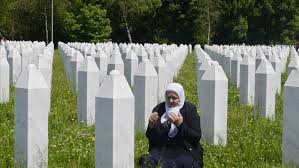
Srebrenica

Our wounds can so easily turn us into people we don’t want to be, and we hardly see it happening.   Sue Fitzmaurice

What we allow the mark of our suffering to become is in our own hands.  bell hooks

What’s left of kisses?  Wounds, however, leave scars.  Bertolt Brecht

“Let it go, David. It will only stir up old wounds.” Who cares about old ones? It’s the new ones that bleed.  Christopher Pike

There’s no antibiotic for the ridding of distress, and no alleviation of these intervals of pain we must encounter. Crystal Woods

Just because his own wings were burnt, it didn’t mean he had to burn others’.  Dean Wilson

Grant us wisdom, grant us courage for the living of these days. From the Christian Hymn, “God of Grace and God of Glory”

This was a week on UN video screens full of irony and rhetoric at times both emptier and less convincing than most of those who “took the floor” probably imagined.

It was a week when the UN’s Economic and Social Council took formal stock of our still-uneven “progress” in fulfilling our sustainable development responsibilities; when the Security Council labored well into the weekend to adopt a measure that will provide only partial relief for the millions of Syrians caught in a decade-long conflict that the Council has been unable to end; and when we commemorated the horrific crimes committed 25 years ago in Srebrenica, crimes which have not yet been fully prosecuted, crimes which still require families to search painfully for both the remains of loved ones and a full accounting of what took place, who was involved, who turned a blind eye to a looming massacre that ripped the worlds of so many apart.

The scar tissue from this UN week was both prevalent and hard to miss.

On Syria, it was not until the dinner hour yesterday when the Council came to an agreement that preserved some measure of the “cross-border mechanism” that has been enabling humanitarian assistance to millions of Syrians, many of whom have suffered multiple displacements and now live beyond the reach of government authority. Belgium and Germany, the co-penholders on the Council’s humanitarian file, sought to re-authorize multiple crossing points to address the dire needs in the northern regions of the country.  Russia and China, on the other hand, sought to ensure that humanitarian actors work more closely and cooperatively with the Syrian authorities, seeking to replace much cross-border access with options for Syria-controlled “cross-line” assistance.  The deadlock of vetoed resolutions was broken with considerable acrimony and with final agreement on only one border crossing point.

Belgium and the Dominican Republic were especially vocal in marking yet another “sad day” for the Council.  Such bitterness as was brought out in these negotiations leaves scars in the Council that will likely test even seasoned diplomats. But the deep sadness for Syrians has been a decade in the making, wounds deeper than most of the rest of us can imagine. If we mange to help keep these people alive until some sort of permanent cease fire and peace agreement are in place –especially those children who have known little but explosions and displacement in their lives — we will surely discover that, as in other parts of the world, many wounds remain, some emanating from years of deep fear and daily uncertainty, but also from the bitter disappointment that those tasked with silencing the guns and stopping the bleeding have largely failed in their duty to do so.

The wounds of Srebrenica are of a somewhat similar order, violence a generation old which completely upended families and communities, violence which has resisted a full measure of justice or closure, crimes which are still being honored in some quarters of the western Balkans and denied altogether in other quarters; reactions which merely grow the scar tissue, pry open the festering wounds and deepen the distrust of authorities at national and international levels.  As the Germany Foreign Minister noted during Friday’s event, people are still finding ways to “play with the narratives” of what happened in Srebrenica, who was responsible both for the killing itself and for creating the political and security contexts in which such butchery could occur.

For all the “never again” rhetoric dispensed on this day, it was the Croatian Ambassador (former UN official) who asserted that such crimes can, indeed, happen again; that the scars of mass violence and discrimination are widely evident (including in places like Cameroon and Myanmar), and that this is largely due to our collective resistance to creating a strong and reliable “preventive network” which can allow us to learn lessons from past wounds more quickly, apply diplomatic and other remedies more effectively, and thereby uphold what the Bosnian president claimed are UN Charter values that have been systematically undermined through a collective “conspiracy of silence.”

There is no such conspiracy in evidence at the High Level Political Forum (HLPF), a core, annual, ECOSOC commitment taking place this week to assess our collective progress towards fulfilling obligations to sustainable development.  Instead, spoken words from diplomats and “experts” have flowed in abundance, some in the form of (for me) unfathomable clichés like “building back better” and “leaving no one behind.”  While many NGOs have used this HLPF opportunity to sell their various “products,” others have rightly called attention to the preponderance of mere reporting taking place; verbiage signifying some multilateral version of “show and tell” during which states and civil society highlight “what we’re doing” while neglecting to reflect sufficiently on the fact that we simply are not yet doing enough to heal wounds of deprivation and injustice that continue to proliferate, to stop the bleeding better than we have done so far.

Closer to home, my younger office colleagues remain painfully aware that our planet’s vital functions are increasingly on “life support.” They recognize that the current pandemic, while a massive complicating factor for sustainable development acknowledged by virtually all at this HLPF, is no excuse for failing to act on SDGs with urgency and courage. They know that we are losing ground on food security and abuses committed against children. They know about the fires blazing in an overheated Arctic, the biodiversity under siege, the corrupt authoritarianism governing more and more UN member states, the deep roots of our propensity to “burn the wings of others.”  They see our collective failures to prevent armed violence and mass atrocities and the scars suggestive of deep wounds courtesy of poverty, disease and what outgoing UN Rapporteur Philip Alston recently referred to as our blatant “disregard for human life.”

And they know first hand that the discourse in the multilateral space we co-habit is generally more political than inspirational, is more about having the right credentials than the right mind-set, is focused more on controlling outcomes rather than ensuring those best possible, is as much about preserving our status, our protocols, our careers, our funders as it is about preserving a common, sustainable future.

There is no “antibiotic” for what distresses us as a species but we do have agency over what “the marks of our suffering will become.” We have it in our power, even now, to affect closure and healing for legacy wounds and stop the bleeding for fresh ones.  We have it in our power to end the violence, to help victims find closure, to reverse our perilous course on climate change and economic inequalities, to restore hope to young people robbed of an education, indeed too-often denied their youth in full measure.

But this will require better from the rest of us than we are now showing, greater displays of wisdom and courage, more than language reduced to clichés or weaponized for the sake of national interests and narrow political concerns, more than pious statements of remorse disconnected from visionary policy change, more than the innumerable good works that don’t yet add up to a sustainable future.

We are wounded people living in a wounded world of our own making. And as such, we have allowed ourselves too often to become the people we say we don’t want to be, the people we swore we would never become, people who hide behind personal grievances and bureaucratic protocols, people who too easily give in to the “given-ness” of our time and who allow “responsibilities” to cloud our deeper duty to fix what’s broken and ensure that “intervals of pain” are as short as we can possibly make them.

And as we struggle to manage our own “intervals,” we would do well to scan the scars on the faces of so many others, scars symbolic of their survival from the trauma that has been needlessly inflicted on them, the bleeding that, even now, holds scant promise of coming to an end. If multilateralism is to have the future we wish for it, a future of trust and effectiveness, a future of more than political rhetoric, limited crossing points and families searching for the remains of long-murdered relations, that bleeding must stop.

We simply must see to it.


Curiosity Call: Stretching Policy and Personal Assumptions, Dr. Robert Zuber

5 Jan

Kid Questions

In all affairs it’s a healthy thing now and then to hang a question mark on the things you have long taken for granted.  Bertrand Russell

Curiosity takes ignorance seriously, and is confident enough to admit when it does not know. It is aware of not knowing, and it sets out to do something about it.  Alain de Botton

Ask yourself three questions and you will know who you are.  What do you believe in? What do you hope for? But most important – What do you love?  Paulina Simons

Don’t question if the world is real; question if your thoughts are. Marty Rubin

As the UN prepares for its 75th anniversary and its decade of action on sustainable development, many are likely in this time of massive fires and human displacement to question both the pace of UN reform and the robustness of the UN’s commitment to implement all of the promises embedded in the 2030 Development Agenda.  And, as we creep ever-closer to a reckless Middle East military confrontation (check out the crowds at Suleimani’s funeral earlier today), many are also questioning the ability of the international community (especially the UN Security Council) to serve as an effective mechanism of conflict prevention rather than as a mere channel for acknowledging newly-escalating tensions.

Such questioning in our view is well within bounds.   It is important that the UN Is held to account for its promises as with other institutions including small NGOs such as our own.   We have all taken on important commitments to enhancing food security, mitigating the devastation from climate change, ensuring peace and security, and much more.  Such commitments were willingly embraced and it is right and sensible to question the resolve of our erstwhile leadership at times when goals get bogged down or otherwise fall woefully behind schedule. A case could surely be made that we are now living through such a time.

That said, the quality of our questions also leaves much to be desired, to our leadership for sure, but also to persons closer to home.

We tend to know just enough about the people whose lives and work we encounter to label them and stick them in boxes of our own making.  We know what they “do” for a living.  We know something about their relationship status and political biases along with a few characteristic habits – often the ones that mostly annoy us.   In such a social environment, we increasingly tend to interpret questions as intrusions on what remains of our privacy, or as judgments on our lack of physical or professional perfection, in part because the questions we are asked, when others even bother to ask them, seem intended to expose rather than explore, to satisfy some prurient interest rather than enhance connection, to promote and amplify an-often limited knowledge base rather than offer invitation to build a base together broader than we could ever build alone.

When was the last time that any of us were asked the kinds of questions that made it more possible for us to explore rather than define, to connect rather than defend?   When was the last time we were asked questions that created safe-enough spaces for curiosity and vulnerability, that allowed us to seek together what we don’t know rather than recite what we already know (or rush to consult our phones as some ultimate authority, thereby abandoning the questions altogether that phones alone can’t process)?  And when was the last time we asked questions ourselves that didn’t house a distinct (and unspoken) agenda and that embodied a commitment to listen to the answers no matter how difficult or challenging those answers might be?

I thought so.  Of the attributes of a rich and connected life that we refuse to practice, asking good questions has become, for too many of us, the top rung in an increasingly lengthy chain.   Our collective curiosity increasingly extends little beyond the fact-checking that can be spewed out by Siri.  Our collective questioning increasingly extends little beyond information that we can “use,” including use against each other.

And yes there is a UN angle on all of this.   Our statement-rich policy environment is shockingly void of questions, certainly of the open-ended variety and mostly (where they exist at all) deeply embedded in our policy accusations.  We read statements and then consult our cell phones to see if we get any tweaks on our twitter feed.  We’re not interested much in what others have to say, in part because we’re heard it all before, and in part because nothing we hear is likely to change what we have to say going forward– or more precisely what our governments or organizations allow us to say.

In the absence of authorization to the contrary,  our questioning in this policy space is infrequent and confined to filling gaps in policy briefings.  It is much less about enabling the curiosity to explore and examine the consequences of our policy choices, to look more closely at our mandates and mission statements and ask ourselves, “if we get what we say we want, how will people be affected?”  Who will be helped or hurt?  And what adjustments need to be made in how we do our business (including a reality-based examination of current and future threats) such that the helping is maximized and the hurting minimized?

A reader might be tempted to assume that such curiosity-based questioning is deeply affirmed and encouraged within the policy community.   But this assumption also needs to be interrogated.  It is easy enough to believe that those pulling the policy levers have your best interests at heart.  It is harder to believe that there are problems and challenges, sometimes most easily perceivable at local level, that are mostly (and sometimes intentionally) invisible to decision-makers.  Those of us who are blessed to sit in these discussions on a daily basis know how impenetrable policy bubbles can be, how dismissive they can be of the evidence and testimony that can complicate the job of policy but can also enrich and extend its products.

Clearly we need to ask better questions of our leadership but also of others in our more immediate orbit, questioning not only the “what” but the ‘why.”  We need to know more about how people do their work in the world, how they overcome challenges and limitations, how they arrive at the opinions that drive their decisions; but even more how they believe, hope and love and what all of that means for the “reality” of their practical decision-making.  And others need to know these things about us.

This past week, a medical practitioner I frequent (and like a lot) said something to me along the lines that “I have known you for years and I don’t really know what you do.”  He assumed that the problem was all about my failure to disclose. That’s surely part of it.  But the other part was about his unwillingness to raise his own level of curiosity, to embed that curiosity in the form of questions, and then allow me the space to respond.

This allowance is something we simply don’t do enough for each other.  We need to make more time to move beyond what people “do” to the larger questions of why they do it and what it takes for them to do what they do.  We need to take our own “ignorance” more seriously,  even our ignorance about the people in our more immediate environments whom we claim to “know well.” In that light, we would do well to “hang more question marks” on all the things we take for granted or that we imagine we already know, the things that we accept because we are too busy or distracted, or because we convince ourselves that we can’t do anything about them anyway. We need to make more space that would allow others in and around our lives to reflect on and share more of their nuances and multiple dimensions.

Here’s to a more curiosity-filled 2020.  In this difficult time for the world, we need every heart and brain engaged beyond the immediate and apparent.


Future Shock: Returning What We’ve Stolen from Children, Dr. Robert Zuber

2 Jun

Stolen 3

Misfortune threshes our souls as a flail threshes wheat, and the lightest parts of ourselves are scattered to the wind.  Danielle Teller

In increments both measurable and not, our childhood is stolen from us, not always in one momentous event but often in a series of small robberies, which add up to the same loss. John Irving

He stood at the window of the empty cafe and watched the activities in the square and he said that it was good that God kept the truths of life from the young as they were starting out or else they’d have no heart to start at all.  Cormac McCarthy

I hate that I stopped believing in things I didn’t even know were matters of belief, like justice and fairness. Or honesty. Or the promises people make to each other. Sue Halpern

My hearts ached with a pain I could not describe. I wondered if I were dying. I felt not sadness. I felt pity. For myself. For us all. We were children no longer. And we never would be again.  K. A. Applegate

This past Friday near the UN, John Burroughs kindly lent us his office patio for what has in the past year become a bit of a custom for us – welcoming a gathering of interns from the organizations with whom we once shared office space and with whom we still work.

Amidst the refreshments in a welcoming space shrouded in green just a few minutes walk from the UN, this gathering is pitched as an opportunity to make some acquaintances and perhaps even friends, but also to ponder “what just happened” at a UN which doesn’t always make the best first impression (or second for that matter) but which challenges our minds, hearts and patience literally by the hour.

This week, various members of our patio group took on policy options in diverse UN conference rooms – from peacekeeping in Somalia and the impact of plundered natural resources on international peace and security to the endless challenge associate with financing for development and the ability of UN managers to take a firm stand on sexual exploitation and abuse. Some also attended an extraordinary event this week hosted by Norway and Jordan focused on violence from “right wing terrorism,” and the often-shocking levels of weaponry and internet space enabling this largely unchecked threat.

All of this is important at multiple policy levels and was occasionally quite eye-opening for the interns.  And some of these experiences were raised during our patio time.   But the interesting parts were less about what the UN was doing and more about how it was doing it, the impressions that these people, some of whom had been in the building less than a week, felt initially about their presence in this center of global governance. Was it different than they imagined?  And did this “difference” make them more or less hopeful for the future of the planet?

For many it WAS different than they imagined in several ways, small and large: being relegated to the far reaches of conference rooms; having to enter the main building with the tourists rather than with the officials; watching diplomats reading prepared statements that had most all passion and urgency wrung out of them; a lack of apologies for policy mis-steps or even acknowledgements of mistakes made or valid points made by others; long meetings that resulted neither in specific actions nor even in a consensus to act that would be more about the promise of change than the promise of lunch.

No, the UN does not seem to make these interns particularly more hopeful about their future, at least not at this early stage of their engagement. Of course, what they conclude now will modify over time. They will become better “adjusted” to the way the UN does its business, the subtleties of diplomacy and diplomatic language that often result in meaningful (if not always timely or sufficient) movement on pressing global issues.

Hopefully, they will also cultivate their own means of feed-back to the UN system of which they are now a part,  a system that continues to grant access and privilege, albeit at times grudgingly, to young people who have (like myself and most of the rest of us) not “earned” it in any substantive sense.  We are where we are, not because we are so intelligent, or brave, or wise, or determined, but because (as I like to say) we’ve collectively been around so long they’ve mostly forgotten we don’t completely belong.

But belong we still do and, like it or not, the system of which we are now a part has done little to confront state leadership that, as the remarkable youth “messenger” Greta Thunberg says often, has literally “stolen our childhood,”  has refused to make the changes drastically or quickly enough to stave off the longer-term prospect of a climate-related extinction, let along the poverty, discrimination and violence that jeopardize millions of children in the shorter term.  The faces of too many of today’s children – locked in cages, trapped under rubble, suffering in the harvest fields, at risk of violence while simply seeking water or firewood – are not the faces around our patio table.  Ours are the faces of privilege, faces with “adult” opportunities to add voice to policy at its global center, to insist (if only they will) that the damage done to those who will co-inherit a planet drowning in plastic and mistrust, melting away our ice caps and eroding our resolve to promote justice and honor our promises, can and must come to a stop.  We can’t afford to further jeopardize those who might well ascend to leadership in societies now pushing away from each other, erecting more barriers than we can dismantle and calling very much into question the cooperative spirit that is our best hope for change.

Of all the UN-related voices that come to us through twitter, email and other online sources, perhaps my favorite comes courtesy of Marta Santos Pais, the Special Representative on Violence against Children.  Despite the enormity of her assigned duties, despite the willingness of too much of the international community to use children’s lives as geo-political pawns which are then justified in the name of dubious ethnic “supremacies” or of erstwhile larger global visions that turn out to be merely mean and petty, Pais soldiers on.  And she does so while regularly sharing the most hopeful photos of children from diverse and often challenged backgrounds, children mostly seen smiling, holding hands and sharing portions of the “lighter side” of themselves, children waving their arms playfully from the classrooms that offer them another way forward, children peering longingly or quizzically into the camera lens as though ready to whisper to anyone close enough to hear, “we need a chance too.”

Indeed they do.  We live in a time which (wrongly in my view) seeks to extend childhood for the mostly-privileged almost into middle-age — putting off the “pity” associated with an inevitable and largely irreversible casting aside of childish ways — while our policies impose bewildering amounts of pain and deprivation on other children that they will do well to heal, even in part.   In looking around the patio table at the remarkable people assembled there, I recognize in them some of what I don’t recognize often enough in their peers (or my own for that matter) – the willingness to take a deep and hopeful breath, to accept the responsibility associated with their training and privilege, to renounce residual vestiges of cynicism even as unresolved shocks to our future multiply, and to find common cause with those (like Greta) younger than themselves who are (and not without cause) quickly losing patience with the rest of us.

It is past time to acknowledge what our greed and indifference have been stealing from our children and pledge to return to them what was implicitly promised when we brought them into this world.

Endgame:  Enhancing Trust in the UN’s Complex Strands of Truth, Dr. Robert Zuber

5 May

Brands

At the least, we should leave flowers; at the least we should leave songs. Xiuhtezcatl Martinez

The Dreaming is now. The Dreaming is always; forever.  Kate Constable

The purpose of any ceremony is to build stronger relationship or bridge the distance between our cosmos and us.  Shawn Wilson

After nourishment, shelter and companionship, stories are the thing we need most in the world.  Philip Pullman

We live in a fragmented civilization with fragmented indoctrinations.  Talismanist Giebra

This was another breathtaking week at the UN.  From nuclear weapons and Syrian reconciliation to depleted fish stocks and the “re-deployment” of the UN development system, seemingly every available conference room was tied up with one policy urgency or another.

There were three other events this week that might seem disparate on the surface, but which are related to questions about means and ends regarding how the UN both communicates its own messages and also allows those who communicate differently to “have their say” in an appropriate and respectful manner.

These events were the plenary of the Permanent Forum on Indigenous Issues, the Committee on Information and the annual event promoting safety and protection for what has become (at least beyond the celebrity journalists who now fill our airwaves) a largely besieged journalistic community.

The Indigenous Forum took up a number of issues that have dominated prior events and that still resist resolution, including inclusion of indigenous languages at national level, modalities for full participation in the work of UN entities, land and water rights (including protection for those who defend those rights), health care (including attention to youth suicide rates) and respect for what many referred to as “indigenous knowledge.” Such knowledge highlights a way of relating to our decreasingly-biodiverse natural order that is more intimate and more interactive than our data-driven and abstracted policymaking. Our UN policy spaces have conferred on us the option of simultaneously “branding” our urgency regarding theis current “extinction moment” while turning at least a partial blind eye to the “business as usual” that props up our own lifestyles but endangers all that deign to come after us.

In the Committee on Information, the issue of languages was again front-and-center.   There has been a movement afoot for some time to within the UN to ensure both the full use of all six “official languages” and to increase sensitivity to those forced to learn one of these languages (primarily English) in order to be able to communicate in a wide range of diplomatic functions and participate fully in UN deliberations.

We fully support this movement.  An English-obsessive environment such as exists at UN Headquarters places undue pressure on UN interpreters but also opens undeserved pathways to participation for essentially monolingual persons such as myself who can barely order meals in another language let alone function without interpretive earphones in the complex policy environment of the UN.  And the commitment to function in all of the official languages of the UN is more than a matter of national or regional pride, more even than upholding the UN Charter.  It is about making space for different ways of knowing the world, the nuances of reality that are largely couched (and sometimes obscured) in the English that dominates this policy space; nuances which bear potential in all languages (certainly including indigenous ones) to cut through our measured bureaucracy-speak and give people stories and metaphors that are suggestive rather than definitive, that enable dialogue rather than merely instruct or even coerce.

This brings us to another core agenda of the Committee related to how the UN “sells itself” and its activities to governments and global constituencies.  While not all delegations are comfortable with what often seems like nothing more than a sophisticated UN branding exercise, few are willing to make the case for truth-telling, for communicating not only what the UN does (which is considerable to be sure), but also what it does not do, what it fails to do and, perhaps most importantly, what it is not well equipped to do.  Here we advocate again contextualizing our narrow “truth zones” to identify the promises made and not kept, but also to highlight the (too many) times we have willfully raised expectations beyond what the system is prepared to fulfill.

A cursory review of US (and now most other cultures) reveals that our current  obsession with branding ourselves, our products and our corporate and career interests has abandoned a more balanced and context-responsible outreach to a veritable feeding frenzy of (at best) half-truths designed to win followers and cultivate “rooting interests.”  What is true, as we have said before, is essentially what you can convince others to be true, obsessing on “facts” at one level but mostly only the “facts” that help make our cases.  And we cleverly avoid context, including the “context” that implicates us in the illusions that have given rise to our current crises.  Indeed, our many hours each week in UN conference rooms indicates that a failure to acknowledge the “contributions” we make to the very ills we are mandated to resolve constitutes a major impediment to the fulfillment of globally-essential tasks that no amount of positive branding can erase.

Collectively, we mostly now assume that we are being manipulated in the public sector to such a degree that it no longer piques our interest, at least on the surface.   We trust less and less of what we are told, but the implications of a so-called “information environment” that at its best now “informs” with willful selectivity remains largely unexamined.  Information, more and more, is a subset of our addiction to entertainment, often celebrating individual and corporate self-promotion, certainly enabling the epidemic need to have our biases and limitations confirmed rather than challenged.  To the extent that any of this is part of what the call for better UN “branding” implies, we need to study the implications for trust and truth more carefully.

And finally, we were present (as in years past) in the annual commemoration of World Press Freedom Day, a time to recall the many journalists worldwide who face harassment, prison, even death for sticking their noses (and their cameras) in the middle of illicit activity that people in power are all-too-willing to punish in order to keep private.  While the president of the General Assembly rightly lauded journalists for “holding up the mirror” to society, for telling the stories that no one else will tell, and for confounding the rumors that proliferate in this world, Lebanon’s Ambassador also lamented the “hyper-partisan” environment that we have created for ourselves, an environment that turns mirror-holding into a potential capital offense and provides cover for agendas that only barely (if at all) reference the “public interest.”

Perhaps the best address at this event came from the African Union’s Ambassador Mohammed, who advocated for “conflict-sensitive” journalism supported by international efforts to pursue the truth that can keep our policies on a steady and humane path.  The key here for me is the “pursue the truth” aspect, which I understand as the best available information set in the broadest possible human and policy contexts.  If we at the UN cannot achieve this level of truth-telling, if we cannot find the means to issue statements and tell stories that seek to enhance and inspire rather than recruit and isolate, we will in the end only strike more blows to our own credibility. As Warren Hoge noted at the same event, part of our essential (and courageous) task in this time of threat from authorities of all stripes remains to “debunk falsehoods.”  A good place to start, for we in the media and policy communities alike, would be with our own.

As many of you know, Avengers: Endgame (which I likely won’t see) has been breaking the internet for weeks complete with its staggering box office success in the US and in other countries.   For those who chalk this up to our endless search for the next big distraction, you might be missing half the point. It is also, I suspect, part of a deep and largely unfulfilled yearning for stories, stories that compel attention and invite people to dream, stories that connect people to larger realities than their ordinary lives ordinarily permit, stories that bridge the ever-widening gap between “our cosmos and us.”

I would prefer to have more of those stories coming from places like the UN.  But do we know how to tell them? And do we have the courage to ensure that the UN plays its part as an antidote to the “fragmented indoctrination” that defines our times?

Money Matters:  An Easter Reflection on the World We Don’t Yet Have, Dr. Robert Zuber

21 Apr

Make the World Better

A fine glass vase goes from treasure to trash, the moment it is broken. Fortunately, something else happens to you and me. Pick up your pieces. Then, help me gather mine.  Vera Nazarian

Be aware of the place where you are brought to tears.  Paulo Coelho

With age, gone are the forevers of youth. Gone is the willingness to procrastinate, delay, to play the waiting game.  Joe Wheeler

Change won’t happen because everyone wishes it happens. It happens only when people decide that we’ll never stop digging until we find our gold.  Israelmore Ayivor

For where your treasure is, there will your heart be also.  Matthew 6

On a rare spring weekend when the end of the Christian Holy Week and the beginning of the Jewish Passover coincide, I was at the Cathedral of St. John the Divine in New York, a place where I did ministry many long years ago.

Amidst the beautiful choral interludes and reflections on crucifixion – a practice which we would now unhesitatingly characterize as torture – a member of the clergy read a long prayer, known as the “Collects.”   Half way through, I heard something that piqued my interest beyond the beautiful petitions that I had once come to know intimately.

We pray for the “members and representatives of the United Nations.”

I don’t know if I technically fit that description, but I do know that many people have “prayed for me” over the years, most to highlight things I was doing that they didn’t like or those times when I was leading myself –or others – astray.   Occasionally I was also “prayed for” in the hope that I would somehow reach my “potential,” would get beyond the childish ways that I dragged far too long into adulthood and assume the responsibility that my education and privilege would suggest and my peers had a right to demand. Mostly in my case, unfortunately, people seemed to assume that they were praying for a “lost soul” rather than for the rapid completion of my somtimes-jagged path towards maturity.

It was in this second sense that this prayer for the UN was intended, “that they may seek justice and truth, and live in peace and concord.” No lost cause here, but rather the fulfillment of an essential and even planet-healing potential.

Surely, this is one hefty solicitation, one which the UN and its diverse stakeholders have yet to reach.  We have, in fact, been a bit too complacent as respect for the rule of law has become an endangered species.   We have too-often replaced jargon and bureaucracy-speak for honest discussion about the future we want and, perhaps more importantly, what stands in our way.   We have allowed politics to taint our primary responsibility to prevent conflict and maintain the peace.  We have refused to play fair in matters of finance and trade thus pushing smaller states into client relationships that force “bargains” that are anything but grand.

At times, the great privilege of working in this policy space for the sake of all life on this stressed planet gets buried under orders from capitals and home offices, and by a “bubble” culture that allows those of us who should know better to believe that the good we are doing is somehow good enough.  Despite frenetic UN activity, despite the many global challenges that rightly find our way into our reports and conference rooms, there is as the Collect goes “too-little health in us.”  As we have noted often, beyond the inspiration of these holy seasons, institutional reform must be accompanied by personal reform; in this instance, the courage to crawl out from under our respective mandates and insist that the good the UN and its member states already do evolves into the good that the times demand.

Such a struggle of potential was on display in several UN venues this week, including a mostly compelling Peacebuilding Commission (PBC) session with Sri Lankan officials on progress made in the realms of development and justice.  As many of you know, the often-horrific violence from earlier this century that officials have already done much to overcome, reappeared this weekend in the form of a series of deadly bomb blasts that tore through churches and hotels.  This is no time or place for second-guessing, but it is worth noting that during this PBC, while the Sri Lankan Finance Minister lauded the “cultural diversity” of his country and praised PBC and other international support for this “maturing democracy,” he and others from the government harshly referenced the “extremists” who pronounce “unfounded criticism” of government development and reconciliation efforts, including the pace of accounting for those still “missing” from the long war. Clearly, the political “co-habitation” envisioned by the Minister in the PBC session still has many miles to go.

And then there was the Financing for Development Forum organized by the president of the Economic and Social Council, Ambassador Rhonda King.  Four days of packed programming, including numerous side events, examined options (with varying degrees of effectiveness) for financing the 2030 Development Agenda, an agenda both daunting and indispensable if we are to emerge from our current malaise of distrust and apathy and forge a healthier, fairer, more secure world.

We were not present for many of the plenary discussions which we were thankfully able to follow through the Global Policy Forum and other of our policy friends.  Some of the side events held greater interest for us, including on “gender-lens impact investing,” on “financial inclusion for the forcibly displaced,” and a hopeful, humble discussion led by El Salvador on creating “feminist foreign policy.”  But the plenary discussions we were able to follow revealed some interesting fault lines on development financing. Some (like us) continued to point out that, despite some success in increasing domestic revenue streams through tax policy reform and the elimination of state corruption, global financial investment is still heavily tilted towards those with incomes, with collateral, with infrastructure already well into development.  Moreover, as noted by several NGOs, the international trading system is similarly skewed towards those states with power and leverage to set the rules.  As some states and civil society worried, the current fiscal ledger for the 2030 Agenda leaves too many inequalities intact, too many skills and voices stranded on the margins, too many waiting for someone to help them “pick up the pieces” before they can move forward.

For all of the well-meaning talent gathered in the Trusteeship Council chamber, it was quite possible to come away from the discussions wondering if this UN commitment is headed in the direction of too many others, a commitment led by people who know well how to “manage” this development race but who apparently have little enough stomach to do what is needed for all of us to reach the finish line.

As the four days of financing for development talk ended, both hopeful and cautionary tales were shared. The eloquent Zambian Ambassador who co-facilitated the draft outcome document eventually approved at this meeting, cited the “beautiful commitments” of the SDGs for which there is surely “enough money in the world.” Without citing bloated defense budgets or other untapped funding sources, he made plain that “we can fund the SDGs if we really want to do so.”  He was followed by Deputy Secretary-General Amina Mohammed who cited 2030 Agenda funding gaps “larger than we had anticipated” while warning against any hint of abandoning yet another promise, this truly grand promise of sustainable development which is tethered to peace and reconciliation in Sri Lanka and elsewhere, the respect for rights and the rule of law, the nurture of our children and care of our oceans, and ultimately (as she well noted) the vitality and credibility of the multilateral system itself.

We return to the prayer of this holy weekend, a prayer to remember where our collective treasure truly lies: in justice and truth, in peace and concord.  This is the agenda for which delay and procrastination are no longer an option.  This is the gold for which we must never stop digging. This is the place of responsibility and service that must “move us to tears” until our jobs are finally done.